Botsociety’s 2017 pitch deck is a masterclass in using traction to overshadow a lack of traditional deck components. With only 11 slides, the company omits a team slide, a formal competition slide, and a specific 'ask' or use of funds. Instead, it leans heavily on the 'show, don't tell' philosophy. The deck identifies a shift in design needs—from static mobile screens to conversational flows—and proves demand through an impressive logo wall featuring Nike and Microsoft. The centerpiece is a revenue chart showing a 5X increase in Q3, ending at $218,000 ARR. This teardown explores how Botsociet…
Key takeaways
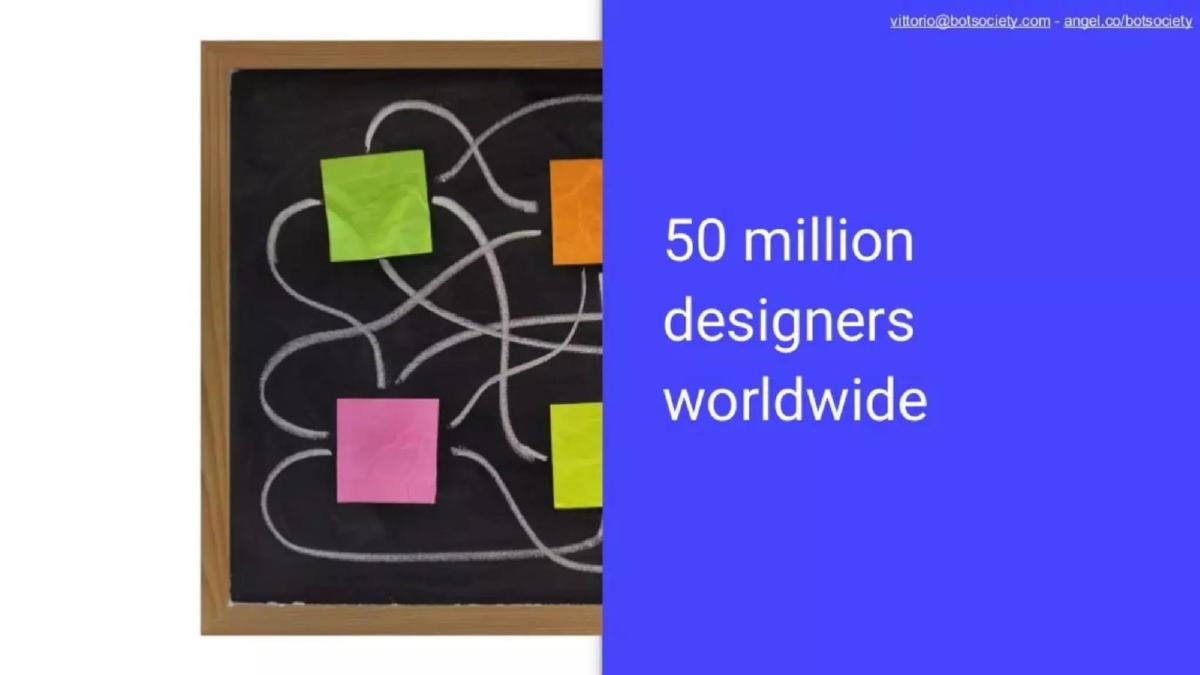
- The deck identifies a market of 50 million designers worldwide who need new tools for conversational interfaces (Slide 5).
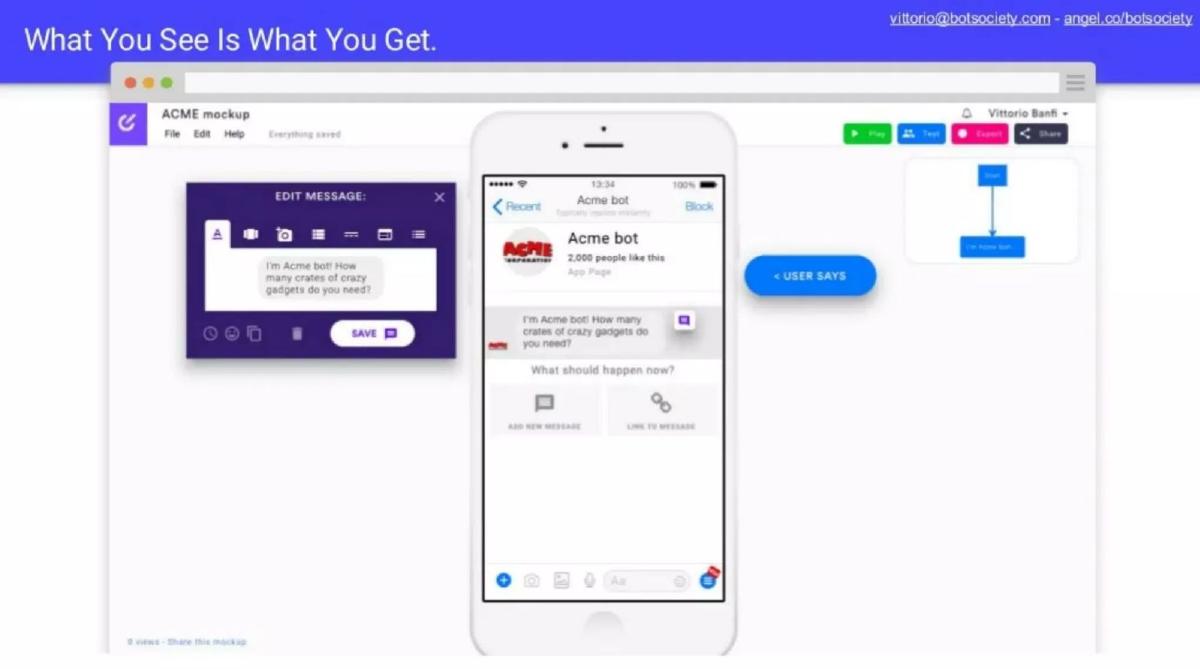
- Botsociety demonstrates a 'What You See Is What You Get' (WYSIWYG) interface for bot design across two product slides (Slides 6 and 7).
- Traction is the deck's strongest point, showing Annual Recurring Revenue growing from $15,000 in March to $218,000 in October (Slide 9).
- The company claims a 5X revenue increase specifically within Q3 (Slide 9).
- The logo wall includes major enterprise clients such as Intuit, Nike, Microsoft, Accenture, and Wells Fargo (Slide 8).
- The deck completely omits a team slide, failing to introduce the founders or their backgrounds within the presentation.
- There is no explicit 'Ask' slide detailing how much capital is being raised or how it will be spent.
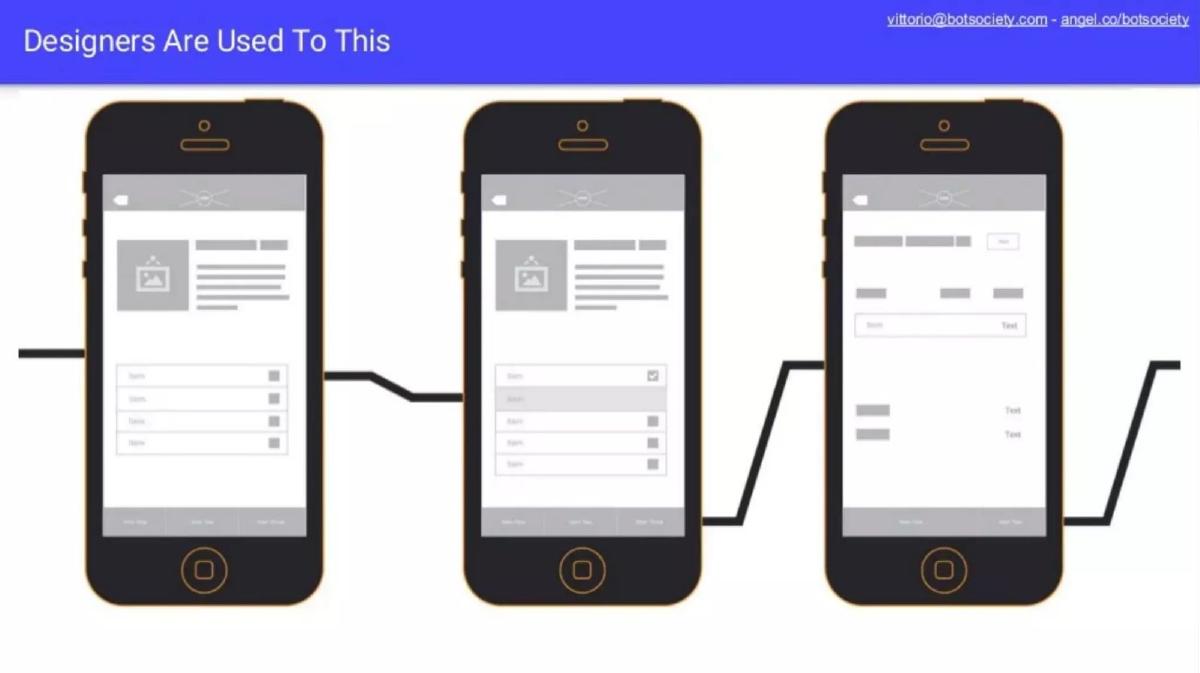
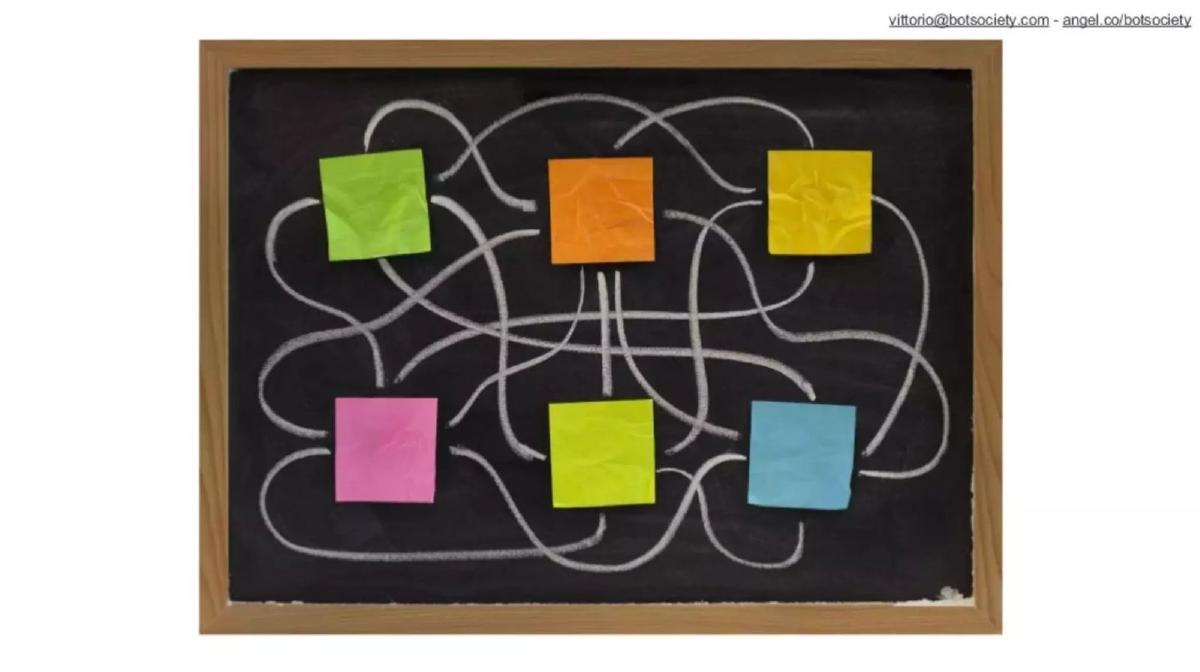
- The problem is framed visually through the contrast of traditional mobile wireframes (Slide 2) versus the complexity of conversational logic (Slide 4).
Introduction: The Lean Traction Deck
The Botsociety pitch deck from 2017 is an 11-slide presentation that prioritizes market momentum over structural formality. At a time when chatbots and voice assistants like Amazon Alexa were reaching peak hype, Botsociety positioned itself as the essential infrastructure for the designers building those experiences. The deck is remarkably sparse on text, relying instead on visual metaphors and a single, powerful growth chart to make its case. While it breaks several 'rules' of pitch deck construction—most notably the omission of a team slide and a clear financial ask—the strength of its enterprise customer list and revenue growth clearly sufficed to secure its $150,000 seed round.
The Problem and Market Opportunity (Slides 1-5)
Slide 1: Cover The deck opens with a clean logo and the tagline: "Design Conversational Interfaces." It includes the CEO’s contact information and a link to their AngelList profile. The branding is professional and fits the 'design tool' aesthetic.
Slide 2: Designers Are Used To This This slide shows three standard mobile phone wireframes connected by a linear path. It establishes the status quo: designers know how to build visual, screen-based interfaces. It sets up the 'before' state of the industry.
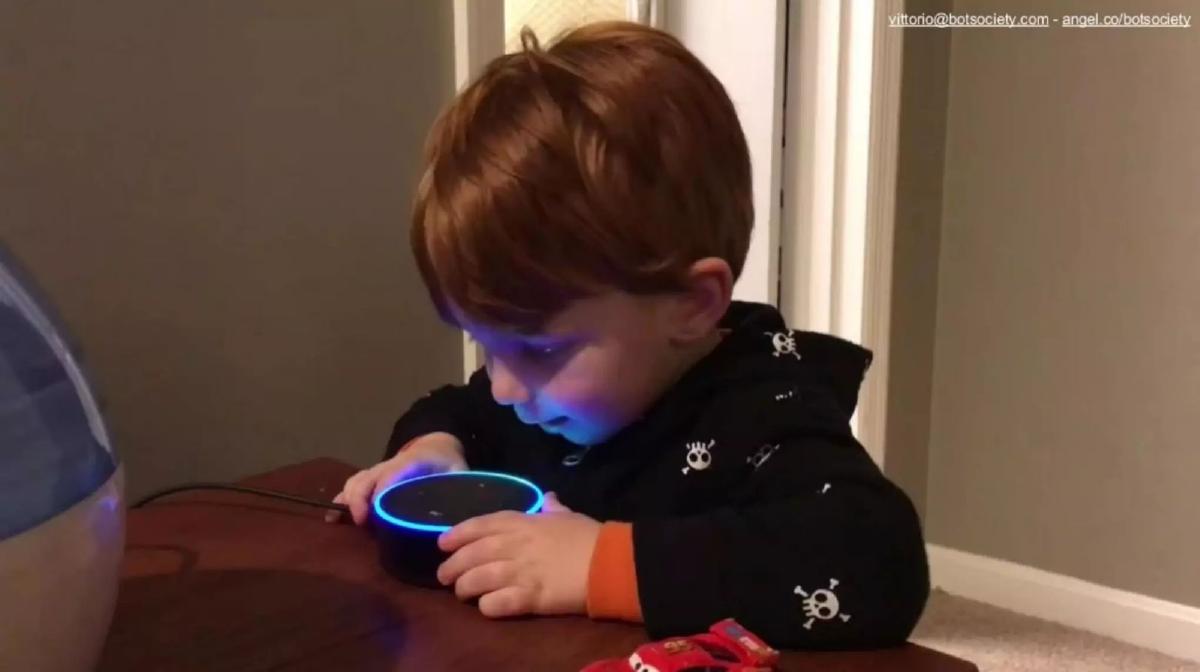
Slide 3: The Shift to Voice Without using a single word, Slide 3 features a photo of a young child interacting with an Amazon Echo (Alexa) device. This serves as the 'Why Now?' component of the deck. It signals a fundamental shift in how users—even the youngest generation—interact with technology, moving away from screens toward conversation.
Slide 4: The New Complexity This slide shows a chalkboard with post-it notes connected by a chaotic web of chalk lines. This is the visual representation of the 'Problem.' Unlike the linear screens on Slide 2, conversational interfaces are messy, branching, and difficult to map using traditional design tools.
Slide 5: Market Size The deck transitions to the market opportunity by overlaying text on the previous chalkboard image: "50 million designers worldwide." By framing the problem as one affecting every designer, Botsociety suggests a massive Total Addressable Market (TAM) for a tool that can untangle the complexity shown in the previous slide.
The Solution and Product (Slides 6-7)
Slide 6: What You See Is What You Get (Part 1) Botsociety introduces its interface. The slide shows a browser-based tool where a user can edit messages for an "Acme bot." It highlights the ability to see the conversation in a mobile mockup format while simultaneously viewing a logic flow on the right side of the screen. This directly addresses the 'messy chalkboard' problem from Slide 4.
Slide 7: What You See Is What You Get (Part 2) The second product slide shows a more advanced interaction, including rich media (images of tennis balls) and multiple-choice user responses ("I need 10", "I need 100", "A BILLION"). This demonstrates that the tool handles not just text, but the full range of modern chatbot capabilities across different platforms.
Traction and Validation (Slides 8-9)
Slide 8: Enterprise Validation This is a high-impact logo wall. It features global giants: Intuit, Lloyds Bank, Wells Fargo, McCann, Nestle, Accenture, PwC, Nike, and Microsoft. Below these are smaller logos including Imagin Bank, Motion.ai, and Haptik. For a seed-stage company, this level of enterprise adoption is an incredibly strong signal of product-market fit.
Slide 9: Annual Recurring Revenue If the logos didn't convince an investor, the revenue chart likely did. The slide shows a line graph of ARR from March to October. The numbers are specific: $15,000 in March, $59,000 in August, $146,000 in September, and $218,000 in October. A large callout notes: "Q3 - 5X revenue." This demonstrates not just growth, but accelerating growth.
The Future and Contact (Slides 10-11)
Slide 10: OEM Customer This slide is somewhat cryptic, featuring a spotlight on an empty stage with the text "OEM customer" and "Upcoming product." This likely refers to a major partnership or a white-label version of their technology, suggesting further expansion beyond their current SaaS model.
Slide 11: Closing The final slide repeats the contact information and AngelList link, set against an isometric illustration of a factory or data center, reinforcing the idea of Botsociety as a 'builder' of bot infrastructure.
What Works in the Botsociety Deck
The 'Show, Don't Tell' Approach: The transition from Slide 2 (linear screens) to Slide 4 (chaotic chalkboard) is a perfect visual metaphor for the problem. It requires no explanation for anyone who has ever tried to map out a complex user journey. By showing the child with the Alexa on Slide 3, they also tap into the emotional and cultural relevance of the voice revolution without needing a slide full of Gartner statistics.
Specific Revenue Data: Many founders hide behind 'percentage growth' or 'indexed' charts. Botsociety’s decision to put exact dollar amounts ($218,000 ARR) on Slide 9 builds immediate trust. The fact that the growth is accelerating (the jump from August to October is much steeper than the previous months) creates a sense of urgency for the investor.
High-Quality Social Proof: The logo wall on Slide 8 is exceptional for a $150k seed round. Having Nike, Microsoft, and Accenture as customers or users suggests that the '50 million designers' mentioned on Slide 5 are not just freelancers, but designers at the world's largest companies.
What Is Missing from the Botsociety Deck
No Team Slide: This is the most glaring omission. In seed-stage investing, the team is often more important than the product. The deck provides no information on who the founders are, their technical background, or why they are the right people to build this specific tool. While the CEO's name is on the cover, his pedigree is left to the investor's research.
No Competition Analysis: The deck assumes Botsociety is the only solution for this problem. In 2017, other prototyping tools (like InVision or Sketch) were beginning to look at conversational flows, and other bot-specific tools were emerging. Failing to address the competitive landscape can make a founder look naive or overconfident.
No 'The Ask': There is no slide stating how much money they are raising, the valuation, or what the milestones will be for the next 18 months. While this information is often handled in the email body or the verbal pitch, its absence in the deck makes the presentation feel more like a product demo than a formal investment proposal.
No Unit Economics: While the ARR growth is impressive, there is no mention of Customer Acquisition Cost (CAC), Lifetime Value (LTV), or churn. For a SaaS tool, investors eventually want to know if the growth is sustainable and profitable.
What a Founder Should Copy
The Visual Problem Statement: Founders should copy the way Botsociety used Slides 2 and 4 to contrast the 'Old Way' and the 'New Way.' It is a highly effective way to explain a technical or workflow problem to a non-technical investor in under ten seconds.
The Traction-First Layout: If you have revenue growth like Botsociety (5X in a quarter), put it front and center. This deck proves that if your metrics are strong enough, you can get away with a shorter, less traditional deck. They didn't bury the lead; they showed the product, showed who uses it, and showed how much they are paying.
Minimalist Text: This deck is designed to be spoken over. There are no walls of text or bullet points with ten items. Each slide has one job and one message. This keeps the investor focused on the presenter rather than reading the slides.
Conclusion
The Botsociety deck is a product of its time—short, punchy, and riding the wave of a new technological category. It succeeded by proving that a real problem existed for a large market and that they had already captured the attention of the world's biggest brands. While the lack of a team slide is a significant risk, the $218,000 ARR figure on Slide 9 likely acted as the ultimate de-risking mechanism for their $150,000 raise.
Frequently asked questions
- How much did Botsociety raise with this deck?
- According to the catalogue listing from pitchdeckhunt.com, Botsociety raised $150,000 in 2017 during their Seed stage. This is a relatively small amount for a Seed round, which may explain the lean, traction-focused nature of the 11-slide deck.
- Who are Botsociety's main customers according to the deck?
- Slide 8 displays a high-profile logo wall including Intuit, Lloyds Bank, Wells Fargo, McCann, Nestle, Accenture, PwC, Nike, and Microsoft. The catalogue listing further specifies that they had more than 200 paying customers at the time of the pitch.
- What is the core problem Botsociety is solving?
- The deck suggests that while designers are used to static mobile wireframes (Slide 2), conversational interfaces like Alexa (Slide 3) result in messy, non-linear logic (Slide 4). Botsociety provides a structured design tool to manage this complexity.
- What financial metrics are shared in the presentation?
- Slide 9 is dedicated to Annual Recurring Revenue (ARR). It shows a growth trajectory starting at $15,000 in March 2017 and reaching $218,000 by October 2017. It specifically highlights a 5X revenue jump during the third quarter.
- Is there a team slide in the Botsociety deck?
- No. The deck is notable for the complete absence of a team slide. While the CEO's name (Vittorio Banfi) and email appear on the cover and final slides, there is no information regarding the founding team's experience or size.