Crowdz utilizes a highly visual, minimalist 10-slide deck to pitch its invoice exchange platform. The narrative centers on a specific pain point: the 30 to 120-day wait for cash that plagues SMEs. By citing a $9 trillion market figure from the Financial Times and demonstrating a three-pronged revenue model (subscription, transaction, and auction fees), the company positions itself as a critical liquidity layer for global trade. While the deck is light on technical architecture and specific unit economics, it leverages strong social proof through logos like Barclays and Cisco. The presentation…
Key takeaways
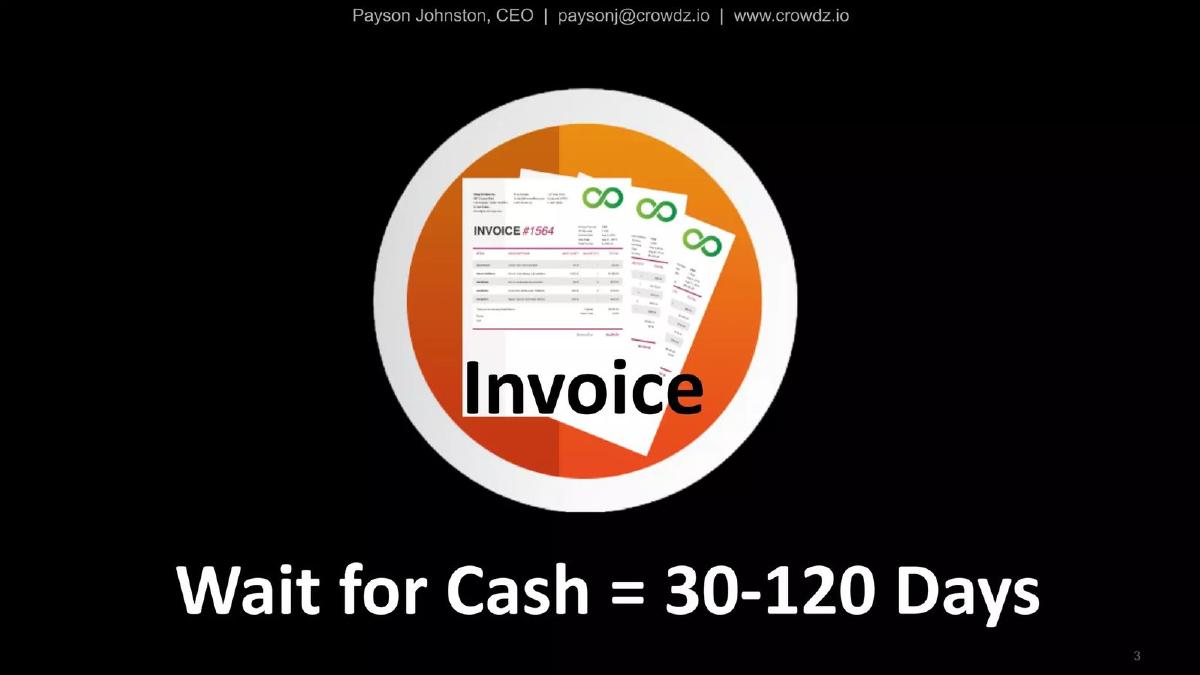
- The deck quantifies the core business problem as a 30-120 day wait for cash on Slide 3.
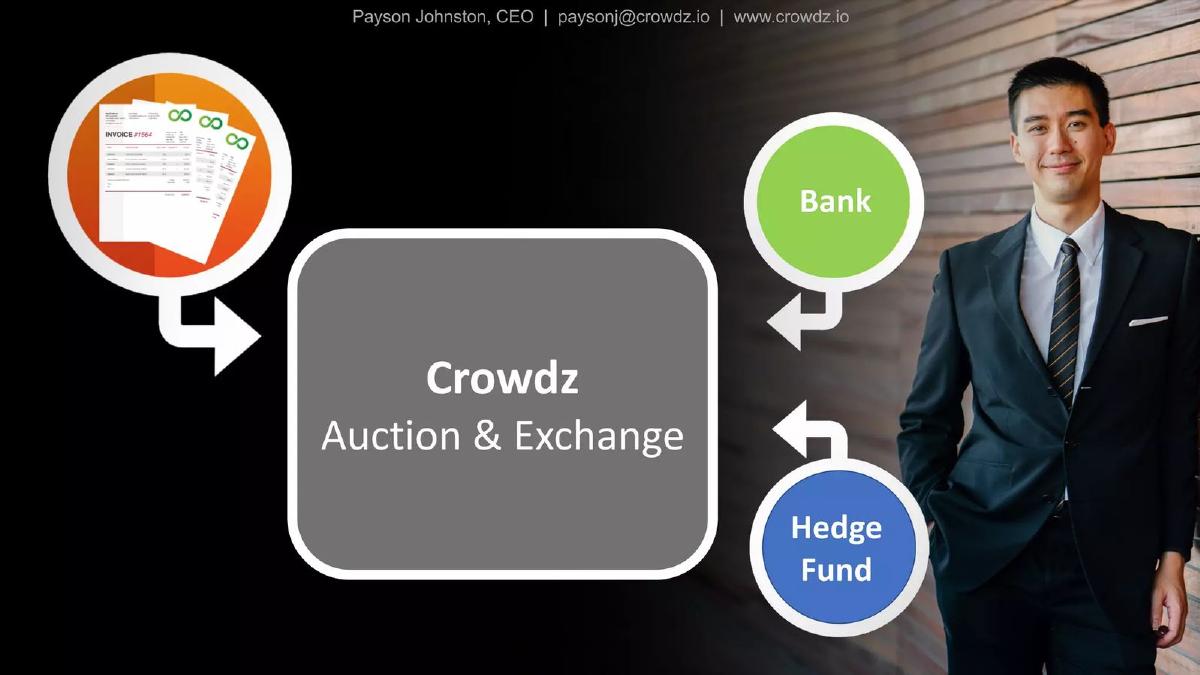
- Crowdz positions itself as the central hub connecting invoices to Banks and Hedge Funds on Slide 4.
- The company cites the Financial Times to validate a $9 trillion market opportunity on Slide 5.
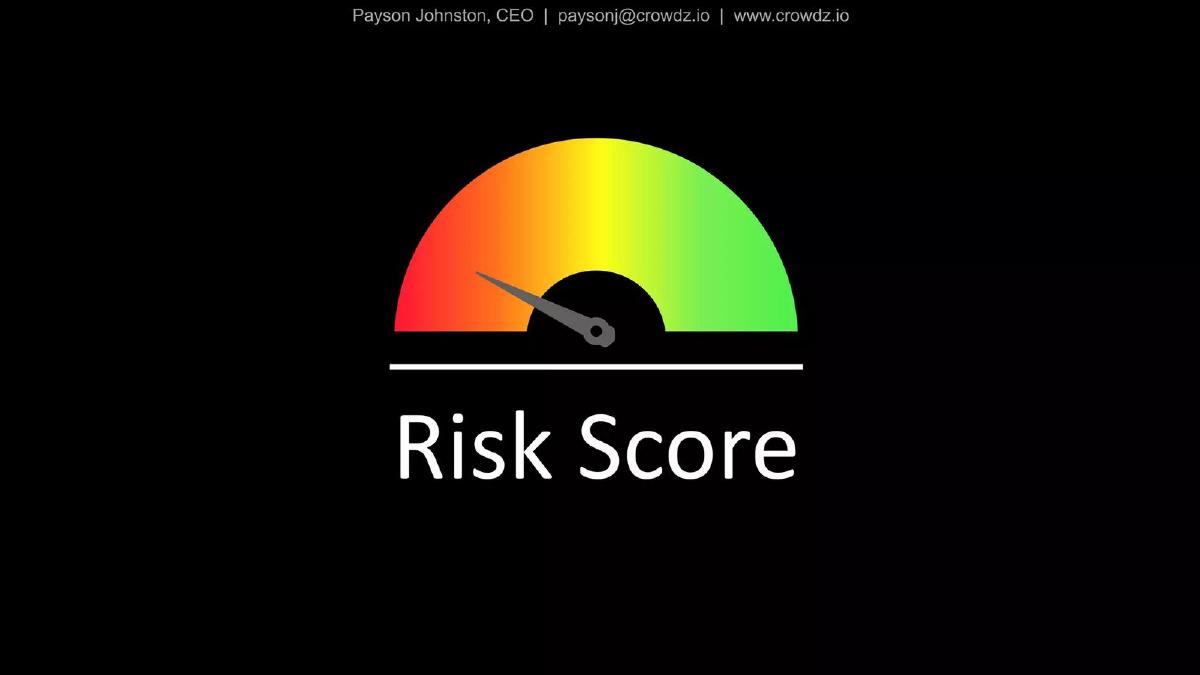
- A proprietary 'Risk Score' is introduced on Slide 6 as a key component of their platform's value.
- The business model is diversified across Subscription Fees, Transaction Fees, and Auction Fees as shown on Slide 7.
- Crowdz reports a specific traction milestone of $125,000 in revenue on Slide 8.
- Early enterprise validation is signaled by the prominent display of Barclays and POSCO logos on Slide 8.
- The team slide (Slide 9) emphasizes pedigree with logos from the White House, MIT, Citi, and Cisco.
The Visual Narrative of Liquidity
The Crowdz pitch deck is a study in minimalism. With only 10 slides, the company avoids the common pitfall of over-explaining the technical nuances of blockchain or fintech architecture, instead focusing on the visceral pain of cash flow management. The deck was used to secure a $3M Series A in 2020, a period where supply chain resilience was becoming a top-tier global priority.
Slide 1: Title and Identity
The cover slide introduces the brand with the tagline: "The Invoice Exchange for Accelerating Cash Flow." It includes the CEO's contact information and the company URL. The logo features a stylized globe, hinting at the global nature of trade finance. It is a standard, professional entry point that establishes the company's focus immediately.
Slide 2: The Hook - Thailand Floods 2011
Slide 2 is an unconventional choice for a fintech deck. It features a full-bleed image of a helicopter over the 2011 Thailand floods. While the slide contains no explanatory text, it serves as a narrative hook—likely used by the presenter to discuss supply chain disruptions and the fragility of global trade. It establishes the 'why now' or the 'why this matters' by showing how external shocks can freeze commerce.
Slide 3: The Quantified Problem
Crowdz moves quickly from the macro disaster to the specific business pain. Slide 3 features an invoice icon and the text: "Wait for Cash = 30-120 Days." This is the core problem statement. By quantifying the delay, Crowdz makes the inefficiency of the current B2B payment system undeniable. It targets the 'dead time' between work performed and payment received.
Slide 4: The Solution Architecture
Slide 4 provides a high-level schematic of the platform. The "Crowdz Auction & Exchange" sits in the center. On the left, invoices enter the system. On the right, capital providers—specifically "Bank" and "Hedge Fund"—are shown bidding on or funding those invoices. A professional-looking individual is pictured on the right, likely representing the target user or the reliability of the financial institutions involved.
Slide 5: Market Size Validation
To prove the scale of the opportunity, Slide 5 uses third-party validation. It quotes the Financial Times stating, "A $9 trillion market..." This refers to the total volume of accounts receivable globally. Using a reputable source like the FT adds immediate credibility to a number that might otherwise seem hyperbolic.
Slide 6: The Proprietary Edge
Slide 6 introduces the "Risk Score" via a speedometer graphic. In invoice financing, the ability to accurately assess the risk of non-payment is the primary barrier to entry. While the slide doesn't explain the algorithm, it signals to investors that Crowdz has a proprietary method for vetting the quality of the invoices on its exchange, which is critical for attracting institutional capital.
Slide 7: The Revenue Model
The business model is presented on Slide 7 with three distinct pillars: Subscription Fees , Transaction Fees , and Auction Fees . The slide uses three images—a data dashboard, a warehouse worker, and a classical bank building—to represent the different segments of their ecosystem. This slide tells investors that the company has multiple ways to monetize its users, from SaaS-style recurring revenue to volume-based marketplace fees.
Slide 8: Traction and Social Proof
Slide 8 is the 'money slide.' It features the logos of Barclays and POSCO above a bold yellow text stating, "$125,000 in Revenue." For a Series A deck, showing six-figure revenue and partnerships with multi-billion dollar enterprises is a strong signal of product-market fit. It proves that the platform isn't just a concept but is actively being used by major market players.
Slide 9: The Team
The team slide (Slide 9) focuses on pedigree. It shows five executives (CEO, CTO, VP of Product, COO, and VP of Sales). Below their photos are logos for Cisco, Intacct, The White House, MIT, Citi, and Standard Chartered. This communicates that the leadership has experience in high-level government, top-tier engineering, and global banking—essential for a company trying to disrupt trade finance.
Slide 10: Closing
The final slide repeats the logo and tagline against a backdrop of a connected global network. It reinforces the company's identity as a global exchange. Notably, the deck ends without a specific 'Ask' slide, which is a significant omission for a fundraising document, though this information is often shared in a separate term sheet or during the verbal pitch.
What Crowdz Does Well
The deck is exceptionally focused. It identifies one massive problem (payment delays) and one clear solution (an auction exchange). By avoiding technical jargon about blockchain or specific API integrations, the founders keep the investor focused on the economic value proposition. The use of the Financial Times quote is a masterclass in using 'borrowed authority' to justify a massive TAM (Total Addressable Market).
Furthermore, the traction slide is honest. Stating $125,000 in revenue is specific and believable for an early-stage company. It shows they have moved past the 'free pilot' stage and have found customers willing to pay for the service.
What Is Missing from the Deck
The most glaring omission is the Ask Slide . There is no mention of how much capital is being raised (though we know from catalogue facts it was $3M) or what the milestones for the next 18 months will be. Additionally, there is no Competition Slide . In the crowded fintech space, investors would want to know how Crowdz differentiates itself from traditional factoring companies or other digital invoice marketplaces like C2FO.
The deck also lacks Unit Economics . While it lists revenue streams, it doesn't show the cost of customer acquisition (CAC) or the lifetime value (LTV) of a typical SME on the platform. Finally, the Product Slide is very high-level; there are no screenshots of the actual interface, which can sometimes leave investors wondering if the software is as polished as the pitch.
Founder's Guide: What to Copy
The 'Problem' Quantification: Copy the way Slide 3 uses a simple, bold number (30-120 days) to define the problem. It is much more effective than a paragraph of text. · Third-Party Validation: If you are claiming a multi-trillion dollar market, don't just say it. Quote a source like the Financial Times or Gartner as Crowdz did on Slide 5. · Pedigree by Association: If your team has worked at impressive places, use the logos. Slide 9 proves that you don't need long bios if the logos do the talking for you. · Multi-Stream Revenue: Showing that you have both SaaS (Subscription) and Marketplace (Transaction/Auction) revenue models suggests a balanced and resilient business.
Frequently asked questions
- What is the primary problem Crowdz is solving?
- According to Slide 3, the primary problem is the cash flow gap created by payment terms. Businesses often have to wait 30 to 120 days to receive cash after issuing an invoice. This delay creates significant liquidity challenges for small and medium-sized enterprises (SMEs) that need capital to operate and grow, effectively trapping trillions of dollars in accounts receivable.
- How does the Crowdz platform actually work?
- Slide 4 illustrates a marketplace model where Crowdz acts as an 'Auction & Exchange.' Invoices are fed into the system, which then connects them to capital providers such as Banks and Hedge Funds. By facilitating an auction, the platform allows businesses to sell their receivables to the highest bidder, converting future payments into immediate working capital.
- What is the revenue model for the company?
- Slide 7 outlines a three-pillar revenue strategy. First, Subscription Fees, likely for platform access. Second, Transaction Fees, charged when invoices are processed. Third, Auction Fees, which are presumably a percentage of the volume traded on the exchange. This multi-stream approach suggests the company seeks both recurring stability and volume-based upside.
- What evidence of market traction does the deck provide?
- Slide 8 provides two main forms of traction: financial and partnership-based. The company explicitly states it has generated $125,000 in revenue. Additionally, it highlights partnerships or pilot programs with major global institutions, specifically Barclays (a major UK bank) and POSCO (a large South Korean steel-making company).
- Who are the key members of the Crowdz leadership team?
- Slide 9 introduces five key executives: the CEO, CTO, VP of Product, COO, and VP of Sales. While their names aren't all listed on the slide, their professional backgrounds are highlighted through logos of former employers and institutions, including Cisco, Intacct, The White House, MIT, Citi, and Standard Chartered.