Hangry’s 15-slide deck from 2022 serves as a masterclass in demonstrating market-product fit within a specific geographic tailwind. The company positions itself as Indonesia's first multi-brand virtual restaurant, capitalizing on a projected $9.3B F&B delivery GMV by 2025. The deck effectively uses case studies for its internal brands—San Gyu, Moon Chicken, and Accha—to prove customer satisfaction through Net Promoter Scores (NPS) ranging from 48 to 60. While the deck is light on detailed unit economics and a specific 'ask' for the current round, it leans heavily on the pedigree of its foundi…
Key takeaways
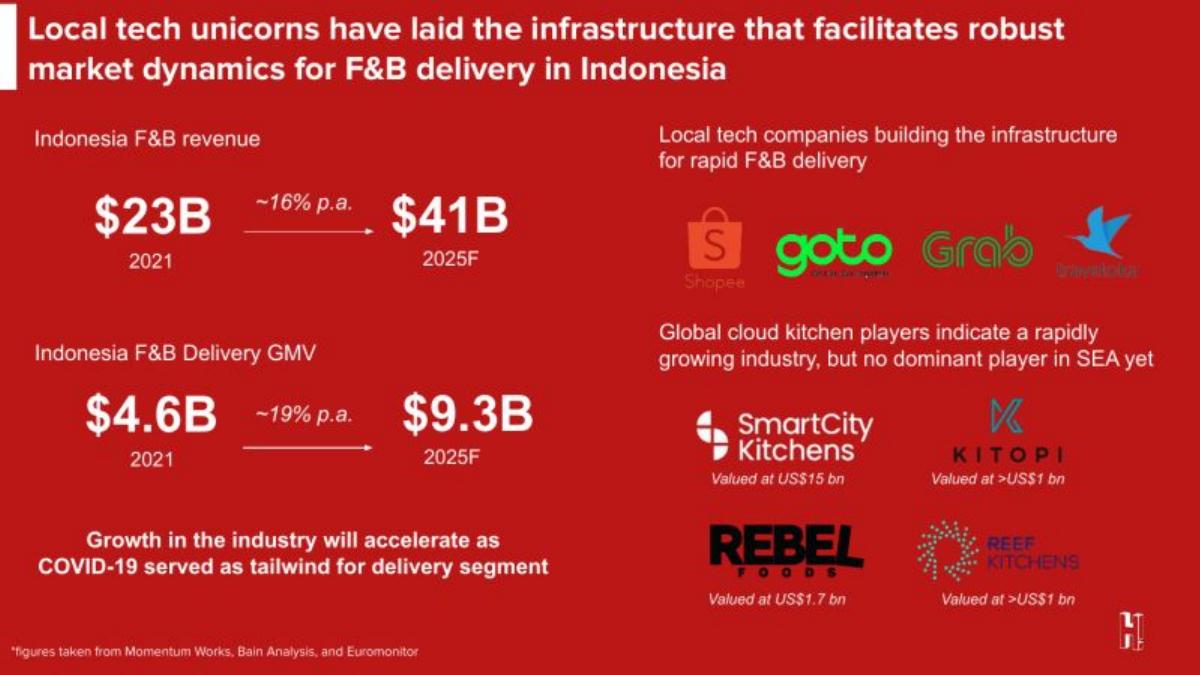
- Indonesia's F&B delivery GMV is projected to grow at 19% p.a. to reach $9.3B by 2025 (Slide 3).
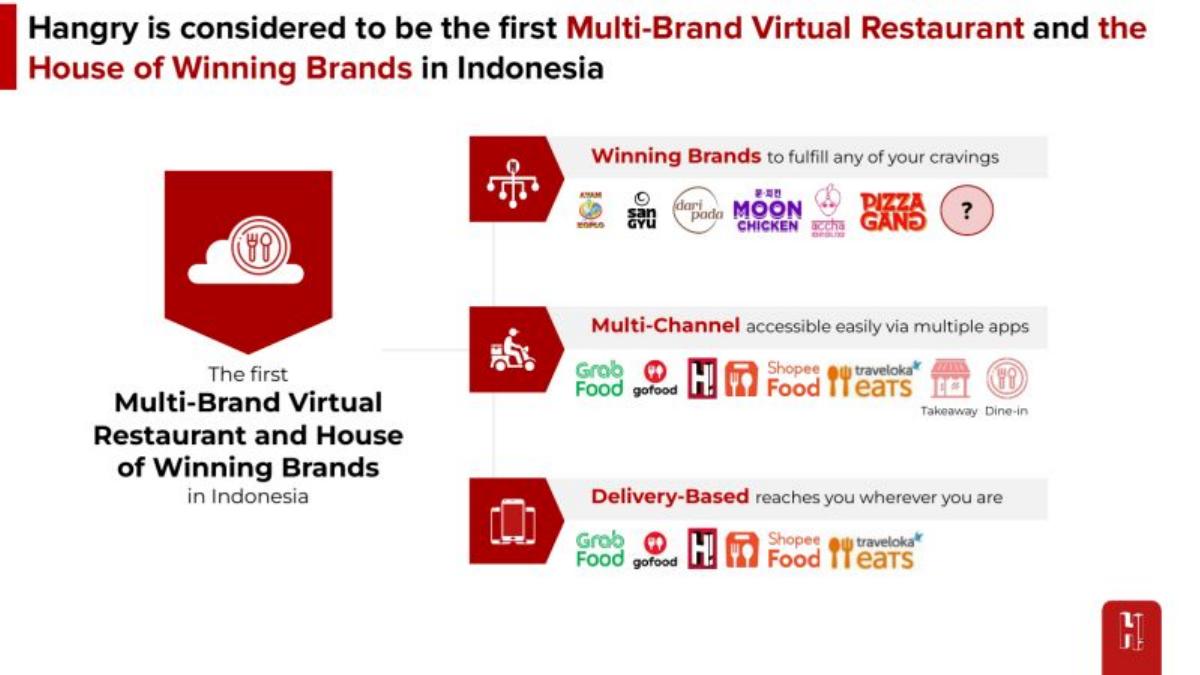
- Hangry identifies as the first Multi-Brand Virtual Restaurant and 'House of Winning Brands' in Indonesia (Slide 4).
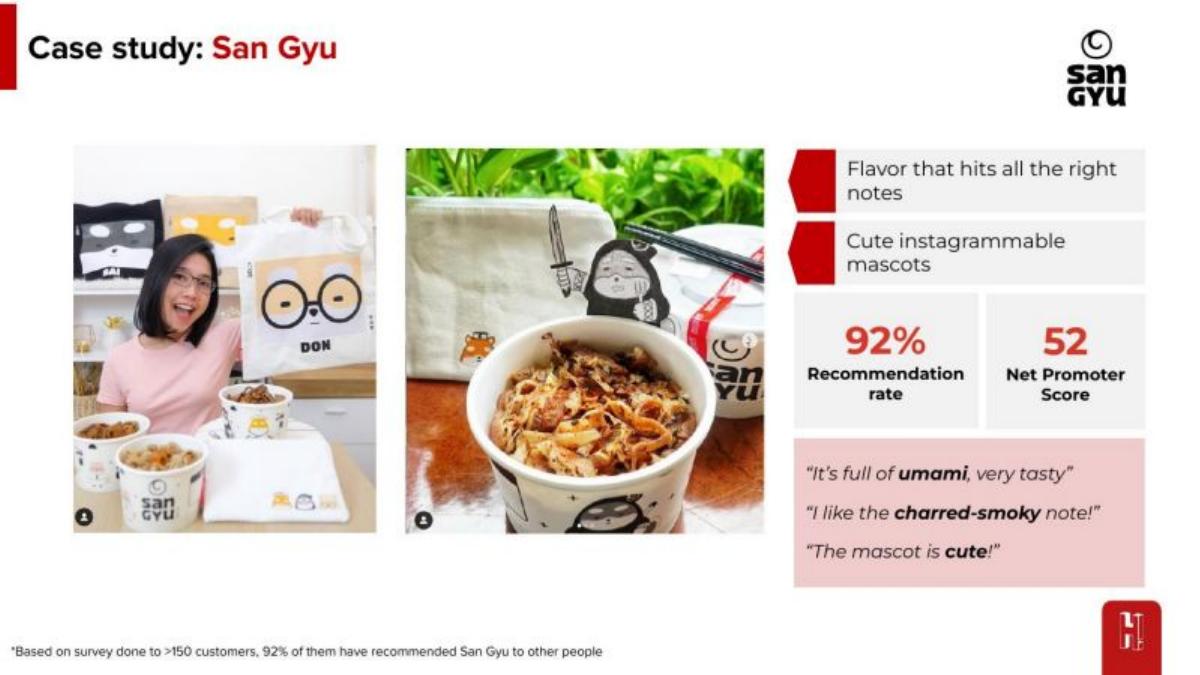
- The brand San Gyu achieved a 92% recommendation rate and an NPS of 52 based on a survey of over 150 customers (Slide 5).
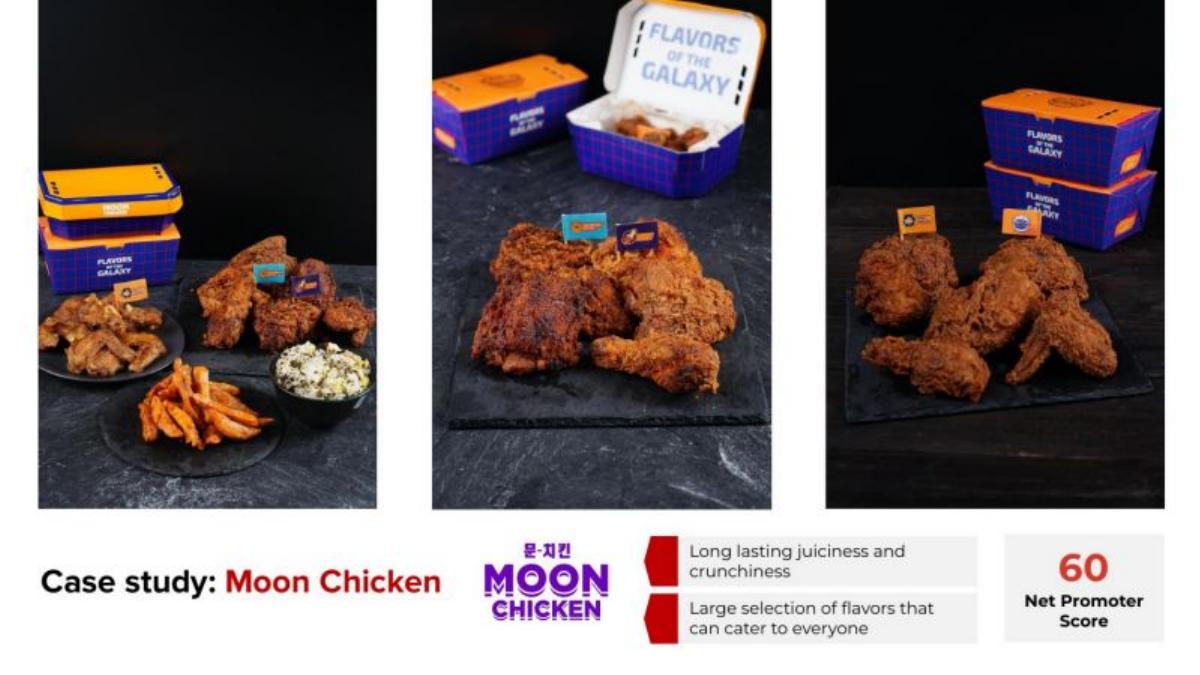
- Moon Chicken maintains a high Net Promoter Score of 60, emphasizing product quality like 'juiciness and crunchiness' (Slide 6).
- The company scaled from a single outlet in November 2019 to 84 outlets by April 2022 (Slide 10).
- Hangry utilizes a dual-funding model for physical expansion, including venture capital and equity crowdfunding platforms like LandX and CrowdDana (Slide 11).
- The founding team consists of experienced operators from Indonesian tech unicorns like OVO, Shopee, and Tokopedia (Slide 13).
- The deck omits a specific breakdown of unit economics, burn rate, or the explicit dollar amount sought in the current raise (Slides 1-15).
Introduction and Vision
Slides 1-2: The Brand Identity
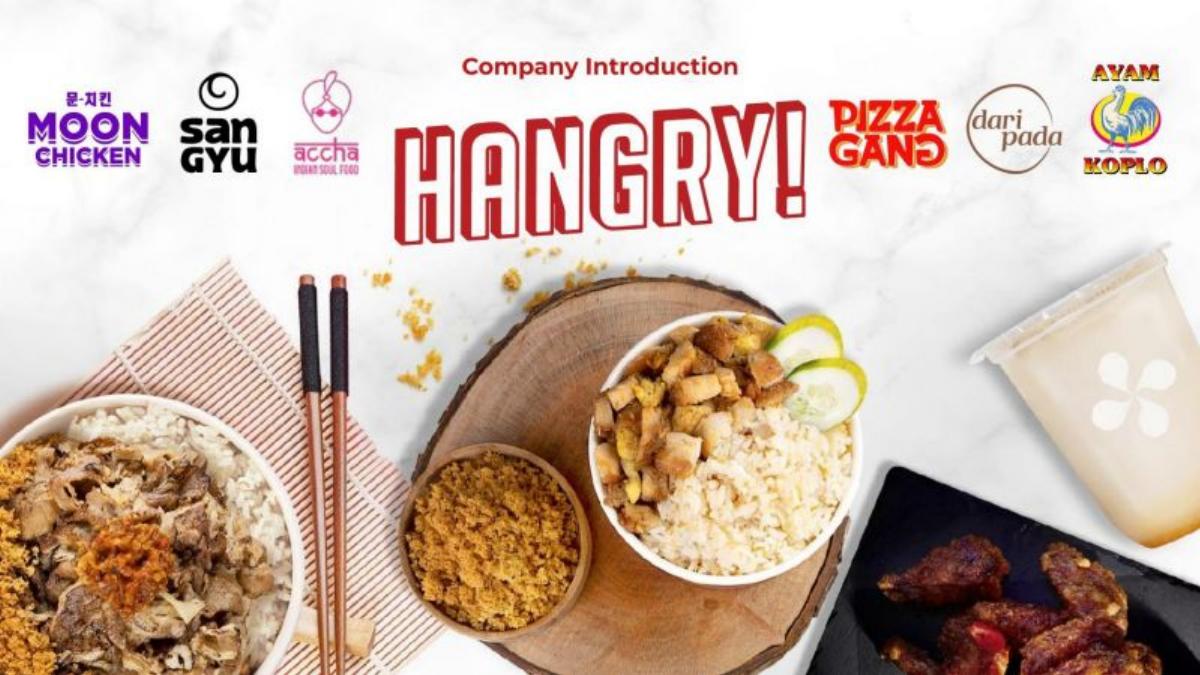
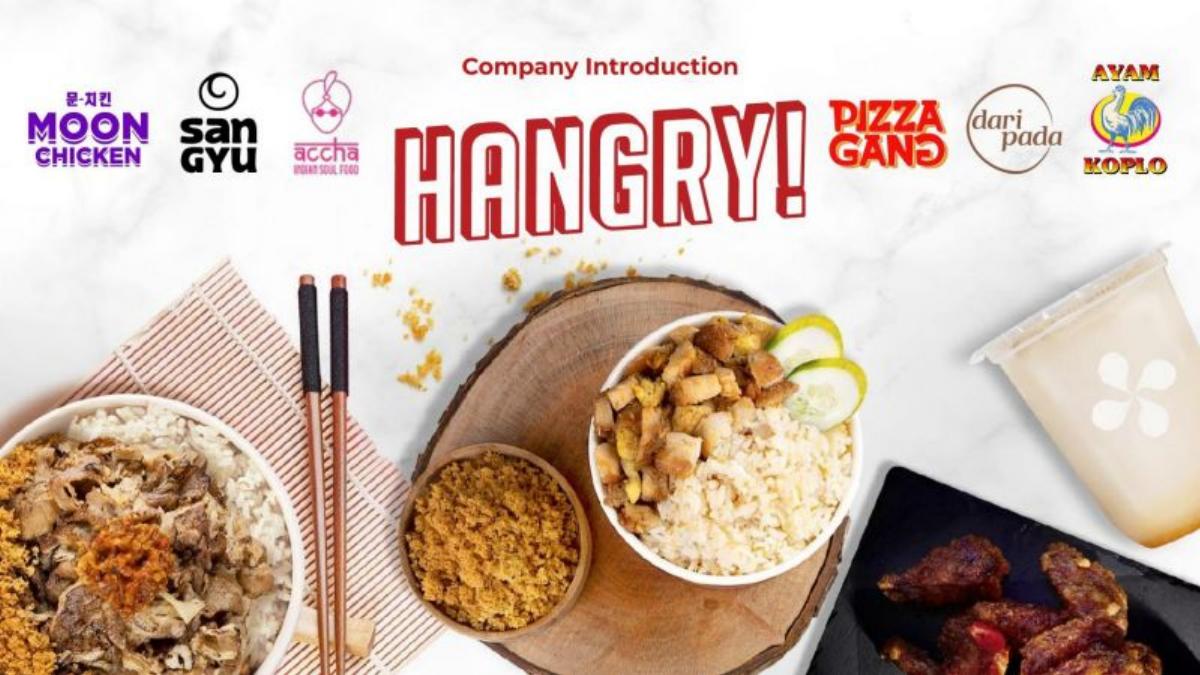
Slide 1 introduces Hangry! alongside its portfolio of brands: Moon Chicken, San Gyu, Accha, Pizza Gang, Dari Pada, and Ayam Koplo. The visual emphasis is on the food itself, signaling a product-first approach. Slide 2 establishes the high-level vision: "Becoming a part of global citizens' daily lives." While the vision is broad, the subsequent slides immediately ground this in the specific Indonesian context.
Market Opportunity
Slide 3: The Indonesian F&B Landscape
This slide provides the macro-economic justification for the business. It cites Indonesia F&B revenue growing from $23B in 2021 to a projected $41B in 2025 (a 16% p.a. increase). More importantly for a virtual restaurant, it highlights F&B Delivery GMV , which is expected to double from $4.6B to $9.3B in the same period. The slide also notes that local tech unicorns like Shopee, GoTo, Grab, and Traveloka have already built the necessary delivery infrastructure. By listing global cloud kitchen players like Kitopi and Rebel Foods , Hangry positions itself within a proven global category that lacks a dominant Southeast Asian leader.
The Solution and Business Model
Slide 4: The Multi-Brand Virtual Restaurant
Hangry defines itself as the "first Multi-Brand Virtual Restaurant and the House of Winning Brands in Indonesia." The slide breaks down the model into three pillars: Winning Brands (diverse cravings), Multi-Channel (accessible via GrabFood, GoFood, ShopeeFood, etc.), and Delivery-Based (reach anywhere). This slide is crucial as it explains how they leverage a single operational footprint to serve multiple consumer segments simultaneously.
Brand Case Studies
Slides 5-8: Proof of Concept
Hangry uses these slides to prove that their brands aren't just placeholders, but actual 'winning' products. San Gyu (Slide 5) boasts a 92% recommendation rate and an NPS of 52 . Moon Chicken (Slide 6) shows a higher NPS of 60 , focusing on product attributes like "juiciness and crunchiness." Accha (Slide 7), an Indian soul food brand, shows an NPS of 48 and emphasizes localization for the Indonesian palate. Slide 8 introduces Pizza Gang as an upcoming launch, highlighting a "special dough recipe." These slides serve to mitigate the risk that a multi-brand strategy might lead to mediocre quality across the board.
Traction and Roadmap
Slide 9: The Journey So Far
This timeline slide tracks the company's progress from November 2019 (launch of initial brands) to March 2022 . Key milestones include a $3M Seed round led by Sequoia Capital's Surge (Jan 2020), a $13M Series A led by Alpha JWC (Apr 2021), and the $22M Series A2 led by JCP (Mar 2022). The timeline also shows geographic expansion to Bandung, Surabaya, Semarang, Medan, and Makassar.
Slide 10: Outlet Growth
The traction is quantified here: Hangry grew from 1 outlet in Nov-19 to 84 outlets in Apr-22 . They set a target to reach 132 outlets by the end of 2022 . This represents a massive operational undertaking and serves as a testament to the team's ability to execute at scale.
Operational Strategy
Slide 11: Innovative Funding for Expansion
This is one of the most unique slides in the deck. It explains how Hangry fuels expansion through Partnership Schemes (individual investors) and Equity Crowdfunding (retail investors via LandX and CrowdDana). By allowing retail investors to participate for as little as $100 , Hangry creates a community-backed expansion model that reduces their reliance on institutional venture capital for every new physical location.
Slide 12: Recent Successes
A summary slide that reiterates recent wins: the $22M Series A2 , the acquisition of Accha , the launch of Pizza Gang , and the opening of a flagship store, Moon Chicken Station Senopati . This slide emphasizes that the company is growing "on all fronts," including M&A and physical retail, not just delivery.
The Team
Slide 13: The Founders
The deck concludes its persuasive argument with the team. Abraham Viktor (CEO) is a serial entrepreneur with a successful exit (Taralite to OVO). Andreas Resha (President) has experience scaling teams to 600 members. The rest of the C-suite (CTO, CBO, COO, CFO) brings deep experience from Shopee, OVO, JPMorgan, and SoftBank Investments . This is a high-pedigree team that signals to investors that the company is in "experienced hands."
Closing
Slides 14-15: Final Vision and Contact
Slide 14 returns to the emotional hook: "Making moments delightful." Slide 15 is a standard contact page. Notably, there is no "Ask" slide detailing how the $22M will be spent, though the catalogue facts suggest the round was already closed or in final stages at the time of this deck's circulation.
What Works in This Deck
Strong Market Context: By linking their growth to the infrastructure laid by Gojek and Grab, they show they are riding a wave rather than swimming against a current. · Brand Validation: Using NPS and recommendation rates for individual brands (Slides 5-7) provides quantitative proof of product-market fit for their specific food offerings. · Operational Velocity: The jump from 1 to 84 outlets in 30 months is a powerful metric that speaks to the team's execution capability. · Founder Pedigree: The team slide is excellent, highlighting specific exits and relevant experience in the exact market they are targeting.
What Is Missing
Unit Economics: There is no mention of Contribution Margin, Customer Acquisition Cost (CAC), or Lifetime Value (LTV). For a delivery-heavy business, these are critical for long-term sustainability. · Profitability Timeline: While expansion is clear, the path to profitability is not addressed. · The Ask: The deck does not explicitly state what they are looking for in terms of a specific dollar amount or valuation, though the catalogue notes a $22M raise. · Competitive Moat: While they mention being the "first," they don't deeply explore how they will defend against well-funded global competitors like Rebel Foods as they enter the region.
Founder Lessons
Leverage Macro Tailwinds: If your industry is benefiting from a massive shift (like the rise of delivery apps in Indonesia), make that the centerpiece of your market slide. · Use NPS for Non-SaaS Products: Hangry proves that Net Promoter Scores aren't just for software. Using them for food brands gives investors a familiar metric to judge customer satisfaction. · Show, Don't Just Tell, Execution: The outlet growth chart (Slide 10) is much more effective than simply saying "we are growing fast." · Diversify Your Capital: The mention of equity crowdfunding (Slide 11) is a great example of how startups can think creatively about financing physical assets without diluting core equity at the same rate.
Frequently asked questions
- What is Hangry's core business model?
- Hangry operates as a 'House of Winning Brands,' which is a multi-brand virtual restaurant model. They develop or acquire food brands—such as Moon Chicken and San Gyu—and fulfill orders through a network of delivery-first outlets. This allows them to capture multiple market segments (Japanese, Fried Chicken, Indian, Pizza) from a single kitchen infrastructure, maximizing efficiency and market share across delivery platforms like GrabFood and GoFood.
- How does Hangry fund its rapid physical expansion?
- Beyond traditional venture capital rounds (like their $22M Series A2), Hangry uses a 'Partnership Scheme' and 'Equity Crowdfunding.' The partnership scheme involves individuals investing in entire outlets, while the crowdfunding model allows retail investors to contribute as little as $100 through platforms like LandX. This diversified capital strategy enables them to scale physical locations without solely relying on their primary balance sheet.
- What metrics does Hangry use to prove brand success?
- Hangry relies heavily on Net Promoter Scores (NPS) and recommendation rates to validate their brands. For instance, Moon Chicken is cited with an NPS of 60, and San Gyu has a 92% recommendation rate. These qualitative metrics are used to demonstrate that their 'virtual' brands have real-world staying power and customer loyalty comparable to traditional brick-and-mortar establishments.
- Who are the key competitors mentioned in the deck?
- The deck lists global cloud kitchen players to show industry growth but notes there is 'no dominant player in SEA yet.' Competitors mentioned include SmartCity Kitchens (valued at $15B), Kitopi (>$1B), Rebel Foods ($1.7B), and Reef Kitchens (>$1B). By highlighting these billion-dollar global peers, Hangry positions itself as the logical local winner for the Indonesian market.
- What is the background of the founding team?
- The team is composed of 'pioneer wave' entrepreneurs from the Indonesian tech ecosystem. CEO Abraham Viktor founded Taralite (acquired by OVO), and President Andreas Resha held leadership roles at Cermati and Jurnal. Other members bring experience from Shopee and JPMorgan. This 'battle-tested' pedigree is a central pillar of their pitch, suggesting they have the operational expertise to handle rapid scaling.