Handspring Health’s 2022 Seed deck is a masterclass in establishing founder-market fit and clinical credibility. By leading with a team that possesses deep roots in healthcare giants like Cigna and UnitedHealth, the company positions itself as an insider capable of navigating complex payer landscapes. The deck identifies a specific market gap: while many startups have moved to virtual-only mental health, Handspring argues that pediatric care requires a hybrid, 'omnichannel' approach to address higher-acuity cases and younger children. The presentation successfully balances the emotional weigh…
Key takeaways
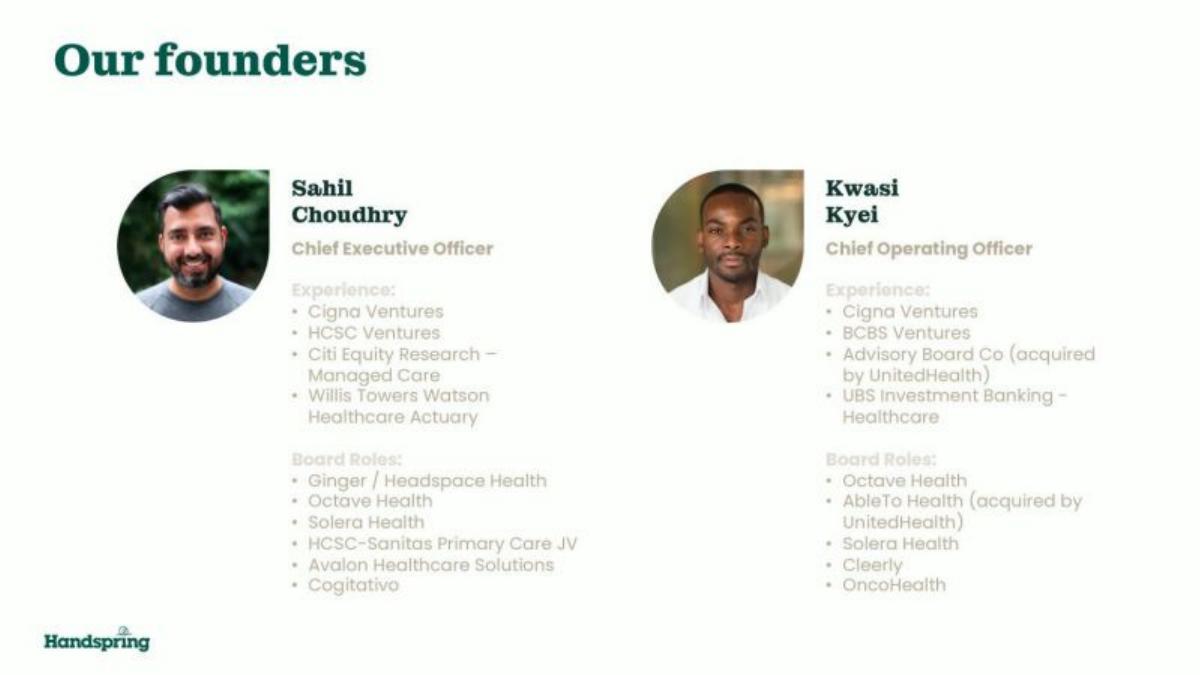
- The founders leverage deep institutional experience from Cigna Ventures and HCSC to establish immediate trust (Slide 3).
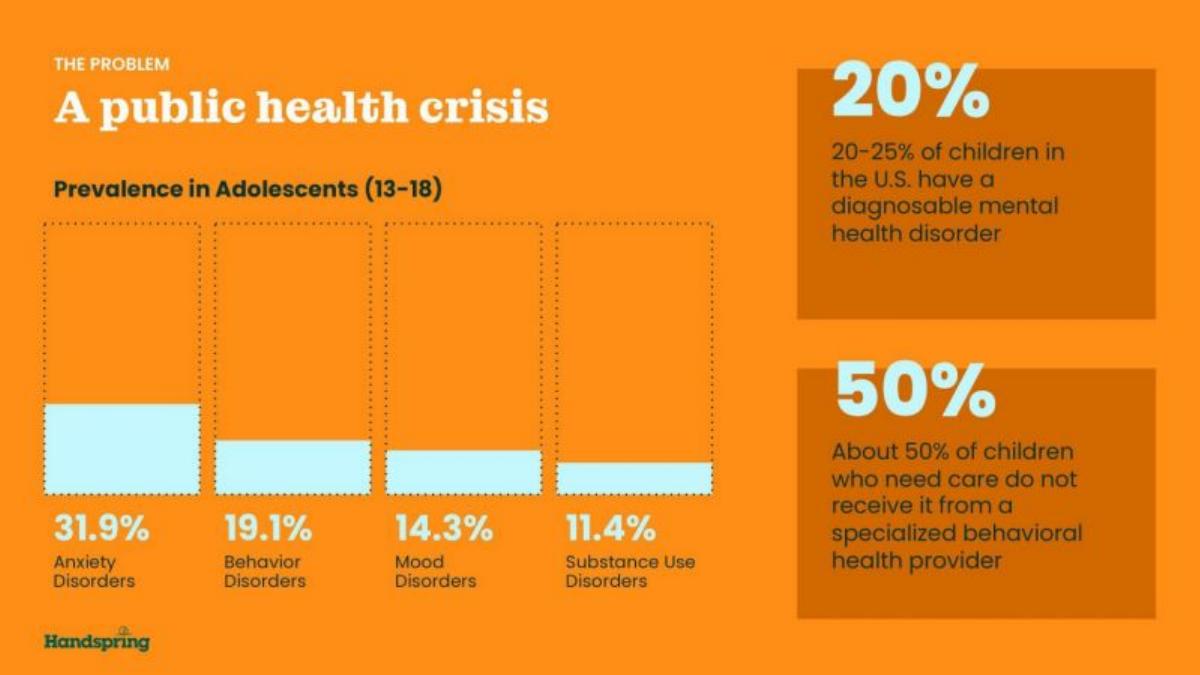
- The deck identifies a massive market opportunity, noting that 20-25% of U.S. children have a diagnosable mental health disorder (Slide 6).
- A significant portion of the pitch focuses on the 'silent pandemic,' highlighting that 24-28% of total behavioral health spend is for those 18 and under (Slide 7).
- Handspring differentiates itself by rejecting the 'virtual-only' trend, arguing that in-person care is essential for younger children and higher acuity (Slide 13).
- The company positions its hybrid model as a 'low CAPEX' advantage because behavioral health clinics require only 'rooms and couches' rather than expensive medical equipment (Slide 13).
- The deck outlines a clear expansion roadmap from ADHD and anxiety into eating disorders, autism, and addiction (Slide 11).
- There is a notable absence of financial projections, current revenue, or specific unit economics in this version of the deck.
- The 'ask'—the specific amount of capital being raised and its intended use—is omitted from the final slides (Slide 15).
The Strategy of Clinical Credibility
Handspring Health’s pitch deck is a focused, professional document that prioritizes clinical outcomes and founder experience over the 'growth at all costs' narrative typical of many tech startups. In the 2022 market, where virtual-only mental health platforms were proliferating, Handspring used this deck to make a contrarian bet: that the future of pediatric mental health is hybrid. By emphasizing their 'omnichannel' approach, they successfully raised $6.2M to build a network of clinics that combine physical presence with digital tools.
Slides 1-2: Mission and Identity
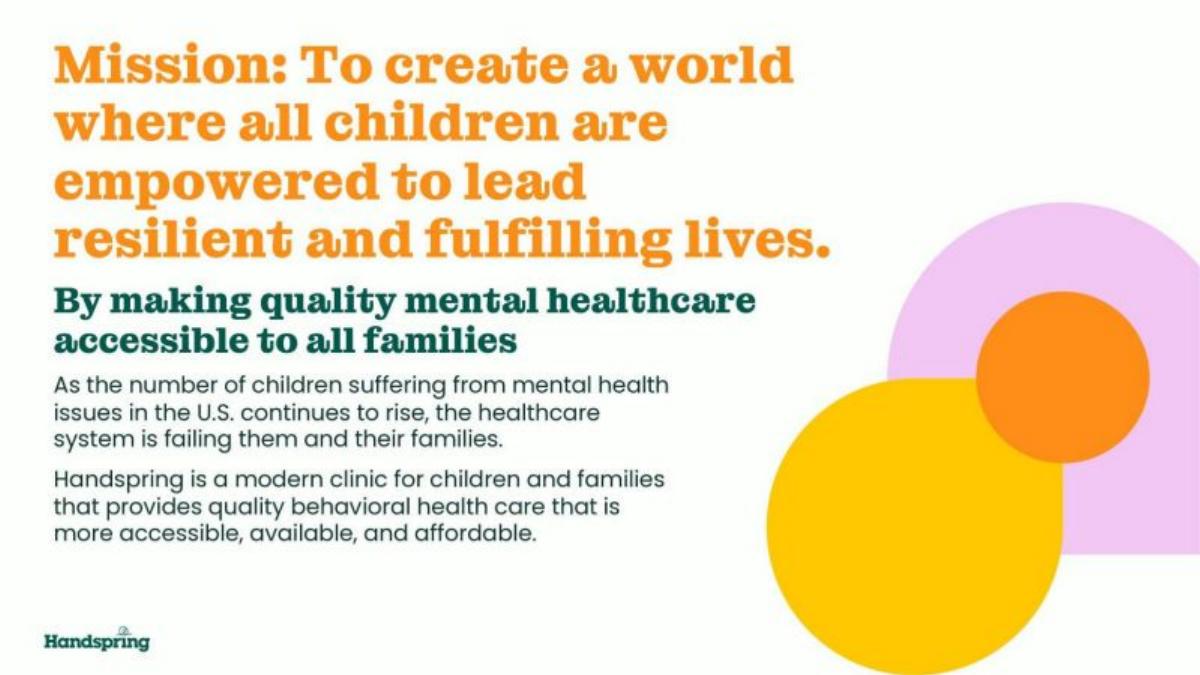
The deck opens with a clean title slide (Slide 1) stating their purpose: "Behavioral health care for all children." This is immediately followed by a mission statement on Slide 2 that defines the company as a "modern clinic for children and families." Notably, they use the word "clinic" rather than "platform" or "app," signaling a commitment to the delivery of actual medical services. They define their value proposition through three pillars: accessibility, availability, and affordability.
Slides 3-5: The Power of the Payer-Centric Team
One of the strongest sections of this deck is the team introduction. Slide 3 introduces Sahil Choudhry (CEO) and Kwasi Kyei (COO). Their resumes are heavy with institutional healthcare names: Cigna Ventures, HCSC Ventures, BCBS Ventures, and UnitedHealth. For a healthcare startup, this is a massive advantage. It tells investors that the founders understand how to get paid by insurance companies—the single biggest hurdle in healthcare scaling.
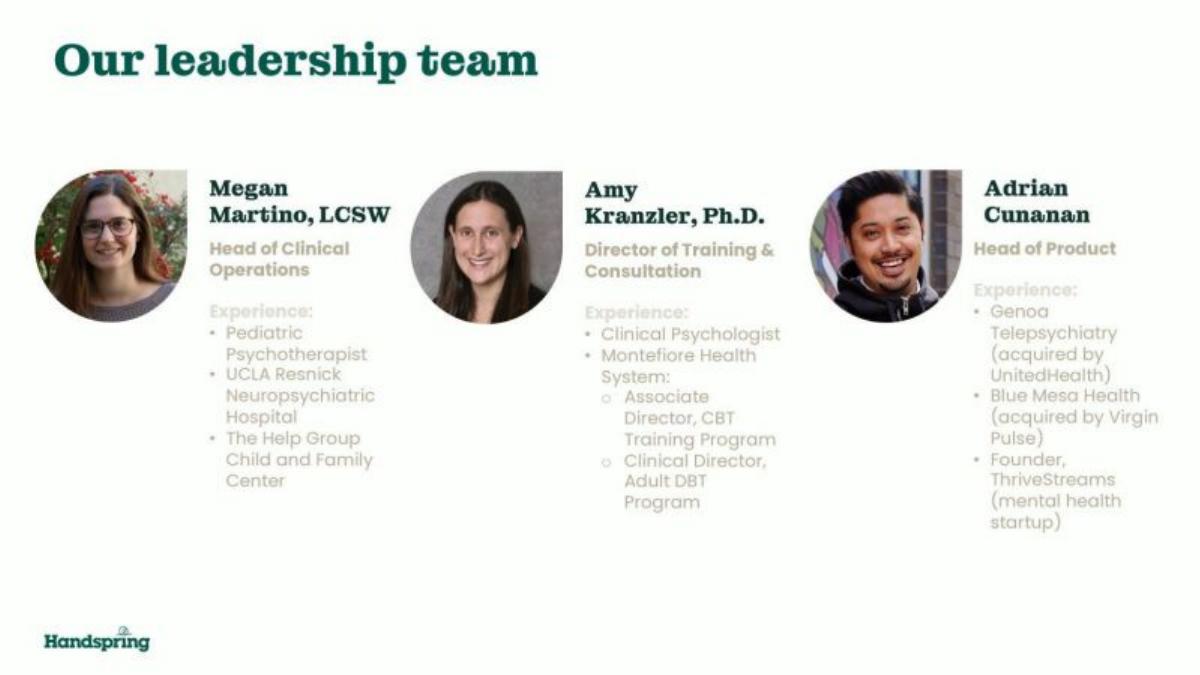
Slide 4 and Slide 5 round out the leadership and advisors. They include clinical experts like Megan Martino, LCSW, and Amy Kranzler, Ph.D., alongside industry veterans like Doug Ghertner (CEO of IVX Health). By placing the team so early in the deck, Handspring establishes that they have the 'right' to win in this complex regulated space before they even explain the market problem.
Slides 6-8: Quantifying the Youth Mental Health Crisis
The problem statement is divided into three parts. Slide 6 uses stark statistics to define the "public health crisis," noting that 20% of children have a diagnosable disorder and 50% of those in need do not receive specialized care. Slide 7 introduces the concept of the "silent pandemic," using commercial insurance data from 2019 and 2020 to show that 24-28% of total behavioral health spend is attributed to those 18 and under. This is a crucial slide for investors because it proves that the market is not just large in terms of patients, but also in terms of existing insurance spend.
Slide 8, titled "Why it matters," identifies the structural failures of the current system: supply shortages (months-long waits), unaffordable care (self-pay burdens), and a lack of appropriate care (pediatricians resorting to medication because they lack referral options). This slide sets up Handspring as the solution to these specific bottlenecks.
Slides 9-10: The Omnichannel Solution
Slide 9 introduces the Handspring model. It is a hub-and-spoke diagram with Handspring at the center, connecting brick-and-mortar clinics, virtual care, insurance acceptance, and evidence-based stepped care. Slide 10 breaks down their services into Digital Care, Psychotherapy, and Psychiatry (the latter noted as coming in late 2022). They also highlight a "Technology Platform" for symptom tracking and member engagement, showing that while they are a clinic, they are still a tech-enabled one.
Slides 11-12: Vision and Core Beliefs
Slide 11 provides a growth roadmap. It starts with common conditions (ADHD, Anxiety) and moves outward toward higher-acuity needs like eating disorders and addiction. This demonstrates a long-term plan to capture the entire pediatric behavioral health market. Slide 12, "Our beliefs," acts as a manifesto. It explicitly states that "Virtual-only models are severely limited" and that "Affordability is key," which means working with payers and the state. This reinforces their focus on the insurance-reimbursement model rather than a high-priced out-of-pocket model.
Slide 13: The Case for Hybrid Care
This is arguably the most important slide in the deck. It explains "Why we're hybrid." Handspring lists four reasons: Appropriate Care (younger kids can't engage over video), Competitive Advantage (competitors are virtual-only), Recruiting Advantage (clinicians want social interaction), and Low CAPEX. The "Low CAPEX" argument is particularly clever; they argue that unlike primary care, mental health clinics only need "rooms and couches," making them relatively cheap to open compared to other medical facilities.
Slides 14-16: Quality and Closing
Slide 14 focuses on their training program, emphasizing "gold standard treatment approaches" and clinician retention. This addresses a major risk in healthcare: provider churn. Slide 15 is a simple "Thank you" with contact information. Slide 16 is a promotional slide for the platform where the deck was hosted and is not part of the Handspring presentation.
What Handspring Health Does Well
1. Founder-Market Fit: The founders' backgrounds in healthcare venture capital and insurance are perfectly aligned with a business model that relies on payer contracts. They don't just know the market; they know the people who write the checks.
2. Clear Differentiation: In a sea of mental health apps, Handspring's insistence on physical clinics is a bold and well-defended differentiator. They provide logical reasons (clinical efficacy for children) and financial reasons (low CAPEX) for this choice.
3. Data-Driven Problem Statement: Using commercial insurance data to show where the money is currently being spent (Slide 7) is much more effective than simply saying "mental health is important."
What is Missing from the Deck
1. Financial Projections: There are no slides showing projected revenue, clinic-level profitability, or the expected timeline to reach break-even for a new location.
2. Unit Economics: For a hybrid model, investors want to see the Cost of Acquisition (CAC) for a patient versus the Lifetime Value (LTV), especially considering the high cost of physical leases and clinician salaries.
3. The Ask: The deck does not specify how much they are raising or how the funds will be allocated (e.g., how many new clinics will $6.2M open?). While this information is often shared in a separate document or during the pitch, its absence in the 'overview presentation' leaves a gap in the narrative.
4. Current Traction: There is no mention of how many clinics are currently open, how many patients have been treated, or any existing payer contracts. The deck feels very much like a 'Day 0' or early-stage vision document.
What Other Founders Should Copy
1. The 'Why Hybrid' Slide: If you are building a business that involves physical infrastructure in a digital world, you must have a slide like Slide 13. It preemptively answers the investor's question: "Why can't this just be an app?"
2. The Payer Perspective: Handspring understands that in healthcare, the patient is the consumer but the insurance company is the customer. Founders should copy the way Handspring aligns its mission with the financial realities of the healthcare system.
3. Specificity in Clinical Scope: Rather than saying they treat "everything," Slide 11 shows a disciplined expansion plan. This builds confidence that the team won't overextend themselves early on.
Frequently asked questions
- How much did Handspring Health raise with this deck?
- According to the catalogue facts, Handspring Health raised $6.2M in a Seed round in 2022. The deck itself serves as an overview presentation for this fundraising effort, though the specific dollar amount is not listed on the slides.
- What is Handspring Health's core business model?
- Handspring Health operates as a 'modern behavioral health clinic' using a hybrid or omnichannel model. This includes both physical brick-and-mortar clinics and a virtual care platform. They differentiate themselves by accepting insurance and focusing specifically on the pediatric population, which they argue requires more specialized care than adults.
- Who are the founders and what is their background?
- The company was co-founded by Sahil Choudhry (CEO) and Kwasi Kyei (COO). Both founders have extensive experience in healthcare venture capital and insurance, with previous roles at Cigna Ventures, HCSC Ventures, and BCBS Ventures. This background suggests a strong focus on the 'payer' side of healthcare.
- What specific problem is the company trying to solve?
- The deck identifies a 'public health crisis' where 50% of children who need mental health care do not receive it from a specialized provider. They highlight three main barriers: a supply shortage leading to months-long waits, unaffordable care due to a lack of in-network providers, and a lack of appropriate pediatric-specific care.
- How does Handspring Health plan to scale?
- Their vision is to build a national multi-specialty pediatric practice. Slide 11 shows a roadmap starting with ADHD, anxiety, and depression, then expanding into OCD, eating disorders, autism, and eventually severe mental illnesses (SMIs) and addiction treatment.