Whylab’s 2020 pre-seed deck is a masterclass in thematic branding, utilizing a consistent 'mental fitness' metaphor to differentiate from traditional therapy apps. The deck identifies a massive gap in mental health prevention, citing that 75% of young adults struggle with their mental well-being (Slide 2). By combining live group workouts with digital coaching, Whylab reports an ARPU of 335€ and a 92% satisfaction rate (Slide 6). While the deck excels at establishing a 'mega trend' and a clear roadmap through 2023, it lacks a specific financial 'ask' or detailed unit economics beyond a single…
Key takeaways
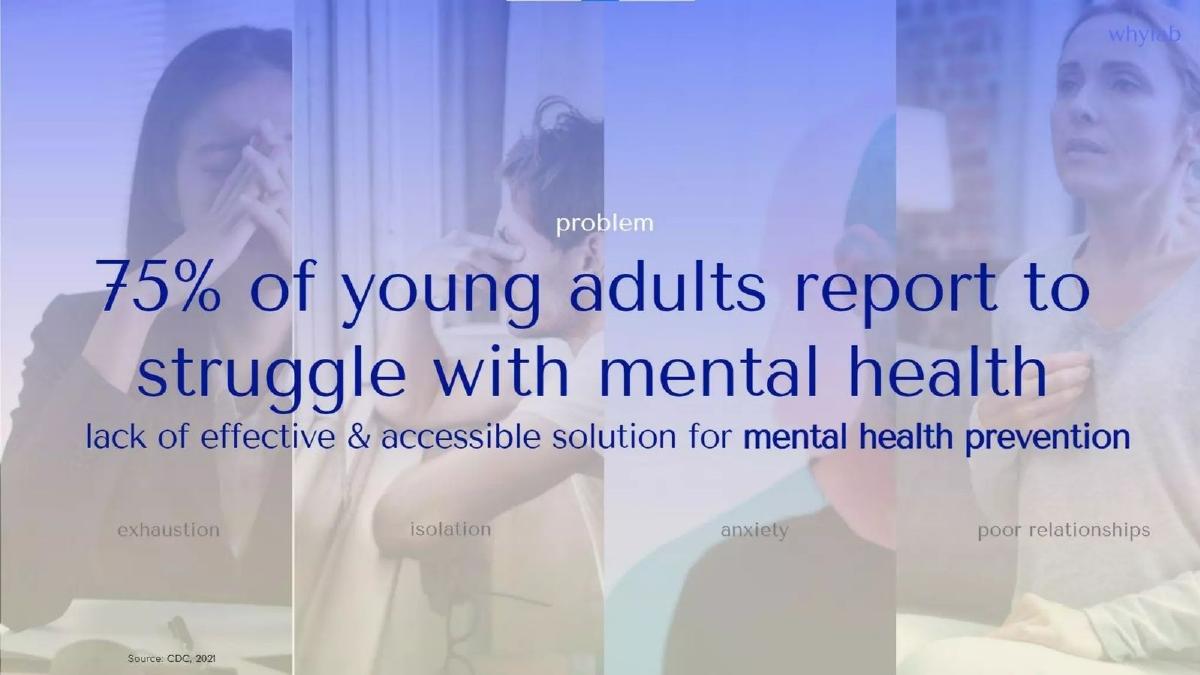
- The problem is framed as a lack of effective prevention, with 75% of young adults reporting mental health struggles (Slide 2).
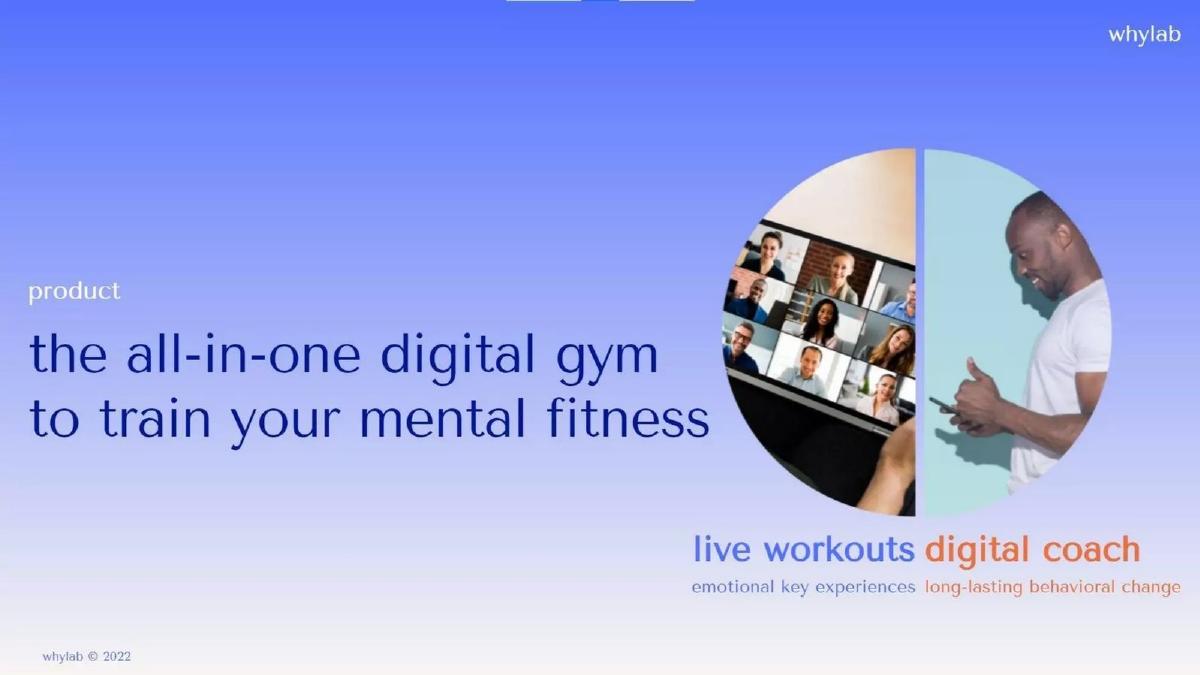
- The product is defined as an 'all-in-one digital gym' featuring live workouts and digital coaching (Slide 4).
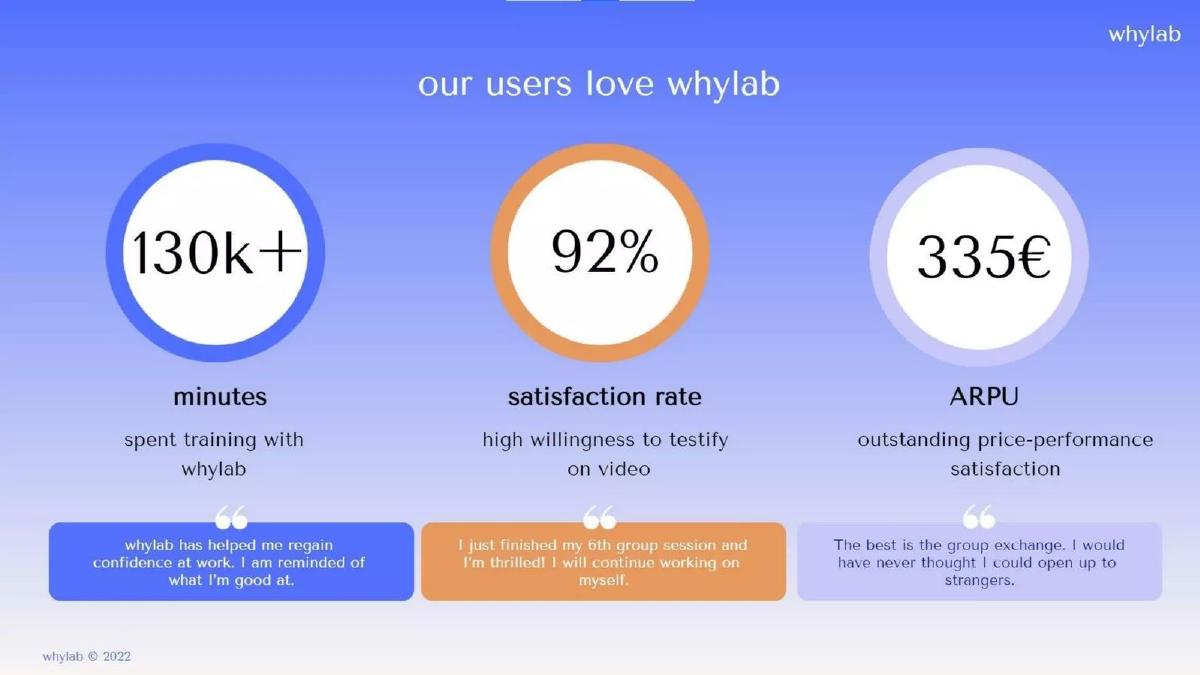
- Early traction is demonstrated by 130k+ minutes spent training and a 92% user satisfaction rate (Slide 6).
- The company reports an Average Revenue Per User (ARPU) of 335€ (Slide 6).
- Whylab estimates a Total Addressable Market (TAM) of 120 billion Euros for the global mental wellness industry (Slide 9).
- The roadmap outlines a transition from B2C focus in 2022 to a B2B roll-out and Series A in 2023 (Slide 10).
- The founding team features backgrounds from high-tier consulting and tech firms including BCG, Rocket Internet, and Accenture (Slide 11).
- The deck omits a specific funding target or 'the ask' for the current round (Slide 12).
The Hook: Reimagining Mental Health as Fitness
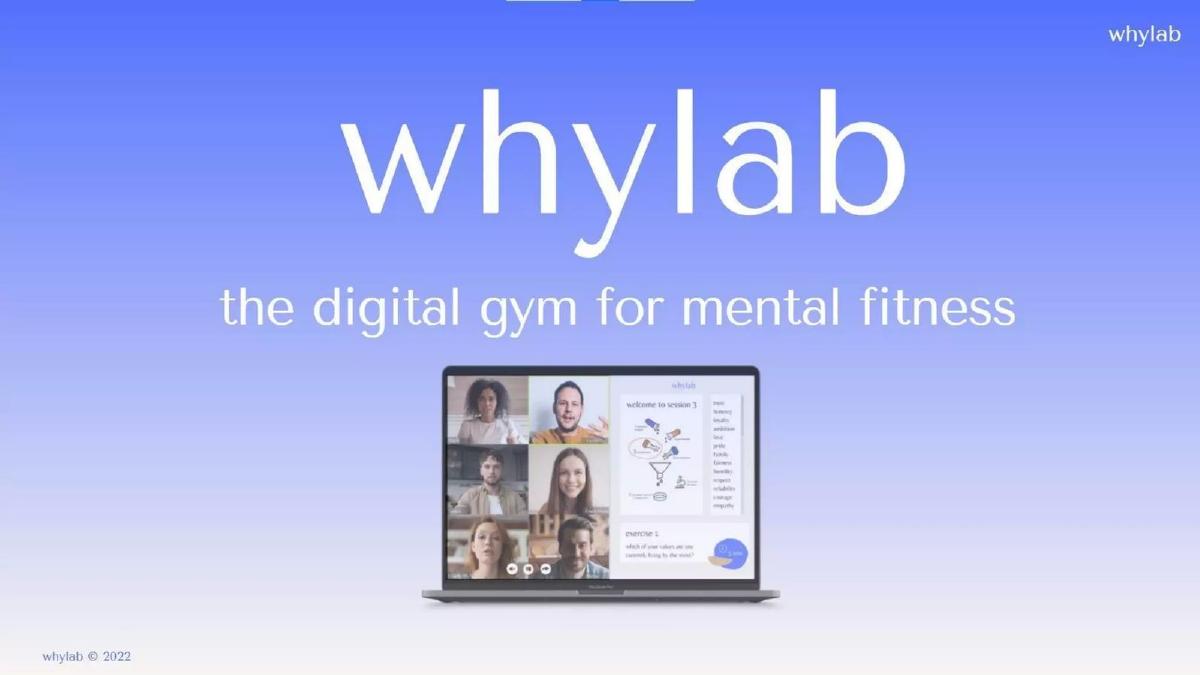
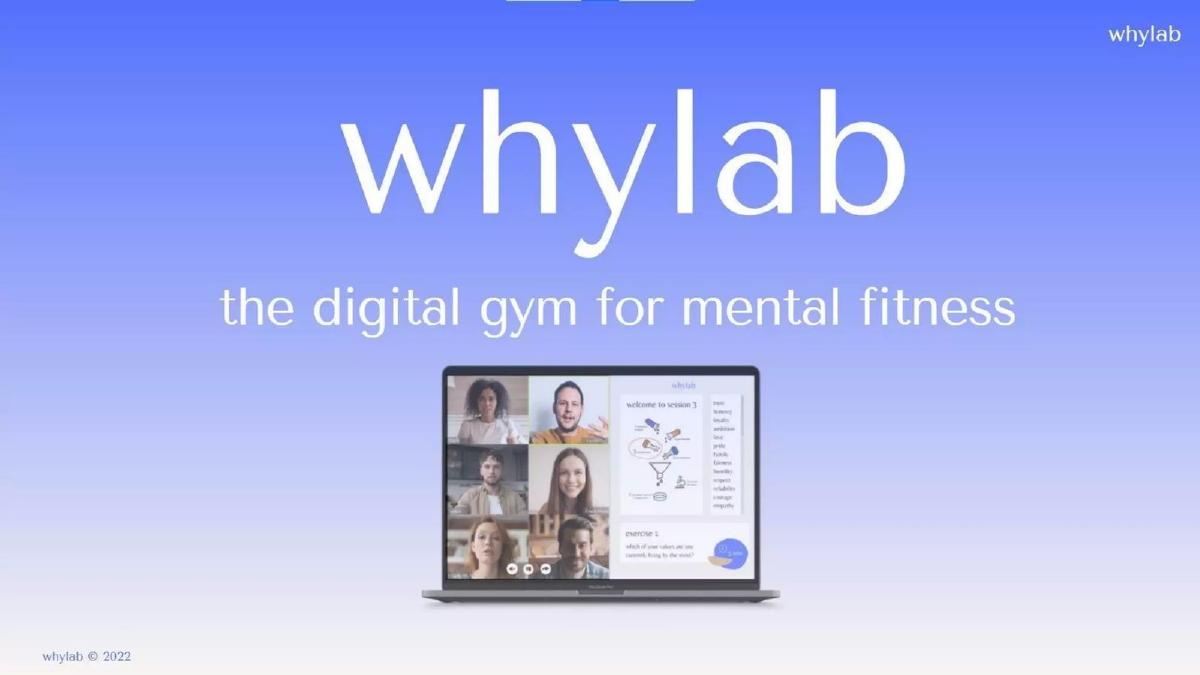
Whylab enters the crowded mental health space with a distinct linguistic pivot. By calling themselves a "digital gym for mental fitness" on Slide 1 , they immediately move the conversation away from the clinical, often stigmatized world of therapy and into the aspirational world of self-improvement. The cover slide features a laptop screen showing a Zoom-style group session, signaling that this is a social, live experience rather than a solitary meditation app.
Defining the Problem and Solution
Slide 2 establishes the urgency. It cites a CDC 2021 source stating that "75% of young adults report to struggle with mental health." The slide identifies four symptoms: exhaustion, isolation, anxiety, and poor relationships. Crucially, it defines the gap not as a lack of doctors, but as a "lack of effective & accessible solution for mental health prevention."
Slide 3 introduces the solution: the concept that "mental fitness prevents severe mental health issues." It draws a direct parallel to physical fitness, suggesting that the mind, like the body, can be trained effectively. This is a strategic move to lower the barrier to entry for users who might not feel they need "therapy" but are comfortable with "training."
Product Mechanics and User Experience
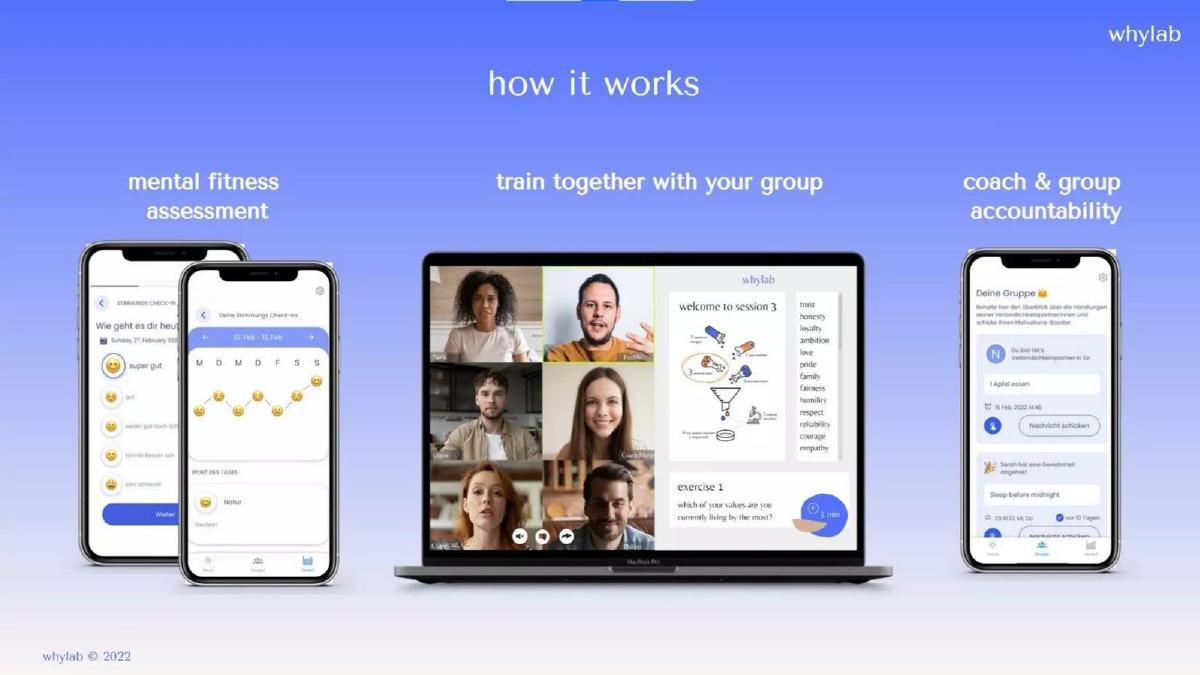
Slide 4 and Slide 5 dive into the product. The platform is described as an "all-in-one digital gym" combining "live workouts" for emotional experiences and a "digital coach" for behavioral change. Slide 5 provides the most detail on the user journey, showing three distinct app interfaces: mental fitness assessment (a mood tracker), train together with your group (a video call interface with interactive exercises), and coach & group accountability (a habit tracker with social features like "Nik's accountability partner"). This suggests a hybrid model of synchronous and asynchronous engagement.
Traction and Validation
Slide 6 is the "proof" slide. It lists three impressive figures: 130k+ minutes spent training, a 92% satisfaction rate , and an ARPU of 335€ . The ARPU figure is particularly notable for a pre-seed stage company, suggesting a high-ticket subscription or course-based model rather than a low-cost mass-market app. The slide also includes testimonials that emphasize the social aspect, with one user noting they "would have never thought I could open up to strangers."
Mission and Market Context
Slide 7 and Slide 8 zoom out to the broader vision. The mission is stated as becoming the "mental fitness companion enabling a happier and healthier society." Slide 8 uses a honeycomb graphic to illustrate the "mega trend" of mental wellness. It lists external factors such as "stigma decreases," "law regulation loosen up," "technology advances (AI, voice)," and "COVID-19 isolates." This slide serves to convince investors that Whylab is riding a wave of inevitable cultural and regulatory change.
Market Size and Financial Opportunity
Slide 9 quantifies the opportunity using the standard TAM/SAM/SOM framework. They claim a TAM of 120 billion Euros for the global mental wellness industry and a SAM of 90 billion Euros for the mental wellness budget among young adults in developed countries. Their SOM is 4.5 billion Euros , which they define as a "market share of 5% after 5 years." While the 5% market share assumption is aggressive, the 90 billion Euro SAM indicates a massive target demographic.
The Roadmap and Team
Slide 10 presents a linear timeline. In 2022, the focus is on the DACH region (Germany, Austria, Switzerland), a B2C focus, and a Seed round. By 2023, they plan to roll out in Northern Europe, move into B2B, and raise a Series A. This roadmap shows a clear progression from a consumer-first product to an enterprise-grade health benefit.
Slide 11 introduces the founders. The team has high "pedigree"—a term often used by VCs to describe founders from top-tier firms. Sarah Reitz (Chief Psychologist) brings clinical credibility and a background at BCG and Columbia University. Luca Lea Kleene (Strategy & Operations) comes from Rocket Internet and Accenture. Nikola Berkmann (Product & Tech) also has Accenture and ESCP experience. This combination of clinical expertise, operational scaling (Rocket Internet), and corporate strategy (BCG/Accenture) is a strong signal for a pre-seed investment.
What Works in This Deck
The Metaphor: The "Digital Gym" framing is consistent throughout and helps the investor immediately categorize the product without needing a complex technical explanation. · Visual Clarity: The deck uses a clean, blue-gradient aesthetic that feels professional and "calm," fitting for a mental health startup. · Traction Metrics: Including a specific ARPU (335€) on Slide 6 is a bold and effective way to show that users are willing to pay significant money for this service. · Team Credibility: The logos on Slide 11 (BCG, Rocket Internet, Accenture) do a lot of heavy lifting in establishing that the founders have the professional discipline to execute.
What Is Missing
The Ask: Slide 12 is a contact slide, but nowhere in the deck does it state how much money they are raising or what the valuation expectations are. This is a significant omission for a fundraising document. · Unit Economics: While ARPU is provided, there is no mention of Customer Acquisition Cost (CAC). In the crowded wellness space, CAC is often the factor that kills startups. · Competitive Landscape: The deck assumes a vacuum. There is no mention of Calm, Headspace, or more clinical competitors like Lyra or BetterHelp. Investors need to know why Whylab wins against these incumbents. · Retention Data: 130k minutes is a good start, but for a "gym" model, investors want to see cohort retention—how many people who start in Month 1 are still "training" in Month 6?
What a Founder Should Copy
The Problem Framing: Start with a massive, undeniable statistic (the 75% figure on Slide 2 ) and then narrow it down to a specific, solvable gap (prevention). · The "How it Works" Slide: Slide 5 is excellent because it shows the product in three different contexts (assessment, group, and habit tracking), giving a full picture of the user experience in one glance. · The Mega Trend Slide: Slide 8 is a great way to show "Why Now?" without using those exact words. It shows that the startup is the logical conclusion of several converging social and technological forces.
Frequently asked questions
- What is Whylab's core product offering?
- Whylab offers a platform they describe as a 'digital gym for mental fitness.' According to slide 4 and 5, this includes three primary components: a mental fitness assessment, live group training sessions (workouts), and a digital coach for group accountability. The goal is to move mental health from a reactive clinical model to a proactive, training-based model.
- How does Whylab justify the market opportunity?
- The deck uses a 'Mega Trend' slide (Slide 8) to list drivers like decreasing stigma, COVID-19 isolation, and technological advances. They quantify this on slide 9 with a TAM of 120 billion Euros for global mental wellness and a SAM of 90 billion Euros specifically for the mental wellness budget among young adults in developed countries.
- What evidence of traction does the deck provide?
- Slide 6 highlights three key metrics: over 130,000 minutes spent training on the platform, a 92% satisfaction rate, and an ARPU (Average Revenue Per User) of 335€. It also includes qualitative user testimonials regarding increased confidence and the value of group exchange.
- Who are the founders of Whylab?
- The team consists of three leaders: Sarah Reitz (Chief Psychologist), Luca Lea Kleene (Strategy & Operations), and Nikola Berkmann (Product & Tech). Their experience includes roles at BCG, Rocket Internet, and Accenture, and education from Columbia University and ESCP Business School (Slide 11).
- What is missing from the Whylab pitch deck?
- The deck is missing a clear financial 'ask'—it does not state how much capital is being raised or the intended use of funds. It also lacks a detailed competitor analysis and specific unit economics beyond ARPU, such as Customer Acquisition Cost (CAC) or churn rates.