The Waze pitch deck represents a strategic pivot from pure navigation utility to a sophisticated advertising ecosystem. With 30 million monthly active users in the U.S. spending an average of 41 minutes per drive, Waze presents a compelling case for the 'in-car channel' as the missing piece in the Google Ads ecosystem. The deck heavily emphasizes its synergy with traditional Out-of-Home (OOH) advertising, claiming a 3x navigation lift when drivers are exposed to both billboards and Waze ads. By leveraging high-intent data like destination, proximity, and travel patterns, Waze positions itself…
Key takeaways
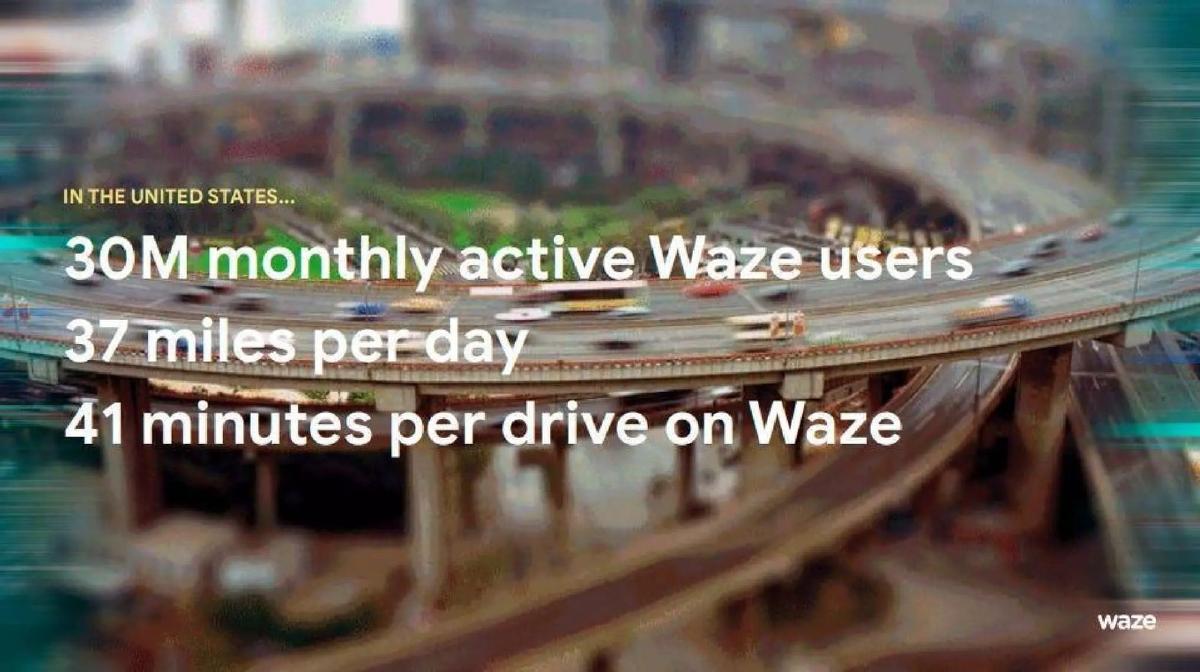
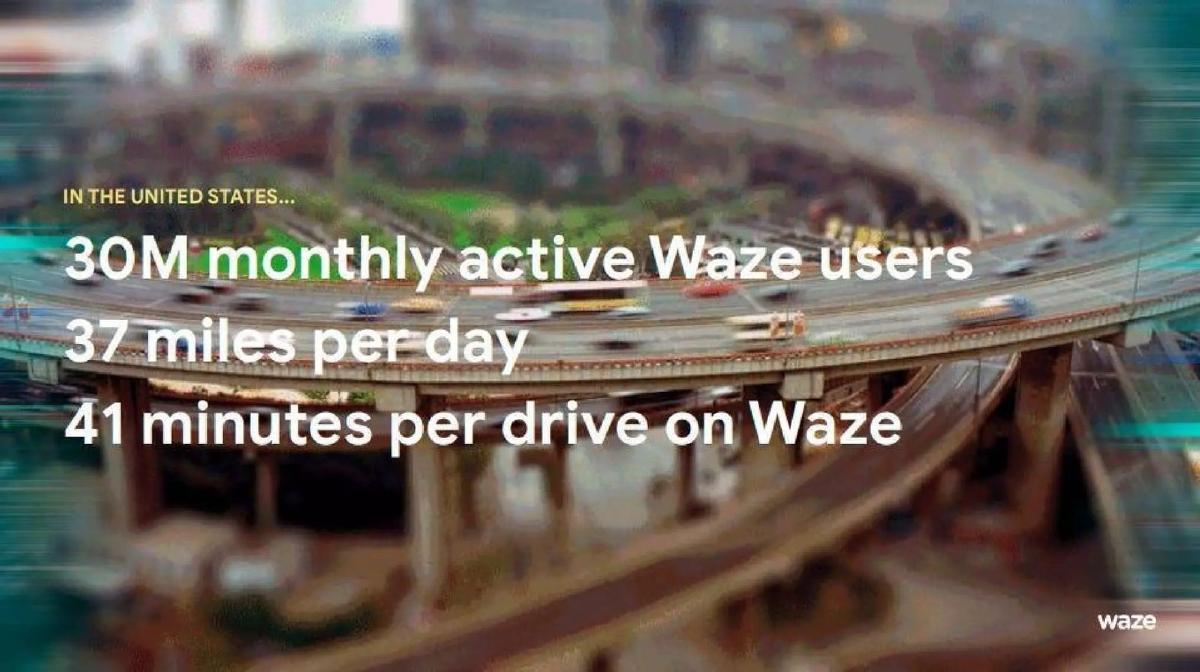
- Waze reports a massive U.S. footprint with 30M monthly active users averaging 41 minutes per drive (Slide 1).
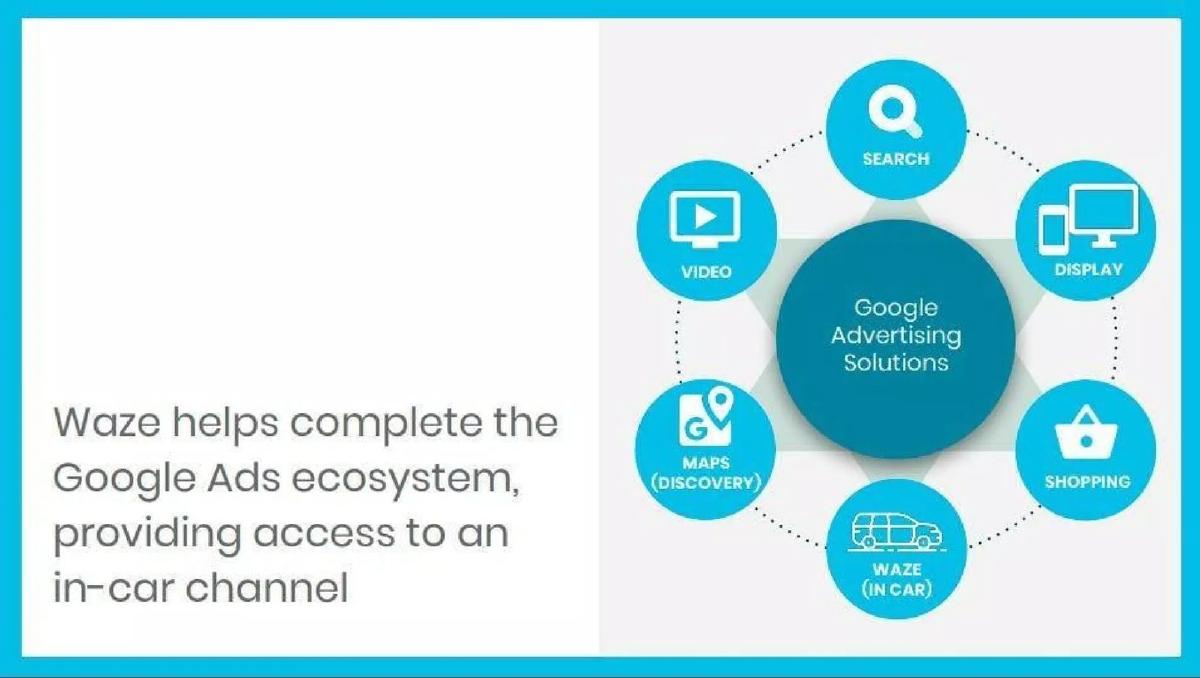
- The platform positions itself as the 'in-car channel' that completes the Google Advertising Solutions circle (Slide 3).
- Waze claims a 3x navigation lift for brands when drivers are exposed to both physical OOH billboards and Waze digital ads (Slide 11).
- The deck introduces the 'Zero-Speed Takeover' ad format, specifically designed to trigger when a driver is stopped for 4+ seconds (Slide 13).
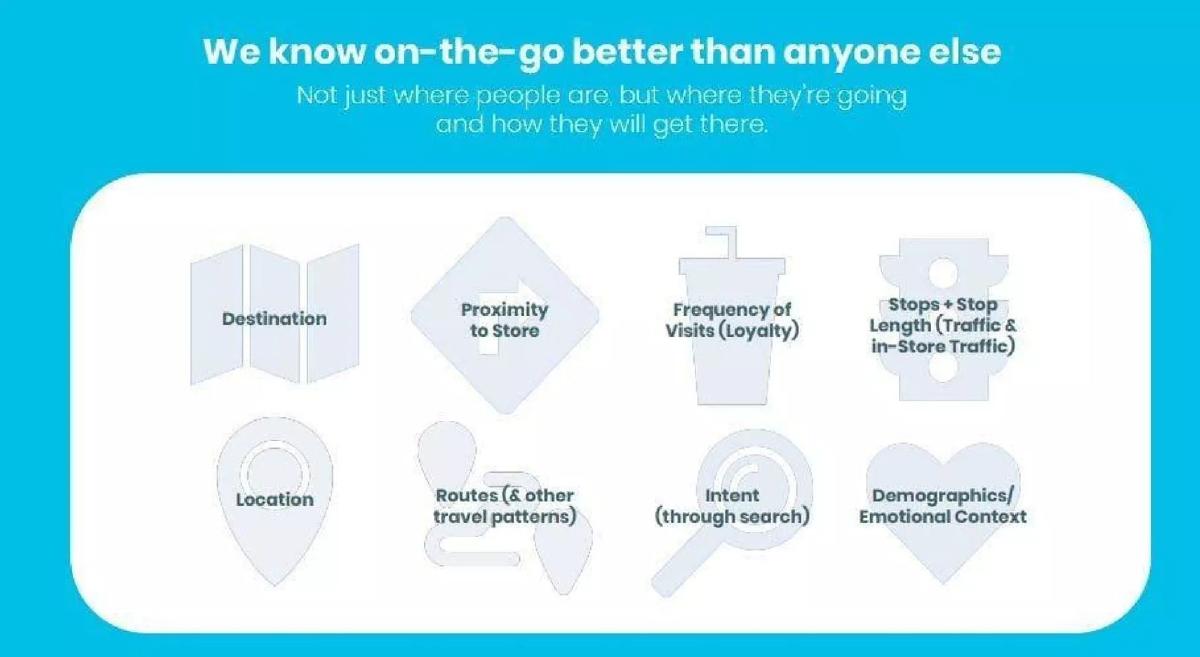
- Data collection extends beyond location to include intent, frequency of visits, and emotional context (Slide 2).
- The 'Road Ahead for OOH' section promises competitor analysis by tracking which roads are popular for competitor drives (Slide 9).
- Waze uses 'Radius Targeting' to bridge the gap between seeing a billboard and taking immediate action via the app (Slide 12).
- The deck completely omits traditional financial projections, team bios, and a specific 'ask' or valuation (Slides 1-14).
The Strategic Shift: From Utility to Ad-Tech Powerhouse
The Waze pitch deck is a fascinating artifact from a company that successfully transitioned from a crowdsourced utility to a cornerstone of the global advertising landscape. While the catalogue facts indicate a 2007 origin and a total raise of $67.1 million, this specific deck reflects a more mature stage of the company, likely post-acquisition or during a major expansion phase into the ad-tech space. It doesn't focus on how the GPS works; it focuses on how the GPS makes money.
Slides 1-3: The In-Car Channel Opportunity
Slide 1: The Scale of Engagement Waze opens with a powerful punch of engagement metrics. In the United States, the platform claims 30M monthly active users. The most critical figures for an advertiser, however, are the 37 miles per day and the 41 minutes per drive. This establishes Waze not just as an app, but as a primary companion for a significant portion of the consumer's day. The blurred background of a highway interchange reinforces the 'on-the-go' context.
Slide 2: Beyond Simple Location Waze distinguishes itself from standard mapping services by listing the depth of its data. It claims to know 'on-the-go better than anyone else.' The slide lists eight data points: Destination, Proximity to Store, Frequency of Visits (Loyalty), Stops + Stop Length, Location, Routes, Intent, and Demographics/Emotional Context. This is a clear signal to brands that Waze offers the same level of targeting sophistication as a social network, but with the added benefit of physical proximity.
Slide 3: Completing the Google Ecosystem This slide is a strategic positioning masterstroke. It places Waze as the final piece of the 'Google Advertising Solutions' puzzle. Surrounding a central Google core are Search, Display, Shopping, Waze (In-Car), Maps (Discovery), and Video. By labeling itself as the 'in-car channel,' Waze justifies its existence alongside Google Maps, suggesting that while Maps is for discovery, Waze is for the active journey.
Slides 4-6: Mapping the Consumer Journey
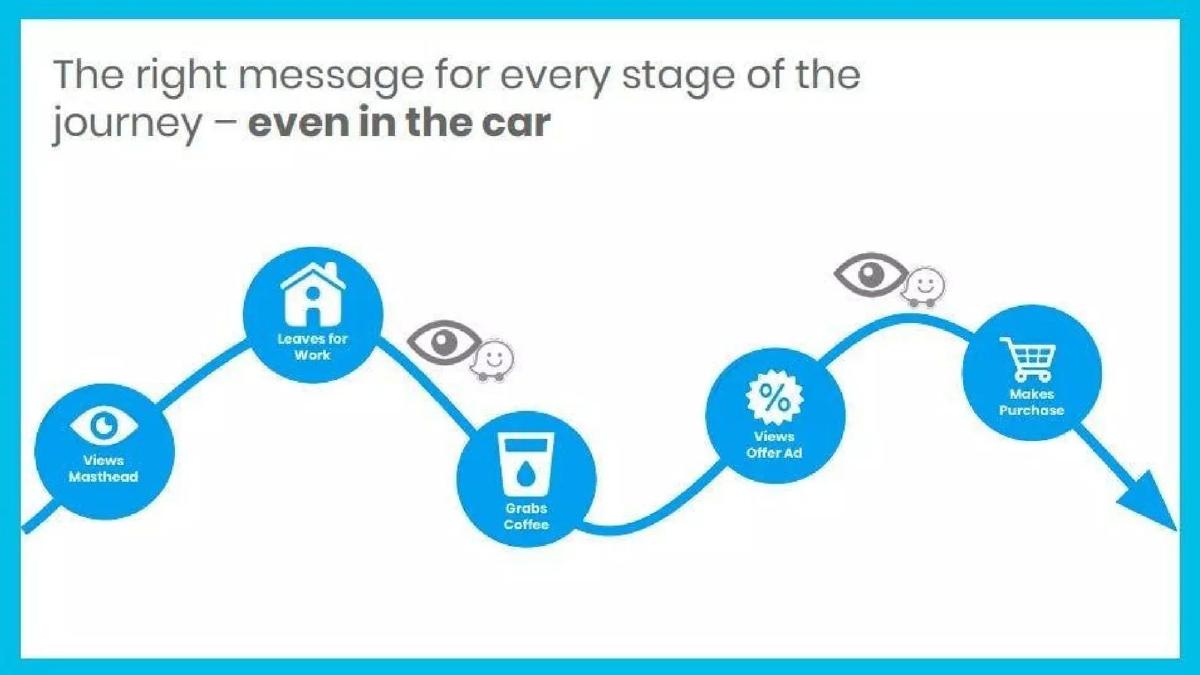
Slide 4: The Path to Purchase This slide visualizes a typical consumer journey: viewing a masthead at home, leaving for work, grabbing coffee, viewing an offer ad, and finally making a purchase. Waze inserts itself into the 'even in the car' segments of this wave, showing its logo at the points where traditional digital advertising usually loses contact with the consumer.
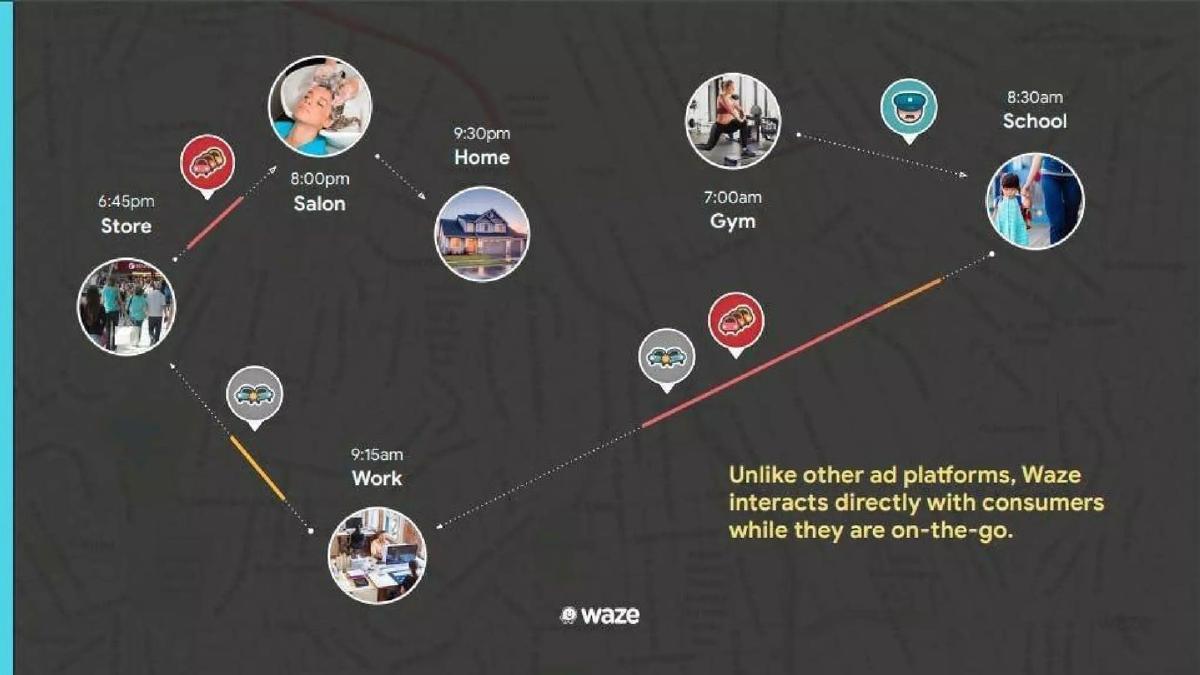
Slide 5: Real-World Interaction Using a dark-mode map interface, Waze illustrates a day in the life of a user (Gym at 7:00 am, School at 8:30 am, Work at 9:15 am, etc.). The caption, 'Unlike other ad platforms, Waze interacts directly with consumers while they are on-the-go,' emphasizes the real-time nature of their intervention. It’s not about where the user was yesterday; it’s about where they are five minutes before they pass a retail outlet.
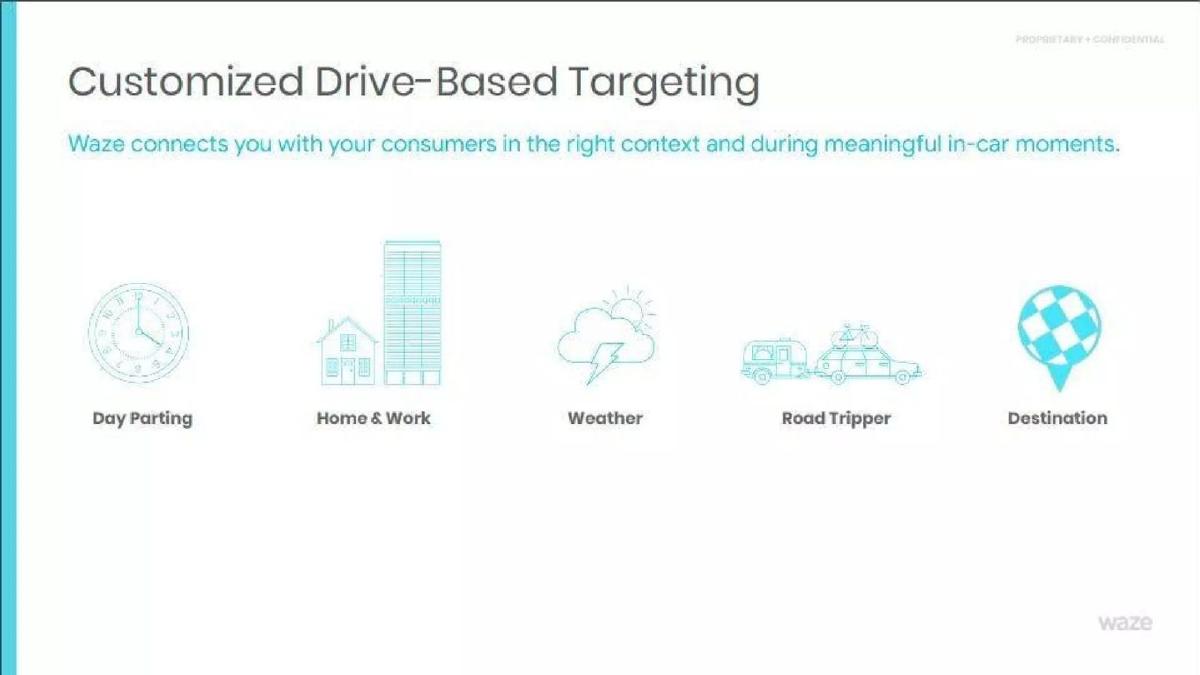
Slide 6: Customized Drive-Based Targeting Waze breaks down its targeting capabilities into five icons: Day Parting, Home & Work, Weather, Road Tripper, and Destination. This slide promises advertisers that they can serve coffee ads on rainy mornings to commuters, or camping gear ads to 'Road Trippers' on long-distance routes. It’s a pitch for hyper-contextual relevance.
Slides 7-11: The OOH (Out-of-Home) Synergy
Slide 7: OOH Innovation This section introduces one of Waze's most unique selling points: its relationship with physical billboards. The slide shows a McDonald’s billboard next to a smartphone running Waze. It introduces the 'Zero Speed Takeover,' a digital ad triggered by a radius target around a physical OOH placement. This effectively turns a static billboard into a clickable digital asset.
Slide 8: The Road Ahead for OOH This slide is heavy on future-facing utility for brands. It offers 'Competitor Analysis' (tracking drives to rival fast-food chains like Burger King or Taco Bell), 'Last Mile Insights' (where customers go after seeing a billboard), and 'Dwell Time' (measuring how fast people drive past signs). It claims the average time someone looks at a billboard is ~3 seconds, implying that Waze can extend that engagement window.
Slide 9: Measuring the Results A map of a city (specifically showing areas like MacArthur Park and Koreatown) is dotted with billboard icons and '2X' or '3X' multipliers. The text states that Waze captures 'when & where billboard impressions are seen,' offering a level of attribution that the OOH industry has historically struggled to provide.
Slide 10: Digital OOH Integration Using a Dunkin' Donuts example, Waze reiterates that 'OOH & Waze Are Better Together.' The visual shows a digital billboard mirrored by a 'Drive There' ad on the phone. The key takeaway here is the highlighted stat: '3x navigation lift when a driver is exposed to both OOH & Waze.'
Slides 11-14: Ad Formats and Real-World Examples
Slide 11: Extending Reach This slide uses a movie advertisement ('Nobody's Fool') to show how Waze extends the reach of a billboard. It illustrates the 'Zero-Speed Takeover' being triggered as a car navigates near a billboard, ensuring the message is seen even if the driver's eyes weren't on the horizon at the exact moment they passed the sign.
Slide 12: Core Ad Formats This is the 'product' slide for the advertising buyer. It defines four formats:
Pins: Location awareness icons on the map. · Takeovers: Large banners for users stopped for 4+ seconds. · Search: Top-of-mind placement for high-intent searches. · Push Notification Reminder: A follow-up for 'Save For Later' ads.
Slide 13 & 14: Case Studies (IKEA and Finding Dory) The final slides are visual proof-of-concepts. Slide 13 shows an IKEA billboard paired with a Waze ad that says '1 min away.' Slide 14 shows a massive 'Finding Dory' building wrap paired with a 'Save For Later' Waze ad. These slides serve to normalize the product by showing it used by world-class brands in high-traffic urban environments.
What Works in the Waze Deck
The 'Missing Link' Narrative: By positioning itself as the 'in-car channel' for Google, Waze creates a category of one. It doesn't compete with Facebook or TV; it fills a gap those platforms cannot reach. · Visual Proof: The use of real-world photos of billboards (McDonald's, IKEA, Disney) makes the abstract concept of 'radius targeting' immediately understandable and credible. · Focus on Intent: The deck repeatedly hammers the idea that Waze knows where you are going. In advertising, destination intent is significantly more valuable than historical location data. · Safety-Conscious Ad Triggers: Mentioning that 'Takeovers' only trigger when a driver is stopped for 4+ seconds (Slide 13) addresses potential regulatory or safety concerns head-on without being prompted.
What is Missing from the Waze Deck
The Team: There is no mention of the founders, engineers, or leadership. This suggests the deck was intended for brand partnerships or as a sales tool rather than a pure VC pitch. · Financials and Pricing: There is no mention of CPMs, CPCs, or revenue growth. For a company that raised over $67M, an investor would expect to see unit economics. · The Competition: While it mentions 'completing' the Google ecosystem, it ignores competitors like Apple Maps or traditional radio advertising, which is its primary rival for in-car attention. · The 'Ask': There is no closing slide with a funding requirement, valuation, or use of proceeds.
What a Founder Should Copy
The 'Better Together' Strategy: If your startup complements an existing giant (like Waze does for OOH or Google), show exactly how you amplify their results. The '3x navigation lift' is the most memorable stat in the deck. · Contextual Storytelling: Slide 5 (the daily schedule) is a great way to show how a product fits into a human life. It moves the conversation from 'features' to 'moments.' · Clear Ad Taxonomy: Slide 12 is a perfect example of how to present a product suite. It uses clear names, simple descriptions, and direct visual examples. · Attribution Focus: In a world of 'vanity metrics,' Waze focuses on 'Navigation Lift' and 'Last Mile Insights.' Founders should always focus on the metrics that actually drive their customers' bottom line.
Frequently asked questions
- What is the primary value proposition of Waze according to this deck?
- Waze positions itself as the premier 'on-the-go' advertising platform. Unlike static maps, Waze uses real-time community data to understand not just where people are, but their intent and destination. This allows brands to reach consumers during the 'in-car' moment, which Waze argues is a critical, previously unreachable gap in the digital marketing funnel.
- How does Waze integrate with traditional billboard advertising?
- Waze calls this 'OOH Innovation.' The app uses radius targeting around physical billboard locations to trigger digital ads (Takeovers) on the user's phone. This 'Better Together' approach aims to amplify the impact of expensive physical signage by providing a digital call-to-action, like a 'Drive There' button, directly in the driver's line of sight when they are stopped.
- What are the core advertising formats offered by Waze?
- The deck highlights four primary formats: Pins (to build location awareness), Takeovers (large banners triggered when the car is stopped for 4+ seconds), Search (to capture high-intent users looking for specific categories), and Push Notification Reminders (triggered by a 'Save For Later' call-to-action).
- What user metrics does Waze use to attract advertisers?
- Waze emphasizes high engagement and dwell time. In the U.S., they boast 30 million monthly active users who drive an average of 37 miles per day. Crucially for advertisers, the average drive time is 41 minutes, representing a significant window of time where Waze is the primary interface for the consumer.
- Is there a team or financial slide in the Waze deck?
- No. This specific version of the deck is an advertising-centric or strategic partnership deck. It lacks the standard venture capital components such as founder biographies, historical revenue, burn rate, or a specific funding request. It focuses entirely on the product's market fit and monetization potential.