WealthyLife’s pitch deck presents a compelling case for a gamified edtech solution targeting financial literacy. By highlighting their flagship app, CreditStacker, and its impressive global rankings—including being the #1 most downloaded education app in 14 countries—the deck establishes immediate market relevance. The narrative is anchored by rigorous validation, citing two independent research studies that show a 42% increase in financial literacy rates over 12 weeks. While the deck excels at showcasing social proof through logos like the United Nations and Mastercard, it remains lean on gr…
Key takeaways
- The company identifies as a financial literacy edtech games provider, as stated on Slide 1.
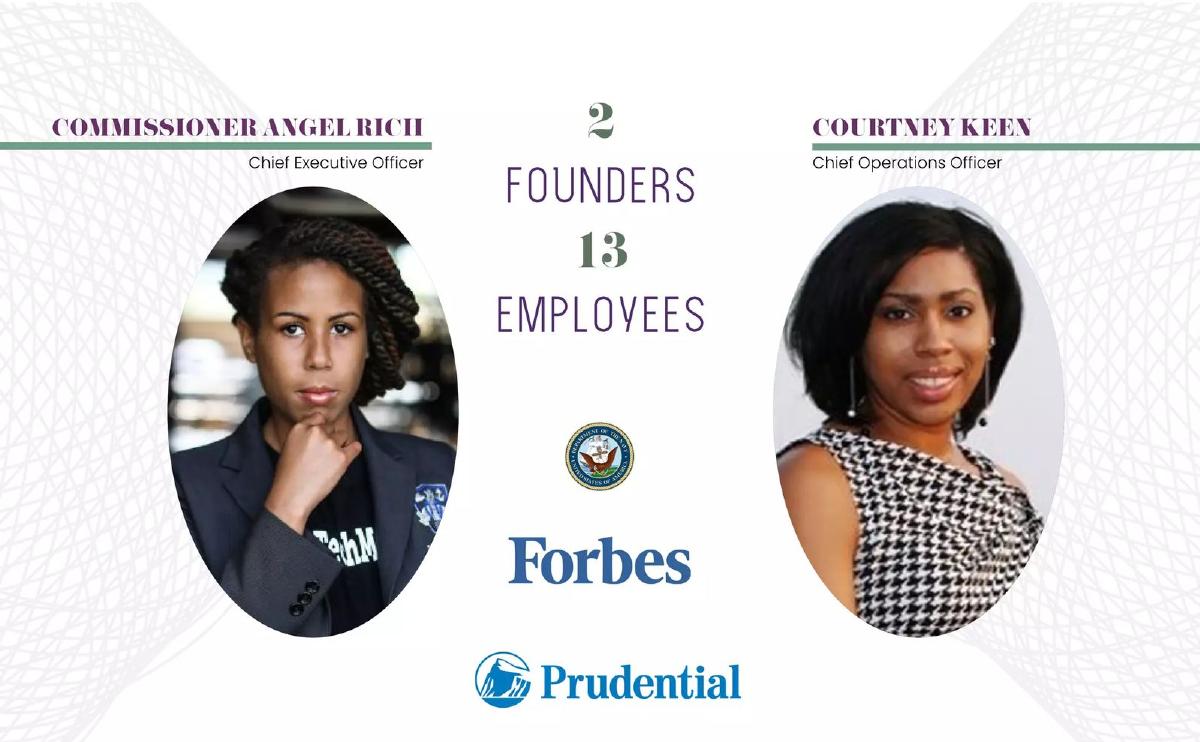
- The team consists of 2 founders and 13 employees, featuring logos from Forbes and Prudential on Slide 2.
- CreditStacker is the core product, ranked as the #1 most downloaded education app in 14 countries according to Slide 3.
- Validation is supported by 15,500 students and two independent research studies cited on Slide 4.
- Product efficacy claims include an 85% increase in graduation likelihood after 12 weeks of use on Slide 4.
- Revenue is generated through Unity Ads, yielding $6 - $12 per 1000 views as noted on Slide 5.
- The company lists high-profile sponsors including AT&T, Mastercard, and the United Nations on Slide 5.
- The funding goal is $1 million, with $500k already raised, allocating 50% of new funds to marketing on Slide 6.
WealthyLife: Gamifying the Path to Financial Stability
WealthyLife enters the edtech space with a specific focus on financial literacy, a sector often criticized for being dry or inaccessible. Their 2019 pitch deck focuses heavily on the success of their flagship app, CreditStacker, and the academic validation behind their methodology. By positioning themselves at the intersection of gaming and social impact, they aim to solve a global problem with a scalable digital solution.
Slide 1: Title and Identity
The opening slide establishes the brand identity immediately. It features a high-resolution image of a user interacting with a smartphone displaying the WealthyLife logo. The subtitle clearly defines the company's niche: "FINANCIAL LITERACY EDTECH GAMES." The inclusion of the website, getwealthylife.com, provides an immediate call to action for investors to explore the product firsthand. The visual language is modern, utilizing a purple and green color palette that suggests both technology and growth.
Slide 2: The Team and Pedigree
Slide 2 introduces the leadership: Commissioner Angel Rich (Chief Executive Officer) and Courtney Keen (Chief Operations Officer) . The slide notes there are 2 FOUNDERS and 13 EMPLOYEES . Rather than providing long biographies, the slide uses powerful logos to establish credibility. The presence of the Department of the Navy , Forbes , and Prudential logos serves as a shorthand for professional excellence and industry recognition. This approach relies on "social proof" to validate the founders' capability to lead a high-growth startup.
Slide 3: Our Solution - CreditStacker
This slide focuses on the product, CreditStacker . It is visually dense with accolades and rankings. The deck claims the app is a "Top 10 App in the world" and a "Top 50 Apps Dept Member" through Google. Apple-related metrics are equally strong, stating the app is the "#1 Most Downloaded Education App in 14 Countries" and in the "Top 5... in 40 Countries." The slide also lists endorsements from the U.S. Department of Education ("Best education technology product in USA"), The White House ("Best financial literacy product in USA"), and JPMorgan Chase & Co. ("Best solution in the world for reducing poverty"). This slide is designed to prove product-market fit through massive adoption and elite-level institutional recognition.
Slide 4: Validation and Research
WealthyLife moves from market popularity to academic efficacy on Slide 4. Titled "VALIDATION," it cites data from 15,500 STUDENTS and 2 INDEPENDENT RESEARCH STUDIES . The metrics provided are specific and impressive:
25% Financial Literacy Rate Increase After 1 Hour · 42% Financial Literacy Rate Increase After 12 Weeks · 85% Graduation Likelihood Rate Increase After 12 Weeks · 1,300 Bank Accounts Opened in 6 Weeks
The slide attributes these findings to studies by the Charter School Development Corporation & Building Hope and the Dept of Insurance, Securities & Banking . For an edtech company, this level of third-party validation is a critical differentiator, moving the product from a simple game to a proven educational tool.
Slide 5: Passive Revenue and Sponsorships
The business model is addressed on Slide 5 under the heading "PASSIVE REVENUE." The company states, "We make $6 - 12 per 1000 views via Unity Ads." This indicates a highly scalable, low-friction monetization strategy. Below the revenue figures, a "SPONSORS" section features logos from AT&T , Mastercard , Charter Schools Development Corporation , and the United Nations . This suggests that while ad revenue is the "passive" stream, the company likely engages in significant B2B partnerships or grants that provide additional capital and distribution channels.
Slide 6: Use of Funds and Investment Highlights
The final slide in this set details the financial ask: "$1 MILLION ($500K RAISED)." The allocation of these funds is broken down as follows:
PAYROLL: 20% · MARKETING: 50% · TECH DEVELOPMENT: 20% · LEGAL: 10%
The heavy lean toward marketing (50%) suggests the company believes the product is ready for mass-market scaling and that user acquisition is the primary lever for growth. The right side of the slide summarizes the investment thesis, highlighting a "Global problem and market," a "Unique, patent pending solution," and "Strong traction and distribution."
What WealthyLife Does Well
The deck is exceptionally strong in terms of validation and social proof . By the third slide, an investor is presented with endorsements from the White House, the UN, and JPMorgan Chase. This level of institutional backing is rare for early-stage startups and significantly de-risks the investment. Furthermore, the use of hard data from research studies (Slide 4) provides a scientific basis for their claims, which is often missing in gamified edtech pitches. The clarity of the revenue model—citing specific CPM (cost per mille) rates from Unity Ads—shows a grounded understanding of their digital monetization.
What is Missing from the Deck
While the deck is strong on accolades, it omits several key operational details. There is no slide detailing the competitive landscape ; it is unclear how WealthyLife compares to other financial literacy apps like Zogo or Greenlight. The deck also lacks detailed financial projections or a breakdown of their current burn rate. While they mention 15,500 students, there is no mention of Monthly Active Users (MAU) or Retention Rates , which are standard KPIs for mobile apps. Finally, the "patent pending" claim is mentioned but not detailed, leaving a question mark over the specific nature of their intellectual property.
Lessons for Founders
Founders should take note of how WealthyLife quantifies impact . Instead of saying the app "helps students," they state it increases graduation likelihood by 85% (Slide 4). This specific, outcome-oriented language is much more persuasive to investors. Additionally, the strategy of leading with traction (Slide 3) rather than the problem/solution framework can be effective when the traction is as significant as being a #1 app in 14 countries. Finally, the Use of Funds slide (Slide 6) is a model of clarity; it tells the investor exactly where the money goes and why, linking the spending directly to the goal of high-growth acquisition.
Frequently asked questions
- What is the primary product offered by WealthyLife?
- The primary product is a mobile application called CreditStacker. According to Slide 3, it is a gamified financial literacy tool that has achieved significant global reach, ranking as a Top 10 app in the world and the #1 most downloaded education app in 14 countries. It is positioned as a solution for reducing poverty and increasing financial knowledge.
- How does WealthyLife validate the effectiveness of its educational games?
- WealthyLife relies on quantitative data from 15,500 students and two independent research studies. Slide 4 details specific outcomes: a 25% increase in literacy after one hour, a 42% increase after 12 weeks, and a notable 85% increase in the likelihood of graduation for users over a 12-week period.
- What is the business model for WealthyLife?
- Based on Slide 5, the company utilizes a 'Passive Revenue' model. They generate income through Unity Ads, earning between $6 and $12 per 1,000 views. The slide also lists major corporate and international sponsors like Mastercard and the United Nations, suggesting a B2B or partnership-led distribution strategy alongside ad revenue.
- Who are the leaders of WealthyLife and what is their team size?
- The company is led by Commissioner Angel Rich (CEO) and Courtney Keen (COO). Slide 2 indicates the startup has a total of 13 employees. The slide also displays logos for the U.S. Navy, Forbes, and Prudential, implying past affiliations, recognition, or partnerships involving the leadership team.
- What are the specific plans for the $1 million funding round?
- Slide 6 outlines the use of funds for a $1 million round, of which $500,000 is already raised. The largest allocation is 50% for Marketing, followed by 20% for Payroll, 20% for Tech Development, and 10% for Legal expenses. The goal is to fuel high-growth user acquisition and global market expansion.