Bumo’s 16-slide deck successfully secured a $10M Seed round by positioning the company as the 'Uber for childcare.' The narrative centers on a classic marketplace efficiency play: connecting licensed providers who have under-utilized sessions with parents facing sudden care gaps due to illness, travel, or work. The deck relies heavily on social proof, citing over 1 billion total media impressions and a 40 million reach via its investor network. While the deck is light on specific financial breakdowns and unit economics, it presents strong early traction metrics, including an LTV/CAC ratio of…
Key takeaways
- The deck uses a Fast Company quote on slide 1 to immediately establish a high-level comparison: 'as easy as hailing an Uber.'
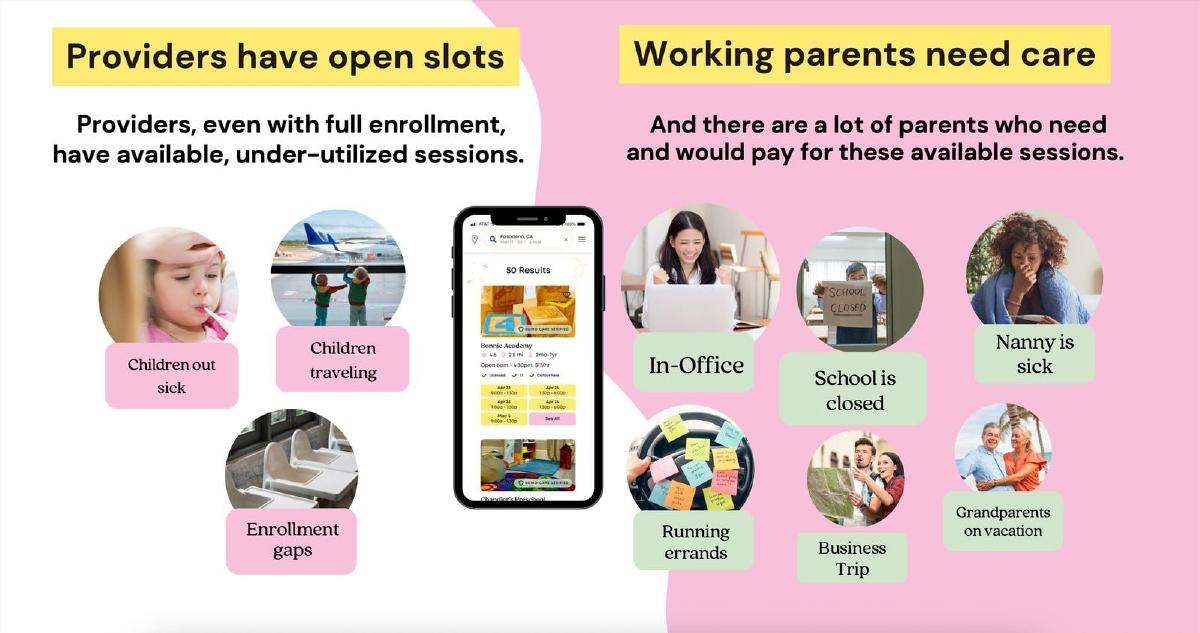
- Bumo identifies a specific inventory problem on slide 4, noting that even fully enrolled providers have under-utilized sessions due to sick children or traveling families.
- The platform offers price transparency, stating on slide 6 that families can book care for as low as $9 per hour.
- Early unit economics are highlighted on slide 9, reporting an LTV/CAC of 6 and a to-date average customer GMV of $1,654+.
- The company leverages massive social reach, claiming 1B+ total media impressions and 20M total views on TikTok (slide 11).
- Market sizing is aggressive, projecting the global childcare market to reach $437 billion by 2032 (slide 13).
- The growth strategy on slide 15 targets 200 active cities by 2025 and 1,000+ active cities by 2026.
- Future revenue streams are clearly identified on slide 15, including employer partnerships, subscription fees, and a global provider network.
The Marketplace for On-Demand Childcare
Bumo entered the market with a $10M Seed round in 2024, aiming to solve the perennial 'childcare crisis' through a tech-enabled marketplace. The deck, consisting of 16 slides, follows a standard problem-solution-traction arc but distinguishes itself through heavy emphasis on brand equity and social influence. As reported by Business Insider, the company operates in the consumer app sector, specifically targeting the North American market. The teardown below examines how Bumo framed its marketplace dynamics to attract significant seed-stage capital.
Slide 1: The Hook
The cover slide is minimalist, featuring a high-quality photo of a smiling family. The core of this slide is a quote from Fast Company: "Booking child care on Bumo is 'as easy as hailing an Uber.'" This is a classic fundraising tactic—using a third-party authority to establish a 'Category X for Category Y' comparison. It immediately tells the investor that this is a high-frequency, high-utility marketplace play.
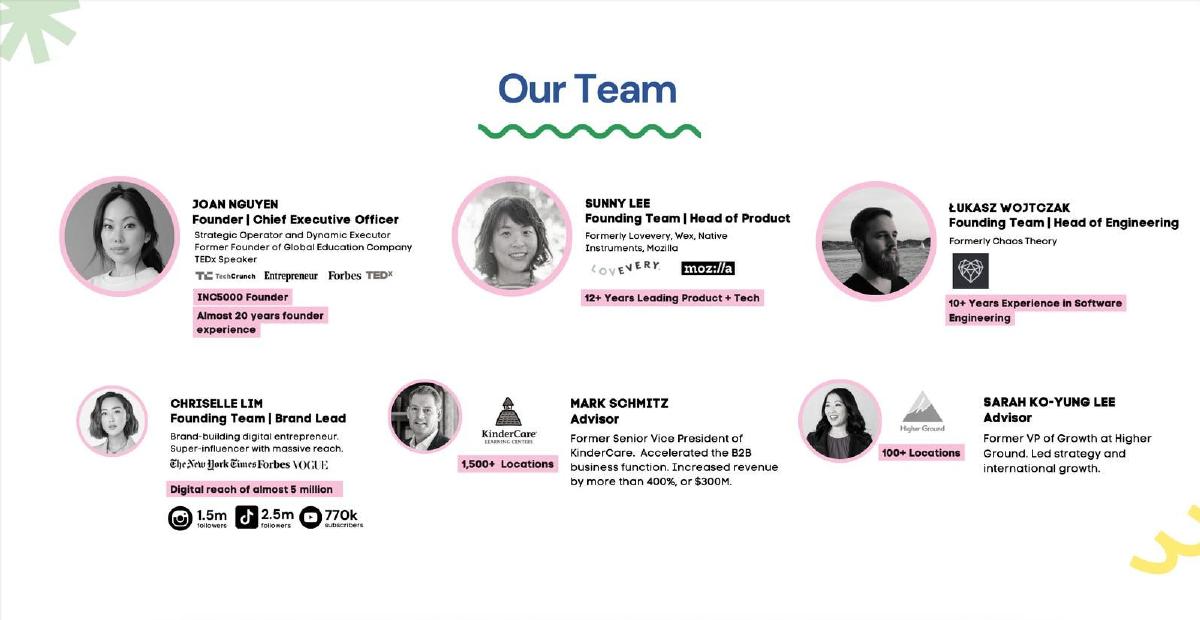
Slide 2: The Team
While the specific bios are not detailed in the text, the placement of the team slide at the front of the deck (Slide 2) suggests that the founders' pedigree is a primary selling point. In the consumer app space, especially one involving trust like childcare, the founders' ability to build a brand is often as important as the technology itself.
Slides 3-6: Defining the Inventory Gap
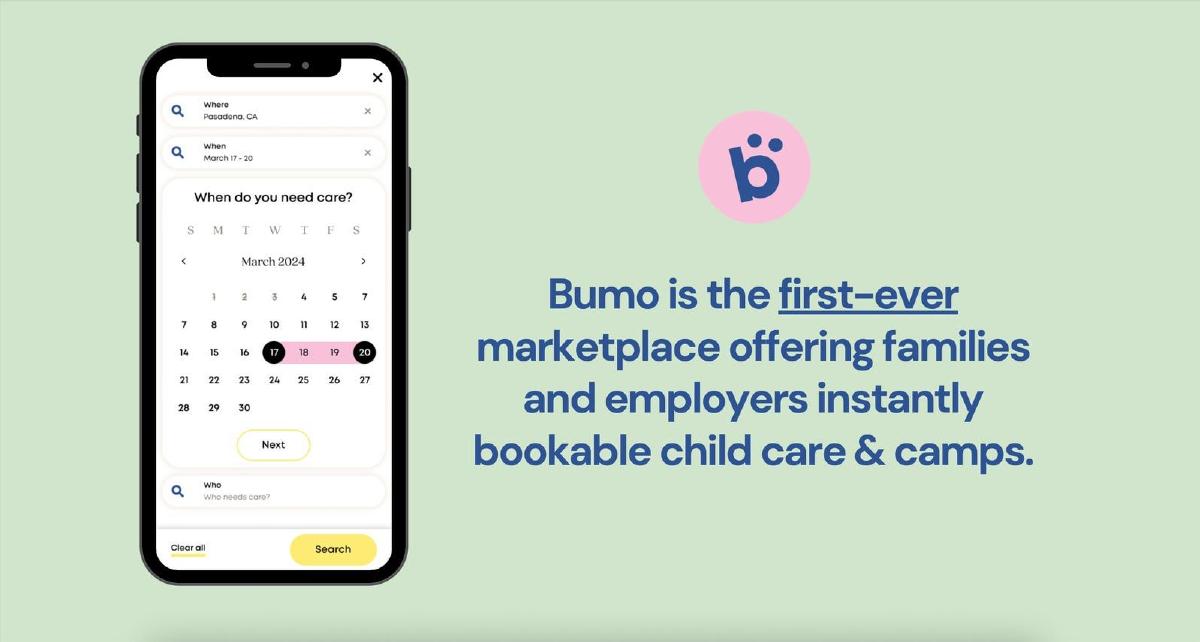
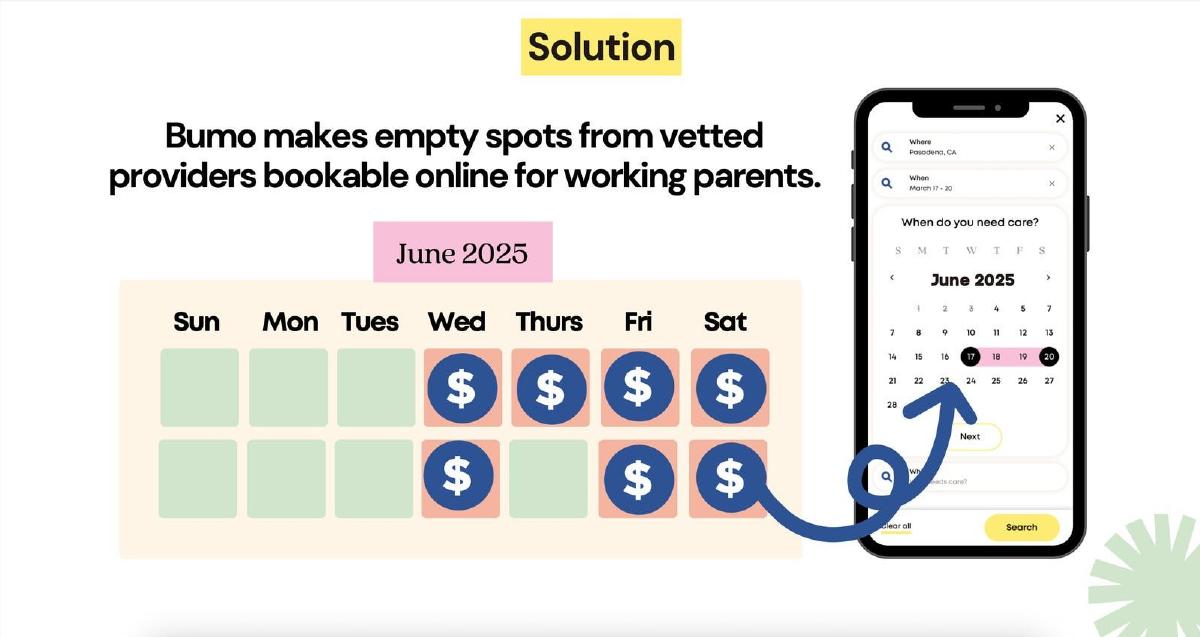
Slide 3 introduces the product interface, showing a calendar and search function. The text identifies Bumo as the "first-ever marketplace offering families and employers instantly bookable child care & camps." This 'instantly bookable' aspect is the key differentiator from traditional listing sites like Care.com.
Slide 4 is the most critical for understanding the business model. It splits the problem into two sides. For providers, it notes that even with full enrollment, centers have "under-utilized sessions" due to sickness or travel. For parents, it lists specific triggers: "In-Office," "School is closed," "Nanny is sick," and "Business Trip." By identifying 'perishable inventory' (the empty slot at a daycare), Bumo creates a classic marketplace efficiency argument.
Slide 6 reinforces the solution with a map view of providers like "ABC Preschool" and "Tulip Infant Center," stating that families can book for "as low as $9 per hour." This price point is positioned to be competitive with nannies or babysitters while offering the security of a licensed facility.
Slides 7-8: The Value Proposition
These slides expand on the benefits for the ecosystem. Slide 7 focuses on costs, likely detailing the take-rate or fee structure, while Slide 8 summarizes the "benefits for everyone." The narrative here is that providers get incremental revenue from slots that would otherwise go unpaid, and parents get reliable, last-minute care without the long-term commitment of a full-time enrollment.
Slides 9-11: Traction and Social Proof
Slide 9 provides the 'meat' for analytical investors. It reports a "To-Date Average Customer GMV" of $1,654+. This is a high figure for a consumer app, suggesting that once a parent uses the service, they spend significant amounts over time. The most impressive metric on this slide is the "LTV/CAC 6," indicating that for every dollar spent on acquisition, the company expects six dollars in lifetime value. It also identifies the total opportunity as 47,000,000 children aged 0 to 11.
Slide 11 shifts to social proof. Bumo claims a "powerful brand presence" with "1B+ Total Media Impressions" and "20M Total Views" on TikTok. It also mentions a "40M Reach via Bumo Investors." This suggests that Bumo’s cap table includes influencers or celebrities who actively promote the platform, providing a built-in, low-cost acquisition channel.
Slides 12-14: Strategy and Competition
Slide 12 outlines the outreach strategy, which likely involves a mix of B2B (employers) and B2C (social media). Slide 13 provides the macro-economic context, citing Grandview Research and Polaris Market Research. It shows the US market growing from $60.4 billion in 2022 to $83.6 billion by 2030, with a global market reaching $437 billion by 2032. This slide is designed to show that Bumo is playing in a massive, expanding pond.
Slide 14 is the competitive landscape. While the specific competitors aren't listed in the text, the "app comparison" likely pits Bumo’s instant-booking and licensed-center focus against the manual search and individual-provider focus of legacy players.
Slide 15: The Growth Roadmap
The growth slide shows a 5-year GMV projection. It sets ambitious targets: "Half a million hours of care" in 2024, followed by "15x Growth in 2025" and reaching "1,000+ Active Cities" by 2026. The goal is to become the "Largest Bookable Child Care Platform in the US" by 2027. Crucially, it lists "Other Future Lines of Revenue," including employer partnerships and subscription fees, showing that the current marketplace is just the first phase of a larger platform play.
What Bumo Does Well
Bumo excels at identifying a specific, solvable inefficiency in a massive market. Most childcare startups try to build new centers or provide better software for existing ones. Bumo focuses on the inventory gap —the fact that licensed centers often have empty seats due to daily fluctuations. This is a 'capital light' way to scale compared to physical expansion.
The deck also leverages social proof better than most Seed-stage companies. By quantifying their media impressions and the reach of their investors, they demonstrate a clear 'unfair advantage' in customer acquisition. In a crowded consumer market, the ability to acquire users organically or through influencer networks is a major de-risking factor for investors.
What is Missing from the Deck
Despite the $10M raise, the deck omits several key pieces of data that sophisticated investors usually require. There is no detailed financial slide showing burn rate, runway, or a breakdown of the take-rate. While they mention an LTV/CAC of 6, they don't show the cohorts or the time-to-payback on that CAC.
Additionally, there is no regulatory or compliance slide . Operating a marketplace for childcare involves significant liability and varying state-by-state licensing requirements. A slide explaining how Bumo vets providers or handles insurance would have strengthened the 'trust' narrative. Finally, the deck lacks a specific 'Ask' slide . While we know they raised $10M, the deck itself does not state the amount being sought or how the funds will be allocated across hiring, marketing, and R&D.
Founder Takeaways: Copy the Efficiency Narrative
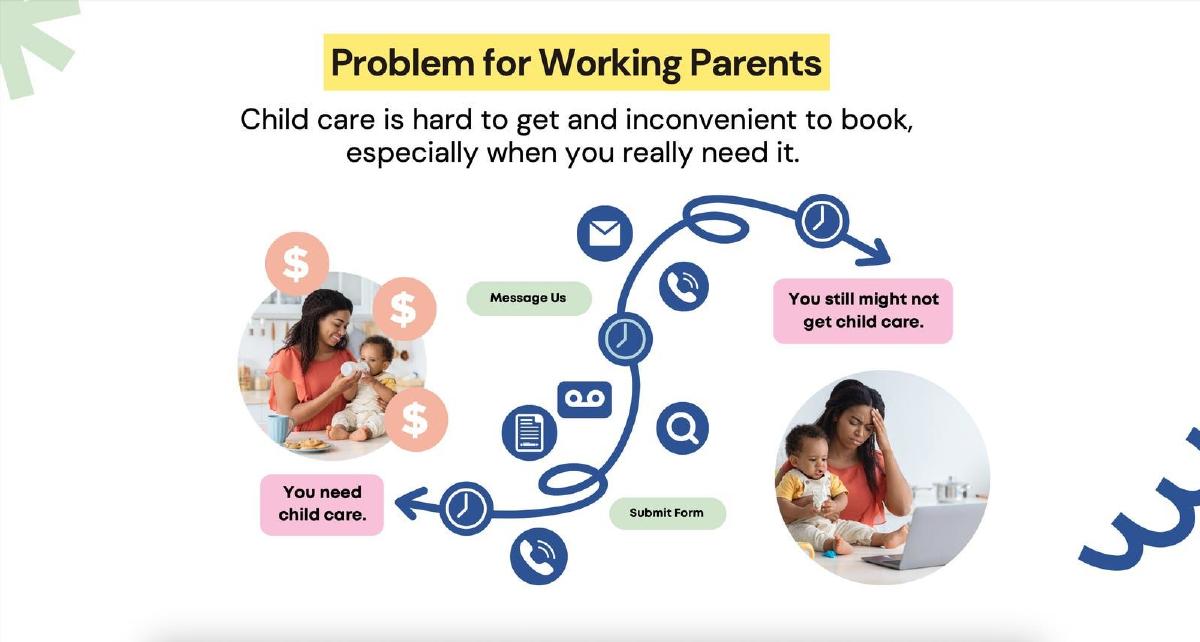
Founders building marketplaces should study Slide 4. Instead of just saying "parents need childcare," Bumo lists six specific, relatable moments of crisis. This makes the product feel like a 'painkiller' rather than a 'vitamin.' If you can identify the exact moment your user feels the most friction, your value proposition becomes much easier to sell.
Furthermore, Bumo’s use of authority quotes (Fast Company) and macro-trends (market growth to $437B) creates a sense of inevitability. Founders should aim to frame their startup not just as a good idea, but as the logical solution to a massive, documented shift in consumer behavior or market dynamics.
Final Summary
Bumo's deck is a masterclass in brand-led marketplace storytelling. It takes a complex, emotionally charged problem (childcare) and reduces it to a simple, tech-enabled solution: 'instantly bookable slots.' By focusing on under-utilized inventory and leveraging a massive social reach, Bumo convinced investors that they could scale rapidly without the traditional overhead of the childcare industry. While more financial transparency would have been ideal, the strength of the traction and the clarity of the vision were clearly enough to secure a significant Seed round.
Frequently asked questions
- What is Bumo's primary value proposition for childcare providers?
- According to slide 4, Bumo helps licensed childcare providers monetize 'under-utilized sessions.' Even when a center has full enrollment, daily vacancies occur when children are out sick or traveling. Bumo allows providers to list these open slots to a marketplace of parents needing short-notice care, effectively increasing their yield without requiring new long-term enrollments.
- How does Bumo justify its customer acquisition strategy?
- Bumo relies heavily on 'social reach' and brand trust rather than traditional paid advertising. Slide 11 highlights a 40 million reach via Bumo investors and 140,000 total followers. This organic and influencer-led approach likely contributes to the LTV/CAC ratio of 6 reported on slide 9, suggesting a highly efficient acquisition model for a consumer app.
- What are the specific use cases Bumo targets for parents?
- Slide 4 lists several 'obstacles for parents' that create a need for Bumo: being in-office, school closures, sick nannies, business trips, running errands, or grandparents being on vacation. By focusing on these high-friction moments, Bumo positions itself as a necessary utility rather than just a luxury service.
- What does the deck reveal about Bumo's future business model?
- While currently a marketplace, slide 15 indicates that Bumo plans to diversify its revenue. Future lines of revenue include B2B employer partnerships (likely as a subsidized benefit), recurring subscription fees for parents, and the expansion of a global provider network to scale beyond its initial North American footprint.
- Is there information on the founding team's background?
- Slide 2 is dedicated to the team, though the provided text only notes 'Bumo slide with the team.' In the context of the social reach mentioned on slide 11, the team likely includes individuals with significant influence in the parenting or lifestyle space, which is a core component of their 'powerful brand presence' narrative.