Breeze is a mobile marketplace designed specifically for the college ecosystem, facilitating peer-to-peer tasks like laundry, grocery shopping, and meal swipe exchanges. The 2018 pitch deck highlights a clear problem: students are overwhelmed by academic and social commitments, while others need flexible ways to earn money. With a TAM of 21 million students and a focused SOM of 1 million, the team leverages their status as students at Baruch and Northeastern to build trust. The deck is notable for its specific market research based on a 300-student survey and a competitive matrix that positio…
Key takeaways
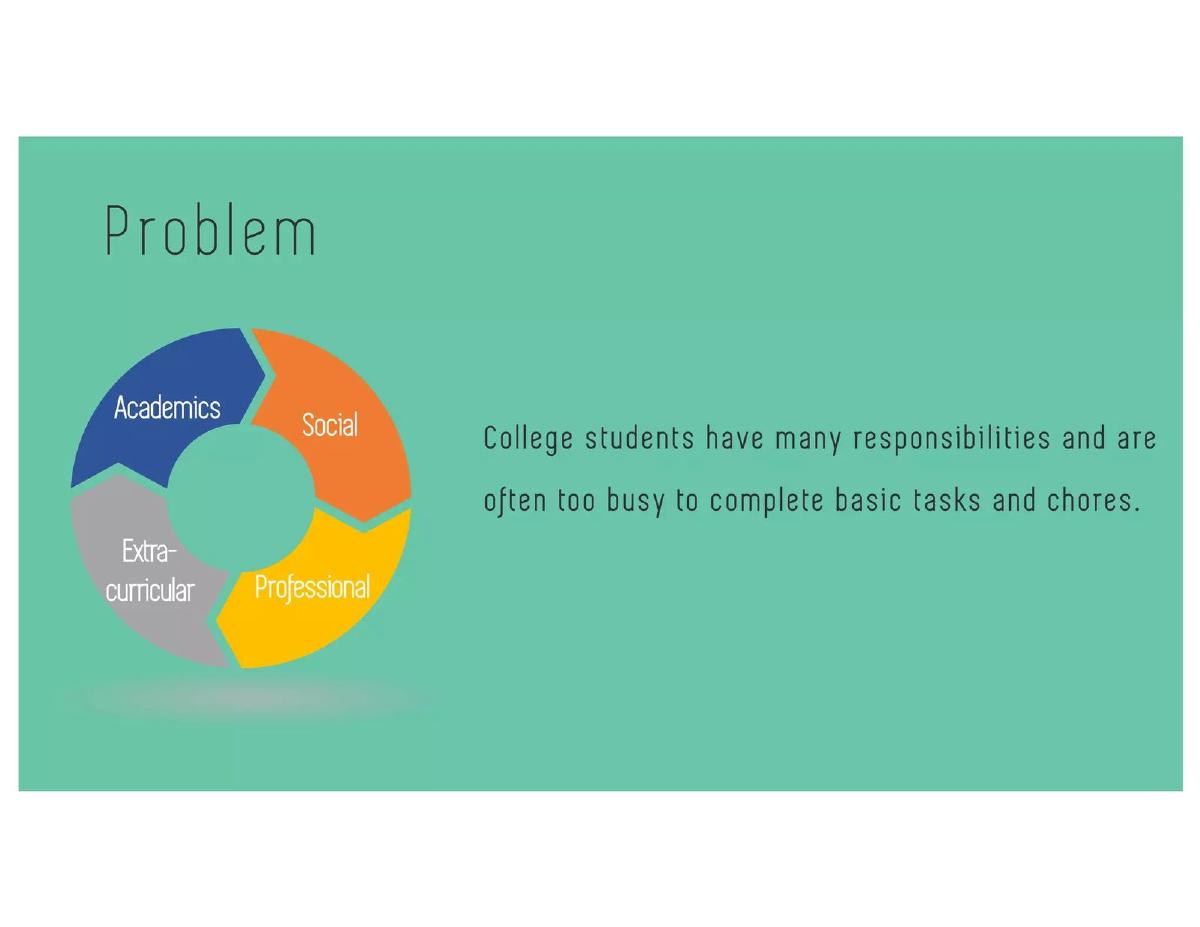
- The problem is defined as a time-management conflict across four pillars: Academics, Social, Extra-curricular, and Professional (Slide 2).
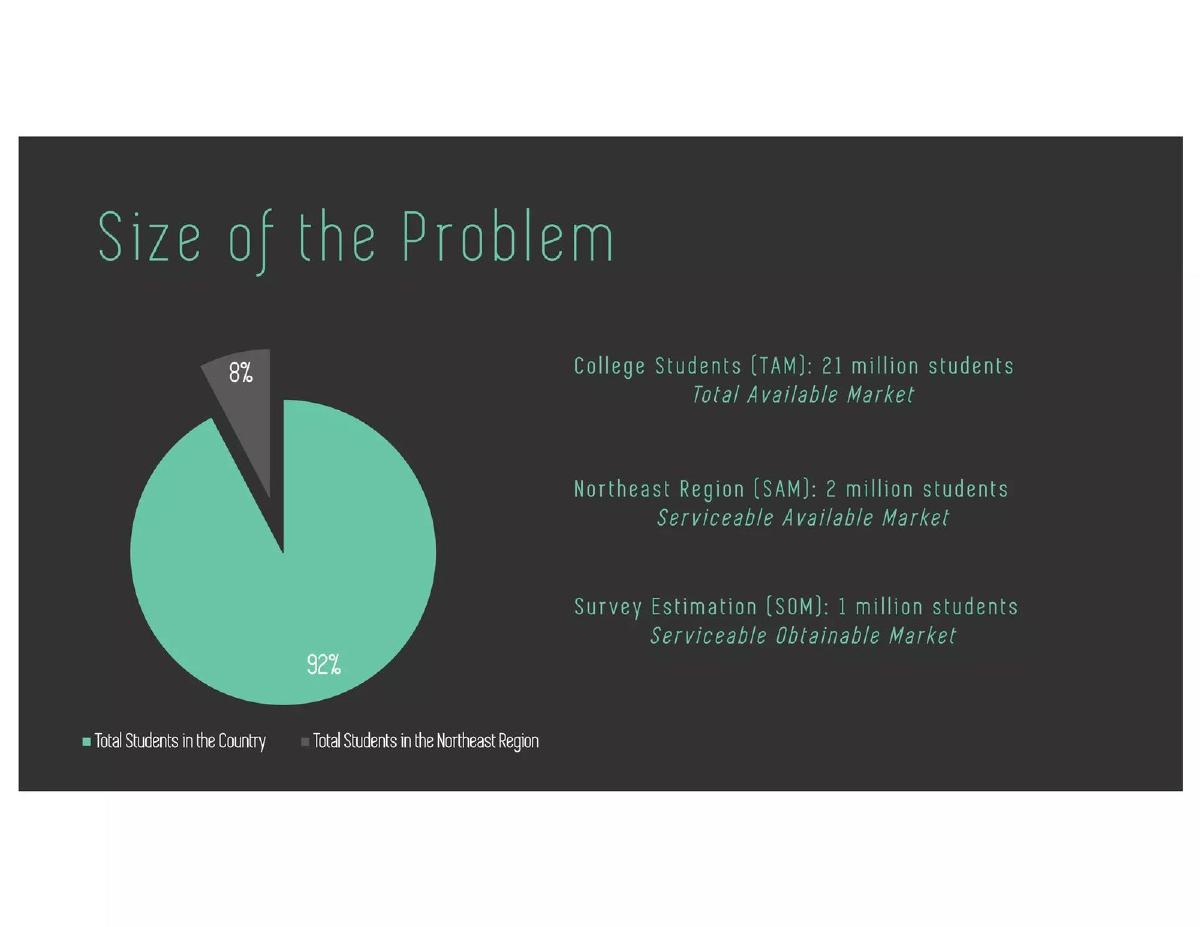
- The Serviceable Obtainable Market (SOM) is targeted at 1 million students based on survey estimations (Slide 5).
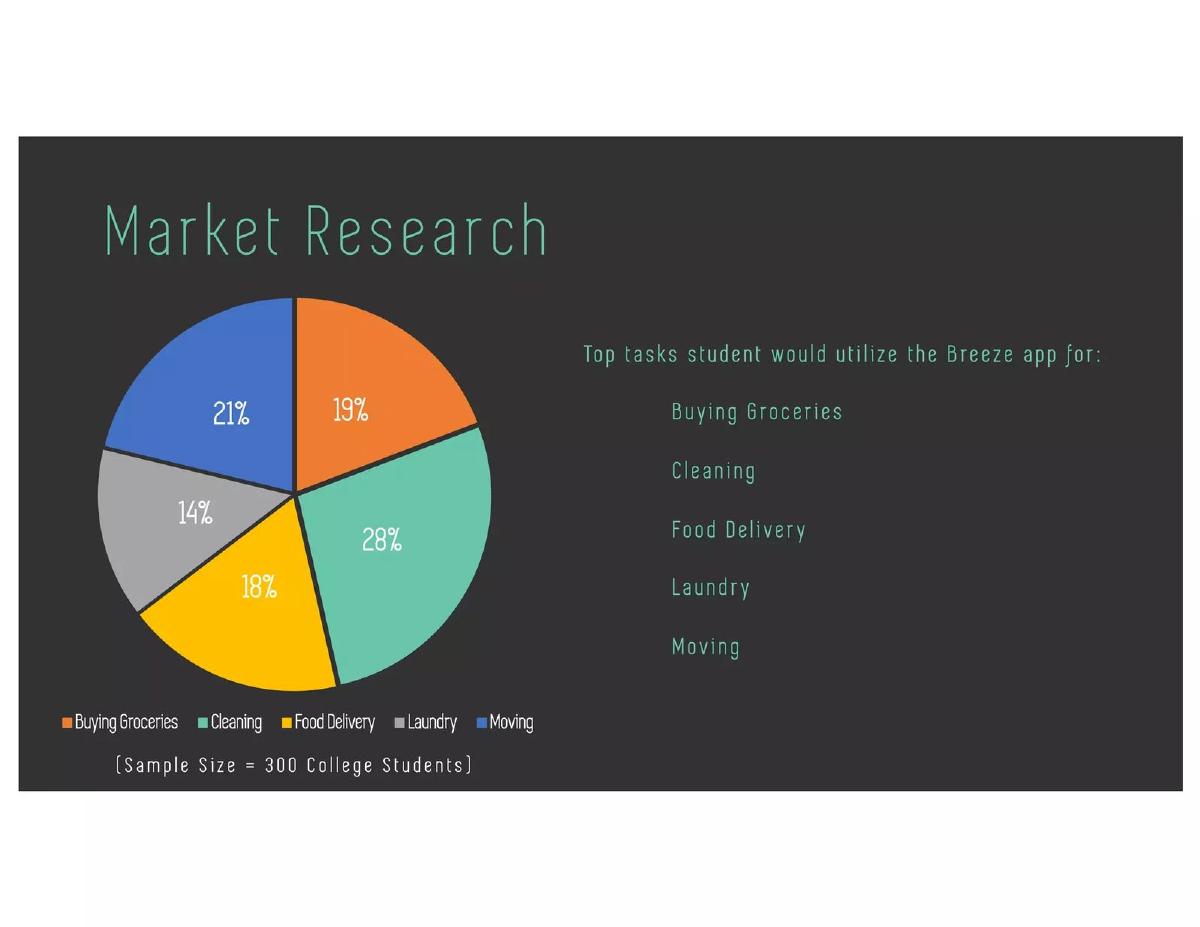
- Primary market research with a sample size of 300 students identified cleaning (28%) and moving (21%) as the most desired services (Slide 6).
- The MVP includes a unique 'Meal swipe' feature priced at $12, addressing a specific campus-only commodity (Slide 8).
- Go-to-market strategy relies heavily on campus ambassadors and partnerships with Greek organizations (Slide 9).
- Breeze positions itself with a low transaction fee of $1 - $2, significantly lower than TaskRabbit's 30% fee (Slide 10).
- The team includes a mix of students from Baruch College and Northeastern University, plus a technology advisor from JP Morgan (Slide 11).
- The company secured a $500 CUNY grant in April 2018 as part of their early milestones (Slide 12).
Executive Summary
Breeze is a peer-to-peer marketplace tailored for the unique constraints and opportunities of college life. The 12-slide deck presented in 2018 outlines a strategy to capture the 'student economy' by facilitating small-scale tasks between peers. While the deck is visually clean and identifies a clear niche, it functions more as a project proposal than a high-growth venture capital pitch, lacking detailed financials and a specific investment request.
Slide 1: Title Slide
The deck opens with a minimalist dark gray background featuring the brand name 'BREEZE' in a thin, sans-serif green font. The tagline, "Let’s work together to make college easier!" immediately establishes the mission. The slide lists the core leadership: Co-founders Kirby Wang and Solomon Park, and Marketing lead Nathan Chen Lin. It is a standard, professional entry point that focuses on the team and the high-level goal.
Slide 2: The Problem
The problem is visualized through a circular flow diagram representing the four main pressures on a student: Academics, Social, Extra-curricular, and Professional. The text states that students have many responsibilities and are "often too busy to complete basic tasks and chores." This slide effectively identifies 'time poverty' as the primary pain point for the buyer side of their marketplace.
Slide 3: The Solution
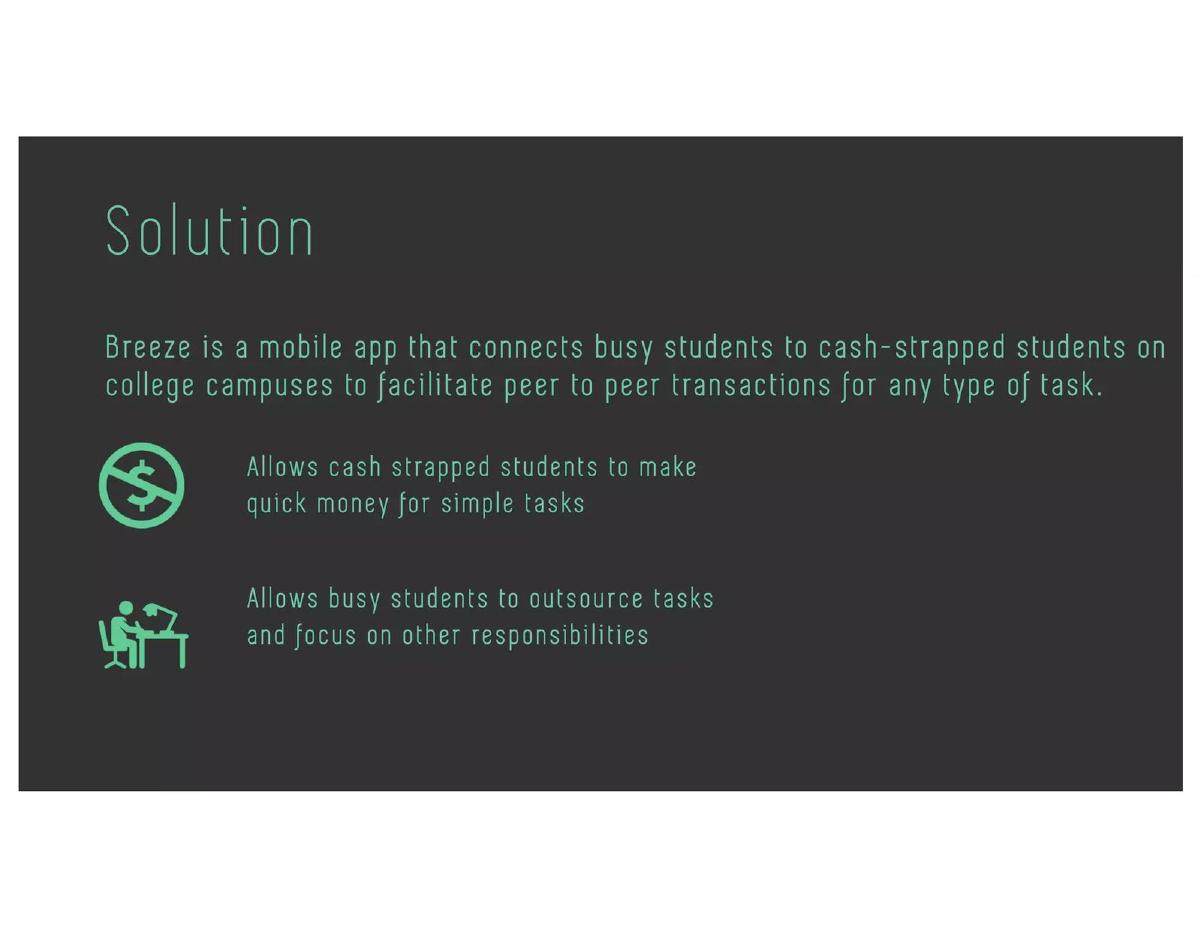
Breeze defines itself as a mobile app connecting "busy students" with "cash-strapped students." The solution is two-fold: it allows one group to make "quick money for simple tasks" and the other to "outsource tasks and focus on other responsibilities." By framing the solution as a benefit to both sides of the marketplace, Breeze establishes the dual-incentive structure necessary for a peer-to-peer platform.
Slide 4: How it Works
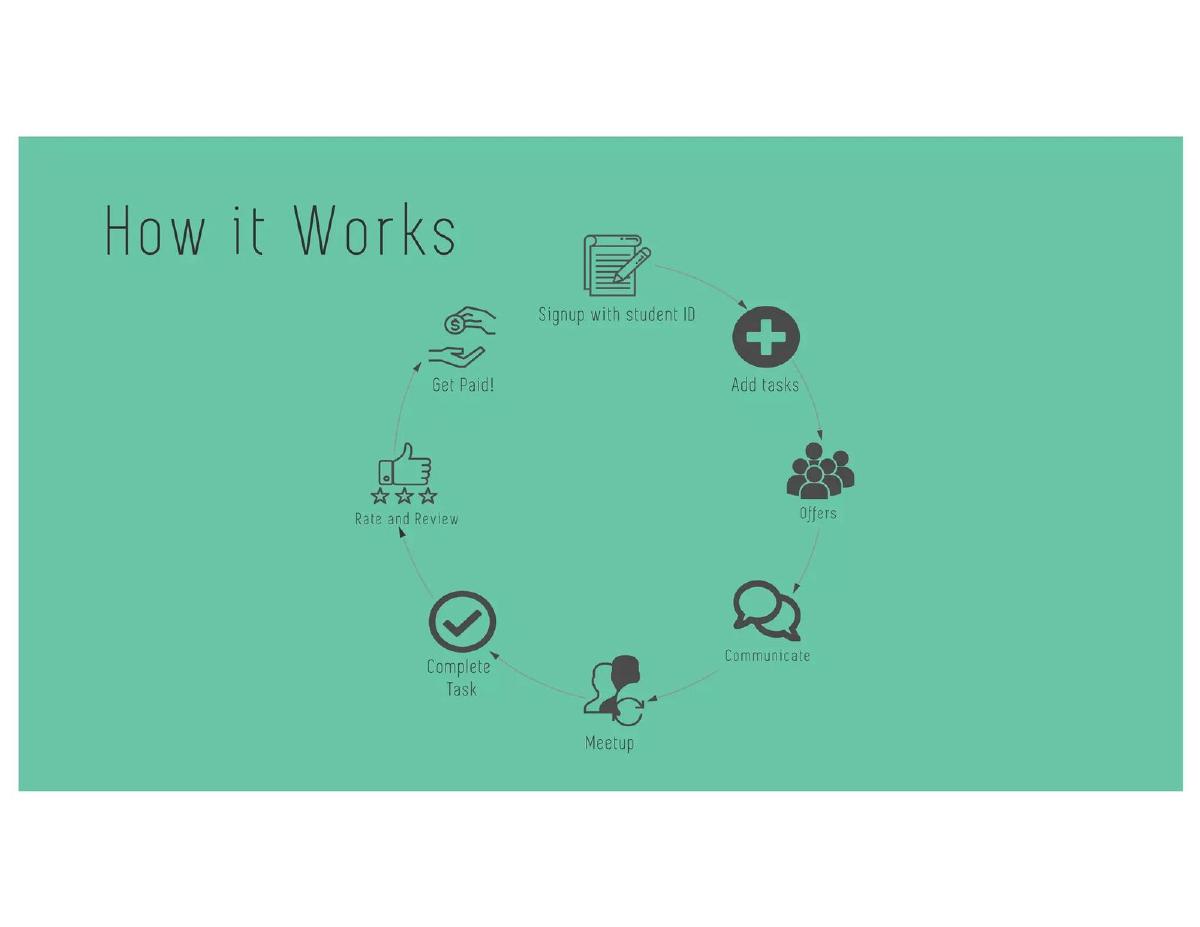
This slide uses a circular process map to explain the user journey. The steps are: Signup with student ID , Add tasks, Offers, Communicate, Meetup, Complete Task, Rate and Review, and finally, Get Paid! The inclusion of "Signup with student ID" is a critical safety and trust feature, signaling that the marketplace is a closed, verified loop exclusive to the campus community.
Slide 5: Size of the Problem (Market Size)
Breeze uses the standard TAM/SAM/SOM framework to quantify their opportunity. They cite a Total Available Market (TAM) of 21 million students nationally. The Serviceable Available Market (SAM) is narrowed to the Northeast Region with 2 million students. The Serviceable Obtainable Market (SOM) is estimated at 1 million students based on their internal survey data. A pie chart shows that the Northeast region represents 8% of the total student population in the country.
Slide 6: Market Research
This is one of the strongest slides in the deck because it provides primary data. Based on a sample size of 300 college students , Breeze identified the demand for specific services: Cleaning (28%) , Moving (21%), Buying Groceries (19%), Food Delivery (18%), and Laundry (14%). This data validates the specific categories the app needs to support at launch to ensure liquidity in the marketplace.
Slide 7: Landing Page
The deck shows a mockup of the Breeze landing page. The design is modern, featuring a mountain-scape background with a blue-to-green gradient. It includes "Get it on App Store" and "Get it on Play Store" buttons, though the text contains placeholders like "Tagline Text should be here." This indicates the company was in the early stages of brand development and web presence at the time of the pitch.
Slide 8: MVP (Minimum Viable Product)
The MVP slide lists five core features: News Feed Tab, Category Tab, Post task button, Message Tab, and Profile Tab. A mobile mockup shows a "News Feed" for Northeastern University. Interestingly, it displays a "Meal swipe" task for $12 and a "Laundry" task for $20. The meal swipe inclusion is a highly specific campus use case that general competitors like TaskRabbit cannot easily replicate, as it involves campus-specific currency.
Slide 9: Go-to-Market Strategy
The strategy is divided into three pillars: 1. Facebook and Instagram advertisements for accessibility; 2. Campus ambassadors for customer education and brand awareness; and 3. Partnerships with school and Greek organizations for mass promotional events. This is a standard "boots on the ground" approach typical for successful campus-based startups like early Facebook or Tinder.
Slide 10: Competition
Breeze compares itself to TaskRabbit, Thumbtack, and GoPuff. The key differentiators are being "Exclusively for students" and the fee structure. While TaskRabbit takes a 30% fee, Breeze proposes a $1 - $2 fee per transaction . This positioning targets price-sensitive students, though it raises questions about the platform's ability to cover operational costs like payment processing and insurance.
Slide 11: Team
The team slide features five individuals. Kirby Wang (Baruch, Statistics) and Solomon Park (Northeastern, Finance) are the co-founders. Nathan Chen Lin handles marketing. The technical side includes Stuart Smith (Technology Advisor, JP Morgan) and Jayser Mendez (Back-end developer, Bronx Community). The team appears well-balanced for an early-stage student venture, combining data, finance, marketing, and engineering.
Slide 12: Milestones
The timeline spans 2018 to 2019. Key achievements in April 2018 include the landing page, participation in the Husky Challenge, and a $500 grant from CUNY . Future goals for August 2018 included securing funding and meeting with schools. The timeline concludes with a Beta Launch in December 2018 . This slide shows the company was in the pre-launch/early-testing phase during the creation of this deck.
What Breeze Does Well
Breeze excels at identifying a hyper-local niche. By focusing exclusively on students and requiring a student ID for signup, they solve the 'stranger danger' problem inherent in gig-economy apps. Their market research (Slide 6) is specific and actionable, showing they listened to their target audience before building. The inclusion of 'meal swipes' in the MVP (Slide 8) is a brilliant example of identifying a 'gray market' that already exists on campuses and bringing it into a formal, safe platform.
What is Missing from the Deck
The most glaring omission is a clear Financial Ask . The deck mentions "Funding" as a milestone but never specifies how much capital they are seeking or how they will allocate it. Furthermore, there is no Unit Economics slide. A $1-$2 transaction fee is very low; the deck doesn't explain how this covers the cost of Stripe/Braintree fees, let alone the cost of acquiring users. There is also no mention of Liability or Insurance , which is a major hurdle for any marketplace involving physical tasks like moving or cleaning in dormitories.
Founder Takeaways: What to Copy
Primary Research: Don't just guess what users want. Breeze surveyed 300 students and used that data to prioritize their feature set. · Niche Features: The 'Meal Swipe' feature is a great example of building something that only works for your specific target market, creating a moat against larger competitors. · Safety as a Feature: Using the .edu email or student ID as a barrier to entry is a low-cost way to build high trust in a marketplace. · Clear Competitive Matrix: Slide 10 clearly shows why a student would choose Breeze over TaskRabbit (price and community).
Frequently asked questions
- What is the core value proposition of Breeze?
- Breeze acts as a specialized labor marketplace for college campuses. It allows busy students to outsource chores like laundry or grocery shopping to other students who need quick cash. By restricting the platform to those with a student ID, it builds a layer of trust and safety that general-purpose platforms like TaskRabbit lack in a campus setting.
- How does Breeze plan to make money?
- According to the competition slide, Breeze intends to charge a transaction fee of $1 to $2 per task. This is a flat-fee model rather than a percentage-based model, which they use to differentiate themselves from competitors like TaskRabbit, who charge a 30% fee. However, the deck does not detail the long-term sustainability of these low fees.
- What specific tasks are students most interested in outsourcing?
- Based on the company's survey of 300 students, the top five tasks are cleaning (28%), moving (21%), buying groceries (19%), food delivery (18%), and laundry (14%). The MVP also suggests a market for 'meal swipes,' which are credits for campus dining halls that often go unused by some students while others are short on food funds.
- Who is the team behind Breeze?
- The founding team consists of Kirby Wang (Statistics, Baruch College) and Solomon Park (Finance, Northeastern). They are supported by Nathan Chen Lin (Marketing, Baruch), a back-end developer from Bronx Community College, and a technology advisor, Stuart Smith, who is affiliated with JP Morgan. This mix suggests a strong understanding of their target demographic.
- What are the biggest risks identified in this deck?
- The primary risk is the lack of financial data. The deck does not provide a specific funding 'ask,' nor does it project burn rate or customer acquisition costs (CAC). Additionally, the low transaction fee ($1-$2) may be insufficient to cover the costs of insurance, dispute resolution, and payment processing as the platform scales beyond a single campus.