Bretzel.co presents a 12-slide pitch deck for a platform designed to automate the creation of comparison content. The company identifies a specific pain point: the manual effort required by individuals and experts (bloggers, consultants) to collect and organize data for product or service comparisons. Their solution involves a browser extension and automated scraping tool to generate actionable results quickly. The deck outlines a three-pronged revenue model—ads, subscriptions, and a marketplace for reselling comparisons—and seeks a 600K Euro investment to fund product redesign and marketing.…
Key takeaways
- The company is seeking a 600K Euro investment for development and marketing as stated on slide 10.
- Bretzel.co positions itself as the 'Slideshare for comparison contents' on slide 12.
- The product features include a comparison builder, automatic data scraping, and personalized ranking according to slide 7.
- The business model is a hybrid of freemium (ads vs. subscriptions) and a marketplace for reselling comparisons shown on slide 8.
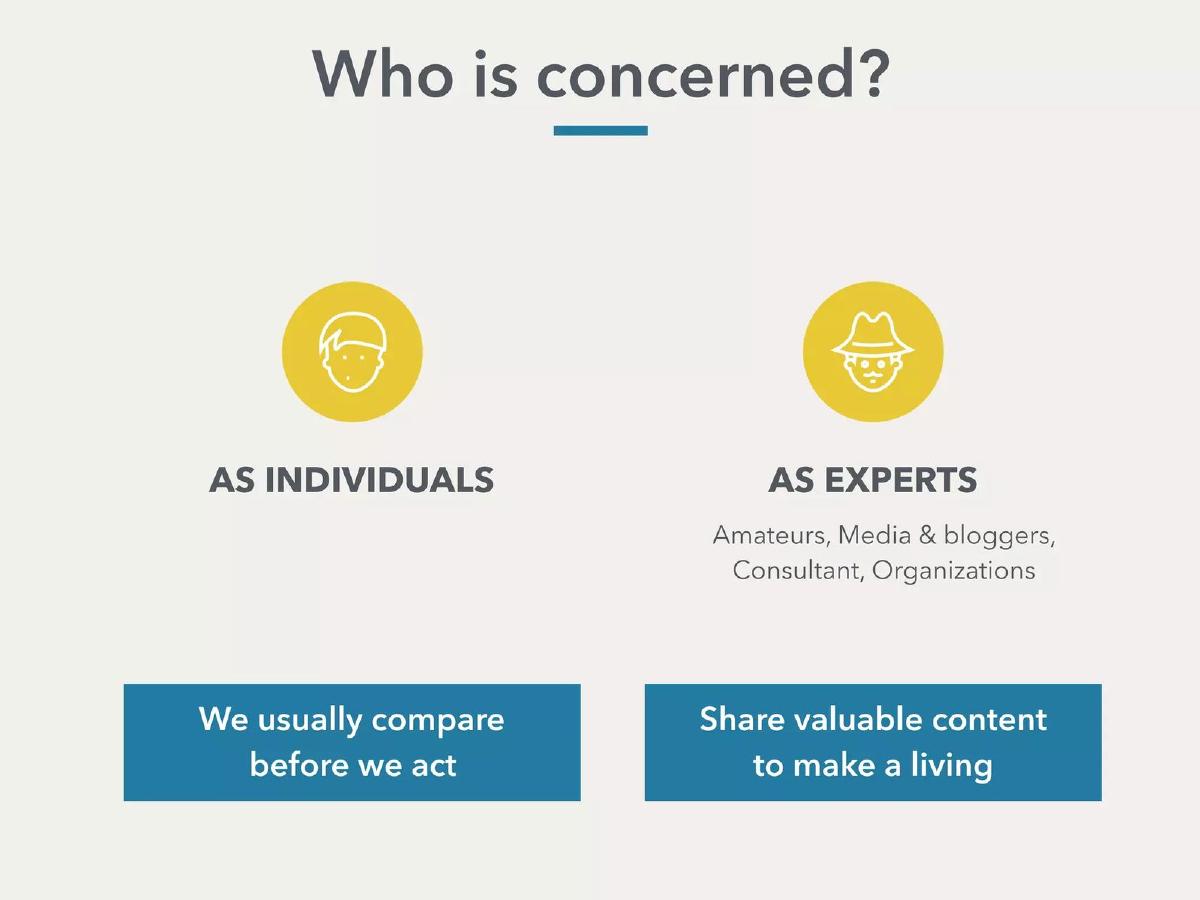
- The target audience is split between individuals who compare before acting and experts who share content to make a living, per slide 5.
- The development timeline on slide 9 indicates the company was in the Beta Test phase in late 2015, with plans for an API and collaboration tools in 2016.
- The team consists of two full-time co-founders (CEO and CTO) and one part-time UX/UI designer as detailed on slide 11.
- The deck identifies existing tools like spreadsheets and sites like Kayak or SocialCompare as the current, less efficient alternatives on slide 3.
Slide-by-Slide Teardown
Slide 1: Title Slide
The deck opens with a minimalist yellow background featuring the Bretzel logo—a stylized pretzel—and the tagline "Make sense at comparing things." The URL BRETZEL.CO is clearly displayed at the bottom. It establishes a friendly, consumer-facing brand identity but does not immediately clarify if this is a B2B or B2C play.
Slide 2: The story behind the idea
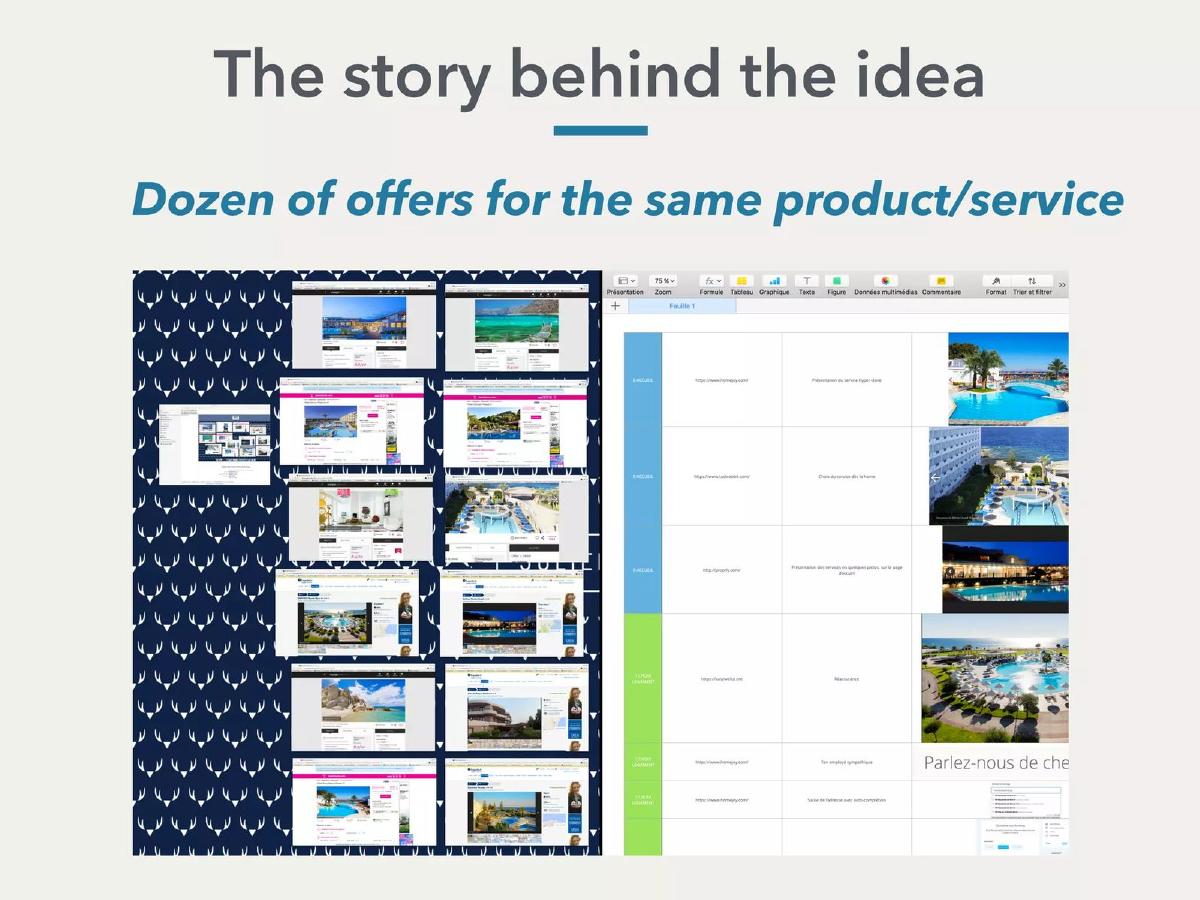
This slide uses a collage of screenshots to illustrate the chaos of modern shopping and research. It notes "Dozen of offers for the same product/service." On the left, multiple browser windows are tiled; on the right, a spreadsheet attempts to organize the data. This is a classic 'before' picture intended to evoke the frustration of manual data management.
Slide 3: Which tool to build a comparison?
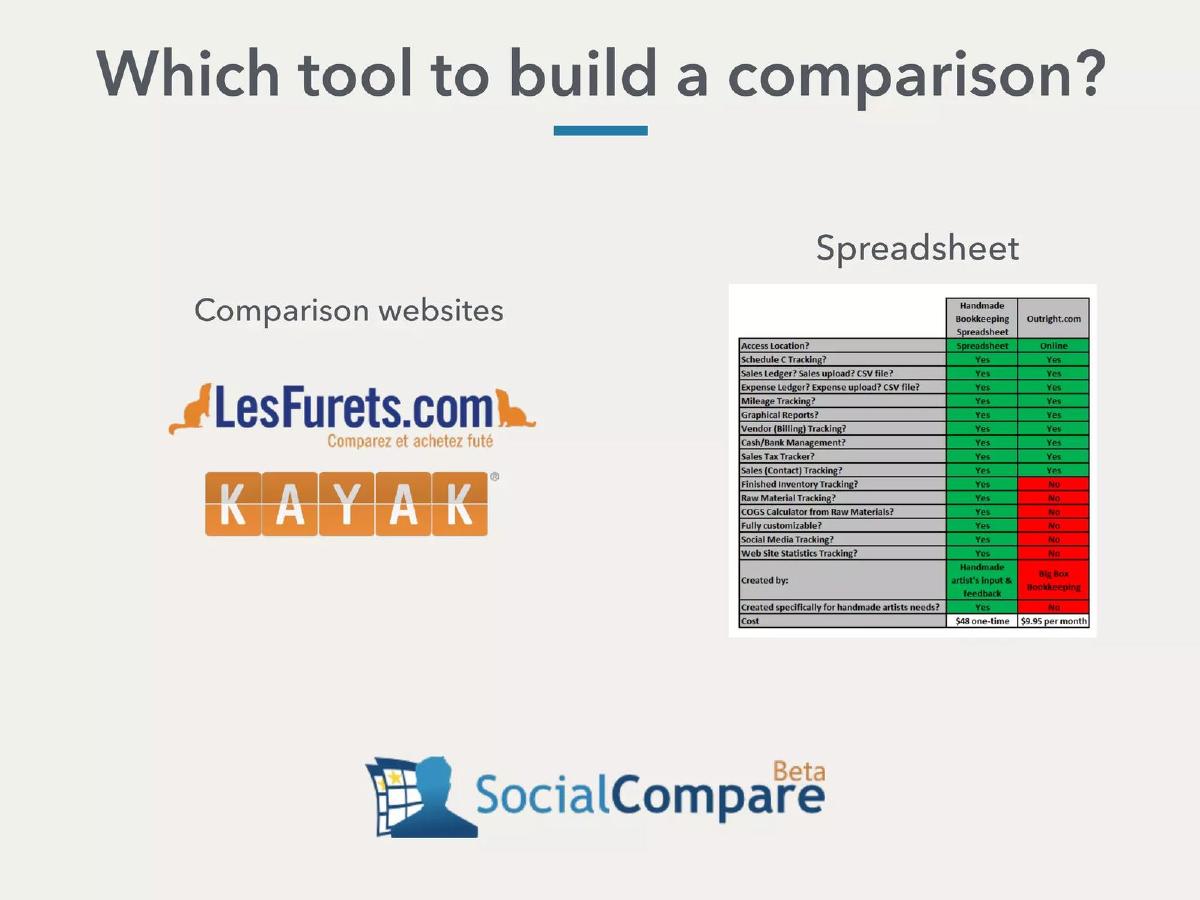
The deck identifies current competitors and alternatives. It lists comparison websites like LesFurets.com and Kayak, alongside generic spreadsheets and SocialCompare (marked as Beta). By grouping these together, the slide suggests that existing solutions are either too niche (travel/insurance) or too manual (spreadsheets).
Slide 4: The problem
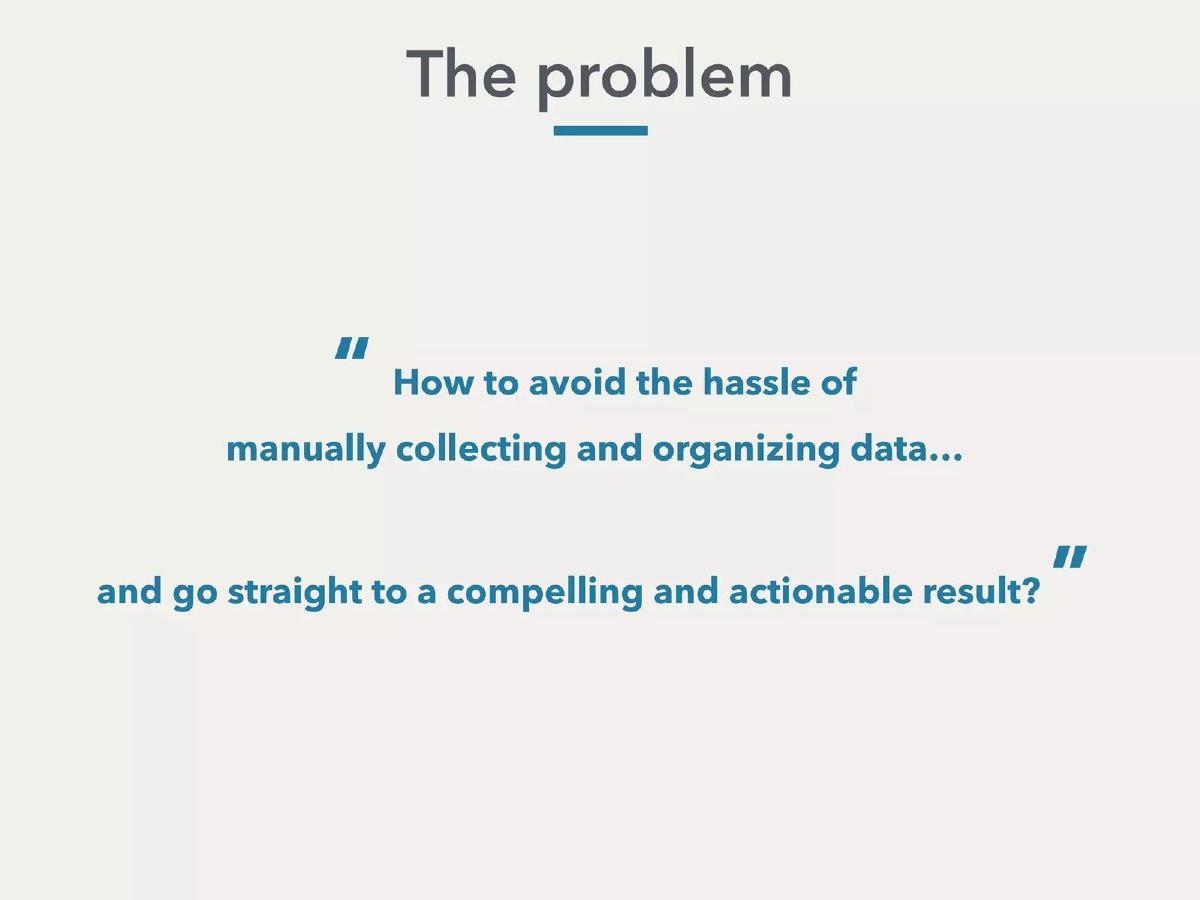
Slide 4 distills the previous two slides into a single question: "How to avoid the hassle of manually collecting and organizing data... and go straight to a compelling and actionable result?" This is a clear problem statement, though it lacks a quantitative measure of how much time or money is currently wasted on this task.
Slide 5: Who is concerned?
The company segments its market into two groups: Individuals and Experts. Individuals are defined as those who "compare before we act," while Experts (amateurs, media, bloggers, consultants, and organizations) are those who "share valuable content to make a living." This indicates a dual-purpose platform for both personal utility and professional content creation.
Slide 6: Create content, collect audience
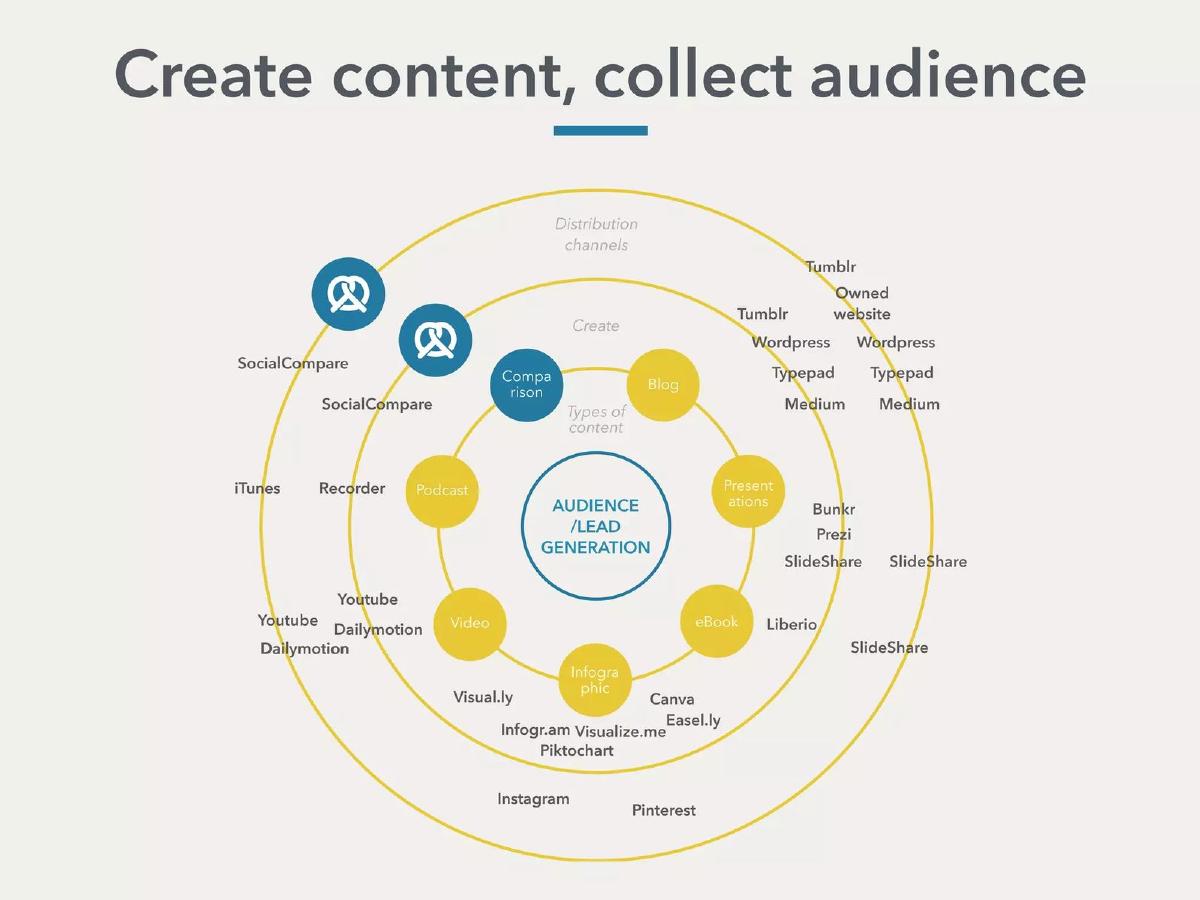
This is a complex ecosystem map. It places "Audience/Lead Generation" at the center, surrounded by content types (Podcast, Video, Infographic, Blog, etc.) and distribution channels (YouTube, Medium, SlideShare, etc.). Bretzel icons are placed specifically next to "Comparison" and "SocialCompare," positioning Bretzel as the engine for a specific type of high-value lead-gen content.
Slide 7: The solution
The solution slide shows a product mockup. The headline is "Bretzel does the dirty job for you." It lists four key value propositions: Comparison builder, Automatic data scraping, Personalized ranking, and Collaborate and share. The visual shows a sidebar interface appearing over a travel website (voyage-prive.com), suggesting a browser extension that pulls data directly from the page the user is viewing.
Slide 8: Business model
Bretzel proposes a three-pillar revenue strategy. The "Free" side relies on ads and basic features. The "Premium" side offers subscription plans with no ads and pro features. The third pillar is a "Marketplace" for "Comparisons reselling." This last point is interesting as it suggests the company wants to build a data repository where users can buy/sell curated comparison sets.
Slide 9: Timeline
The timeline shows the company's progress through 2015 and 2016. At the time of the deck ("today"), they had completed a landing page and MVP and were in the middle of a Beta Test and Redesign. Future goals included a browser extension, scraping tool, collaboration features, weighting algorithms, and an API.
Slide 10: Our needs
The 'Ask' slide is direct: "600K€ investment." The funds are earmarked for Development (redesign, browser extensions, feature speed) and Marketing (user and audience acquisition). They also mention the need for a "Board of advisors," which is a common request for early-stage teams looking for mentorship.
Slide 11: The Team
The team slide features three individuals. Guillaume (CEO) and Gatien (CTO) are full-time, while Julie (UX/UI Designer) is part-time. The slide provides a good breakdown of past experiences, skills, achievements, and education. Notably, two members are associated with "Koudetat-TheFamily," a well-known European startup accelerator program.
Slide 12: Thank You
The final slide reiterates the brand and adds several descriptors: Scalable, Actionable, Internationalisation, and Embeddable. Most importantly, it provides a final hook: "The 'Slideshare' for comparison contents." This is a strong, relatable analogy for investors to understand the platform's potential scale and utility.
What Works
Clear Analogy: Describing the product as the "Slideshare for comparison contents" on slide 12 is a very effective way to communicate the vision. It suggests a platform where content is created, hosted, shared, and embedded elsewhere, creating a natural growth loop.
Problem/Solution Alignment: The deck does a good job of showing the 'mess' of manual comparisons (Slide 2) and then showing a clean, automated solution (Slide 7). The transition is logical and easy to follow.
Targeted Audience Segmentation: By identifying 'Experts' who make a living sharing content (Slide 5), Bretzel identifies a user base that has a high incentive to use the tool for professional gain, which supports the subscription business model.
What is Missing
Traction Metrics: Despite being in the "Beta Test" phase (Slide 9), there are no metrics regarding how many users are in the beta, how many comparisons have been built, or any early engagement data. Investors usually want to see some proof of life beyond an MVP.
Market Size (TAM/SAM/SOM): The deck explains who the users are but not how many of them exist. There is no mention of the total addressable market for comparison content or lead generation, which makes the 600K Euro ask harder to justify from a purely mathematical standpoint.
Competitive Analysis: While Slide 3 mentions Kayak and SocialCompare, it doesn't explain why Bretzel is better or how it will defend its position against these players or new entrants. A simple feature comparison matrix would have been helpful here.
What a Founder Should Copy
The 'Needs' Breakdown: Slide 10 is a good example of how to clearly state an investment ask and how the money will be spent. It doesn't just say "600K," it breaks it down into Development and Marketing sub-tasks.
The Team Layout: Slide 11 is excellent. It uses a consistent format to display experience, skills, and education, making it very easy for an investor to scan and understand the team's pedigree and balance of skills.
Visual Consistency: The deck uses a consistent color palette (yellow, blue, white) and clean typography. It looks professional and branded without being overly cluttered, which helps keep the focus on the content.
Unit Economics: There is no mention of Customer Acquisition Cost (CAC) or Lifetime Value (LTV). While perhaps early for a seed-stage deck, some projections on how the 600K Euro would translate into a specific number of users would strengthen the pitch.
Frequently asked questions
- What is the primary problem Bretzel.co is trying to solve?
- According to slide 4, the primary problem is the 'hassle of manually collecting and organizing data' when trying to compare multiple offers for the same product or service. The company aims to help users bypass manual entry and go straight to a compelling, actionable result through automation.
- How does Bretzel.co plan to make money?
- Slide 8 details a three-part business model. First, a 'Free' tier supported by ad revenue. Second, a 'Premium' subscription tier offering no ads and pro features. Third, a marketplace for 'Comparisons reselling,' suggesting a platform where users can monetize the data sets they have compiled.
- What is the current stage of the product according to the deck?
- Based on the timeline on slide 9, the deck was likely produced in late 2015. At that time, they had a landing page and an MVP completed, and were moving through a 'Beta Test' and 'Redesign' phase. Future milestones included a browser extension and API development.
- Who are the founders and what is their background?
- Slide 11 lists Guillaume as Co-founder & CEO, with experience as a CMO and E-commerce Manager. Gatien is the Co-founder & CTO, described as a self-educated coder (Ruby on Rails) and former product manager. Both founders are noted as having attended Koudetat-TheFamily.
- What specific features does the software offer?
- Slide 7 highlights four core features: a Comparison builder, Automatic data scraping, Personalized ranking, and the ability to Collaborate and share. The visual suggests this is delivered via a web overlay or browser-integrated tool.