By Rotation used this 14-slide deck to raise a $3M Seed round in 2022. Rather than a traditional data-heavy corporate presentation, the deck leans into the company's identity as a 'community-powered platform.' It successfully highlights a high-engagement user base, with 85% of users actively renting and over 250,000 active app users. The deck prioritizes social proof—featuring user testimonials, press clippings from Forbes and Vogue, and physical pop-up events—over granular financial modeling or unit economics. While it lacks a clear 'Ask' slide or detailed competitor matrix, it effectively s…
Key takeaways
- The platform reports high user engagement, with 85% of users actively renting (Slide 3).
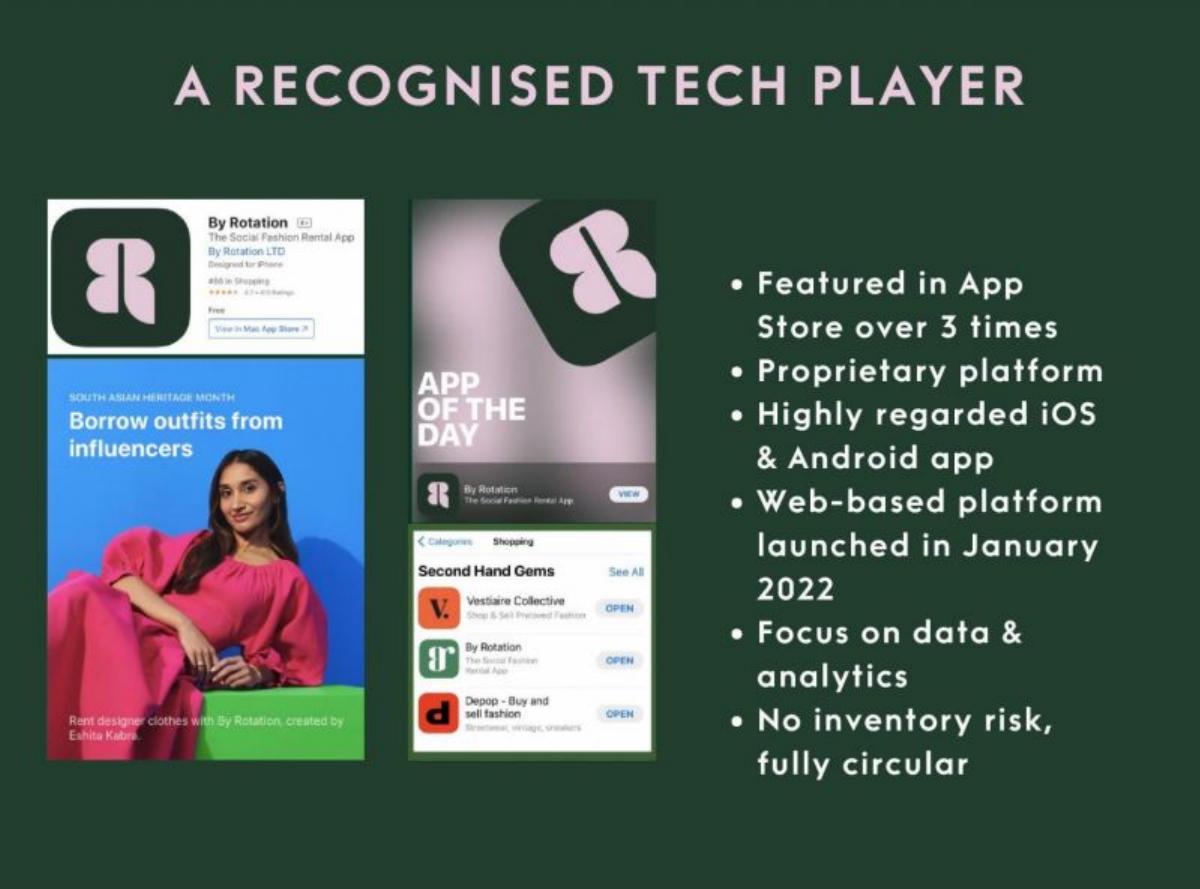
- By Rotation operates an inventory-light model with 'no inventory risk,' positioning itself as fully circular (Slide 6).
- The audience is highly targeted, with 95% female users and 61% aged between 25-34 (Slide 3).
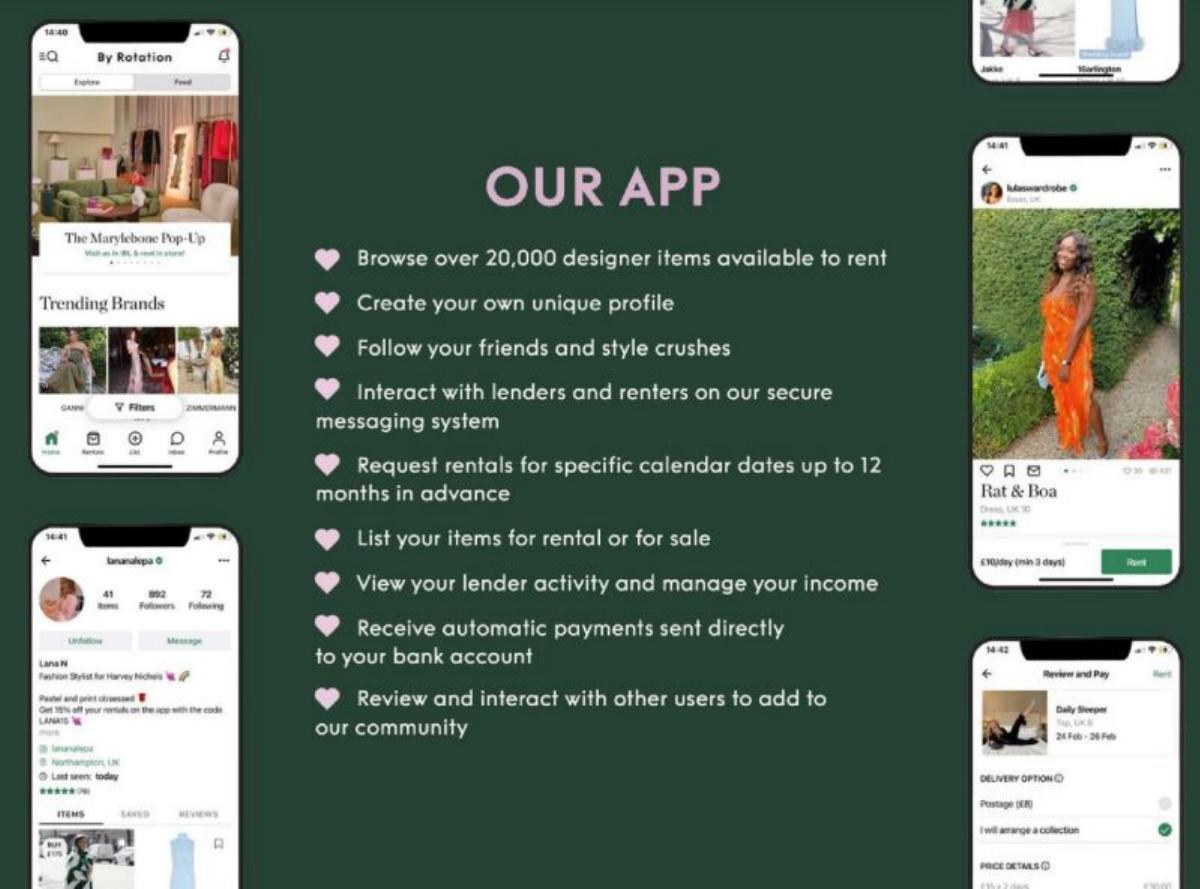
- The app serves as a social network where users can follow 'style crushes' and interact via secure messaging (Slide 4).
- Sustainability is a core value proposition, claiming to have saved 580 million glasses of water in 2021 (Slide 7).
- The company uses physical pop-up spaces to strengthen community relationships and brand life (Slide 10).
- Monetization is proven through user testimonials, such as one 'Rotator' earning over £7,000 (Slide 8).
- The deck emphasizes press validation, specifically a Forbes headline calling it the app that 'wants to end fast fashion' (Slide 11).
The By Rotation Pitch Deck Teardown
By Rotation’s 14-slide Seed deck is a masterclass in lifestyle branding for a tech-enabled marketplace. In an industry often bogged down by the logistics of dry cleaning and inventory management, By Rotation pivots the conversation toward community, social interaction, and environmental impact. This teardown examines how they leveraged social proof and high-level engagement metrics to secure $3M in Seed funding.
Slides 1-2: Brand Identity and Mission
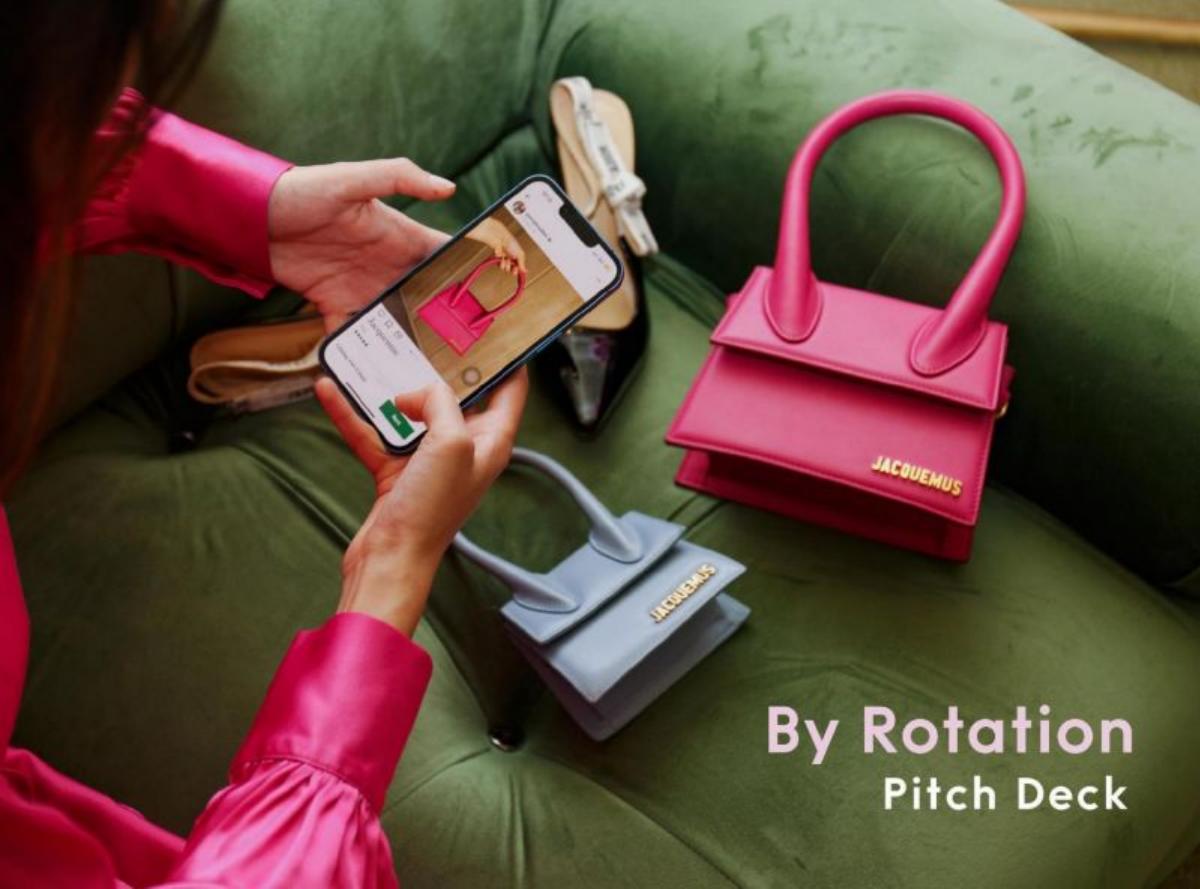
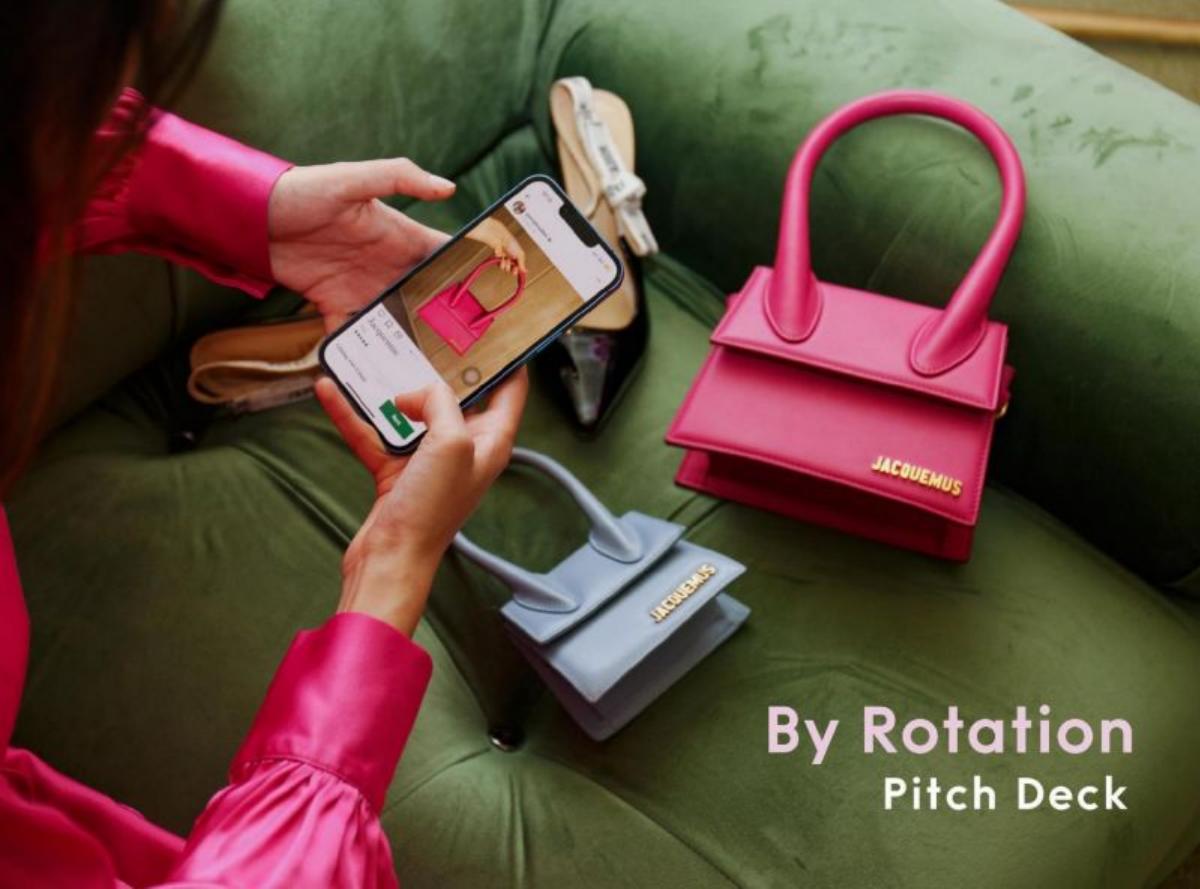
The deck opens with a high-quality lifestyle image on Slide 1 , immediately establishing the aesthetic of the brand. There is no tagline here, just the logo and the words 'Pitch Deck.' This minimalism suggests a brand that relies on its visual identity.
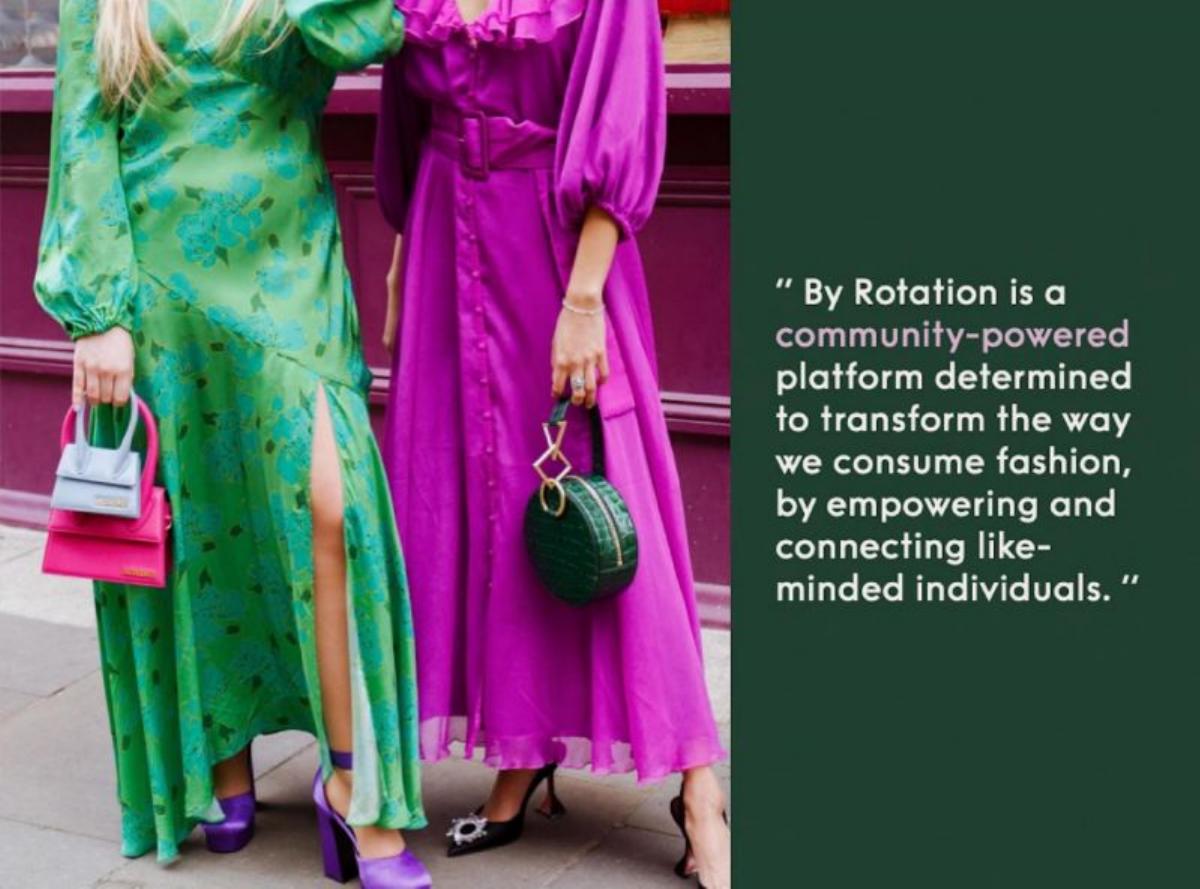
Slide 2 defines the company as a 'community-powered platform.' The mission statement is clear: to transform fashion consumption by 'empowering and connecting like-minded individuals.' By using the word 'individuals' rather than 'customers,' they reinforce the peer-to-peer (P2P) nature of the business model from the outset.
Slide 3: Traction and Audience Metrics
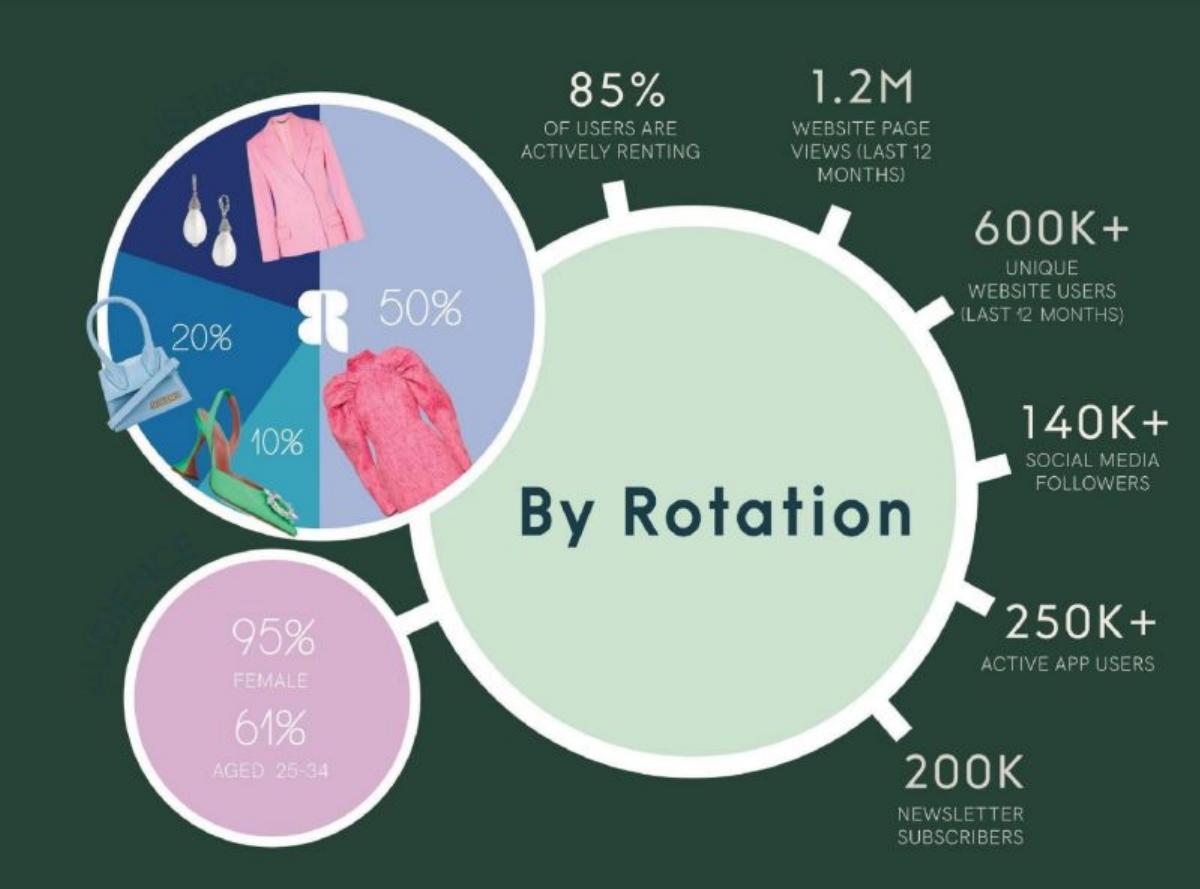
This is the 'meat' of the early deck. Slide 3 uses a bubble-chart layout to present several key performance indicators (KPIs). The most significant figure is that 85% of users are actively renting . This is a remarkably high conversion/retention metric for a marketplace. Other figures include:
1.2M website page views (last 12 months). · 600K+ unique website users (last 12 months). · 250K+ active app users. · 200K newsletter subscribers. · 140K+ social media followers.
The slide also breaks down the audience: 95% female and 61% aged 25-34 . A small pie chart shows the listing categories, with dresses making up 50% of the inventory, followed by bags at 20% , and shoes/accessories at 10% and 20% respectively.
Slide 4: Product and Social Features
Slide 4 focuses on the app's functionality. It lists nine core features, emphasizing the social network aspect. Users can 'follow your friends and style crushes' and 'interact with lenders and renters on our secure messaging system.' This slide confirms the P2P nature of the platform, noting that users can 'list your items for rental or for sale' and 'receive automatic payments sent directly to your bank account.'
Slide 5: The Team
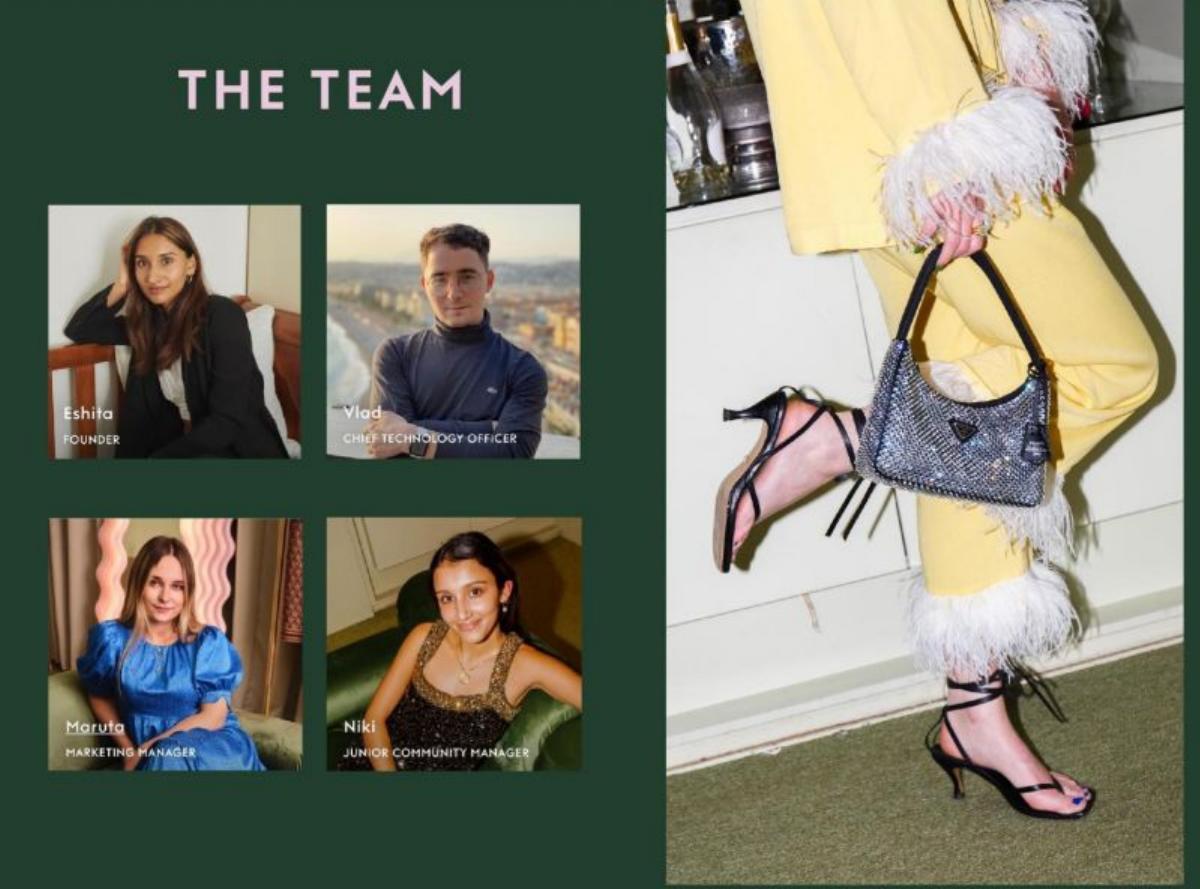
Slide 5 introduces the leadership. It features Eshita (Founder), Vlad (Chief Technology Officer), Maruta (Marketing Manager), and Niki (Junior Community Manager). While the slide is visually consistent with the rest of the deck, it lacks 'pedigree' markers—there are no logos of previous companies or universities, which is a common omission in early-stage decks that rely more on current traction than past resumes.
Slide 6: Technical Recognition and Business Model
Slide 6 positions By Rotation as a 'recognised tech player.' It highlights that the app has been featured in the App Store over 3 times and was named 'App of the Day.' Crucially, this slide clarifies the business model: 'No inventory risk, fully circular.' This is a vital point for investors, as it distinguishes By Rotation from 'Rent the Runway' style models that require heavy capital expenditure to purchase and store clothing.
Slide 7: Sustainability Impact
Sustainability is a major theme in fashion tech. Slide 7 cites the IPCC and UNECE to frame the problem (fashion is responsible for 10% of global CO2 emissions). It then quantifies By Rotation's 2021 impact: saving the equivalent of 60,000 trees worth of CO2 and 580M glasses of water . These are 'sticky' metrics that help an investor justify the ESG (Environmental, Social, and Governance) value of the investment.
Slides 8-10: Community and Physical Presence
Slide 8 provides social proof through three testimonials. One user, @tiffanyluckett, claims to have made over £7,000 by renting out items from her wardrobe. This proves the supply-side incentive of the marketplace.
Slide 9 and 10 focus on 'Community Events' and 'Pop-Ups.' The deck explains that they have a 'constant cycle of in-person events' and have partnered with brands like Caudalie and Guerlain. This physical presence is presented as a way to 'bring our brand to life' and 'further strengthen our relationship with our community.' For a digital app, this level of offline engagement is a differentiator.
Slides 11-13: Press and Partnerships
Slide 11 is a 'Press' slide dominated by a Forbes quote: 'The Clothing Rental App That Wants To End Fast Fashion.' It also lists Vogue Business, Evening Standard, BBC, and Refinery29.
Slide 12 lists corporate partnerships, including Bumble, THE OUTNET, Westfield, and Secret Spa . These logos suggest the brand has high-market appeal and can play well with established enterprise players.
Slide 13 is a 'Partnership Case Study' regarding a 2021 collaboration with the hotel chain Page8 to offer a 'fashion rental concierge service.' This slide is used to demonstrate 'innovation and news-worthy partnerships,' citing a 4-page spread in Stella Magazine as a result.
What Works in This Deck
Visual Consistency: The deck uses a dark green and soft pink palette that feels premium and fashion-forward. · Clear Differentiation: By repeatedly emphasizing 'community' and 'social,' they distance themselves from being 'just another rental site.' · The 'No Inventory' Hook: For Seed investors, the lack of inventory risk (Slide 6) is the most attractive part of the business model. · Quantified Sustainability: Instead of vague 'we are green' statements, they provided specific (if estimated) figures on water and CO2 savings.
What Is Missing
The Ask: There is no slide detailing how much they are raising or what the milestones for the next 18 months are. · Unit Economics: While we see a user made £7,000, we don't see the platform's take rate, Customer Acquisition Cost (CAC), or Lifetime Value (LTV). · Competitor Analysis: The deck does not mention competitors like Hurr or Depop, leaving the investor to do their own market mapping. · Financial Projections: There are no charts showing revenue growth or future targets.
What a Founder Should Copy
Founders building marketplace apps should emulate Slide 3 . It manages to pack six different types of traction into one slide without feeling cluttered. Additionally, the use of a Partnership Case Study (Slide 13) is a great way to show how a startup can punch above its weight class by collaborating with established brands. Finally, if your business has a social mission, Slide 7 shows how to use third-party data (IPCC) to validate your impact metrics.
Frequently asked questions
- What is By Rotation's business model?
- Based on the deck, By Rotation operates a peer-to-peer (P2P) marketplace model for fashion rental. Slide 6 explicitly states they have 'no inventory risk,' meaning they do not buy or hold the clothes themselves. Instead, they provide the proprietary platform (iOS, Android, and Web) that allows individuals to list their own items for rental or sale, taking a fee on transactions while the community handles the 'rotation' of goods.
- How much did By Rotation raise with this deck?
- According to the catalogue facts, By Rotation raised $3M in a Seed round in 2022. Interestingly, the deck itself does not include a 'The Ask' slide or a breakdown of how the funds would be allocated, which suggests this version of the deck may have been used as a teaser or supplemented by a separate financial document during investor meetings.
- Who is the target demographic for the app?
- Slide 3 provides a clear breakdown of their audience: 95% are female, and 61% fall within the 25-34 age bracket. This millennial-heavy demographic aligns with the 'social' features of the app, such as following friends and 'style crushes,' as detailed on Slide 4.
- What are the key engagement metrics shown?
- The deck highlights several impressive top-of-funnel and engagement metrics on Slide 3: 1.2M website page views and 600k+ unique website users over 12 months, 250k+ active app users, and a 200k-strong newsletter subscriber list. Most notably, they claim 85% of their users are 'actively renting.'
- How does the company address sustainability?
- Sustainability is a primary pillar of their pitch. Slide 7 quantifies their impact, stating that in 2021, the community saved the CO2 equivalent of 60,000 trees and 580 million glasses of water by choosing to rent instead of buying new. They position themselves as a 'fully circular' solution to the fashion industry's 10% contribution to global carbon emissions.