Wayward Strand’s pitch deck is a masterclass in communicating a complex, non-traditional gameplay mechanic through clear visual storytelling. Rather than focusing on high-octane action, the deck prioritizes the 'simultaneous narrative'—a technical and creative feat where NPCs live their lives independently of the player. By emphasizing that a single playthrough only reveals a fraction of the content (2-3 hours out of a much larger web), the deck establishes high replayability and technical defensibility. While it lacks traditional venture metrics like CAC or LTV, it successfully sells the 'vi…
Key takeaways
- The game features a unique 'simultaneous' narrative where all character threads play out at once (Slide 1).
- Gameplay is structured over a fixed period of three in-game days (Slide 2).
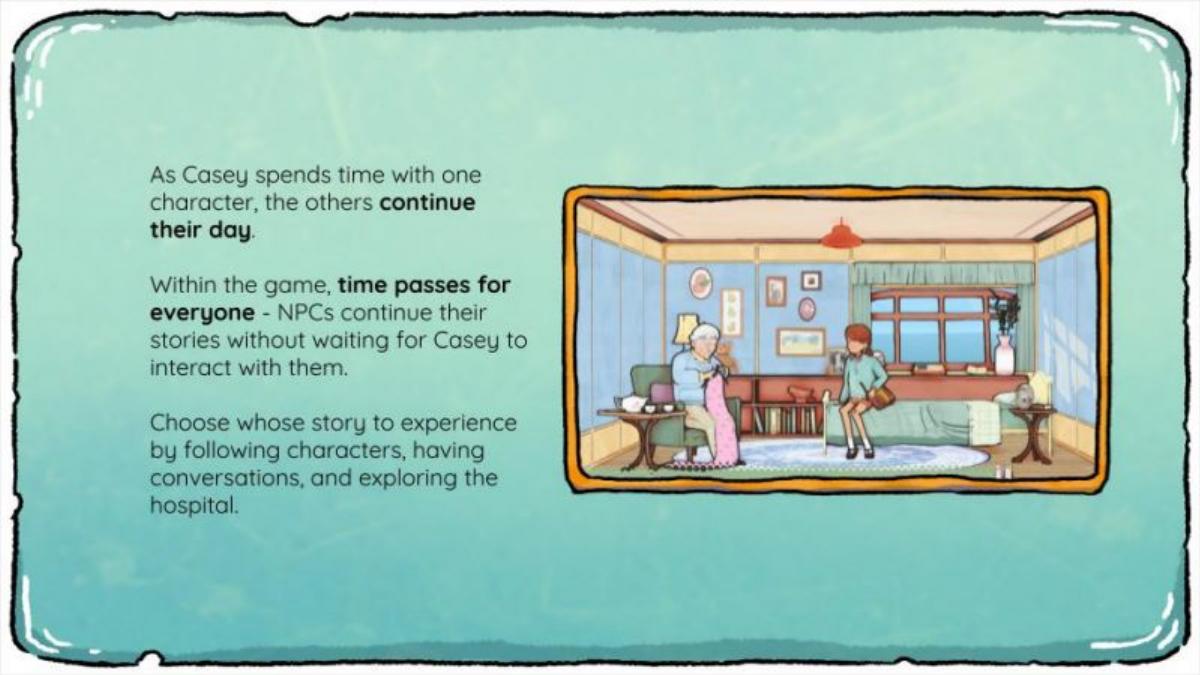
- NPCs are designed to be completely independent, continuing their stories regardless of player interaction (Slide 3).
- The deck highlights a custom-developed toolset used to manage complex, time-based story structures (Slide 11).
- A single playthrough takes 2-3 hours, but seeing all content requires a dozen or more playthroughs (Slide 11).
- The game intentionally omits a 'fail case,' focusing on empathy and exploration rather than skill (Slide 12).
- The development team, Ghost Pattern, includes veterans from titles like The Sims FreePlay and Armello (Slide 14).
- The deck lacks all traditional financial projections, budget breakdowns, and specific funding asks (Slides 1-16).
The Narrative-First Pitch: Wayward Strand
Wayward Strand is an indie game that defies traditional genre conventions. Developed by the Australian studio Ghost Pattern, the game is set on an airborne hospital in the 1970s. The pitch deck is not a collection of spreadsheets and growth hacks; instead, it is a visual and conceptual guide to a new type of interactive storytelling. In this teardown, we look at how the team communicated a complex technical achievement—simultaneous character schedules—as a cozy, accessible consumer product.
Slides 1-4: Setting the Scene and the Protagonist
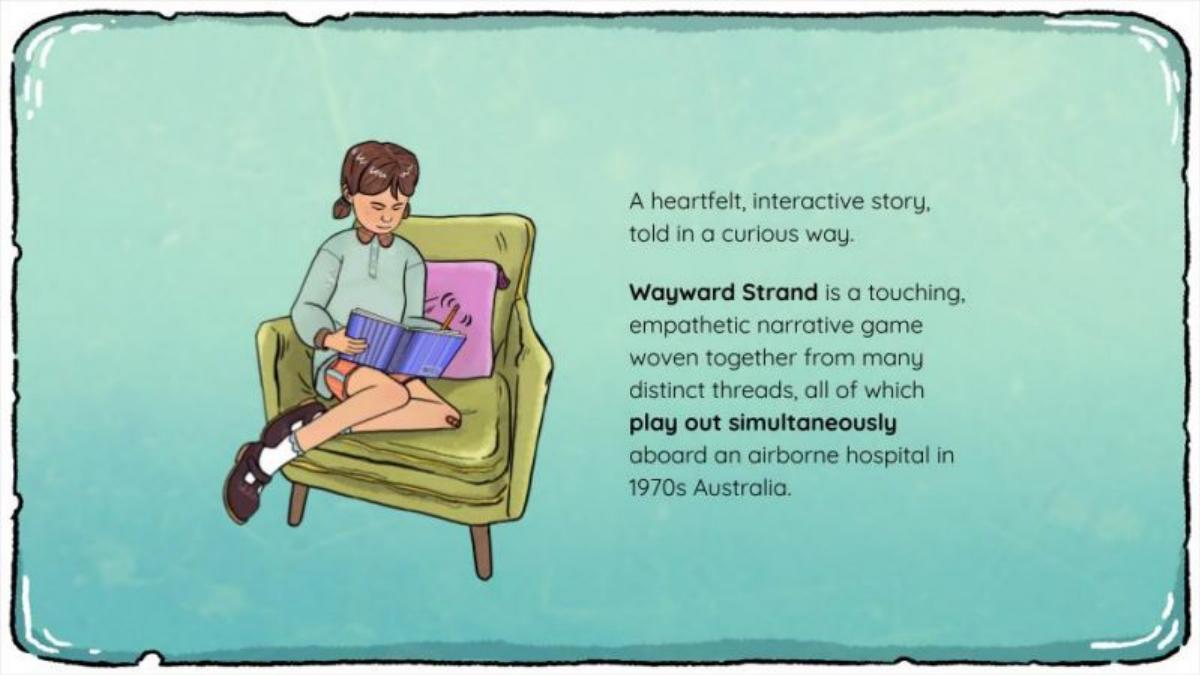
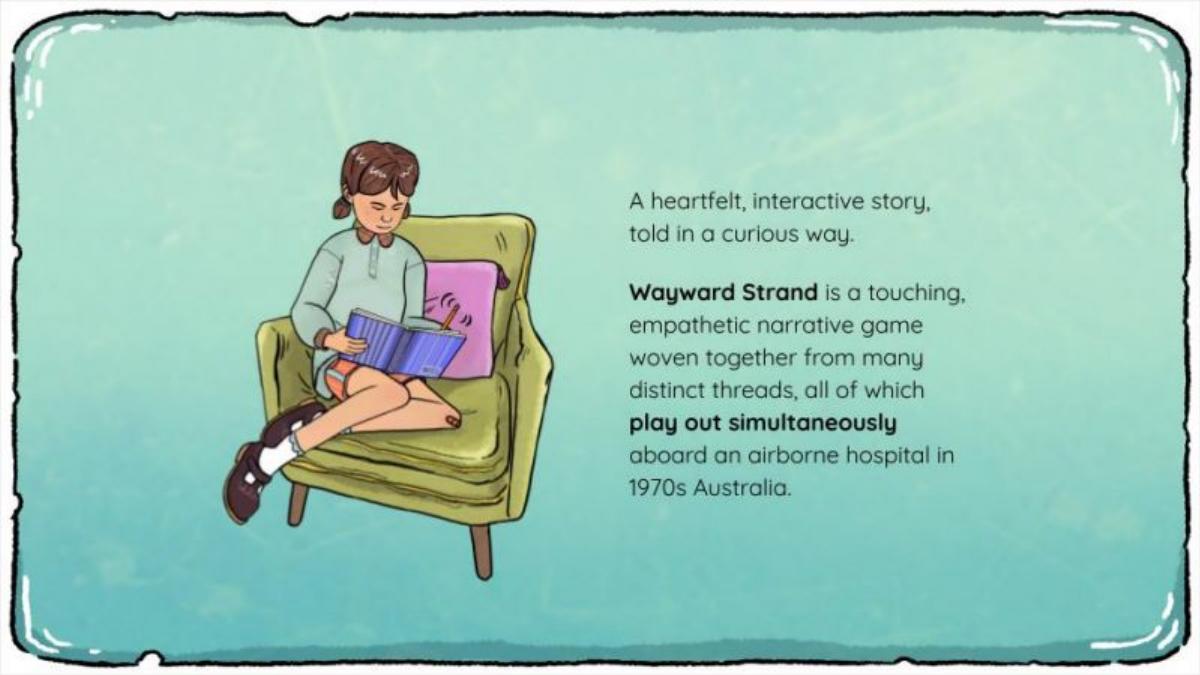
The deck opens with a clear, atmospheric introduction. Slide 1 defines Wayward Strand as a "heartfelt, interactive story" where threads "play out simultaneously." This is the most important hook of the deck. It immediately differentiates the project from standard RPGs or adventure games where the world revolves around the player.
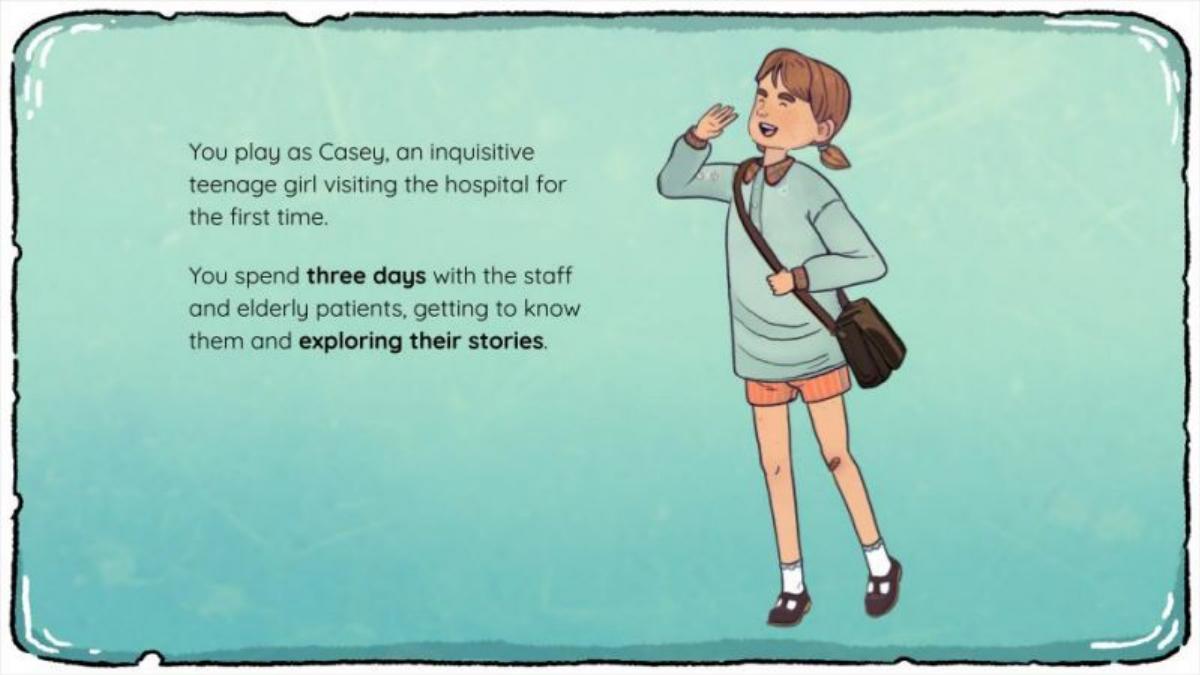
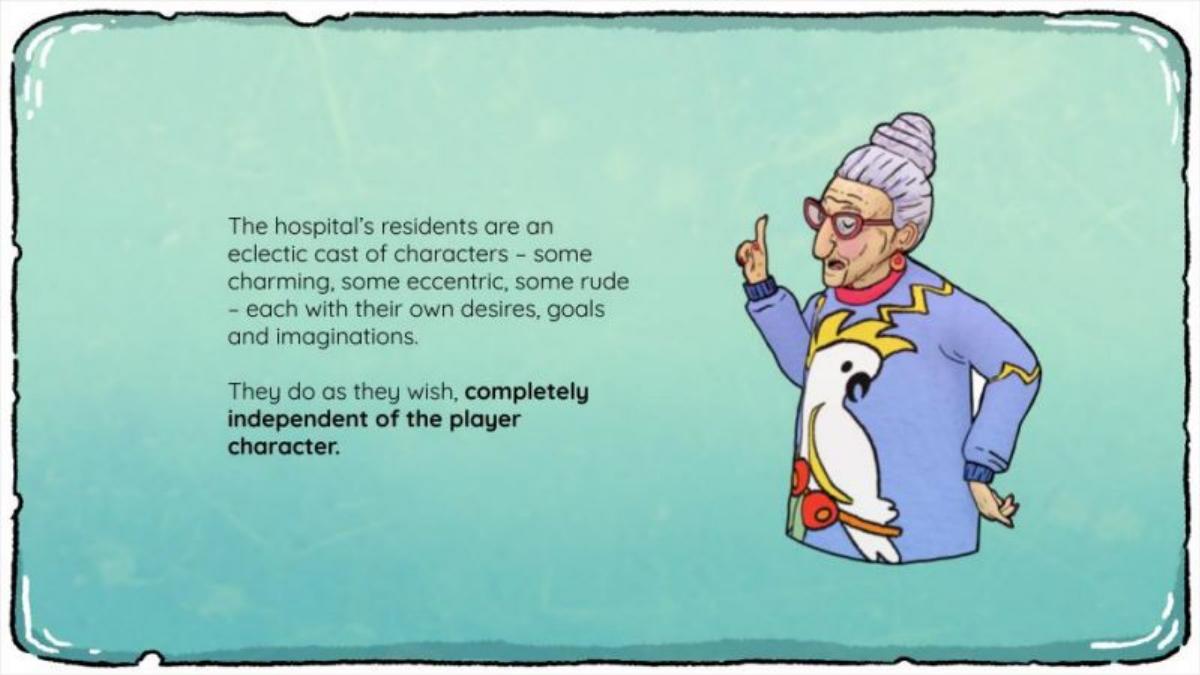
Slide 2 introduces the player character, Casey, a teenage journalist. By giving her a specific role (visiting for three days) and a specific tool (a notebook, mentioned later), the deck establishes the gameplay loop: observe, record, and interact. Slide 3 and Slide 4 reinforce the independence of the NPCs. The deck notes that residents do as they wish, "completely independent of the player character." This sets up the central conflict of the gameplay: you cannot be everywhere at once, which necessitates multiple playthroughs.
Slides 5-8: Defining the Gameplay Loop
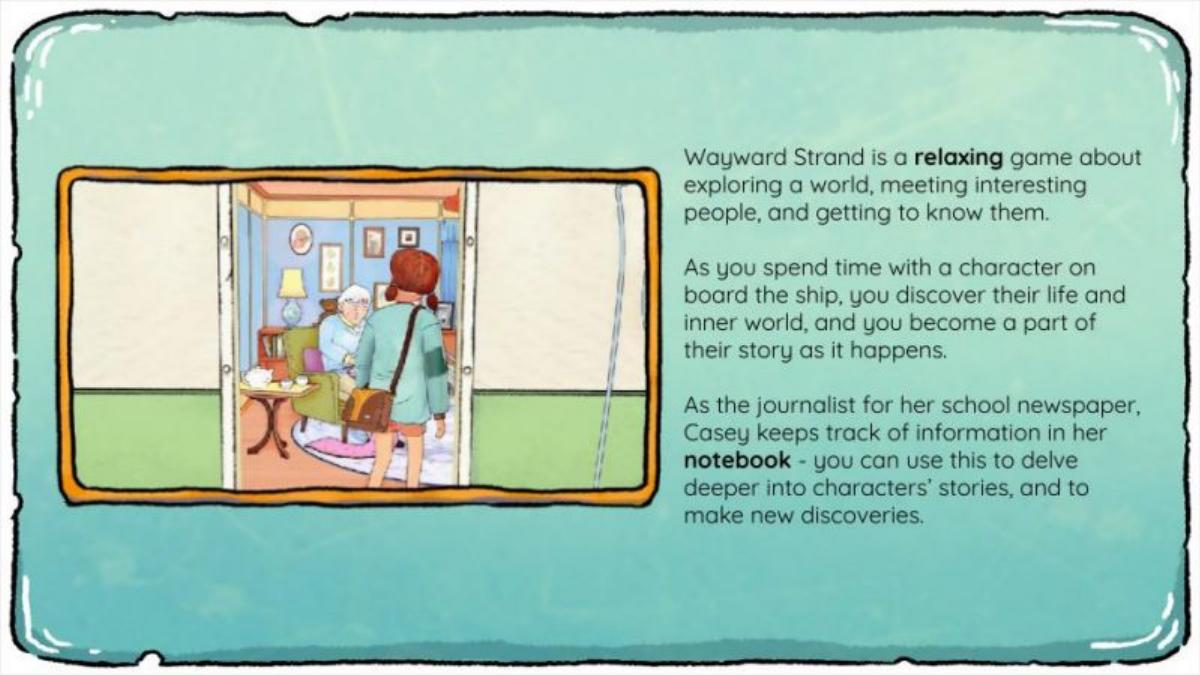
The "Gameplay" section begins on Slide 5 . Slide 6 describes the experience as "relaxing" and highlights the notebook mechanic. This is a clever way to show how the game handles information density without overwhelming the player. The notebook is the UI solution for a complex narrative.
Slide 7 and Slide 8 detail the specific verbs available to the player: follow, eavesdrop, interrupt, and converse. These are low-friction interactions. Slide 8 also mentions that every character is "fully voiced," which is a significant production detail that hints at the project's scope and budget requirements without showing a line-item spreadsheet.
Slides 9-11: The Technical Moat - Simultaneous Stories
Slide 9 acts as a transition to the "Living Narrative" section. Slide 10 claims the game has a "unique narrative structure" with over a dozen characters. However, Slide 11 is the most critical slide in the deck for an investor or publisher. It shows a screenshot of the studio's custom-developed toolset.
This slide proves that the "simultaneous stories" claim isn't just a creative ambition—it’s a technical reality. The visualization of rows (characters) and columns (time) shows how the team manages the complexity of dozens of scenes playing out at once. By stating that a single playthrough is 2-3 hours but seeing everything takes "a dozen or more playthroughs," the team is pitching a high-density content model that maximizes the assets they've built.
Slides 12-13: Market Positioning and Accessibility
Slide 12 addresses the "No fail case." In the world of indie games, this is a polarizing choice, but the deck defends it by focusing on "deeper conversations" and "personal moments." It frames the lack of a lose-state as a feature that encourages exploration.
Slide 13 explicitly targets a broad demographic: "adults, children, grandparents alike." By stating that "skill is not the focus," the deck positions Wayward Strand in the same market as "cozy games" like Animal Crossing or Stardew Valley, which have seen massive commercial success by appealing to non-traditional gamers.
Slide 14: The Team (Ghost Pattern)
The team slide on Slide 14 provides the necessary credibility. While Wayward Strand is Ghost Pattern's first project together, the members have worked on high-profile titles including Armello , Cosmic Express , and The Sims FreePlay . Mentioning The Sims is particularly strategic here, as it is the gold standard for games featuring independent NPC AI and life-simulation elements.
Slides 15-16: Conclusion and Visual Identity
Slide 15 is a beautiful full-page piece of key art showing the airborne hospital. It serves as a reminder of the game's unique aesthetic and setting. Slide 16 is a standard thank you slide with the website URL. Notably, there is no contact information for a specific founder or a call to action regarding a funding round.
What Wayward Strand Does Well
Visual Consistency: The deck uses a hand-drawn, scrapbook-style border and a consistent color palette that matches the game's art style. This makes the deck feel like an extension of the product itself. · Technical Proof: Slide 11 is the "money slide." It takes a vague concept (simultaneous stories) and shows the actual engine/tool used to build it. This reduces the perceived risk of the project's complexity. · Clear Value Prop: The deck never wavers from its core message: this is an empathetic, non-linear story about people. It doesn't try to pretend it's an action game or a platformer.
What is Missing from the Deck
The Ask: There is no slide indicating how much money the studio is looking for or what the terms of the investment are. · Financial Projections: There are no sales targets, pricing strategies, or revenue forecasts. While common in indie game pitches to publishers, a VC would find this omission glaring. · Market Analysis: The deck mentions a broad audience but doesn't provide data on the size of the "narrative game" market or list specific competitors (e.g., 80 Days or Firewatch). · Roadmap: There is no timeline for development, alpha/beta testing, or the final release date (though catalogue facts state it was released in 2022).
What Founders Should Copy
Show the Tools: If you are building something with a unique technical hook, show the backend. The scheduling tool on Slide 11 does more to convince an observer of the game's viability than five slides of text ever could. · Define the 'Verbs': Slide 7 and 8 clearly define what the player does. Many narrative pitches get bogged down in plot summaries; Wayward Strand stays focused on the mechanics of interaction. · Lead with the Hook: The "simultaneous narrative" is mentioned on the very first slide. Don't make your audience wait until the middle of the deck to understand your 'unfair advantage' or unique selling point.
Frequently asked questions
- What is the primary innovation pitched in the Wayward Strand deck?
- The primary innovation is the 'Simultaneous Narrative' structure. Unlike traditional games where the world waits for the player to trigger events, Wayward Strand’s characters follow a strict schedule over three days. Slide 11 shows a complex scheduling tool where rows represent characters and columns represent time, proving the studio built a custom technical solution to handle this non-linear storytelling.
- How does the deck address replayability?
- Replayability is a core value proposition. Slide 11 explicitly states that while a single playthrough is only 2-3 hours, it takes 'a dozen or more playthroughs' to see everything. This suggests a high value-to-price ratio for consumers, as the 'countless stories' (Slide 10) cannot be exhausted in one sitting.
- Who is the target audience according to the pitch?
- The deck claims 'Anyone can play,' specifically mentioning adults, children, and grandparents (Slide 13). It positions the game as an accessible experience for people who enjoy fiction or cartoons with strong character development, rather than 'hardcore gamers' who prioritize control dexterity or skill-based challenges.
- What is missing from this deck that a VC would typically expect?
- This is a creative/publisher pitch rather than a standard VC deck. It completely omits financial data, including the total amount raised (listed as '--' in catalogue facts), marketing plans, distribution strategy, and unit economics. There is no 'Ask' slide detailing how much capital is needed or how it will be allocated.
- What is the significance of the 'No fail case' slide?
- Slide 12 uses the 'No fail case' to define the game's genre as a 'relaxing' and 'empathetic' experience. By removing the possibility of losing, the founders are signaling that the game’s retention and engagement come from emotional investment and curiosity rather than mechanical difficulty, which broadens the potential market to non-gamers.