Wax Music positions itself as a social discovery engine that solves the problem of unsold concert inventory by leveraging user engagement data. The deck highlights a clear funnel: following tastemakers leads to content engagement, which triggers personalized concert recommendations and in-app ticket purchases. With 25,000 registered users and 1.7 million algorithm inputs already processed, the team demonstrates early technical validation. The founders bring a mix of music industry experience and technical execution, having previously built a top-ranked travel app. However, the deck relies on…
Key takeaways
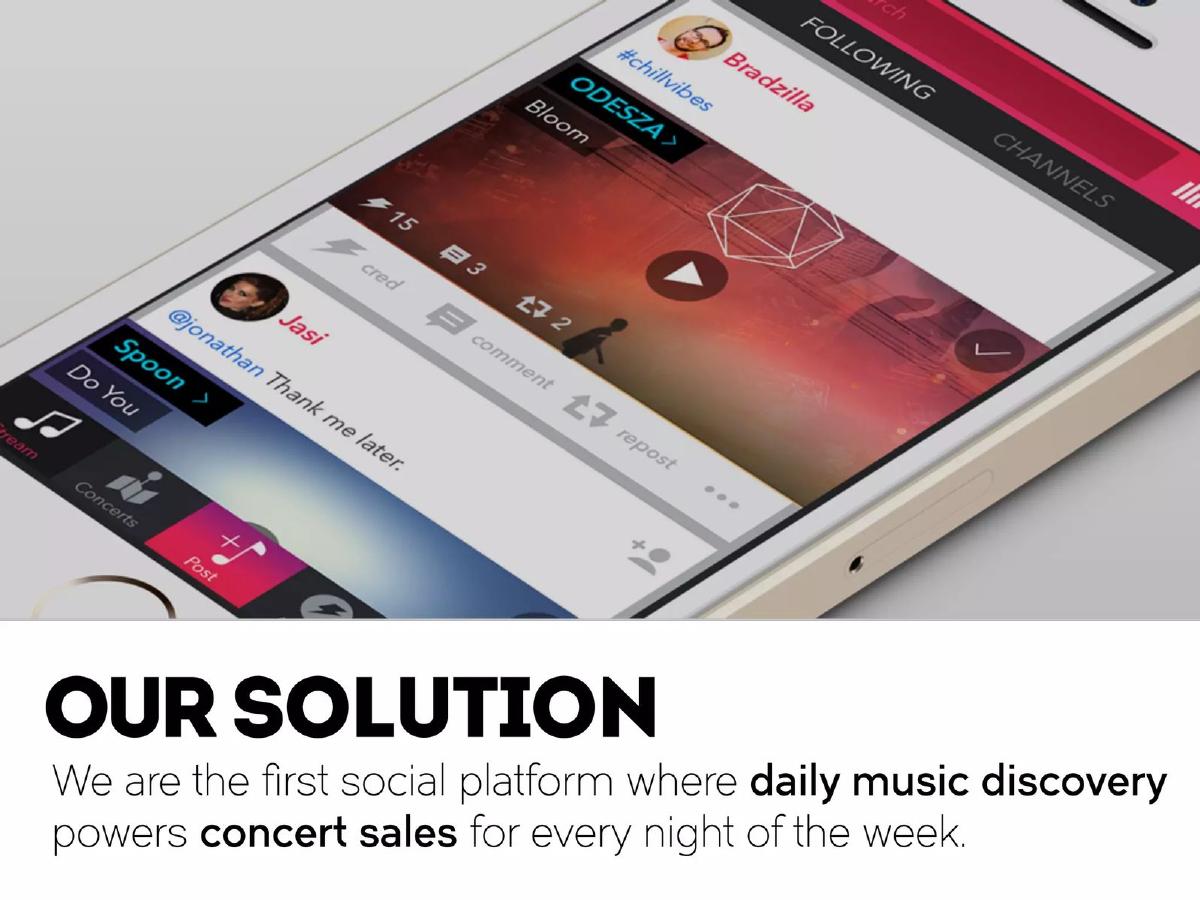
- The company defines itself as the first social platform where daily music discovery powers concert sales (Slide 2).
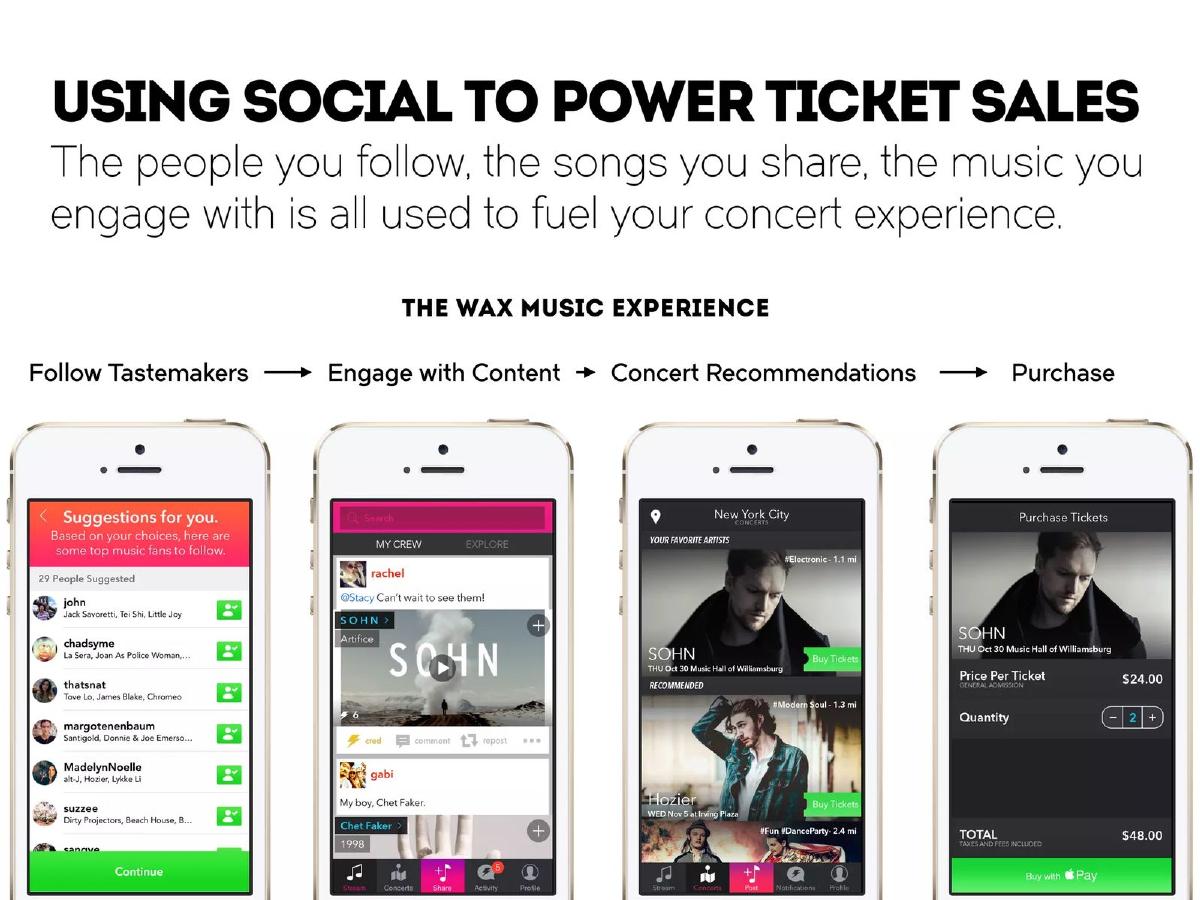
- Product functionality is built on a four-step user journey: Follow Tastemakers, Engage with Content, Concert Recommendations, and Purchase (Slide 3).
- Early traction metrics include 25,000 registered users and 60,000 songs shared (Slide 4).
- The platform has processed 1.2 million songs and 1.7 million algorithm inputs to refine recommendations (Slide 4).
- Market sizing targets a $24.9 billion concert and event promotion industry, citing 2014 IBIS World data (Slide 5).
- The core business hypothesis is that social engagement can unlock revenue opportunities for unsold tickets (Slide 5).
- The leadership team includes a CEO with 10 years in the music industry and a CPO/CTO duo who built the #1 travel app, Happy Cow (Slide 6).
- The fundraising ask is $750,000 for a Seed round, with $50,000 already committed at the time of the deck (Slide 7).
Wax Music: The Social-to-Ticket Funnel
Wax Music presents a pitch deck focused on the intersection of social media and live event commerce. The core thesis is that music discovery is currently fragmented from the act of purchasing concert tickets. By creating a unified social environment, Wax Music aims to capture the intent of music fans and direct it toward local live events, specifically helping venues move unsold inventory.
Slide 1: Title Slide
The deck opens with the Wax Music logo—a stylized '@' symbol that doubles as a vinyl record or a target, utilizing a pink-to-blue gradient. The branding is clean and modern, signaling a consumer-facing mobile application. There is no tagline or mission statement on this slide, leaving the brand name to stand alone.
Slide 2: Our Solution
Slide 2 introduces the value proposition: "We are the first social platform where daily music discovery powers concert sales for every night of the week." The slide features a high-fidelity mobile mockup showing a social feed with song snippets, 'cred' (likely a social currency or like equivalent), and comments. The emphasis on "every night of the week" suggests a focus on the long-tail of smaller club shows rather than just major stadium tours.
Slide 3: Using Social to Power Ticket Sales
This slide details the "Wax Music Experience" through a four-step linear process: Follow Tastemakers, Engage with Content, Concert Recommendations, and Purchase. Four mobile screens illustrate this journey. The first screen shows a "Suggestions for you" list of fans to follow. The second shows a social feed with a SOHN track. The third displays a localized concert recommendation for SOHN at the Music Hall of Williamsburg in New York, including the distance from the user (1.1 mi). The final screen shows a checkout page for two tickets at $24.00 each, featuring a "Buy with Apple Pay" button. This slide is effective because it demonstrates a complete, frictionless path to conversion.
Slide 4: Early Engagement
Wax Music uses Slide 4 to present their traction metrics. They list 25,000 Registered Users, 60,000 Songs Shared, 1.2 million Songs Processed, and 1.7 million Algorithm Inputs. The background image of a crowd at a concert reinforces the company's focus. The distinction between "songs shared" and "algorithm inputs" is important; it suggests that the platform is not just a social network but a data engine that learns from user behavior to improve its recommendation accuracy.
Slide 5: The Opportunity
The market sizing slide compares three figures: $1B for music streaming, $24.9B for concert & event promotion, and a forecasted $28.7B in 2019. The slide uses a bar chart to visually emphasize that the real revenue in the music industry lies in live events rather than streaming. The text states, "Wax Music users will go to more concerts and unlock revenue opportunities for unsold tickets." By citing an IBIS World report from September 2014, the deck establishes a professional research foundation, though the data is now several years old.
Slide 6: The Team
The team slide highlights three core leaders and three advisors. CEO Jonathan Lane is credited with 10 years in the music industry and co-founding a co-working space. CPO Dr. John Wolanin is a UI/UX designer with a dissertation on music and adolescent psychology. CTO Joseph Landon is a former Director of Platform Development for Break.com. A key credibility marker is included in a sub-note: John and Joe have built 30+ apps together, including "Happy Cow," which they claim reached #1 in the travel category. The advisors include individuals from ShareThis, AEG/Goldenvoice, and What If Sports, providing a mix of social media and live event industry expertise.
Slide 7: Fundraising
The final slide in this set outlines the financial ask. Wax Music is seeking $750,000 in Seed Financing, with $50,000 already committed. The milestones for this capital include establishing pilot venue partnerships, improving the "human-powered" music algorithm, adding location-based notifications, and expanding the platform to Android and Web. This slide is direct but lacks a specific timeline for these milestones.
What Wax Music Does Well
The deck excels at visualizing the user journey. By showing the exact screens a user encounters from discovery to purchase, the founders remove ambiguity about how the product works. The focus on "unsold inventory" is a smart strategic angle; venues and promoters are highly motivated to fill empty seats, making them potential partners rather than just vendors. The team slide also does a good job of highlighting the existing working relationship between the CPO and CTO, which reduces the perceived risk of technical execution failure.
What is Missing from the Deck
There are several critical omissions that a sophisticated investor would likely question. First, there is no mention of the business model or take-rate. Does Wax Music take a percentage of the ticket sale, or is it an affiliate model? Second, the deck does not address the competitive landscape. Established players like Bandsintown or Songkick offer similar discovery-to-ticket services, and the deck does not explain Wax Music's unique advantage over them. Third, there is no discussion of unit economics—specifically the Customer Acquisition Cost (CAC) versus the Lifetime Value (LTV) of a user who buys tickets. Finally, the market data is significantly outdated, which may lead investors to question the current relevance of the projections.
Founder Takeaways
Show the Flow: Like Slide 3, founders should always include a step-by-step visual of the user journey. It is the most efficient way to explain a complex social-to-commerce ecosystem. Highlight Proven Partnerships: The fact that the CPO and CTO had already shipped 30 apps together is a massive de-risking signal. If your team has a history of shipping successful products, make it a prominent part of your team slide. Target a Specific Pain Point: Instead of just saying "we sell tickets," Wax Music specifically mentions "unsold inventory." This identifies a specific pain point for the supply side of the market (venues), which makes the business case more compelling than a general marketplace play. Be Specific with Use of Funds: The fundraising slide clearly lists what will be built (Android/Web) and what business goals will be chased (pilot venues), which gives investors a clear picture of what their money is buying.
Frequently asked questions
- What is the primary problem Wax Music is trying to solve?
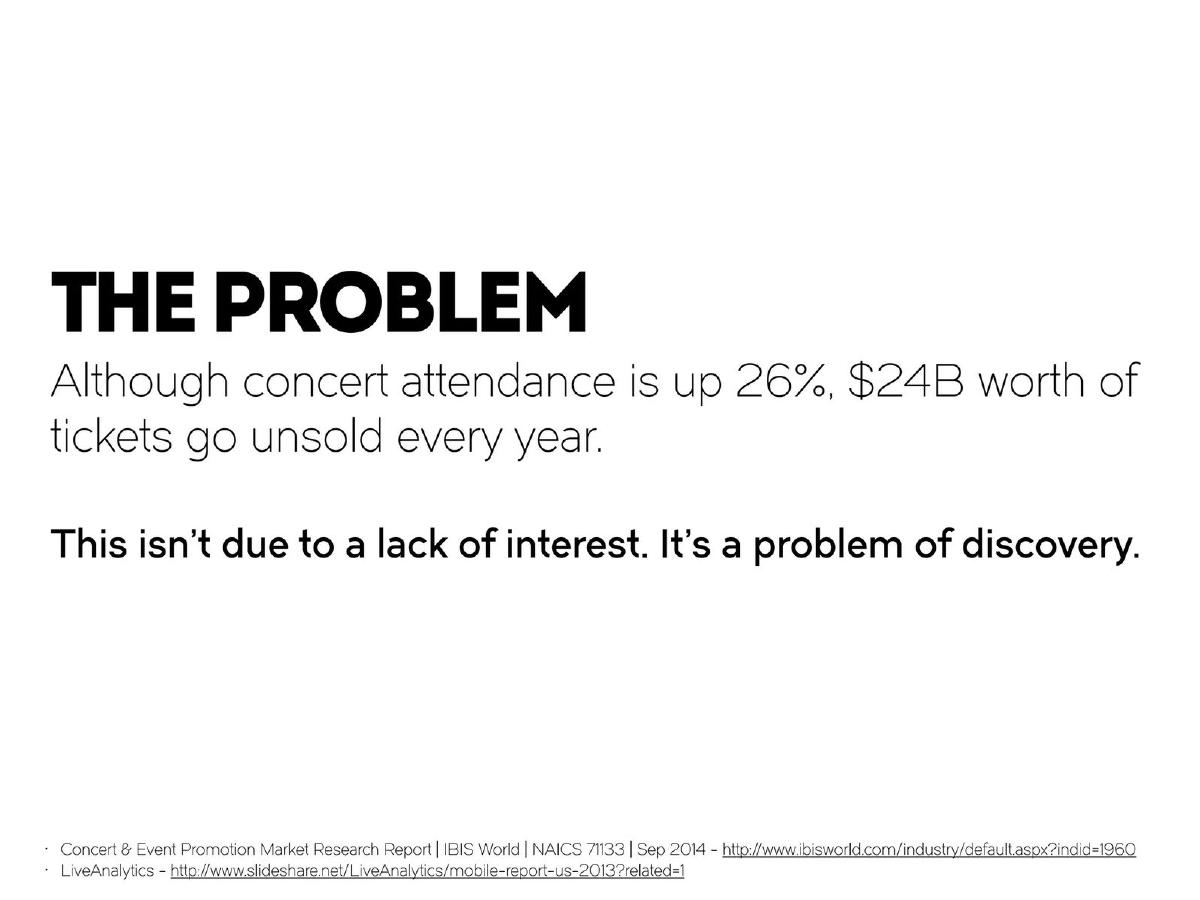
- Wax Music addresses the inefficiency in the concert industry where tickets often go unsold. By using social discovery—tracking who users follow and what they listen to—the platform provides hyper-personalized concert recommendations. The goal is to convert passive music listeners into active ticket buyers, specifically targeting the 'unsold inventory' segment of the $24.9 billion concert promotion market.
- How does the app's user experience lead to revenue?
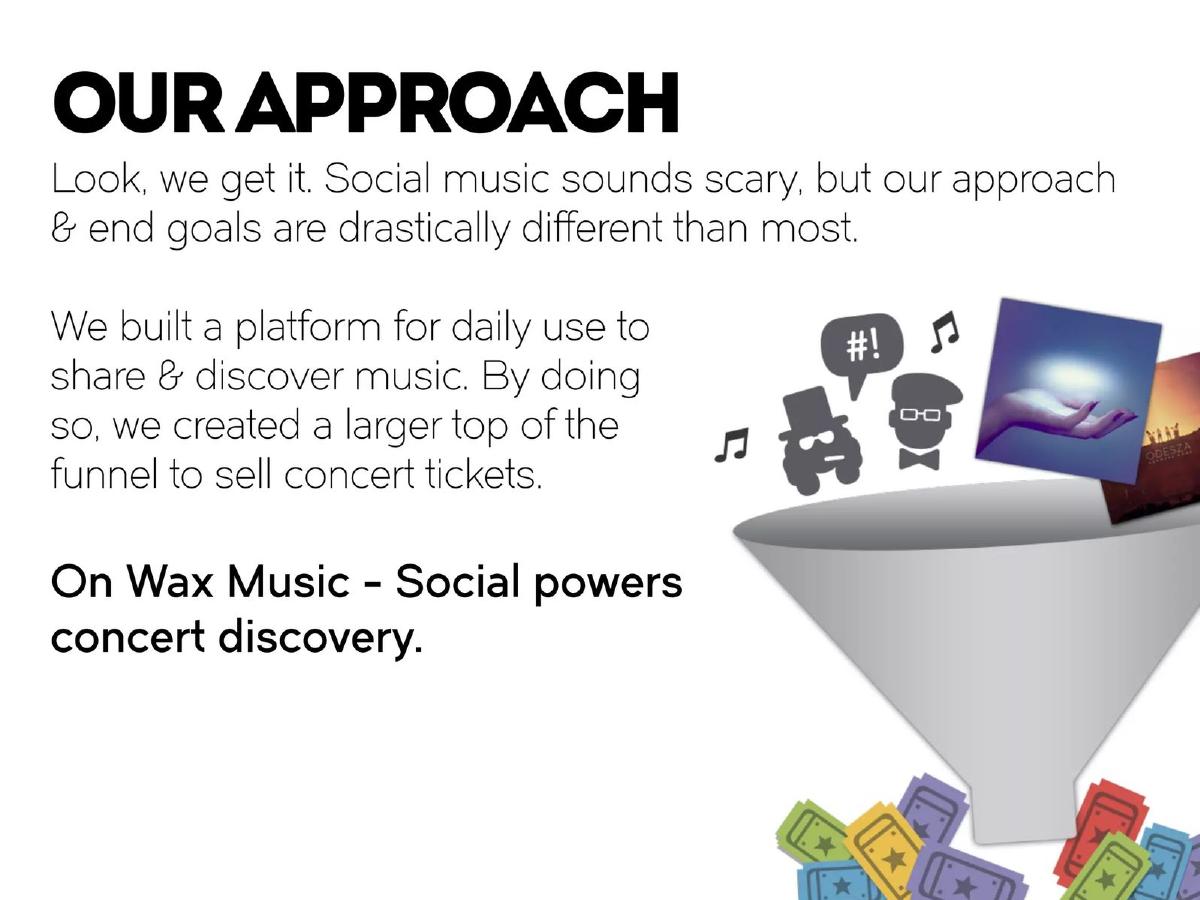
- The deck outlines a social-to-commerce funnel. Users follow 'tastemakers' and engage with shared songs. This activity feeds an algorithm that generates localized concert recommendations (e.g., showing a SOHN concert at Music Hall of Williamsburg). The final step is a frictionless purchase interface, including integration with Apple Pay, allowing the platform to capture a share of the transaction.
- What is the current stage of the product and its traction?
- At the time of this deck, Wax Music was in a seed stage with a functional iOS app. They reported 25,000 registered users and significant data collection, including 1.7 million algorithm inputs. The fundraising slide indicates they are looking to move beyond their initial iOS presence to include Android and Web versions, as well as formalizing pilot programs with venues.
- Who are the key people behind Wax Music?
- The team is led by CEO Jonathan Lane, who has a decade of experience at RocketScience and Adrenaline Records. The technical and design execution is handled by Dr. John Wolanin (CPO) and Joseph Landon (CTO). Notably, Wolanin and Landon have a history of collaboration, having shipped over 30 apps together, including the highly-ranked 'Happy Cow' travel application.
- What are the biggest risks or omissions in this pitch deck?
- The deck lacks a specific slide on unit economics or the take-rate from ticket sales. While it mentions 'unsold inventory,' it does not explain the legal or technical integrations required to access primary or secondary ticket markets (like Ticketmaster or StubHub). Additionally, the market data is dated (referencing 2014 and 2019 forecasts), which may not reflect current post-pandemic industry shifts.