Boosk is a Brazilian event technology platform designed to connect 'the right people to the right places.' The pitch deck outlines a four-step value proposition for both attendees (profiling, recommendation, decision, and purchase) and producers (promotion, sales, real-time analytics, and ticket validation). A significant portion of the presentation is dedicated to demonstrating traction, showing a sharp increase in user growth from 3,000 in February to a projected or realized 100,000 by June. By referencing major festivals like Lollapalooza Brasil and Rock in Rio, the deck attempts to contra…
Key takeaways
- The company positions itself with the tagline 'As pessoas certas, nos lugares certos' (The right people, in the right places) on slide 1.
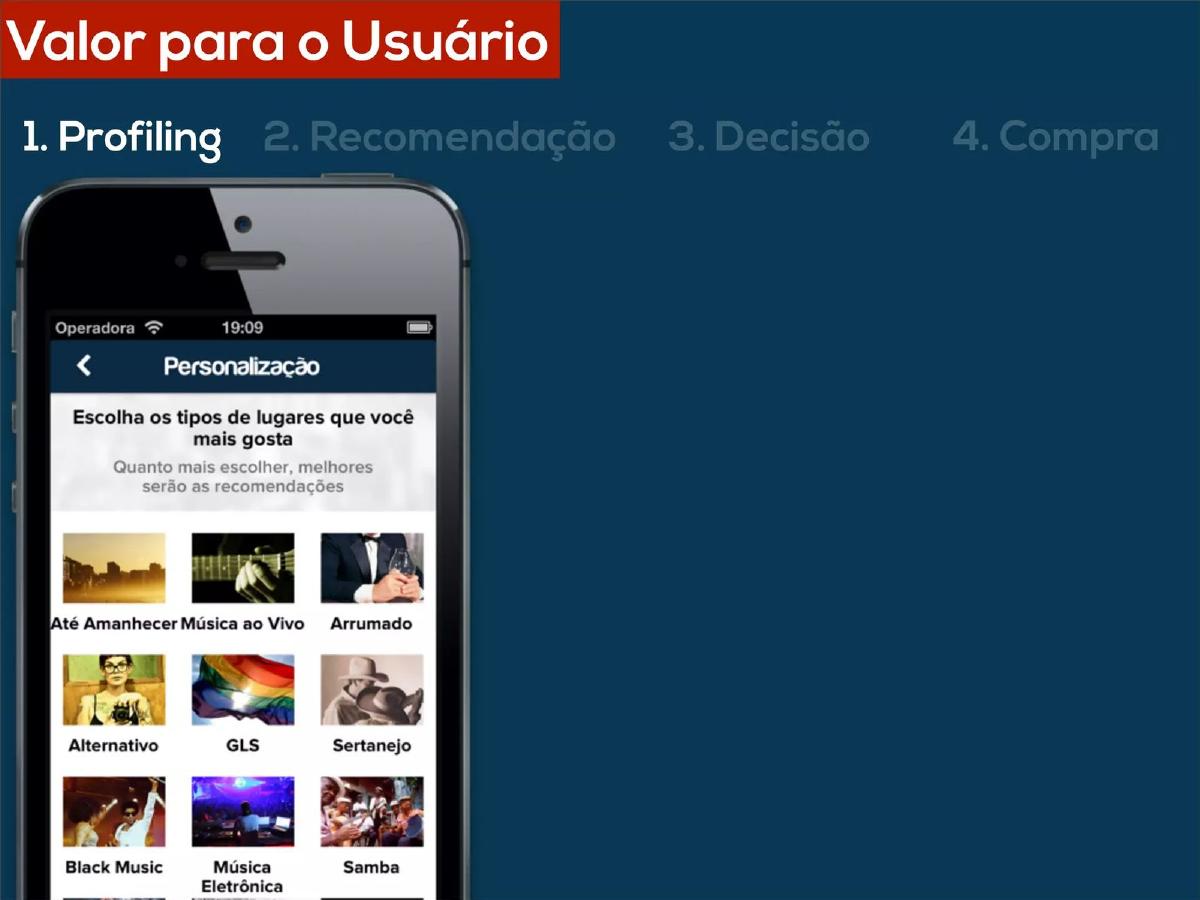
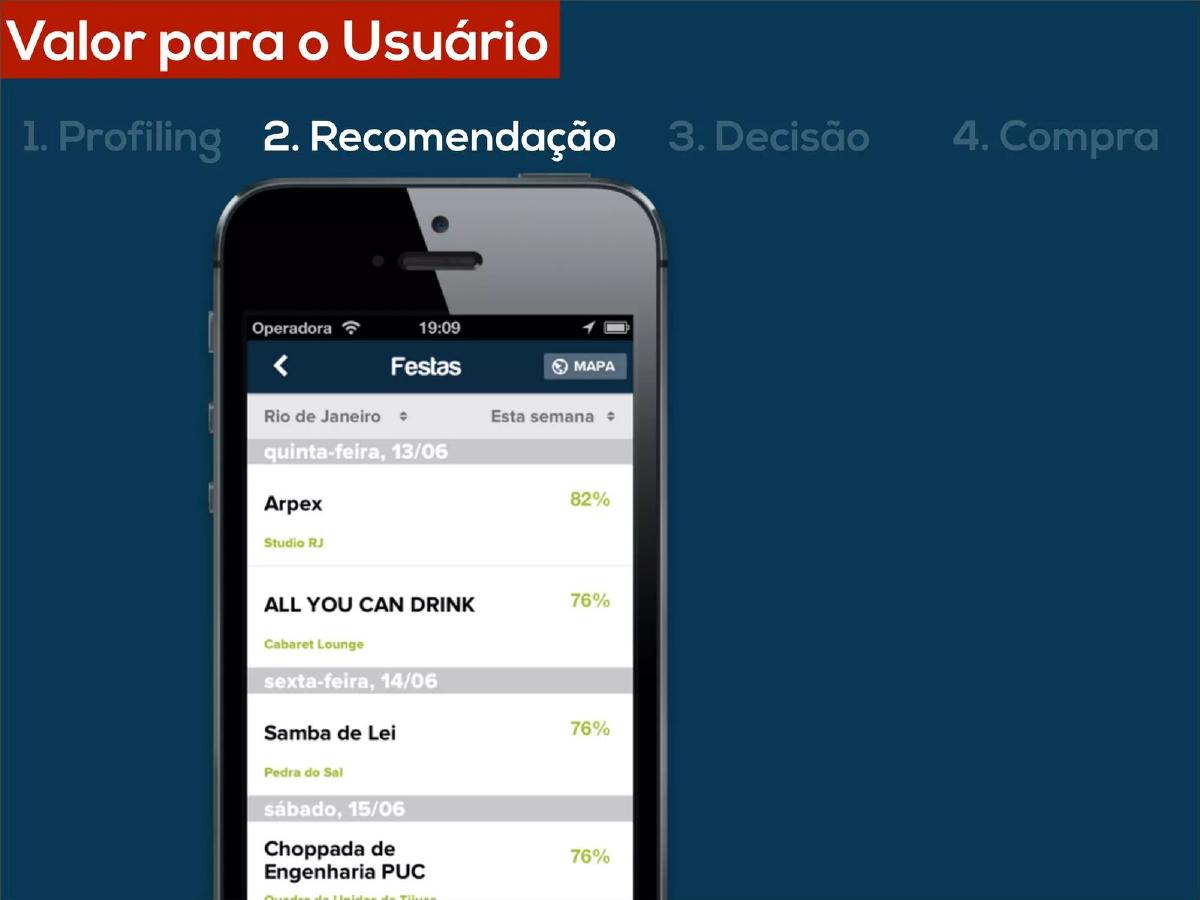
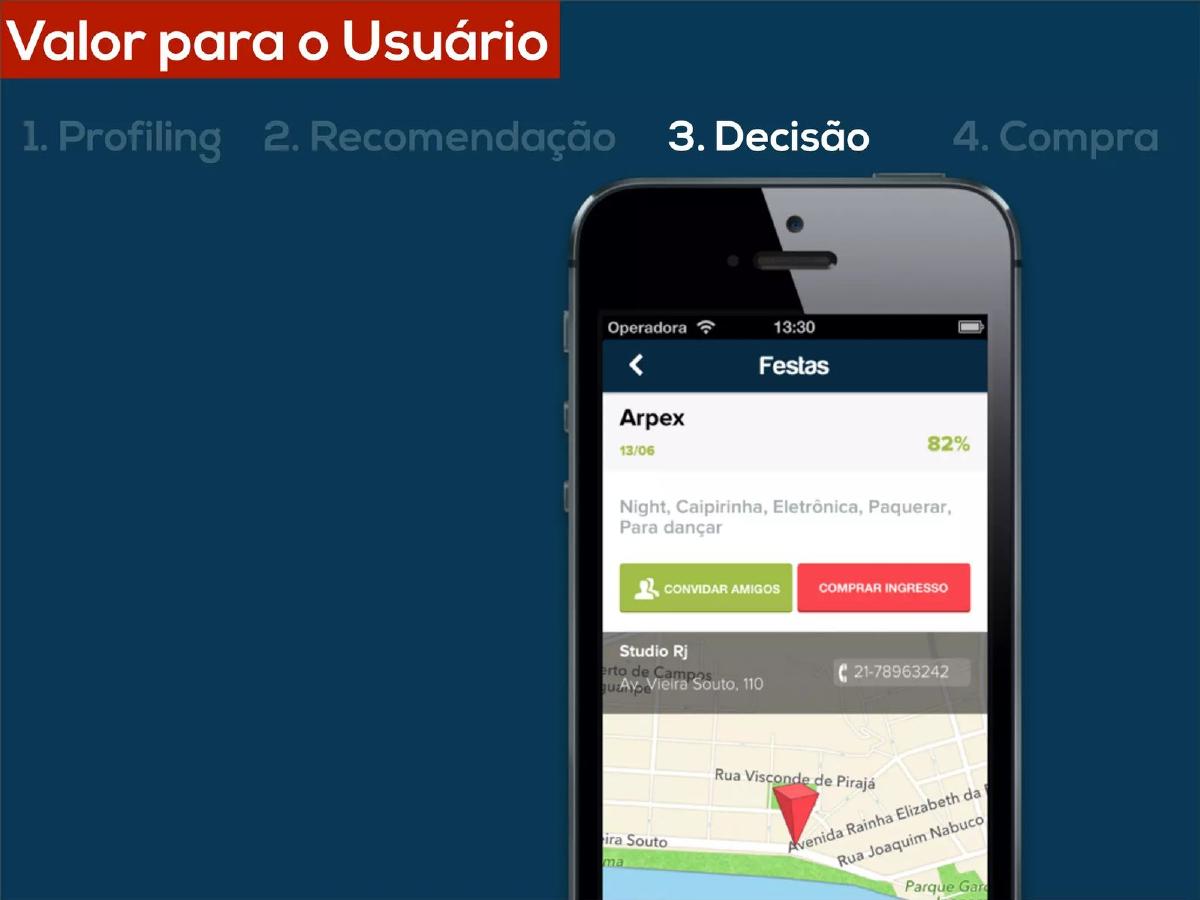
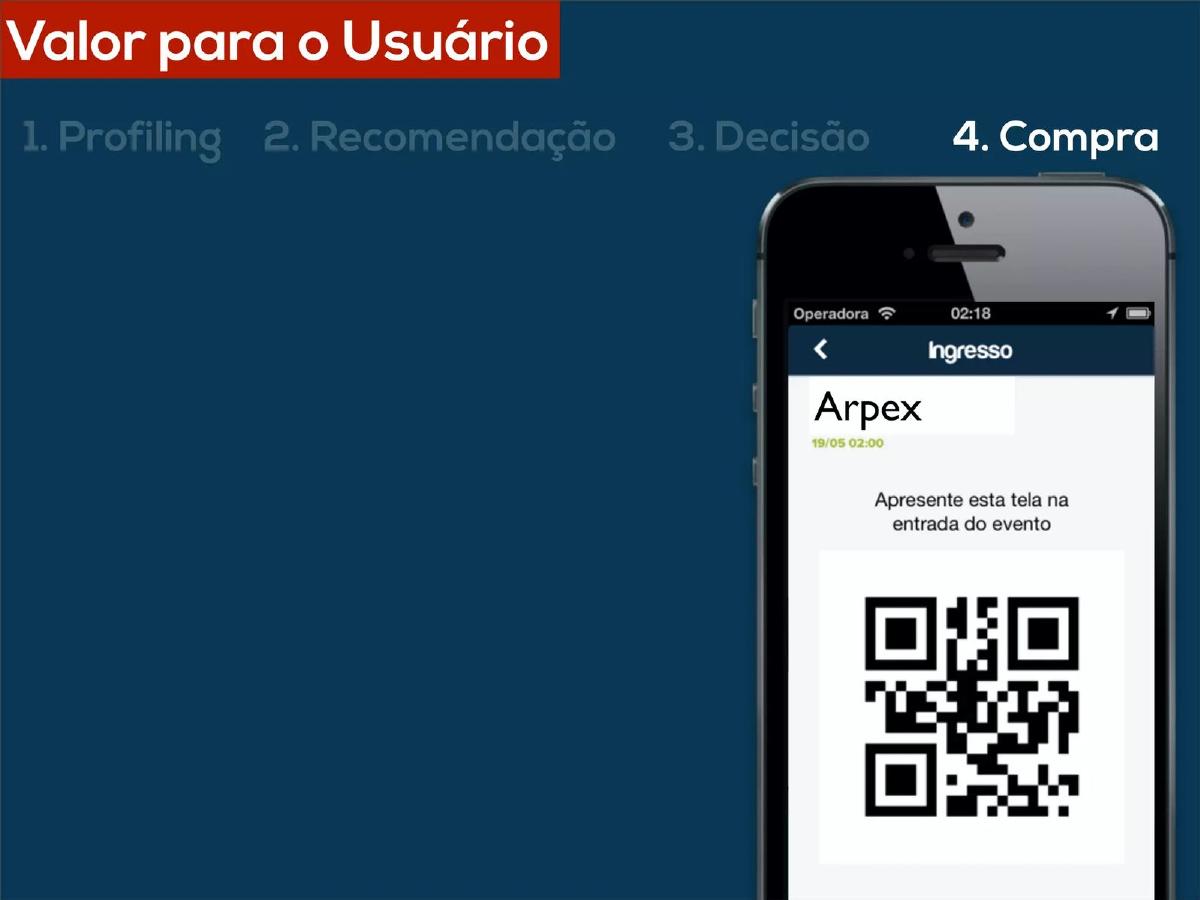
- User value is defined through a four-stage funnel: Profiling, Recommendation, Decision, and Purchase (slide 2).
- The platform provides producers with real-time analytics and ticket validation tools (slide 7).
- Early growth metrics show the platform scaling from 3,000 users in February to 7,500 in April during the beta phase (slide 4).
- The deck claims a massive jump to 100,000 users by June, though it is unclear if this is a projection or historical data (slide 4).
- Boosk highlights its involvement or target market reach with '150 festas' (150 parties) as shown on slide 6.
- The deck uses major annual festivals like Lollapalooza and Rock in Rio to establish the scale of the Brazilian event market (slide 9).
- There is a total absence of a team slide, business model details, or a specific funding request in the provided selection.
Executive Summary: The Discovery-to-Transaction Loop
Boosk is a mobile-first platform targeting the Brazilian live entertainment market. The deck positions the company as a bridge between event-goers and producers, utilizing data-driven profiling to drive ticket sales. While the visual language of the deck is high-energy and lifestyle-oriented, the core value proposition rests on its ability to turn user data into actionable sales for event organizers. The following teardown examines the narrative flow and data presentation across the nine provided slides.
Slide 1: Brand Identity and Tagline
The cover slide features the company name, boosk , in a bold, lowercase sans-serif font. The tagline, "As pessoas certas, nos lugares certos" (The right people, in the right places), immediately establishes the company's focus on curation and matching. The background imagery of a crowded concert with laser lights sets the emotional context for the product: high-energy nightlife and live music.
Slide 2: The Four Pillars of User Value
This slide breaks down the consumer journey into four distinct steps: 1. Profiling, 2. Recomendação (Recommendation), 3. Decisão (Decision), and 4. Compra (Purchase). The focus of the slide is on the final step, showing a mobile mockup of a digital ticket for an event called "Arpex." The ticket includes a QR code and the instruction "Apresente esta tela na entrada do evento" (Present this screen at the event entrance). This indicates that Boosk is a closed-loop system where discovery leads directly to a digital transaction and entry validation.
Slides 3 and 4: Traction and Growth Projections
Slide 3 introduces the heading "CRESCIMENTO" (Growth) with two initial data points: 3,000 in February and 5,000 in March. Slide 4 expands this timeline, showing a progression from 3,000 (Feb) to 7,500 (Apr) under a "Versão Beta" label. A red vertical line separates the beta period from a massive spike: 52,000 in May and 100,000 in June. The lack of specific labels for these numbers (users, tickets sold, or downloads) is a weakness, though in the context of a pitch deck, they typically represent registered users. The jump from 7,500 to 100,000 in two months suggests either a massive marketing spend or, more likely, a projection based on a planned full-market launch after the beta period.
Slides 5 and 6: Market Presence
Slide 5 is a full-bleed lifestyle image of a packed nightclub, reinforcing the target environment. Slide 6 overlays the text "150 festas" (150 parties) over an image of attendees. This serves as a proof-of-concept metric, suggesting that the platform has already been used to manage or promote 150 individual events. This is a vital metric for a marketplace startup, as it demonstrates supply-side adoption.
Slide 7: The Producer Value Proposition
Titled "Valor para o Produtor" (Value for the Producer), this slide mirrors the user value slide but focuses on the B2B side. The four pillars are: 1. Divulgação (Promotion), 2. Venda (Sales), 3. Real-time analytics, and 4. Validação do Ingresso (Ticket Validation). The mobile mockup shows a list of concerts in Rio de Janeiro (Bebel Gilberto, Luiz Melodia e Trio, etc.) with percentage indicators (74%). These percentages likely represent ticket sales progress or capacity, providing producers with a quick dashboard view of their event's health.
Slides 8 and 9: Market Context and Frequency
Slide 8 is a high-contrast image of a crowd at a major concert, serving as a transition. Slide 9 features the logos of Lollapalooza Brasil and Rock in Rio with the text "Uma vez por ano..." (Once a year...). This is a classic "market gap" slide. By highlighting that these massive festivals only happen annually, Boosk implies that there is a massive, underserved market for the other 364 days of the year where smaller, frequent "festas" and concerts require the same level of professional discovery and ticketing infrastructure.
What Boosk Does Well
The deck excels at defining a clear dual-sided value proposition . By explicitly listing the four steps of value for both the user (Slide 2) and the producer (Slide 7), the founders show they understand the needs of both stakeholders in a marketplace. The use of QR-code mockups and real-time analytics screens makes the product feel tangible and ready for scale. Furthermore, the traction slide (Slide 4) uses a clear visual separator (the red dashed line) to distinguish between the controlled beta environment and the post-launch growth phase, which helps manage investor expectations regarding early-stage volatility.
Critical Omissions
The most glaring omission in the provided slides is the Team Slide . In early-stage startups, the founders' background in event management or software engineering is often more important than the initial traction numbers. There is also no mention of the Business Model ; while 'Sales' are mentioned, the deck does not specify if Boosk takes a percentage of the ticket price, charges a listing fee, or sells data insights to producers. Finally, the Competitive Landscape is ignored. The Brazilian ticketing market is crowded with players like Sympla and Eventbrite; Boosk fails to explain why its 'Profiling' engine is a defensible moat against these established giants.
Founder's Guide: What to Copy
Symmetry in Value Propositions: If you are building a marketplace, copy the way Boosk uses two separate slides to explain exactly what the 'Buyer' gets and what the 'Seller' gets. Use the same 4-point structure for both to show platform balance. · Visualizing the 'Gap': Slide 9 is a great example of using industry giants to frame a problem. By showing Rock in Rio and saying "Once a year," they effectively argue that the 'real' market is the daily activity that happens outside of mega-festivals. · Clean Mockups: The app screens are not cluttered. They focus on one specific action (a QR code for the user, a sales list for the producer). This prevents the investor from getting bogged down in UI details and keeps them focused on the workflow.
Final Analysis
The Boosk deck is a visually cohesive presentation that successfully communicates the 'vibe' of the product and the basic mechanics of its marketplace. It effectively uses the Brazilian market context to suggest a large opportunity for localized event discovery. However, to secure funding, the founders would need to supplement these slides with deep dives into their unit economics, their specific customer acquisition strategy for reaching the 100,000-user mark, and a detailed breakdown of the technical team building the recommendation engine.
Frequently asked questions
- What is the primary problem Boosk is trying to solve?
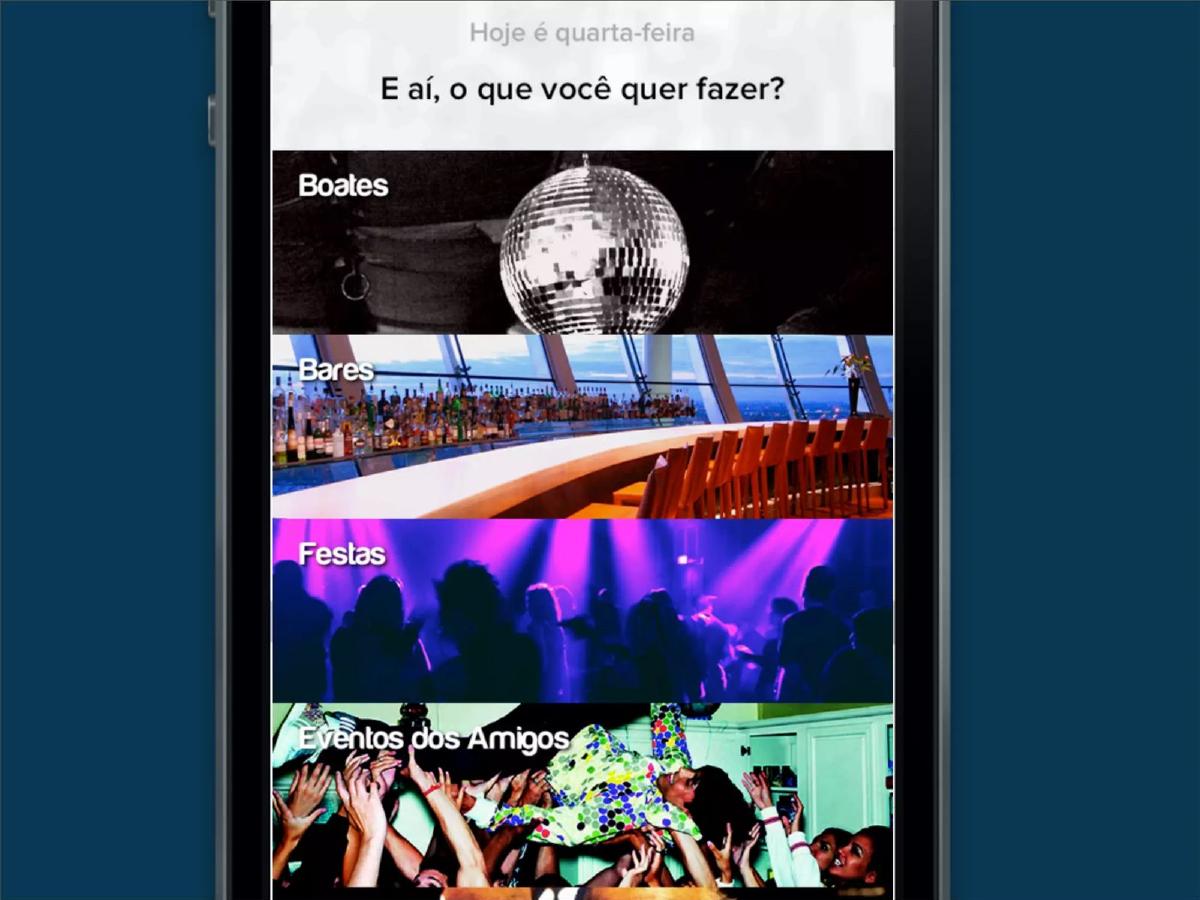
- Based on the tagline and the 'Value for User' slide, Boosk aims to solve the discovery problem in the nightlife and event industry. By using 'Profiling' and 'Recommendation,' the app attempts to match users with events that suit their specific tastes, moving away from generic event listings toward a personalized discovery engine that ends in a seamless QR-code-based purchase.
- How does Boosk provide value to event organizers?
- Boosk offers a suite of B2B tools including 'Divulgação' (Promotion), 'Venda' (Sales), 'Real-time analytics,' and 'Validação do Ingresso' (Ticket Validation). This suggests the platform is not just a consumer app but a full-stack event management system that allows producers to track attendee data and entry logistics in real-time via a mobile interface.
- Is the growth shown in the deck organic or projected?
- Slide 4 shows a bar chart where the first three months (Feb-Apr) are labeled 'Versão Beta' with modest growth (3k to 7.5k). A red dashed line separates these from May and June, where the numbers jump to 52,000 and 100,000 respectively. Given the visual separation, it is highly likely that the 100,000 figure was a projection at the time the deck was designed.
- What geographic market is Boosk targeting?
- The deck is written in Portuguese and features the 'Lollapalooza Brasil' logo and a 'Rio de Janeiro' location tag in the app mockups (slide 7). This confirms the primary target market is Brazil, specifically focusing on the high-density urban event scenes in cities like Rio de Janeiro and potentially São Paulo.
- What critical information is missing from this pitch deck?
- The deck is heavily focused on vision and top-line user growth. It lacks a 'Team' slide to establish founder credibility, a 'Business Model' slide to explain how they monetize (e.g., transaction fees vs. SaaS fees for producers), and a 'Competition' slide. Most importantly, there is no 'Ask' slide detailing how much capital is being raised and how it will be deployed.