Boon’s 2016 Seed deck is a masterclass in brevity, utilizing only seven slides to secure $1.5 million in funding. The presentation avoids the typical data-heavy slog of HR tech decks, instead focusing on a singular, compelling problem: the 'Referral Gap.' By contrasting the high desire for referrals (88%) against the low actualization rate (22%), Boon creates an immediate need for its solution. The deck leans heavily on visual product mockups and high-profile logos like Red Bull and Hautelook to establish credibility. While it lacks traditional slides for team, business model, and competition…
Key takeaways
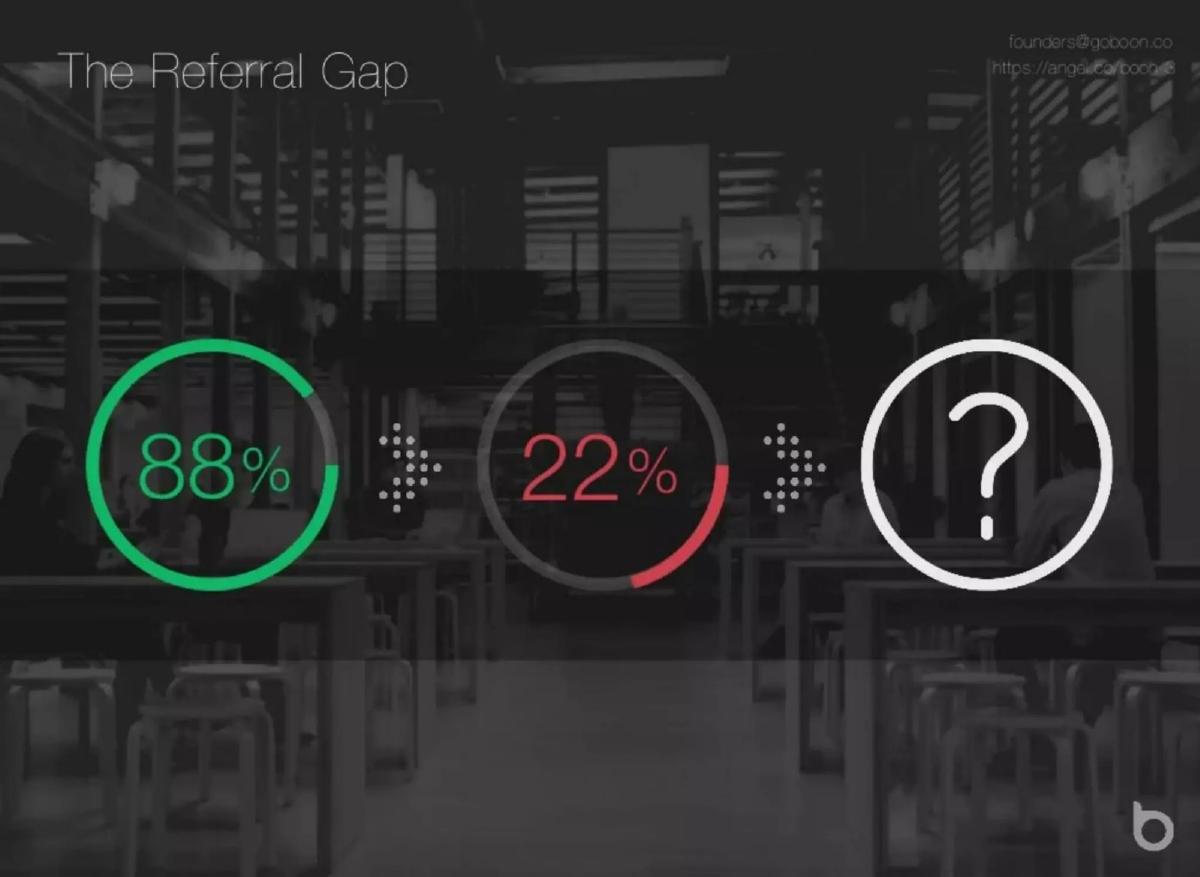
- The deck identifies a massive discrepancy on Slide 3, showing that while 88% of people want referrals, only 22% actually happen.
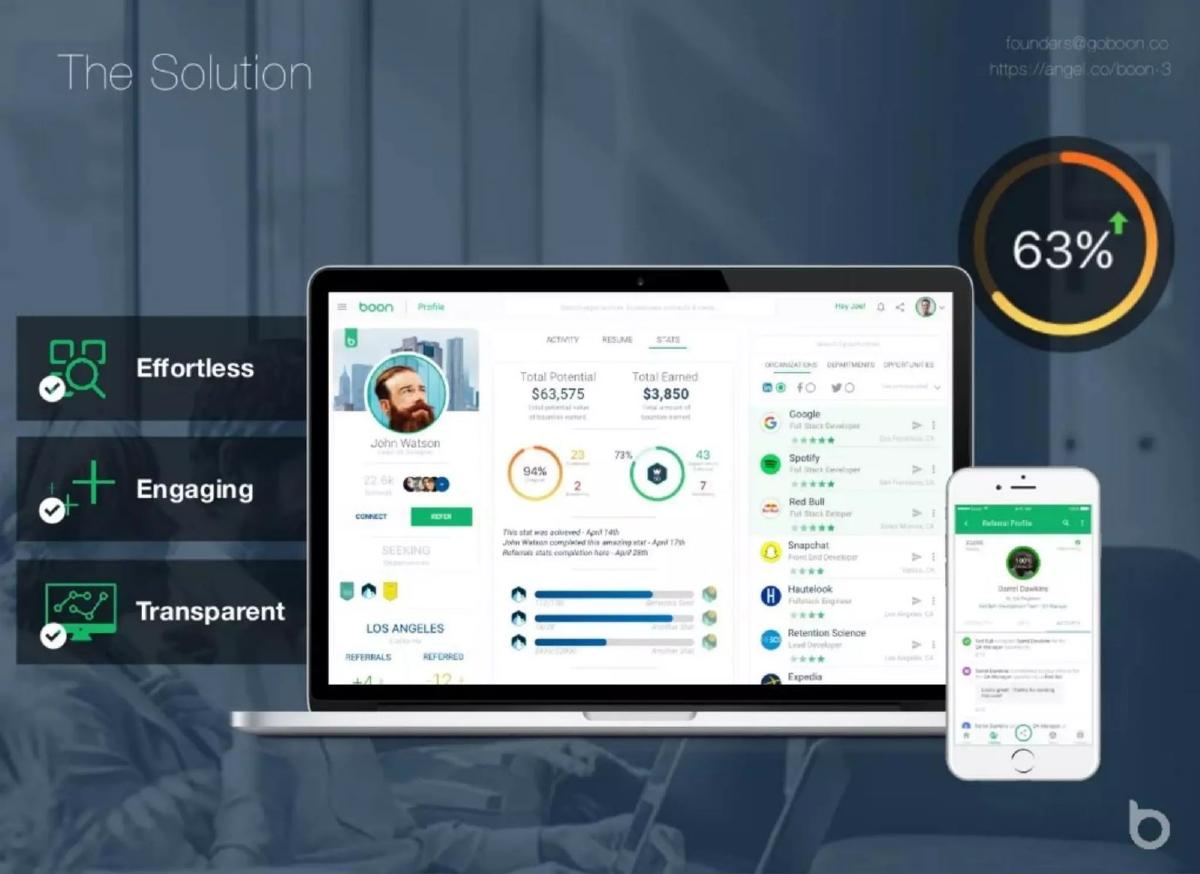
- Boon claims a significant performance metric on Slide 4, stating their solution can boost referred talent by 63%.
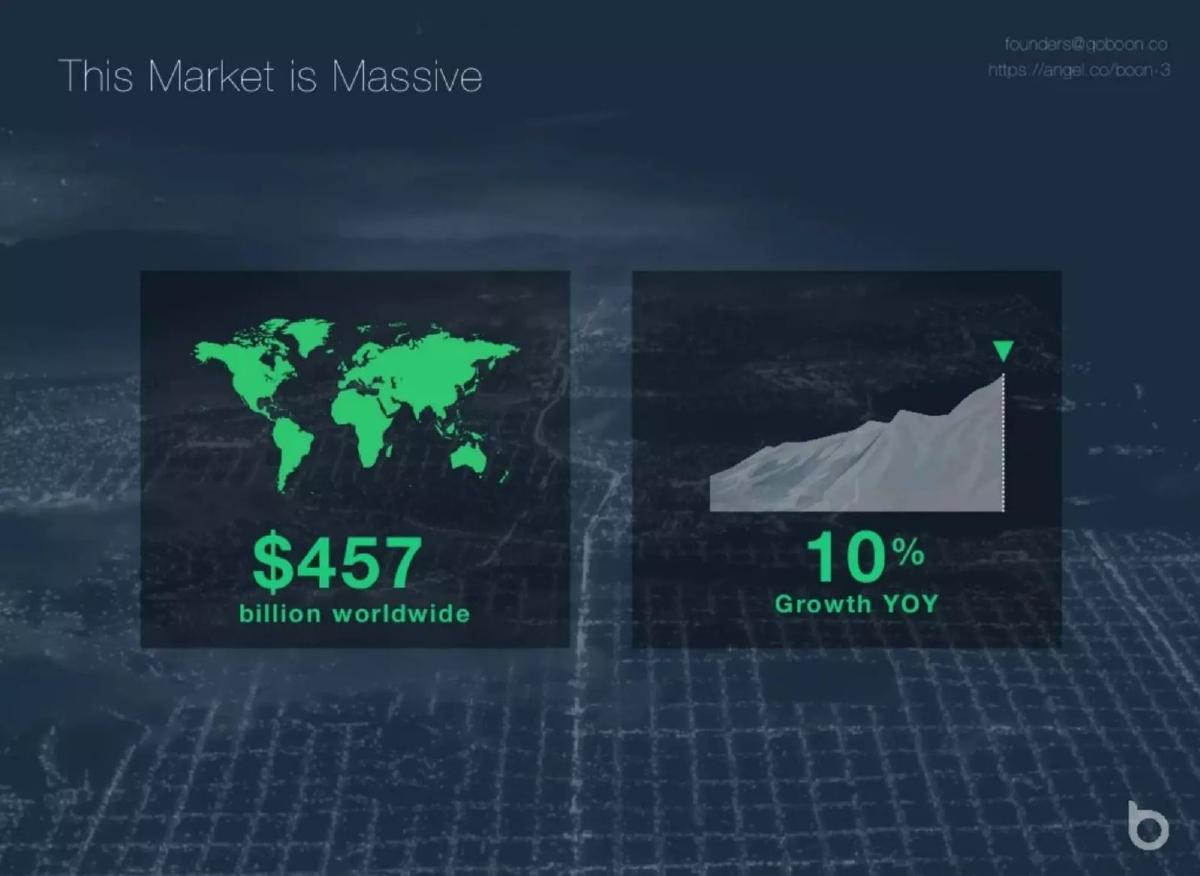
- The total addressable market is cited as $457 billion worldwide with a 10% year-over-year growth rate on Slide 5.
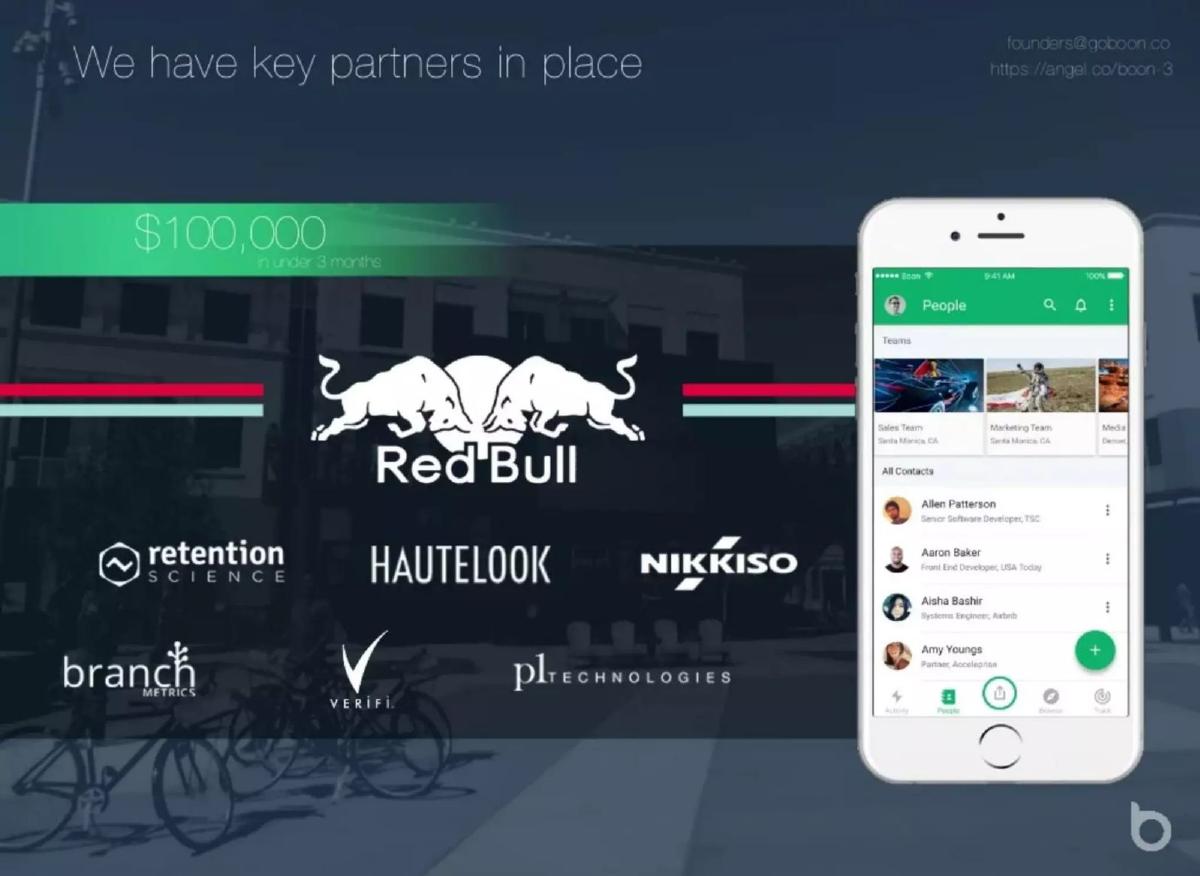
- Early revenue traction is highlighted on Slide 6, noting $100,000 generated in under 3 months.
- The company secured high-tier pilot partners or customers including Red Bull, Hautelook, and Nikkiso as seen on Slide 6.
- The deck completely omits a team slide, leaving the founders' backgrounds to be discovered via the contact email or external links.
- There is no mention of a business model, pricing structure, or specific fundraising 'ask' within the 7 slides.
- The presentation relies on a 'show, don't tell' philosophy with high-fidelity product mockups on Slide 4 and Slide 6.
The 7-Slide Seed Strategy
Boon’s 2016 pitch deck is an anomaly in the world of venture capital. At just seven slides, it bypasses almost every conventional 'rule' of pitch deck construction. There is no team slide, no competition slide, no financial projections, and no explicit 'ask.' Yet, the company successfully raised $1.5 million. This teardown examines how Boon used a minimalist narrative and high-signal traction to convince investors that their referral engine was a 'game-changer' in the $457 billion recruiting market.
Slide 1: The Vision
The cover slide is clean and professional, featuring the Boon logo and the tagline: "Turn every employee into your best recruiter." It sets the stage for a B2B SaaS tool focused on human resources and talent acquisition. The contact information in the top right corner points to an AngelList profile, suggesting this deck was likely used as a teaser or a digital leave-behind for platform-based investors.
Slide 2: The Problem - Recruiting is Broken
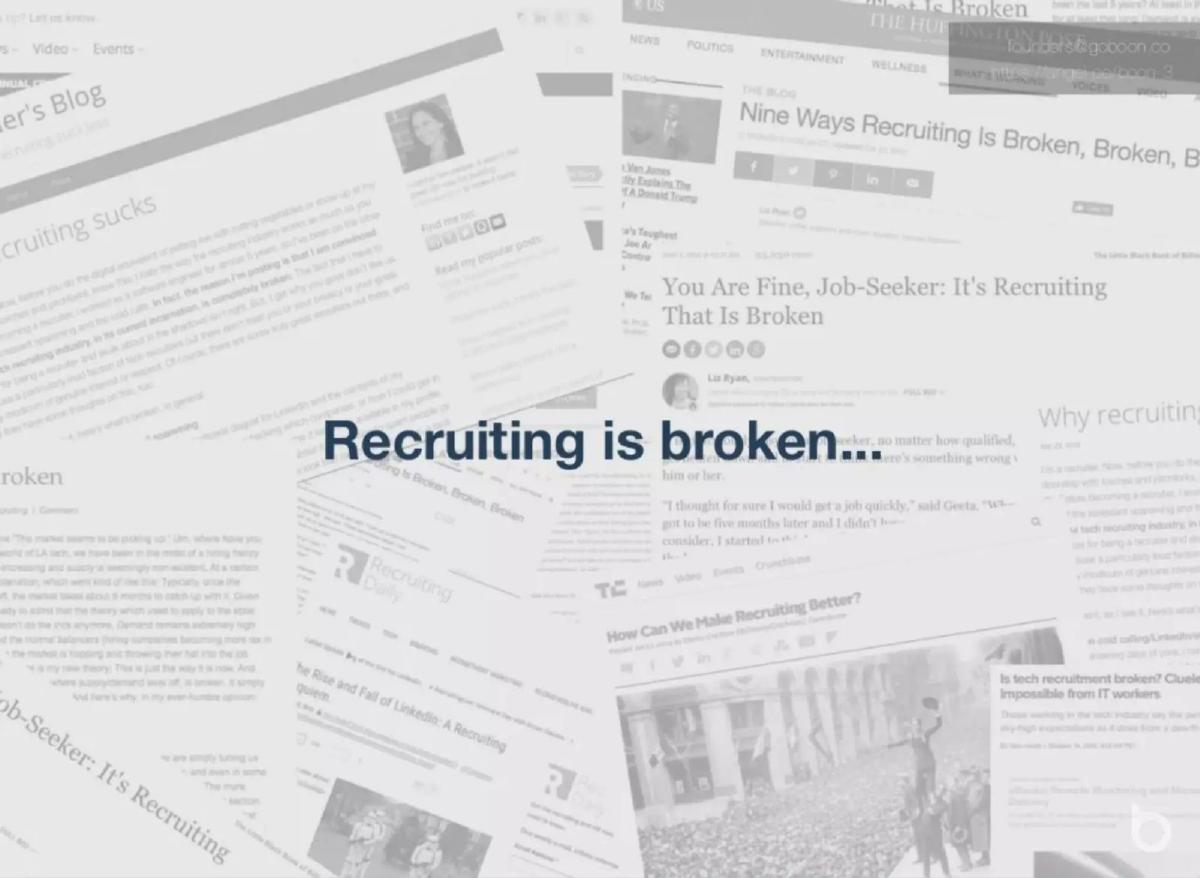
Slide 2 uses a collage of headlines from major publications like The Huffington Post and Recruiting Daily. The central text reads, "Recruiting is broken..." This is a standard 'emotional' opening for an HR tech deck. It taps into the universal frustration of hiring managers and job seekers alike. While the headlines are a bit dated (referencing the 'Rise and Fall of LinkedIn'), they effectively establish that the current status quo is unsatisfactory.
Slide 3: The Referral Gap
This is the most critical slide in the deck. It introduces "The Referral Gap" using three circles. The first circle shows 88% (representing the desire or perceived value of referrals), the second shows 22% (the actual execution rate), and the third is a question mark. This slide quantifies the 'broken' nature of the industry mentioned on the previous slide. It tells the investor exactly where the inefficiency lies: everyone knows referrals are the best way to hire, but almost no one is doing it effectively at scale.
Slide 4: The Solution and The 63% Boost
Slide 4 introduces the product interface. It highlights three value propositions: Effortless, Engaging, and Transparent. The mockup shows a dashboard for a user named 'John Watson' with a 'Total Potential' of $63,575 and 'Total Earned' of $3,850. This implies a gamified, incentive-based system. Most importantly, a callout bubble in the top right claims a 63% increase in referred talent. This specific metric provides a tangible ROI for potential customers.
Slide 5: Market Size
Boon frames the opportunity as "Massive." They cite a $457 billion worldwide market with 10% Growth YOY. By using a global map and a growth chart, they signal that this isn't just a niche tool for startups, but a solution for a global, expanding enterprise problem. The 10% growth figure is particularly important as it suggests the market is not just large, but accelerating.
Slide 6: Traction and Social Proof
If Slide 3 is the 'hook,' Slide 6 is the 'closer.' It carries the header "We have key partners in place." The slide features a prominent Red Bull logo, along with Hautelook, Nikkiso, Retention Science, Branch Metrics, Verifi, and PL Technologies. The most impressive figure on the slide is "$100,000 in under 3 months." For a Seed stage company, six-figure revenue in the first quarter of operations is a massive signal of product-market fit. It proves that companies are willing to pay for the solution to the 'Referral Gap.'
Slide 7: The Call to Action
The final slide is a simple contact page. It repeats the founder email address and provides a background image of a city skyline. Notably, there is no mention of how much money they are raising or what the terms are. This suggests the deck was designed to initiate a conversation rather than close a deal on the spot.
What Works in This Deck
The 'Referral Gap' Metric: Creating a proprietary name for a problem (The Referral Gap) makes the solution feel more scientific and necessary. It simplifies a complex HR problem into a simple math equation that needs solving.
High-Signal Traction: Listing Red Bull as a partner is a major win for a Seed-stage startup. It immediately removes the 'risk' of whether large enterprises will adopt the platform. The $100k revenue figure further validates this.
Visual Clarity: The deck is not cluttered. Each slide has one job. Slide 3 identifies the gap; Slide 4 shows the product; Slide 5 shows the market; Slide 6 shows the money. This makes the deck very easy to digest in under 60 seconds.
What is Missing
The Team: This is the most glaring omission. Investors at the Seed stage primarily bet on people. By excluding the founders' backgrounds, Boon relies entirely on their traction to carry the day. While it worked here, it is a high-risk strategy.
Business Model: The deck shows that users can 'earn' money, but it doesn't explain how Boon makes money. Is it a SaaS subscription? A percentage of the referral bonus? A per-hire fee? This is a fundamental question left unanswered.
Competition: The recruiting space is incredibly crowded with ATS (Applicant Tracking Systems) and other referral tools. Boon does not explain how they differ from existing solutions or how they integrate with them.
What a Founder Should Copy
The 3-Month Revenue Highlight: If you have early revenue, put it front and center. Boon’s mention of $100k in 3 months is likely what secured the $1.5M investment more than any other slide.
The Problem Gap: Find a way to represent your problem as a 'gap' between two statistics. It is a highly effective way to visualize the 'before and after' of your product's impact.
Minimalist Product Mockups: Instead of listing 20 features, Boon showed a dashboard that clearly communicated 'Earnings' and 'Activity.' It makes the product feel 'Effortless,' which was one of their core claims.
Final Thoughts
Boon’s deck is a 'traction-first' presentation. It assumes that if the problem is big enough and the early revenue is strong enough, the details of the team and the competition can be handled in a follow-up meeting. For founders with significant early momentum, this 'less is more' approach can create an air of inevitability and urgency that longer, more defensive decks often lack.
Frequently asked questions
- How did Boon raise $1.5M with only 7 slides?
- Boon focused on high-impact metrics and social proof. By showing $100,000 in revenue within three months and listing Red Bull as a partner, they proved market pull. The 'Referral Gap' (88% vs 22%) provided a simple, logical hook that didn't require extensive explanation, allowing the traction to speak for itself.
- What is the 'Referral Gap' mentioned in the deck?
- On Slide 3, Boon illustrates that 88% of employees or candidates believe in the power of referrals, yet only 22% of hires actually come through that channel. This 66-point gap represents the inefficiency Boon aims to solve through automation and gamification.
- Is the lack of a team slide a mistake?
- In most cases, yes. However, for Boon, the early revenue and enterprise logos likely served as a proxy for team competency. While not recommended for most founders, this deck shows that extreme traction can sometimes override the need for a traditional 'pedigree' slide at the Seed stage.
- What market size does Boon target?
- Slide 5 identifies the global recruiting market at $457 billion. By highlighting a 10% year-over-year growth rate, Boon positions itself within a stable, expanding industry where even a small percentage of market capture represents a significant venture-scale opportunity.
- What are the core features of the Boon product?
- According to Slide 4, the product is built on three pillars: Effortless (automation), Engaging (gamification/rewards), and Transparent (dashboards). The mockups show a 'Total Potential' earnings dashboard for employees, suggesting a financial incentive model for referrals.