BorrowBot’s 2016 pitch deck presents a solution for the information asymmetry in the Thai lending market. By utilizing a chatbot interface, the company aimed to guide users through the complexities of mortgages, auto loans, and SME financing. The deck highlights a significant market opportunity, citing a mortgage market value of 3.07 trillion baht in 2016. While the presentation is strong on vision and market size, it lacks critical financial data, such as specific unit economics, current traction metrics, or a defined funding ask. The execution plan relies heavily on partnerships and social…
Key takeaways
- The company identifies a specific pain point: borrowers do not know which financial institutions offer the best loans (Slide 3).
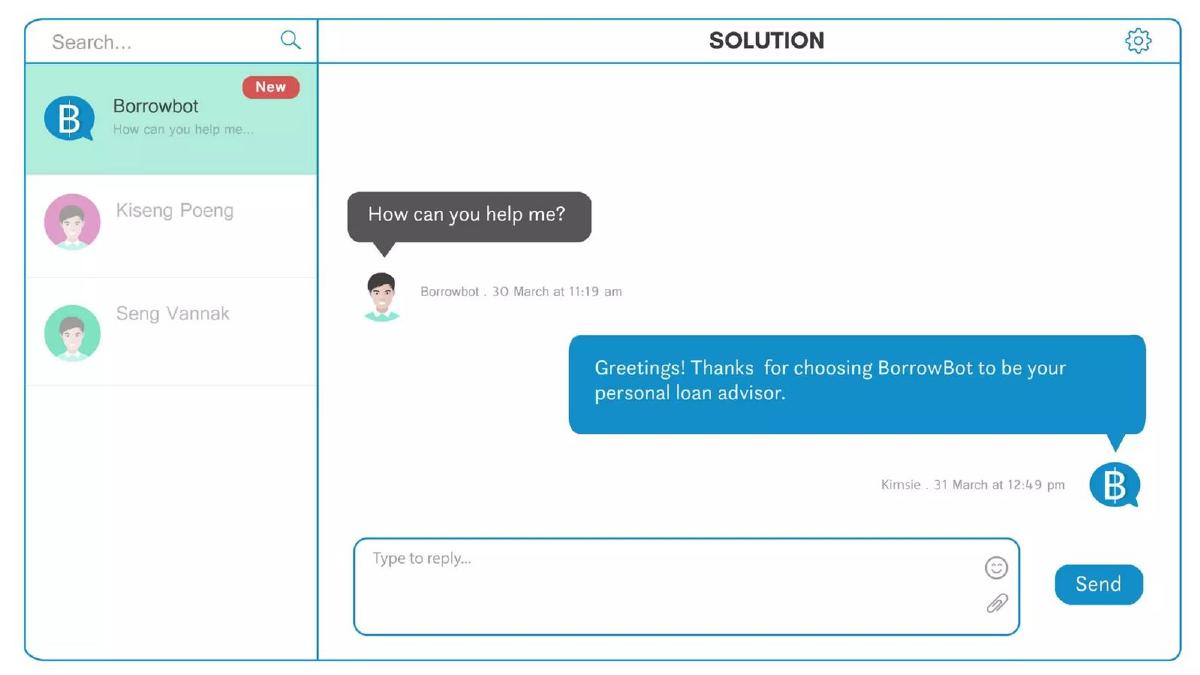
- The product is positioned as an automated chatbot system that acts as a personal loan advisor (Slide 2 and Slide 4).
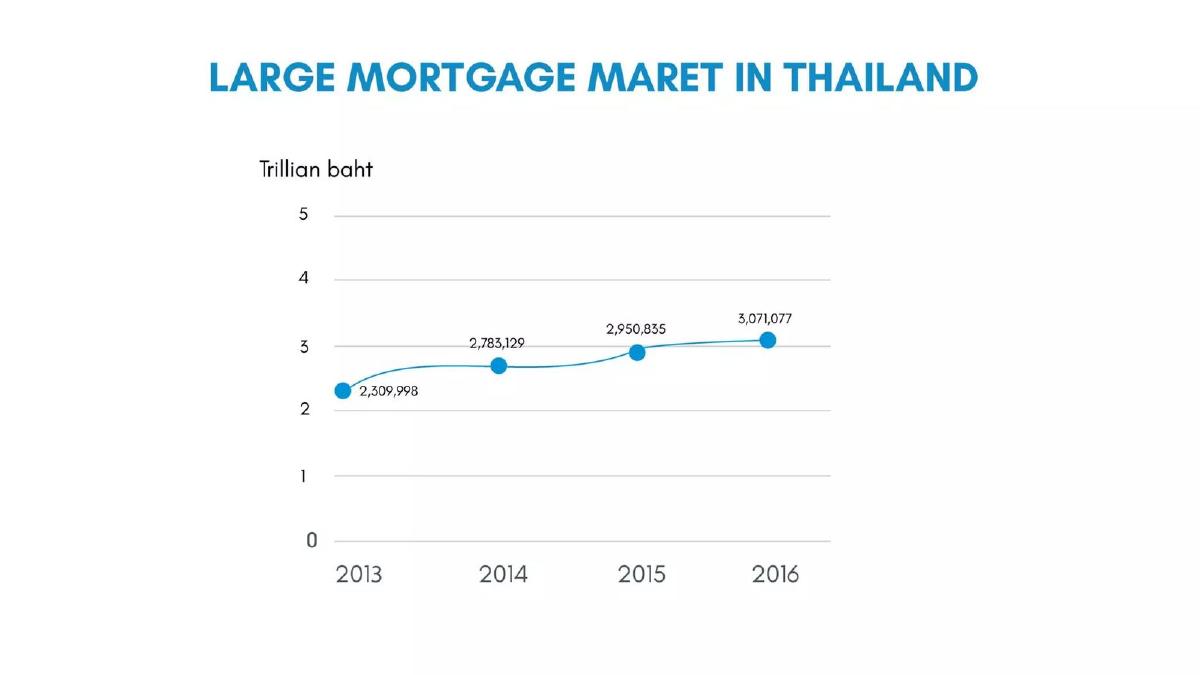
- BorrowBot targeted a mortgage market in Thailand that grew from 2.3 trillion baht in 2013 to over 3.07 trillion baht in 2016 (Slide 6).
- The initial target audience is defined as Bangkok residents aged 20-50 who are smartphone users and have profitable careers (Slide 7).
- Revenue streams are diversified across referral fees, lead sales, licensing to institutes, featured ads, and commissions (Slide 8).
- The execution plan indicates that the prototype phase was completed prior to the deck's publication (Slide 10).
- Future milestones included expansion into Cambodia, Vietnam, and Myanmar by 2018 (Slide 11).
- The deck completely omits a specific fundraising 'Ask' or a breakdown of how capital would be allocated.
BorrowBot Pitch Deck Analysis
The BorrowBot deck from 2016 is a classic example of early-stage fintech positioning. It leans heavily on the then-emerging trend of conversational UI (chatbots) to solve a traditional financial services problem: lead generation and advisory in the mortgage sector. While the visual presentation is clean, the content is high-level, focusing more on the 'what' and 'where' rather than the 'how' and 'how much.'
Slide 1: Title Slide
The cover slide features the BorrowBot logo—a stylized 'B' inside a chat bubble—and the tagline 'choose wisely, no regrets.' The background image of money being exchanged is literal and sets the stage for a finance-focused presentation. It establishes the brand identity immediately but offers no specific industry context until the following slides.
Slide 2: What is BorrowBot?
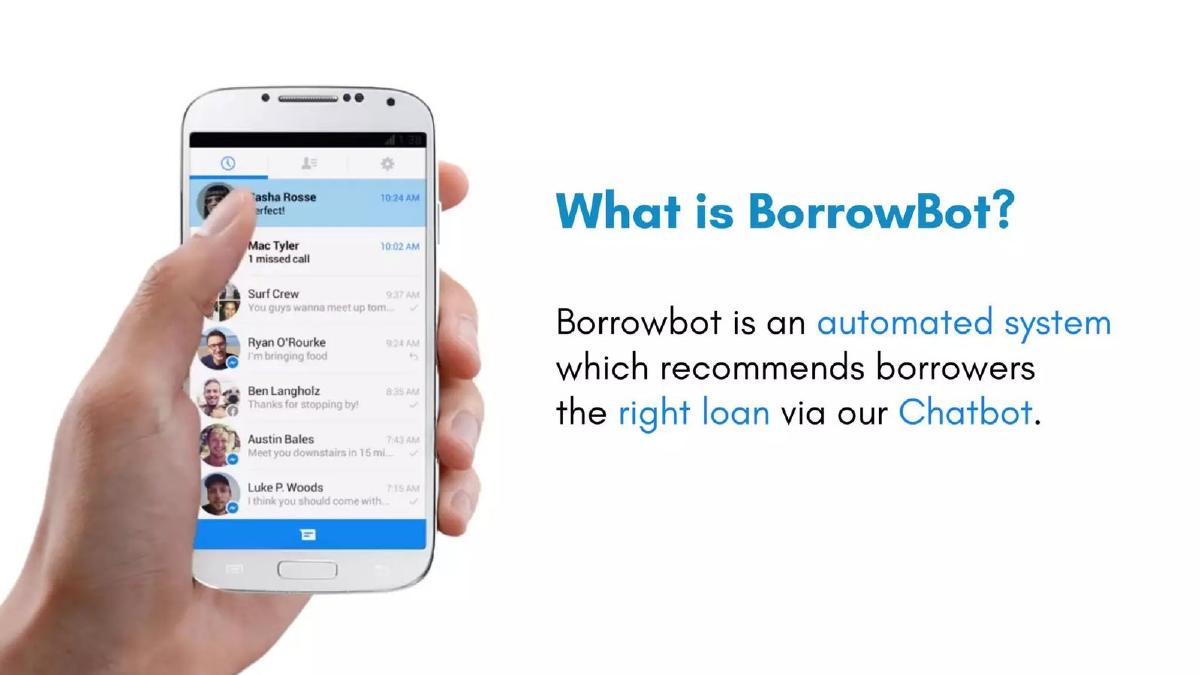
This slide provides a concise definition: 'Borrowbot is an automated system which recommends borrowers the right loan via our Chatbot.' It includes a mockup of a smartphone running a messaging app. This is an effective 'high-concept pitch' slide that explains the product in a single sentence. By using the term 'automated system,' the founders are signaling a scalable technology play rather than a manual brokerage service.
Slide 3: The Problem
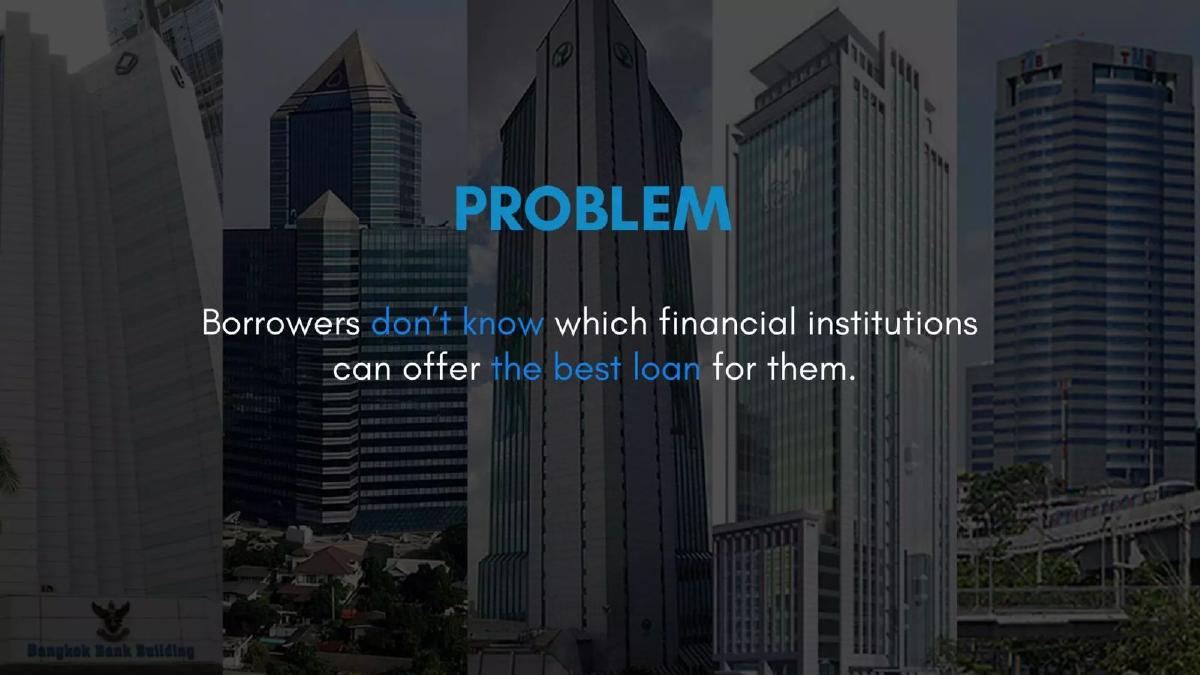
The problem statement is simple: 'Borrowers don’t know which financial institutions can offer the best loan for them.' The background features various bank buildings in Thailand (such as Bangkok Bank and TMB). This slide identifies information asymmetry as the primary barrier for consumers. However, it lacks data to support how much time or money is currently wasted due to this problem.
Slide 4: The Solution
Slide 4 shows a desktop/web interface mockup of the chatbot in action. The bot greets the user as a 'personal loan advisor.' This slide is intended to show the user experience. It reinforces the conversational nature of the product, suggesting that the complexity of loan comparison is hidden behind a simple chat interface.
Slide 5: Product Demo
This is a transition slide featuring a tablet on a grass background with a 'Product Demo' button. In a live presentation, this would likely trigger a video or a live walkthrough. For a static deck, it serves to inform the reader that a functional product exists, though no actual demo content is visible in the PDF version.
Slide 6: Market Size
The deck focuses on the 'Large Mortgage Market in Thailand.' It provides a line graph showing growth in 'Trillian baht' (likely a typo for Trillion). The figures cited are 2,309,998 million in 2013, 2,783,129 million in 2014, 2,950,835 million in 2015, and 3,071,077 million in 2016. This slide successfully demonstrates a large, growing TAM (Total Addressable Market) in the company's home country.
Slide 7: Starting Target
BorrowBot defines its initial target as Bangkok residents, male and female, aged 20-50. They specify that these users should have 'profitable careers' (employed or SME owners), be smartphone users (Android/iOS), and have a need for finances (mortgages, auto loans, SME loans, personal loans). This is a broad but logical starting point, focusing on the urban center where smartphone penetration and financial literacy are highest.
Slide 8: Revenue Stream
The business model is diversified into five categories: Referral Fees , Leads sales , Licensing to Institute , Featured Ads , and Commission . While this shows multiple ways to make money, it can also be a red flag for investors who prefer a focused primary revenue driver in the early stages. The slide does not explain the percentage or dollar value of these fees.
Slide 9: The Team
The 'Squad' slide introduces four members: Woraphop, Kimseng, Kimsie, and Cholathit. They are assigned roles in business development, customer development, creative design, and product development. The major flaw here is the total lack of credentials. There are no logos of former employers, no university names, and no specific achievements listed for any team member.
Slide 10: Execution Plan
This slide uses a roadmap graphic to show four steps: 01 Prototype (marked as 'Done'), 02 User Acquisition (via money expos, office areas, property developers, and social media), 03 Tweak & Optimize (based on feedback), and 04 Market Expansion (partnerships and mass marketing). It shows a basic understanding of the startup lifecycle but lacks specific dates or KPIs for each phase.
Slide 11: Milestones
The timeline extends from 2016 to 2019. 2016 was for 'Finding the Right Model.' 2017 was 'Take off the Ground' (conquering the Bangkok market). 2018 was 'Get Outside of the Box' (expanding to Cambodia, Vietnam, and Myanmar). 2019 was 'Conquer ASEAN Market.' These are ambitious goals, but the deck provides no evidence of the regulatory or linguistic capabilities required to expand into three different countries within 24 months.
Slide 12: Closing Quote
The deck ends with a quote from Ro May: 'before you make a choice, make sure you can live with it.' This is a thematic closing that ties back to the 'no regrets' tagline, but it replaces the traditional 'Contact Us' or 'Ask' slide, which is a missed opportunity to provide a clear call to action.
What BorrowBot Does Well
The deck is visually consistent and easy to read. It avoids the 'wall of text' trap that many early-stage founders fall into. The problem and solution are linked clearly through the chatbot interface, and the market size slide (Slide 6) uses specific, cited figures to prove the opportunity is worth pursuing. The definition of the target audience (Slide 7) is also more specific than many generic 'everyone with a phone' descriptions found in other decks.
What is Missing from the Deck
The Ask: There is no mention of how much capital the company is raising, the valuation, or the terms of the round. · Traction: Slide 10 says the prototype is 'Done,' but there are no metrics. How many users have chatted with the bot? How many leads have been generated? Even beta test data would be valuable here. · Competition: The deck ignores the existence of other loan comparison sites, traditional brokers, and the banks' own digital efforts. · Unit Economics: While Slide 8 lists revenue streams, it doesn't explain the Cost Per Acquisition (CPA) versus the Lifetime Value (LTV) of a user. · Team Pedigree: Without professional backgrounds, the team slide fails to build investor confidence in the founders' ability to execute in a highly regulated industry like finance.
Lessons for Founders
Founders can learn from BorrowBot's ability to simplify a complex product into a clear narrative. However, the omissions in this deck serve as a cautionary tale. If you are pitching a fintech product, you must address the regulatory environment and the competitive landscape. Furthermore, never leave out the 'Ask'—investors need to know what you want from them. Finally, if you include a team slide, ensure it highlights why your team is uniquely qualified to solve the specific problem you've identified.
Frequently asked questions
- What is the primary value proposition of BorrowBot?
- BorrowBot positions itself as an automated personal loan advisor. According to Slide 2 and Slide 4, the value lies in using a chatbot interface to simplify the loan discovery process. It addresses the problem that borrowers lack the information to identify the 'best' loan among various financial institutions, specifically targeting mortgages, auto loans, and SME lending.
- How does BorrowBot plan to generate revenue?
- Slide 8 outlines five distinct revenue streams: Referral Fees, Lead Sales, Licensing to Institutes, Featured Ads, and Commissions. This suggests a B2B2C model where the company monetizes both the user's intent (leads/referrals) and the financial institution's need for technology (licensing) or visibility (ads).
- What market size does the deck claim for Thailand?
- Slide 6 focuses exclusively on the mortgage market in Thailand. It provides a historical growth chart showing the market rising from 2,309,998 million (2.3 trillion) baht in 2013 to 3,071,077 million (3.07 trillion) baht in 2016. This is used to justify the 'Large Mortgage Market' opportunity.
- Who are the founders and what are their roles?
- Slide 9 introduces the 'Squad' consisting of four members: Woraphop (Business Developer), Kimseng (Customer Developer), Kimsie (Creative Designer), and Cholathit (Product Developer). However, the deck does not provide any professional background, previous experience, or education for these individuals, which is a significant omission for investors.
- What are the biggest weaknesses in this pitch deck?
- The deck lacks three critical components: Traction, Competition, and the Ask. There are no figures regarding current user numbers or revenue. It does not list any competitors, which is unrealistic in the fintech space. Finally, it fails to state how much money the company is seeking or how that money will be spent.