Bower (formerly PantaPå) presents a compelling case for a digital-first recycling deposit system. The deck highlights a significant pivot from a hardware-reliant analogue system to a scalable mobile application that utilizes existing recycling infrastructure. With a reported €1m annualized run rate in 2021 and partnerships with global giants like Unilever and Nestlé, the company demonstrates strong B2B traction alongside explosive consumer adoption. The most striking metric is their organic growth: reaching the #1 spot on the Swedish App Store with €0 in paid user acquisition, driven by viral…
Key takeaways
- Bower achieved the #1 most downloaded app status in Sweden with zero paid user acquisition (Slide 3).
- The platform has secured a €1m annualized run rate as of 2021 from global CPG brand subscriptions (Slide 3).
- User engagement is high, with 10,000 new users and 200,000 scanned packages per day reported during viral peaks (Slide 3).
- The technology uses patented geolocation to ensure users only receive rewards when in close proximity to a recycling station (Slide 11).
- Bower has recycled 16 million packs, saving an estimated 770 tons of carbon dioxide (Slide 16).
- The business model targets a €325bn global market by providing consumer insights to brand owners (Slide 3).
- Major CPG partners including P&G, Coca-Cola, and Nestlé are already integrated into the platform (Slide 13).
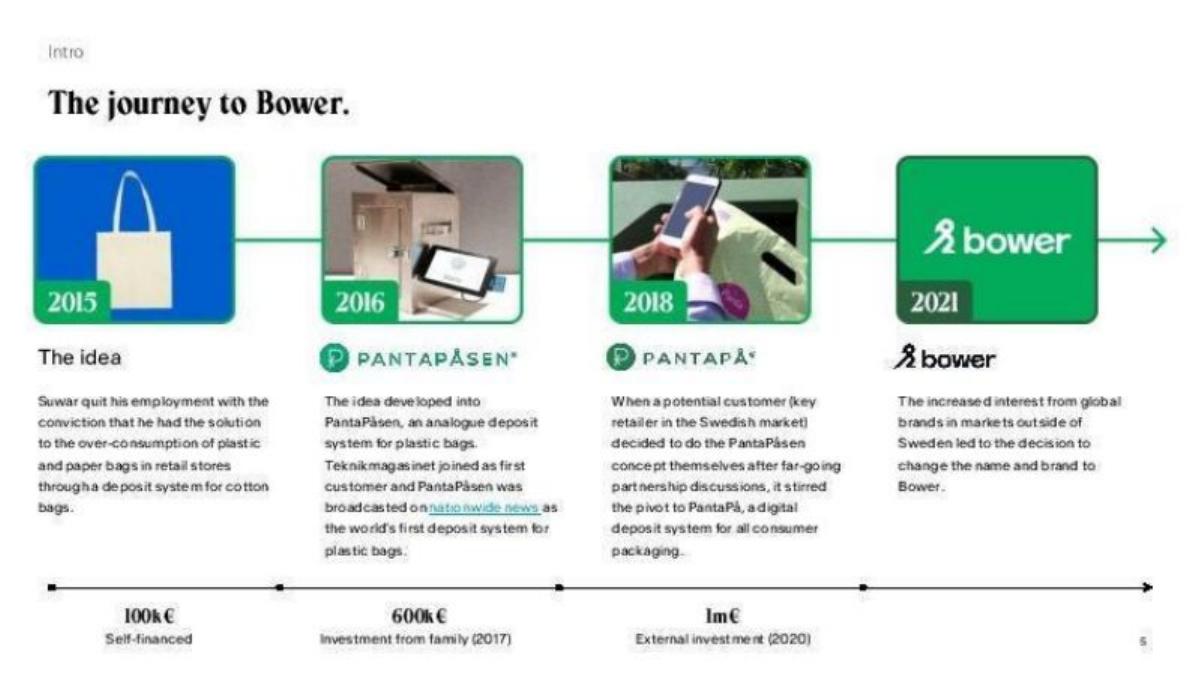
- The company successfully pivoted from a physical deposit system (PantaPåsen) to a digital-only platform (Bower) to increase scalability (Slide 5).
Executive Summary and Brand Identity
Slides 1-2: The Hook and Visual Language
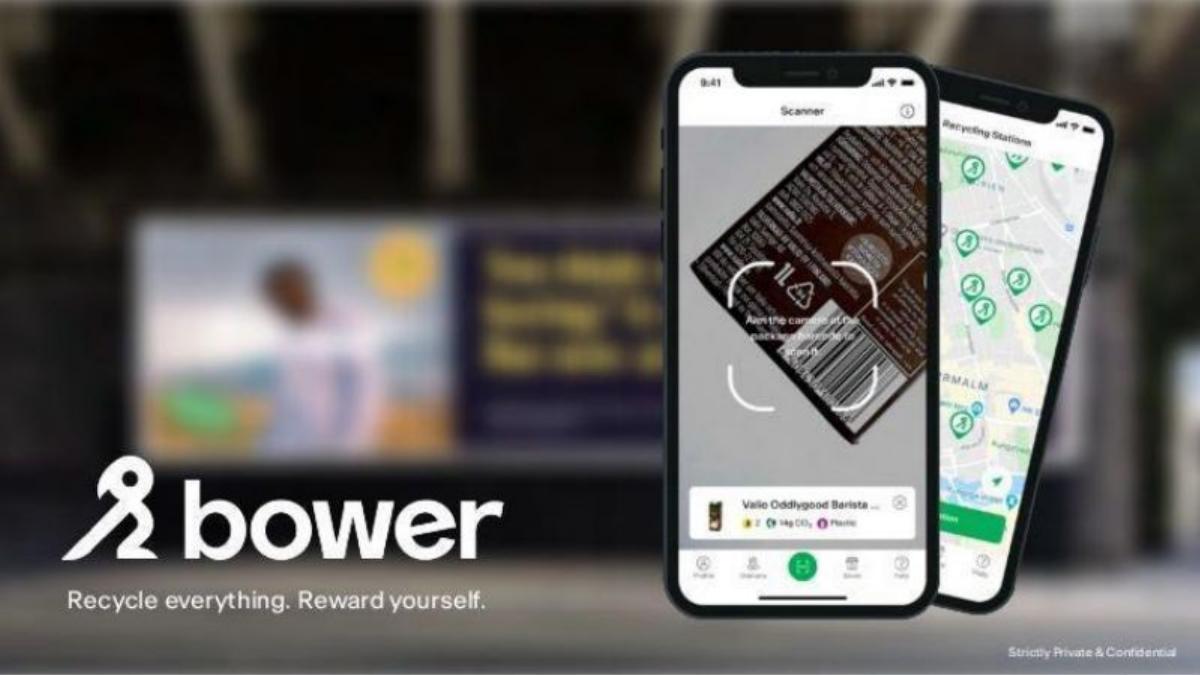
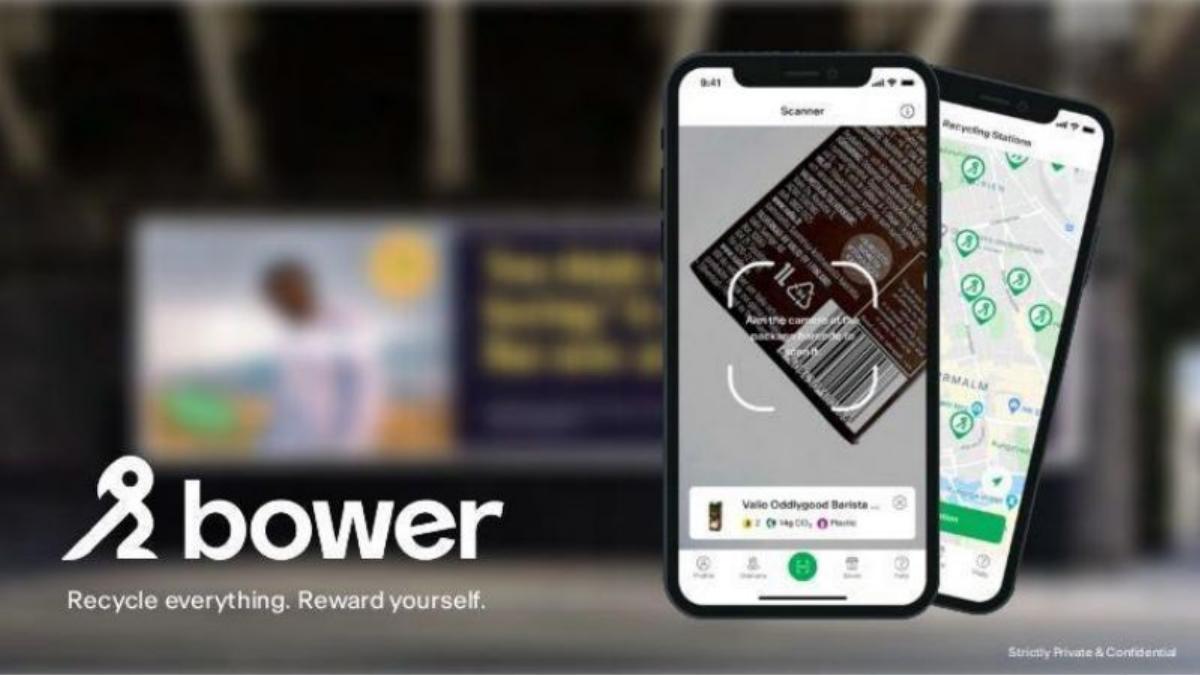
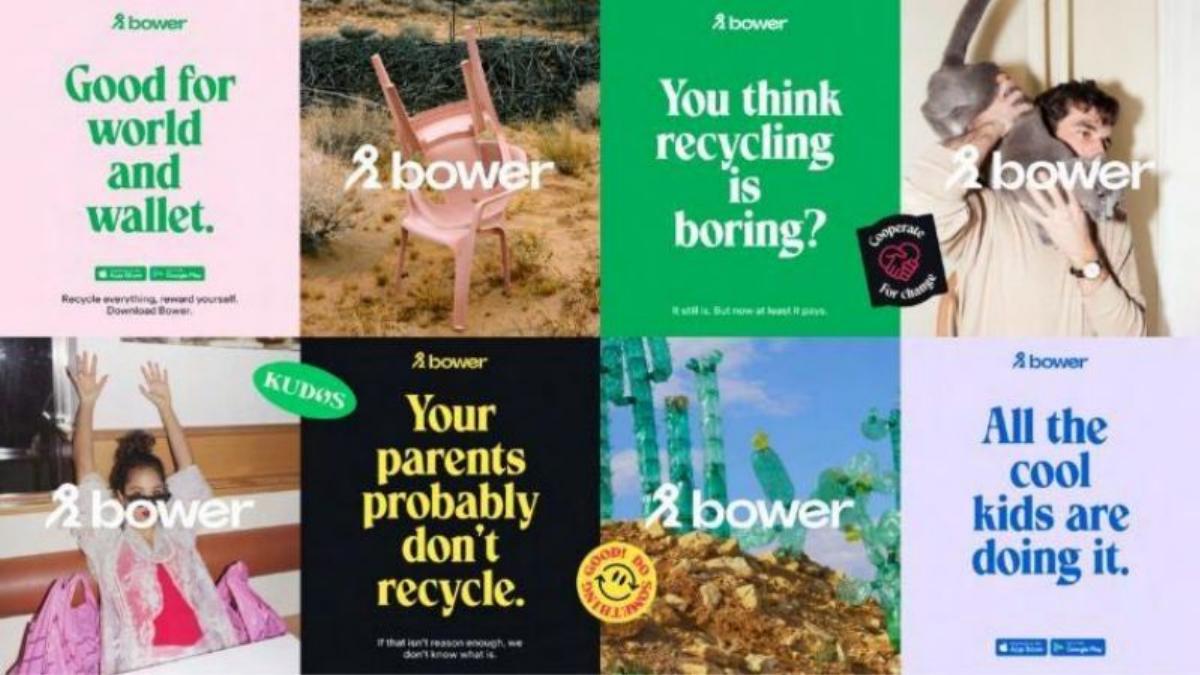
Bower opens with a clean, product-focused cover slide. The tagline "Recycle everything. Reward yourself" (Slide 1) immediately establishes the value proposition: a dual-sided benefit of environmental responsibility and personal gain. The visual shows the app in action, highlighting a barcode scanner and a map of recycling stations. Slide 2 serves as a mood board, showcasing the brand's marketing aesthetic. It uses bold, provocative copy like "Your parents probably don't recycle" and "All the cool kids are doing it," signaling a target demographic of younger, socially conscious consumers.
Slide 3: The Executive Summary
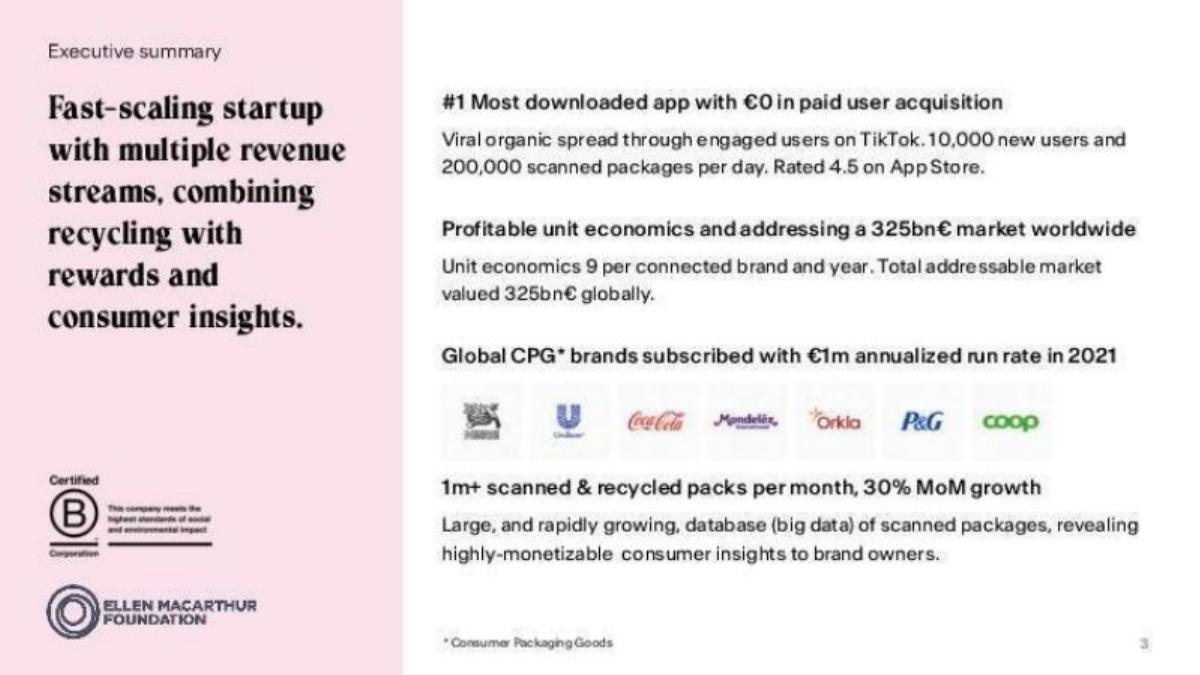
This is the most information-dense slide in the deck. It lists four critical pillars of the business: #1 Most downloaded app with €0 in paid user acquisition , profitable unit economics addressing a €325bn market , a €1m annualized run rate in 2021 from CPG brands, and 30% MoM growth with over 1 million scans per month. The inclusion of the B-Corp and Ellen MacArthur Foundation logos provides immediate institutional credibility.
The Origin Story and Problem Statement
Slides 4-6: The Journey and Recognition
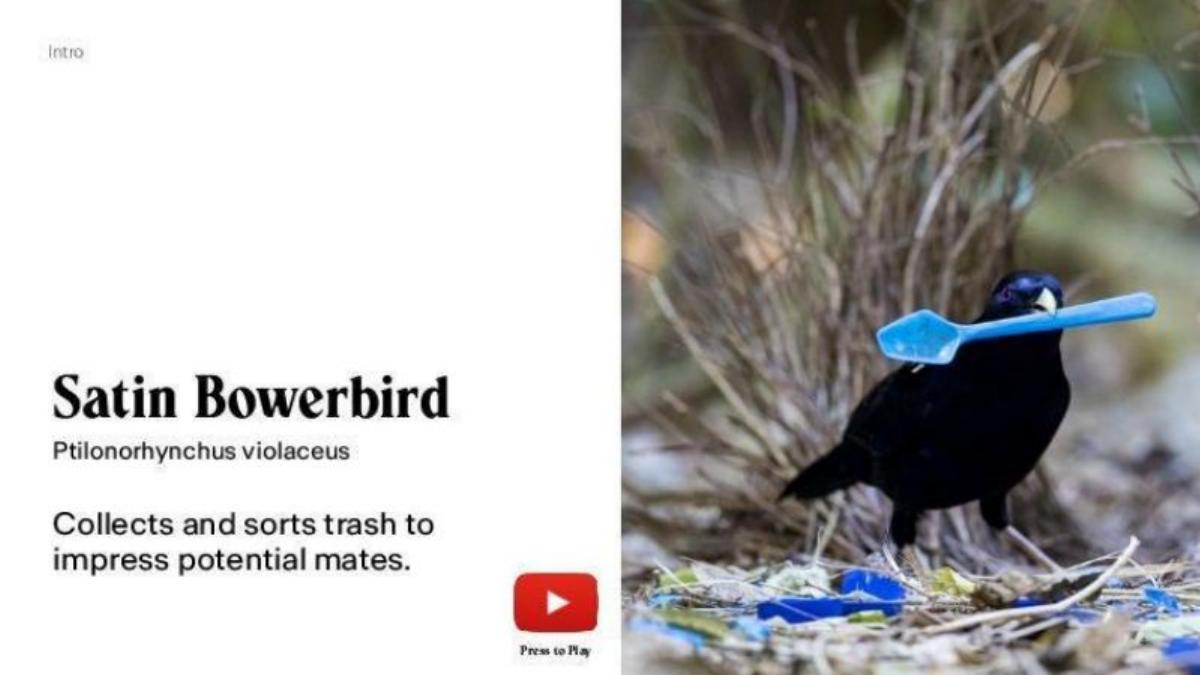
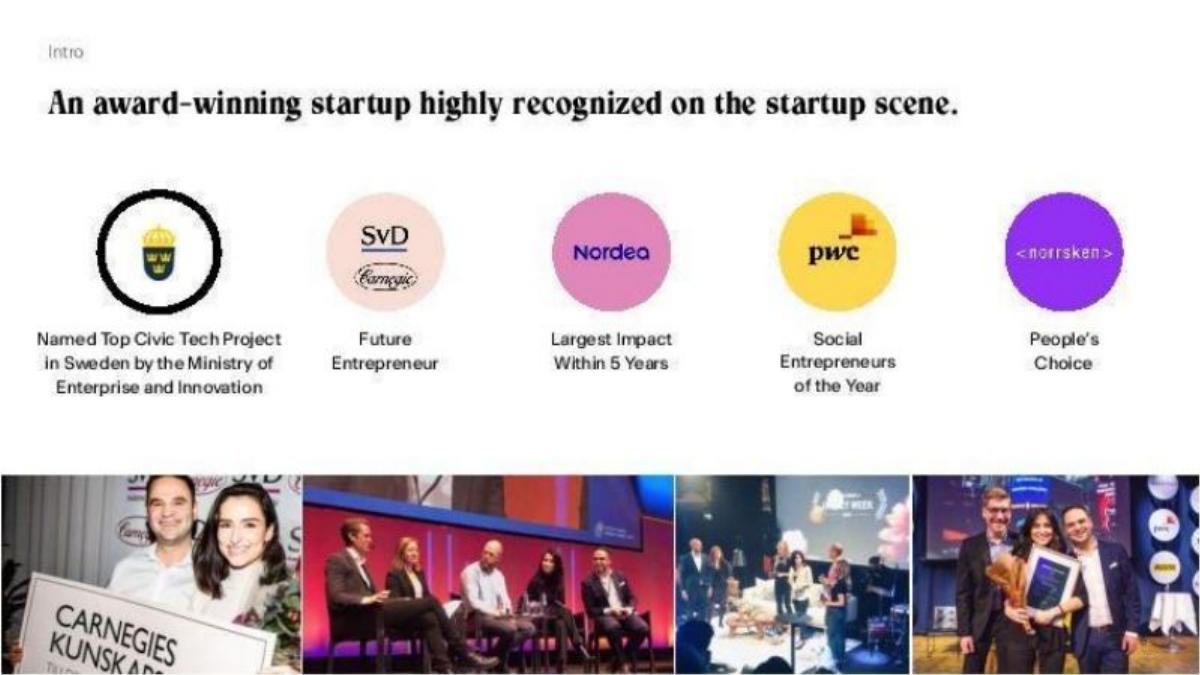
Slide 4 introduces the name's inspiration: the Satin Bowerbird , which "collects and sorts trash to impress potential mates." This adds a layer of storytelling to the brand. Slide 5 details the company's evolution from 2015 to 2021, showing a clear progression from a niche analogue solution for plastic bags (PantaPåsen) to a global digital platform. It also notes the funding history: €100k self-financed , €600k from family , and €1m in external investment . Slide 6 lists awards, including "Top Civic Tech Project in Sweden" and "Social Entrepreneurs of the Year" by PwC, further validating the team's execution capabilities.
Slides 7-8: Defining the Problem
The problem is framed through three lenses: the planet is at its limit, companies need to decrease emissions, and consumers lack incentives. Slide 8 provides the data to back this up, noting that only 9% of plastics get recycled because bins don't provide incentives, and while reverse vending machines work (recycling 80% of PET bottles ), they are difficult to scale. This sets the stage for a solution that combines the effectiveness of vending machines with the ubiquity of trash bins.
The Solution and Product Mechanics
Slides 9-11: The Digital Deposit System
Bower's solution is simple: Bins + Smartphones = A modern deposit system (Slide 9). The deck emphasizes that this works for "all packages worldwide." Slide 10 explains the "world-unique platform" that uses patented geolocation in-app technology . This is a crucial technical detail, as it addresses the potential for fraud by ensuring users are actually at a recycling bin when they claim a reward. Slide 11 reiterates that scanning only yields value in close proximity to GPS coordinates.
Slide 12: User Experience
The product flow is broken down into four steps: 1. Scan at home , 2. Go to a station , 3. Recycle your packages , and 4. Get rewarded . The rewards include "great deals," "money," or "donations to charity." This slide effectively demonstrates the app's ease of use, summarized by the phrase "Easy peasy."
Traction and Market Opportunity
Slides 13-15: B2B and B2C Traction
Slide 13 displays a "wall of logos" featuring heavy hitters like Nestlé, Unilever, Coca-Cola, P&G, and Nespresso . These are not just users; they are "connected products" that subscribe to the platform. Slide 14 dives into the viral growth story, noting that a single TikTok video led to 10k new users/day and 200k scans/day . The slide poses a rhetorical question: "What happens if we add a marketing budget?" Slide 15 shows how brands like Grumme and YES are now including the Bower logo directly on their packaging, providing free advertising for the app.
Slides 16-17: Impact and Market Size
Slide 16 quantifies the environmental impact: 16 million packs recycled and 770 tons of CO2 saved . It also claims a >20% increase in plastic waste recycled in areas where the app is active. Slide 17 returns to the market opportunity, framing the mission as addressing a €325bn global market . The visual of a large billboard reinforces the brand's ambition to be a household name.
Final Slides and Omissions
Slide 18: Contact Information
The deck concludes with contact details for Suwar Mert . Notably, this deck omits a traditional Team Slide with individual bios, a Financials Slide showing historical burn or revenue growth over time, and a specific "The Ask" Slide detailing how much capital is being raised in this Series A and how it will be allocated. While the catalogue facts state $47M was raised, the deck itself does not specify the round size or terms.
What Bower Does Well
Viral Proof: The story of reaching #1 on the App Store with zero spend is a powerful testament to product-market fit and organic demand. · Strategic Partnerships: Listing P&G, Unilever, and Coca-Cola as paying subscribers (Slide 3 and 13) proves the B2B value proposition is already validated by the world's largest polluters/packagers. · Technical Moat: Mentioning the patented geolocation technology (Slide 10) provides investors with comfort that the system is difficult to game and has a defensible intellectual property layer. · Clear Pivot Narrative: Slide 5 explains why the company changed names and models, showing the founders are responsive to market feedback and scalability challenges.
What is Missing from the Deck
Team Bios: There is no slide dedicated to the founders' backgrounds or the expertise of the engineering and sustainability teams. · Detailed Financials: While a €1m ARR is mentioned, there are no charts showing revenue growth, margins, or projections. · The Ask: The deck does not state how much money they are looking for or what the specific milestones for the Series A will be. · Competitor Analysis: The deck ignores other recycling apps or waste management startups, focusing only on the inadequacy of traditional bins and vending machines.
Founder Lessons
Lead with Traction: If you have a #1 app or blue-chip customers, put them on Slide 3. Don't make investors wait until the end of the deck to see your wins. · Use Relatable Impact Metrics: Instead of just listing tons of CO2, Bower compared it to train trips (Slide 16). This makes the environmental impact tangible for non-experts. · Show, Don't Just Tell, the Product: Using high-quality mockups of the app interface alongside photos of real-world usage (Slide 12) helps investors visualize the user journey instantly. · Leverage Brand Identity: Bower's consistent use of bold typography and a specific color palette (Slide 2) makes the company feel like a modern consumer brand rather than a dry utility app.
Frequently asked questions
- How does Bower prevent users from cheating the reward system?
- Bower utilizes a patented geolocation technology within the app. According to Slide 11, the deposit value is only retrieved when the user scans the barcode in close proximity to the specific GPS coordinates of a verified recycling bin. This ensures that the physical act of recycling is verified by location before any points or rewards are issued to the user's account.
- What is the primary revenue model for Bower?
- Based on Slide 3, Bower operates a subscription-based model for global Consumer Packaging Goods (CPG) brands. These brands pay to be part of the platform, which Bower describes as a 'highly-monetizable consumer insights' engine. By 2021, this model had already reached a €1m annualized run rate, providing brands with big data on how and where their packaging is recycled.
- How did Bower achieve such high user growth without a marketing budget?
- Slide 14 explains that Bower reached the #1 spot on the App Store through viral organic reach on TikTok. A single engaged user with only 1,600 followers posted a video of the app in action, which generated millions of views. This resulted in a peak of 10,000 new users and 200,000 scans per day without any paid advertising spend.
- What was the company's journey prior to becoming Bower?
- The company started in 2015 as PantaPåsen, an analogue deposit system for plastic bags. As shown on Slide 5, they received €100k in self-financing, followed by €600k from family in 2017. In 2018, they pivoted to PantaPå, a digital system for all packaging, and finally rebranded to Bower in 2021 to facilitate international expansion after raising €1m in external investment.
- What specific environmental impact has the app had so far?
- Slide 16 claims that 16 million packages have been recycled through the app. The company translates this impact into relatable metrics: 770 tons of saved carbon dioxide, which they equate to 250 million round trips between Stockholm and Gothenburg by train. Additionally, they note that their presence increases plastic waste recycling by over 20%.