BoxedUp's seed deck positions the company as a logistics-heavy solution for the creator economy, moving beyond traditional local rental shops. By combining direct-to-customer fulfillment of owned equipment with a 15% marketplace commission on third-party and peer-to-peer rentals, the company seeks to solve the problem of idle inventory and limited local market reach. The deck highlights a $144 billion market opportunity and a clear roadmap to expand from high-end camera gear into broader categories like heavy machinery and recreational goods. With a $2.5 million ask for 18 months of runway, t…
Key takeaways
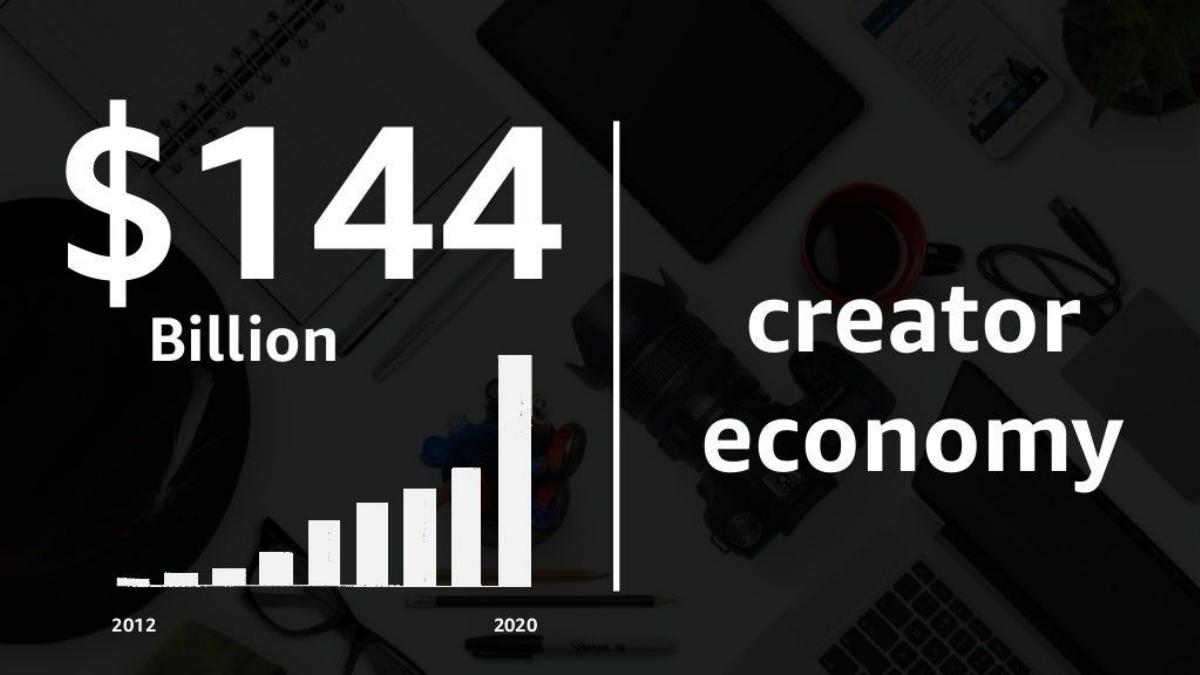
- The company identifies a $144 billion creator economy market as of 2020 (Slide 2).
- The problem for equipment owners is defined as limited monetization options for idle inventory and declining revenue due to local market constraints (Slide 3).
- The business model utilizes a 15% referral fee for third-party (3P) and peer-to-peer (P2P) rentals (Slide 5).
- BoxedUp differentiates itself from competitors like ShareGrid and Fat Llama by focusing on a national marketplace rather than just local peer-to-peer options (Slide 6).
- The delivery roadmap targets a transition from 2-day national delivery in 2021 to same-day local delivery by 2023 (Slide 7).
- The product selection is planned to expand from camera gear to bicycles, bounce houses, and heavy construction equipment (Slide 7).
- The $2.5M seed ask is intended to cover 18 months of runway, with $900k allocated to four full-time employees (Slide 8).
- At the time of the deck, $1M of the $2.5M round was marked as 'Deposited' (Slide 8).
Slide-by-Slide Analysis
Slide 1: Title Slide
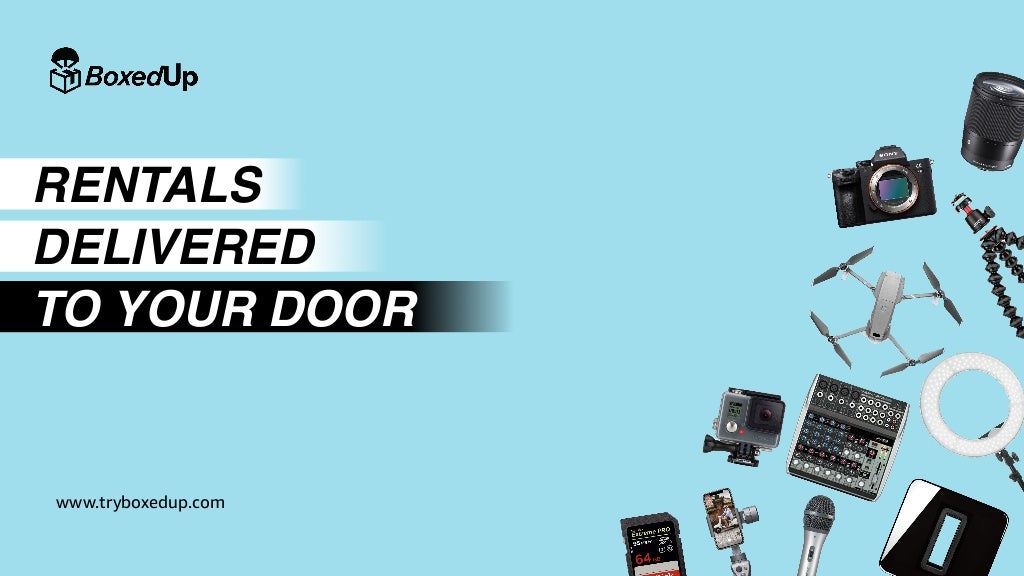
The cover slide establishes the brand identity with the tagline "Rentals Delivered To Your Door." The visual elements include a variety of creator-focused hardware: a Sony mirrorless camera, a drone, a ring light, a microphone, and an audio mixer. This immediately signals that the initial target market is content creators and videographers. The URL www.tryboxedup.com is provided at the bottom left.
Slide 2: Market Opportunity
This slide uses a large-scale figure of $144 Billion to define the "creator economy." A bar chart shows growth from 2012 to 2020, illustrating a steep upward trajectory. By framing the business within this specific economy rather than the general rental market, the company attempts to capture the zeitgeist of the gig economy and independent digital entrepreneurship.
Slide 3: The Problem
The problem is framed specifically "for equipment owners." Two main pain points are identified: Limited Options to monetize seldom-used equipment and Declining Revenue for local rental shops that are geographically constrained. This slide is crucial because it identifies the supply side of the marketplace as the primary beneficiary of the platform, suggesting that inventory acquisition is a key hurdle they intend to solve.
Slide 4: Go To Market
The Go To Market strategy is visualized as a circular ecosystem involving three pillars: Equipment Owners (individuals and shops), Content Creators (the renters), and Platforms & Brands (represented by YouTube and NPR logos). This suggests BoxedUp intends to act as the connective tissue between those who own gear and those who need it to produce content for major distribution platforms.
Slide 5: Business Model
BoxedUp outlines two distinct revenue streams. First is Rental & Purchase Revenue , which is noted as "MVP only" and involves BoxedUp-owned equipment. Second is the Marketplace Commission , which is a 15% referral fee collected from third-party (3P) and peer-to-peer (P2P) renters. The diagram shows a central "Customer" interacting with a BoxedUp Distribution Center, Local Rental Shops, and Peer Renters, indicating a hybrid logistics model.
Slide 6: Competition
The competitive landscape is mapped on a 2x2 grid with axes for "Local vs. National" and "Sole Distributor vs. Marketplace Options." BoxedUp places itself in the top-right quadrant (National Marketplace). Competitors like ShareGrid , Fat Llama , and Joymode are clustered in the Local Marketplace quadrant, while Lensrentals and BorrowLenses (BL) are placed in the National Sole Distributor quadrant. This positioning claims a unique space for BoxedUp as the only national-scale marketplace.
Slide 7: Selection/Capability Roadmap
This slide details the evolution of the service. The Delivery Capability timeline moves from "2-Day National Delivery" in 2021 to "Same Day, Local Delivery" by 2023. Below this, the Selection graphic shows an expansion from small electronics (cameras, drones) to mid-sized goods (bicycles, car seats, surfboards) and finally to heavy equipment (tractors, jet skis, and construction lifts). This indicates an ambition to become a general "everything" rental platform.
Slide 8: Use of Funds
The final slide in this set presents a $2.5M seed ask for 18 months of runway . A progress bar at the bottom shows that $1M has already been "Deposited," while the remainder is in "Term Sheets." The budget breakdown allocates the largest portion, $900k , to four full-time employees (CEO, Sales, SDE, and Logistics). Other significant costs include $500k for recruitment of 3P/P2P suppliers and $400k for outsourced software development.
What Works Well in This Deck
Clear Market Positioning: The 2x2 competitive matrix on Slide 6 is effective. It clearly identifies a perceived gap in the market—national scale combined with a marketplace model—and places BoxedUp directly in that white space. This helps investors understand the "Why Now" and the specific niche the company aims to dominate.
Logical Progression of Scope: The roadmap on Slide 7 is ambitious but follows a logical sequence. Starting with high-value, low-bulk items like cameras allows the company to refine its logistics and 15% commission model before tackling the significant operational challenges of renting out heavy machinery or jet skis.
Transparent Use of Funds: Slide 8 provides a granular breakdown of how the $2.5M will be spent. By specifying the roles to be hired (CEO, Sales, SDE, Logistics) and acknowledging the use of outsourced development, the founders demonstrate a clear operational plan for the next 18 months.
What Is Missing or Could Be Improved
Traction Data: The provided slides contain no historical data regarding actual rentals, user growth, or revenue generated during the MVP phase. While Slide 5 mentions an MVP, there are no metrics to prove that the 15% commission model is sustainable or that customer acquisition costs are manageable.
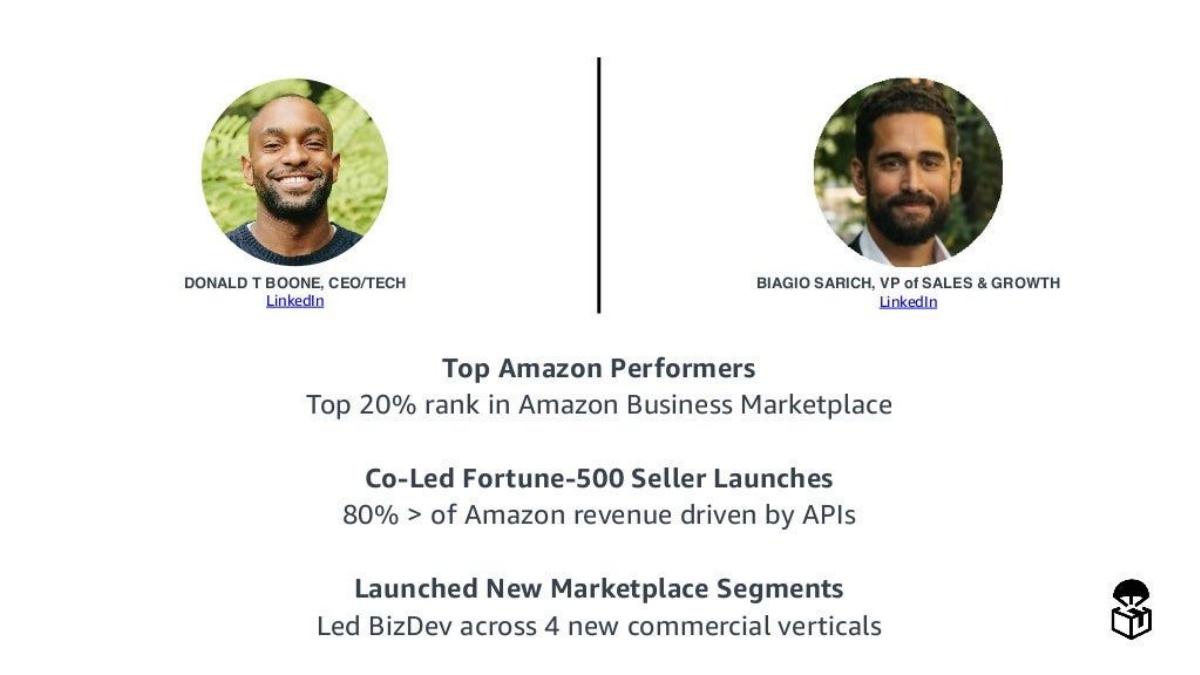
Team Background: There is no team slide in the provided selection. For a seed round, the experience of the founders is often the most critical factor. Without knowing if the team has a background in logistics, marketplace dynamics, or the creator economy, it is difficult to assess their ability to execute the 2023 roadmap.
Unit Economics: While the 15% referral fee is stated, the deck does not address the costs of insurance, shipping, or logistics fulfillment. Slide 8 mentions $125k for insurance and $350k for logistics, but these are aggregate figures rather than per-transaction breakdowns. Investors would likely want to see how much of that 15% is eaten up by operational overhead.
Founder Takeaways
Define your supply side: BoxedUp does a good job of explaining why equipment owners need their platform (Slide 3). If you are building a marketplace, you must solve a problem for the suppliers just as much as the consumers. · Visualizing the Roadmap: Using icons to show product expansion (Slide 7) is a powerful way to communicate scale without using too much text. It allows investors to visualize the company's future state as a multi-category platform. · Fundraising Status: Including a progress bar for the round (Slide 8) can create a sense of momentum and FOMO (Fear Of Missing Out) by showing that a significant portion of the capital is already committed or deposited. · Hybrid Models: If your long-term goal is a marketplace but you are starting with owned inventory (Slide 5), be explicit about that transition. It shows you understand the difference between a capital-intensive business and a scalable platform.
Frequently asked questions
- What is BoxedUp's primary revenue driver?
- According to slide 5, the company employs a dual revenue strategy. During the MVP phase, they generate revenue through direct-to-customer fulfillment of equipment owned by BoxedUp. Long-term, they shift toward a marketplace model, collecting a 15% referral fee from third-party rental shops and peer-to-peer renters.
- How does BoxedUp plan to compete with established rental platforms?
- Slide 6 positions BoxedUp in the 'National Marketplace' quadrant. Unlike competitors like ShareGrid or Joymode, which are categorized as 'Local,' or Lensrentals, which is a 'Sole Distributor,' BoxedUp aims to combine the scale of a national platform with the inventory diversity of a marketplace.
- What categories of equipment does BoxedUp intend to rent?
- Slide 7 shows a selection roadmap starting with creator tools like drones, cameras, and microphones. It then expands into consumer goods like car seats and bicycles, eventually reaching large-scale items such as jet skis, trailers, and heavy construction machinery like backhoes and boom lifts.
- What is the specific use of funds for the $2.5M seed round?
- Slide 8 breaks down the $2.5M ask: $900k for 4 FTEs (CEO, Sales, SDE, Logistics), $500k for 3P/P2P recruitment, $400k for outsourced software development, $350k for logistics and fulfillment, $225k for marketing and local sales, and $125k for insurance.
- What is the projected timeline for delivery improvements?
- Slide 7 outlines a three-stage capability roadmap. It begins with 2-day national delivery in 2021, moves to next-day same-state delivery, and aims for same-day local delivery by 2023. This suggests a heavy investment in regional distribution hubs.