Little Lunch’s 16-slide deck is a masterclass in demonstrating market dominance within a specific geographic niche. By 2020, the company had secured a 56% market share in the organic soup and stew category within the DACH region (Germany, Austria, Switzerland). The deck highlights a strong 42% CAGR from 2015 to 2020 and a sophisticated multichannel distribution strategy that spans 74% of German supermarkets, drugstores, and cash & carry markets. While the deck is light on specific financial projections and a clear 'ask' slide, it compensates with powerful brand sentiment data and a clear road…
Key takeaways
- The company achieved a 56% market share in the organic soups category by 2020 (Slide 8).
- Little Lunch maintained a strong Compound Annual Growth Rate (CAGR) of 42% between 2015 and 2020 (Slide 6).
- Distribution is highly mature, with products available in 74% of all German supermarkets and drugstores (Slide 6).
- The brand demonstrates significant social proof with 71k Facebook fans and a 1400% YoY increase in Pinterest users (Slide 11).
- The business model relies on outsourcing manufacturing and logistics to ensure fast scalability (Slide 10).
- The core demographic is 70% women, aged 25-49, with middle to higher education levels (Slide 12).
- Future growth is pegged on a $148M market for pasta sauces and a $145M market for fresh ready meals (Slide 8).
- The deck lacks a specific funding ask or a detailed use-of-funds breakdown (Omitted).
Introduction: From Niche to Mass Market
The Little Lunch pitch deck represents a company that has already moved past the 'proof of concept' stage and into 'market dominance.' Founded in 2014, the brand spent six years refining a product that brings organic quality to the convenience food aisle. This teardown analyzes the 16-slide deck used during their 2022 period, which resulted in $3.12M in funding according to catalogue facts.
Slides 1-3: Vision and Mission
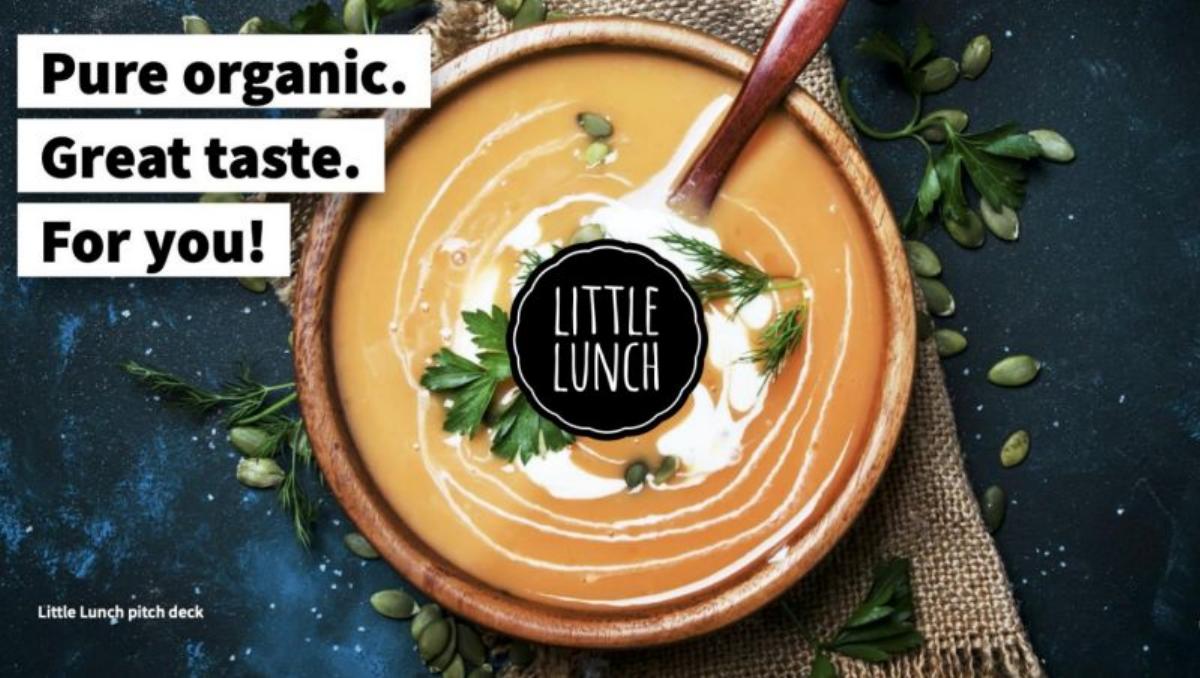
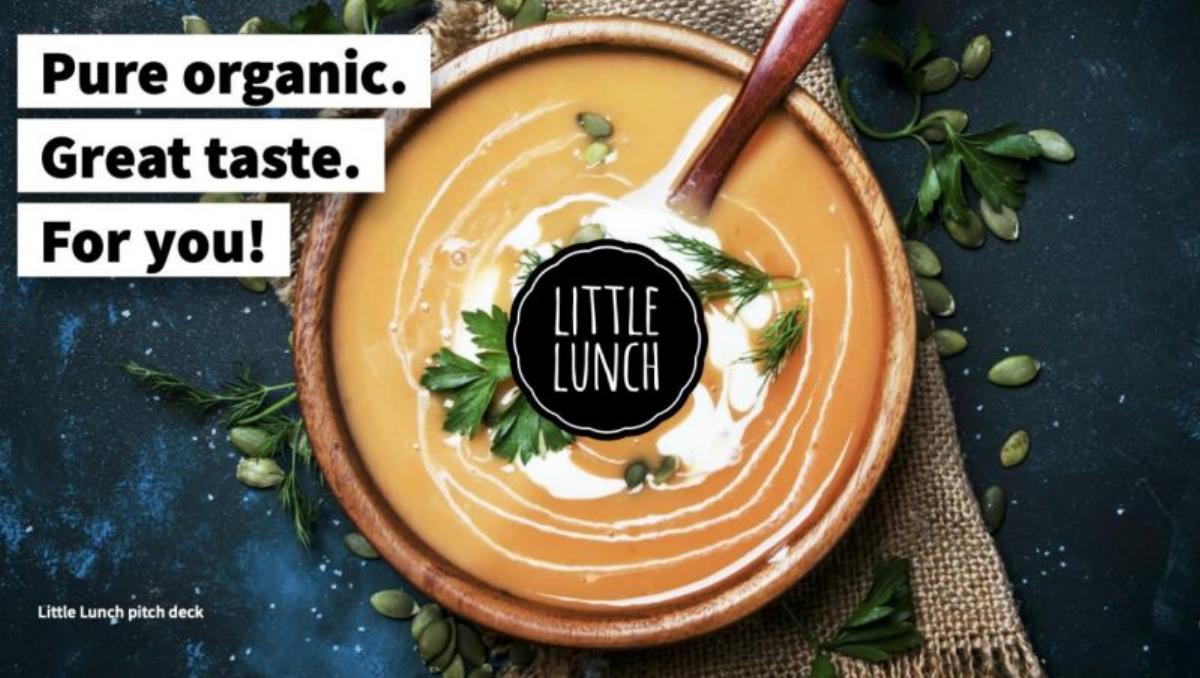
The deck opens with high-quality food photography and a simple slogan: "Pure organic. Great taste. For you!" on Slide 1. This sets a consumer-packaged goods (CPG) tone immediately—clean, appetizing, and professional.
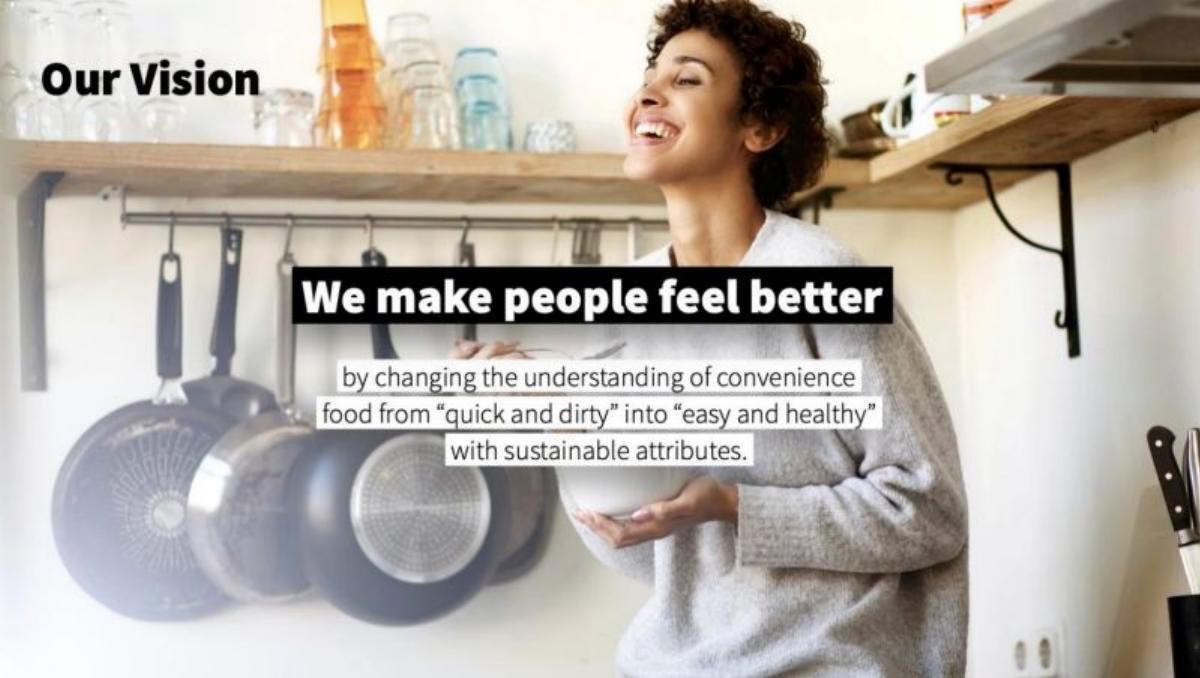
Slide 2 defines the vision: "We make people feel better by changing the understanding of convenience food from 'quick and dirty' into 'easy and healthy' with sustainable attributes." This is a classic 'redefining a category' play. They aren't just selling soup; they are selling a lifestyle shift.
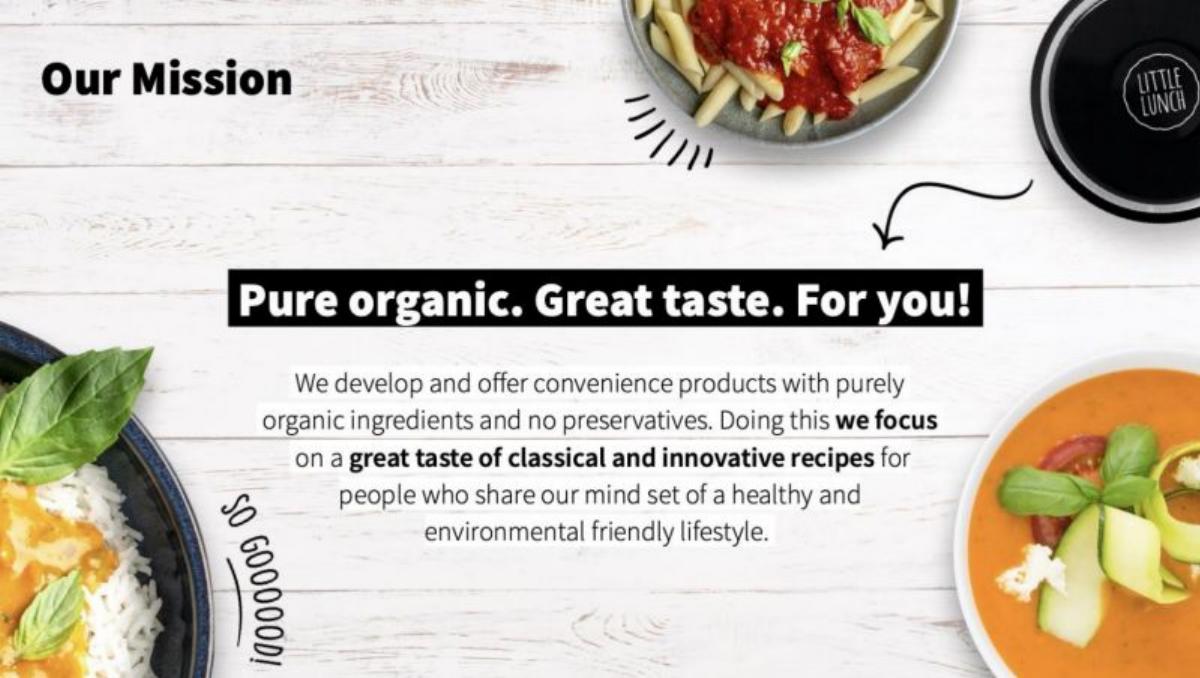
Slide 3 reinforces the mission, emphasizing "classical and innovative recipes" and the removal of preservatives. The design is consistent, using whitespace and high-resolution imagery to mirror the 'clean' nature of the product.
Slides 4-5: Product and Portfolio
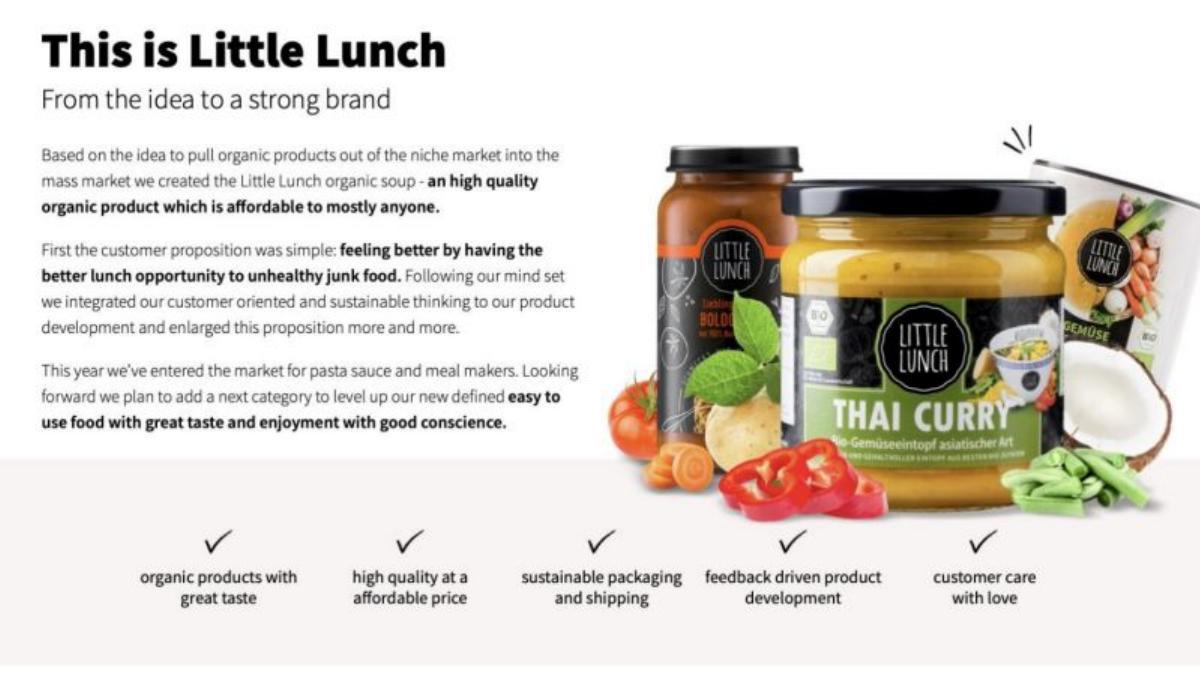
Slide 4 introduces the brand's core value proposition: pulling organic products out of the niche and into the mass market by making them "affordable to mostly anyone." This is a critical point for investors; organic food often struggles with price elasticity. Little Lunch claims to have solved this. They list five pillars of their brand: organic ingredients, affordable price, sustainable packaging, feedback-driven development, and customer care.
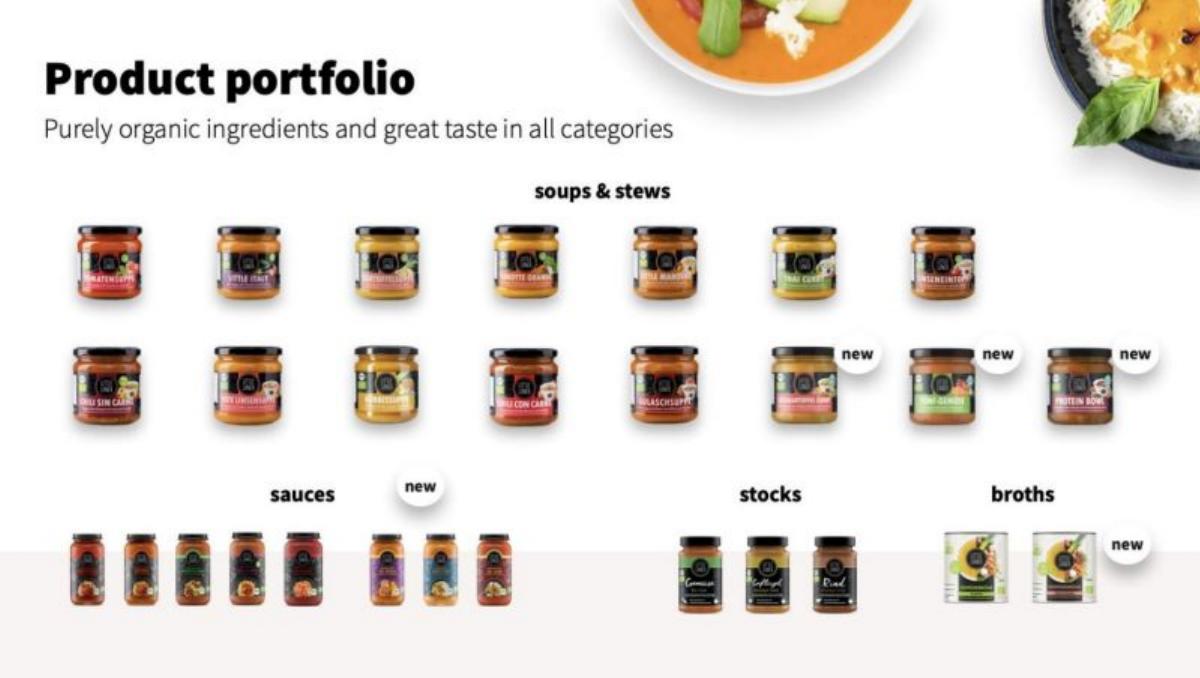
Slide 5 displays the Product Portfolio . It is extensive. They show 15 varieties of soups and stews, including several marked as "new." They also show a line of sauces, stocks, and broths. This slide proves that Little Lunch is no longer a 'one-trick pony' but a platform brand capable of occupying multiple shelf segments.
Slide 6: The Executive Summary
This is the 'money slide' for many analysts. It lists the reasons to invest:
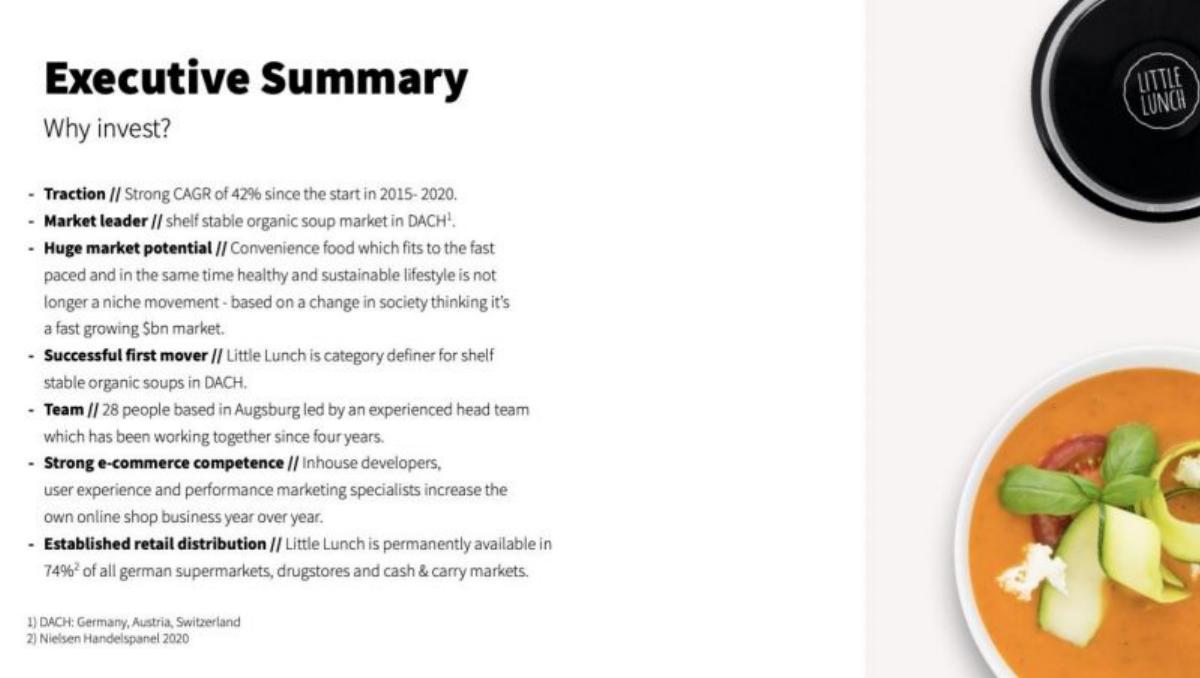
Traction: 42% CAGR from 2015-2020. · Market Leader: Shelf-stable organic soup market in DACH. · Distribution: Available in 74% of all German supermarkets and drugstores (citing Nielsen Handelspanel 2020). · Team: 28 people based in Augsburg.
The mention of 74% retail distribution is a massive signal of maturity. It means the 'hard work' of retail placement is largely done; the investment is likely for expansion and marketing rather than initial sales efforts.
Slides 7-8: E-commerce and Market Share
Slide 7 highlights "Strong e-commerce competence." In the CPG world, being 'digital-first' or having a strong Direct-to-Consumer (DTC) channel is a hedge against retail volatility. They mention in-house developers and performance marketing specialists, suggesting they own their customer data rather than relying solely on third-party retailers.
Slide 8 provides the most impressive metric in the deck: 56% market share in soups in 2020 . They also define the 'Huge future market' by identifying adjacent categories: Pasta Sauce & Meal Makers ($148M) and Fresh Ready Meals ($145M). By showing their dominance in a $24M niche (Organic soups & stews), they argue they are the natural winner for these larger adjacent markets.
Slides 9-10: Growth and Business Model
Slide 9 outlines a four-part Growth Strategy : (A) DACH potential, (B) European expansion, (C) Line extensions, and (D) New categories. It’s a standard but logical progression.
Slide 10 explains the Business Model . It is an asset-light approach. They outsource Manufacturing, Logistics, and Field Sales. They keep Key-Account, Marketing, Operations, Accounting, Product Development, and Customer Care in-house. This slide is titled "Scalability, Control, Access." It tells investors that the company can grow without a linear increase in headcount or capital expenditure on factories.
Slides 11-13: Brand, Customer, and Sustainability
Slide 11 focuses on being a "Love brand." They cite 71k Facebook fans, 60k monthly Pinterest users (a 1400% YoY increase), and 49k Instagram followers. They also show a chart from an Innofact AG study indicating that Little Lunch has higher 'Aided Awareness' and 'Sympathy' scores than their main competitors.
Slide 12 breaks down the Customer Base . They move away from the 'millennial' trope to show a broader appeal: "The Conscious" (housewives), "The Working Mom," "The Single," and "The Trendsetter." They note that 70% of their customers are women aged 25-49.
Slide 13 covers Sustainability . They mention a zero carbon footprint from 2021, 95% recyclable packaging, and partnerships with social organizations like SOS Kinderdörfer. In the modern ESG (Environmental, Social, and Governance) investing climate, this slide is mandatory for a food brand.
Slides 14-16: Team and Conclusion
Slide 14 introduces the founders, Denis Gibisch and Daniel Gibisch , both listed as CEO/Founder. They note the team has been working together for four years. The slide also lists company facts: Founded in 2014, 28 employees, 6 shareholders, and a 600 sq m office in Augsburg. Curiously, the slide uses icons for the 'Heads of' various departments rather than photos or names, which is a missed opportunity to show the depth of the leadership team.
Slide 15 is a simple "Thank you!" with a photo of the founders, and Slide 16 is a placeholder for the pitch deck library source.
What Little Lunch Does Well
The deck excels at proving market fit and dominance . Most startups struggle to prove anyone wants their product; Little Lunch proves that 56% of the market wants theirs. The use of third-party data (Nielsen, Innofact AG) adds a layer of credibility that self-reported metrics lack. The visual identity is also incredibly strong—it looks like a brand that belongs on a premium supermarket shelf.
What is Missing from the Deck
The most glaring omission is the Financial Ask . There is no slide stating how much money they are looking for, the valuation they are seeking, or the specific milestones that capital will unlock. Furthermore, while they mention a 42% CAGR, they do not provide absolute revenue figures . A 42% growth rate on $1M is very different from 42% on $50M. They also omit unit economics (margins, CAC, LTV), which are vital for a retail/DTC hybrid business.
What Founders Should Copy
Founders should emulate the Executive Summary (Slide 6) . It is a perfect 'TL;DR' for a busy investor, hitting traction, market position, and distribution in four bullet points. Additionally, the Business Model slide (Slide 10) is an excellent way to visualize the 'Internal vs. External' split of a company, clearly showing how the business intends to scale without becoming bloated with infrastructure costs.
Final Thoughts
Little Lunch presents a very 'safe' investment for a Seed or Series A round. They have a proven product, a dominant market share in their home region, and a clear path to expansion. While the deck lacks the granular financial detail of a late-stage pitch, its focus on brand sentiment and retail penetration makes a compelling case for a company that has successfully captured the 'healthy convenience' zeitgeist in Europe.
Frequently asked questions
- What is Little Lunch's primary market position?
- Little Lunch is the market leader in the shelf-stable organic soup market in the DACH region (Germany, Austria, and Switzerland). According to slide 8, they held a 56% market share in this category as of 2020. They have successfully moved organic products from a niche offering into a mass-market staple by focusing on affordability and convenience.
- How does Little Lunch handle production and logistics?
- The company utilizes an asset-light business model. As detailed on slide 10, they outsource manufacturing, logistics, and field sales to external partners. This allows the internal team to focus on core competencies like product development, marketing, and customer care while enabling rapid scalability without the overhead of owning factories.
- What does the company's growth look like?
- The company reported a 42% CAGR from its inception in 2015 through 2020. Their growth strategy involves four pillars: reaching full potential in the DACH region, expanding geographically into the rest of Europe, extending existing product lines, and entering entirely new categories like sauces and meal makers (Slide 9).
- Who is the target customer for Little Lunch?
- While they claim to fit a 'new society thinking' rather than just millennials, their data shows a specific core demographic. Slide 12 notes that 70% of their customers are women, typically aged 25-49, who are working professionals with middle to higher education and household net income.
- What is missing from the Little Lunch pitch deck?
- The deck is notably missing a specific 'Ask' slide detailing how much capital they are raising and at what valuation. It also lacks a detailed financial forecast or 'burn' slide. While it mentions a 42% CAGR, it does not provide absolute revenue figures or unit economics like Customer Acquisition Cost (CAC) or Lifetime Value (LTV).