Supliful’s 22-slide pitch deck is a masterclass in leveraging the 'Creator Economy' narrative to modernize the traditional dropshipping and private label industry. By positioning themselves as the infrastructure for social selling, they move beyond being a mere supplement supplier to becoming a platform play. The deck effectively uses a 'Superstar vs. Long-tail' comparison to highlight market friction, backed by early traction data including $270k in revenue within eight months of beta. While the financial projections are ambitious—targeting a jump from near-zero to $100M in three years—the c…
Key takeaways
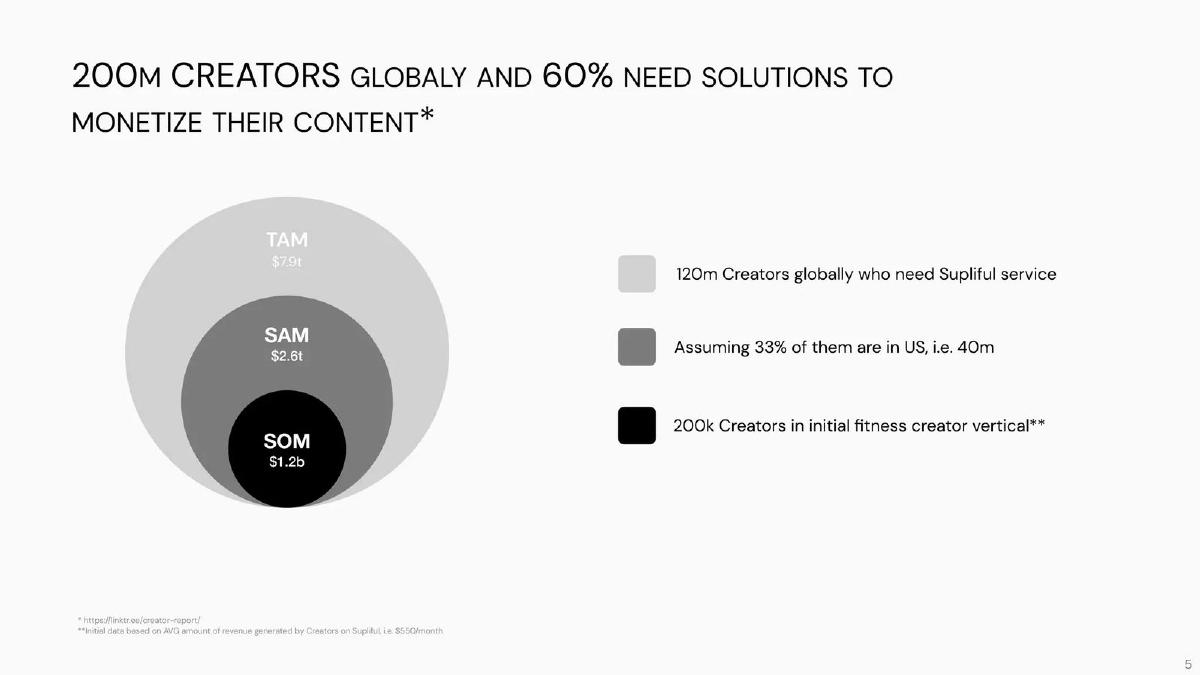
- The deck identifies a massive TAM of $7.9T, narrowing down to a $1.2B SOM specifically for the fitness creator vertical (Slide 5).
- Supliful utilizes a three-pronged revenue model: 33% product markups, 5% store-front commissions, and $39-$349 monthly subscriptions (Slide 8).
- Early traction is demonstrated by 370+ activated creators and 800+ linked Shopify stores within 8 months of beta (Slide 11).
- The founders emphasize their background as creators who exited Grafomap.com without external financing (Slide 14).
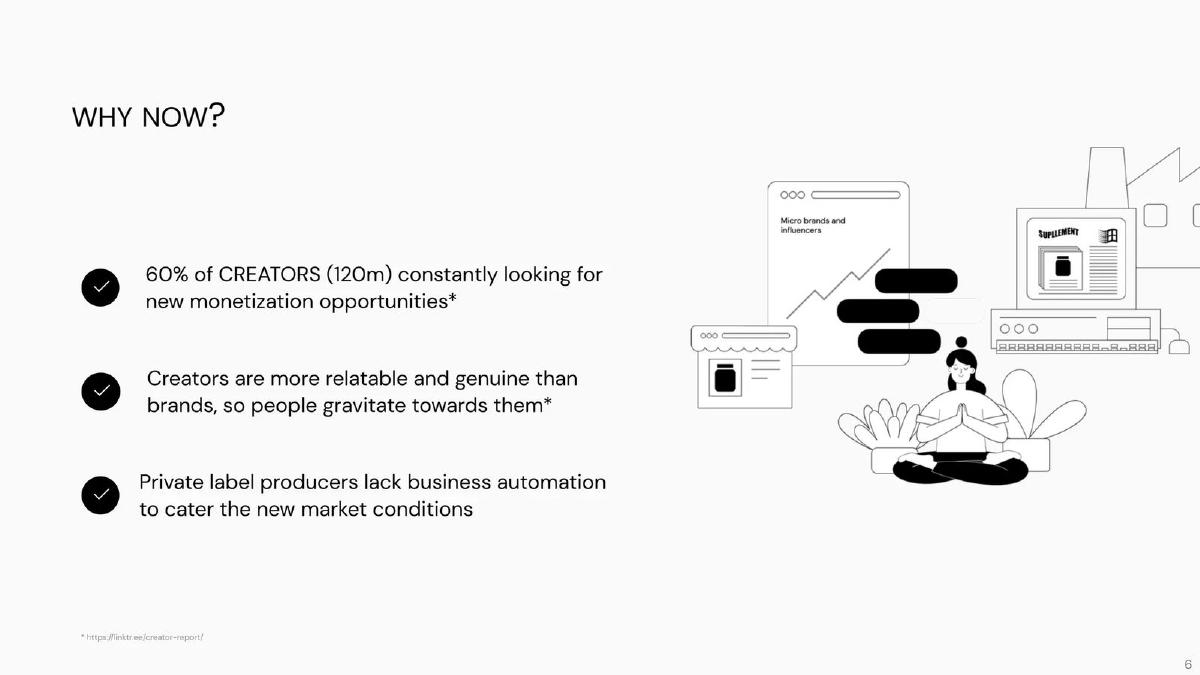
- The 'Why Now' slide points to a lack of business automation among traditional private label producers (Slide 6).
- The deck includes a specific $2M Seed round ask with a detailed allocation of funds across four key growth areas (Slide 17).
- Unit economics are presented as a 'positive acquisition feedback loop' with a $156 LTV per subscriber against a $50 acquisition cost (Slide 9).
- The competitive landscape is mapped on an axis of 'On demand' vs. 'Large MOQs' and 'Retail' vs. 'Ecommerce' (Slide 12).
Executive Summary: The Infrastructure for Creator-Led CPG
Supliful’s pitch deck is a highly structured argument for the 'democratization' of consumer packaged goods (CPG). By taking the proven print-on-demand model and applying it to the high-margin supplement industry, they address a specific pain point: the high barrier to entry for creators who want to move beyond affiliate links to owning their own brands. The deck is notable for its clarity on revenue mechanics and its reliance on founder pedigree to de-risk a pre-seed/seed investment.
Slides 1-4: The Hook and the Solution
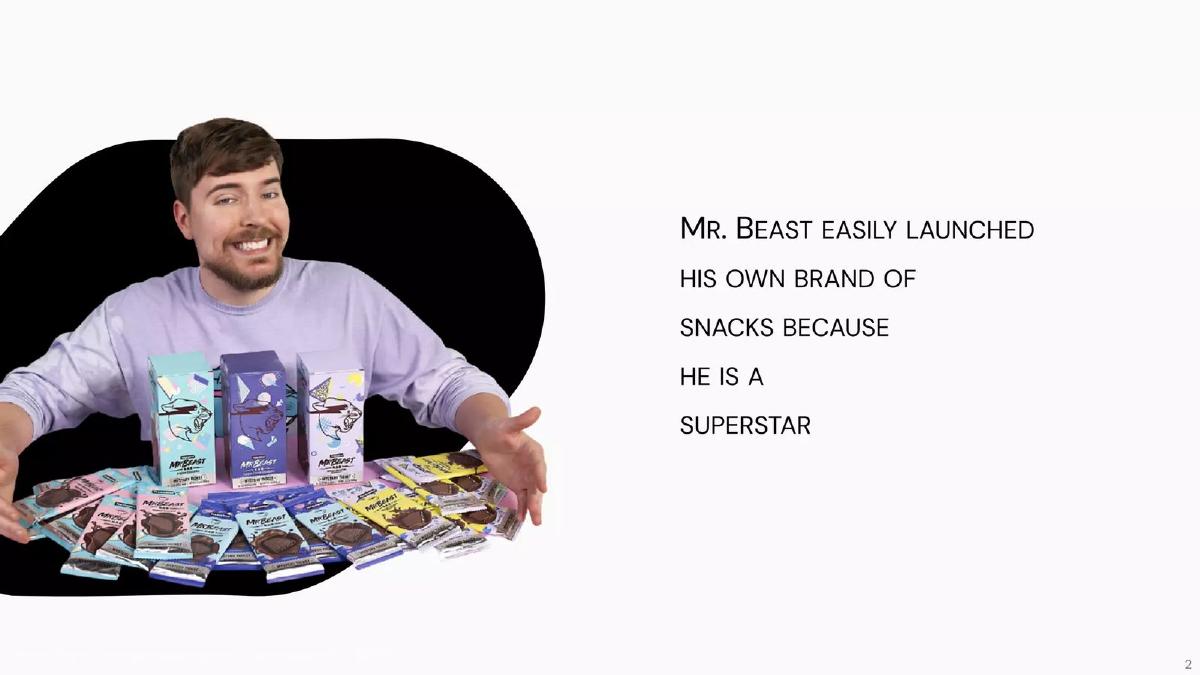
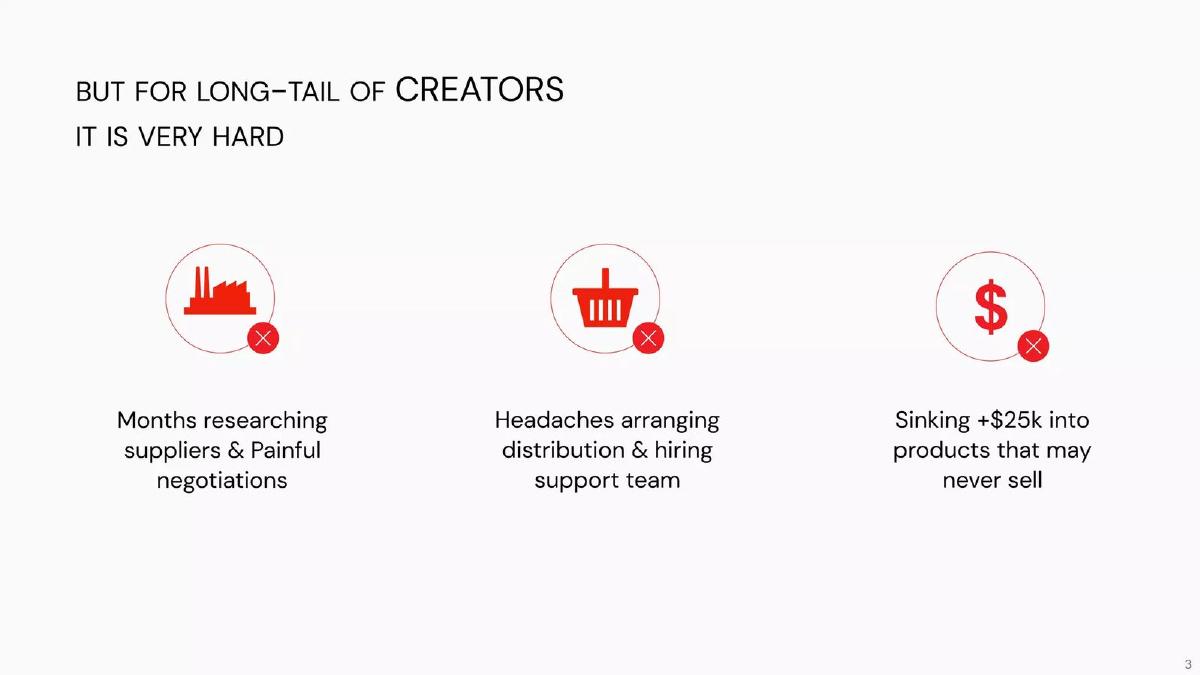
The deck opens with a clear value proposition: "We make it easy for creators to launch their own private label brand." Slide 2 uses a 'Superstar' anchor, mentioning Mr. Beast’s success with Feastables, to illustrate that while top-tier creators can launch brands easily, the 'long-tail' of creators faces significant hurdles. Slide 3 quantifies these hurdles: months of research, distribution headaches, and the risk of "sinking +$25k into products that may never sell."
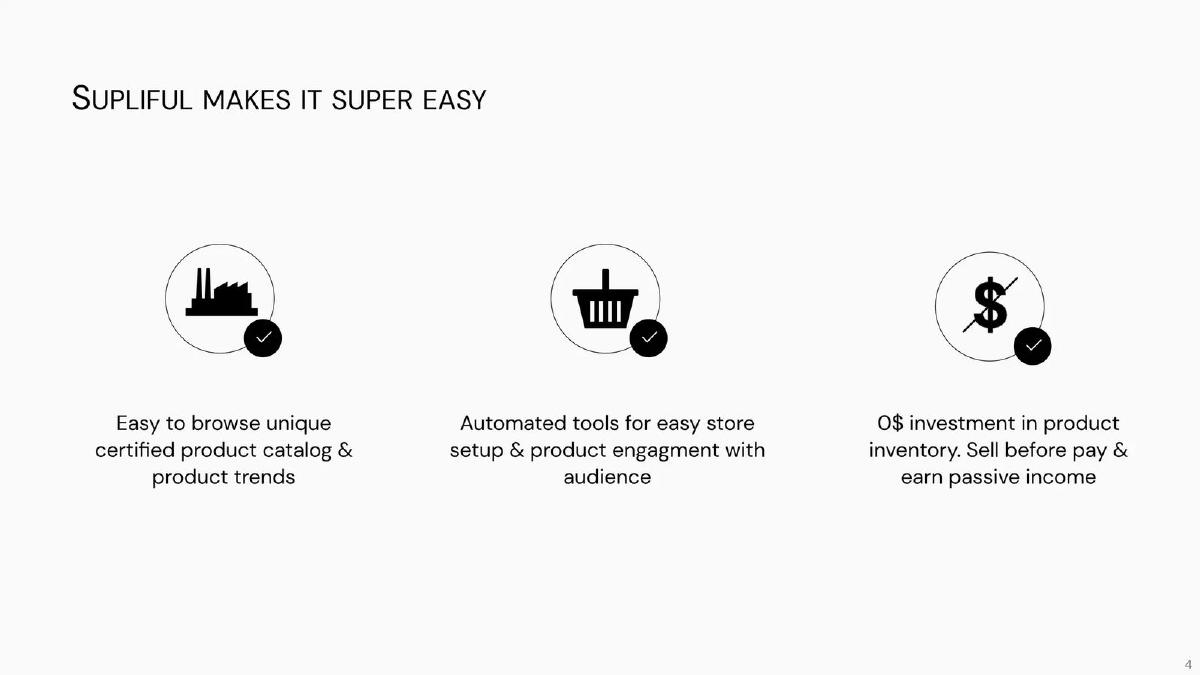
Slide 4 introduces the Supliful solution as the inverse of these problems. They promise a unique certified product catalog, automated store setup, and most importantly, "0$ investment in product inventory." This 'sell before you pay' model is the core of their disruptive claim, effectively removing the financial risk of entrepreneurship for their target demographic.
Slides 5-6: Market Opportunity and Timing
The market sizing on Slide 5 is aggressive. It claims a TAM of $7.9T , which likely refers to the total global retail or e-commerce market, rather than a specific supplement niche. However, it grounds this by focusing on a SOM of $1.2B , specifically targeting 200k creators in the fitness vertical. They calculate this based on an average creator revenue of $550/month .
Slide 6, the 'Why Now' slide, identifies three catalysts: 60% of creators are actively seeking new monetization, consumers find creators more relatable than traditional brands, and traditional private label producers lack the automation required to handle small, on-demand orders. This framing positions Supliful as the necessary technological bridge between old-school manufacturing and new-school marketing.
Slides 7-9: Product and Business Model
Slide 7 provides a simple two-step visualization of the product: select from 100+ products in 5+ categories, add branding, and publish. The automation of fulfillment to the 'Creator end customer' is the key technical takeaway here.
The business model on Slide 8 is exceptionally clear—a rarity in early-stage decks. They list three revenue drivers: 33% average markup on products, a 5% commission on Supliful-hosted storefronts, and $39 or $349/month subscription plans. This diversification shows investors that the company isn't just reliant on transaction volume; they also have a SaaS-style recurring revenue component.
Slide 9 breaks down the unit economics. They claim a $10 CAC per signup and a 20% conversion rate to paid subscribers. This results in a $50 subscriber acquisition cost against a $156 LTV (based on a $39 fee and 4-month average life). The slide notes that these benchmarks are based on data from Printify.com, a strategic comparison they return to later.
Slides 10-11: Traction and Social Proof
Slide 10 uses a specific case study: 'Fitness Creator Mason,' who reportedly earned $170k in 6 months . The chart breaks down revenue, COGS, and gross profit, showing a peak monthly revenue of $43,797 in May. This provides a 'proof of concept' that the model works for individual users.
Slide 11 aggregates this data to show platform-wide growth. Eight months after beta, they report:
370+ Activated Creators · 800+ Linked Shopify stores · $270k in Supliful Revenue (out of $540k total generated by creators)
The inclusion of 70+ 5-star Shopify reviews adds a layer of third-party validation to these numbers.
Slides 12-13: Competition and Comparables
Slide 12 uses a standard 2x2 matrix to position Supliful in the 'Ecommerce/On-demand' quadrant. They successfully differentiate themselves from 'Large MOQ' players like MyProtein and traditional 'Retail' like Walgreens.
Slide 13 is a 'Comparable' slide, often used to justify high valuations. They point to Printful (valued at $1b+) and Printify (valued at $300M+) . Both companies are based in Riga, Latvia—the same location as Supliful. This suggests a regional expertise in building on-demand fulfillment software, which helps de-risk the operational execution in the eyes of an investor.
Slides 14-15: Team and Early Backers
The team slide (Slide 14) is a strong point. The founders highlight that they "built and exited GRAFOMAP.COM in 5 years without external financing." This proves they can build a profitable business and manage an exit. The team includes specialists in business operations, digital marketing, and full-stack development, along with a fulfillment manager with 10+ years of experience.
Slide 15 shows that they already have +$900k in commitments from early investors, including Jevgeni Kabanov (CPO at Bolt) and firms like Startup Wise Guys and Diaspora Ventures. This creates a sense of momentum and 'FOMO' for the remaining $1.1M of the round.
Slides 16-17: The Vision and The Ask
Slide 16 presents a hockey-stick growth chart, projecting a jump from 2022 levels to $100M in revenue by 2025 . They also set a target for break-even in Q4 2024 . While these are standard 'venture scale' projections, the jump from $270k to $100M in three years is a significant claim that would require massive creator adoption.
Slide 17 is the 'Ask.' They are raising a $2M Seed round to reach $4M GMV. The allocation is specific:
$700k: Acquire 4,000 active creators. · $300k: Build 'Creators Academy' for coaching. · $400k: Add 15+ food suppliers and lab testing. · $600k: Build automation tools and gamify selling.
Slides 18-22: Appendix and Supplemental Data
The appendix includes a contact slide (Slide 18) and deeper dives into their supply chain. Slide 20 lists specific US suppliers like Reliance, YouBar, and Vitalabs , which addresses potential concerns about product quality and shipping times. Slide 21 showcases product variety beyond just protein powder, including coffee, superfoods, and 'Cricket Protein.'
Finally, Slide 22 details their acquisition funnel, showing they are #1 on main keywords like 'supplements on demand' and have been featured in publications like The Next Web and Men’s Journal. This suggests they have a handle on organic growth, not just paid spend.
What Works in This Deck
The 'Printful for X' Analogy: By comparing themselves to Riga-based unicorns in the print-on-demand space, they make a complex logistics business easy to understand. · Clear Revenue Streams: They don't hide how they make money. The breakdown of markups vs. subscriptions vs. commissions is transparent and logical. · Founder-Market Fit: The previous exit in a similar (though non-supplement) space gives investors confidence that the team can handle the 'unsexy' parts of e-commerce like fulfillment and customer support. · Specific Use of Funds: The 'Ask' slide doesn't just say 'Growth.' It breaks down exactly what $2M buys in terms of creator count and product features.
What Is Missing or Weak
Regulatory and Compliance Detail: The supplement industry is heavily regulated by the FDA. While they mention 'certified' products, a dedicated slide on how they handle liability, labeling laws, and quality control would have been beneficial for a Seed round. · Churn Data: They estimate a 4-month customer life based on Printify data, but they don't show their own actual churn rates from the beta. In the creator economy, 'burnout' and store abandonment are high risks. · The $100M Leap: The transition from $270k in revenue to $100M in three years (Slide 16) is not fully supported by the current growth trajectory. It assumes a massive acceleration that usually requires more than just 'automation tools.'
What Founders Should Copy
The Problem/Solution Mirror: Slide 3 and Slide 4 are perfect mirrors of each other. Every 'red X' in the problem slide is answered by a 'black check' in the solution slide. · The Unit Economics Loop: Slide 9 is an excellent way to visualize how a company turns $1 of capital into more than $1 of value. It’s a 'money printer' diagram that investors love. · The Competitive Axis: Instead of a checklist where they win everything, the 2x2 matrix on Slide 12 actually defines the category they are creating (On-demand Ecommerce). · Case Study Integration: Using a real creator (Mason) with real screenshots of a TikTok profile makes the abstract concept of 'social selling' feel tangible and achievable.
Frequently asked questions
- What is Supliful's core business model?
- Supliful operates as a B2B platform that allows creators to launch private-label supplement brands with zero upfront inventory investment. They handle the manufacturing, fulfillment, and dropshipping. Their revenue comes from three sources: a 33% average markup on products, a 5% commission on sales made through their hosted storefronts, and monthly subscription fees ranging from $39 to $349.
- How does Supliful justify its market size?
- The deck cites a global pool of 200 million creators, claiming 60% (120 million) need monetization solutions. They further segment this into a $2.6T SAM for the US market and a $1.2B SOM specifically targeting 200k creators in the fitness vertical, based on an average revenue of $550 per month per creator.
- What traction did the company have at the time of the deck?
- Eight months after their beta launch, Supliful reported over 370 activated creators and 800 linked Shopify stores. Total revenue generated by creators on the platform reached $540k, while Supliful's own revenue was noted at $270k. They also highlighted 70+ 5-star reviews on the Shopify App Store.
- Who are the competitors identified in the deck?
- Supliful compares itself to traditional retail giants like Walgreens and CVS, supplement brands like MyProtein and Herbalife, and e-commerce platforms like Shopify. However, they distinguish themselves from 'Large MOQ' (Minimum Order Quantity) providers by offering 'On-demand' fulfillment, similar to Printful and Printify but specialized for the supplement and CPG space.
- What is the specific 'Ask' in this pitch deck?
- The company is seeking a $2M Seed round to reach $4M GMV within 18 months. The funds are earmarked for: $700k to acquire 4,000 active creators, $300k to build a 'Creators Academy,' $400k to expand to 15+ food suppliers and implement lab testing, and $600k to build out automation tools and gamified selling features.