SureGroup’s 2014 pitch deck is a masterclass in 'the gap' strategy—identifying a massive global industry (gift cards) and highlighting its absence in a high-growth region (Africa). By citing a $130 billion US market on slide 2 and contrasting it with a $1 trillion projected African consumer spend on slide 3, the founders established a clear $8.7 billion opportunity. The deck successfully transitioned from macro-economic theory to tangible execution, showcasing ~$1 million in voucher sales during their pilot period across three countries. While the deck is light on technical architecture and u…
Key takeaways
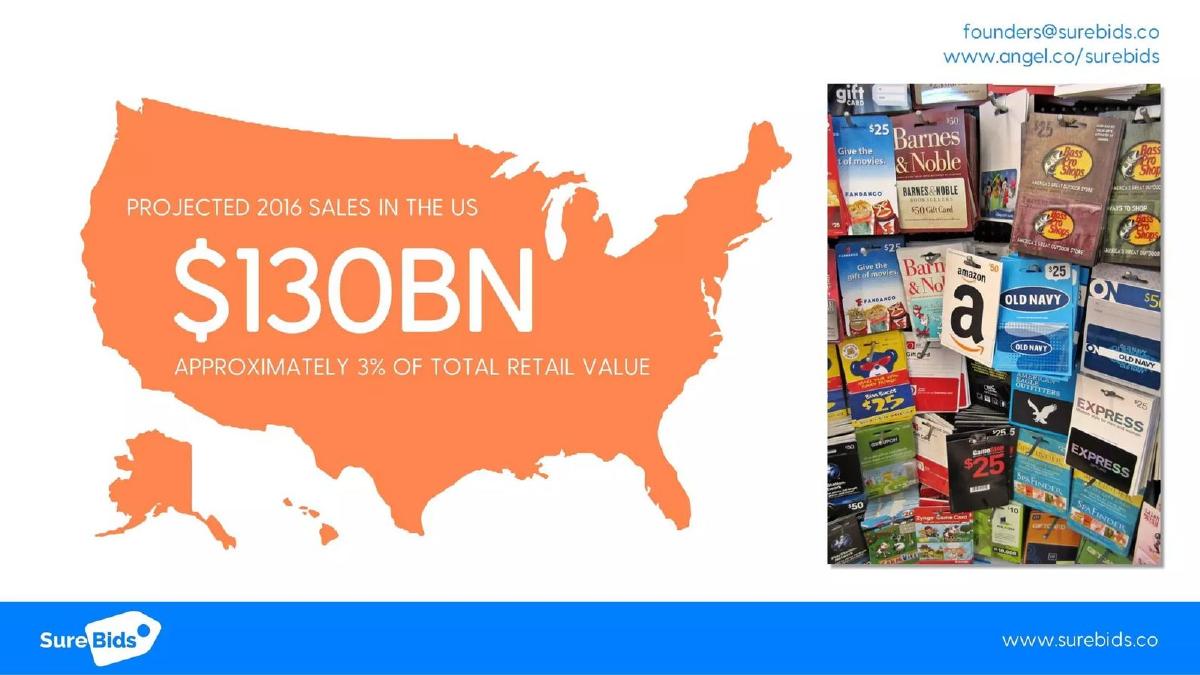
- The deck uses a comparative market analysis, citing $130 billion in US gift card sales to anchor the potential of the African market (Slide 2).
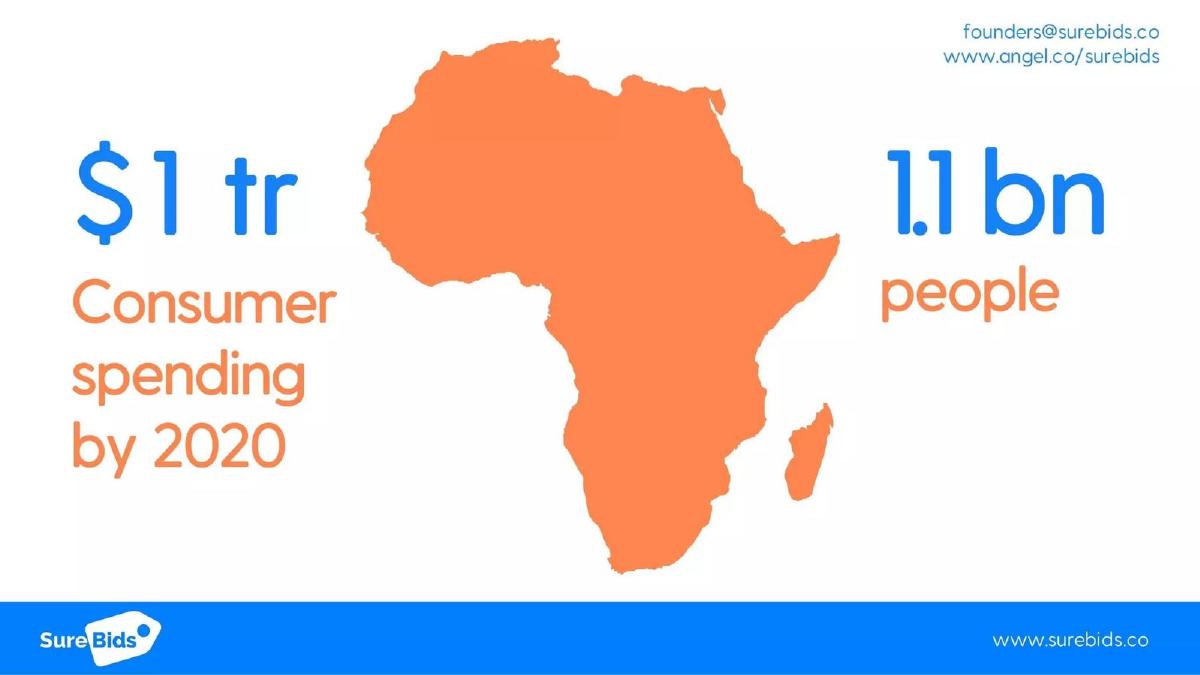
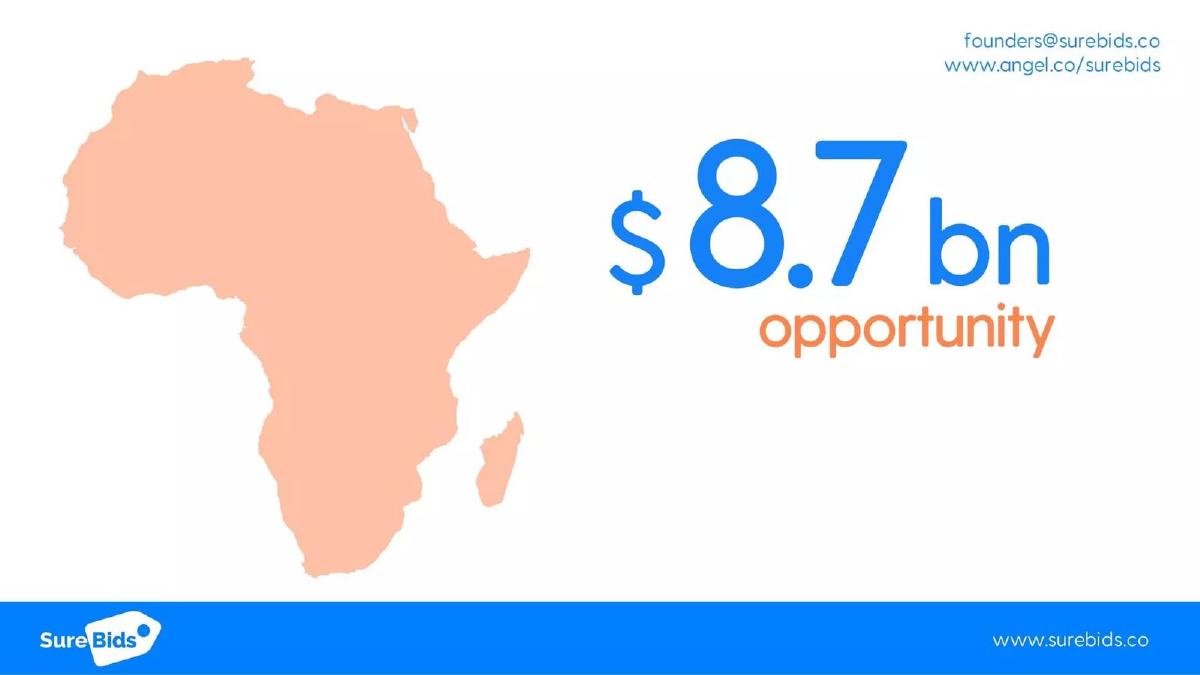
- The founders identified an $8.7 billion specific opportunity within a broader $1 trillion consumer spending forecast for Africa by 2020 (Slides 3 and 4).
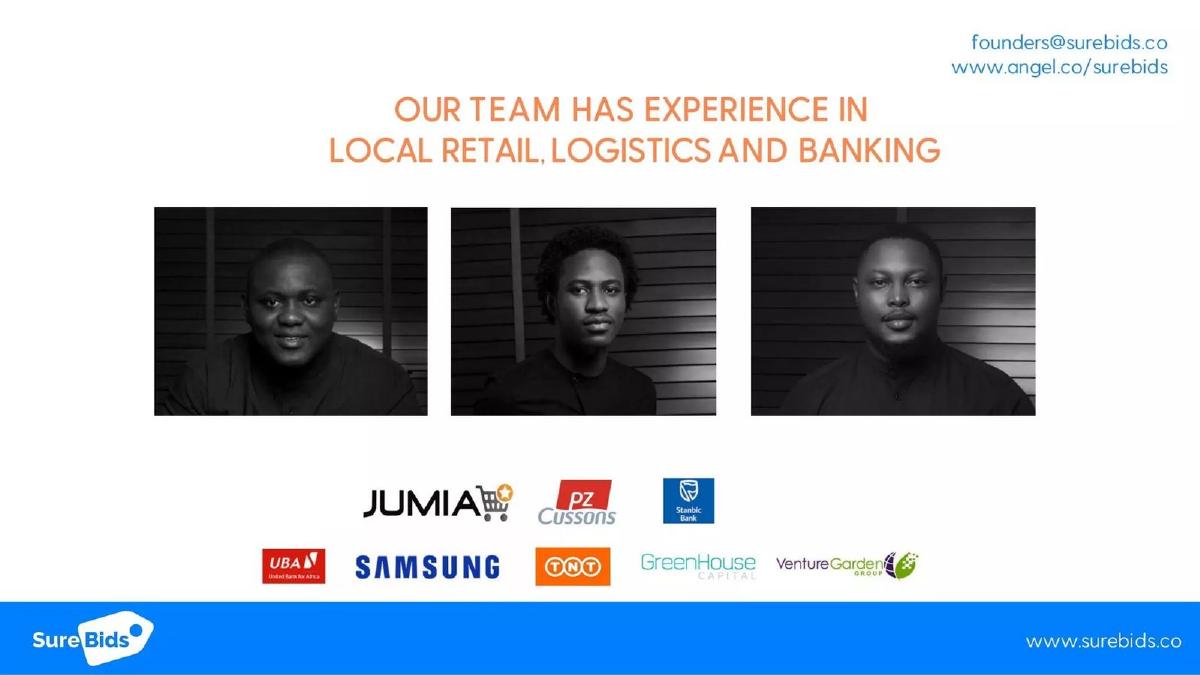
- The team slide emphasizes multi-sector expertise in local retail, logistics, and banking, featuring logos from Jumia and Samsung (Slide 5).
- Traction is quantified by a pilot period that generated approximately $1 million in voucher sales (Slide 7).
- The startup demonstrated geographic reach early on, operating in Nigeria, Kenya, and Rwanda during their pilot (Slide 7).
- The business model targets two distinct segments: Peer-to-peer gifting and B2B corporate rewards (Slides 8 and 9).
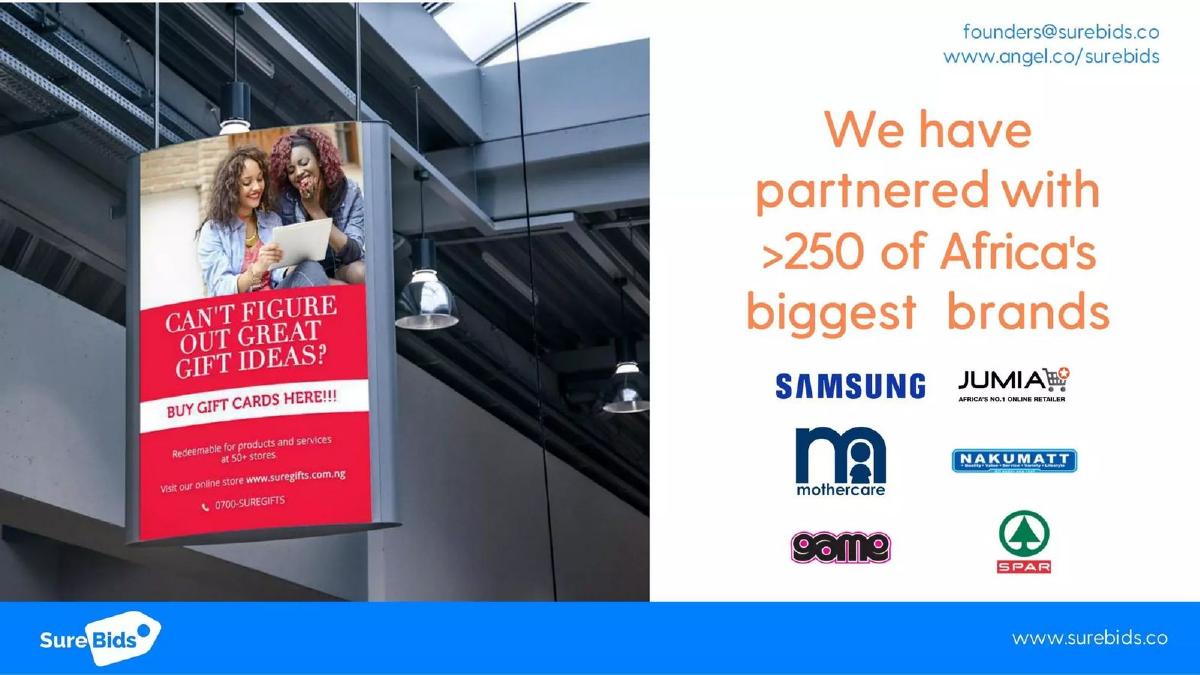
- Social proof is a core pillar of the deck, claiming partnerships with over 250 brands including Spar, Game, and Mothercare (Slide 6).
- The deck completely omits a specific 'Ask' slide, failing to state the amount of capital sought or the intended use of funds within the 10 slides provided.
The Macro-to-Micro Narrative: A Teardown of SureGroup
In 2014, the African tech ecosystem was in a different stage of maturity. SureGroup, then known as SureBids, entered the market with a clear thesis: the gift card and voucher market, which was a multi-billion dollar staple in the West, was virtually non-existent in Africa despite massive consumer spending. This 10-slide deck is a concise exercise in market sizing and traction-based validation.
The Market Anchor (Slides 1-4)
Slide 1: Title The deck opens with the title 'Building Africa's Gift Card Market.' It is a direct, functional statement of intent. The imagery of the Lekki-Ikoyi Link Bridge in Lagos, Nigeria, immediately grounds the company in its primary operating hub.
Slide 2: The US Benchmark The founders use a classic 'look at the West' comparison. They cite projected 2016 sales in the US at $130 billion, representing approximately 3% of total retail value. This slide serves to prove that the 'Gift Card' is a proven, massive asset class in developed economies. By showing a photo of a crowded gift card rack, they visualize a retail reality that they intend to replicate in Africa.
Slide 3: The African Scale The narrative shifts to the target continent. The slide presents two massive figures: $1 trillion in consumer spending by 2020 and a population of 1.1 billion people. This is the 'Why Africa' slide, establishing the sheer volume of capital moving through the hands of African consumers.
Slide 4: The Specific Opportunity Slide 4 bridges the gap between the US market and the African market. It identifies an '$8.7 bn opportunity.' While the deck doesn't explicitly show the math on this slide, it likely applies the ~1% to 3% gift card penetration rate seen in other markets to the $1 trillion spending figure mentioned on the previous slide. This is a calculated way to move from a 'huge continent' to a 'specific, addressable market.'
Team and Network (Slides 5-6)
Slide 5: The Team The team slide is light on names but heavy on pedigree. It states the team has experience in 'Local Retail, Logistics and Banking.' Below the three founder headshots are logos of previous employers or affiliated companies, including Jumia, Samsung, UBA, PZ Cussons, Stanbic Bank, and TNT. This suggests the founders aren't just tech enthusiasts but industry insiders who understand the friction points of African commerce.
Slide 6: Merchant Partnerships For a voucher business, the 'Supply' side of the marketplace is everything. Slide 6 claims partnerships with '>250 of Africa's biggest brands.' It features logos for major retailers like Spar, Game, Nakumatt, and Mothercare. This slide is designed to de-risk the investment by showing that the hard work of merchant acquisition is already underway.
Traction and Use Cases (Slides 7-9)
Slide 7: Pilot Results This is the most critical slide in the deck. It moves the conversation from 'what could be' to 'what is.' During their pilot period, SureBids achieved:
10,000 new customers sent to merchants. · ~$1 million in voucher sales. · Operations in 3 countries (Nigeria, Kenya, Rwanda).
The $1 million figure is a significant milestone for a Seed-stage company in 2014, providing strong evidence of product-market fit.
Slide 8: Peer-to-Peer Gifting This slide defines the first of two primary use cases. It lists 'Groceries and Essentials,' 'Utility Bills,' and 'Airtime Top Up.' This indicates that SureBids isn't just for luxury 'gifting' but serves as a functional tool for remittances and essential spending—a common pivot for voucher companies in emerging markets.
Slide 9: Corporate Rewards & Loyalty The second use case is B2B. The company claims to serve '125+ Companies.' The logos displayed are impressive: Coca-Cola, Nestlé, DHL, and Airtel. This suggests a diversified revenue stream, where the company isn't just relying on individual consumers but is also integrated into the HR and marketing budgets of multinational corporations.
The Conclusion (Slide 10)
Slide 10: The Vision The deck ends with a quote from Euromonitor: 'No other market offers the vast, untapped prepaid cards opportunity present in Africa.' This reinforces the opening thesis. It leaves the investor with the idea that the opportunity is not just large, but unique to this specific geography.
What Works in the SureGroup Deck
1. The 'Proven Model' Logic: By starting with the US market ($130B), the founders bypass the need to explain why gift cards are a good idea. They only need to explain why they are the ones to build it in Africa.
2. High-Signal Social Proof: The sheer volume of logos (Samsung, Coca-Cola, DHL, Jumia) is the deck's strongest asset. For a Seed round, having 125+ corporate clients and 250+ merchants suggests a level of operational maturity that far exceeds a typical 'three guys and a laptop' startup.
3. Multi-Country Validation: Showing operations in Nigeria, Kenya, and Rwanda on slide 7 demonstrates that the model is scalable across different African regulatory and retail environments, rather than being a 'Nigeria-only' play.
What is Missing from the SureGroup Deck
1. The Financial Ask: There is no slide stating how much money is being raised, what the valuation is, or what the milestones for the next 18 months are. This is a glaring omission for a fundraising document.
2. Unit Economics: While the deck boasts $1 million in voucher sales, it does not mention the take rate or margin. In the voucher business, gross merchandise value (GMV) can be high while net revenue remains very low. Investors would want to see the commission structure from merchants.
3. Product Interface: There are no screenshots of the app or the web interface. We see the 'idea' of the product and the 'results' of the product, but we don't see the product itself. This leaves questions about the user experience and the technology behind the 'alternative currency.'
4. Competitive Landscape: The deck implies they are the first and only players ('untapped opportunity'), but it fails to acknowledge existing loyalty programs, bank-led gift cards, or the informal voucher systems already in place.
What a Founder Should Copy
1. The 'Anchor' Slide: Use a mature market (US/Europe) to set the ceiling for your industry, then show the current floor in your target market. It makes the 'gap' look like an inevitability rather than a risk.
2. Segmented Use Cases: Clearly separating P2P (Slide 8) from B2B (Slide 9) shows that you understand the different buyers in your ecosystem. It demonstrates a sophisticated go-to-market strategy.
3. Traction as the Centerpiece: Slide 7 is the heart of the deck. If you have a million dollars in sales or 10,000 customers, put those numbers in big, bold circles. Don't hide your best facts in a wall of text.
4. Professional Design: The deck uses a consistent color palette (blue and orange) and high-quality imagery. In 2014, this level of polish helped signal that the founders were serious professionals capable of dealing with the enterprise clients (like Coca-Cola) they claimed to have.
Frequently asked questions
- How much did SureGroup raise with this deck?
- According to catalogue data from pitchdeckhunt.com, SureGroup (formerly SureBids) raised $450,000 in a Seed round in 2014. The deck itself focuses on establishing the market opportunity and pilot traction rather than the specific financial terms of the round.
- What was the primary value proposition of SureBids?
- The company aimed to build Africa's gift card market. As stated in the catalogue description, they viewed vouchers as a 'simple, yet safe alternative currency' to cash, which is often expensive and difficult to track in African commerce. They created a closed network where vouchers could be spent across an extensive merchant list.
- What traction did the company show in the deck?
- On slide 7, the company reported ~$1 million in voucher sales during their pilot period. They also claimed to have sent over 10,000 new customers to their merchant partners and established a presence in three countries: Nigeria, Kenya, and Rwanda.
- Who were the key partners mentioned in the deck?
- The deck highlights partnerships with over 250 brands on slide 6, including Samsung, Jumia, Mothercare, Nakumatt, Game, and Spar. Additionally, slide 9 lists over 125 corporate clients for their rewards and loyalty program, featuring global names like Coca-Cola, DHL, Nestlé, and Airtel.
- What is missing from the SureBids pitch deck?
- The deck is missing several standard venture components: a specific 'Ask' slide (amount and use of funds), a detailed 'Problem' slide explaining why cash is failing, a 'Product' slide showing the actual user interface, and any mention of unit economics or revenue margins on the $1 million in sales.