LiveControl’s 18-slide Series A deck is a study in clear positioning and aggressive value propositions. By contrasting a $25k-$50k traditional event production cost against their $149 starting price, the company makes an immediate, undeniable case for market disruption. The deck successfully navigates the 'service vs. software' trap by highlighting machine learning and computer vision capabilities that automate camera movements, framing the business as a scalable SaaS-marketplace hybrid. While it lacks a traditional team slide or detailed financial projections, the traction metrics—500% YoY g…
Key takeaways
- The deck uses a 'Tired vs. Wired' comparison on slide 7 to visually contrast manual setup with cloud-based production.
- LiveControl claims a 99% cost reduction, dropping the per-event price from $25k-$50k to just $149 (slide 8).
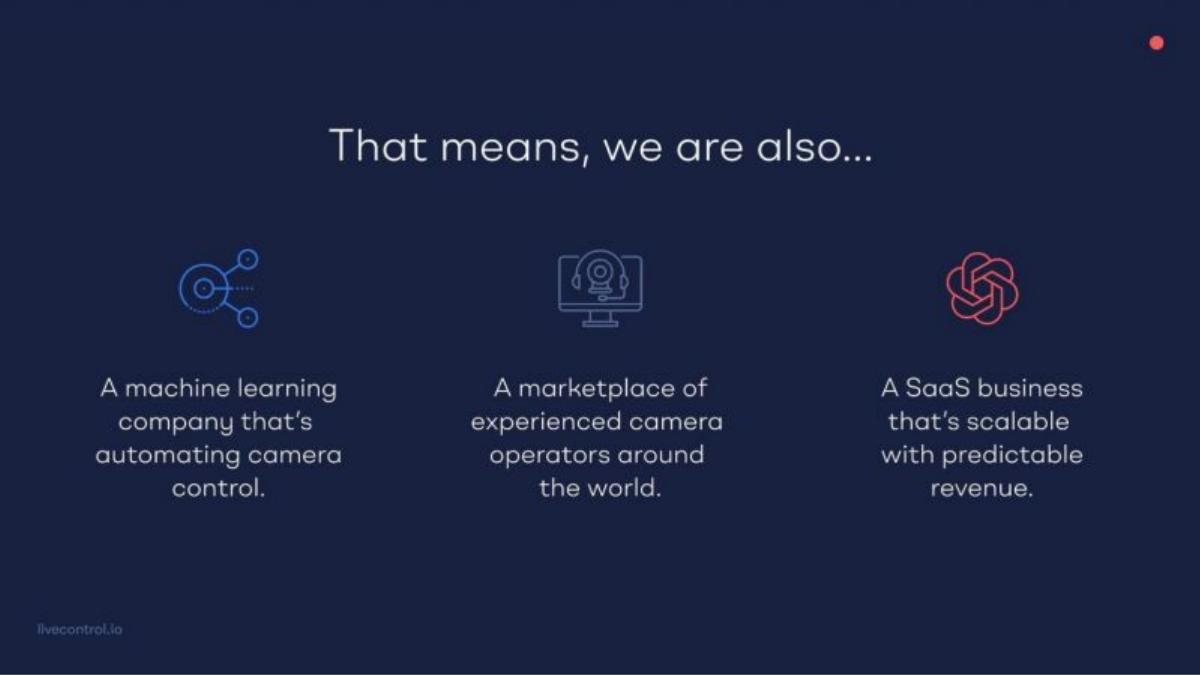
- The business model is positioned as a hybrid of machine learning, a talent marketplace, and a SaaS platform (slide 3).
- Traction is demonstrated through 500% YoY growth and '1000s of produced events' (slide 13).
- The addressable market is estimated at $200B, targeting creators who previously could not afford production (slide 14).
- The deck highlights technical defensibility through 'Tri-Sync Movements' and computer vision for automated framing (slide 10).
- Customer testimonials on slide 12 focus on three specific outcomes: increased revenue, increased engagement, and time saved.
- The deck notably omits a dedicated team slide, founder bios, and a specific use-of-funds breakdown.
The Narrative: Democratizing High-End Production
LiveControl’s pitch deck is built on a single, powerful premise: professional video production is too expensive for 99% of the market. The deck moves quickly from the problem (high cost and complexity) to a solution that leverages remote labor and automation. By the time the investor reaches the traction slides, the 'why' has been established through a series of stark financial contrasts. This is a classic disruption play—taking a luxury service and turning it into a commodity through technology.
Slides 1-3: The Identity and Vision
The deck opens with a clean title slide ( Slide 1 ) declaring LiveControl as "The Future of Video Production." This is immediately followed by a definition slide ( Slide 2 ) that uses the term "democratizing," a favorite in venture capital. It defines the company as a "video software company" building "on-demand, multi-camera, cloud production tools."
Slide 3 is critical for positioning. It attempts to preempt the 'is this just a service business?' question by labeling the company as three things: a machine learning company, a marketplace, and a SaaS business. By grouping these together, they argue that while there is a human element (the operators), the scalability comes from the automation and the predictable revenue model.
Slides 4-6: The Problem and the Old Guard
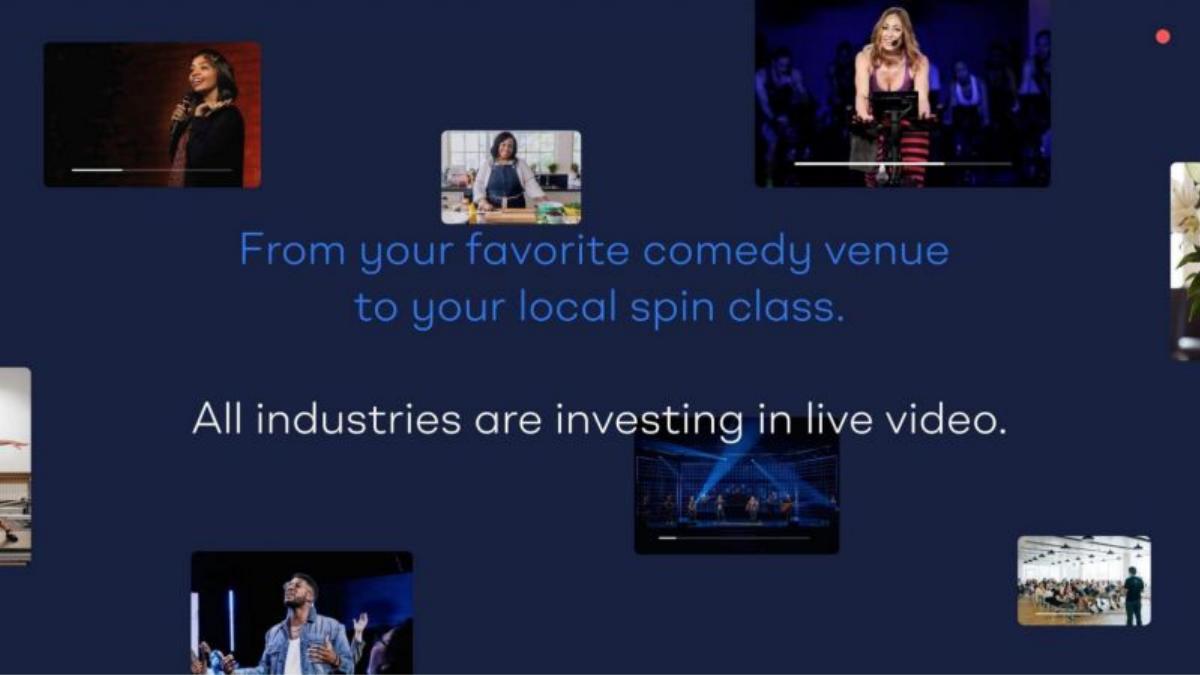
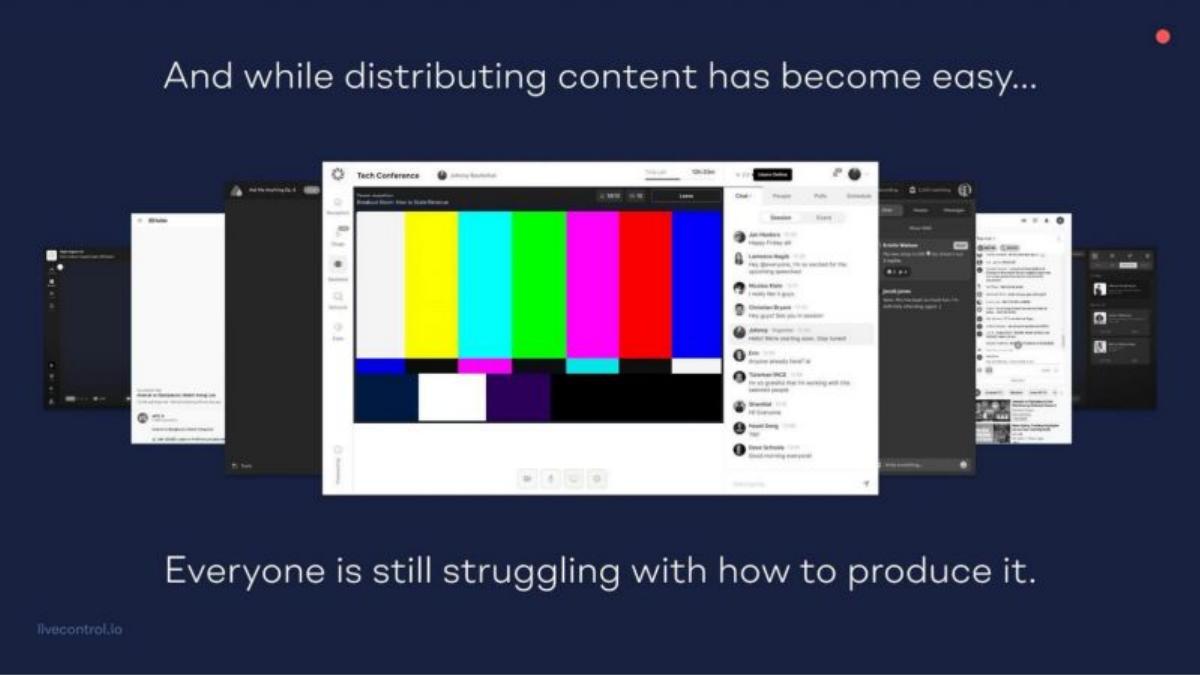
Slide 4 uses a collage of images—from comedy venues to spin classes—to show that "all industries are investing in live video." This sets the stage for the market need. Slide 5 then pivots to the struggle: while distribution (YouTube, Twitch, etc.) is easy, production remains the bottleneck.
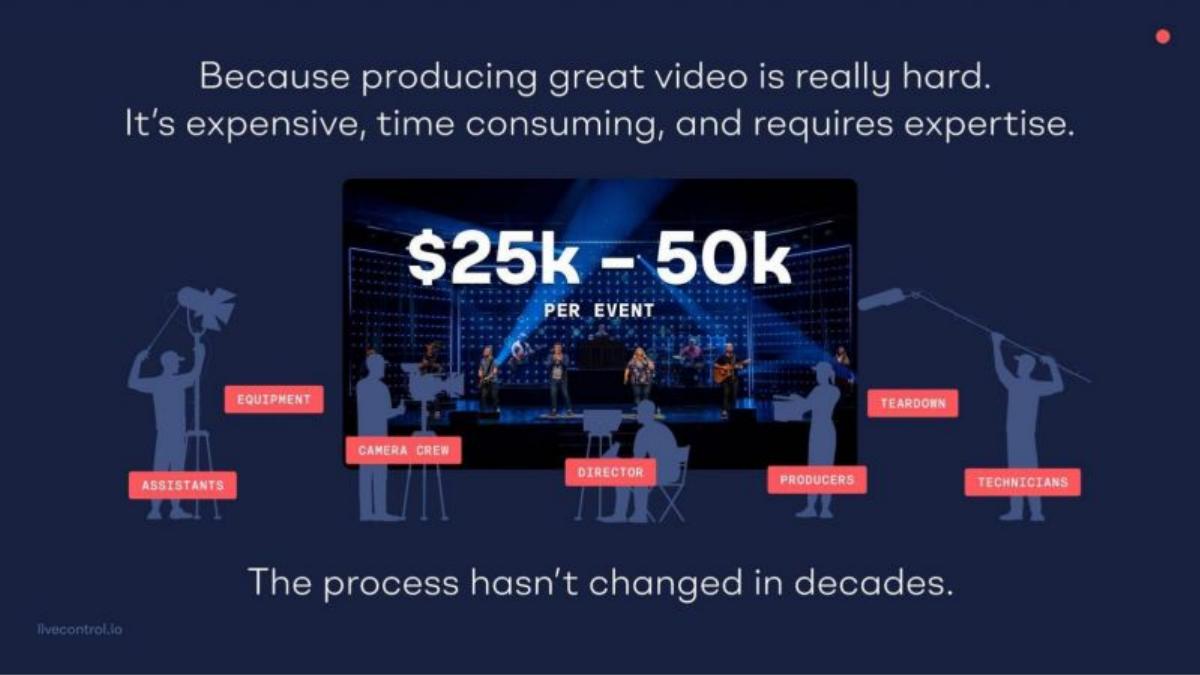
Slide 6 provides the 'villain' of the story. It visualizes the traditional production process, listing assistants, equipment, camera crews, directors, producers, and technicians. The slide features a bold figure: "$25k - 50k PER EVENT." This creates a high-cost anchor in the investor's mind, making any lower price point seem like a massive opportunity.
Slides 7-9: The Solution and Radical Pricing
Slide 7 uses the "Tired vs. Wired" meme format. On the left, the traditional process is crossed out with a red 'X' and labeled "an expensive process that doesn't scale." On the right, LiveControl is shown as "on-demand cloud video production."
Slide 8 is the 'money slide.' It features a bar chart comparing traditional production ($25k-$50k) to LiveControl. The LiveControl price is listed as "$149 PER EVENT," with an arrow indicating this is "99% LESS." This is a powerful visual that justifies the company's rapid growth; a 100x price reduction usually leads to massive market expansion.
Slide 9 explains the workflow. It’s a four-step process: One-time set up of a PTZ (Pan-Tilt-Zoom) camera, scheduling via a dashboard, remote production by a single operator, and simulcasting to any platform. This slide clarifies that LiveControl doesn't just provide software; they provide the operator too.
Slides 10-12: The Technology and Value Add
Slide 10 dives into the "how." It highlights "Tri-Sync Movements" and "Computer Vision." The claim is that their algorithms allow cameras to pan, tilt, and zoom simultaneously, mimicking a human operator. This is the "software" part of the "video software company" claim. Slide 11 expands on the features, including hosting, distribution, a customizable web player, and analytics.
Slide 12 focuses on customer outcomes. It uses three charts to show "Real Value":
Increase Revenue: A funeral home (Jenna M.) saw live streaming revenue jump from near zero to over $200k. · Increase Engagement: A worship leader (Nathan A.) saw viewership increase tenfold. · Save Time: A band leader (Chad M.) saw man-hours drop from 40-60 per week to just the time it takes to schedule a service.
Slides 13-15: Traction and Market Size
Slide 13 presents the hard data. The company claims "500% YOY GROWTH" and "1000s OF PRODUCED EVENTS." It also mentions "$30M TOTAL CAPITAL RAISED," which refers to the round this deck was likely used for or finalized with. A map of the US shows a dense concentration of customers, particularly on the coasts.
Slide 14 addresses the Total Addressable Market (TAM). They estimate an "ADDRESSABLE MARKET $200B." This is a massive number, justified by the idea that they are unlocking "whitespace"—creators who previously couldn't afford production. The slide lists verticals like worship, cooking, corporate, and even funerals.
Slide 15 is a placeholder for a 90-second video demo, emphasizing the "mission to democratize video production for every creator."
Slides 16-18: The Close
Slide 16 summarizes the offering as "Your production crew in a box." Slide 17 is a simple closing slide with the website URL. Slide 18 is a promotional slide for the source of the deck and not part of the LiveControl presentation.
What Works in This Deck
The 99% Cost Reduction: The strongest part of this deck is the price comparison on Slide 8. In venture capital, a 10x improvement is often the benchmark for a successful startup. Claiming a 100x improvement (99% reduction) is an attention-grabber that makes the rest of the deck's claims about growth and market size feel plausible.
Clear Verticalization: By showing specific examples like funerals, spin classes, and churches, LiveControl proves that their product isn't just for 'techies.' They are solving a real-world problem for non-technical users in traditional industries.
Hybrid Positioning: The deck does a good job of framing a service-heavy business (remote camera operators) as a tech-enabled platform. By emphasizing computer vision and automated movements, they suggest that as the technology improves, the human-to-camera ratio will decrease, leading to higher margins.
What is Missing
The Team: There is no team slide. For a Series A round of $30M, investors typically want to see the pedigree of the founders and the technical leadership. Omitting this suggests the deck relied heavily on the strength of the traction and the clarity of the business model.
Unit Economics: While the $149 price point is impressive, the deck doesn't explain the cost of the remote operator or the hardware. Investors would want to know the gross margins on that $149 to see if the business can actually reach profitability.
The Ask: The deck doesn't explicitly state how much they are looking to raise or how they plan to spend the money. While this information is often shared in the meeting rather than the deck, including a high-level roadmap is standard for Series A.
What Other Founders Should Copy
The 'Tired vs. Wired' Slide: Slide 7 is a perfect example of how to communicate a paradigm shift. It’s visual, easy to understand, and uses a popular cultural shorthand to make the company feel modern and inevitable.
Outcome-Based Testimonials: Instead of just quoting happy customers, Slide 12 uses data (revenue, viewership, hours) to back up the testimonials. This turns a 'soft' slide into a 'hard' data slide.
The Anchor Price: If your product is significantly cheaper than the status quo, you must anchor the old price first. Slide 6 does this perfectly by breaking down the costs of a traditional crew before revealing the LiveControl price.
Frequently asked questions
- How does LiveControl justify its low price point?
- On slide 10, LiveControl explains that they use custom algorithms and computer vision to automate camera movements. This allows a single remote operator to handle multi-camera productions that would traditionally require a large on-site crew. By replacing manual labor with remote software control, they reduce the per-event cost by 99%.
- What is the core business model presented in the deck?
- As shown on slide 3, LiveControl identifies as a 'SaaS business that's scalable with predictable revenue.' However, it acknowledges it is also a marketplace of experienced camera operators. This hybrid model allows them to provide a full-service 'production crew in a box' while maintaining the recurring revenue characteristics of software.
- Does the deck show actual product functionality?
- Yes, slide 10 and 11 provide screenshots of the backend platform. These slides highlight features like remote control, 24/7 monitoring, and a customizable web player with archiving and analytics. Slide 9 also outlines the four-step user journey: One-time set up, Schedule, Produce, and Stream.
- What market segments is LiveControl targeting?
- Slide 14 identifies a $200B addressable market across diverse verticals. Specific examples shown include music, worship, comedy, cooking, exercise, corporate events, and funerals. The strategy is to unlock 'whitespace'—customers who wanted live video but were priced out by traditional $25k+ production costs.
- What are the most significant omissions in this pitch deck?
- The most glaring omission is the lack of a Team slide. There is no information regarding the founders' backgrounds or the size of the engineering team. Additionally, the deck does not include a 'The Ask' slide detailing how much they are raising or a 'Use of Funds' slide, though catalogue data confirms the round was $30M.