Little Spoon's 2016 Series B pitch deck, comprising 9 slides, outlines their strategy to address the children's health and wellness market, valued at $108 billion. The deck highlights the millennial generation's unique needs and their disruption of traditional industries. Little Spoon positions itself as a provider of high-quality, affordable nutrition solutions, supported by a strong community and trusted resources. Key products include 'Babyblends' and 'Plates,' with a focus on organic, ready-to-eat meals. The company emphasizes its customer service, content platform 'Is This Normal,' and a…
Key takeaways
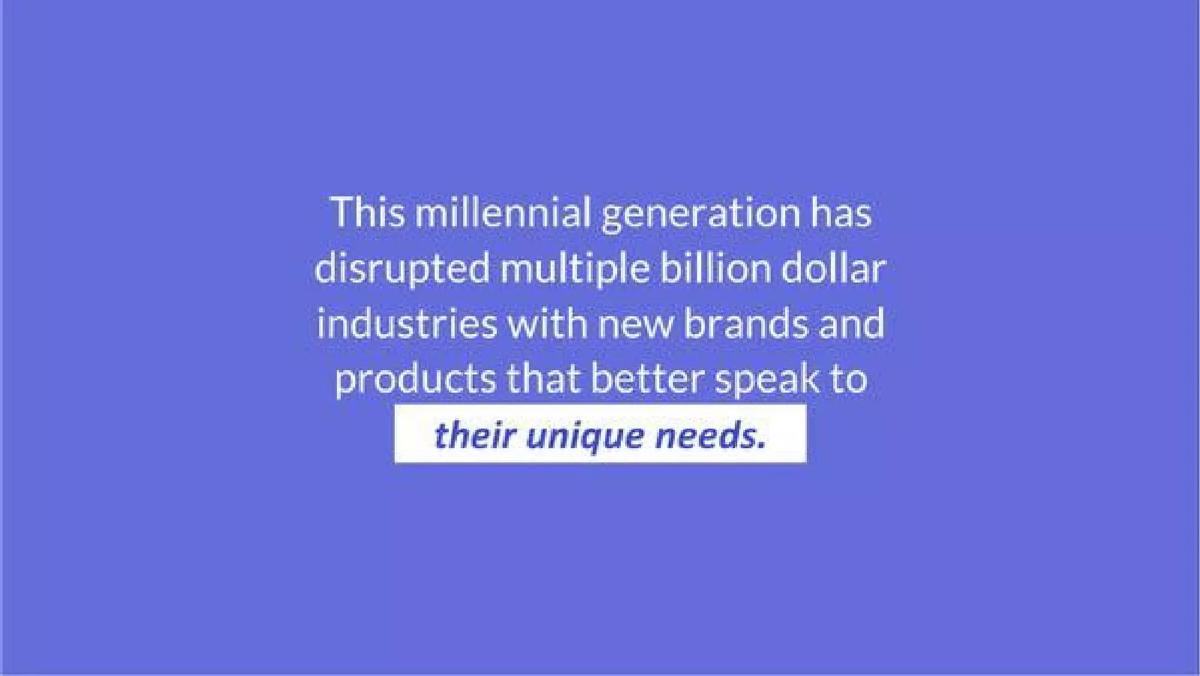
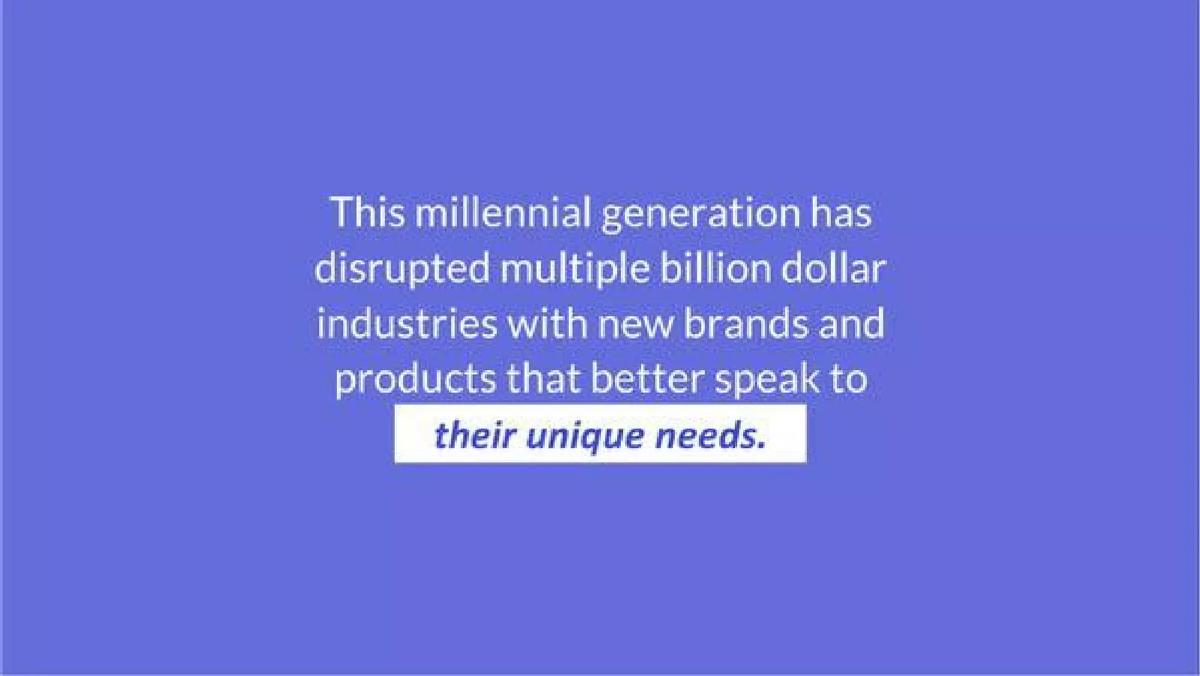
- The deck opens by framing the opportunity around the millennial generation's impact on industries by addressing 'their unique needs' (Slide 1).
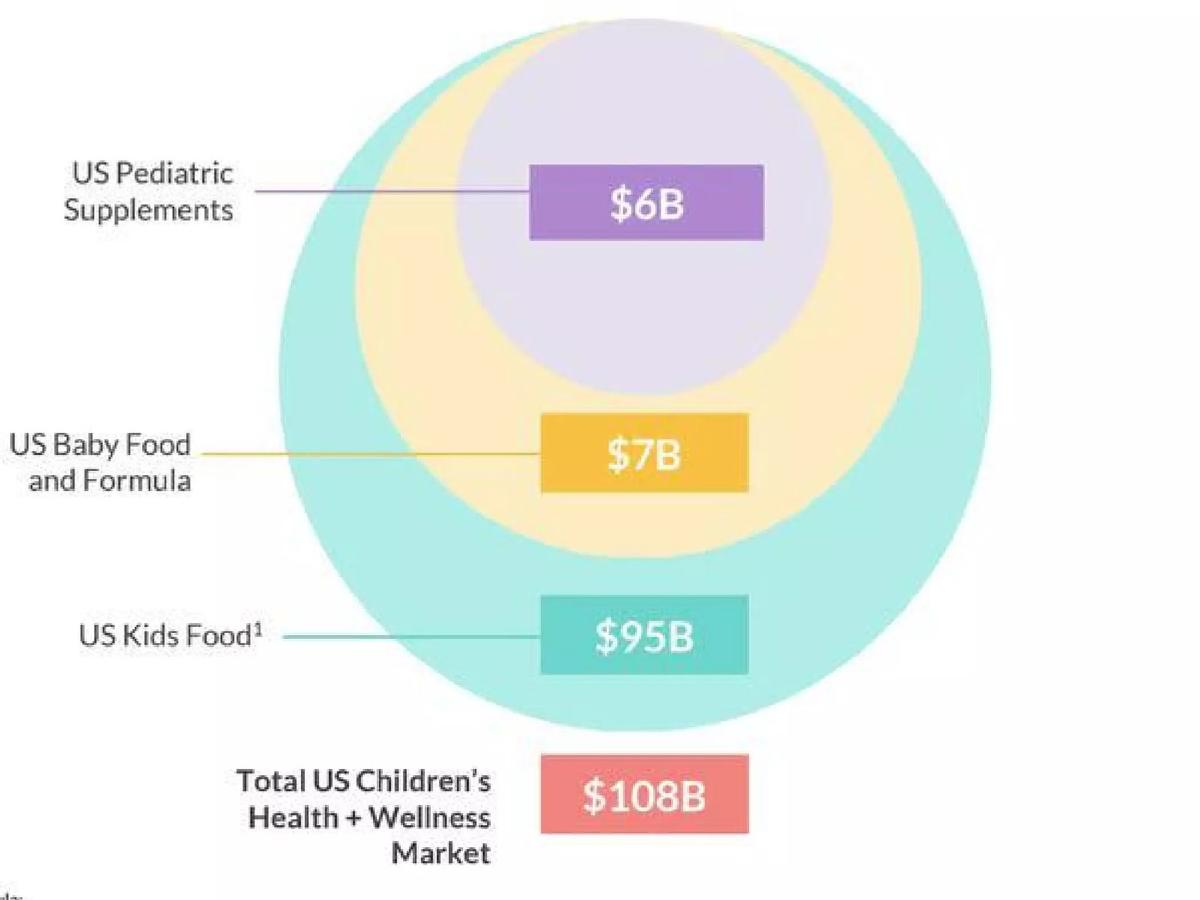
- Little Spoon targets a 'Total US Children's Health + Wellness Market' valued at $108 billion, breaking it down into pediatric supplements, baby food/formula, and kids food (Slide 2).
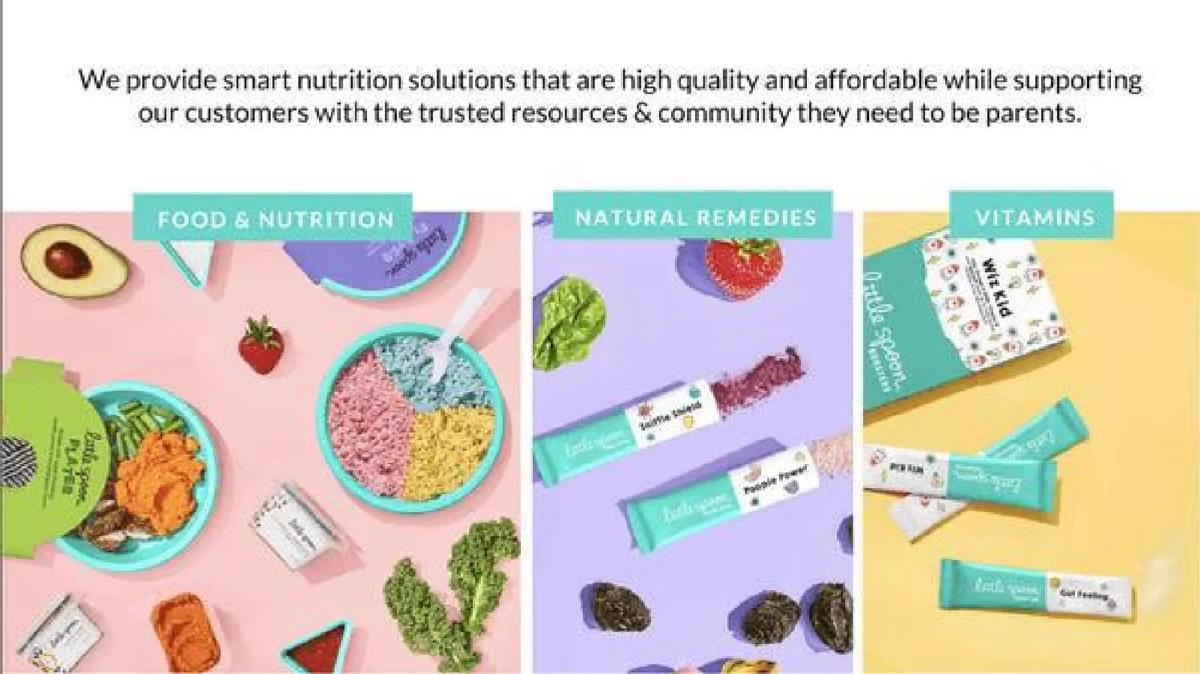
- The company's core offering is 'smart nutrition solutions' that are 'high quality and affordable,' supported by 'trusted resources & community' (Slide 3).
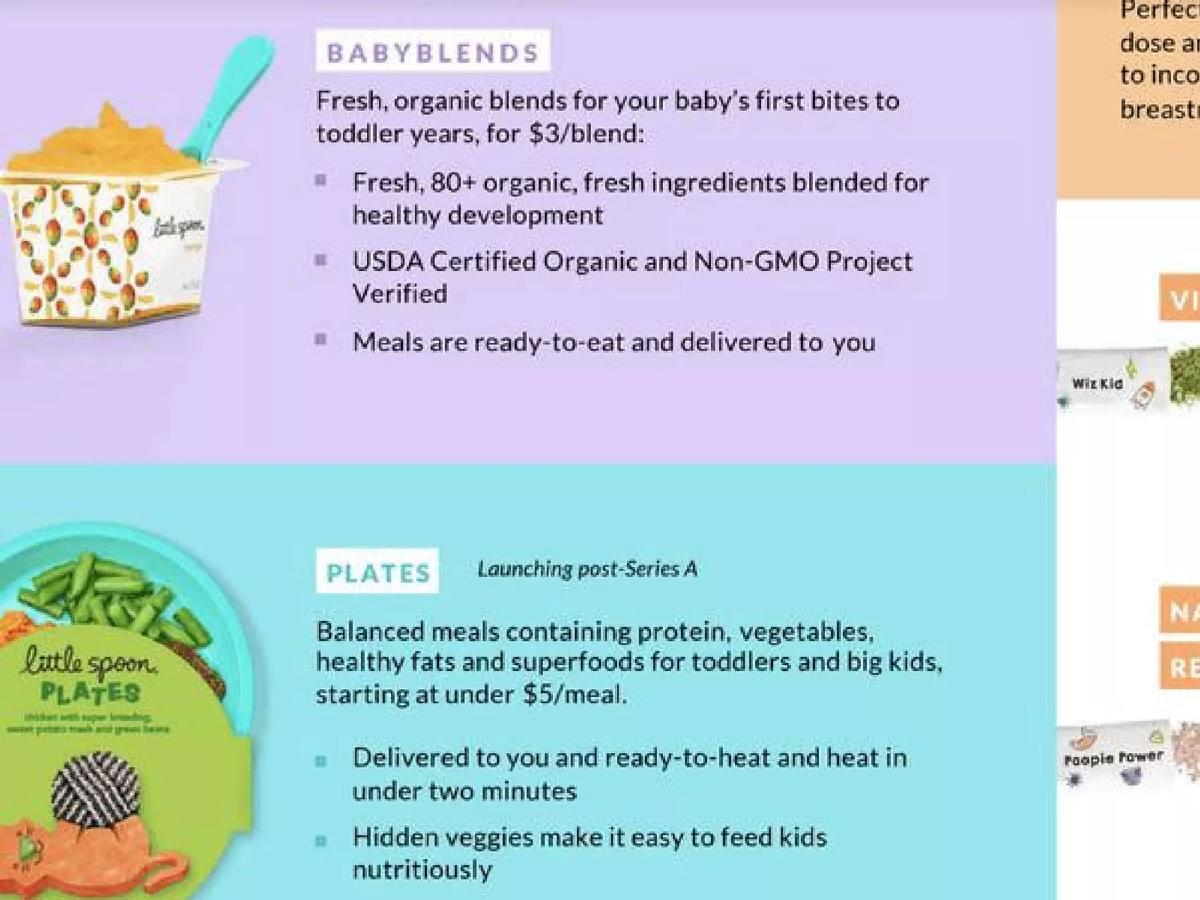
- Product lines include 'BABYBLENDS' for $3/blend and 'PLATES' starting at under $5/meal, both emphasizing organic, ready-to-eat options (Slide 4).
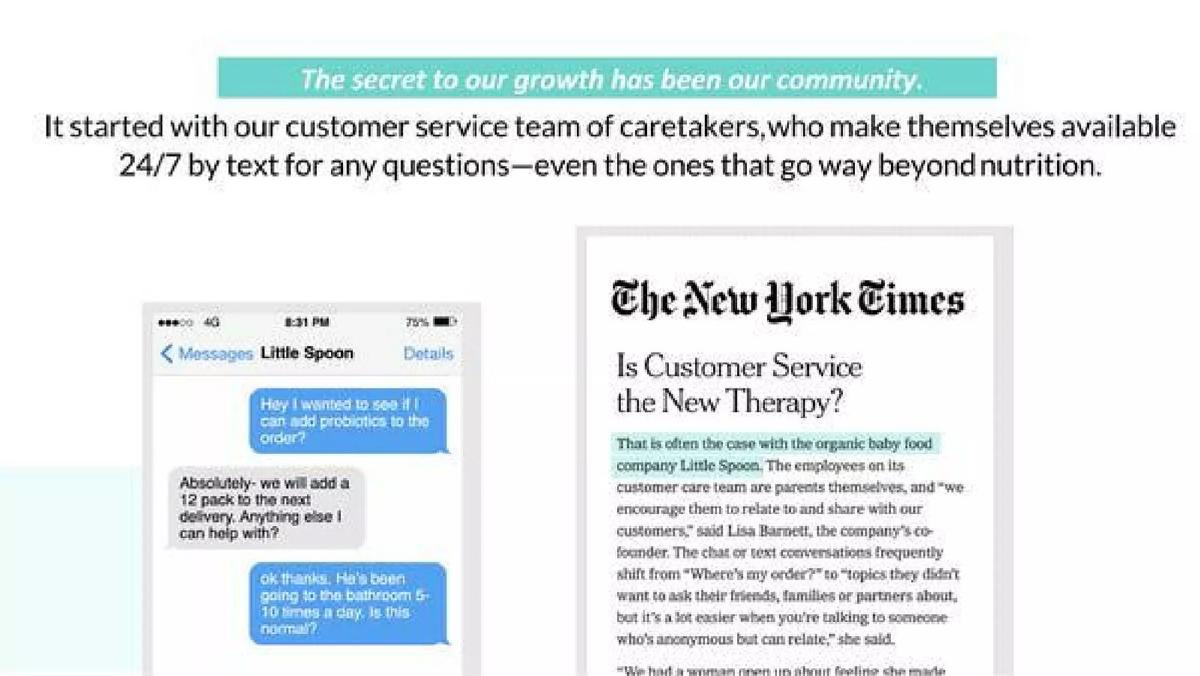
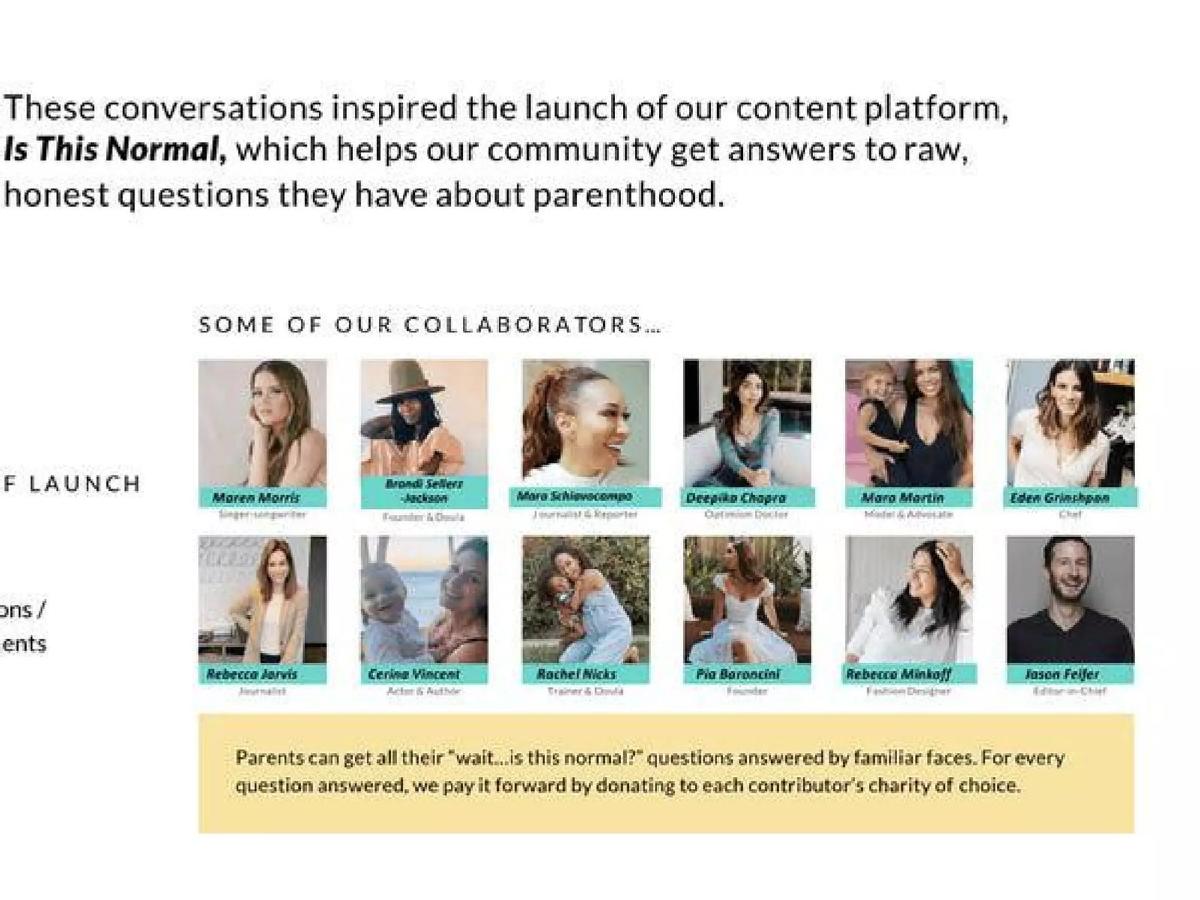
- A central growth driver is their 'community,' exemplified by 24/7 text-based customer service and a content platform called 'Is This Normal' (Slides 5 & 6).
- Little Spoon claims to have delivered '2 million meals across all 48 continental states in under 2 years,' attributing this to their parenting community, nimble cold supply chain, accessible price points, and R&D model (Slide 7).
- The 'Plates' product line offers a 'rotating menu of 25+ meals' with 'hidden veggies' and is packaged in 'reusable, recyclable' containers (Slide 8).
- The deck concludes with a forward-looking statement about continuing to 'create innovative, high quality and accessible solutions to support families everywhere' (Slide 9).
Little Spoon Pitch Deck Teardown: A Community-Driven Approach to Children's Wellness
This teardown analyzes the 9-slide Series B pitch deck used by Little Spoon in 2016, which contributed to their successful raise of $73,000,000. The deck focuses on articulating the market opportunity within children's health and wellness, Little Spoon's product offerings, and their unique community-centric approach to growth. As a fundraising analyst for StartupFundraising.com, this analysis will adhere strictly to the content presented on the slides, noting both what is effectively communicated and what critical information is omitted.
What This Deck Is
This Little Spoon pitch deck is a Series B presentation from 2016, designed to secure significant growth capital. It positions the company as an innovator in the children's health and wellness space, specifically targeting millennial parents. The deck emphasizes market disruption, product quality, affordability, and a strong community engagement strategy as core tenets of its business model. It aims to convey a compelling vision for a company that is not just selling products but building a holistic support system for modern parents.
Slide-by-Slide Walkthrough
Slide 1: Title / Thesis
The first slide presents a bold statement on a solid blue background. The text reads: "This millennial generation has disrupted multiple billion dollar industries with new brands and products that better speak to their unique needs ." The phrase "their unique needs" is highlighted in bold. This slide serves as an introductory thesis, immediately framing the market opportunity around the behavioral and consumer preferences of millennials. It sets a tone of disruption and innovation, suggesting that Little Spoon is part of this trend by catering to a specific, underserved demographic.
Slide 2: Market Opportunity
Slide 2, titled "Market Opportunity," visually represents the total addressable market using concentric circles. The largest circle encompasses "US Kids Food" valued at $95B. Within this, a smaller circle represents "US Baby Food and Formula" at $7B. The innermost circle shows "US Pediatric Supplements" at $6B. Below these circles, a sum is provided: "Total US Children's Health + Wellness Market" at $108B. A small footnote marker '1' is visible next to "US Kids Food" but the corresponding footnote content is not visible on the slide. This slide effectively quantifies the market Little Spoon operates within, demonstrating a substantial opportunity across various segments of children's health and wellness.
Slide 3: Our Solution / Product Overview
This slide introduces Little Spoon's core value proposition and product categories. At the top, the text states: "We provide smart nutrition solutions that are high quality and affordable while supporting our customers with the trusted resources & community they need to be parents." Below this, the slide is divided into three vertical sections, each showcasing product imagery and a category label. The first section, labeled "FOOD & NUTRITION," displays images of baby food purees and toddler plates. The second, "NATURAL REMEDIES," shows small pouches of what appear to be natural supplements. The third, "VITAMINS," features vitamin packets. This slide visually communicates the breadth of Little Spoon's offerings, moving beyond just food to encompass a broader wellness approach for children and support for parents.
Slide 4: Product Detail - Babyblends & Plates
Slide 4 provides more specific details on two key product lines: "BABYBLENDS" and "PLATES." The top half focuses on "BABYBLENDS," described as "Fresh, organic blends for your baby's first bites to toddler years, for $3/blend." Key features listed are: "Fresh, 80+ organic, fresh ingredients blended for healthy development," "USDA Certified Organic and Non-GMO Project Verified," and "Meals are ready-to-eat and delivered to you." An image of a baby food cup is shown. The bottom half details "PLATES," noting they are "Launching post-Series A." These are described as "Balanced meals containing protein, vegetables, healthy fats and superfoods for toddlers and big kids, starting at under $5/meal." Features include: "Delivered to you and ready-to-heat and heat in under two minutes," and "Hidden veggies make it easy to feed kids nutritiously." An image of a toddler plate is included. This slide offers concrete product specifications, pricing, and benefits, highlighting convenience and nutritional value.
Slide 5: Community as a Growth Driver - Customer Service
This slide introduces the concept of community as a central element of Little Spoon's growth strategy. The main text states: "The secret to our growth has been our community. It started with our customer service team of caretakers, who make themselves available 24/7 by text for any questions—even the ones that go way beyond nutrition." The slide features two visual elements. On the left, a screenshot of a text message conversation with "Little Spoon" shows a customer asking about adding probiotics and then a question about a child's bathroom habits, with Little Spoon's helpful responses. On the right, a snippet from a "The New York Times" article is displayed, with the headline "Is Customer Service the New Therapy?" and a highlighted section mentioning "the organic baby food company Little Spoon" and its customer care. This slide effectively illustrates how Little Spoon builds deep customer relationships and trust, positioning their customer service as a differentiator and a source of growth.
Slide 6: Community as a Growth Driver - Content Platform
Continuing the theme of community, Slide 6 focuses on Little Spoon's content platform. The text at the top reads: "These conversations inspired the launch of our content platform, Is This Normal , which helps our community get answers to raw, honest questions they have about parenthood." The title "Is This Normal" is bolded. Below this, a section titled "SOME OF OUR COLLABORATORS..." displays headshots and names of twelve individuals, along with their roles (e.g., "Singer songwriter," "Founder & CEO," "Journalist & Reporter," "Optimum Doctor"). A yellow box at the bottom explains: "Parents can get all their "wait...is this normal?" questions answered by familiar faces. For every question answered, we pay it forward by donating to each contributor's charity of choice." This slide demonstrates Little Spoon's strategy to leverage its community insights into a valuable content offering, further cementing its role as a trusted resource for parents and showcasing a network of influencers.
Slide 7: Growth & Operations
Slide 7 highlights Little Spoon's operational achievements and growth drivers. The top text states: "We are fueling sustainable, organic growth, delivering 2 million meals across all 48 continental states in under 2 years ." The number of meals and states are bolded. Below this, a section titled "This is driven by our..." lists four bullet points: "Parenting community and platform, which has emerged as one of the fastest growing communities in our space," "Nimble cold supply chain reaches the entire continental US without any air freight," "Accessible price points, which have enabled Little Spoon to resonate in cities, suburbs and rural areas alike," and "Cutting edge product innovation, driven by our community collaboration model for R&D." On the right side of the slide, a large image of a young child eating from a Little Spoon plate is displayed. This slide quantifies growth and attributes it to specific strategic advantages, emphasizing both community and operational efficiency.
Slide 8: Product Deep Dive - Plates & Sustainability
This slide offers a deeper look into the "Plates" product line and Little Spoon's commitment to sustainability. The left side, under the heading "Plates," reiterates that they "are our newest line of toddler and big kid's meals." Below this, a grid of six boxes lists key features: "Under $5 / meal," "Rotating menu of 25+ meals," "Ready to eat in under 2 minutes," "Hidden Veggies and Superfoods in every meal," "100% clean ingredients, free of hormones, and never any preservatives, artificial sugars or junk." On the right side, the top section, "Time to get saucy.", describes a line of "veggie enhanced and supercharged sauces to make mealtime fun." The bottom right section, "Plates Made to Reuse," highlights sustainability: "Our Plates are completely reusable, recyclable, top rack dishwasher safe and BPA/BPS-free. And soon, we'll be launching our Plates send back program, a reuse initiative we cannot wait to offer the community!" Images of the plates and sauces are interspersed. This slide reinforces product quality, convenience, variety, and introduces an important aspect of corporate responsibility through sustainable packaging.
Slide 9: Future Vision / Closing Statement
The final slide presents a forward-looking statement on a pink background. The text reads: "And we won't stop there. We will continue to create innovative, high quality and accessible solutions to support families everywhere." This slide serves as a concluding thought, conveying ambition and a commitment to ongoing innovation and expansion of their mission. It acts as a high-level vision statement, leaving the investor with a sense of the company's future potential and broad impact.
What Works Well
The Little Spoon pitch deck effectively communicates its core value proposition and market opportunity. The opening slide immediately frames the company within a compelling narrative of millennial-driven market disruption (Slide 1), which is a strong hook for investors interested in consumer trends. The market sizing on Slide 2 is clear and substantial, demonstrating a large addressable market of $108 billion. By breaking it down into segments, it shows a comprehensive understanding of the children's health and wellness landscape. The visual presentation of products on Slide 3 and the detailed descriptions on Slide 4 are clear and appealing, highlighting key benefits like organic ingredients, convenience, and affordability. The emphasis on community as a growth driver (Slides 5 and 6) is particularly strong and innovative. Showcasing 24/7 customer service via text and a content platform with collaborators demonstrates a deep understanding of parental needs and a unique approach to building brand loyalty and trust. The New York Times mention on Slide 5 lends significant credibility. Quantifying growth with "2 million meals across all 48 continental states in under 2 years" (Slide 7) provides a tangible measure of success and operational reach. The mention of a "nimble cold supply chain" is a crucial operational detail for a food delivery business, indicating logistical competence. The commitment to sustainability with reusable and recyclable packaging for "Plates" (Slide 8) aligns with modern consumer values and positions Little Spoon as a forward-thinking brand. The overall design is clean, colorful, and visually engaging, making the information accessible and easy to digest.
What Is Missing
Despite its strengths, this Little Spoon pitch deck has several notable omissions that are typically crucial for a Series B funding round. Firstly, there is no dedicated team slide . For a growth-stage company, the experience and expertise of the leadership team are paramount for investors, and its absence is a significant oversight. Secondly, the deck lacks detailed financial performance metrics . While "2 million meals" is a good indicator of scale, investors at Series B would expect to see revenue, profit margins, customer acquisition costs (CAC), lifetime value (LTV), churn rates, and other key financial indicators. The deck also omits a clear competitive analysis . While it implies disruption of traditional brands, it does not explicitly identify competitors or explain Little Spoon's competitive advantages in detail against specific rivals. There is no mention of unit economics , which would be critical for understanding the profitability and scalability of each meal or product sold. Furthermore, the deck does not include a specific "ask" slide , detailing the amount of funding sought, how the capital will be used, or the milestones it will enable the company to achieve. While the company did raise $73,000,000, the deck itself provides no indication of the funding goal. There is also no explicit discussion of the company's go-to-market strategy beyond community and delivery, nor any specific details on marketing channels or customer acquisition funnels. Finally, while the vision on Slide 9 is aspirational, a more concrete roadmap or strategic plan for future growth and expansion would strengthen the deck.
What a Founder Should Copy
Founders can draw several valuable lessons from Little Spoon's pitch deck. Firstly, the strategy of framing the market opportunity around a specific, influential demographic like millennials (Slide 1) is highly effective. This immediately contextualizes the problem and solution within a relevant, growing consumer trend. Secondly, the clear and quantified market sizing (Slide 2) is excellent; breaking down a large market into sub-segments demonstrates thorough research and understanding. Thirdly, the emphasis on community as a core growth driver and differentiator (Slides 5 and 6) is a standout feature. Showcasing how customer service and content creation build loyalty and trust can be a powerful narrative, especially for consumer-facing businesses. The inclusion of a third-party endorsement, such as the New York Times snippet (Slide 5), adds significant credibility. Fourthly, quantifying operational achievements like "2 million meals across all 48 continental states" (Slide 7) provides concrete evidence of execution and scale. For businesses with complex logistics, highlighting a "nimble cold supply chain" is a smart way to address potential investor concerns about operational challenges. Lastly, the clear and visually appealing presentation of product features, pricing, and benefits (Slides 4 and 8) makes it easy for investors to understand what the company offers and its value proposition. The commitment to sustainability (Slide 8) also resonates with modern investors and consumers, demonstrating a forward-thinking approach to business. Founders should aim to integrate these elements to create a compelling and well-supported narrative for their own ventures.
Frequently asked questions
- What is the primary market Little Spoon targets according to this deck?
- Little Spoon primarily targets the 'Total US Children's Health + Wellness Market,' which the deck values at $108 billion. This market is further segmented into US Pediatric Supplements ($6B), US Baby Food and Formula ($7B), and US Kids Food ($95B), indicating a broad focus on children's nutrition and well-being.
- How does Little Spoon describe its product offerings?
- Little Spoon describes its offerings as 'smart nutrition solutions that are high quality and affordable.' Their main product lines are 'BABYBLENDS,' which are fresh, organic blends for babies and toddlers, and 'PLATES,' which are balanced, ready-to-heat meals for toddlers and older kids, emphasizing hidden vegetables and clean ingredients.
- What unique approach does Little Spoon highlight for customer engagement?
- Little Spoon highlights a community-driven approach to customer engagement. This includes a 24/7 text-based customer service team of 'caretakers' who answer questions beyond just nutrition, and a content platform called 'Is This Normal' that provides answers to parenting questions from collaborators.
- What growth metrics or achievements are mentioned in the deck?
- The deck states that Little Spoon is 'fueling sustainable, organic growth,' having delivered '2 million meals across all 48 continental states in under 2 years.' This growth is attributed to their parenting community, nimble cold supply chain, accessible price points, and community-driven R&D model.
- What key information is noticeably absent from this pitch deck?
- Key information absent from this pitch deck includes a dedicated team slide, detailed financial performance metrics (beyond meal count), a clear competitive analysis, specific unit economics, and a direct 'ask' for funding or details on how the raised capital would be utilized.