LoanWell’s 15-slide Seed deck is a masterclass in niche targeting. By focusing specifically on community lenders—such as CDFIs and local credit unions—the company avoids the 'boil the ocean' trap common in FinTech. The deck clearly outlines a comprehensive end-to-end solution covering intake, underwriting, and servicing, which directly addresses the manual inefficiencies of their target market. While the deck is strong on product functionality and market sizing, it lacks a specific 'Ask' slide and detailed financial projections, relying instead on high-level revenue model ranges. Despite thes…
Key takeaways
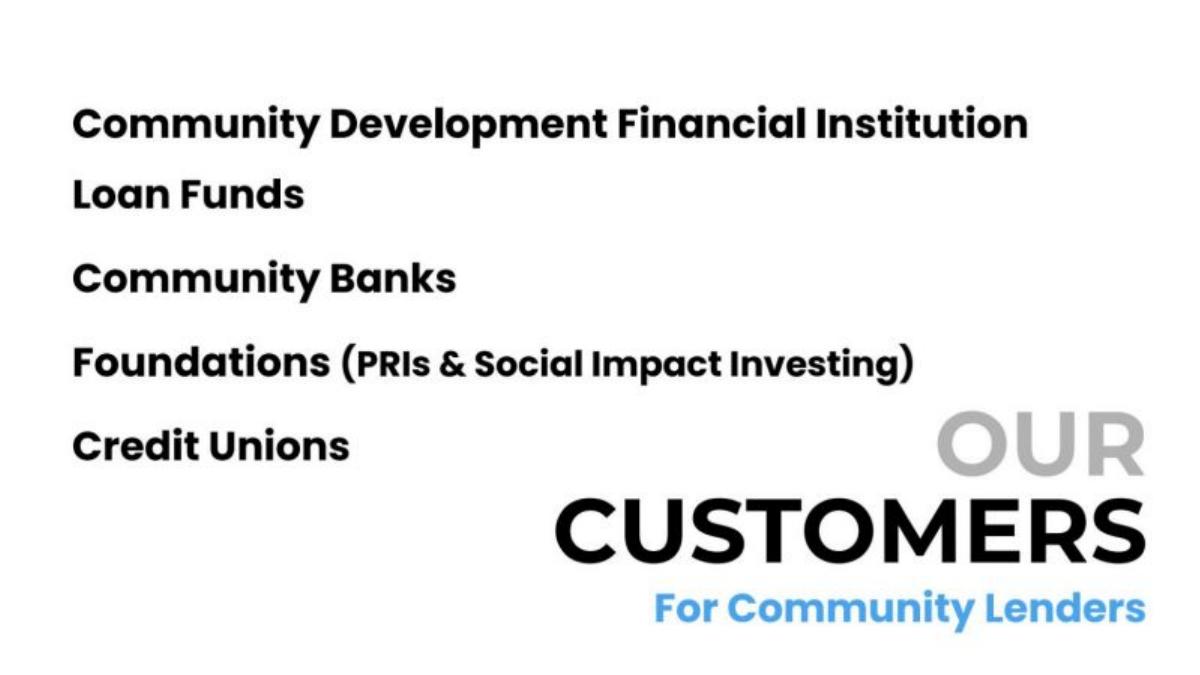
- The platform targets five specific customer segments: CDFIs, Loan Funds, Community Banks, Foundations, and Credit Unions (Slide 2).
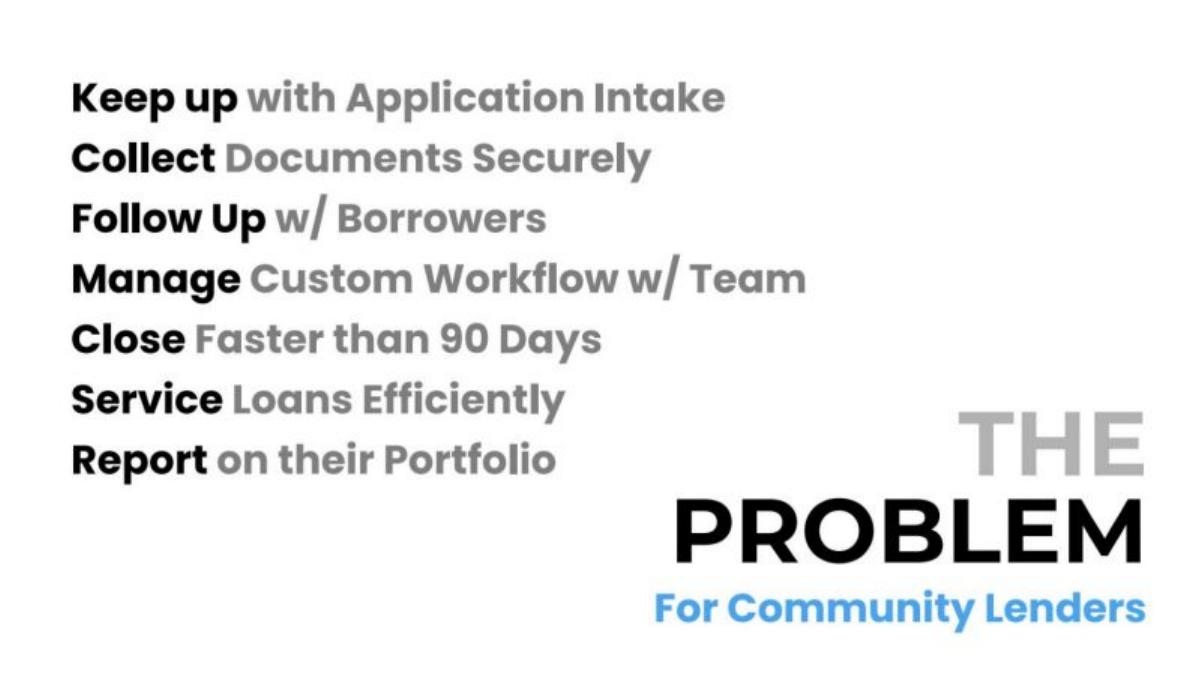
- LoanWell identifies a critical pain point in the 90-day closing cycle for community lenders (Slide 3).
- The leadership team features deep domain expertise, including a COO/CFO who managed banks in four countries (Slide 5).
- Product slides emphasize a 'TurboTax-inspired' user experience to simplify complex loan terms and document uploads (Slide 7).
- The platform includes an 'Auto-Decision' engine that allows lenders to bring their own rules and use 3rd party APIs (Slide 9).
- Market sizing estimates a $100M+ Serviceable Obtainable Market (SOM) consisting of over 3,000 community lenders (Slide 10).
- The revenue model utilizes a tiered annual subscription ranging from $25K to $100K per year (Slide 11).
- Customer Lifetime Value (LTV) is projected between $75K and $300K (Slide 11).
Executive Summary: The Niche FinTech Playbook
LoanWell’s pitch deck is a focused presentation that prioritizes market fit over broad-market hype. In an era where many FinTechs attempt to disrupt major commercial banks, LoanWell identifies a massive, underserved segment: community lenders. By providing the digital infrastructure these institutions lack, LoanWell positions itself as an essential partner rather than a competitor. This teardown examines the 15 slides that helped the company secure $3M in Seed funding.
Slide 1: Title and Product Vision
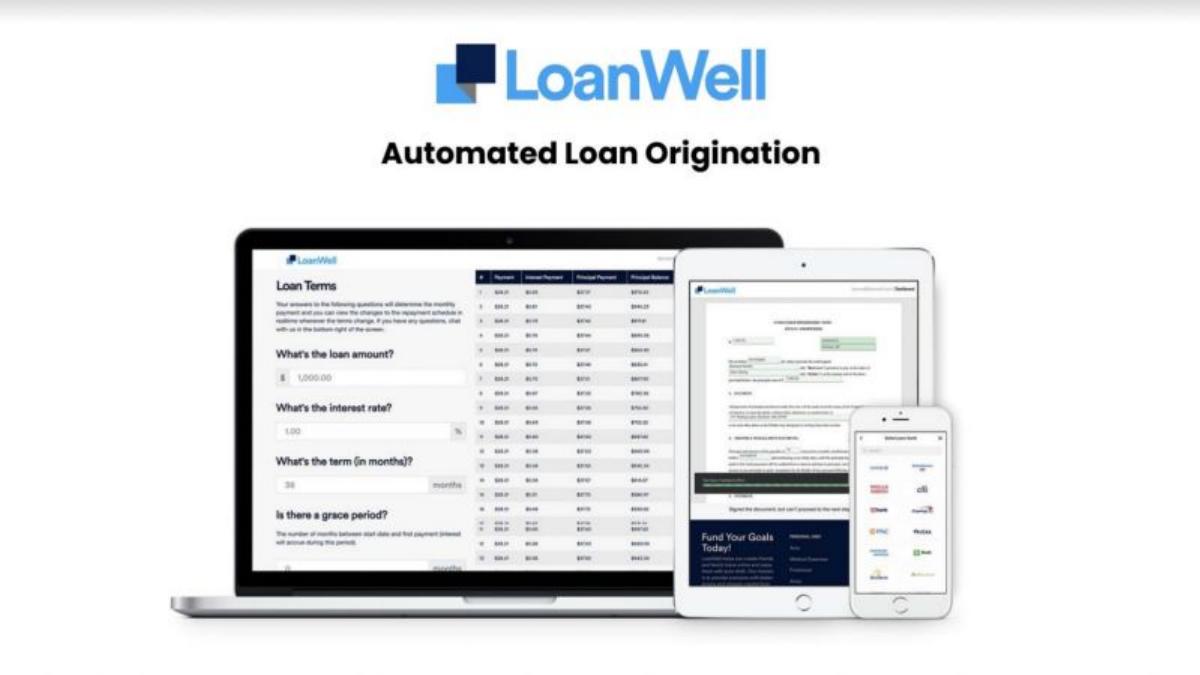
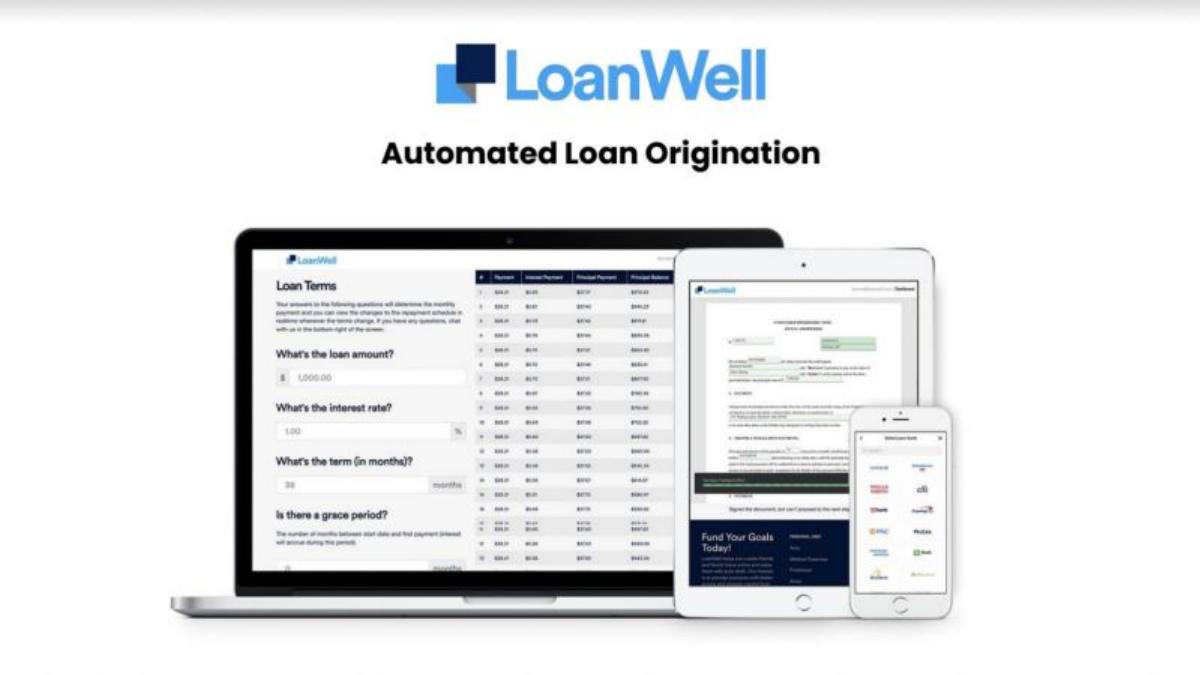
The cover slide is minimalist, featuring the LoanWell logo and the tagline "Automated Loan Origination." Below the text, a product mockup shows the platform across three devices: a laptop, a tablet, and a smartphone. This immediately communicates that the solution is modern, responsive, and ready for multi-device use—a stark contrast to the legacy, paper-based systems often found in community banking.
Slide 2: Defining the Customer
LoanWell does not waste time. Slide 2 lists their five core customer segments: Community Development Financial Institutions (CDFIs), Loan Funds, Community Banks, Foundations (PRIs & Social Impact Investing), and Credit Unions. By explicitly naming these groups, the company demonstrates a deep understanding of the specialized lending landscape. This is a strategic move to show investors that they have a clear, narrow focus for their Go-To-Market strategy.
Slide 3: The Friction in Community Lending
The problem slide highlights seven operational hurdles. Most notably, it mentions the struggle to "Close Faster than 90 Days." Other pain points include application intake, secure document collection, borrower follow-up, and portfolio reporting. The slide effectively frames the problem as an efficiency crisis, suggesting that community lenders are currently bogged down by manual processes that prevent them from scaling their impact.
Slide 4: The End-to-End Solution
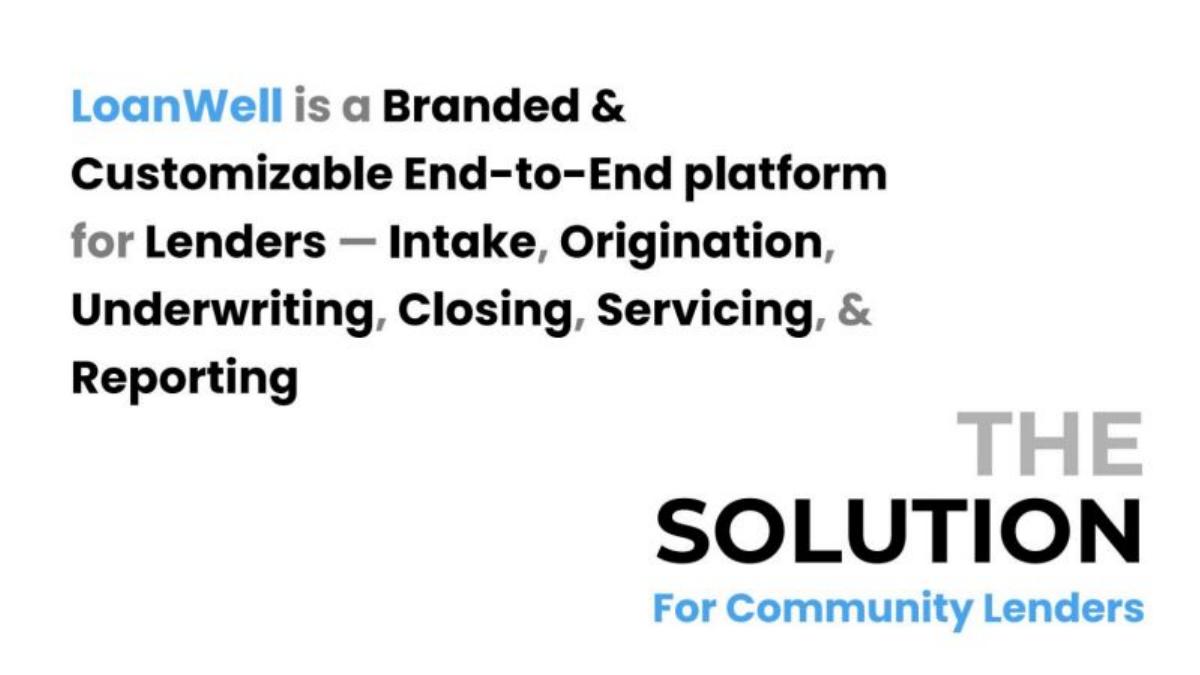
Slide 4 introduces LoanWell as a "Branded & Customizable End-to-End platform." It lists the six stages of the lending lifecycle that the software handles: Intake, Origination, Underwriting, Closing, Servicing, & Reporting. The use of the word "Branded" is key here; it tells the lender that they can maintain their community identity while using LoanWell’s white-labeled technology.
Slide 5: Leadership Team
The team slide is a strong point for LoanWell. Bernard Worthy (CEO/CTO) is noted for building software for Visa and Forbes. Justin Straight (COO/CFO) brings the domain authority, having managed banks and credit unions in four countries. The inclusion of Philip Tester (VP - Sales) , Evan Halley (Sr. Eng.) , and Alison McGee (Sr. CS) rounds out the leadership, showing that the company has already invested in sales and customer success infrastructure, not just engineering.
Slide 6: Front End User Experience
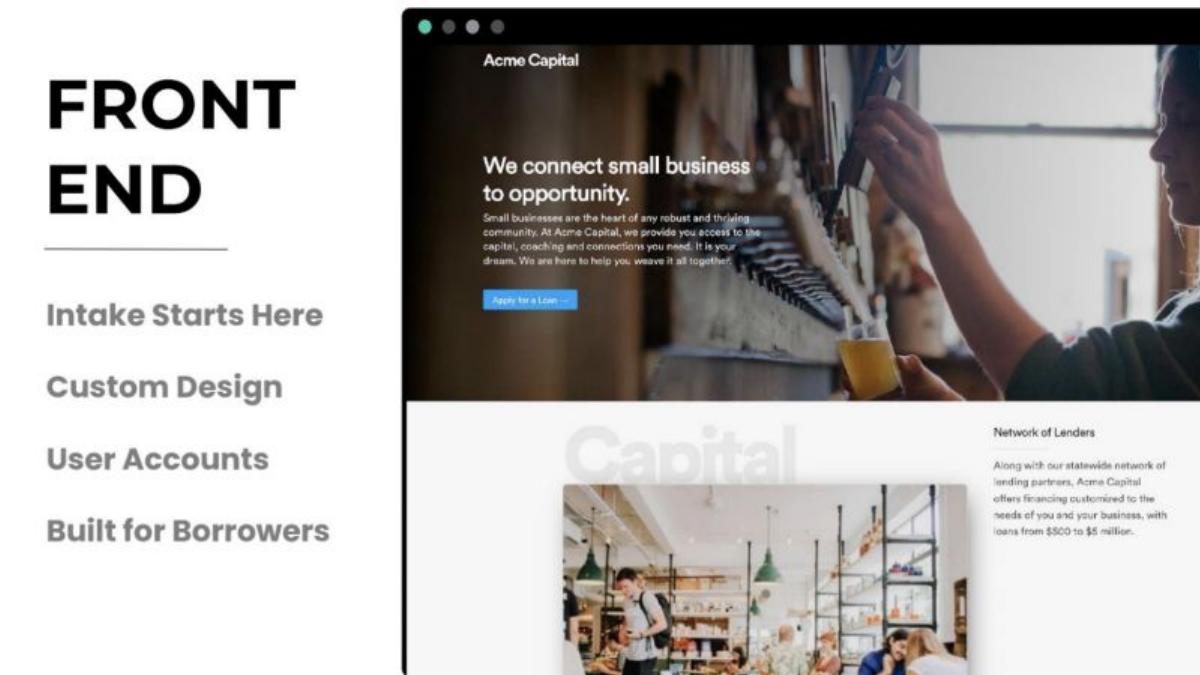
This slide showcases a mockup for "Acme Capital," illustrating the borrower’s experience. Key features listed include Intake Starts Here, Custom Design, User Accounts, and Built for Borrowers. The visual emphasizes a clean, modern web interface that looks more like a consumer tech product than a traditional banking portal.
Slide 7: Loan Terms and Data Entry
LoanWell describes its interface as "Inspired by TurboTax." This is a powerful analogy for investors, as it implies a complex process (loan applications) made simple through a guided, step-by-step UI. The slide also highlights Origination, Customizable, and Document Upload capabilities.
Slide 8: Workflow Management
Slide 8 focuses on the internal lender experience. It shows a progress tracker for both the lender and the borrower, indicating which steps (e.g., Application Processing, Credit Committee Review) are complete. It also mentions Integrations (QB) —referring to QuickBooks—and Portfolio Reporting , addressing the administrative burden mentioned in the problem slide.
Slide 9: The Auto-Decision Engine
This is the most technical slide in the deck. It details the "Auto-Decision" criteria, such as debt service coverage ratios and credit availability. It highlights features like Bring Your Own Rules, 3rd Party APIs, Tax Return OCR, and Automated Letters. This slide proves that LoanWell isn't just a digital form; it's an intelligent engine that can automate actual financial decision-making.
Slide 10: Market Sizing (TAM/SAM/SOM)
LoanWell presents a standard market funnel. The TAM is $8.5B/yr with an 18.7% CAGR. The SAM is $540M+/yr across 15K+ lenders. The SOM is $100M+/yr , targeting 3K+ community lenders. These numbers are grounded and realistic, avoiding the multi-trillion dollar exaggerations often seen in FinTech decks.
Slide 11: Revenue Model and Unit Economics
The revenue model is straightforward: $25K - $100K Annual Subscription Plan and a $5K - $20K Integration Fee. This results in a Customer LTV of $75K - $300K. While the deck doesn't provide CAC (Customer Acquisition Cost) data, the high LTV relative to the subscription price suggests a healthy margin if the sales cycle is manageable.
Slide 12: Traction and Social Proof
The "Selected Customers" slide features 15 logos, including Habitat for Humanity, NC Rural Center, Accion Chicago, and Thread Capital. The diversity of these logos—ranging from housing nonprofits to regional recovery funds—validates that the platform is versatile enough to serve various types of community-focused financial entities.
Slide 13: Mission and Impact
The mission slide connects the technology back to the real world: "To significantly increase the efficiency of the loan origination process for community lenders, in order to greatly improve access to affordable capital for the small businesses that power our local and national economies." The imagery of small business owners (a barber, a brewer, a farmer) reinforces the social impact aspect of the business, which is highly relevant to their target customer base.
Slide 14 & 15: Closing
The deck ends with a simple "Thank you" slide and a promotional slide for the platform where the deck was hosted. Notably, there is no contact information or specific call to action on the final slide, which is a minor but common omission.
What LoanWell Does Well
Niche Authority: By focusing on community lenders, LoanWell avoids competing directly with giants like nCino or Blend, who typically target Tier 1 and Tier 2 banks. · Product Depth: The deck moves beyond high-level concepts to show actual decisioning logic and workflow steps, proving the product is built out. · Team-Market Fit: The leadership team’s background in both high-scale tech (Visa) and community banking management is a perfect match for this specific problem.
What Is Missing from the Deck
The Ask: There is no slide stating how much money they are raising or what the milestones for the next 18 months are. (Catalogue facts indicate they raised $3M). · Competitive Landscape: The deck does not mention competitors. While community lenders often use manual processes, there are legacy core banking systems that LoanWell must integrate with or replace. · Growth Metrics: While they show customer logos, they do not provide data on revenue growth, number of loans processed, or the total dollar volume of loans originated through the platform.
Founder's Takeaway: Copy the 'TurboTax' Analogy
If you are building a B2B SaaS product that digitizes a complex, regulated process, use LoanWell’s "Inspired by TurboTax" framing. It is the fastest way to communicate 'ease of use' to an investor without needing to show a 20-minute demo. Additionally, the way LoanWell segmented their SOM (Slide 10) by specific lender counts (3K+ Community Lenders) is an excellent way to show that a niche market is still large enough to support a venture-scale business.
Frequently asked questions
- What is LoanWell's primary value proposition?
- LoanWell provides an end-to-end, branded, and customizable platform for community lenders. It automates the entire loan lifecycle—including intake, origination, underwriting, closing, servicing, and reporting—to reduce the time-to-close, which is currently cited as exceeding 90 days for many manual lenders.
- Who are LoanWell's target customers?
- The company specifically targets community-focused financial institutions. This includes Community Development Financial Institutions (CDFIs), local loan funds, community banks, foundations engaged in social impact investing, and credit unions. They estimate there are over 3,000 such lenders in their immediate SOM.
- How does LoanWell generate revenue?
- LoanWell employs a B2B SaaS model. Revenue is generated through an annual subscription plan priced between $25,000 and $100,000, supplemented by a one-time integration fee ranging from $5,000 to $20,000. This results in a projected customer LTV of $75,000 to $300,000.
- What technical features are highlighted in the deck?
- Key features include a customizable front-end for borrowers, a 'TurboTax-inspired' loan terms interface, automated workflow tracking for both lenders and borrowers, and an auto-decision engine. The engine supports 3rd party APIs, tax return OCR, and automated letter generation.
- What is missing from the LoanWell pitch deck?
- The deck lacks a formal 'Ask' slide detailing the specific amount being raised and the intended use of funds. It also omits a detailed competition slide, a roadmap for future product development, and specific historical growth metrics like MoM revenue or user growth.