The 2015 pitch deck for Locus (then MARA Labs) is a masterclass in technical validation. With only 11 slides, the founders—both former Amazon engineers—focused heavily on the inefficiency of manual intervention in logistics. Rather than relying on theoretical gains, they used a live B2C app, RideSafe, to generate 220,000+ location data points in just four weeks, proving their 'Realtime Route Deviation Detection' engine worked in the wild. The deck successfully positioned a complex algorithmic solution as an accessible 'Platform as a Service' with a clear usage-based revenue model. While it la…
Key takeaways
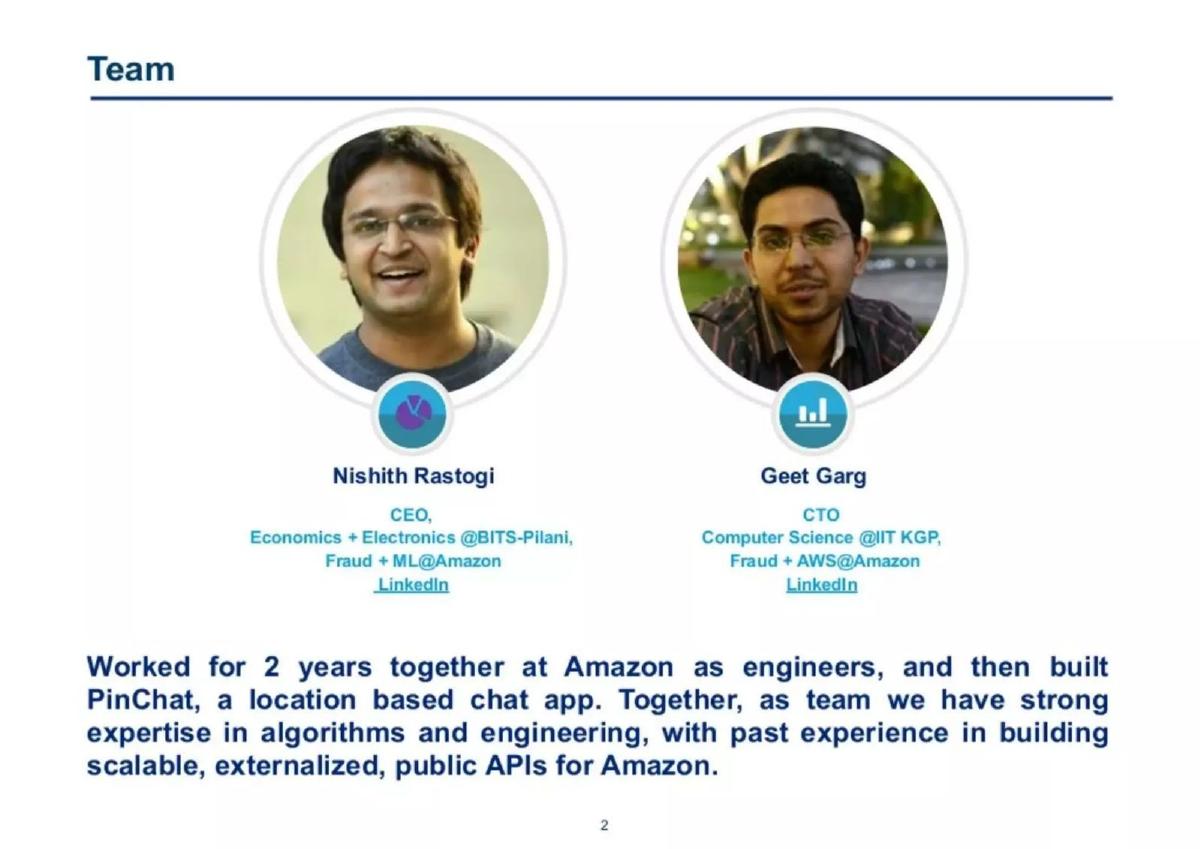
- The founders leveraged their background as Amazon engineers to establish immediate technical credibility on slide 2.
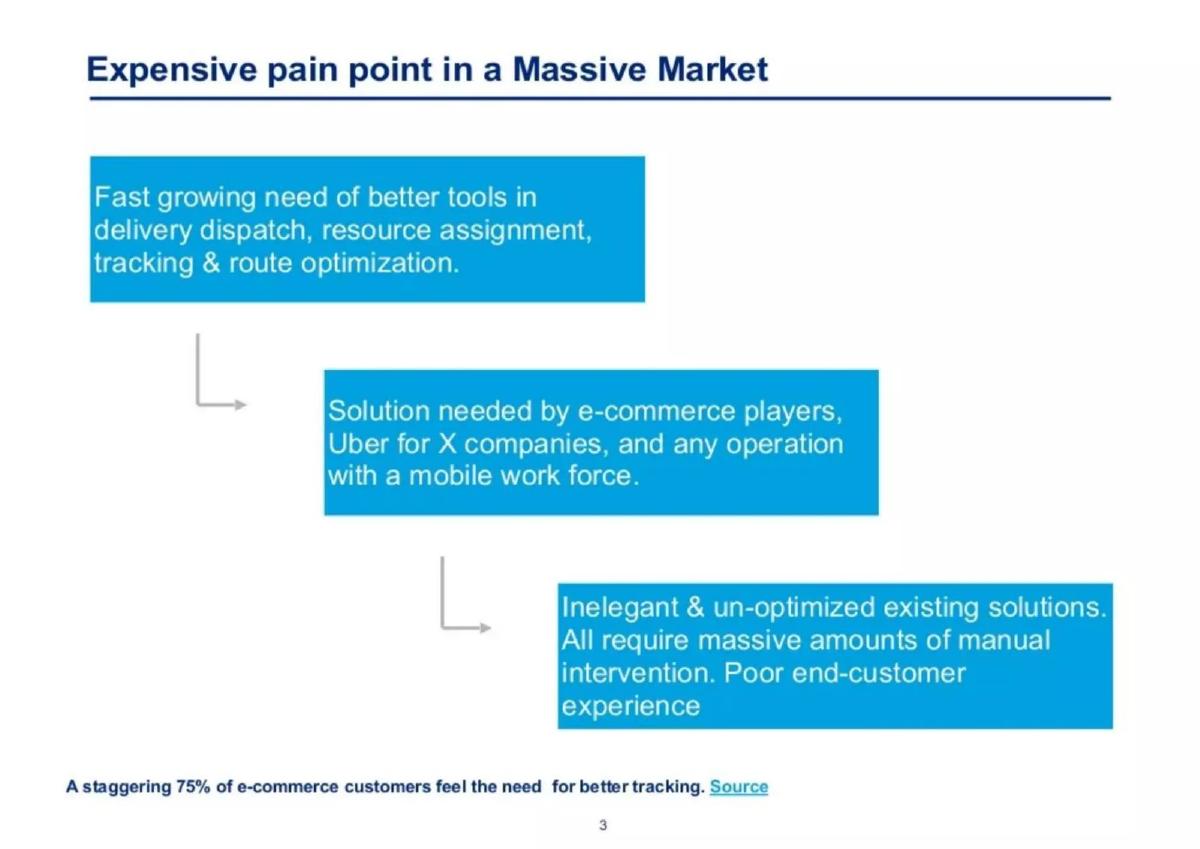
- The deck identifies a specific pain point: 75% of e-commerce customers feel the need for better tracking, as noted on slide 3.
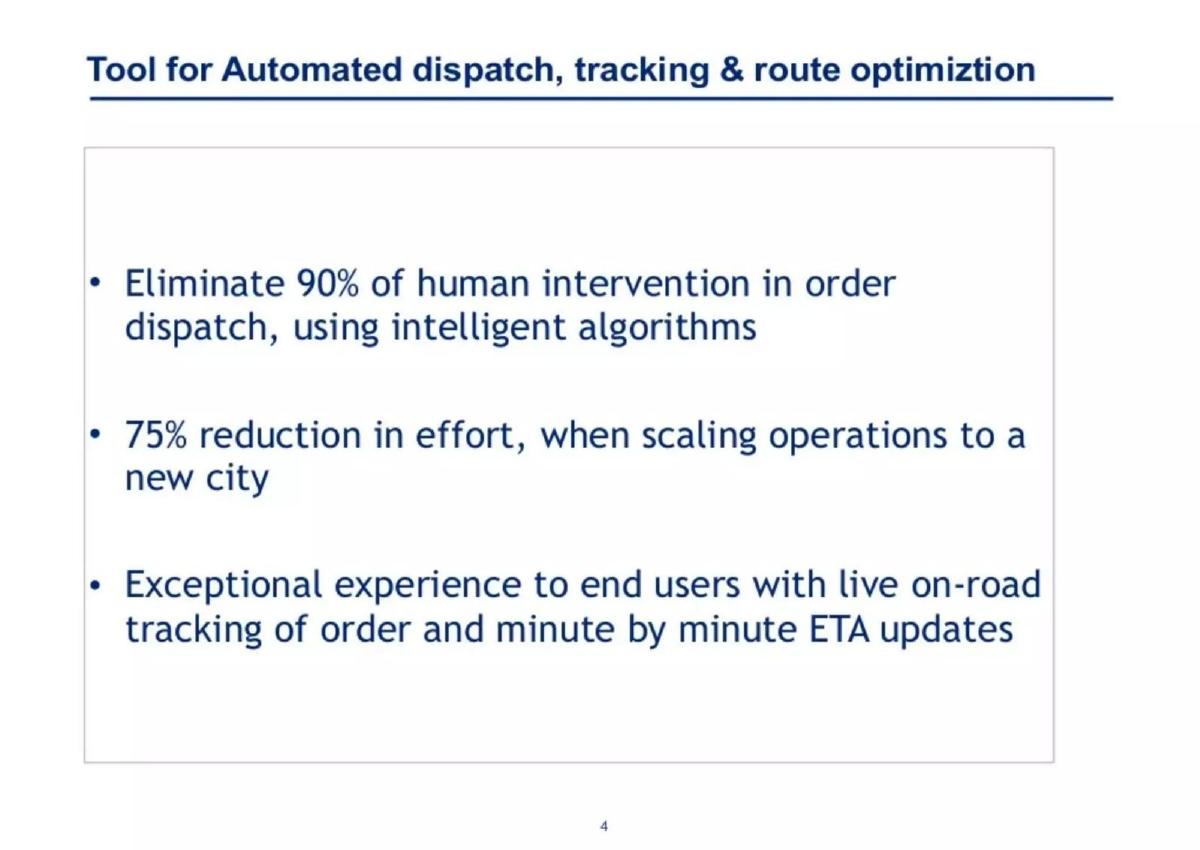
- Locus claims their intelligent algorithms can eliminate 90% of human intervention in order dispatch (slide 4).
- The platform targets a $231 billion logistics fulfillment industry, citing massive investments in the 'Uber for X' economy (slide 7).
- The revenue model is strictly usage-based, charging a few single-digit cents per API call while providing tools and SDKs for free (slide 9).
- A B2C reference app, RideSafe, was used to collect 12,000+ KM of usage data in its first four weeks to validate the B2B engine (slide 10).
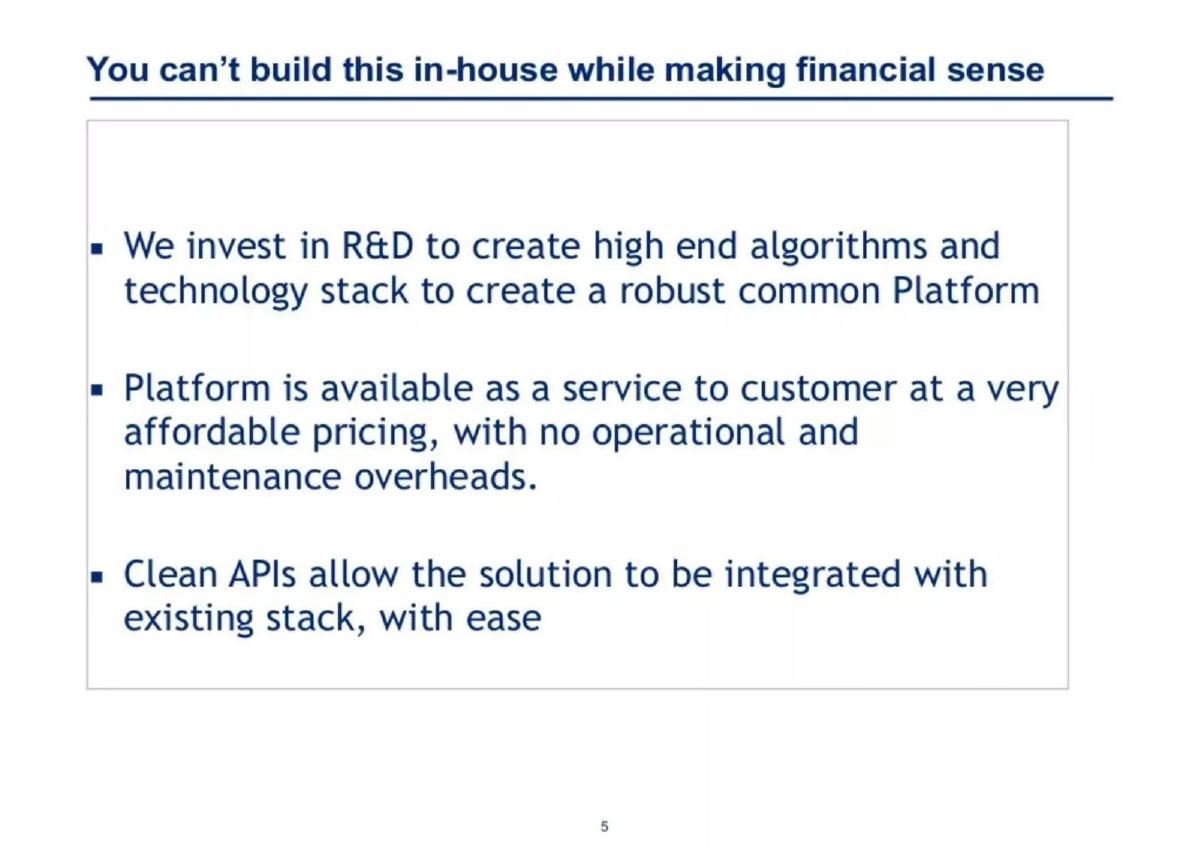
- The deck emphasizes that building such a system in-house does not make 'financial sense' for most companies due to R&D costs (slide 5).
- The product was initially branded as 'MARA Labs' with the tagline 'MARA Ain’t a Routing Algorithm' (slide 1).
Introduction: The Algorithmic Approach to Logistics
In 2015, the logistics tech space was becoming crowded with 'Uber for X' clones. Locus (then operating as MARA Labs) took a different approach by positioning itself as the infrastructure layer rather than the service provider. This 11-slide deck focuses on the 'Platform as a Service' (PaaS) model, emphasizing engineering pedigree and data validation. The deck is concise, avoiding the fluff of market trends to focus on the technical efficiency of their routing engine.
The Foundation: Team and Vision (Slides 1-2)
Slide 1 introduces the company as MARA Labs with the subtitle 'MARA Ain’t a Routing Algorithm.' This is a curious branding choice that immediately signals a focus on complex logic over simple mapping. The title clearly defines the product: 'Platform as a Service for Logistics Fulfillment.'
Slide 2 is perhaps the strongest slide in the deck. It features the two founders, Nishith Rastogi (CEO) and Geet Garg (CTO). Their credentials are the highlight: both are BITS-Pilani or IIT graduates who worked together for two years as engineers at Amazon. Specifically, they highlight experience in 'Fraud + ML' and 'Fraud + AWS,' which suggests a deep understanding of high-scale, high-stakes data processing. The mention of their previous project, PinChat, shows they have a history of building together, a key metric for early-stage investors.
The Problem: Manual Inefficiency (Slides 3-5)
Slide 3 identifies an 'Expensive pain point in a Massive Market.' It uses a simple flow chart to explain that as the need for delivery dispatch grows, existing solutions remain 'inelegant' and require 'massive amounts of manual intervention.' A footer note claims that 75% of e-commerce customers feel the need for better tracking, citing an external source to validate the consumer demand.
Slide 4 presents the solution as a 'Tool for Automated dispatch, tracking & route optimization.' The value proposition is quantified with bold claims: eliminating 90% of human intervention and a 75% reduction in effort when scaling to new cities. This slide transitions the conversation from 'what we do' to 'how much money we save the client.'
Slide 5 addresses the 'Build vs. Buy' dilemma. Titled 'You can’t build this in-house while making financial sense,' it argues that the R&D required for high-end algorithms is too high for individual companies. By offering 'Clean APIs' and 'affordable pricing,' Locus positions itself as the logical choice for companies that want to focus on their core business rather than logistics math.
Market Opportunity and Use Cases (Slides 6-7)
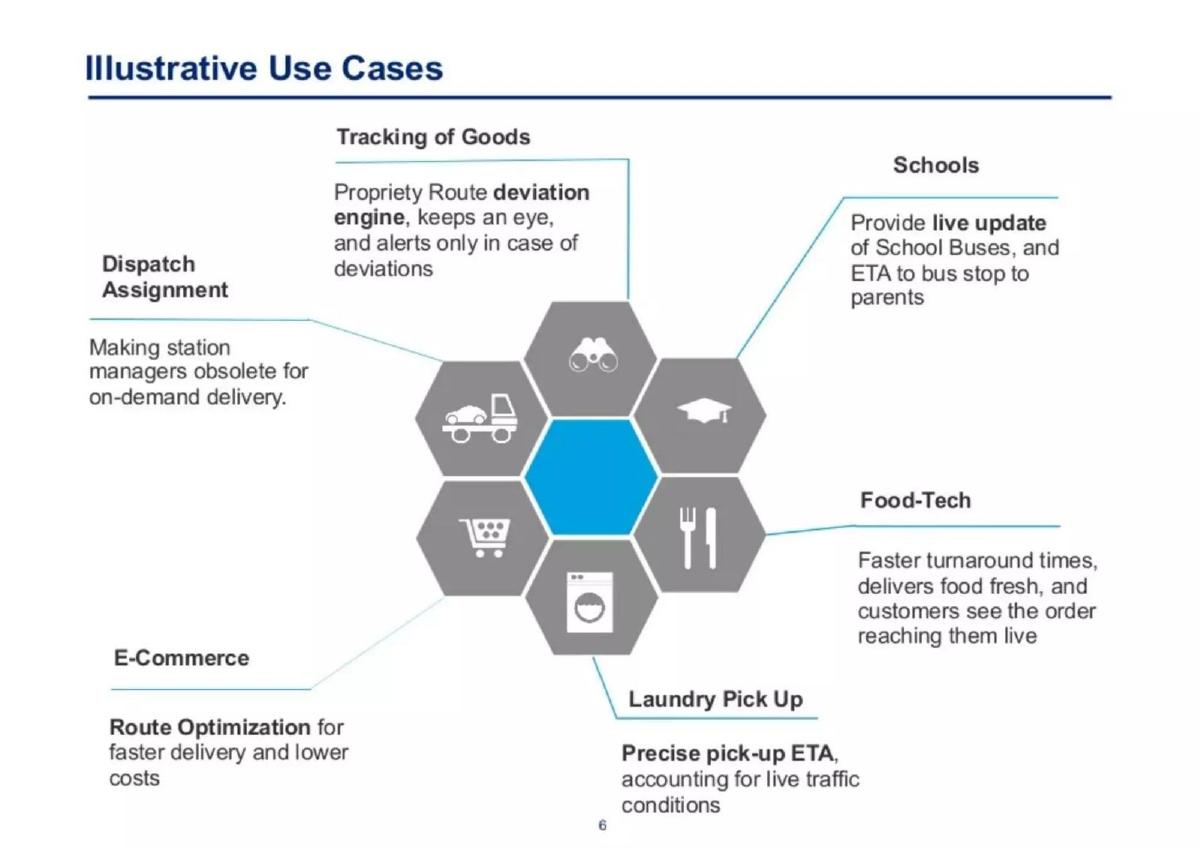
Slide 6 uses a hexagonal graphic to illustrate 'Illustrative Use Cases.' It covers a broad spectrum: tracking goods, school bus updates, food-tech turnaround times, laundry pick-up ETAs, and e-commerce route optimization. This demonstrates the versatility of their API—it is not just for packages, but for any 'mobile work force.'
Slide 7 tackles 'Market Size Indicators.' Rather than a standard TAM/SAM/SOM pyramid, it lists specific investment figures: a $231 billion logistics fulfillment industry, $1.5 billion invested in the US 'Uber for X' economy in 2014, and $400 million in Indian food/grocery startups in Q1 2015. By highlighting the volume of deliveries from specific Indian companies like HealthKart and Lenskart (10 million a year), they ground the market size in tangible, local data.
The Mechanics: Business and Revenue Models (Slides 8-9)
Slide 8 explains the 'Business Model' through an Input/Benefits table. The inputs are simple: locations, times, and available personnel. The benefits are the output of the Locus engine: optimum routes, route splitting, and live reporting. This slide demystifies the 'black box' of their algorithm for non-technical investors.
Slide 9 details the 'Revenue Model.' It is a pure SaaS play. They use a 'Subscription Model, Card on File' system. The core pricing is usage-based: 'Each API call is charged at a few (single digit) cents per call.' Crucially, they mention that all 'tooling, SDKs delivery apps, dashboards' are provided free of cost, which is a classic 'land and expand' strategy to reduce friction during integration.
Validation: The RideSafe Proof of Concept (Slides 10-11)
Slide 10 is the 'traction' slide, but with a twist. Since Locus was a B2B platform, they built a B2C app called 'RideSafe' to demonstrate their B2B APIs. This app featured their 'R2D2' (Realtime Route Deviation Detection) engine. The results are impressive for a four-week period: 12,000+ KM of usage data, 2,000 users, and 220,000 location points. They even claim a 'Rank 1 on Play Store in transport category' on Women's Day with 'No marketing spend.' This proves the algorithm works in a live, unpredictable environment.
Slide 11 concludes the deck with 'Sample Media Coverage' for the RideSafe app. It shows clippings from Lifehacker, NDTV, and The Hindu. While the media coverage is for the B2C app, it serves as third-party validation of the underlying technology that Locus intended to sell to enterprises.
What Works in the Locus Deck
Technical Credibility: The founders do not hide behind business jargon. By highlighting their Amazon engineering backgrounds and specific experience in Machine Learning and AWS, they establish that they are the right people to build a complex routing engine.
Data-Driven Validation: The use of the RideSafe app was a brilliant move. Many B2B startups struggle to show traction before they land their first enterprise contract. By building a simple consumer app, Locus generated hundreds of thousands of data points to prove their 'R2D2' engine could handle real-world variables like 'soft roads' and 'lost network signals.'
Clear Pricing Strategy: The revenue model is transparent. Charging per API call aligns the company's success with the client's volume. By offering the front-end tools (dashboards and apps) for free, they remove the 'implementation cost' barrier that often kills enterprise software deals.
What Is Missing from the Locus Deck
The Ask: There is no slide indicating how much capital the company is seeking or how they plan to use the funds. While this information is often shared in person, its absence in the deck makes the narrative feel incomplete.
Competitive Analysis: The deck assumes that the only competition is 'in-house' development or 'inelegant' existing solutions. It does not name specific competitors or explain how Locus's algorithms are superior to other third-party logistics software available at the time.
Financial Projections: There are no charts showing projected revenue growth, burn rate, or a path to profitability. For a Series stage deck, investors typically expect to see how the 'single digit cents per API call' scales into a multi-million dollar business.
What a Founder Should Copy
Quantify the Value: If you are building an efficiency tool, you must provide percentages. Locus’s claim of '90% reduction in human intervention' is a powerful hook that any operations manager would want to investigate.
The Reference App Strategy: If your core product is an invisible API or a complex backend, build a 'reference implementation.' Locus used RideSafe to show their API in action. This allows investors to 'touch and feel' the technology even if they aren't the target B2B customer.
Focus on 'Financial Sense': Slide 5 is a great example of handling the 'why don't we just build this ourselves?' objection before it is even asked. By framing the product as a way to avoid R&D overhead, you turn a software purchase into a strategic financial decision.
Final Thoughts
The Locus deck is a lean, engineering-first presentation. It relies heavily on the pedigree of the founders and the raw data generated by their proof-of-concept app. While it lacks some of the traditional business slides (competition, financials, ask), it succeeds by proving that the core technology is both functional and necessary in a massive, growing market. The subsequent $78.8 million raised by the company suggests that investors were convinced by this 'algorithms-first' approach.
Frequently asked questions
- What was the primary problem Locus aimed to solve in 2015?
- Locus targeted the 'inelegant and un-optimized' nature of existing logistics solutions. According to slide 3, these solutions required massive amounts of manual intervention and resulted in a poor end-customer experience. The company aimed to replace manual dispatching with intelligent algorithms to reduce human effort by 90%.
- How did the founders prove their technology worked without enterprise case studies?
- They built a B2C safety app called RideSafe. As shown on slide 10, this app used their proprietary 'R2D2' (Realtime Route Deviation Detection) engine. In just four weeks, they gathered 12,000 KM of data and 220,000 location points, proving the algorithm could handle real-world edge cases like lost signals and shortcuts.
- What is the specific revenue model outlined in the deck?
- Locus employed a 'Card on File' subscription model where the primary driver of revenue was API usage. Slide 9 states they charge a few single-digit cents per API call. To lower the barrier to entry, they provided all dashboards, SDKs, and delivery apps to the client for free.
- Who were the target customers for the Locus platform?
- The deck identifies three main segments on slide 3: e-commerce players, 'Uber for X' companies, and any operation with a mobile workforce. Slide 6 further illustrates use cases in schools (bus tracking), food-tech (fresh delivery), and laundry pick-up services.
- What is missing from this pitch deck that is usually expected?
- The deck is missing a formal 'Ask' slide (specifying how much money they are raising), a detailed competition matrix, and a 3-5 year financial projection. It also lacks a roadmap slide showing future feature development beyond the initial routing engine.