Pluang's 11-slide deck is a masterclass in high-growth storytelling for the Southeast Asian market. Raising $55M in 2022, the company positioned itself as the 'investing super app' for first-time investors. The presentation leans heavily on massive growth multiples—specifically a 47.5x increase in monthly transactions between 2020 and 2021. By highlighting Indonesia's position as the 4th largest country by population with only 1% equity ownership, Pluang presents a compelling 'gap in the market' narrative. The deck emphasizes their unique regulatory position as the only regional player with l…
Key takeaways
- Pluang achieved >22x growth in Monthly Transacting Users between 2020 and 2021 (Slide 3).
- The platform saw a >47.5x increase in the number of monthly transactions during the same period (Slide 3).
- Indonesia is highlighted as the 4th largest country globally by population, yet has only 1% equities ownership (Slide 7, Slide 8).
- The company positions itself as the only regional player with licenses for crypto, equities, mutual funds, and gold (Slide 10).
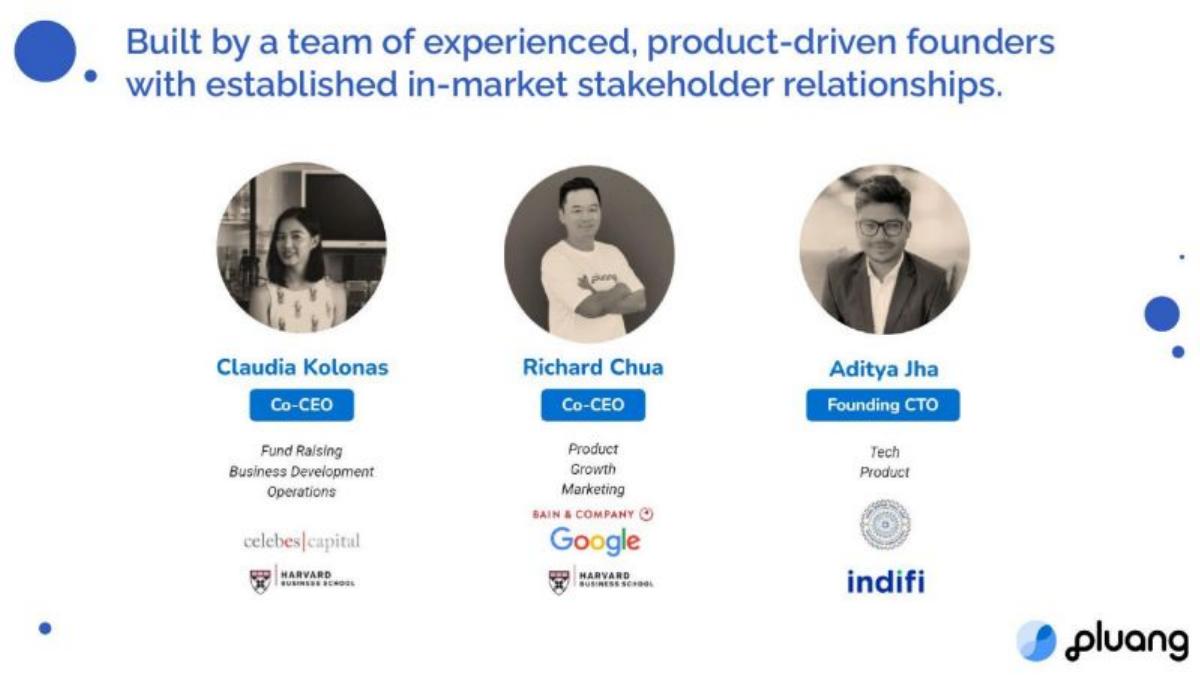
- The leadership team includes two Co-CEOs with backgrounds from Harvard Business School, Google, and Bain & Company (Slide 4).
- Distribution is powered by 'mini-app' partnerships with major platforms including Gojek, Tokopedia, Bukalapak, and DANA (Slide 11).
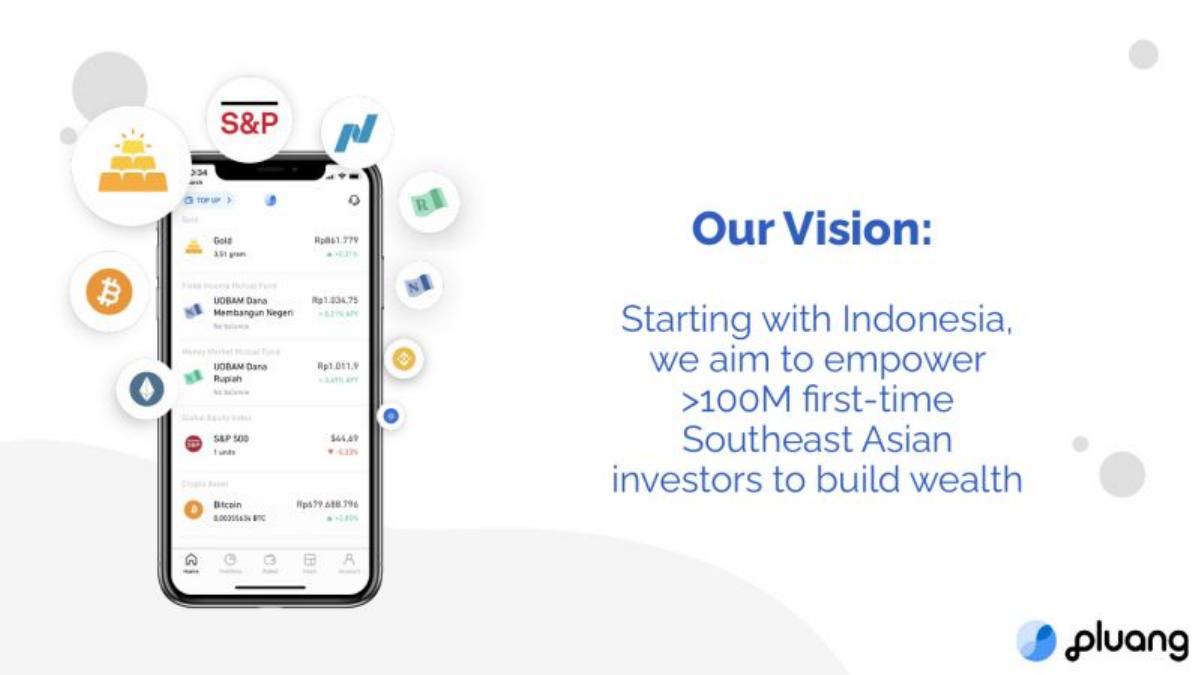
- The vision is to empower over 100 million first-time Southeast Asian investors (Slide 5).
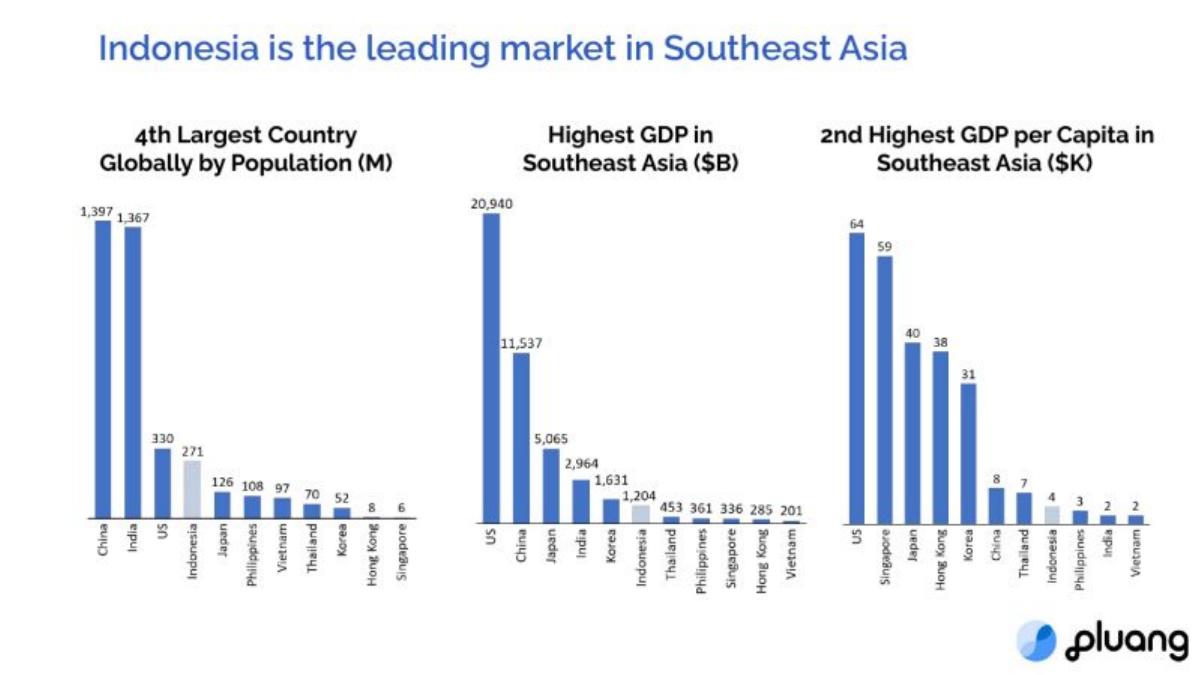
- The deck identifies Indonesia as having the highest GDP in Southeast Asia at $1,204B (Slide 7).
The Investing Super App Narrative
Pluang’s Series C deck is a concise, 11-slide presentation that focuses on market opportunity and explosive traction. In the world of Southeast Asian fintech, the 'super app' terminology is frequently used, but Pluang backs this up by showing a diverse product suite and a massive distribution network. The deck is designed to convince late-stage investors that Pluang has already won the Indonesian market and is ready to scale across the region.
Slide 1: Title and Identity
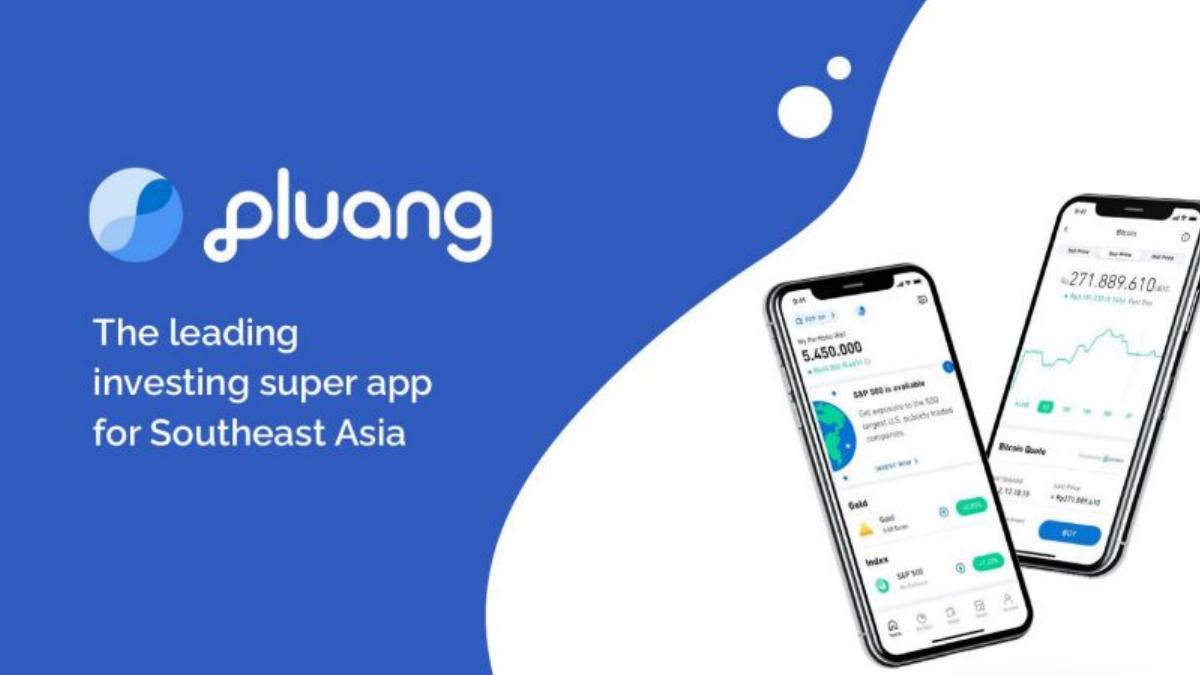
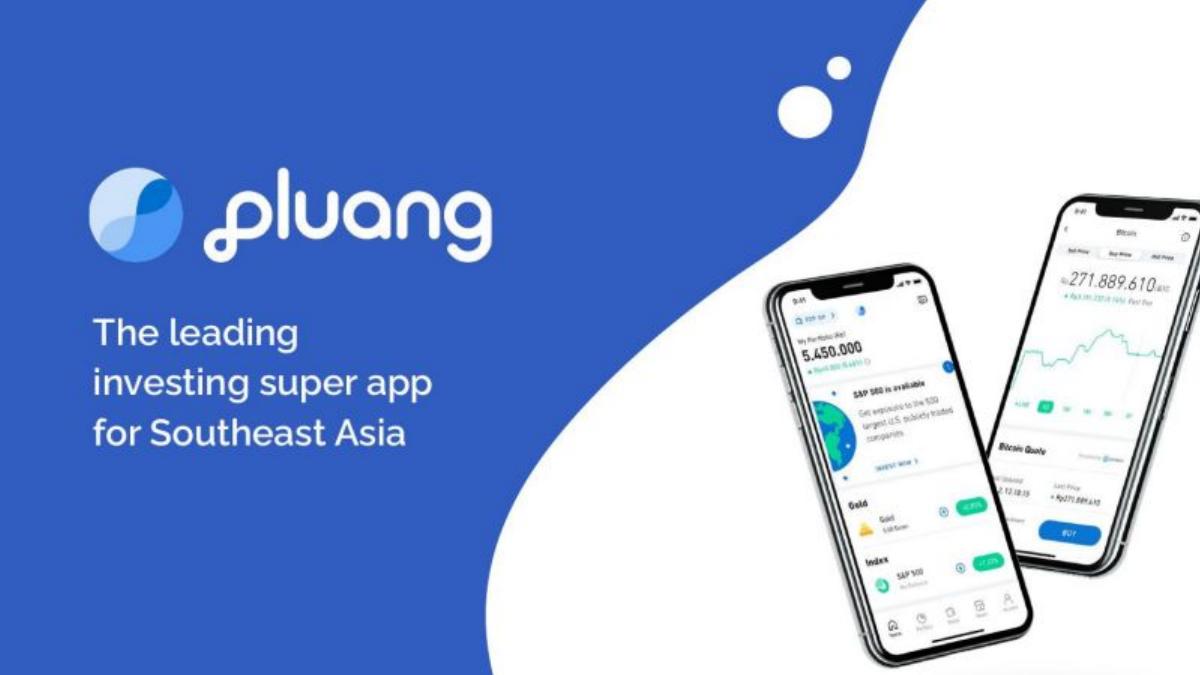
The opening slide establishes Pluang as "The leading investing super app for Southeast Asia." It features a clean UI mockup showing a portfolio value of 5,450,000 IDR and options for S&P 500, Gold, and Bitcoin. This immediately signals the multi-asset nature of the platform. The branding is professional, using a blue and white palette that suggests stability and trust—critical for a wealth-tech company.
Slide 2: The Value Proposition
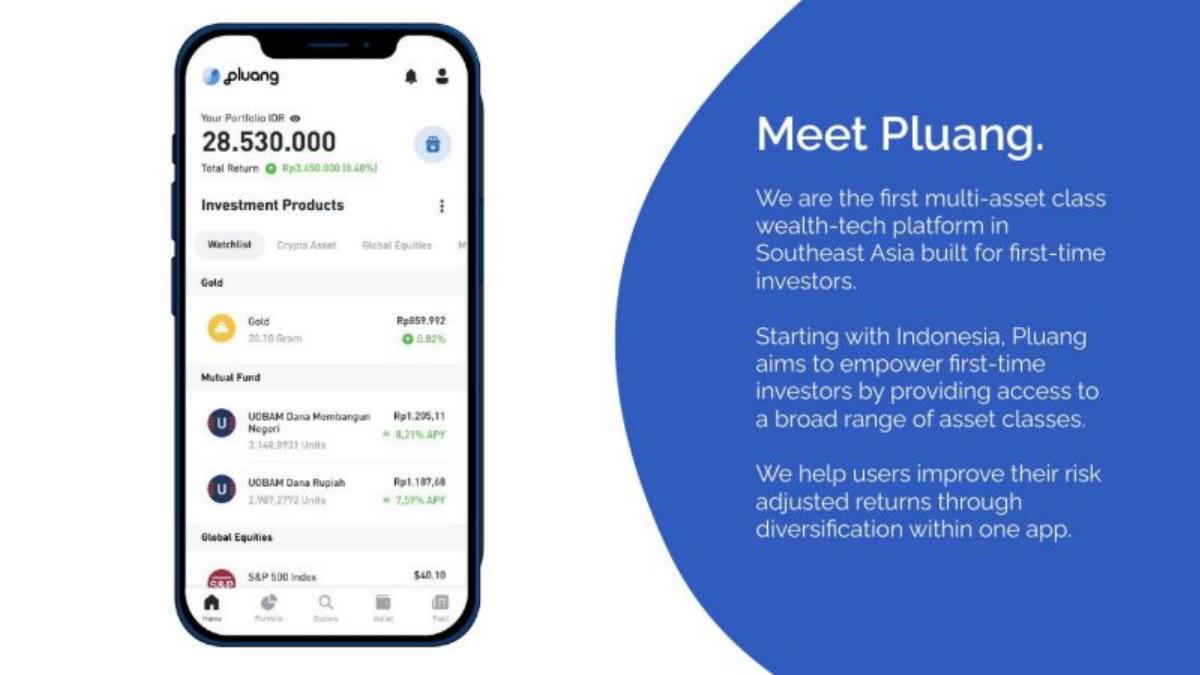
Slide 2 introduces the company's mission. It defines Pluang as the "first multi-asset class wealth-tech platform in Southeast Asia built for first-time investors." The slide emphasizes three key goals: empowering first-time investors, providing access to a broad range of asset classes, and helping users improve risk-adjusted returns through diversification. A mobile mockup shows a portfolio of 28,530,000 IDR, reinforcing the app's utility.
Slide 3: Hyper-Growth Metrics
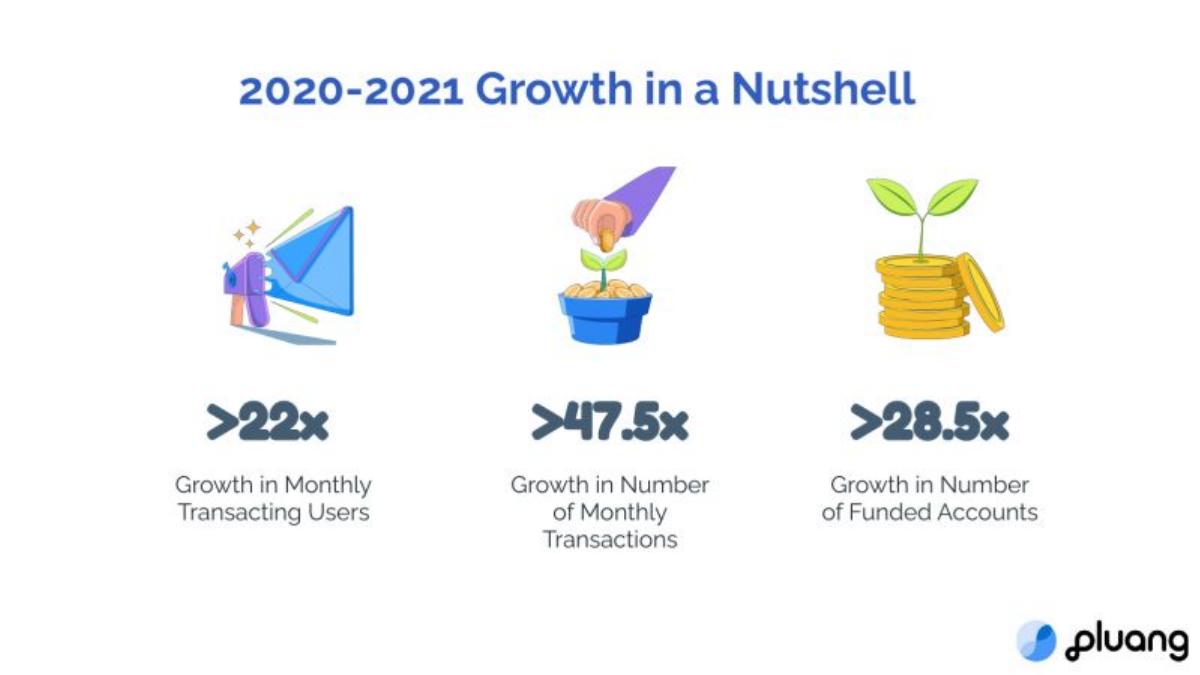
This is the 'wow' slide of the deck. Pluang presents three massive growth figures for the 2020-2021 period: >22x growth in Monthly Transacting Users, >47.5x growth in Number of Monthly Transactions, and >28.5x growth in Number of Funded Accounts. By using multiples rather than raw numbers, Pluang emphasizes the velocity of their expansion, which is a key metric for a Series C round.
Slide 4: The Leadership Team
The team slide features three key individuals: Claudia Kolonas (Co-CEO), Richard Chua (Co-CEO), and Aditya Jha (Founding CTO). The pedigree is high, with mentions of Harvard Business School, Google, Bain & Company, and Celebes Capital. This slide is intended to build investor confidence by showing that the founders have both the local market expertise and the global business education necessary to scale a unicorn.
Slide 5: The Vision
Slide 5 articulates a clear target: empowering >100M first-time Southeast Asian investors . It uses a visual of the app surrounded by icons for gold, the S&P 500, and various cryptocurrencies. This slide transitions the deck from 'what we have done' to 'where we are going,' setting the stage for the market analysis that follows.
Slide 6: Indonesia as the Anchor Market
Pluang makes a data-driven case for why they started in Indonesia. Using three bar charts, they show that Indonesia is the 4th largest country globally by population (271M), has the highest GDP in Southeast Asia ($1,204B), and the 2nd highest GDP per capita in the region ($4K). This justifies their focus on Indonesia as the primary engine for their regional ambitions.
Slide 7: The Untapped Opportunity
Slide 7 highlights the 'investing gap.' While Indonesia has 70% internet penetration and a high percentage of new digital consumers (37%), its equities ownership is a mere 1% . This is contrasted against the US (14%) and China (13%). This slide effectively argues that the market is not just large, but almost entirely untapped, representing a massive 'blue ocean' opportunity for a platform that can simplify investing.
Slide 8: Core Value Pillars
Pluang identifies four pillars of its value proposition: Trustworthy , Simple and accessible , Low-Cost , and One-Stop-Shop for All Asset Classes . These are the standard requirements for a successful B2C fintech, but they are essential to state clearly when targeting first-time investors who may be skeptical of financial services.
Slide 9: The Regulatory Moat
This slide addresses a major hurdle in fintech: licensing. Pluang claims to be the only player in the region to have the licenses and product offerings for Crypto, Equities & Indexes, Mutual Funds, and Gold. In a fragmented regulatory environment like Southeast Asia, having this 'full house' of licenses is a significant competitive advantage that is difficult for new entrants to replicate quickly.
Slide 10: Distribution via Mini-Apps
The final content slide explains their 'go-to-market' and retention strategy. Instead of just relying on direct app downloads, Pluang integrates as a 'mini-app' within the largest digital ecosystems in Indonesia. The slide prominently features the logos of Gojek , Tokopedia , Bukalapak , and DANA . This strategy allows Pluang to acquire users at a lower cost by leveraging the massive existing user bases of these partner platforms.
Slide 11: Conclusion
The final slide is a standard placeholder from the source library, inviting viewers to browse more examples. In the original deck, this would typically be a contact slide or an 'Ask' slide.
What Works in This Deck
1. Growth Velocity: The use of 22x and 47x growth multiples on Slide 3 is incredibly effective. For a Series C, investors want to see that the company has found product-market fit and is now in a hyper-scaling phase. These numbers provide that proof immediately.
2. Clear Market Gap: The comparison between 70% internet penetration and 1% equity ownership is a classic 'gap' slide. It makes the investment opportunity feel inevitable rather than speculative.
3. Regulatory Moat: By explicitly stating they are the only player with licenses for all four major asset classes, Pluang answers the 'why you' question and highlights a significant barrier to entry for competitors.
4. Strategic Partnerships: Showing deep integration with Gojek and Tokopedia (the GoTo group) demonstrates that Pluang isn't just a standalone app, but a core component of the Indonesian digital economy.
What Is Missing from This Deck
1. Unit Economics: For a Series C deck, there is a surprising lack of data on Customer Acquisition Cost (CAC), Lifetime Value (LTV), or contribution margins. Investors at this stage usually want to see that the growth is sustainable and profitable.
2. Financial Projections: The deck focuses on historical growth (2020-2021) but does not provide forward-looking revenue or AUM (Assets Under Management) targets. While the vision is to reach 100M users, the path to monetization is not detailed.
3. Use of Funds: There is no 'Ask' slide in this version of the deck. It is unclear how the $55M raised was intended to be spent—whether on regional expansion, product development, or marketing.
4. Competitive Landscape: While they claim a regulatory moat, they do not mention other wealth-tech players in the region (like Ajaib or Bibit). A competitive matrix or comparison would have added depth to their market leadership claim.
What a Founder Should Copy
1. The 'Multiples' Approach to Traction: If your raw numbers are sensitive or if the growth is so high that the raw numbers don't tell the whole story, use multiples (e.g., 22x growth). It creates a sense of momentum that is very attractive to VCs.
2. The 'Mini-App' Strategy: Pluang’s strategy of piggybacking on larger platforms is a brilliant way to solve the high cost of customer acquisition in fintech. Founders should look for 'ecosystem' partners rather than trying to build a siloed audience.
3. Focus on the 'Why Now': By showing the surge in 'New Digital Consumers' on Slide 8, Pluang explains why their growth happened in 2021. Founders should always link their success to a broader market trend or shift in consumer behavior.
4. Visual Simplicity: The deck is not cluttered. Each slide has one main point and uses high-quality icons and mockups to support it. This makes the deck easy to digest in a 5-minute review.
Frequently asked questions
- What is Pluang's core business model?
- Pluang operates as a multi-asset 'wealth-tech' platform specifically designed for first-time investors in Southeast Asia. According to Slide 2 and Slide 10, they provide a one-stop-shop for investing in gold, crypto, mutual funds, and global equities (like the S&P 500). Their model relies on a seamless online-to-offline distribution strategy and integration into existing popular apps.
- How did Pluang demonstrate market traction in this deck?
- Traction is the centerpiece of the deck, specifically on Slide 3. They report massive growth multiples from 2020 to 2021, including a 22x increase in monthly transacting users, a 47.5x increase in monthly transactions, and a 28.5x increase in funded accounts. This hyper-growth suggests rapid market adoption in the Indonesian market.
- What is Pluang's competitive advantage regarding regulation?
- Pluang claims a significant regulatory moat on Slide 10, stating they are the only player in the region to possess the licenses and product offerings for four distinct asset classes: Crypto, Equities & Indexes, Mutual Funds, and Gold. This multi-license status allows them to offer a diversified portfolio within a single app.
- Who are Pluang's strategic partners?
- As shown on Slide 11, Pluang utilizes a 'Mini-App' distribution strategy. They have partnered with the largest digital ecosystems in Indonesia, including Gojek (ride-hailing/payments), Tokopedia (e-commerce), Bukalapak (e-commerce), and DANA (digital wallet). These partnerships allow Pluang to reach users where they already spend their time and money.
- What market gap is Pluang addressing?
- Slide 8 identifies a massive disparity: while Indonesia has 70% internet penetration and a high rate of new digital consumers, equities ownership stands at just 1%. This is compared to 14% in the US and 13% in China. Pluang aims to bridge this gap by making investing simple, low-cost, and accessible for the 100M+ potential investors in the region.