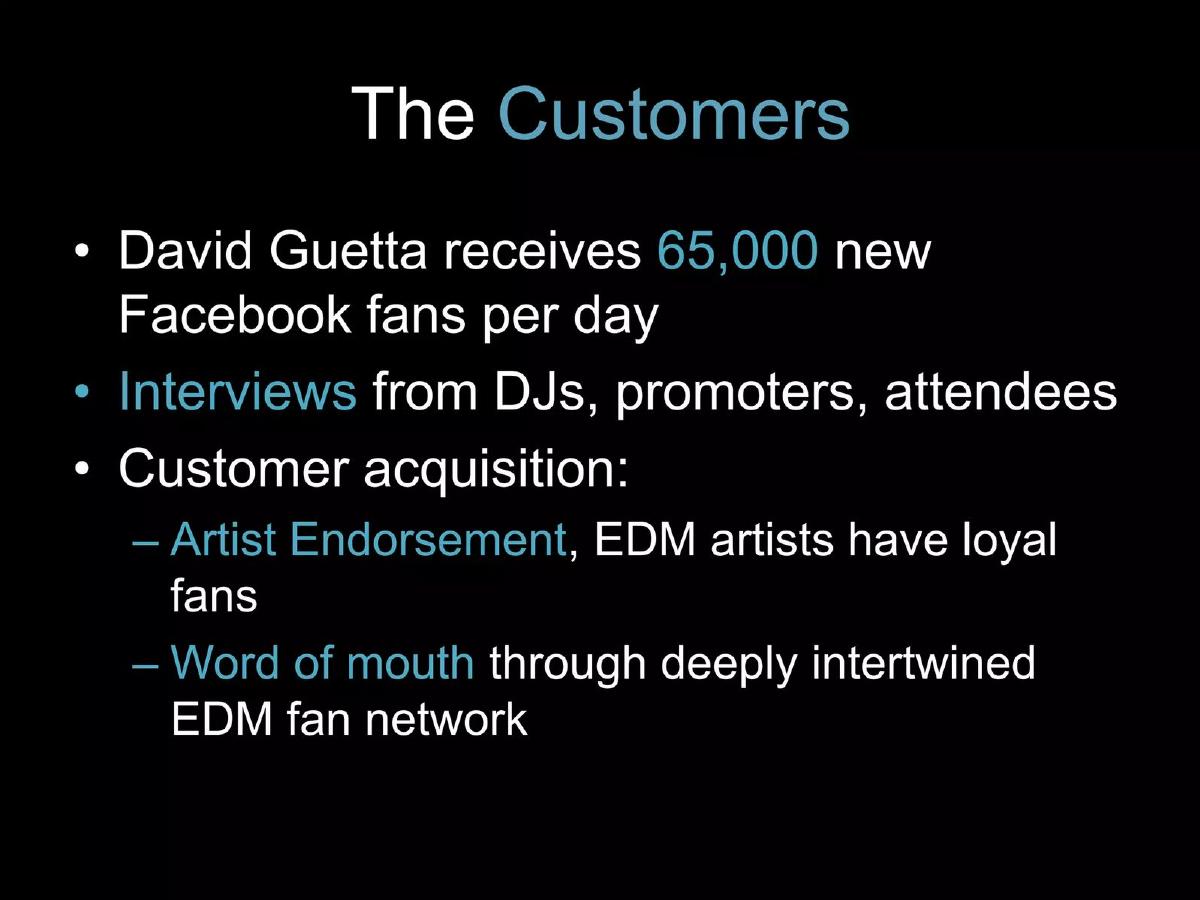
Pluntz presented a pitch for a mobile and web application dedicated to replicating the EDM concert experience for remote users. The deck highlights a market with over $4 billion in annual revenue and a significant surge in festival attendance, tripling between 2007 and 2010. Their business model relied on a mix of free low-quality samples, paid high-quality full-length concerts, and targeted advertising for tickets and digital sales. While the deck provides wireframes for a 'Left Swipe/Profile' and a 'Viewing Concert' screen, it lacks critical financial projections, a formal funding ask, and…
Key takeaways
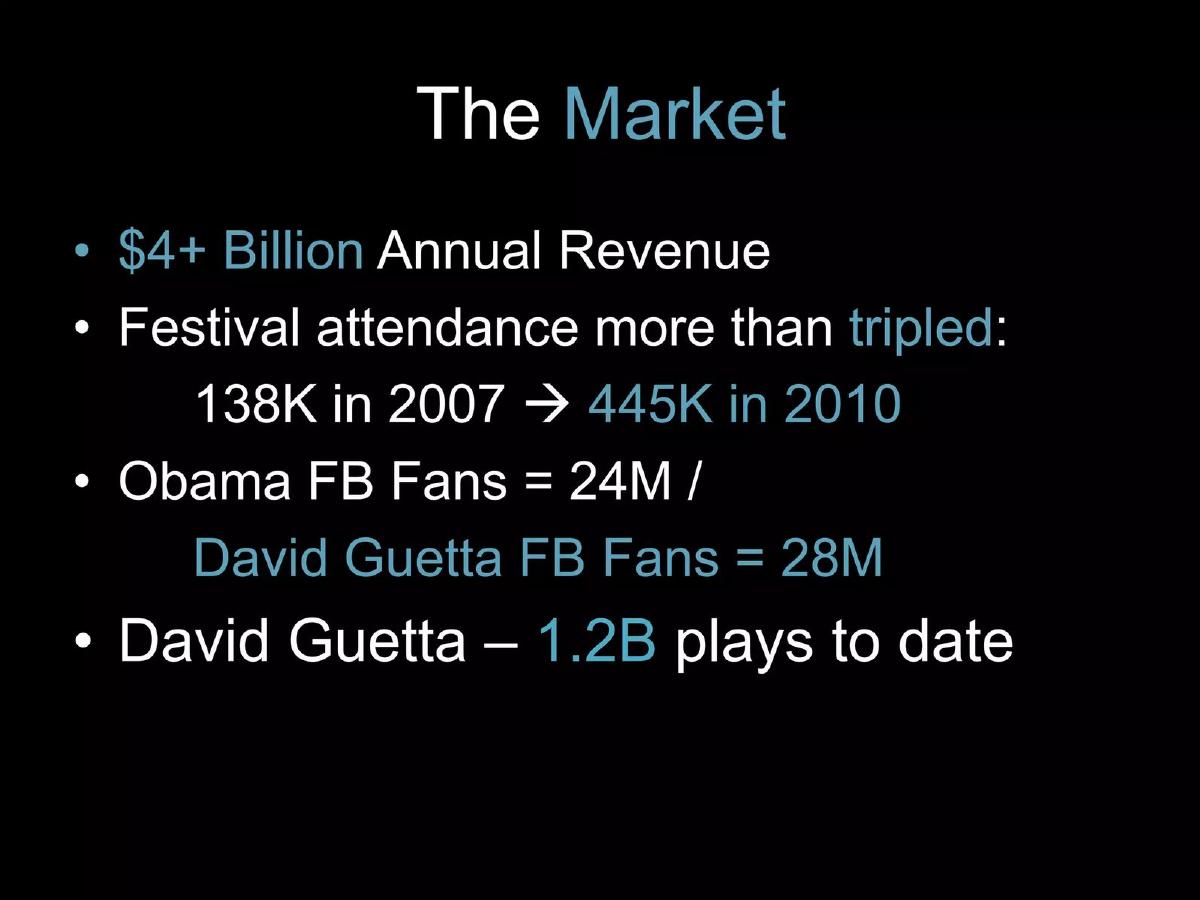
- The company identifies the EDM market as generating $4+ billion in annual revenue (Slide 2).
- Festival attendance is cited as tripling from 138,000 in 2007 to 445,000 in 2010 (Slide 2).
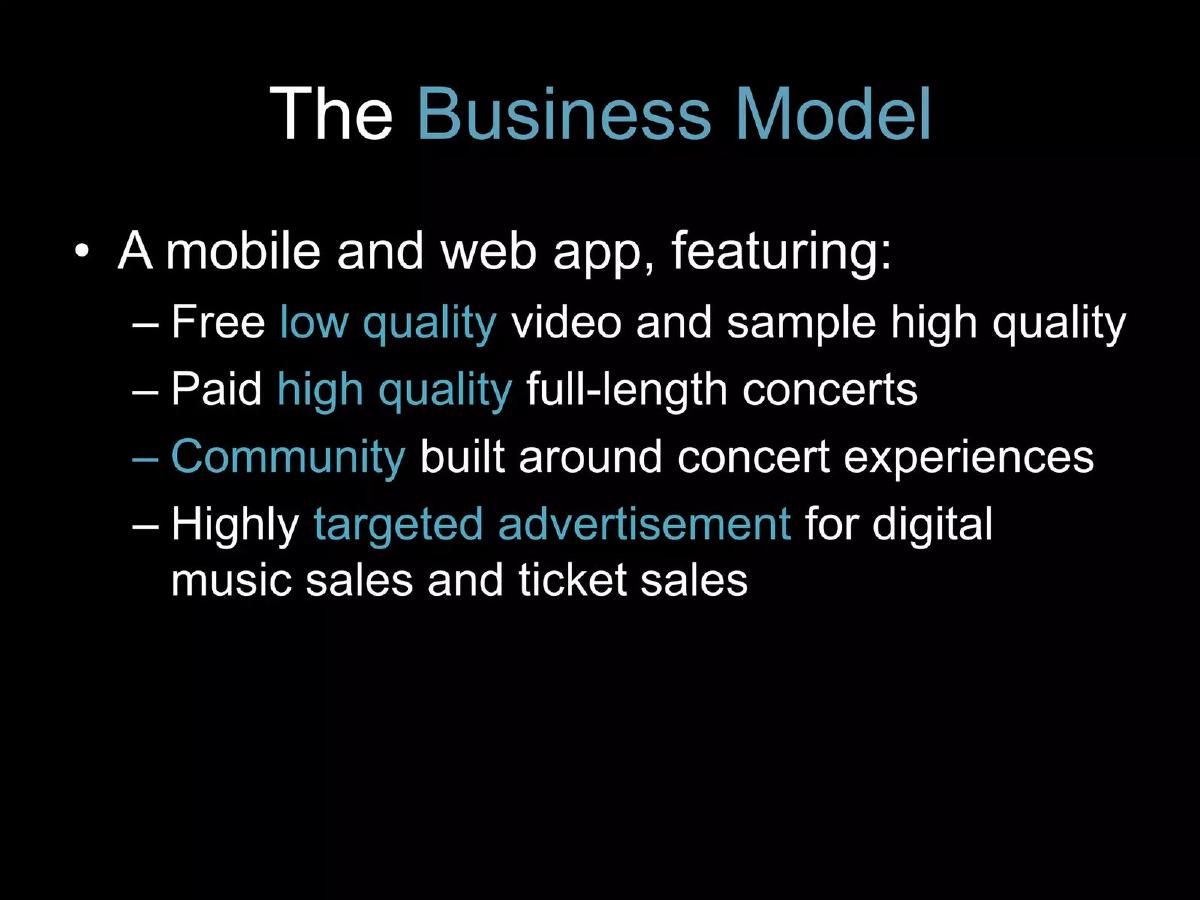
- The business model utilizes a freemium approach, offering free low-quality video and paid high-quality full-length concerts (Slide 3).
- Revenue streams include targeted advertising for digital music sales and ticket sales (Slide 3).
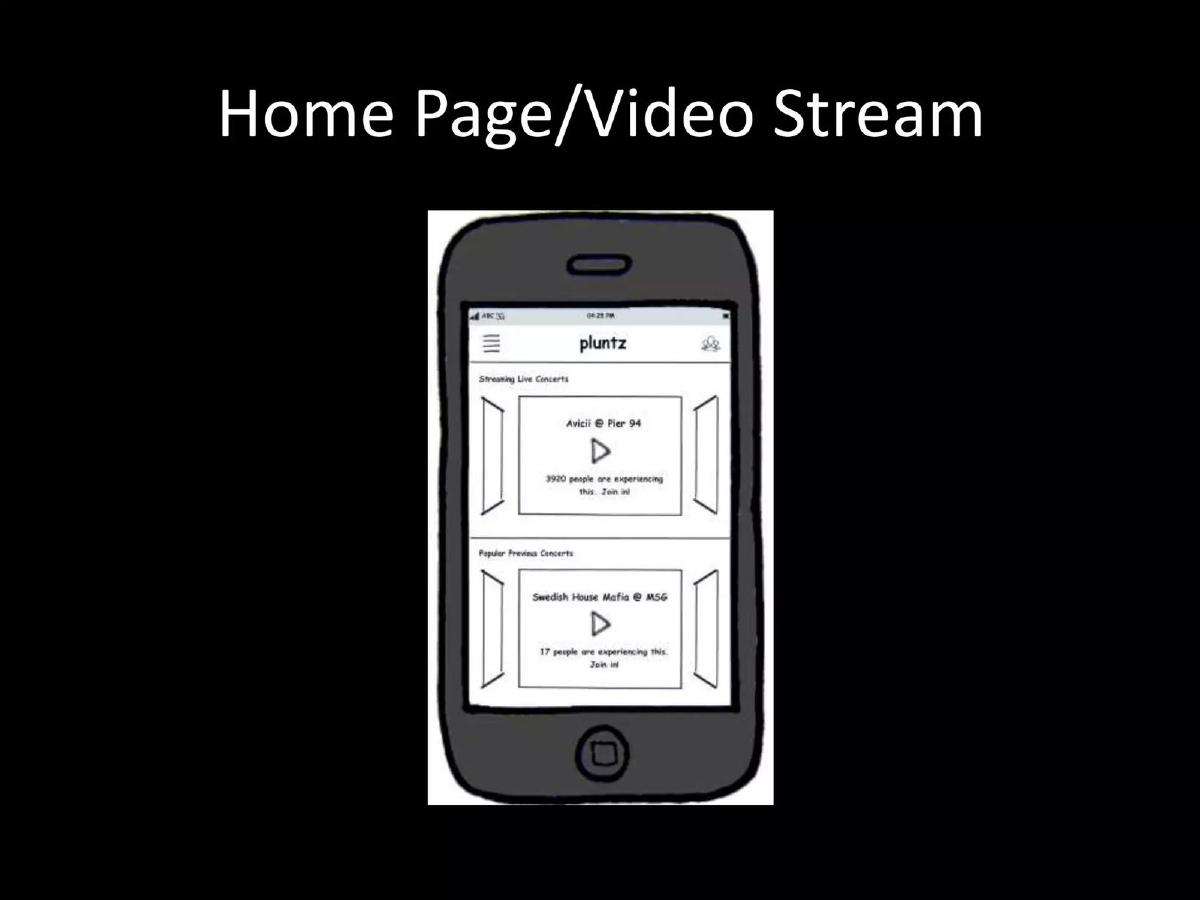
- Product wireframes show a user interface featuring a profile section and a live streaming view with social interaction (Slides 4 and 5).
- The deck lists David Guetta as a market benchmark, noting his 28 million Facebook fans and 1.2 billion plays (Slide 2).
- Competition is categorized into general social/music platforms and one direct niche competitor, be-at.tv (Slide 6).
- The deck omits a team slide, financial forecasts, and a specific investment ask (General observation).
Introduction
The Pluntz pitch deck is a brief, six-slide presentation focused on a niche streaming service for Electronic Dance Music (EDM). The deck positions the company at the intersection of the mobile app explosion and the global rise of EDM culture. While the presentation establishes a clear market opportunity, it functions more as a product concept than a comprehensive investment proposal, lacking the financial and operational depth usually required for a formal seed round.
Slide 1: Title and Mission
The opening slide introduces the brand name "pluntz" in a simple, lowercase sans-serif font against a dark background with blue light streaks. The tagline is "EDM anywhere." Below this, the mission statement is clearly defined: "We are replicating the very unique EDM (electronic dance music) experience onto your phone & computer." The slide lists four individuals: Vinh Bui, Tony Jin, Lance Zhao, and Victor Em. This slide establishes the core focus immediately, though it lacks professional branding or a clear value hook beyond the basic service description.
Slide 2: The Market
This slide attempts to quantify the opportunity using four key data points. First, it claims the market generates "$4+ Billion Annual Revenue." Second, it notes that festival attendance more than tripled, growing from "138K in 2007 to 445K in 2010." To illustrate the digital scale of the genre, the deck compares political figures to artists, stating that while Obama had 24 million Facebook fans, "David Guetta FB Fans = 28M." Finally, it notes that David Guetta has reached "1.2B plays to date." These metrics effectively demonstrate that the audience is both massive and digitally active, though the source for the $4 billion figure is not cited.
Slide 3: The Business Model
Pluntz outlines a four-pronged approach to monetization and product structure. The platform is described as a mobile and web app featuring:
Free low quality video and sample high quality content to drive user acquisition. · Paid high quality full-length concerts as the primary direct revenue driver. · A community built around concert experiences to increase retention. · Highly targeted advertisement for digital music sales and ticket sales.
This model suggests a standard freemium conversion funnel, though it does not specify pricing tiers or expected conversion rates.
Slide 4: Left Swipe/Profile
This slide provides a wireframe of the mobile interface. The sketch shows a basic smartphone silhouette with a menu titled "Tony Jin." The menu options include "Streaming Live Concerts," "Popular Concerts," "Activity," "Settings," and "Sign Out." A search bar at the top asks, "What concert do you want to experience?" The use of wireframes suggests the product was in the early design phase at the time of the pitch, rather than being a functional application.
Slide 5: Viewing Concert
The second wireframe focuses on the playback experience. It shows a video player for "Avicii @ Pier 94" with a "Live Stream on 2/3/12" label. Below the video, there are social engagement metrics (153 likes and 39 comments) and a chat feed. User comments like "AVICII IS KING!" and "Does anyone know what that song was?" are included to demonstrate the intended community interaction. This slide reinforces the "experience" aspect of the mission statement by showing how fans would interact during a live event.
Slide 6: So why pluntz?
The final slide in this set addresses the competitive landscape. It lists general competitors including Facebook, SoundCloud, Mixcrate, and Official.fm . It also mentions Fuse.tv and Tiesto’s first live Twitter stream as examples of existing attempts to capture this market. The deck argues that "None of these focus on the problem at hand." It identifies be-at.tv as the "Major Competitor." This slide is intended to show market awareness, but it fails to explain the specific technological or contractual advantages Pluntz has over be-at.tv or the larger social platforms.
What Works
The deck excels at identifying a specific, high-growth niche. By using David Guetta’s Facebook stats as a proxy for market demand, the founders effectively communicate the scale of the EDM fandom to an audience that might not be familiar with the genre. The business model is straightforward and follows proven digital media patterns (freemium content + targeted ads). The inclusion of wireframes, while basic, helps the viewer visualize the specific "community" and "live" aspects of the product that distinguish it from a simple video repository like YouTube.
What is Missing
This teardown reveals several significant gaps that would prevent a professional investor from moving forward. Most notably, there is no Team slide providing biographies or relevant experience for the four names listed on the cover. There is no Financial slide ; without projections for user acquisition costs (CAC), lifetime value (LTV), or licensing costs for the music and concert footage, the business model remains theoretical. The deck also lacks a Roadmap or Traction slide, leaving it unclear if the app has been built or if any partnerships with venues or artists have been secured. Finally, there is no Ask —the deck does not state how much money is being raised or what the milestones for that capital would be.
Founder Takeaways
Founders can learn from the clarity of the market slide. Comparing a niche celebrity to a global political figure is a shorthand way to prove cultural relevance. However, the lack of a "Team" slide is a critical error; in early-stage investing, the pedigree and technical capability of the founders are often more important than the idea itself. Additionally, when entering a space involving copyrighted content (music and live performances), a deck must address the "moat" or the strategy for securing rights, which Pluntz omitted. If you are pitching a content platform, you must explain how you will afford the content you plan to stream.
Frequently asked questions
- What is the core value proposition of Pluntz?
- Pluntz aims to replicate the unique EDM concert experience on mobile phones and computers. By providing high-quality live streams and a community-focused interface, they seek to serve fans who cannot attend physical festivals, leveraging the genre's massive digital footprint and growing live event attendance.
- How does Pluntz plan to make money?
- The business model is multi-faceted. It includes a freemium video tier where users pay for high-quality, full-length concert access. Additionally, the platform intends to generate revenue through highly targeted advertisements specifically for digital music downloads and physical concert ticket sales, capitalizing on the high engagement of the EDM community.
- Who are the primary competitors identified in the deck?
- The deck lists general platforms like Facebook, SoundCloud, Mixcrate, and Official.fm as indirect competitors. It also mentions specific artist platforms and Tiesto's Twitter streams. However, it identifies be-at.tv as the 'Major Competitor,' claiming that other platforms do not focus sufficiently on the specific problems of the EDM concert experience.
- What stage of development is the Pluntz product in?
- Based on the slides, the product appears to be in the conceptual or early wireframe stage. Slides 4 and 5 show hand-drawn or basic digital wireframes of a mobile app rather than finished UI/UX designs or screenshots of a live product. There is no mention of current user metrics or active beta testing.
- What critical information is missing from this pitch deck?
- The deck is missing several standard fundraising components. There is no team slide detailing the founders' backgrounds, no financial projections or unit economics, and no 'Ask' slide specifying how much capital is being raised or how it will be used. It also lacks a clear technology roadmap or go-to-market strategy.