Pocket Concierge presents a highly concise 9-slide deck tailored for a demo day environment, specifically the 500 Kobe Pre-Accelerator. The presentation identifies four primary friction points in the Japanese fine-dining sector: low-tech operations (Slide 2), revenue loss from cancellations (Slide 3), language barriers (Slide 4), and complex cultural nuances (Slide 5). The solution leverages the unique pedigree of Founder CEO Kei Tokado, a former chef at the Michelin-starred Sakuragawa (Slide 6). While the deck is light on technical architecture, it provides clear traction metrics of 1,000 bo…
Key takeaways
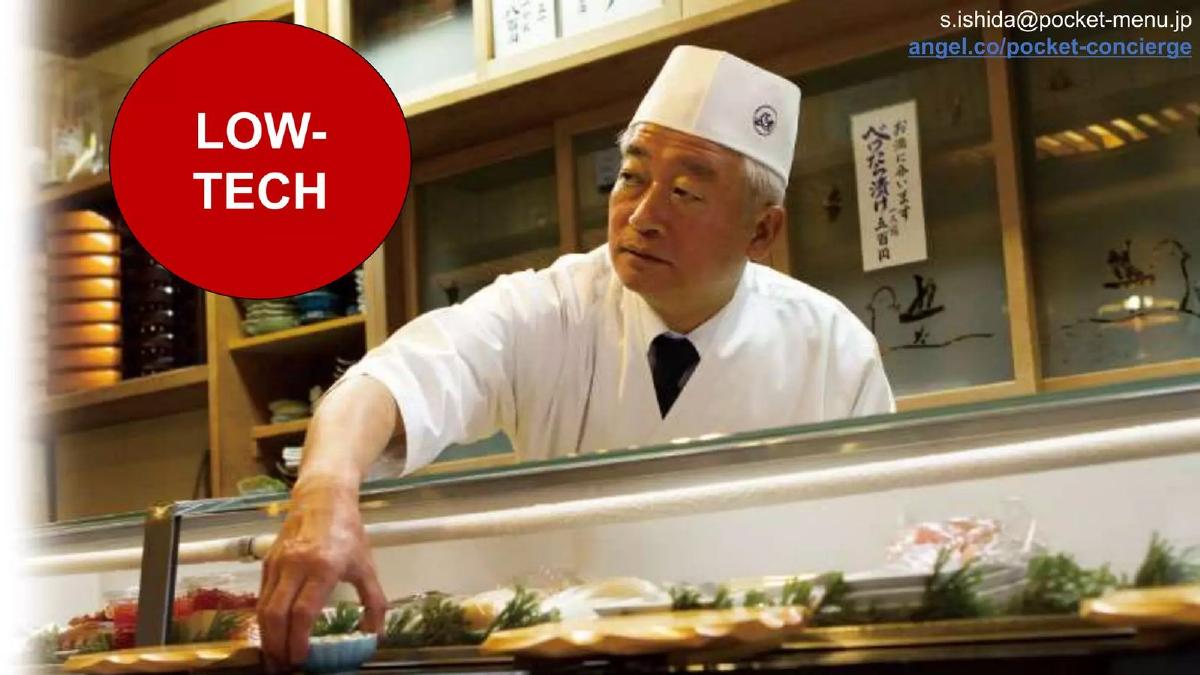
- The deck identifies 'Low-Tech' operations as a primary barrier to entry for high-end Japanese restaurants on Slide 2.
- Revenue protection is a core value proposition, addressing 'Cancellations & No Shows' on Slide 3.
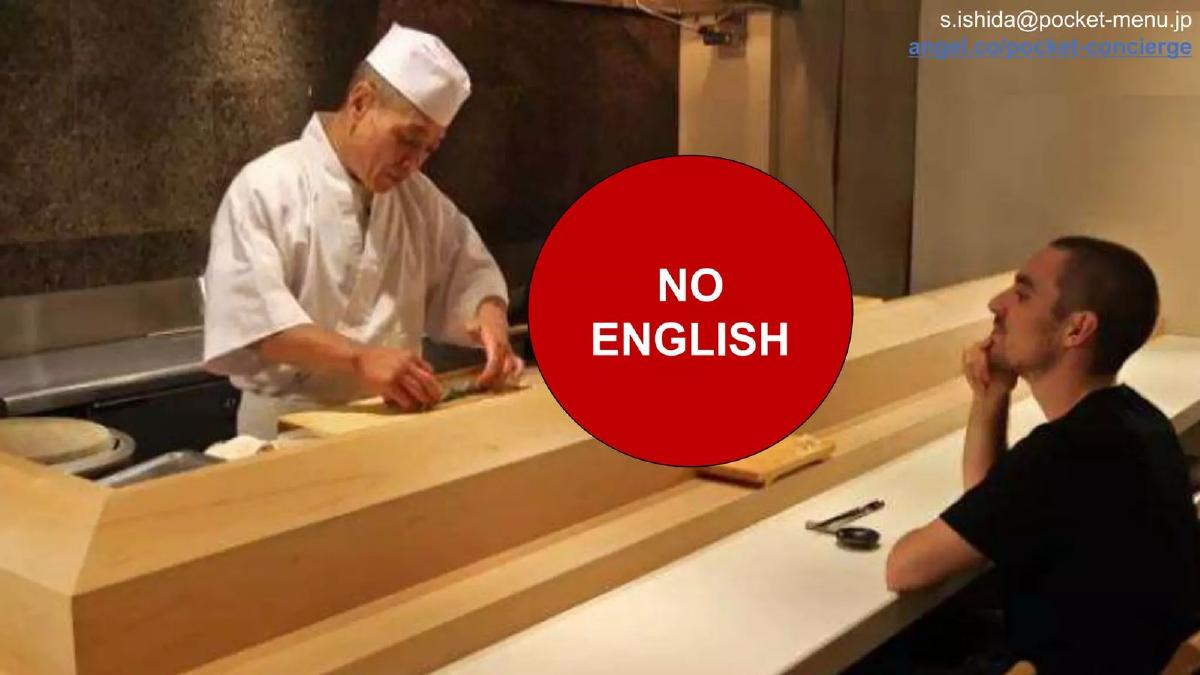
- Language barriers ('No English') are highlighted as a specific pain point for international diners on Slide 4.
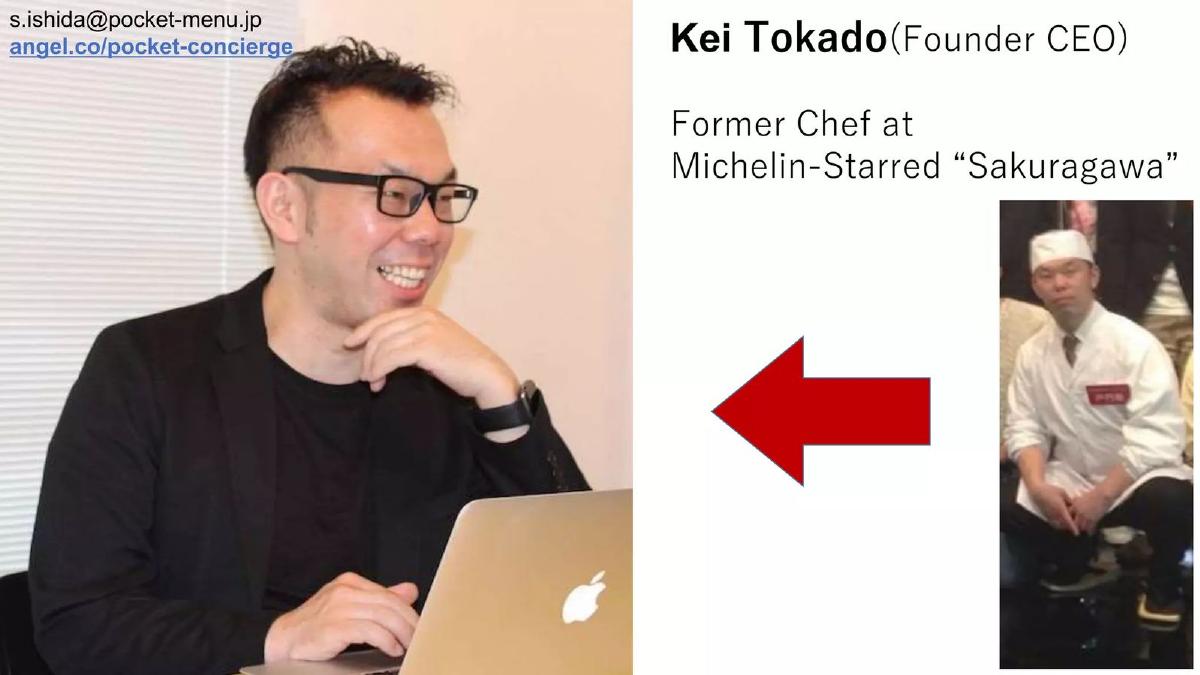
- Founder-market fit is established on Slide 6 by noting CEO Kei Tokado was a chef at Michelin-starred Sakuragawa.
- The business model is transparently stated as a $20 fee per booking on Slide 7.
- The company achieved a traction milestone of 1,000 bookings per month, as shown on Slide 7.
- The deck lists ten major partners or investors, including LINE, 500 Startups, and SMBC Venture Capital on Slide 8.
- The presentation completely omits a formal 'Ask' slide, missing details on funding amount or use of proceeds.
Introduction and Context
Pocket Concierge is a Japan-based platform designed to facilitate reservations at high-end, often exclusive restaurants. This 9-slide deck was prepared for the 500 Kobe Pre-Accelerator Demo Day. Given the demo day format, the deck is designed to be highly visual and fast-paced, focusing on the 'why' and the 'who' rather than exhaustive financial modeling. The company was eventually acquired by American Express, making this an interesting look at an early-stage pitch that led to a successful exit.
Slide 1: Title Slide
The deck opens with a minimalist black background featuring the Pocket Concierge logo and name. It includes the contact information for Seiya Ishida, Director of Business Development, and a link to the company's AngelList profile. This is a standard, professional opening that establishes the brand identity immediately.
Slides 2-5: The Problem Statement
Pocket Concierge uses a four-slide sequence to define the market friction. Each slide uses a high-quality photograph of a traditional Japanese restaurant setting overlaid with a red circle containing a short text description of a pain point.
Slide 2 (Low-Tech): Highlights that elite restaurants in Japan often rely on analog systems (phones and paper ledgers), making them inaccessible to modern digital booking platforms. · Slide 3 (Cancellations & No Shows): Addresses the financial risk to restaurants. High-end dining involves expensive ingredients and limited seating; a single no-show can ruin the night's margins. · Slide 4 (No English): Identifies the language barrier. Many of Japan's best chefs do not speak English, creating a barrier for the growing number of international tourists seeking authentic culinary experiences. · Slide 5 (Culture): Points to the 'hidden' rules of Japanese fine dining. From etiquette to the 'members-only' nature of certain sushi dens, the cultural gap is a significant hurdle for outsiders.
This sequence is effective because it builds a narrative of a market that is ripe for disruption but requires a nuanced, respectful approach rather than a purely 'move fast and break things' tech solution.
Slide 6: The Founder-Market Fit
This is arguably the most important slide in the deck. It introduces Kei Tokado , the Founder and CEO. The slide notes he is a "Former Chef at Michelin-Starred 'Sakuragawa'" . By showing a photo of him in a suit next to a photo of him in chef's whites, the deck communicates that the founder speaks the language of the restaurants he is trying to sign. In a niche market like Japanese fine dining, this pedigree is a massive competitive advantage that a standard software engineer would lack.
Slide 7: Traction and Business Model
The deck moves quickly to the numbers. It uses two simple icons to convey the current state of the business:
1K booking/month: This establishes that the product is live and has achieved a baseline level of product-market fit. · $20/booking: This defines the unit economics. It is a high-margin transaction fee, reflecting the premium nature of the service.
While the slide lacks a growth chart or historical data, the clarity of the $20 fee tells investors exactly how the company intends to scale revenue.
Slide 8: Partners and Investors
To validate the business, Slide 8 displays a grid of logos. The presence of 500 Startups , LINE , and SMBC Venture Capital is significant. LINE, in particular, is the dominant messaging app in Japan, suggesting a potential distribution channel. Other logos include Allied Architects, Mixi, Monex Ventures, Fuji Startup Ventures, Adways, and MS&AD. This level of institutional backing for a pre-accelerator demo day is impressive and suggests the company had already gained significant momentum before this presentation.
Slide 9: Closing Slide
The deck ends as it began, with the logo and contact information. It repeats the email address and AngelList URL, ensuring that interested investors have a clear path to follow up.
What Works Well
1. Visual Storytelling: The use of full-bleed imagery in the problem section (Slides 2-5) creates an emotional connection to the craft of Japanese cooking while highlighting the inefficiencies of the business side. It is a very 'clean' deck that avoids the clutter often seen in early-stage pitches.
2. Credibility: The founder's background (Slide 6) is the 'unfair advantage.' In the restaurant industry, especially the high-end segment, chefs are notoriously protective of their brand. Having a Michelin-starred chef at the helm solves the supply-side acquisition problem.
3. Simplicity: The business model is reduced to a single figure: $20 per booking. There is no confusion about how the company makes money.
What Is Missing
1. The Ask: There is no mention of how much money the company is raising or what the valuation expectations are. While common in demo day decks where the 'ask' is delivered verbally, it makes the deck less effective as a standalone document.
2. Market Size: The deck does not quantify the Total Addressable Market (TAM). Investors would want to know how many high-end restaurants exist in Japan and globally, and what the total volume of international gastro-tourism looks like.
3. Competition: There is no mention of competitors like OpenTable or local Japanese incumbents. The deck relies entirely on the 'culture' and 'chef-founder' angle to imply differentiation without explicitly stating it.
4. Technology: There is no information on how the platform actually works. Is it a mobile app? A web portal? Does it integrate with existing POS systems? The 'how' is completely absent.
Lessons for Founders
1. Lead with your 'Why': Pocket Concierge spends nearly half the deck (4 out of 9 slides) explaining the specific nuances of the problem. For niche markets, ensuring the investor understands the pain point is more important than showing a feature list.
2. Highlight Founder-Market Fit: If you have a background that gives you a unique advantage in your industry, make it a focal point. Kei Tokado’s chef background is the primary reason an investor would trust this team to sign up exclusive restaurants.
3. Keep Traction Simple: You don't always need complex cohorts and LTV/CAC calculations in a demo day deck. A single, strong metric (1,000 bookings) combined with a clear revenue per unit ($20) can be enough to spark interest for a follow-up meeting.
4. Use Social Proof: If you have reputable investors or partners, put them on a slide. The logo wall on Slide 8 does a lot of the heavy lifting in terms of convincing the audience that this is a serious, vetted venture.
Frequently asked questions
- What is the primary problem Pocket Concierge is solving?
- Pocket Concierge addresses the friction between high-end Japanese restaurants and international diners. According to Slides 2 through 5, these restaurants suffer from 'low-tech' booking systems, high rates of 'cancellations and no-shows,' a lack of English proficiency, and complex cultural barriers that make it difficult for foreigners to secure reservations at elite establishments.
- How does the company generate revenue?
- The business model is a transactional marketplace fee. Slide 7 explicitly states the company earns '$20/booking.' By processing 1,000 bookings per month, the deck implies a current monthly revenue run rate of approximately $20,000 at the time of the presentation.
- Why is the founder's background significant in this deck?
- In the high-end culinary world, trust and reputation are paramount. Slide 6 highlights that CEO Kei Tokado is a former chef at 'Sakuragawa,' a Michelin-starred restaurant. This background suggests he has the personal network and industry understanding required to onboard exclusive restaurants that typically reject third-party booking platforms.
- Which major investors have backed Pocket Concierge?
- Slide 8 displays a robust list of institutional backers and partners. These include global accelerator 500 Startups, messaging giant LINE, SMBC Venture Capital, Monex Ventures, Fuji Startup Ventures, and Mixi. The presence of these names provides significant social proof for a seed-stage company.
- What critical information is missing from this pitch deck?
- The deck is extremely lean, likely due to demo day time constraints. It lacks a market size analysis (TAM), a competitor landscape, a product roadmap, and a specific financial ask. Investors viewing this deck would need to follow up to understand how much capital is being raised and how the company plans to scale beyond 1,000 bookings.