PlayPlay’s 2022 Series B deck is a concise, 10-slide presentation that successfully raised $55M. The deck is notable for its heavy emphasis on the 'Why Now' and 'Problem' slides, which occupy 30% of the presentation. It positions the product specifically for enterprise teams—Marketing, HR, and Support—rather than individual creators. By framing the market as a choice between 'expensive agencies' and 'prosumer tools with no support,' PlayPlay carves out a middle ground for high-quality, collaborative video production. However, the deck is remarkably light on hard data; it contains zero financi…
Key takeaways
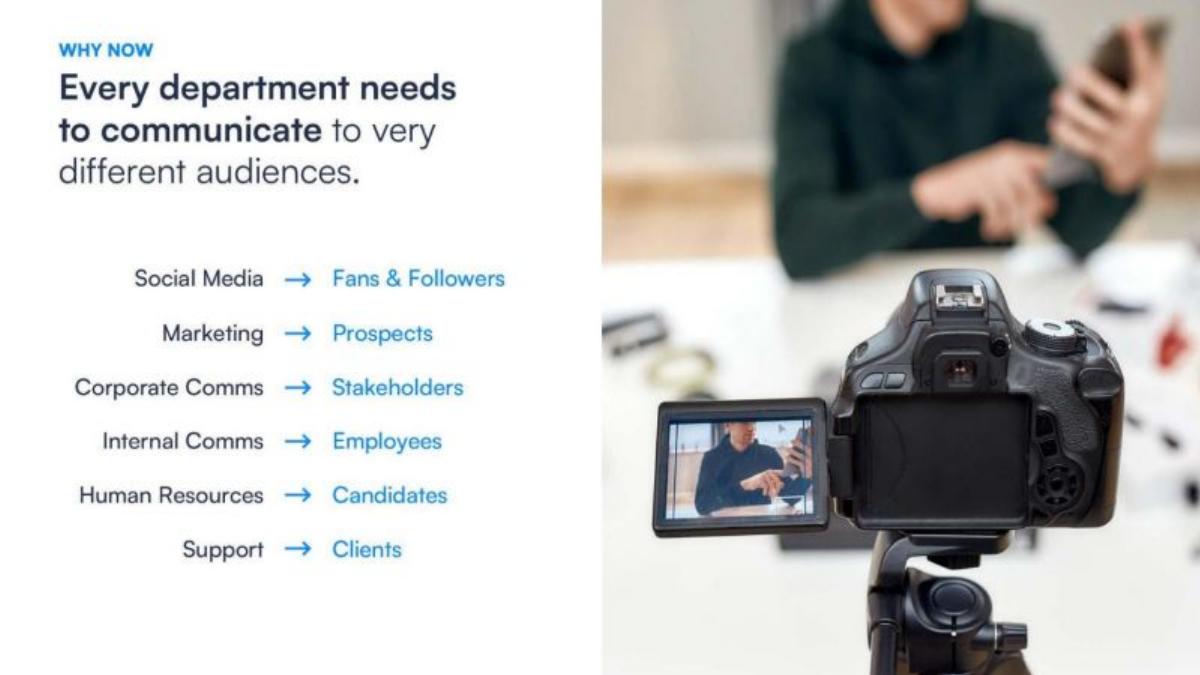
- The deck identifies six specific internal departments that require video communication, ranging from HR to Support (Slide 3).
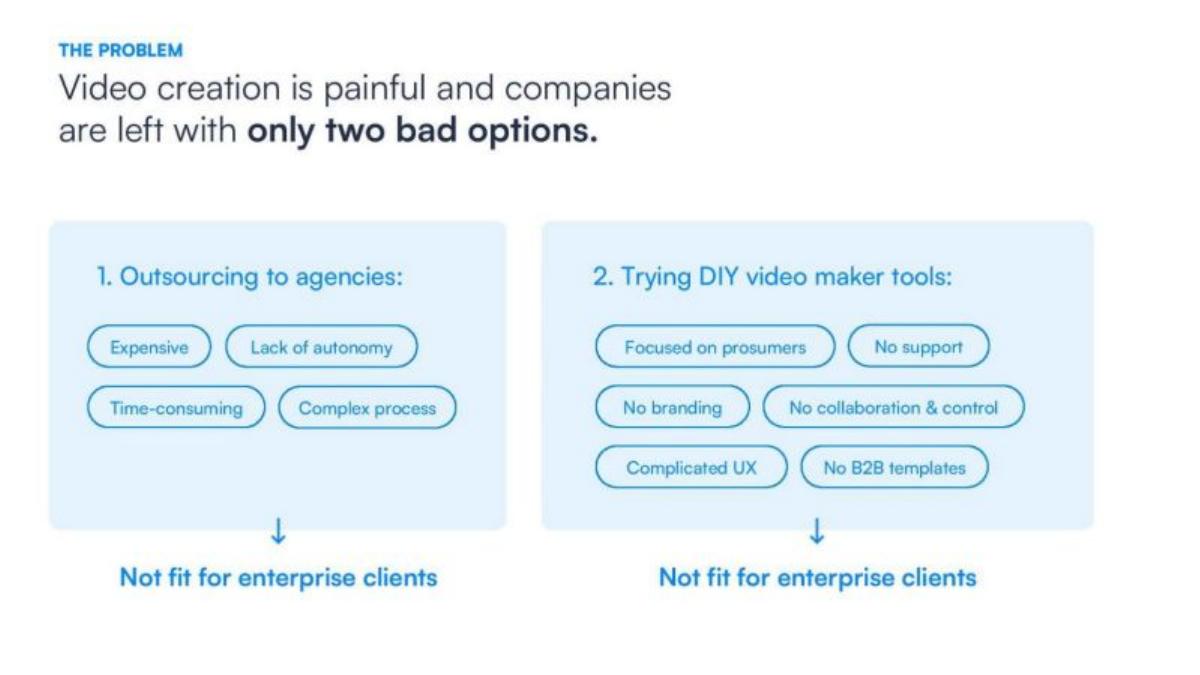
- PlayPlay positions the market as a binary of 'bad options': expensive agencies or prosumer DIY tools (Slide 4).
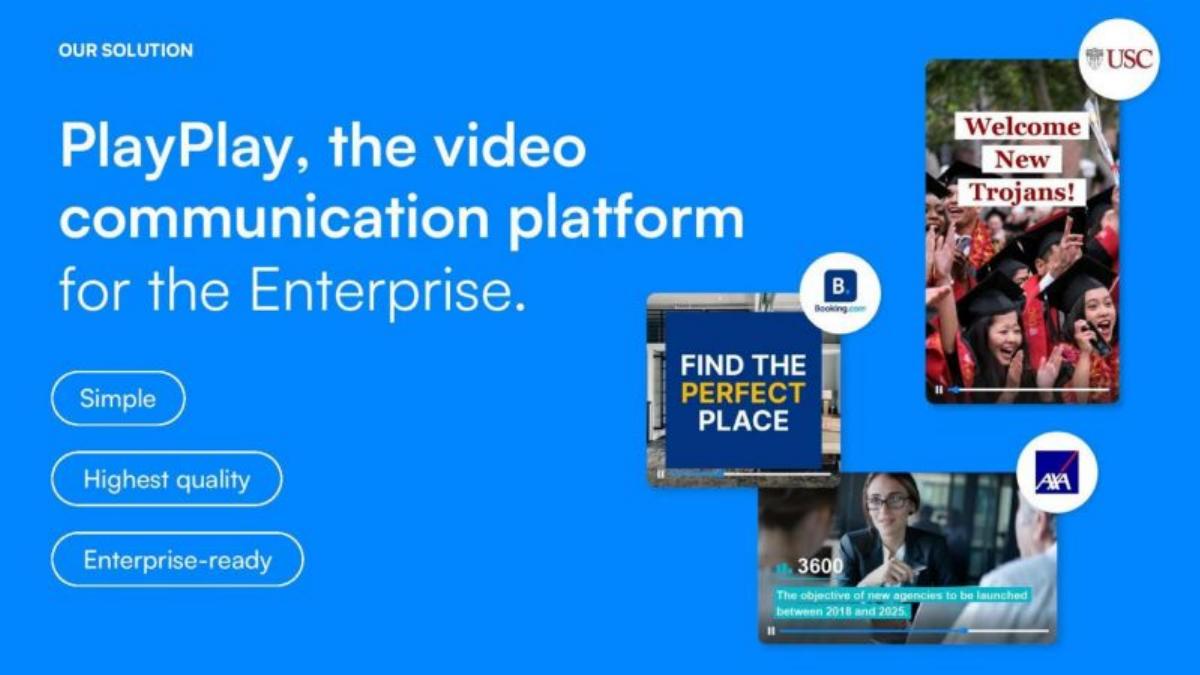
- The solution is defined by three pillars: Simple, Highest quality, and Enterprise-ready (Slide 5).
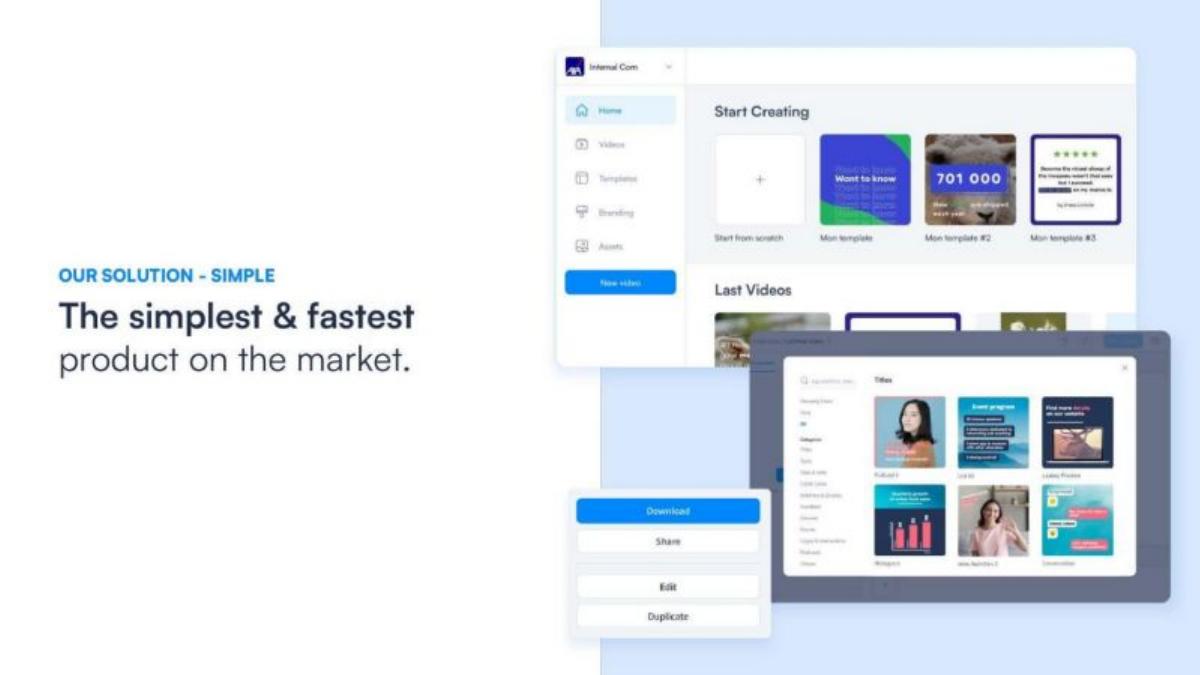
- The product interface is highlighted to emphasize speed and ease of use for non-experts (Slide 6).
- The deck showcases nine distinct use cases for video, including tutorials, case studies, and reporting (Slide 7).
- Collaboration features, such as folder structures and permission levels (Owner, Admin, Member), are explicitly shown (Slide 8).
- A user testimonial from a VP of Marketing claims the tool replaces a 3-day, $10K studio process with a 2-hour internal task (Slide 9).
- The deck omits all financial data, including ARR, churn, and customer acquisition costs, despite being a Series B round.
The Narrative-First Series B Deck
PlayPlay’s Series B deck is a study in narrative efficiency. In just 10 slides, the company establishes a massive market shift, identifies a specific enterprise pain point, and presents a solution that balances quality with ease of use. While most Series B decks are heavy on spreadsheets and cohort analysis, PlayPlay relies on the strength of its positioning. The catalogue facts state that this round raised $55M in 2022, a testament to the power of a clear 'Problem/Solution' fit in the enterprise software space.
Slide 1: Title Slide
The deck opens with a minimalist title slide. It features the PlayPlay logo—a play button integrated into the letter 'A'—against a vibrant blue and purple gradient background. There is no tagline or mission statement here, relying entirely on brand recognition or the preceding introduction by the founder.
Slide 2: Why Now - Video is Everywhere
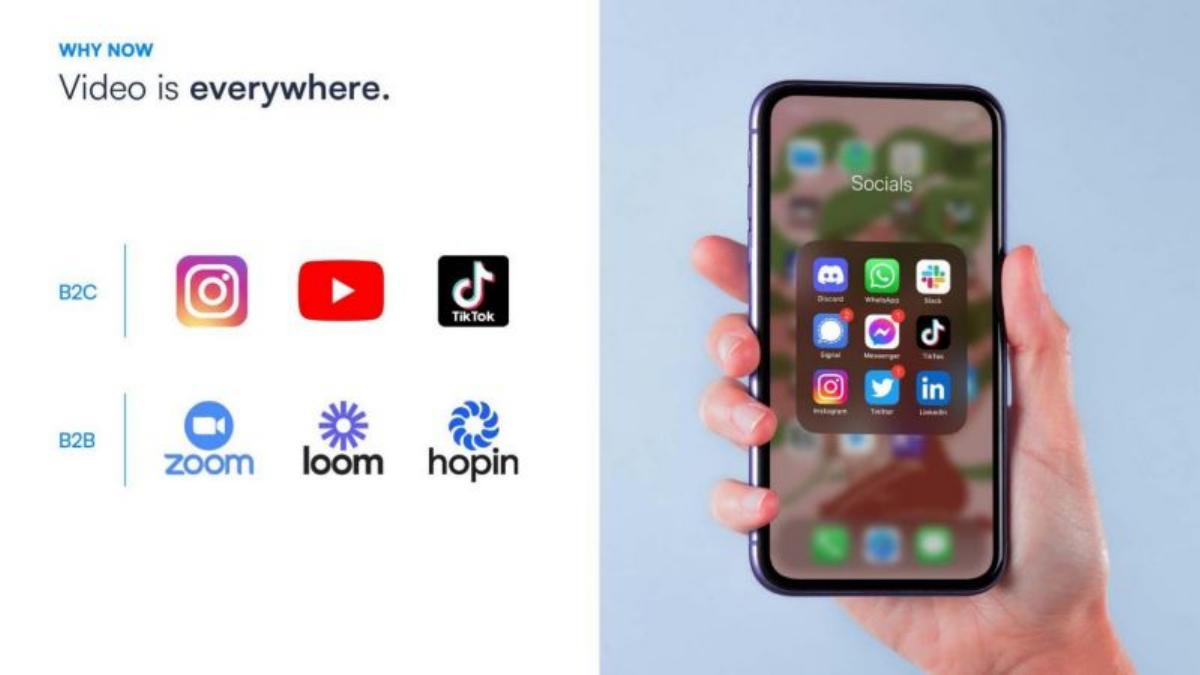
Slide 2 establishes the macro trend. It divides the video landscape into B2C (Instagram, YouTube, TikTok) and B2B (Zoom, Loom, Hopin). The visual of a hand holding a smartphone with a 'Socials' folder emphasizes that video is no longer a niche medium but a primary mode of communication across all aspects of life. This slide sets the stage for the 'inevitability' of PlayPlay’s solution.
Slide 3: Why Now - Departmental Needs
This slide narrows the focus from the general public to the enterprise. It lists six specific departmental workflows: Social Media to Fans, Marketing to Prospects, Corporate Comms to Stakeholders, Internal Comms to Employees, Human Resources to Candidates, and Support to Clients. By doing this, PlayPlay expands its Total Addressable Market (TAM) within a single organization, suggesting that their tool isn't just for the social media manager, but for the entire C-suite and support staff.
Slide 4: The Problem - Two Bad Options
Slide 4 is the most critical strategic slide in the deck. It frames the current market as a failure of two extremes. Option 1: Outsourcing to agencies is labeled as expensive, time-consuming, and lacking autonomy. Option 2: DIY video maker tools are criticized for being prosumer-focused, lacking branding, and having no collaboration features. Both are explicitly stamped with 'Not fit for enterprise clients.' This creates a 'Goldilocks' zone for PlayPlay to occupy.
Slide 5: Our Solution - The Enterprise Platform
The solution slide introduces PlayPlay as 'the video communication platform for the Enterprise.' It highlights three value propositions: Simple , Highest quality , and Enterprise-ready . The slide features logos from USC, Booking.com, and AXA, providing immediate social proof that large, reputable organizations are already using the platform to create high-quality vertical and horizontal video content.
Slide 6: Simple - The Product Interface
PlayPlay addresses the 'Simple' value prop by showing the product UI. The slide claims it is 'The simplest & fastest product on the market.' The screenshots show a template-driven workflow ('Start from scratch,' 'Mon template #1') and a clean asset management system. The inclusion of a 'Download/Share/Edit/Duplicate' menu suggests a streamlined post-production process that requires no specialized training.
Slide 7: Highest Quality - Storytelling Needs
To counter the 'DIY tools look cheap' argument, Slide 7 showcases nine examples of output. These include News , Tutorials , Case Studies , Events , Interviews , Ads , Social Clips , Podcasts , and Reporting . The visual quality of these thumbnails is high, featuring professional typography and clean layouts, supporting the claim that the tool provides the 'visual quality of an agency.'
Slide 8: Enterprise-Ready - Collaboration
This slide focuses on the 'Enterprise-ready' pillar. It shows a folder structure organized by department (Social Media, Marketing, Internal Comms) and a permission management interface. The roles listed— Owner , Admin , and Member —along with a comment thread between team members ('The interview is a bit long, can you manage to get under 1:30?'), demonstrate that the tool is built for team workflows, not just solo creators.
Slide 9: Testimonials - The Value Realization
The final content slide provides four user testimonials. The most impactful quote comes from Michelle M., a VP of Marketing, who states: 'If I ask our studio to do a video, I would wait for 3 days and pay 10K!' Another user, Edward R., claims a task that used to take a week now takes 'an hour or two.' These quotes quantify the ROI of the platform in terms of both time and capital, which is essential for a Series B pitch.
Slide 10: Closing Slide
The deck concludes with a promotional slide for bestpitchdeck.com. It does not contain contact information for the PlayPlay team or a final call to action, which is common in decks shared publicly after a round has closed.
What Works in the PlayPlay Deck
The primary strength of this deck is its segmentation . By listing specific departments (Slide 3) and specific use cases (Slide 7), PlayPlay makes it very easy for an investor to visualize the 'land and expand' strategy within a large corporation. If HR uses it for recruiting and Marketing uses it for ads, the seat count grows naturally.
Furthermore, the competitive positioning on Slide 4 is masterful. It doesn't just say 'we are better than Canva' or 'we are cheaper than an agency.' It identifies the structural weaknesses of those two categories—lack of support and lack of autonomy—and positions PlayPlay as the only logical choice for a serious business.
What is Missing from the PlayPlay Deck
As a Series B deck, the omissions are significant. There is no financial data . Investors at this stage typically expect to see ARR growth, Net Revenue Retention (NRR), and Gross Margins. There is also no team slide . While the founders may be well-known in the French tech ecosystem, a standard pitch deck usually highlights the leadership's ability to scale a company to a $55M+ valuation.
Additionally, there is no market sizing (TAM/SAM/SOM) . While Slide 2 and 3 hint at a large market, there are no dollar figures attached to the opportunity. Finally, there is no competition slide beyond the generic categories mentioned on Slide 4. Direct competitors in the enterprise video space are not addressed, which is a common requirement for late-stage due diligence.
What Founders Should Copy
Founders should emulate PlayPlay’s visual clarity . Each slide has one clear headline and a supporting visual that isn't cluttered with text. The use of 'Why Now' to frame the problem as an inevitable shift in communication is a highly effective way to create urgency.
The use of testimonials to prove ROI (Slide 9) is another takeaway. Instead of just saying 'we save you money,' they used a customer quote to put a specific dollar amount ($10K) and time frame (3 days vs 2 hours) on the savings. This is much more persuasive than a generic marketing claim. Finally, the departmental breakdown on Slide 3 is a great way for B2B SaaS founders to show how their product can permeate an entire organization rather than staying siloed in one team.
Note: This teardown is based on the 10-slide version of the deck provided. It is highly likely that a supplemental data room containing the missing financial and team information was provided to investors during the actual $55M fundraise.
Frequently asked questions
- How much did PlayPlay raise with this deck?
- According to the catalogue listing, PlayPlay raised $55M in a Series B round in 2022. This is a significant sum for a deck that contains only 10 slides and no financial data, indicating that the company's traction was likely already well-known to the participating investors or detailed in a separate data room.
- Who is the target customer for PlayPlay according to the deck?
- The deck explicitly targets 'the Enterprise.' Slide 3 lists specific internal departments: Social Media, Marketing, Corporate Comms, Internal Comms, Human Resources, and Support. This distinguishes them from prosumer tools like TikTok or Instagram, which are mentioned on Slide 2 as part of the broader 'video is everywhere' trend.
- What are the 'two bad options' PlayPlay claims to solve?
- On Slide 4, PlayPlay argues that companies currently face two poor choices: outsourcing to agencies (which is expensive, time-consuming, and lacks autonomy) or using DIY video tools (which are focused on prosumers, lack branding/collaboration, and have no B2B support). PlayPlay positions itself as the bridge between these two extremes.
- What product features are emphasized in the presentation?
- The deck focuses on three areas: simplicity (Slide 6 shows a template-based UI), quality (Slide 7 shows professional-looking outputs like ads and podcasts), and enterprise readiness (Slide 8 shows collaboration tools, brand asset folders, and user permission settings).
- Is there a roadmap or 'Ask' slide in this deck?
- No. The 10-slide deck ends with testimonials and a promotional slide for the hosting platform. It does not include a future roadmap, a breakdown of how the $55M will be spent, or a specific 'Ask' regarding valuation or terms.