Platform.sh, a Paris-based automated cloud hosting solution, raised $187,300,000 following this 2015 later-stage deck. The presentation is notable for its heavy emphasis on developer culture and the 'Manifesto' approach, rather than leading with raw financial metrics. By framing the problem as a conflict between 'shipping great code' and 'the other stuff' (DevOps, compliance, database management), Platform.sh positioned itself as an essential utility for agile teams. The deck effectively uses social proof through developer testimonials and a massive logo wall of over 5,000 customers. While it…
Key takeaways
- The deck leads with a 'Manifesto' on slide 2, establishing a philosophical alignment with developers before discussing the product.
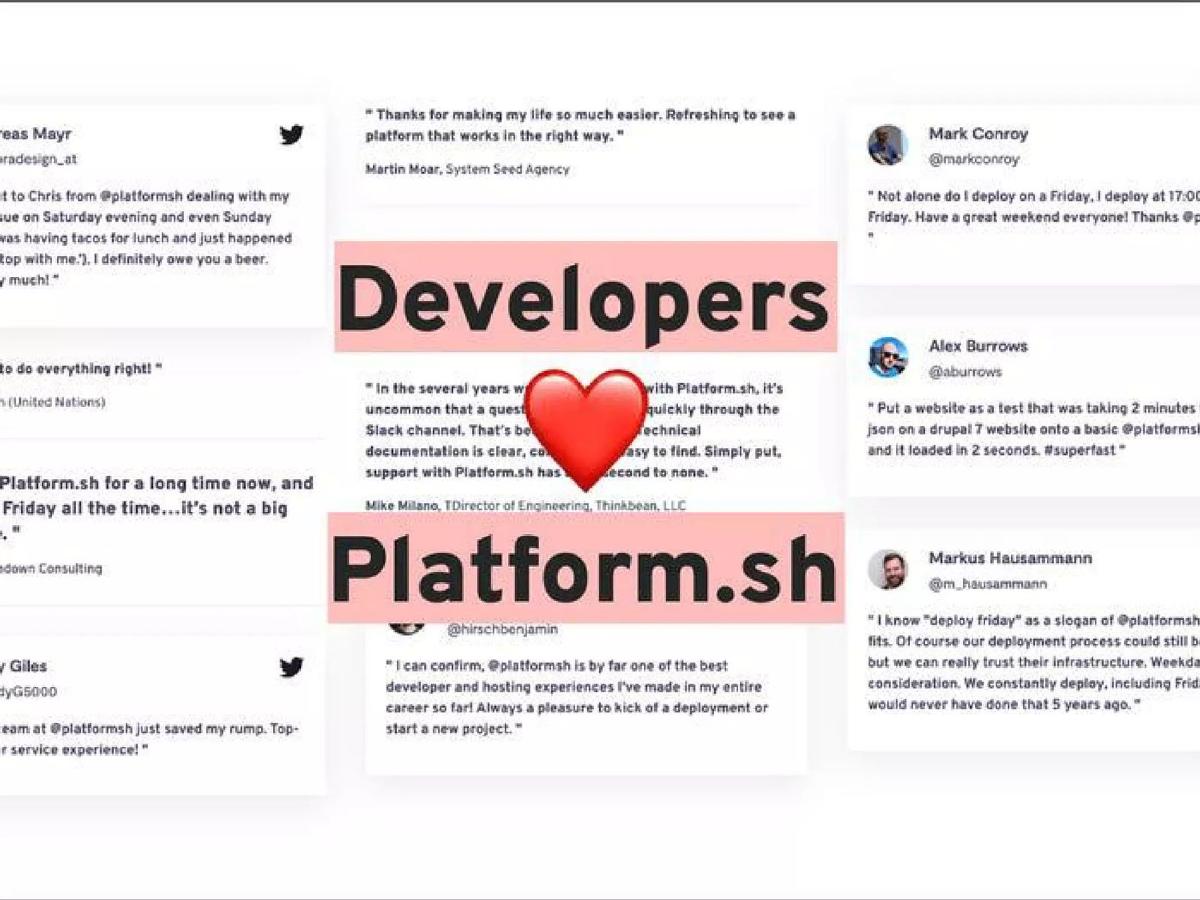
- Social proof is prioritized early, with slide 3 dedicated entirely to developer testimonials from Twitter and Slack.
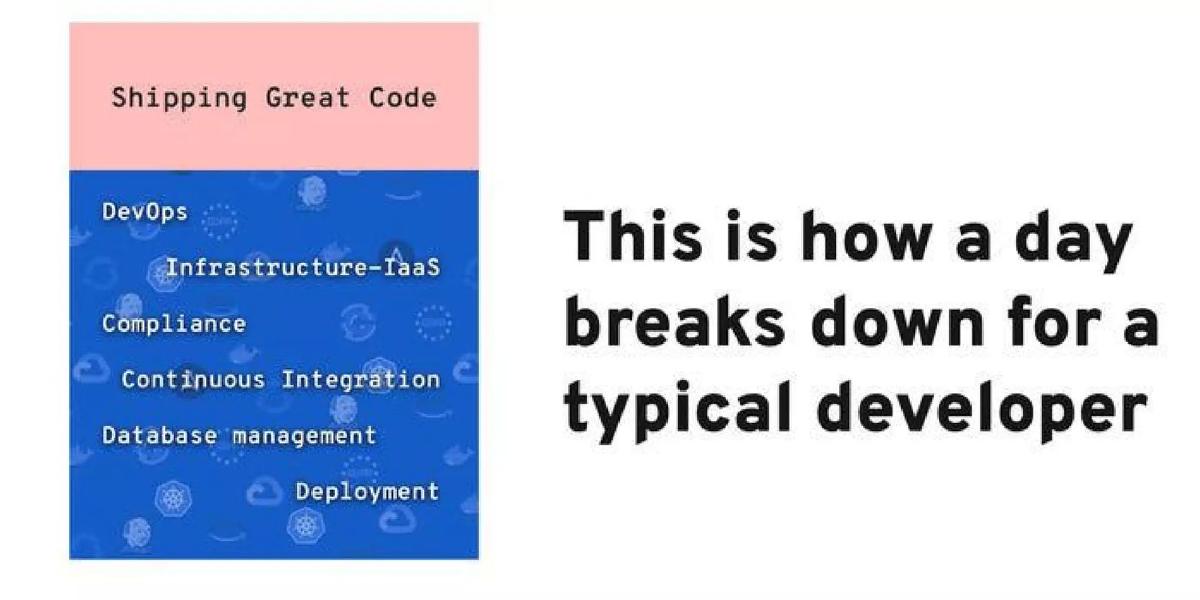
- The problem is visualized on slide 4 as a burden of 'all the other stuff' like compliance and database management that distracts from shipping code.
- Platform.sh uses market comparables on slide 6, citing GitLab's $2.7BN valuation and GitHub's $7.5BN acquisition to validate the Git-based workflow market.
- The product's core value proposition is defined on slide 10 as the ability to 'patch all their sites centrally' and provide 99.99% SLAs.
- Slide 21 uses a plane crash analogy to describe the instability of software deployments before Platform.sh.
- The deck claims a massive user base on slide 28, stating more than 5,000 customers and 65,000 developers rely on the platform.
- The presentation omits a traditional team slide, financial projections, and a specific funding 'ask' in the 14 slides provided.
The Philosophy of Infrastructure: A Manifesto-First Approach
Platform.sh does not begin its deck with a graph of up-and-to-the-right revenue. Instead, it begins with a philosophy. This is a common tactic for companies selling to developers, where cultural alignment is often as important as technical specifications. By starting with a 'Manifesto,' the company establishes a shared set of values with its audience before ever asking for a check.
Slides 1-3: The Emotional Hook
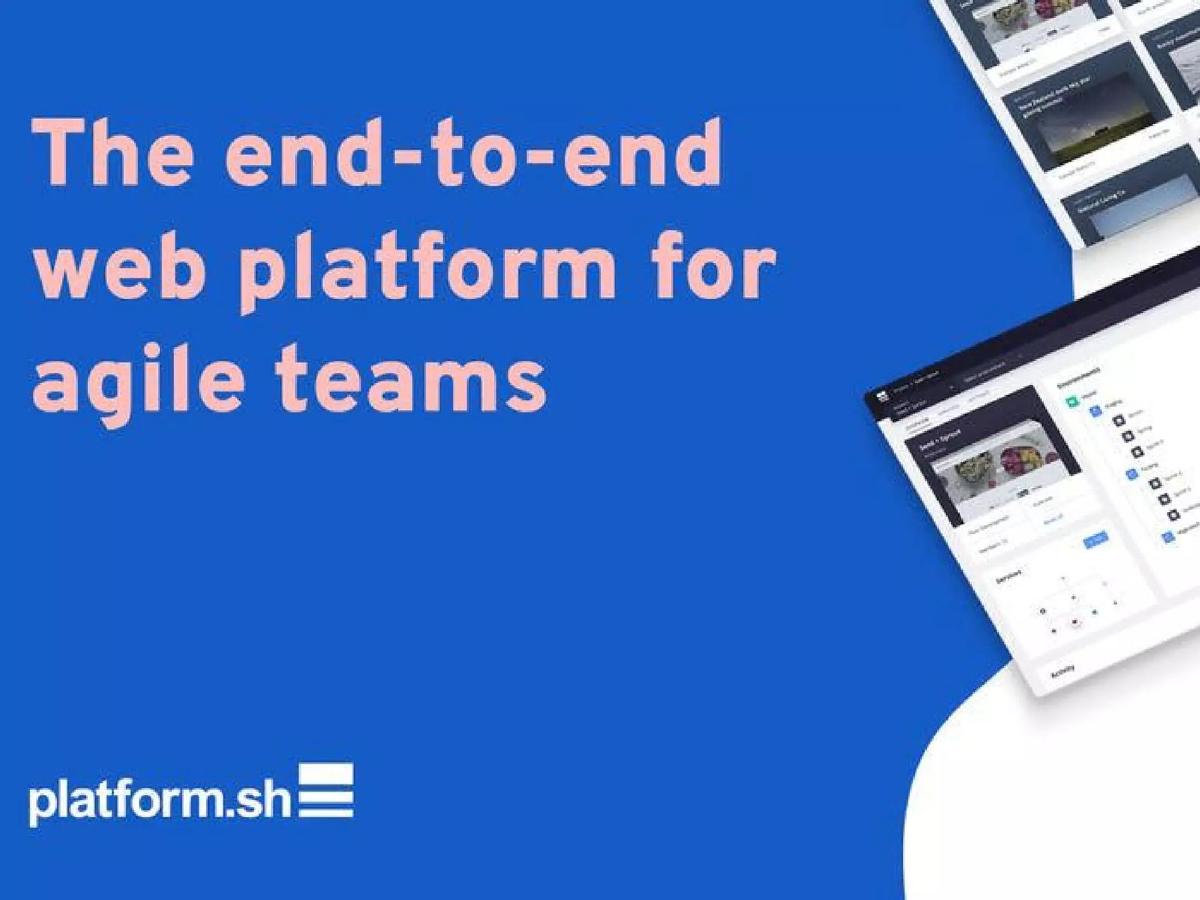
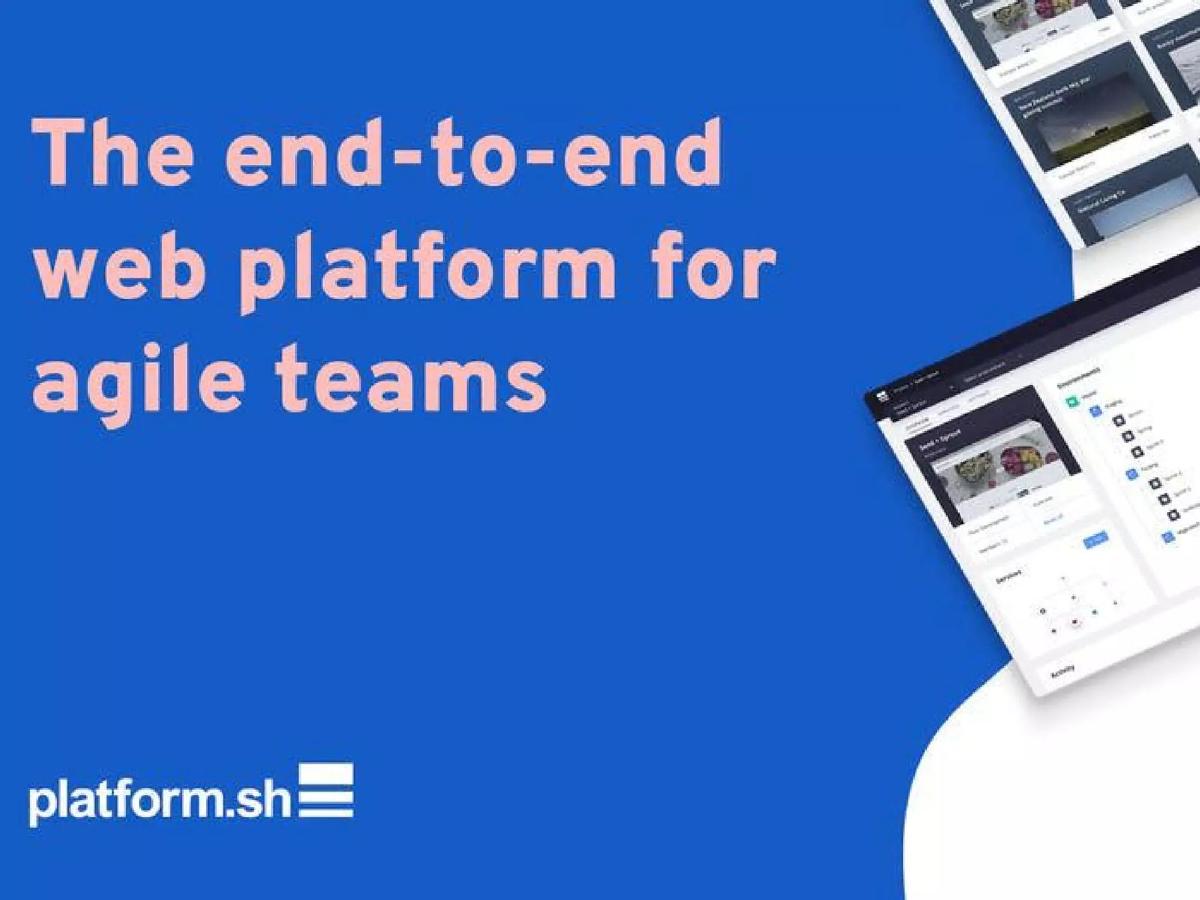
Slide 1 is a standard title slide, but the subtitle is telling: "The end-to-end web platform for agile teams." It positions the product not as a hosting provider, but as a holistic solution for a specific type of worker—the 'agile' developer. The imagery shows a clean dashboard, suggesting that the complexity of the backend is hidden behind a user-friendly interface.
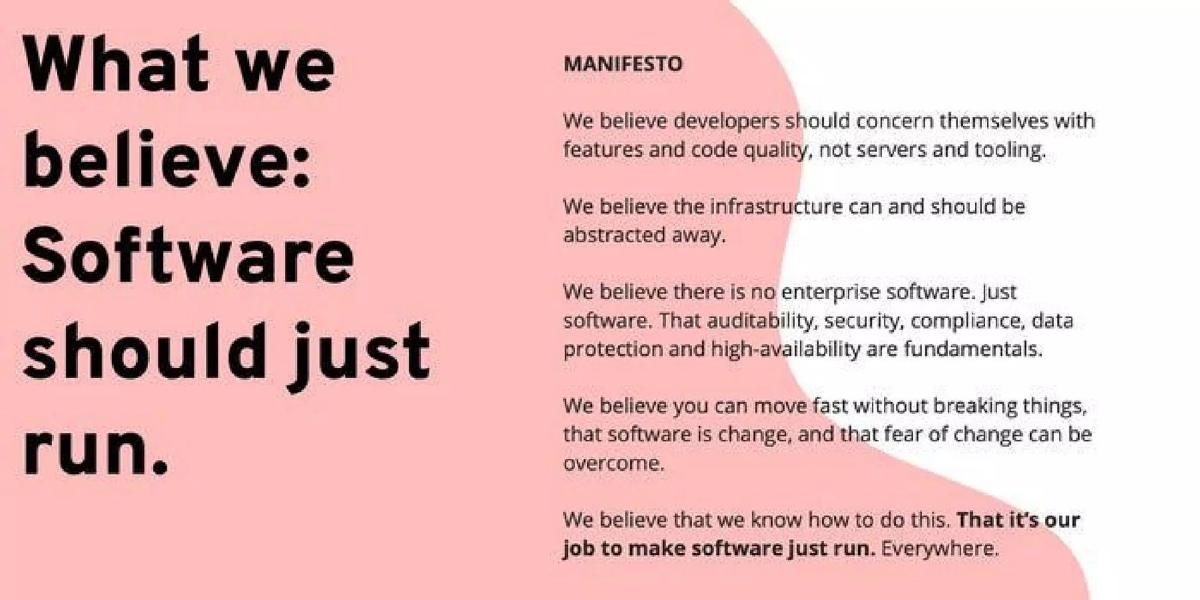
Slide 2 , titled "Manifesto," is the heart of the company's brand identity. It lists five core beliefs, most notably: "We believe developers should concern themselves with features and code quality, not servers and tooling." This is a direct appeal to the pain points of the target user. It also makes a bold claim: "We believe there is no enterprise software. Just software." This challenges the traditional notion that 'enterprise' tools must be clunky or difficult to use, asserting that security and compliance are fundamentals, not add-ons.
Slide 3 reinforces this emotional connection with a collage of developer testimonials. The slide is titled "Developers [Heart] Platform.sh." It includes quotes from Twitter and Slack, such as "Thanks for making my life so much easier" and "I definitely owe you a beer." This grassroots validation is crucial for a bottom-up adoption strategy, proving that the product isn't just purchased by CTOs, but loved by the people actually using it.
Slides 4-6: Defining the Burden and the Market
Slide 4 visualizes the problem. It splits the developer's world into two categories: "What they love [and are paid to do]" (Shipping Great Code) and "All the other stuff they have to do." The 'other stuff' is a long list including DevOps, IaaS, compliance, and database management. By framing these as chores, Platform.sh positions itself as the liberator of the developer's time.
Slide 5 acts as a transition, asking "How does Platform.sh drive the shift to shipping code and creating value?" It promises background information, which leads directly into market validation.
Slide 6 is a classic 'Market Size' or 'Comps' slide. Titled "Git is kind of a big deal," it features the logos of GitLab and GitHub. It cites GitLab's $2.7BN valuation (2019) and GitHub's $7.5BN acquisition by Microsoft (2018). This is a strategic move to anchor Platform.sh's value in the minds of investors. If the tools used to store code are worth billions, then the platform that runs that code must be equally valuable.
Slides 7-10: The Workflow and Enterprise Scaling
Slides 7 and 8 focus on the Git-based workflow. Slide 7 states "Complete websites are managed in Git," showing a branching diagram that includes databases and languages like Python and MongoDB. Slide 8 emphasizes speed and collaboration, noting that "Teams accomplish more, faster... working together." These slides are designed to show that Platform.sh isn't just a destination for code, but a part of the development process itself.
Slide 9 introduces the concept of "fleets of websites." This is where the deck pivots from individual developer productivity to enterprise management. The "real magic" is described as multiplying workflow power across hundreds or thousands of sites simultaneously.
Slide 10 lists the specific enterprise outcomes. It promises that technology organizations can "Patch all their sites centrally," "Secure their data," and "Ensure governance." Crucially, it mentions a "high-availability SLA (up to 99.99%)" and "24x7 global support." The inclusion of logos for Drupal, WordPress, Node.js, and Magento at the bottom shows the platform's versatility across different tech stacks.
Slides 21-28: Stability and Massive Traction
Slide 21 uses a high-stakes analogy to explain the risks of deployment. It compares software deployment to airplane takeoffs and landings, stating "Planes crash at takeoff and landing." It notes that before Platform.sh, "change and stability were contradictory." The solution offered is "Automated high-availability, parallel QA and fail-proof deployments." This slide addresses the fear that keeps CTOs awake at night: the site going down during a major update.
Slide 22 provides a concrete performance metric: "Deploying 20 times a day, while being hit with peak traffic, on a Friday, becomes something normal to do." This is a powerful statement for e-commerce companies that typically freeze code deployments during high-traffic periods like Black Friday.
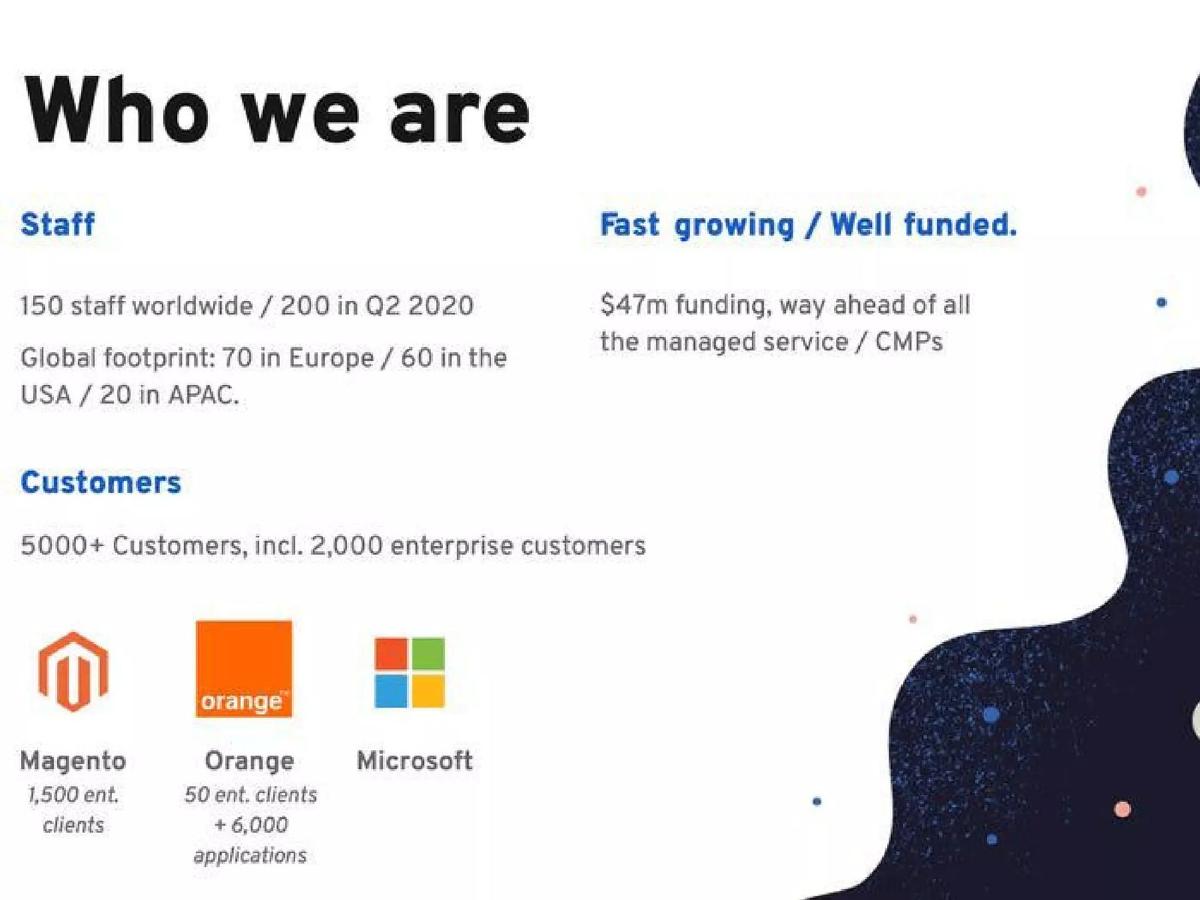
Slide 28 is the final proof of scale. It claims "More than 5,000 customers and 65,000 developers rely on Platform.sh." The logo wall is impressive, featuring a mix of media (The Economist, Slate), non-profits (Comic Relief, British Council), and tech companies (Magento). This variety proves that the problem of 'server management' is universal across industries.
What Works in This Deck
The narrative arc is the strongest element. It moves from a high-level philosophy (Manifesto) to individual user pain (The Burden) to market validation (Git Comps) and finally to enterprise-scale proof (5,000 customers). The deck successfully balances the 'cool' factor of a developer tool with the 'boring' reliability required by enterprise buyers. The use of social proof—both through individual tweets and large corporate logos—creates a sense of inevitability.
What Is Missing
As a later-stage deck, the omissions are notable. There is no mention of the company's revenue growth, churn rates, or customer acquisition costs. While the catalogue mentions a raise of $187.3M, the slides do not specify how much they are looking for in this specific round or what the milestones for the next 18-24 months are. Furthermore, there is no team slide in the provided 14 pages. For an infrastructure company, the technical pedigree of the engineering leadership is usually a key selling point that is absent here.
What a Founder Should Copy
Founders building technical products should copy the 'Manifesto' approach. Instead of explaining what you do, explain what you believe about the future of your industry. This builds an immediate bond with the user. Additionally, the use of market comparables (Slide 6) is a highly effective way to explain a new category. By pointing to GitLab and GitHub, Platform.sh didn't have to explain why Git was important; they just had to explain why they were the logical next step in that evolution. Finally, the 'Plane Crash' analogy on Slide 21 is a masterclass in using a simple, visceral image to explain a complex technical risk.
Frequently asked questions
- What is the primary problem Platform.sh aims to solve?
- According to slide 4, the primary problem is the 'other stuff' that developers are forced to do instead of shipping code. This includes DevOps, infrastructure-IaaS, compliance, continuous integration, database management, and deployment. The deck frames these tasks as distractions that prevent teams from creating value and moving fast.
- How does the company validate its market size?
- Platform.sh validates its market on slide 6 by pointing to the success of Git-based platforms. It specifically cites GitLab's $2.7BN valuation in 2019 and Microsoft's $7.5BN acquisition of GitHub in 2018. By positioning itself as the 'end-to-end web platform' for these workflows, it hitches its potential to the proven multi-billion dollar Git ecosystem.
- What are the key technical benefits highlighted for enterprise clients?
- On slide 10, the deck highlights five key enterprise benefits: central patching of all sites, fully managed database services, governance over technology and processes, high-availability SLAs of up to 99.99%, and 24x7 global support. This shifts the narrative from a developer tool to a mission-critical enterprise security and scaling solution.
- How does the deck handle social proof?
- The deck uses a two-pronged approach to social proof. Slide 3 focuses on the 'love' from individual developers, using informal testimonials to show grassroots adoption. Slide 28 provides the 'enterprise' proof, listing over 5,000 customers and 65,000 developers, accompanied by a logo wall including The Economist, Magento, and the British Council.
- What is missing from this pitch deck?
- The provided 14 slides omit several standard venture components: there is no team slide detailing founder expertise, no financial slide showing MRR or ARR growth, no unit economics (CAC/LTV), and no slide detailing the specific amount of capital being raised or the intended use of funds.