Playhouse successfully raised $2.8M in a 2022 Seed round by positioning itself as the 'TikTok for Real Estate.' The deck identifies a specific vulnerability in legacy portals: they are built for transactions, not entertainment. With Zillow, Realtor.com, and Redfin collectively reaching over 200 million monthly active users despite flat actual home sales, Playhouse argues that consumers are hungry for video-first, creator-driven content. The founders, Alex Perelman and Nathan Shinder, utilized their background at PeerStreet to build a compelling case for a referral-based business model. The de…
Key takeaways
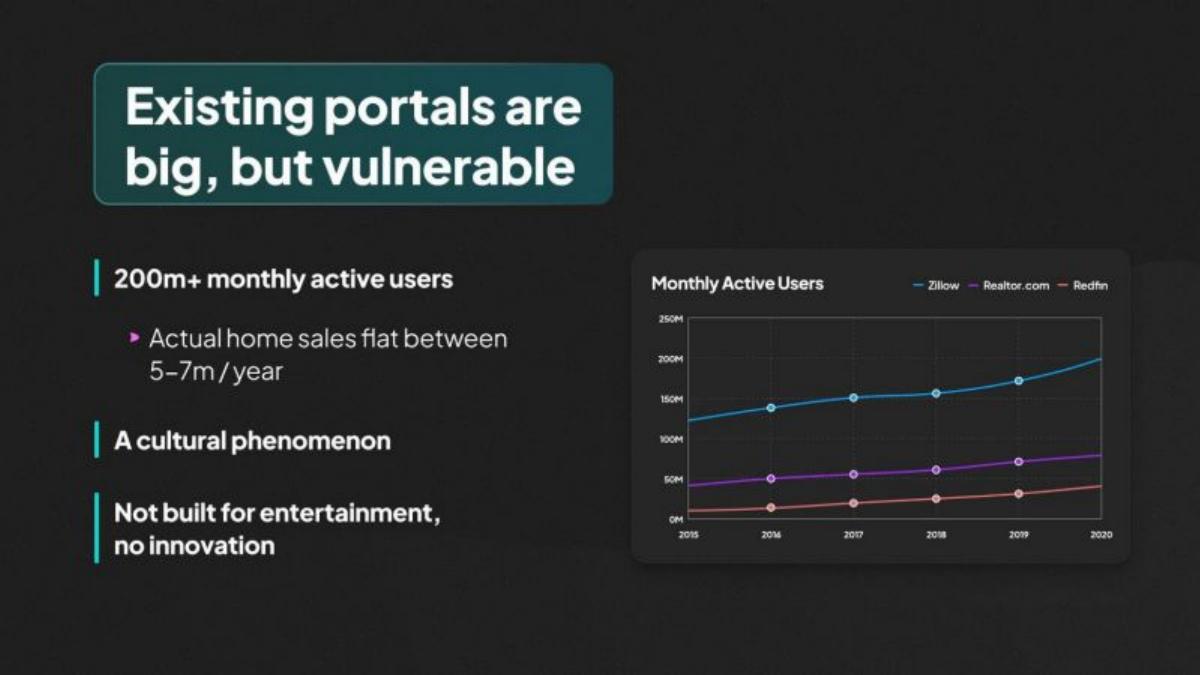
- Legacy real estate portals have over 200 million monthly active users, yet annual home sales remain flat at 5-7 million, indicating a massive audience using these tools for entertainment rather than immediate purchase (Slide 2).
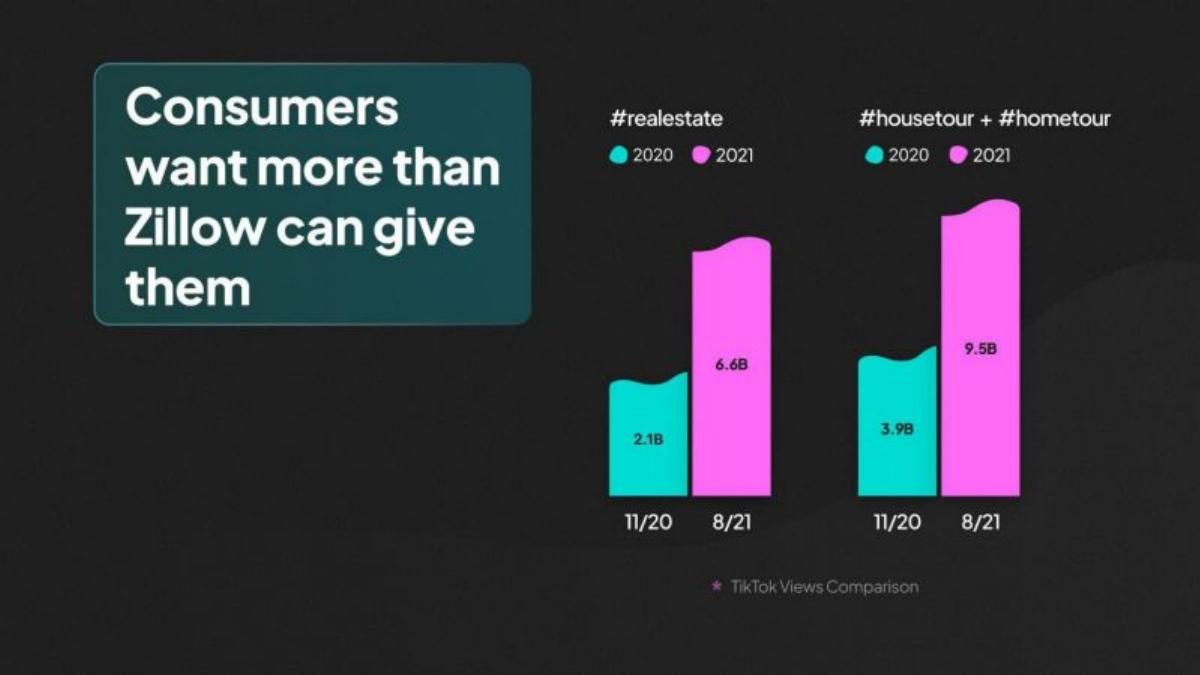
- Consumer behavior is shifting toward short-form video, with #housetour and #hometour views on TikTok growing from 3.9B in November 2020 to 9.5B by August 2021 (Slide 3).
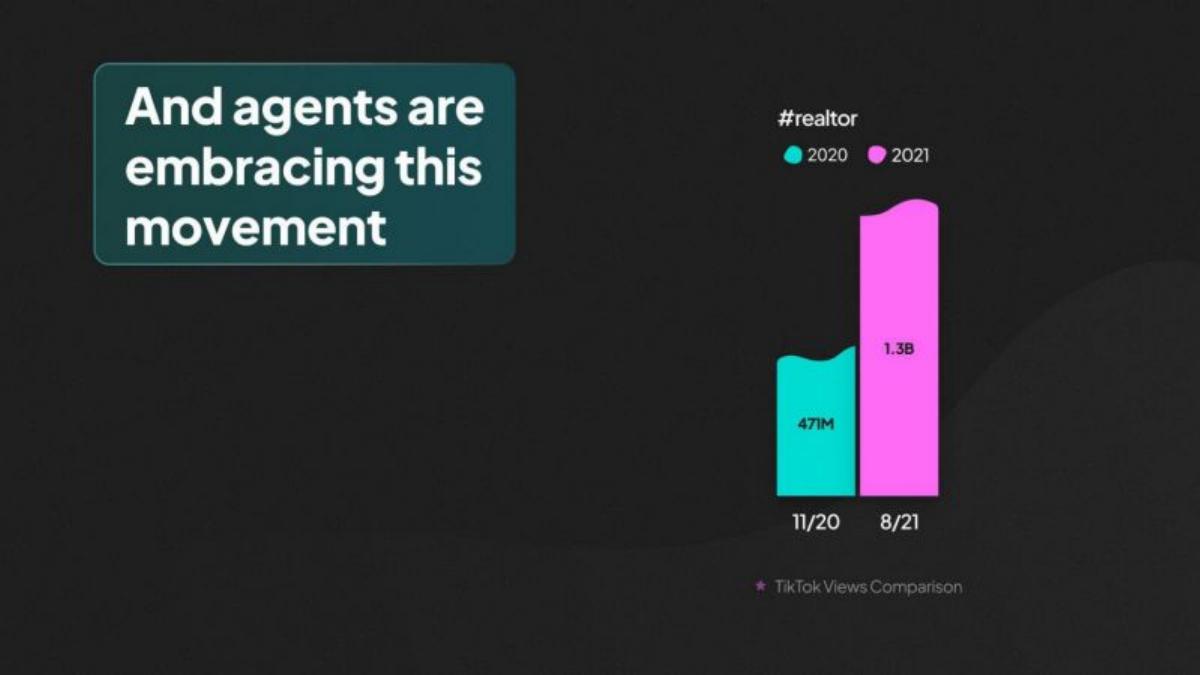
- Real estate agents are actively participating in this trend, with #realtor views on TikTok jumping from 471M to 1.3B in less than a year (Slide 4).
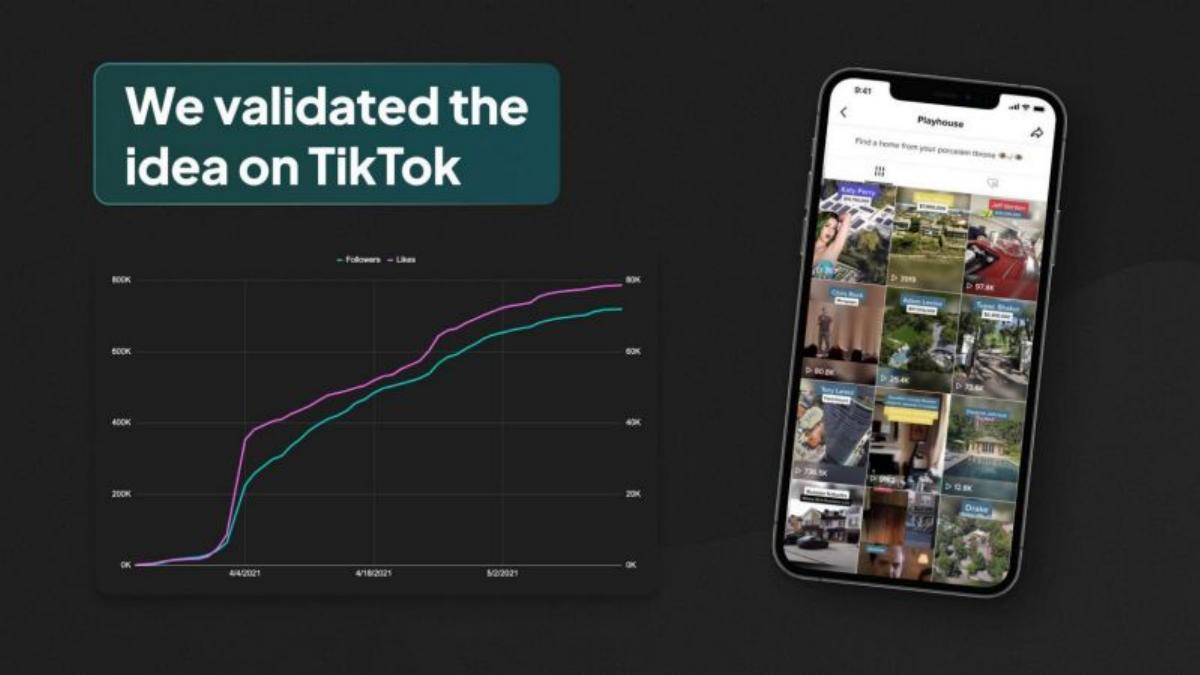
- The startup validated its concept through a TikTok account that gained approximately 80,000 followers and significant likes in just one month (Slide 5).
- Playhouse identifies a $17B market opportunity based on the 15-35% referral fees agents pay on their share of the $98B in annual US commissions (Slide 9).
- The founding team has deep domain expertise, with Alex Perelman being the former CTO of PeerStreet and Nathan Shinder having grown rental loans from $0 to $40M/mo at the same firm (Slide 10).
- The deck lists an impressive roster of angel investors and founders from companies like YouTube, Twitch, Rotten Tomatoes, and Crunchyroll, signaling strong industry backing (Slide 10).
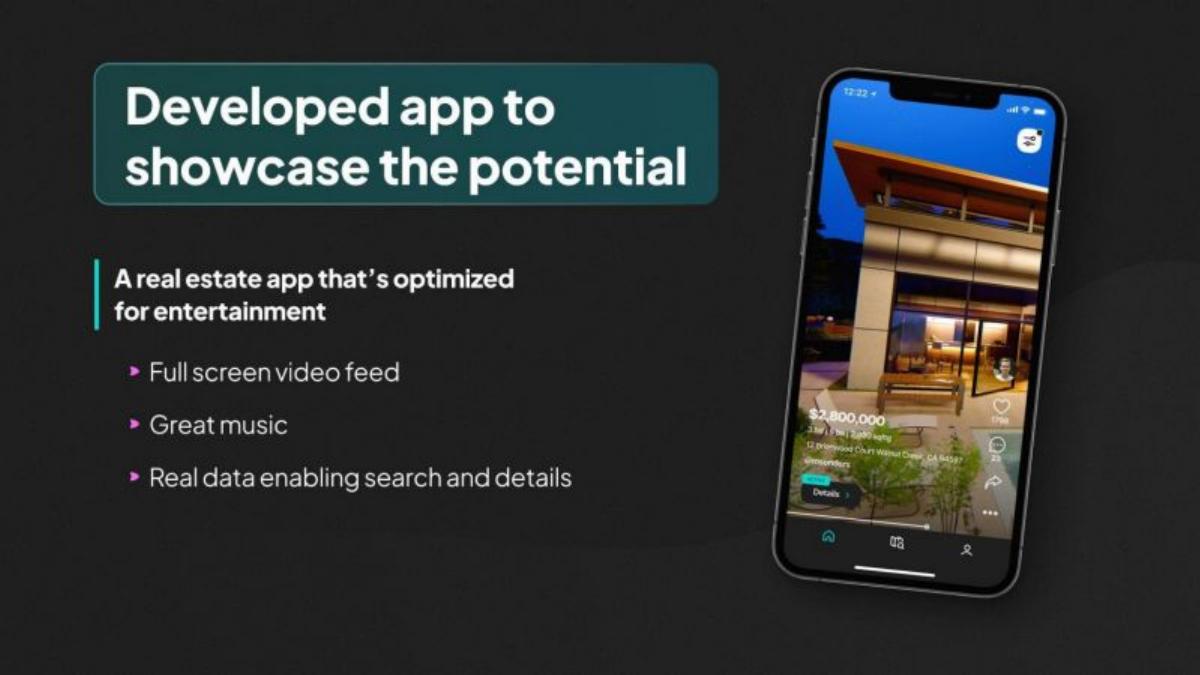
- The product is positioned as 'Zillow meets TikTok,' featuring full-screen video feeds, music, and real-time data for search and details (Slide 6).
Playhouse: The TikTok-ification of Real Estate Search
The Playhouse pitch deck is a masterclass in identifying a 'cultural phenomenon' and building a venture-scale case around it. In 2022, the company raised $2.8M to capitalize on the fact that millions of people browse real estate listings not because they are buying a house today, but because it is a form of digital entertainment. By framing Zillow as a vulnerable legacy incumbent and TikTok as the behavioral blueprint, Playhouse created a compelling narrative for the Seed stage.
Slide 1: Title and Value Proposition
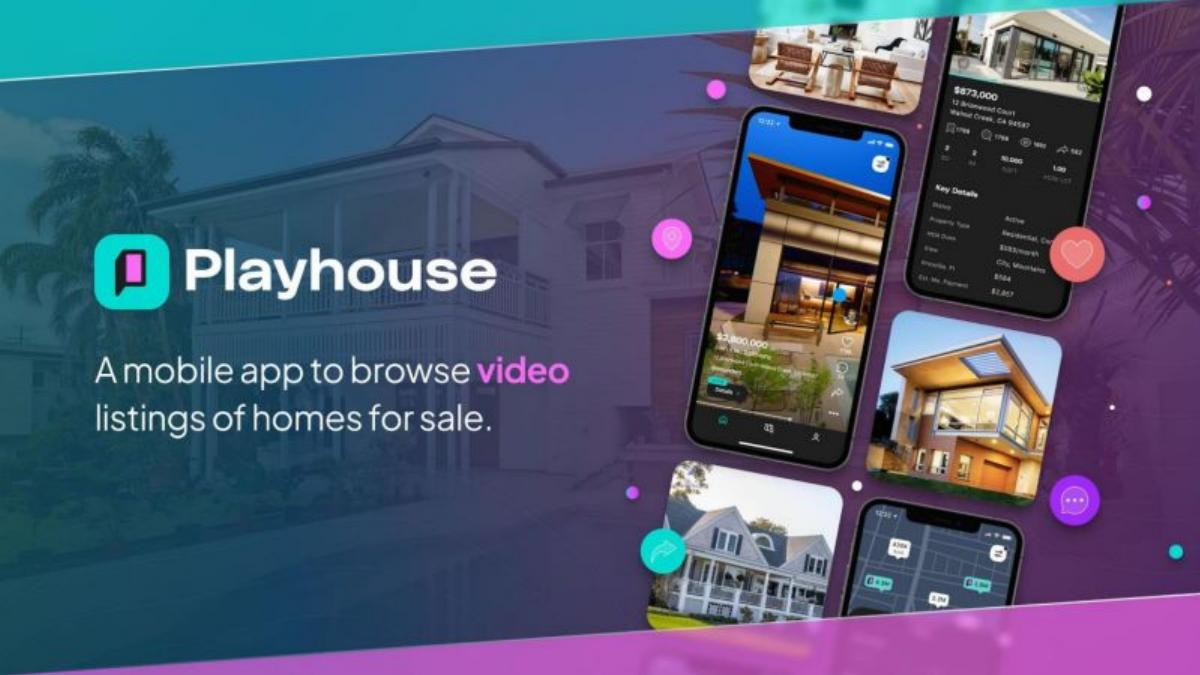
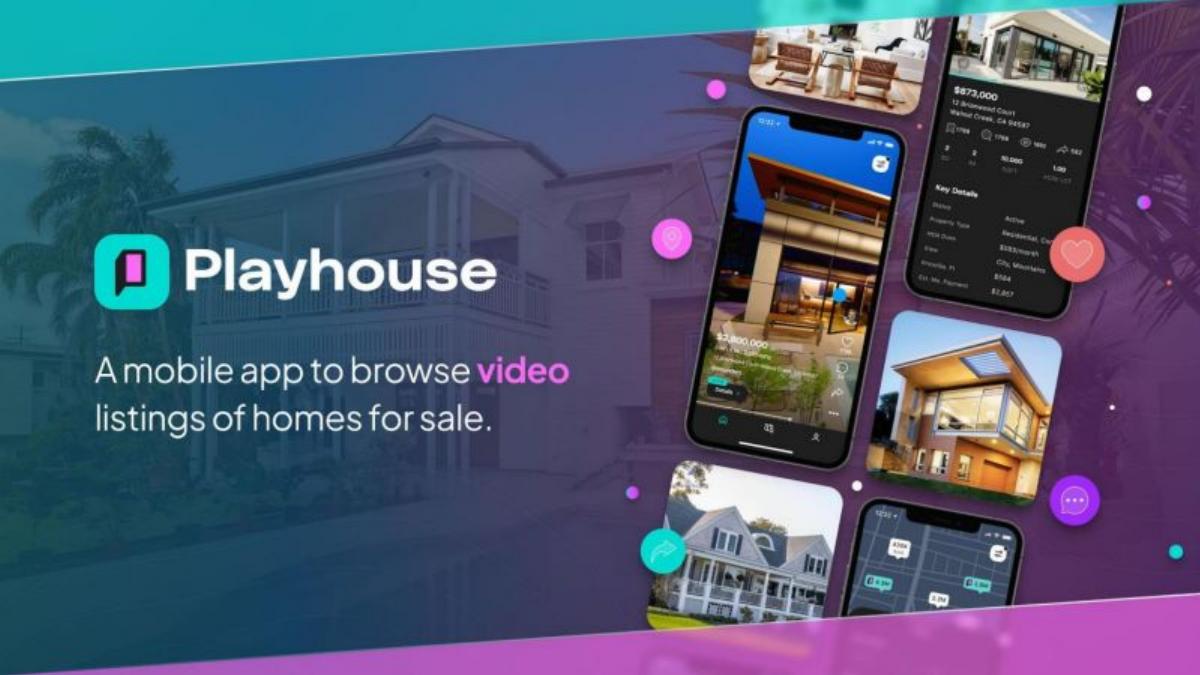
The opening slide introduces Playhouse as 'A mobile app to browse video listings of homes for sale.' The visual design is modern, utilizing a dark mode interface with vibrant neon accents. The imagery shows the app in action: high-quality, full-screen vertical video of luxury homes, immediately signaling that this is a mobile-first, visual experience rather than a data-heavy desktop portal.
Slide 2: The Vulnerability of Legacy Portals
Playhouse begins its argument by highlighting the gap between usage and transactions. Slide 2 notes that existing portals have over 200 million monthly active users, yet actual home sales remain flat between 5-7 million per year. The slide labels Zillow, Realtor.com, and Redfin as 'big, but vulnerable,' specifically because they were 'not built for entertainment.' This sets the stage for Playhouse to capture the 'Zillow surfers' who are currently underserved by utility-focused platforms.
Slide 3 & 4: The Shift to Short-Form Video
These slides use TikTok data to prove that the market has already moved to video. Slide 3 shows that views for #housetour and #hometour grew from 3.9B in November 2020 to 9.5B in August 2021. Slide 4 demonstrates that the supply side is following suit, with #realtor views growing from 471M to 1.3B in the same period. By using third-party platform data, Playhouse validates that the behavior they want to monetize already exists at scale.
Slide 5: Internal Validation via TikTok
To prove they can capture this interest, Playhouse shares their own social traction. Slide 5 displays a growth chart showing their TikTok account reaching approximately 80,000 followers and a similar number of likes within a single month (April to May 2021). This 'idea validation' slide is crucial for a pre-revenue or early-stage startup, as it shows they understand the mechanics of the platform they are trying to build.
Slide 6: Product Showcase
Slide 6 defines the product as 'A real estate app that’s optimized for entertainment.' It lists three core features: full-screen video feed, great music, and real data enabling search and details. The screenshot shows a $2.8M listing in Walnut Creek, CA, demonstrating that the app combines the aesthetic of social media with the functional data (price, beds, baths, sqft) of a traditional real estate listing.
Slide 7 & 8: Engagement and Inbound Demand
Slide 7 highlights a feature in the Product Hunt Weekly Digest from August 15, 2021, titled 'Zillow meets TikTok.' Slide 8 provides qualitative proof of demand, showing screenshots of messages from agents and brokers across the US (New Mexico, Carlsbad, CT, and Puerto Rico) asking how to list their properties. This addresses the 'chicken and egg' problem of marketplaces by showing that the supply side (agents) is desperate for new ways to reach buyers.
Slide 9: The $17B Market Opportunity
The business model is clearly articulated on Slide 9. Playhouse intends to 'sell buyer leads to agents.' They break down the math: 6.5M homes sold in 2020 at a $300k average price equals ~$98B in annual commissions. Since agents typically pay 15-35% for referrals, Playhouse calculates a $17B addressable market. This is a standard but effective way to show how a 'fun' app turns into a high-revenue business.
Slide 10: Founders and Investors
The team slide is exceptionally strong for a Seed round. Alex Perelman (CTO) and Nathan Shinder (Ops) both come from PeerStreet, a successful real estate crowdfunding platform. Perelman is a 4x founder and 2x YC alum. The investor list is equally impressive, featuring the founders of YouTube, Twitch, and Rotten Tomatoes. This suggests that the 'entertainment meets real estate' thesis has been vetted by pioneers of the attention economy.
Slide 11: The Generational Shift
The final content slide summarizes the vision: the future of online real estate is 'Video first, Mobile native, and Creator driven.' It reinforces the idea that Playhouse isn't just a new app, but a participant in a 'generational shift' in how people interact with property listings.
What Works in the Playhouse Deck
Clear Analogies: By positioning themselves as 'Zillow meets TikTok,' the founders avoid having to explain complex mechanics. Investors immediately understand the user experience and the growth strategy.
Social Proof: The deck uses a mix of macro trends (TikTok views) and micro validation (their own follower growth and agent DMs) to create a sense of inevitability.
Domain Expertise: The founders aren't just social media experts; they have deep backgrounds in real estate tech (PeerStreet), which gives them credibility when discussing commission splits and referral models.
What Is Missing from the Playhouse Deck
Unit Economics: While the deck explains the referral model, it does not provide data on the cost to acquire a user (CAC) versus the expected lifetime value (LTV) of a lead. In a social-driven model, these numbers are critical for scaling.
Content Strategy Details: The deck mentions 'creator driven' content but doesn't explain how they will incentivize creators or agents to produce high-quality video specifically for Playhouse versus just cross-posting from TikTok or Instagram.
The Ask: The deck does not explicitly state the amount being raised or the intended use of funds. While the listing confirms a $2.8M raise, the slide deck itself omits the 'Ask' slide, which is common in decks shared publicly after a round closes but is a missed opportunity for a teardown of the original pitch.
Founder Takeaways: What to Copy
Use 'Vulnerability' to Frame Incumbents: Instead of saying Zillow is bad, Playhouse says Zillow is 'not built for entertainment.' This acknowledges the incumbent's strength (200M users) while identifying a specific, unserved need that Playhouse can fill.
Validate Before You Build: The fact that the founders grew a TikTok account to 80k followers before (or during) the app's development is a powerful signal. It proves there is an audience for the content, which de-risks the technical build of the app.
Leverage High-Profile Angels: If you have investors who are founders of famous companies, list them prominently. The presence of the YouTube and Twitch founders on the Playhouse team slide acts as a massive 'seal of approval' for an entertainment-focused startup.
Frequently asked questions
- What is the primary business model for Playhouse?
- According to slide 9, Playhouse operates on a lead generation and referral model. They sell buyer leads to real estate agents. The deck notes that agents typically pay 15-35% of their commission for referrals, with 25% being the industry standard. By capturing the 'top of funnel' entertainment-seeking audience, Playhouse aims to monetize the eventual transaction.
- How does Playhouse differentiate itself from Zillow or Redfin?
- Slide 2 explicitly states that existing portals are 'not built for entertainment' and lack innovation. Playhouse differentiates by being 'video first, mobile native, and creator driven' (Slide 11). While Zillow is a utility for searching listings, Playhouse is designed as a social discovery app where users browse video listings in a manner similar to TikTok.
- What evidence of product-market fit does the deck provide?
- The deck provides three layers of validation: social media growth (80k followers on TikTok, Slide 5), media recognition (featured by Product Hunt, Slide 7), and supply-side demand. Slide 8 shows screenshots of inbound requests from real estate agents across the US and photography studios asking how to list their homes on the platform.
- Who are the key investors mentioned in the Playhouse deck?
- Slide 10 lists institutional investors including Y Combinator, Goodwater Capital, Agya Ventures, and Nomo Ventures. It also highlights high-profile individual investors such as Steve Chen (YouTube Founder), Kevin Lin (Twitch Founder), Adam Nash (ex-CEO of Wealthfront), and Patrick Lee (Rotten Tomatoes Founder).
- What are the key market statistics cited in the deck?
- The deck cites that annual US agent commissions are approximately $98B, derived from 6.5M homes sold in 2020 at an average price of $300k with a 5% total commission split (Slide 9). They calculate their addressable market at $17B by applying referral fee percentages to these commission totals.