FairFleet’s pitch deck is a study in extreme minimalism, relying on large-scale imagery and single-metric slides to convey its value proposition. Founded in 2015, the company targets the construction and real estate sectors with a drone-based inspection marketplace. The deck successfully establishes the 'why now' by claiming drones are 17x faster than traditional methods and highlighting a 28% cost overrun problem in construction. However, the presentation is notably thin on operational details. It lacks a team slide, a clear technology roadmap, and a specific funding ask. While the 10% commi…
Key takeaways
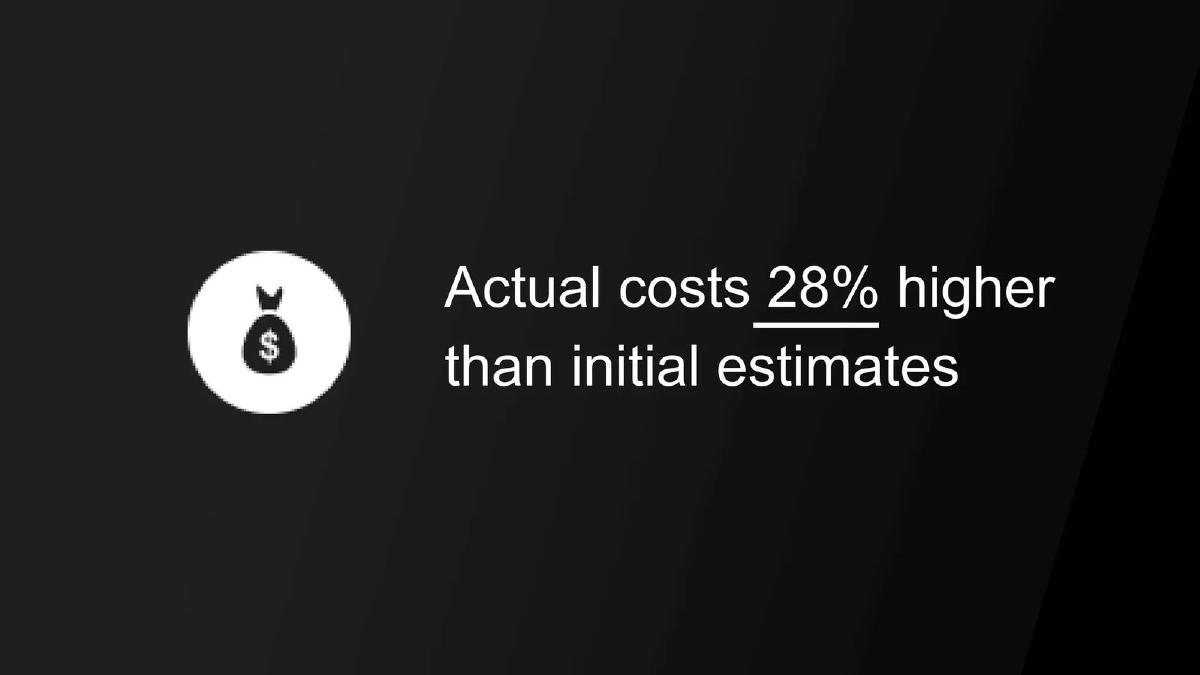
- The company identifies a specific pain point in construction where actual costs are 28% higher than initial estimates (Slide 4).
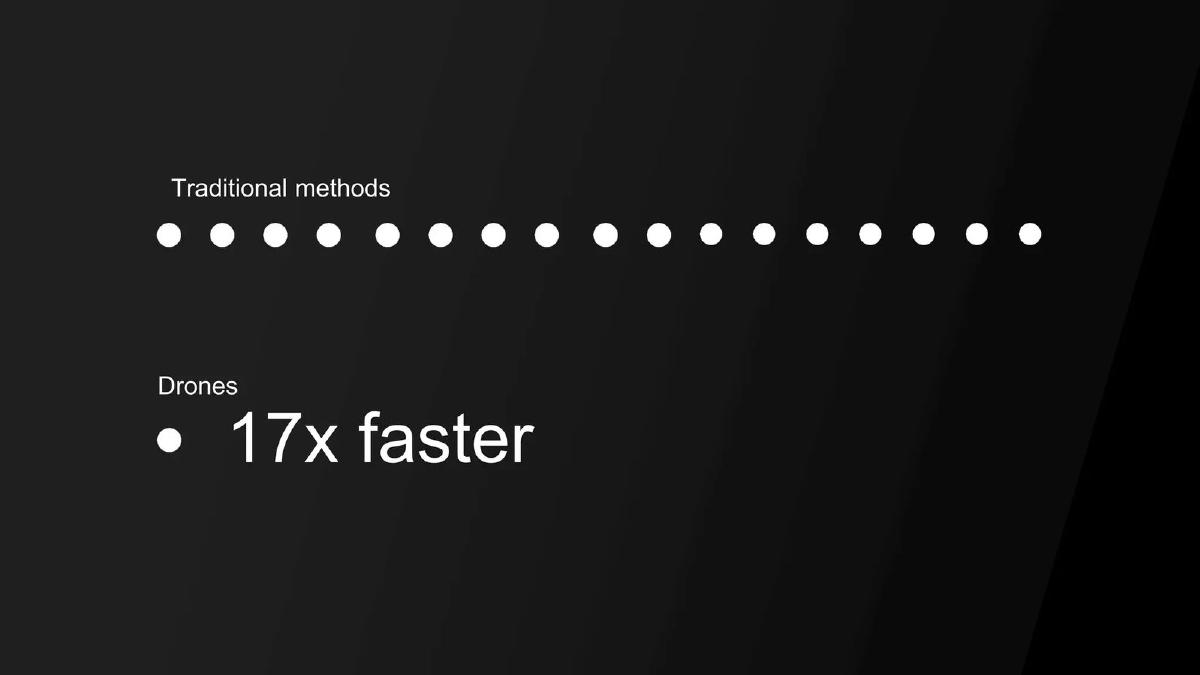
- FairFleet claims a massive efficiency gain, stating that drone inspections are 17x faster than traditional methods (Slide 6).
- The business operates as a marketplace connecting independent pilots with engineers, architects, and real estate managers (Slide 5).
- Traction is demonstrated through 6 existing contracts in Germany and an association with Allianz (Slides 7 and 8).
- The total addressable market for the European sector is estimated at €4,500,000,000 (Slide 9).
- The revenue model is a straightforward 10% commission on each transaction (Slide 10).
- The deck completely omits a team slide, leaving the founders' backgrounds and technical capabilities unknown.
- There is no 'Ask' slide detailing how much capital is being raised or how it will be deployed.
The Minimalist Marketplace: FairFleet's Visual Narrative
FairFleet’s 2015 pitch deck is a product of its time, leaning heavily into the 'less is more' design philosophy. With only 11 slides and very few words per page, the deck attempts to sell a vision of efficiency in an industry—construction—notoriously plagued by delays and cost overruns. While the visual clarity is commendable, the lack of depth in several key areas creates a high-risk profile for potential investors.
Slide 1: Title and Value Proposition
The deck opens with a stark black background and the company name in bold white lettering. The sub-headline, 'Drone inspections marketplace for construction & real estate,' is an excellent example of a clear, jargon-free one-sentence pitch. It immediately identifies the technology (drones), the service (inspections), the business model (marketplace), and the target industries (construction and real estate).
Slides 2 & 3: The Human Element and Industry Friction
Slide 2 features a full-bleed photo of a construction worker with a tablet, grounding the technology in a real-world setting. Slide 3 uses icons to represent common industry challenges: personnel management, manual labor (the saw icon), safety/risk (the warning sign), scheduling (the calendar), and reporting (the chart). These slides serve as a visual 'problem' section, though they rely entirely on the presenter to provide verbal context.
Slide 4: The Quantified Problem
This is one of the most effective slides in the deck. It states a single, powerful statistic: 'Actual costs 28% higher than initial estimates.' By highlighting this specific inefficiency, FairFleet positions its drone services not just as a 'cool' tech addition, but as a financial necessity for project managers looking to protect their margins.
Slide 5: The Solution Mockup
Slide 5 shows a tablet displaying the FairFleet interface. The copy clarifies the marketplace dynamics: 'Drone photography and inspections for engineers, architects and real estate managers by independent pilots.' This slide confirms that FairFleet does not intend to own a fleet of drones, but rather to act as the software layer connecting supply (pilots) with demand (professionals).
Slide 6: The Efficiency Multiplier
To follow up on the cost-overrun problem, Slide 6 introduces the speed solution. It compares 'Traditional methods' (represented by a long line of dots) to 'Drones,' which are labeled as '17x faster.' This is a classic '10x better' claim that venture capitalists look for, though the deck provides no data or case study on this slide to back up the 17x figure.
Slide 7: Social Proof
Slide 7 consists solely of the Allianz logo. In a Pre-Seed deck, a logo of this magnitude suggests a pilot program, a strategic partnership, or a major early customer. It provides immediate institutional credibility, even without a detailed description of the relationship.
Slide 8: Local Traction
The deck moves from a global brand to local execution. Slide 8 shows a map of Europe with a pin on Germany and the text '6 Contracts in Germany.' For a 2015-era drone startup, having six active B2B contracts is a solid signal of early product-market fit, moving the conversation from theory to reality.
Slide 9: Market Opportunity
FairFleet defines its Total Addressable Market (TAM) as the 'European market' valued at '€ 4,500,000,000.' While the number is large enough to be 'venture scale,' the slide is somewhat vague. It doesn't specify if this is the total construction inspection market or the specific portion addressable by drones.
Slide 10: Business Model
The revenue model is presented with absolute clarity. The company targets 'Firms with budgets between 1M and 50M euros' and states, 'We take 10% commission on each transaction.' This transparency is a strength; investors can easily calculate potential revenue based on the market size mentioned in the previous slide.
Slide 11: Call to Action
The final slide returns to the minimalist branding with the URL 'FAIRFLEET360.com' and the tagline 'Come fly with us.' It is a standard, if somewhat quiet, conclusion to the presentation.
What FairFleet Does Well
The deck excels at brevity and clarity . A reader can flip through these 11 slides in under 60 seconds and understand exactly what the company does and how it makes money. The use of a single, high-impact statistic (the 28% cost overrun) creates a compelling 'Why' for the business. Furthermore, the 10% commission model is a proven marketplace mechanic that is easy for investors to model.
What is Missing from the Deck
The omissions in this deck are significant and would likely lead to a long list of follow-up questions from any serious analyst:
No Team Slide: This is the most glaring omission. In a Pre-Seed round, the 'who' is often more important than the 'what.' There is no mention of the founders' expertise in aviation, construction, or marketplace operations. · No Competitive Landscape: The drone inspection space was becoming crowded in 2015. The deck fails to explain how FairFleet differs from competitors like DJI's enterprise tools or other emerging service platforms. · No Financial 'Ask': The deck does not state how much money the company is looking to raise, what the valuation expectations are, or what milestones the funding will help them achieve. · No Technology Depth: While it mentions 'video and data,' it doesn't explain if FairFleet provides automated analysis, 3D modeling, or just raw footage. The value of drone data usually lies in the processing, not just the flight.
Founder's Playbook: What to Copy
Founders should emulate FairFleet’s 'one idea per slide' rule. By not cluttering slides with paragraphs of text, they force the audience to focus on the most important metrics: the 17x speed increase and the 10% commission. The use of a major corporate logo (Allianz) as a standalone slide is also a powerful way to signal 'big-league' validation. However, founders must ensure they supplement this visual style with a robust appendix or a second, more detailed 'leave-behind' deck that includes the team, the tech stack, and the specific funding requirements.
Frequently asked questions
- What is FairFleet's primary business model?
- FairFleet operates as a B2B marketplace. According to Slide 5 and Slide 10, they connect independent drone pilots with professional clients like engineers and architects. They monetize this by taking a 10% commission on every transaction facilitated through their platform.
- Which industries does FairFleet target?
- The deck explicitly targets the construction and real estate sectors. Slide 1 introduces the company as a 'Drone inspections marketplace for construction & real estate,' and Slide 5 mentions engineers, architects, and real estate managers as the primary users.
- What evidence of traction does the deck provide?
- Traction is presented through two main indicators: a partnership or client relationship with Allianz (Slide 7) and the existence of 6 active contracts within the German market (Slide 8). No specific revenue figures or growth rates are provided.
- How does FairFleet justify the need for drones in construction?
- The justification is two-fold: cost and speed. Slide 4 points out that construction costs typically run 28% over budget, implying a need for better oversight. Slide 6 quantifies the solution's value by stating drones are 17x faster than traditional inspection methods.
- What are the biggest weaknesses of this pitch deck?
- The deck suffers from significant omissions. It lacks a team slide, which is critical for a Pre-Seed round to establish founder-market fit. It also fails to include a financial 'Ask,' a competitive analysis, or a detailed product roadmap beyond a single tablet mockup.