FactoryFour’s 2015 Series A deck is unconventional, prioritizing narrative flow over data density. With only 13 slides, it spends nearly half its real estate establishing a visceral 'problem' through images of complex circuit boards and messy spreadsheets. The deck successfully communicates a transition from manual, error-prone processes to an 'Automated Manufacturing Platform.' While it boasts impressive traction—$372K ARR in six months and a $2MM pipeline (Slide 12)—it is notably missing a team slide, a competitive landscape, and a specific funding 'ask.' This teardown explores how a strong…
Key takeaways
- The deck uses a 13-slide sequence that prioritizes visual storytelling over text-heavy explanations.
- FactoryFour reports achieving $372K in ARR within just six months of operation (Slide 12).
- The company claims a $2MM qualified pipeline and partnerships with industry giants like General Motors and Autodesk (Slide 12).
- The 'Problem' section is uniquely visual, using a four-slide build-up to illustrate how spreadsheets lead to manufacturing errors (Slides 7-10).
- The deck identifies three core pain points: High Rates of Error, Long Turn-Around Times, and Difficulty Scaling Production (Slide 10).
- The solution is framed as an 'Automated Manufacturing Platform' that connects with IOT to eliminate errors (Slide 11).
- There is no dedicated team slide, leaving the founders' backgrounds to be inferred or researched elsewhere.
- The deck lacks a formal 'Ask' slide, failing to specify the exact dollar amount or use of funds for the Series A.
The Visual Narrative of FactoryFour
The FactoryFour pitch deck from 2015 is a study in minimalist persuasion. At only 13 slides, it moves quickly from a high-level vision to a visceral representation of industry pain. Unlike many Series A decks that drown the reader in TAM/SAM/SOM calculations and complex architecture diagrams, FactoryFour uses a 'show, don't tell' approach. The deck is designed to be presented rather than read as a standalone document, as evidenced by the lack of dense bullet points.
Slides 1-5: The Setup and the Accidental Template
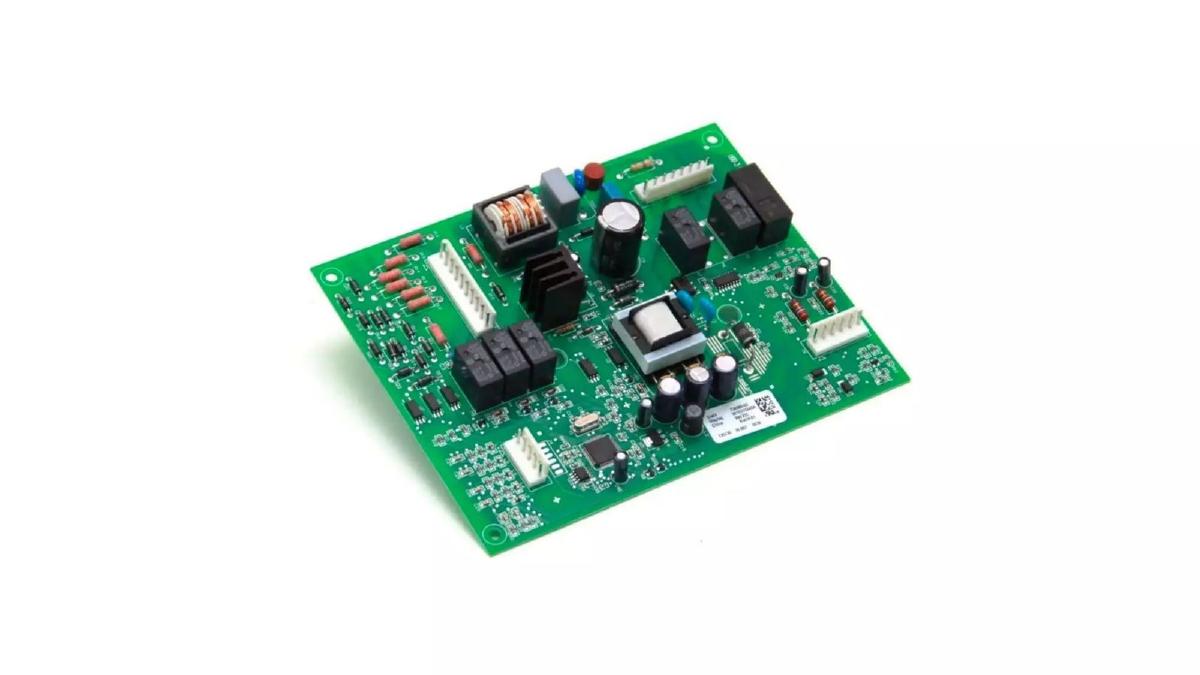
Slide 1 introduces the company with the tagline: 'Make manufacturing automation easy, powerful, and affordable.' It includes a contact email and an AngelList link, establishing a transparent, accessible tone from the outset. Slide 2 is a full-bleed image of a complex printed circuit board (PCB). This serves as the 'hero' image of the product being manufactured, grounding the software solution in physical reality.
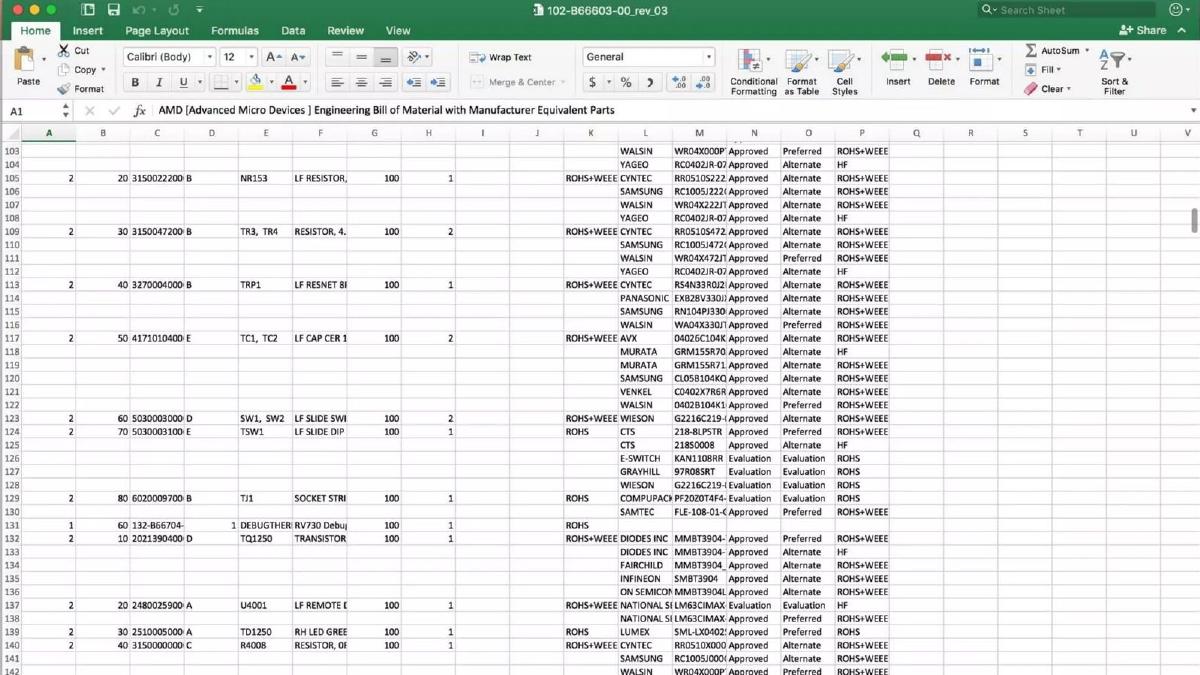
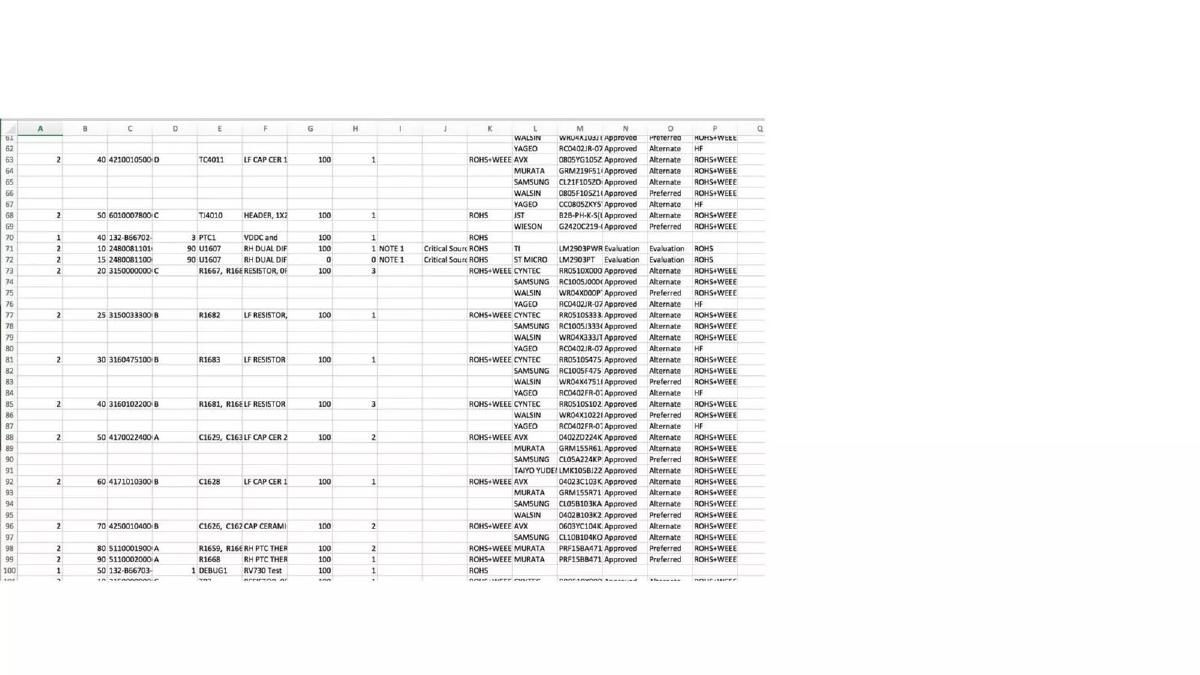
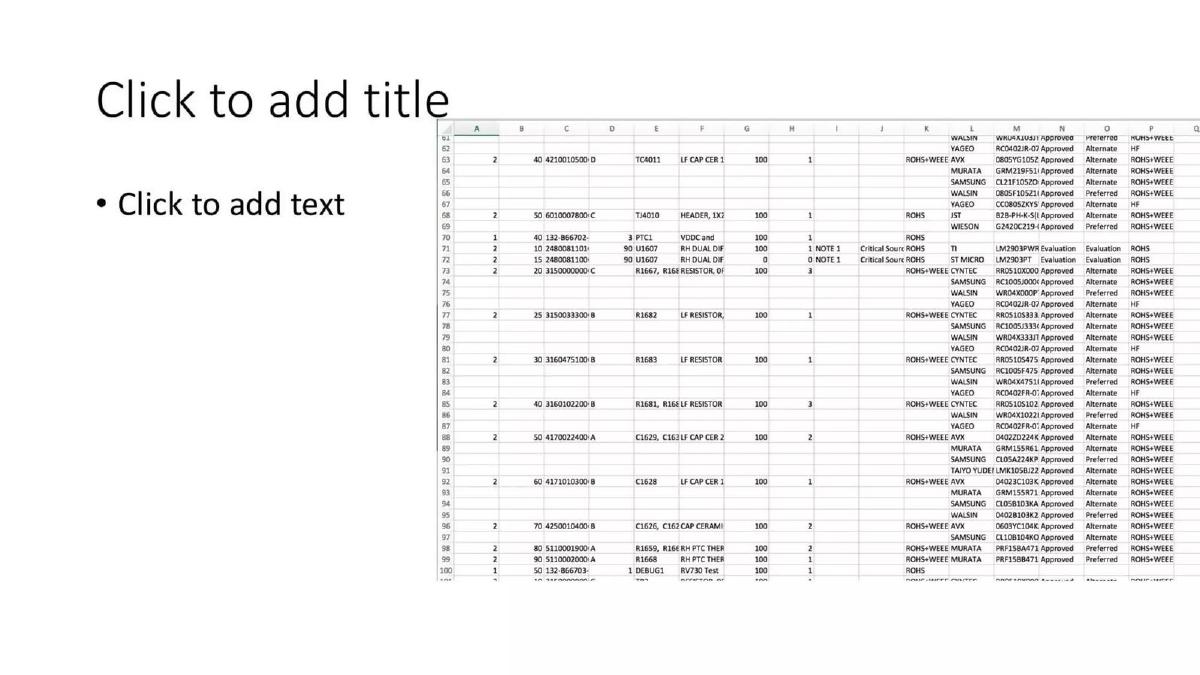
Slides 3 and 4 are perhaps the most curious in the deck. They are raw screenshots of an Excel spreadsheet containing an 'Engineering Bill of Material.' This is the 'before' state—the manual, tedious way manufacturing is currently managed. However, Slide 5 appears to be a production error in the deck itself, featuring the default PowerPoint text 'Click to add title' and 'Click to add text' over the same spreadsheet image. This is a reminder that even successful $8M rounds can be raised with decks that have minor formatting oversights.
Slides 6-10: Visualizing the Problem
Slide 6 simply says 'Don't Worry,' acting as a transition into the 'Problem' section. This is a classic storytelling technique to lower the audience's guard before hitting them with the pain points. Slides 7, 8, and 9 use a build-up animation style. Slide 7 shows the PCB; Slide 8 adds a spreadsheet with a red 'X' over it; Slide 9 adds a fire emoji over the PCB. The message is clear: Spreadsheets + Complex Hardware = Disaster.
Slide 10 culminates the problem statement. It displays a chaotic collage of legacy software interfaces, including a visible Oracle logo. Below this mess, three specific pain points are listed in bold red text: 'High Rates of Error,' 'Long Turn-Around Times,' and 'Difficulty Scaling Production.' By visually contrasting the 'mess' of legacy systems with the clean design of the deck, FactoryFour positions itself as the modern savior of the factory floor.
Slide 11: The Solution
The solution is presented on Slide 11 as an 'Automated Manufacturing Platform.' The workflow is simplified into three steps: 'Connect with IOT,' 'Automate production processes,' and 'Reduce lead time / Eliminate error.' The use of simple blue icons keeps the focus on the outcome rather than the technical 'how.' It frames the company not just as a tool, but as a bridge between the physical world (IOT) and business outcomes (Lead time reduction).
Slide 12: Traction and Credibility
This is the 'money slide' of the deck. FactoryFour presents two massive growth metrics: '$372K ARR in only 6 months' and a '$2MM Qualified Pipeline.' For a Series A, showing that you can go from zero to nearly $400K in half a year is a powerful indicator of product-market fit. The slide also notes that their 'Seed Round Closed' was led by Refactor Capital. To seal the deal, they list Autodesk, 3D Systems, and General Motors as partners. Having a logo like GM on a 2015 manufacturing deck is often enough to bypass deeper due diligence on other slides.
Slide 13: The Vision
The deck closes on Slide 13 with a bold claim: 'Creating the Internet of Manufacturing.' This elevates the company from a manufacturing execution system (MES) to a category-defining platform. It includes a phone number and email, ending the presentation on a direct call to action.
What Works in This Deck
The 'Problem' Build-up: Using four slides to gradually illustrate how spreadsheets destroy manufacturing efficiency is much more memorable than a single slide with five bullet points. · High-Signal Logos: The inclusion of General Motors and Autodesk (Slide 12) provides instant enterprise validation. In the 'Other' manufacturing sector, these are the ultimate gatekeepers. · Velocity: Highlighting $372K ARR in just six months (Slide 12) suggests a 'pull' from the market that investors find irresistible. · Minimalism: The deck is uncluttered, making the key metrics and the 'Internet of Manufacturing' vision stand out.
What is Missing
Team Slide: There is no mention of who is building this. Investors at the Series A level usually want to see a deep bench of engineering and industry talent. · Competition: While they mock legacy systems like Oracle on Slide 10, they don't address other modern competitors or how they win in a crowded MES market. · The Ask: The deck never specifies how much money they are raising or what they plan to do with it. While the catalogue says $8M, the deck leaves this to the imagination. · Unit Economics: There is no mention of Customer Acquisition Cost (CAC), Lifetime Value (LTV), or churn rates, which are standard for a SaaS-style manufacturing platform.
What a Founder Should Copy
The Traction Layout: Slide 12 is a perfect example of how to display traction. It combines revenue, pipeline, investor pedigree, and partner logos into a single, high-impact view. · Visual Metaphors: Use images of the 'old way' (spreadsheets, cluttered legacy UI) to make the 'new way' feel like a relief. · The 'Internet of [Industry]' Hook: Positioning your company as the 'Internet of X' is a classic way to signal that you are building a platform/ecosystem rather than just a feature.
Frequently asked questions
- How much did FactoryFour raise with this deck?
- According to the catalogue data, FactoryFour raised $8,000,000 in 2015. Interestingly, the deck itself does not state a specific 'ask' or funding goal, which is unusual for a Series A presentation. It relies on the momentum of a recently closed seed round led by Refactor Capital to signal investment viability.
- What is the primary problem FactoryFour solves?
- The deck focuses on the 'chaos' of manual manufacturing management. It uses slides 7 through 10 to show that relying on spreadsheets for complex hardware (like the circuit board shown) leads to high error rates and slow turnaround times. They position themselves as the modern alternative to legacy systems like Oracle, which is shown in a cluttered screenshot on slide 10.
- Who are FactoryFour's key partners?
- On slide 12, FactoryFour lists three major industry partners: Autodesk, 3D Systems, and General Motors. These high-profile logos serve as a massive credibility booster, suggesting that their 'Internet of Manufacturing' platform has already been vetted by enterprise-level players in the automotive and design sectors.
- Is there a team slide in the FactoryFour deck?
- No. This is one of the most significant omissions in the deck. While slide 12 shows a headshot of an investor/lead from Refactor Capital, there is no slide detailing the founders' experience or the engineering team's pedigree. In a Series A, this is typically a 'hard rule' inclusion, but FactoryFour opted to focus entirely on product and traction.
- What are the key metrics mentioned in the deck?
- The deck is light on unit economics but heavy on growth velocity. Slide 12 highlights two primary figures: $372K in Annual Recurring Revenue (ARR) achieved in only six months, and a $2MM qualified sales pipeline. These figures indicate a very short sales cycle or high-contract values for a young company.