FameBit’s 2013 seed deck is a quintessential example of a 'traction-first' pitch. In just 14 slides, the company establishes its position as the bridge between brands and YouTube influencers. Rather than relying on complex financial models or long-term roadmaps, the deck focuses on the immediate friction of the status quo—manual searches, messy spreadsheets, and fragmented email communication—and presents a streamlined SaaS solution. With a reported $600,000 run rate and 120 brands already on board by slide 3, the deck effectively shifts the investor conversation from 'will this work?' to 'ho…
Key takeaways
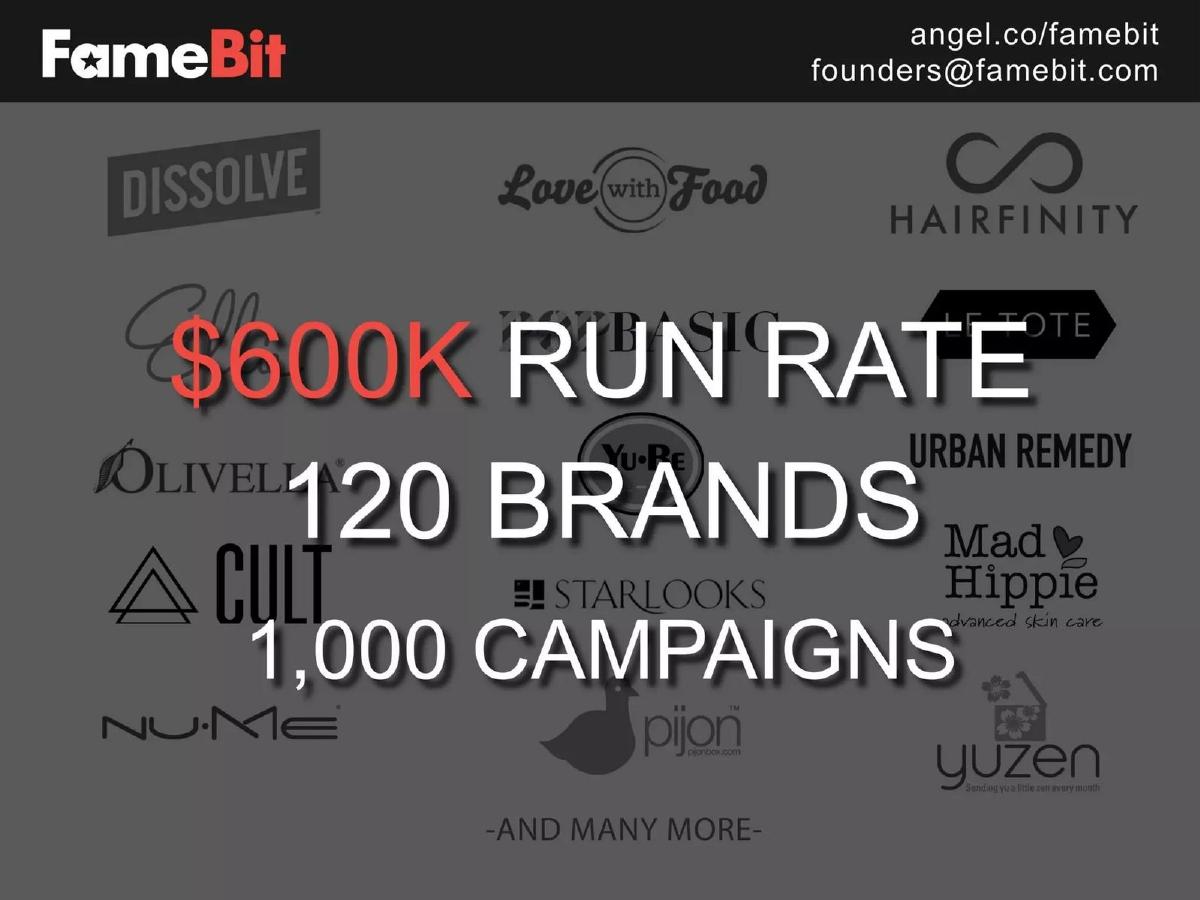
- The deck leads with massive traction, citing a $600k run rate and 1,000 campaigns on slide 3.
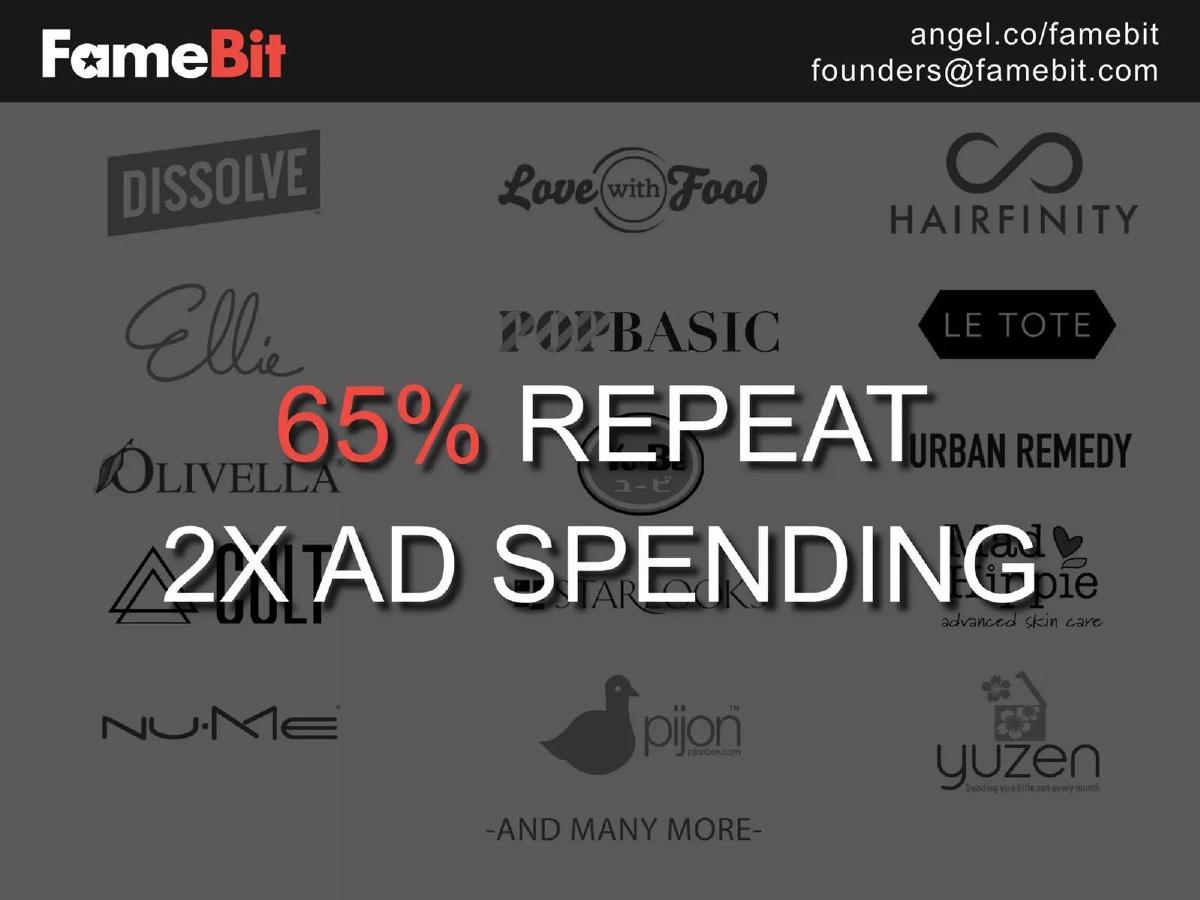
- Customer retention is highlighted early, with slide 4 reporting a 65% repeat rate and a 2x increase in ad spending.
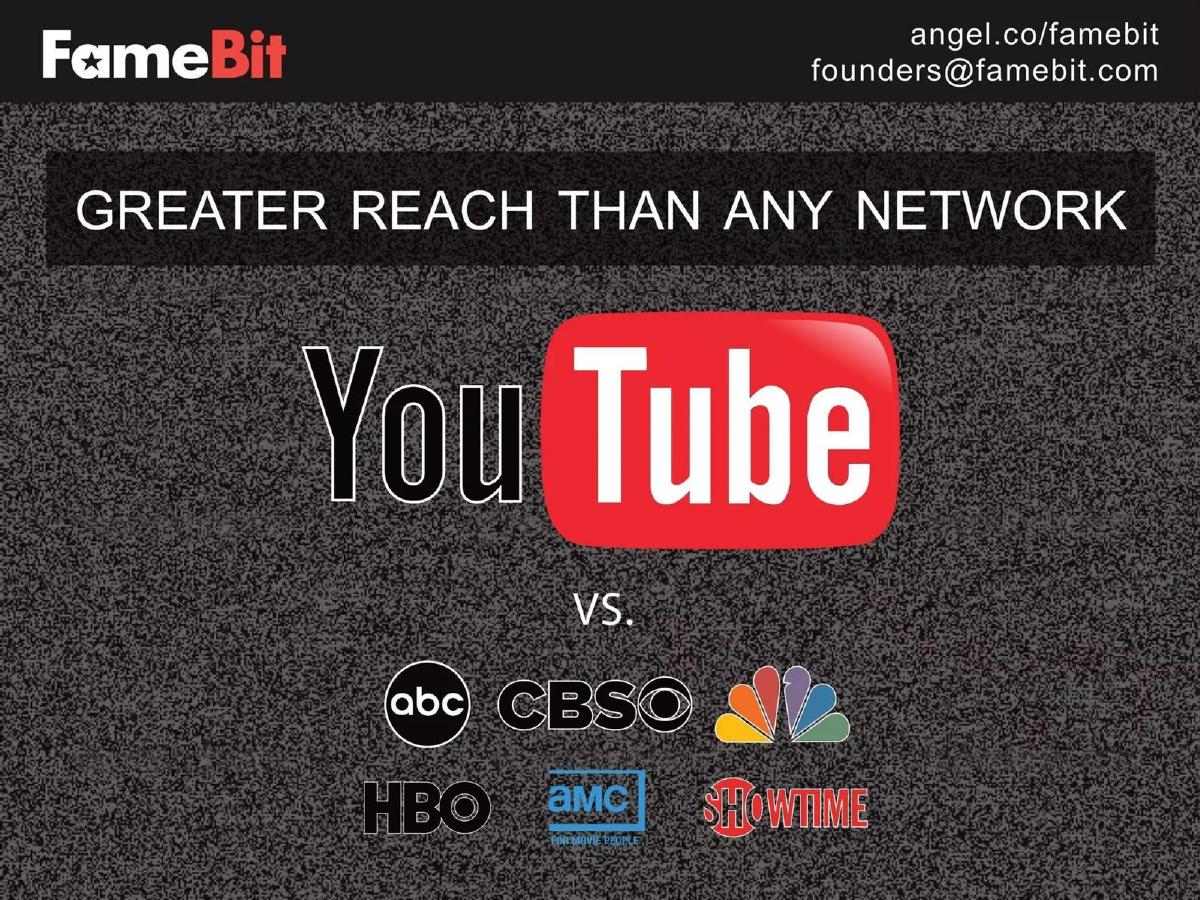
- Market reach is validated by comparing YouTube's scale to traditional networks like ABC, HBO, and NBC on slide 6.
- The 'Problem' is illustrated through screenshots of the status quo: manual YouTube searches (slide 7), cold emails (slide 8), and 'messy spreadsheets' (slide 9).
- Product functionality is demonstrated through a clear workflow: influencer discovery (slide 11), bidding/campaign creation (slide 12), and video delivery (slide 13).
- The deck identifies three specific campaign types—Review, Haul, and Tutorial—to define the platform's utility on slide 10.
- The presentation completely omits a team slide, a competition slide, and a specific funding ask.
- The deck uses a consistent header containing the company's AngelList URL and a generic founders' email address on every slide from 2 to 13.
The Power of Traction-First Pitching
FameBit’s 2013 seed deck is a masterclass in brevity and proof. At a time when 'influencer marketing' was still a burgeoning term, FameBit managed to raise $1.5 million by focusing almost exclusively on their existing numbers and the friction of the current market. The deck is only 14 slides long, and it wastes no time on fluff. By the third slide, the investor knows exactly how much money is moving through the platform and how many brands have signed on. This teardown examines how FameBit used a simple, visual narrative to turn a complex marketplace problem into an obvious investment opportunity.
Slides 1-4: The Hook and The Hard Numbers
Slide 1 is a standard title slide featuring the logo and the tagline: "Connecting Brands to YouTube Influencers." It sets the stage immediately. There is no ambiguity about what the company does. The background image of young, stylish individuals subtly nods to the target demographic of the creators on the platform.
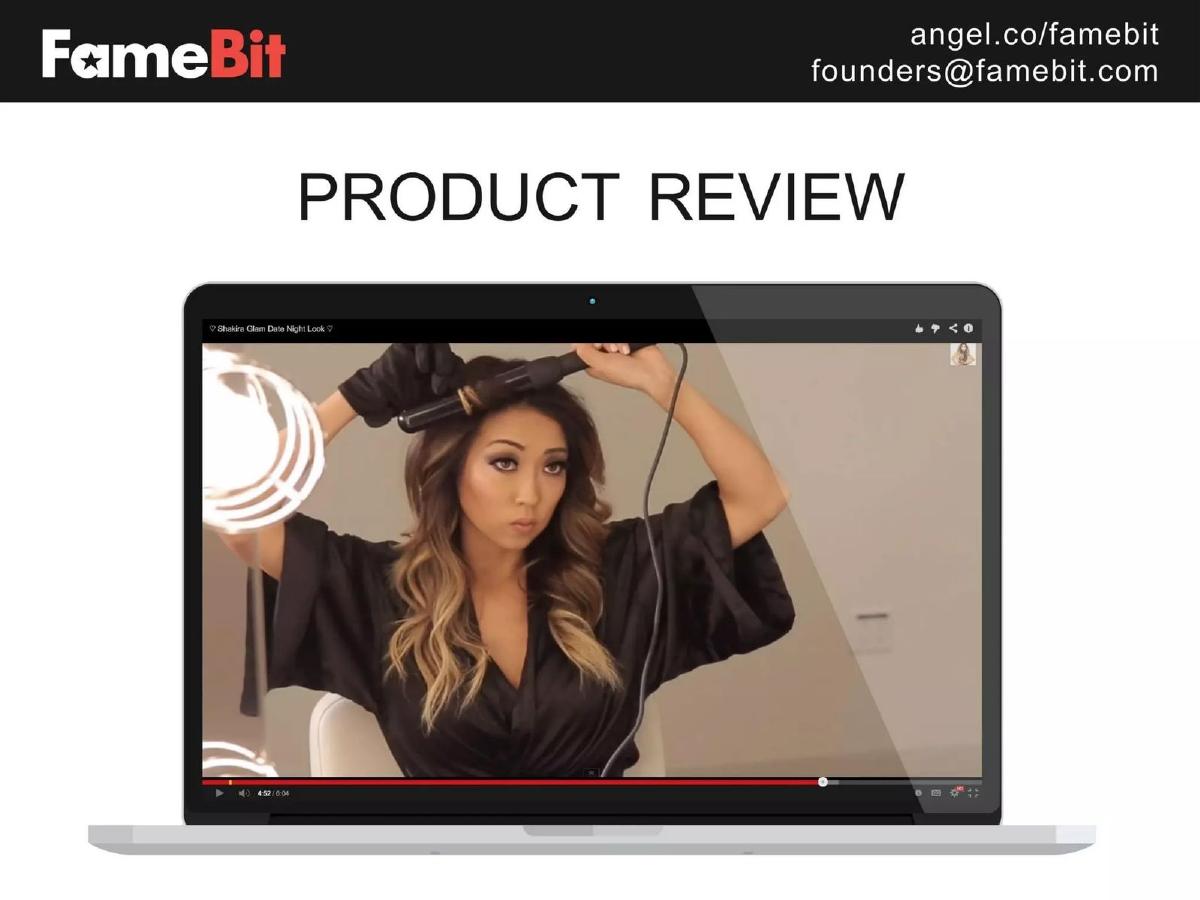
Slide 2 is an interesting choice for a second slide. Titled "Product Review," it shows a laptop screen with a YouTube video of a creator performing a hair tutorial. This serves as a visual definition of the 'unit of value' FameBit provides: the sponsored video. It grounds the abstract concept of 'influencer marketing' in a tangible product.
Slide 3 is the 'Traction' slide, and it is the strongest part of the deck. It features three massive figures: "$600K RUN RATE," "120 BRANDS," and "1,000 CAMPAIGNS." The background is a collage of brand logos including Dissolve, Hairfinity, and NuMe. By placing this at the beginning, FameBit effectively ends the debate over whether there is a market for this service. They have already executed at a scale that justifies a seed round.
Slide 4 doubles down on the traction by focusing on retention and growth. It claims a "65% REPEAT" rate and "2X AD SPENDING." This tells investors that the platform is not a 'one-and-done' service. Brands are finding enough value to come back and, more importantly, to increase their budgets. This is a key indicator of a healthy marketplace.
Slides 5-6: The Market Opportunity
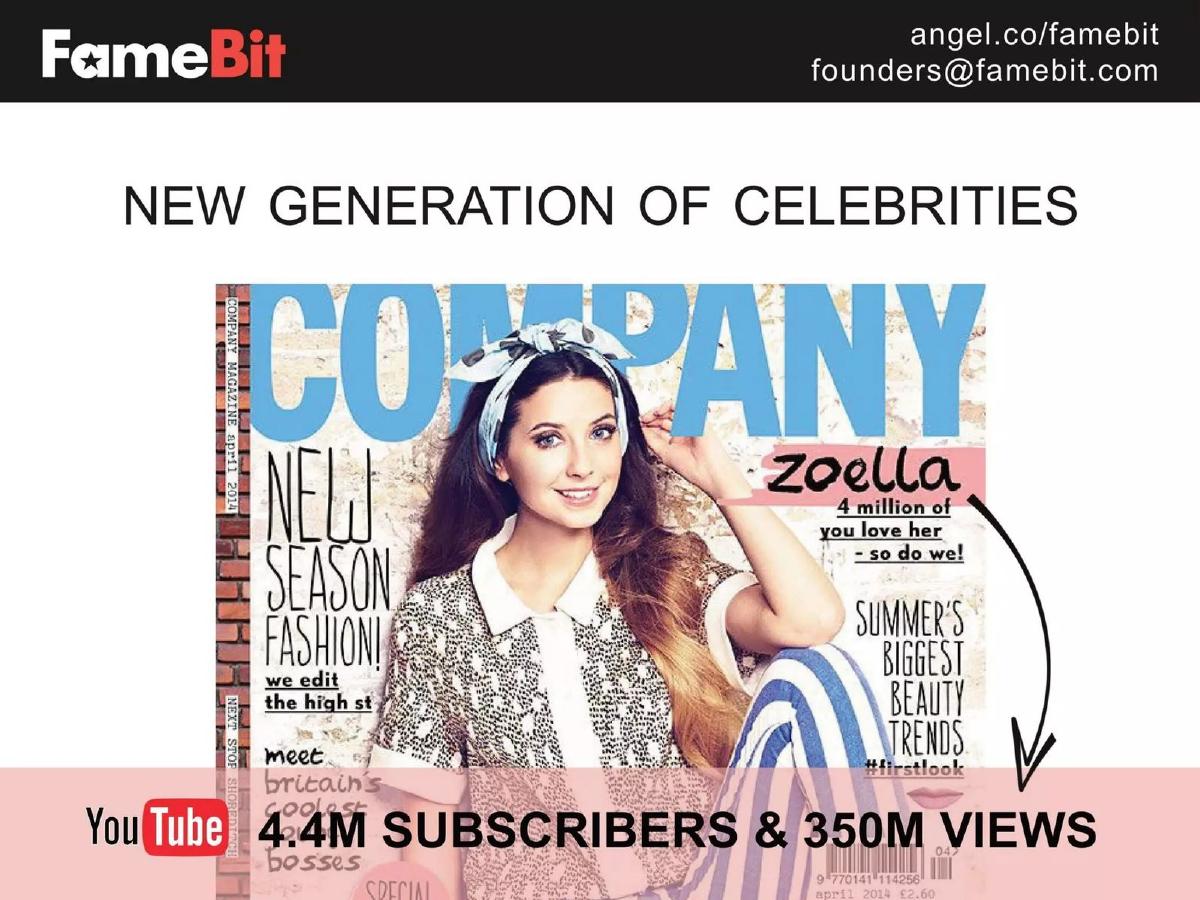
Slide 5 introduces the "New Generation of Celebrities." It features a magazine cover of Zoella, a prominent YouTuber at the time, noting she has "4.4M SUBSCRIBERS & 350M VIEWS." This slide is designed to educate investors who might not be familiar with the scale of YouTube stardom. It frames these creators as the new A-listers, implying that brands who ignore them are missing out on the future of advertising.
Slide 6 takes the scale argument further with the headline "GREATER REACH THAN ANY NETWORK." It places the YouTube logo in direct competition with traditional television giants like ABC, CBS, NBC, HBO, AMC, and Showtime. The background is television static, a clever visual metaphor for the 'fading' relevance of traditional broadcast media compared to the clarity of digital video. This slide establishes the 'Total Addressable Market' (TAM) by suggesting FameBit is tapping into the multi-billion dollar television advertising budget.
Slides 7-9: The Problem (The Status Quo)
Instead of using bullet points to describe why the current process is bad, FameBit uses three slides to show the 'messy' reality of influencer marketing without their platform.
Slide 7 shows a YouTube search for "makeup tutorial." The implication is that finding the right influencer is currently a manual, needle-in-a-haystack process. Slide 8 shows a generic Gmail inbox with a cold outreach email. This highlights the unprofessional and unorganized nature of communication between brands and creators. Slide 9 is titled "MESSY SPREADSHEET" and shows a complex Excel file used to track influencers, addresses, and giveaway statuses. Together, these three slides create a visceral sense of 'there must be a better way,' which perfectly teases the solution.
Slides 10-13: The Solution and Product Workflow
Slide 10 asks "WHICH CAMPAIGN TYPE?" and lists "REVIEW vs. HAUL vs. TUTORIAL." This shows that FameBit has categorized the market and understands the specific needs of its users. It moves the conversation from 'what is the problem' to 'how do we execute.'
Slide 11 , titled "YOUTUBER CONNECTION," shows the FameBit dashboard. It’s a clean, Pinterest-style grid of influencers with their subscriber counts and total video views clearly displayed. This is the direct answer to the manual search problem shown on slide 7.
Slide 12 covers "CAMPAIGN CREATION." The screenshot shows a bidding system where creators propose videos for specific prices (e.g., $115, $200). This is a crucial revelation of the business model—it’s a marketplace where prices are set by the market, not just the platform. It also shows how FameBit centralizes the 'messy' communication and spreadsheets into a single interface.
Slide 13 shows "VIDEO DELIVERY." It features a pop-up within the platform stating "Video Approved and Completed!" with an embedded YouTube player. This demonstrates that FameBit handles the entire lifecycle of a campaign, from discovery to final approval, providing a 'full-stack' solution for brands.
Slide 14: The Close
Slide 14 is a repeat of the title slide, providing the AngelList URL and the founders' email address once more. Notably, there is no 'Ask' slide detailing how much they are raising or how they will spend the money. There is also no 'Roadmap' slide.
What Works in This Deck
The most successful element of this deck is its unapologetic focus on traction . By leading with revenue and campaign volume, FameBit forces the investor to take them seriously from slide 3. The use of visual storytelling for the problem is also highly effective. Showing a messy spreadsheet is far more relatable to a brand manager (or an investor who has seen them) than a list of bullet points about 'inefficiency.'
The product screenshots are also well-executed. They don't just show the UI; they show the UI in the context of a workflow. You see the discovery, the bidding, and the completion. This makes the 'Solution' feel real and ready to scale, rather than a theoretical concept.
What is Missing
The most glaring omission is the Team Slide . In early-stage fundraising, the 'who' is often as important as the 'what.' Without knowing the backgrounds of the founders, an investor has no way to judge their ability to navigate the inevitable pivots of a startup.
Also missing is a Competition Slide . In 2013, Multi-Channel Networks (MCNs) like Maker Studios and Fullscreen were the dominant players in the YouTube space. FameBit was essentially disintermediating these networks by allowing brands to go direct. Failing to address how they fit into the existing ecosystem of MCNs is a missed opportunity to explain their competitive advantage.
Finally, the lack of a clear 'Ask' is a weakness for a standalone deck. While this information might have been on the AngelList page linked on every slide, a pitch deck should ideally stand on its own. Investors want to know how much capital is needed to reach the next milestone.
What a Founder Should Copy
Lead with your best foot forward: If you have traction, don't bury it on slide 10. Put it on slide 3 like FameBit did. It changes the entire tone of the meeting. · Use 'Status Quo' visuals: If your software replaces a manual process, show a screenshot of that manual process (the spreadsheet, the inbox, the sticky notes). It makes the pain point tangible. · Define your 'Unit of Value': FameBit clearly identified that their business is built on the 'Sponsored Video.' Every slide reinforces this unit, making the business model easy to grasp. · Keep it lean: 14 slides is an ideal length for a seed deck. It’s enough to tell a complete story without losing the viewer’s attention.
Conclusion: FameBit’s deck worked because it proved there was a bridge needed between the 'New Generation of Celebrities' and the brands that wanted to reach their audiences. By showing they had already built that bridge and that people were paying to cross it, they made the investment decision a matter of scale rather than a matter of faith.
Frequently asked questions
- Why is there no team slide in the FameBit deck?
- It is highly unusual for a seed deck to omit a team slide. In FameBit's case, this deck was likely designed to live on their AngelList profile or as a follow-up to a meeting where the founders had already introduced themselves. For a standalone pitch, excluding the team is a significant risk, as investors at the seed stage bet primarily on the founders' ability to execute.
- How does FameBit quantify the 'Problem' without using words?
- FameBit uses a 'show, don't tell' approach. Slides 7, 8, and 9 use screenshots of a YouTube search bar, a generic Gmail inbox, and an Excel spreadsheet. This visually communicates that the current process for brand-influencer collaboration is manual, unorganized, and unscalable, making the 'Solution' slides that follow feel like a necessary relief.
- What does the '2x Ad Spending' metric on slide 4 signify?
- This metric suggests that once brands use the platform, they don't just return; they increase their budget. For a marketplace, this is a critical indicator of 'Net Revenue Retention' and customer satisfaction. It proves that the ROI for the brands is high enough to justify doubling their investment, which de-risks the business model for investors.
- Is the $600k run rate on slide 3 gross merchandise value (GMV) or revenue?
- The deck does not explicitly state if the $600k run rate is net revenue or GMV (total spend through the platform). However, in the context of 2013 influencer marketing, a $600k run rate for a seed-stage company is impressive regardless. Usually, 'run rate' in a marketplace teardown refers to the annualized revenue the platform takes as a fee.
- What is the significance of slide 10's campaign types?
- By listing 'Review vs. Haul vs. Tutorial,' FameBit shows they understand the specific mechanics of YouTube content. This demonstrates 'founder-market fit'—they aren't just building a generic marketplace; they are building tools tailored to the specific ways YouTube creators and brands actually interact, which helps in defining the product's feature set.