Fairmat's Serie A deck presents a vision for 'virtuous recycling' of high-performance materials, specifically carbon fiber reinforced polymers (CFRP). The company positions itself as a solution to industrial waste, claiming to have secured 1,315 tons of CFRP scraps, representing 8% of a 15,500-ton global market. The business model is diversified across upstream recycling revenues, downstream material sales, and by-product carbon credit revenues. However, the available slides are a 'sanitized' version of the original pitch; nearly every critical financial metric, contract detail, and growth pr…
Key takeaways
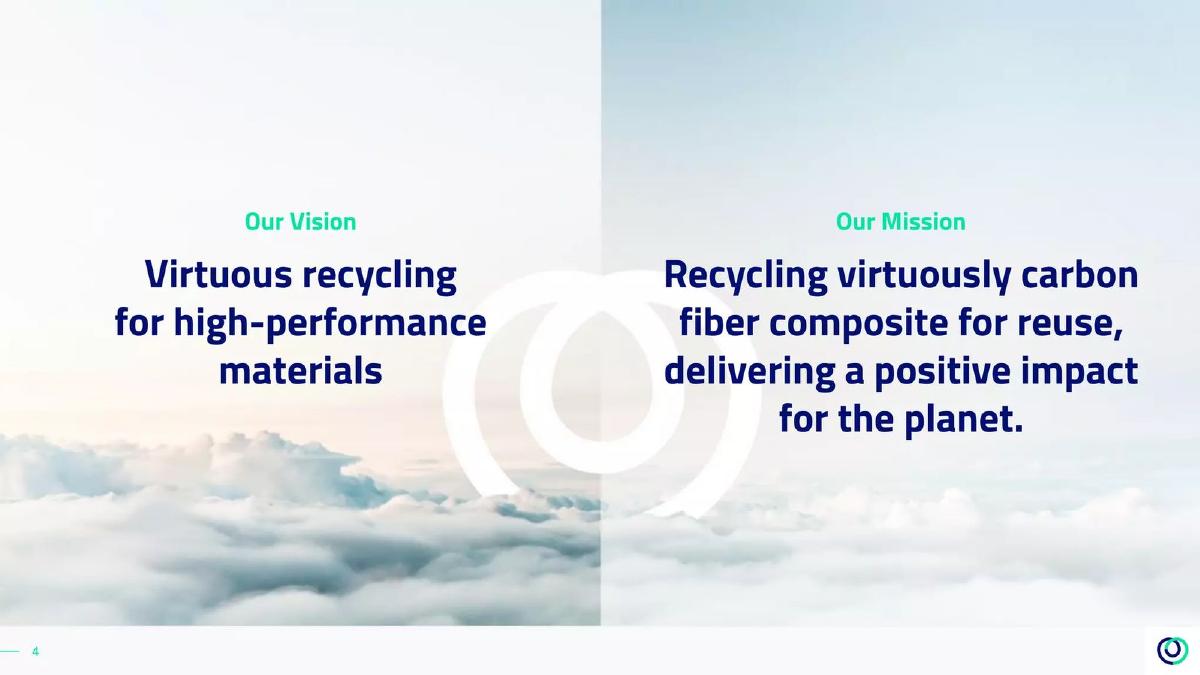
- The company's mission is focused on recycling carbon fiber composite for reuse to deliver a positive impact for the planet (Slide 4).
- Fairmat utilizes a triple-revenue stream: Upstream (recycling fees), Downstream (new material sales), and By-product (carbon credits) (Slide 7).
- The company claims that recycling one ton of waste avoids emitting approximately 10 tonnes of CO2e (Slide 7).
- Early traction includes a team of over 40 people, two filed patents, and an opened factory building (Slide 10).
- Fairmat has secured 1,315 tons of CFRP scraps, which it claims is 8% of the 15,500-ton worldwide industrial scrap market for 2020 (Slide 13).
- The deck asserts that Fairmat has secured more than 35% of the EU double-digit growth market in its first vertical (Slide 13).
- A materials commercial pipeline is in place, with potential revenues expected to exceed the 2026 business plan generation (Slide 19).
- The public version of the deck omits all specific financial figures, including turnover, EBITDA margins, and contract counts, using 'XXX' as a placeholder (Slides 7, 13, 16, 19).
The Vision and Mission of Circular Materials
Slide 4: Vision and Mission
Fairmat opens its narrative with a clean, high-level summary of its purpose. The vision is stated as "Virtuous recycling for high-performance materials," while the mission expands this to "Recycling virtuously carbon fiber composite for reuse, delivering a positive impact for the planet." This slide establishes the company as a DeepTech or ClimateTech play, focusing on a specific, high-value waste stream: carbon fiber. By using the word "virtuous," the founders signal a commitment to the circular economy, where waste is not just processed but returned to a high-performance state. The background imagery of clouds suggests a focus on carbon and atmospheric impact, which is a recurring theme throughout the deck.
The Economic Engine
Slide 7: The Revenue Model
This is arguably the most important slide for understanding Fairmat's business logic. It breaks down the revenue into three distinct streams, which provides a level of financial diversification rarely seen in early-stage startups. First is the "Upstream" recycling revenue, where Fairmat is paid to take the waste. The slide uses a placeholder "€XXX/t" for the price per ton. Second is "Downstream" revenue, where the company sells the processed "fair mat(erial)" back to the market. Again, the price is listed as "€XXX/t." Third is the "By-product" revenue from carbon credits. The slide notes that Fairmat avoids emitting approximately 10 tonnes of CO2e per ton of waste recycled. At the bottom, a footer indicates an assumed carbon price of €85 per ton. The total revenue per ton is summarized as "€XXXk," suggesting that the combined value of these three streams is significant. This "triple-dip" strategy—getting paid to take the raw material, paid to sell the finished product, and paid for the environmental offset—is a compelling economic narrative for a Serie A investor.
Operational Readiness and Traction
Slide 10: Early Traction and Inception Rate
Slide 10 shifts the focus from theory to execution. Fairmat highlights an "exceptional inception rate," a term likely used to describe the speed at which they have set up operations. The slide lists four key milestones: a team of over 40 people (including senior executives from strategic industries), the opening of a factory building, two filed patents with others ongoing, and "exceptional commercial success" in both recycling and material sales. The inclusion of a photo of a large, clean industrial facility is a critical piece of evidence. For a hardware or materials startup, showing a physical factory proves that the company has moved beyond lab-scale experiments and is ready for industrial-scale production. The mention of patents provides the "moat" or intellectual property protection that Serie A investors look for to justify a higher valuation.
Market Share and Growth Potential
Slide 13: Market Positioning
This slide provides a quantitative look at the market opportunity. Fairmat identifies the 2020 worldwide Carbon Fiber Reinforced Polymers (CFRP) industrial scrap market as 15,500 tons. A donut chart breaks this down by region: China (28%), North America (26%), Europe (21%), and Other Asia (19%). Fairmat claims to have secured 1,315 tons of these scraps, which represents 8% of the global market and, according to the text, more than 35% of the EU market. This is a bold claim for a company in its early years. It suggests that Fairmat has already captured a dominant position in its home region (Europe). The slide also mentions a "double digit growth market," positioning the company within a tailwind. However, the "Next step" is listed as "XXX," leaving the specific geographic or vertical expansion plans to the imagination of the public viewer.
The Pipeline and Future Outlook
Slide 16: Contracts and Collaborations
Slide 16 focuses on the commercial pipeline. It uses a teal call-out box to highlight "€XXM" of potential revenues in the current pipeline by the end of 2024. The slide is designed to show a list of "Key signed contracts" and "Logos," but these have been replaced with placeholders. It mentions "XXX contracts signed" and "XXX additional collaborations expected by year end." While the specific names are missing, the structure of the slide tells us that Fairmat is tracking its progress through a traditional B2B sales funnel. The goal here is to demonstrate that there is market pull for their recycled material and that they are not just a research project looking for a problem to solve.
Slide 19: Financial Forecast
The final slide in this selection shows a "Forecast" graph. The graph itself is a simple upward-curving line with the label "Graph," and the turnover and EBITDA margin are listed as "€X" and "X%" respectively. Despite the lack of data, the text at the bottom is telling: "Materials commercial pipeline standing at €XXM of potential revenues, Exceeding 2026 BP revenue generation." This suggests that the company is performing ahead of its original business plan (BP). For a Serie A round, showing that you are outperforming your previous projections is a powerful way to build investor confidence. It implies that the management team is conservative in its estimates and capable of over-delivering.
What Works in This Deck
1. Clear Revenue Logic: The three-pronged revenue model (Slide 7) is the strongest part of the deck. It clearly explains how the company captures value at every stage of the recycling process. This reduces the perceived risk for investors because the company isn't reliant on a single market price or customer type.
2. Industrial Proof: The use of a factory photo (Slide 10) and specific tonnage figures (Slide 13) moves the conversation from "what if" to "what is." In the materials sector, the ability to scale production is the primary hurdle, and Fairmat addresses this head-on.
3. Market Specificity: Rather than claiming to solve all recycling problems, Fairmat focuses specifically on CFRP. By quantifying the global scrap market at 15,500 tons, they show they have a deep understanding of their niche and a realistic view of their current 8% market share.
What is Missing
1. Unit Economics: While the revenue streams are identified, the costs are not. We don't know the cost of processing a ton of carbon fiber or the capital expenditure required to build the factory. Without these, the "€XXXk" revenue figure is incomplete.
2. Competitive Landscape: The deck does not mention other players in the carbon fiber recycling space. Investors will want to know how Fairmat's patented process differs from traditional pyrolysis or chemical recycling methods used by competitors.
3. The "Ask": There is no slide in this selection that specifies how much money is being raised or how the funds will be allocated. While this might be in the 14 slides not shown, its absence in a teardown of this length is notable.
Founder's Playbook: What to Copy
1. The "Triple-Dip" Revenue Slide: If your business has multiple ways to monetize a single unit of activity (like recycling a ton of waste), use a layout similar to Slide 7. It makes a complex business model feel organized and lucrative.
2. Regional Dominance Metrics: Fairmat's claim of 35% EU market share (Slide 13) is a great way to show traction. Even if your global market share is small, showing that you are winning in a specific geography proves your model works and can be exported.
3. Pipeline vs. Forecast: Slide 19's note about exceeding the 2026 business plan is a masterclass in signaling. If you are ahead of schedule, make sure that is the one thing an investor remembers from your financial section.
Frequently asked questions
- What is Fairmat's core product?
- Fairmat does not sell a traditional software product; it provides a recycling service and a resulting material. According to slide 4 and 7, they recycle carbon fiber reinforced polymer (CFRP) scraps to create a 'new fair mat(erial)' for reuse in high-performance applications. The goal is to create a circular economy for materials that are traditionally difficult to recycle.
- How does Fairmat make money?
- Fairmat employs a multi-layered revenue model shown on slide 7. They charge 'Upstream' fees for the act of recycling carbon fiber composite. They generate 'Downstream' revenue by selling the recycled material. Finally, they generate 'By-product' revenue through carbon credits, valued at an assumed price of €85 per ton of CO2e.
- What is the scale of Fairmat's current operations?
- As of the deck's creation, Fairmat has moved into the industrial phase. Slide 10 notes they have opened a factory building and hired over 40 people, including senior executives. Slide 13 specifies they have secured 1,315 tons of CFRP scraps, which accounts for 8% of the global industrial scrap market.
- Why are there so many 'XXX' marks in the deck?
- This is a common practice for companies sharing decks on public platforms like SlideShare. The 'XXX' marks are placeholders for sensitive financial data, contract names, and specific growth targets. While it obscures the company's current valuation and exact revenue, it allows the general logic of the business model to be shared without leaking trade secrets.
- What market does Fairmat operate in?
- Fairmat operates in the Carbon Fiber Reinforced Polymers (CFRP) recycling market. Slide 13 identifies a total worldwide industrial scrap market of 15,500 tons as of 2020, with major concentrations in China (28%), North America (26%), and Europe (21%). They are currently focused on the European market.