How B2B SaaS startups present the team in a pitch deck: show who has lived the customer's problem.
B2B SaaS Team Slide: Real Pitch Deck Examples
Eight team slides from B2B software companies, shown in full, compare how each proves the founders know the customer's workflow, can sell to businesses and can build software that holds up in production.
TL;DR
A B2B SaaS team slide should answer three questions: have these people lived the problem they are selling a fix for, who will sell to businesses, and who can build software that companies will trust? Flowhaven's CEO built Rovio's "(Angry Birds) full licensing operations framework", which is the exact workflow Flowhaven sells software for. Five Flute says "we deeply understand the problem space" and backs it with years of running hardware engineering teams. Replicated names a Chief Product Officer who was a "previous customer" and a revenue chief who ran "$220m/year" sales at LivePerson. Contur shows three names and employer logos with no line on what anyone did, so an investor cannot tell why this team fits email software.
B2B SaaS team slides from real pitch decks
Each example shows the exact stored slide above its analysis and links to the full teardown. Claims are as shown on the slides; we have not verified them.
Flowhaven team slide — slide 3
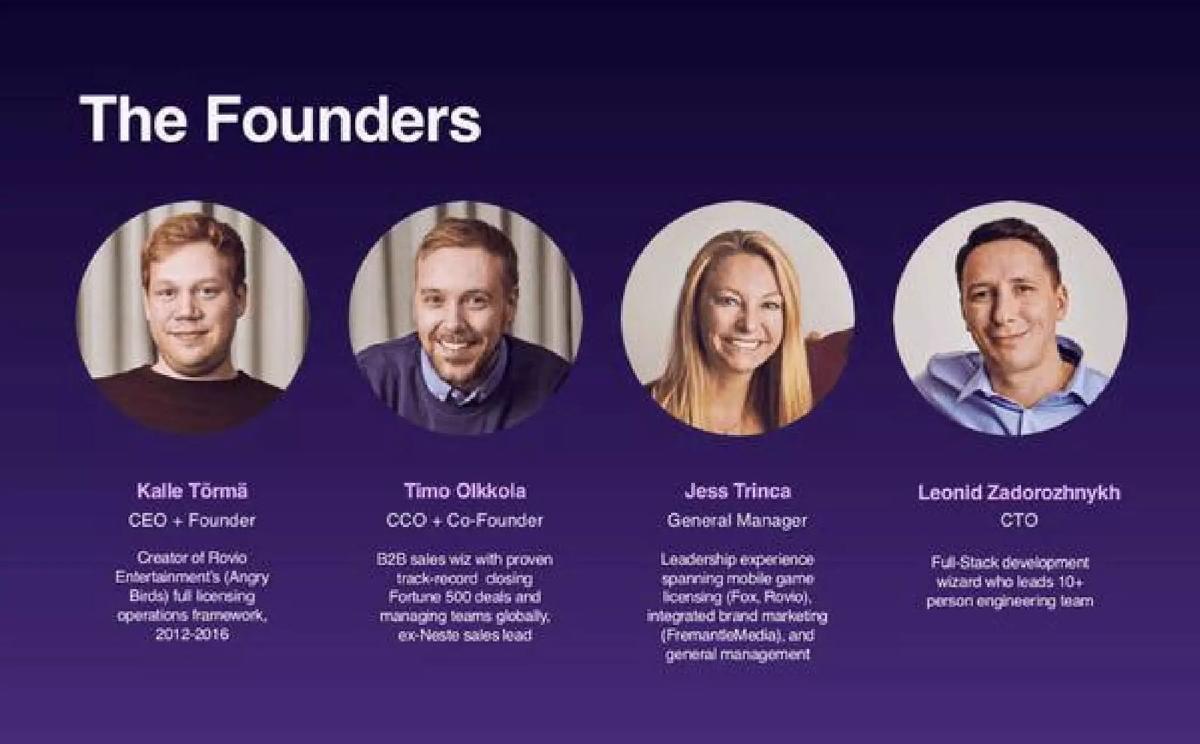
Licensing management software for brands. Four people with photos, role and one short line each.
Flowhaven deck, slide 3. Exact stored slide matched to this analysis.
Our analysis: The CEO ran the exact process the product replaces, at one of the best-known licensing programmes of its time.
Evidence and limitation: Roles and dates as stated; not verified.
What a founder can adapt: If a founder ran your customer's workflow, name the company and the years in the first line.
Supporting analysis
What the deck claims: Kalle Törmä, CEO + Founder: "Creator of Rovio Entertainment's (Angry Birds) full licensing operations framework, 2012-2016." Timo Olkkola, CCO + Co-Founder: "B2B sales wiz with proven track-record closing Fortune 500 deals and managing teams globally, ex-Neste sales lead." Jess Trinca, General Manager: "mobile game licensing (Fox, Rovio), integrated brand marketing (FremantleMedia)." Leonid Zadorozhnykh, CTO: "leads 10+ person engineering team."
Presentation choice: Domain insight and business selling are each owned by a named founder, in one line apiece.
When it does not fit: Replace "sales wiz" and "development wizard" with a figure: deals closed, systems shipped.
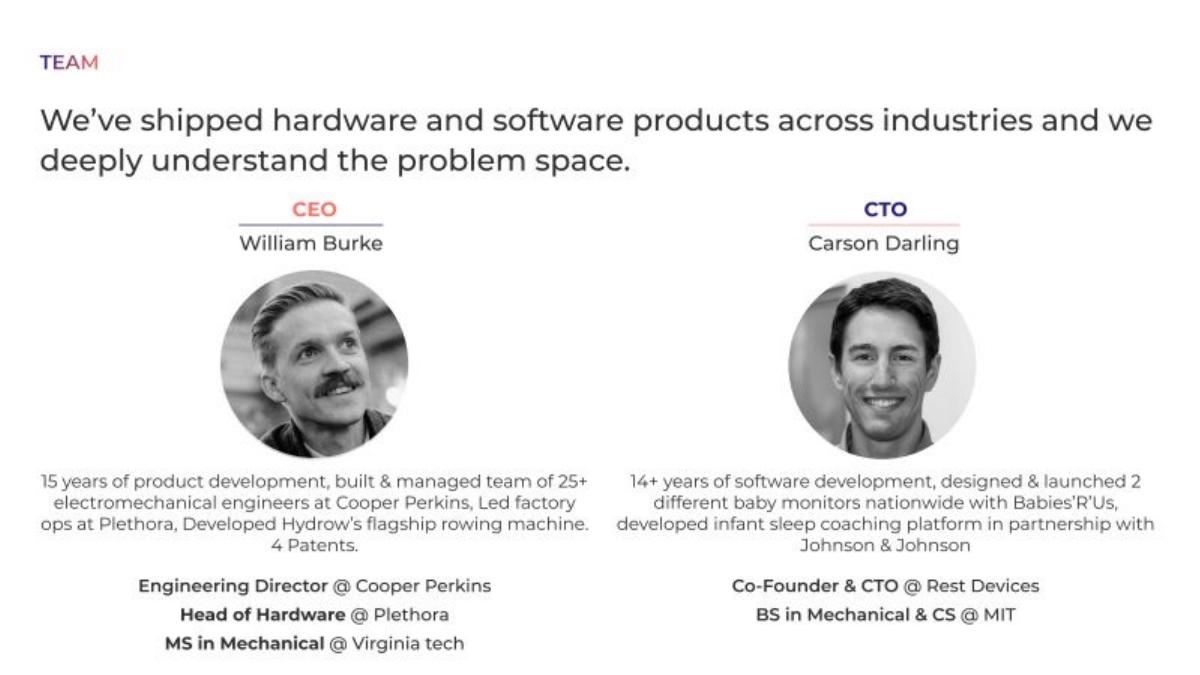
Collaboration software for hardware engineering teams. Two founders under a one-sentence claim.
Five Flute deck, slide 2. Exact stored slide matched to this analysis.
Our analysis: Both founders are the customer: they have run the hardware engineering teams the product is built for.
Evidence and limitation: Years, team size and patents as stated; not verified.
What a founder can adapt: Write a headline that states why this team, then give each founder the proof for it.
Supporting analysis
What the deck claims: "We've shipped hardware and software products across industries and we deeply understand the problem space." William Burke, CEO: "15 years of product development, built & managed team of 25+ electromechanical engineers at Cooper Perkins… Developed Hydrow's flagship rowing machine. 4 Patents." Carson Darling, CTO: "14+ years of software development, designed & launched 2 different baby monitors nationwide with Babies'R'Us… Co-Founder & CTO @ Rest Devices."
Presentation choice: The headline makes one claim and every line underneath proves it.
When it does not fit: Say who will sell. Neither founder shows sales experience, the obvious gap for a seed SaaS company.
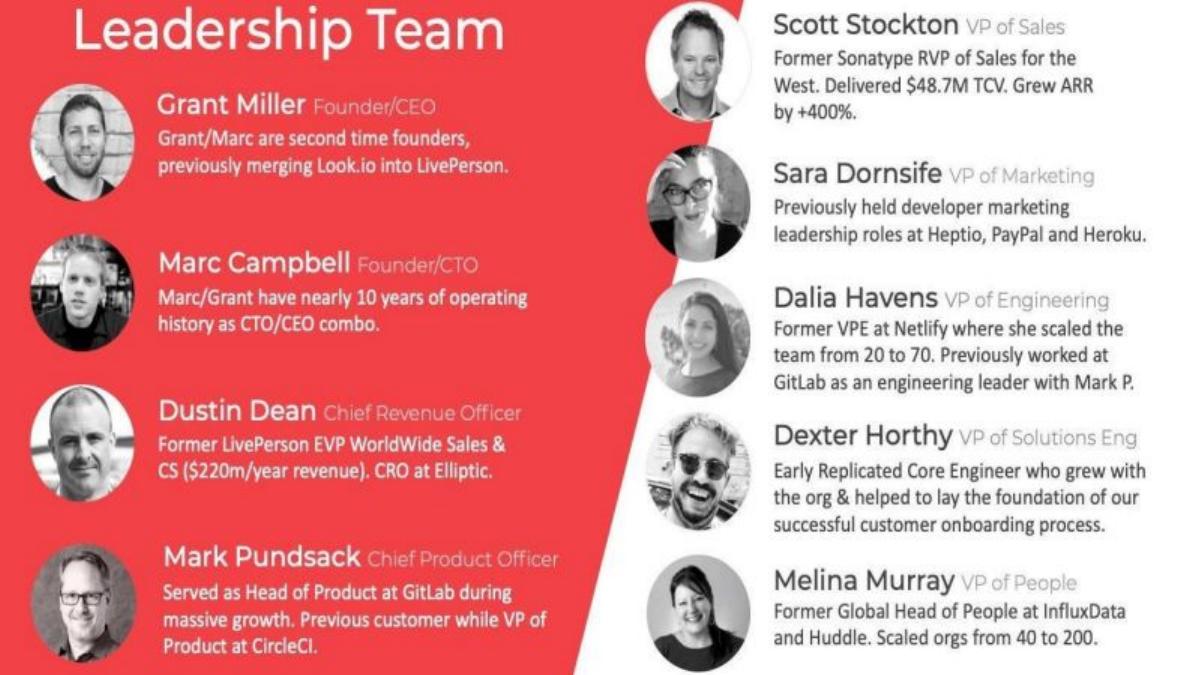
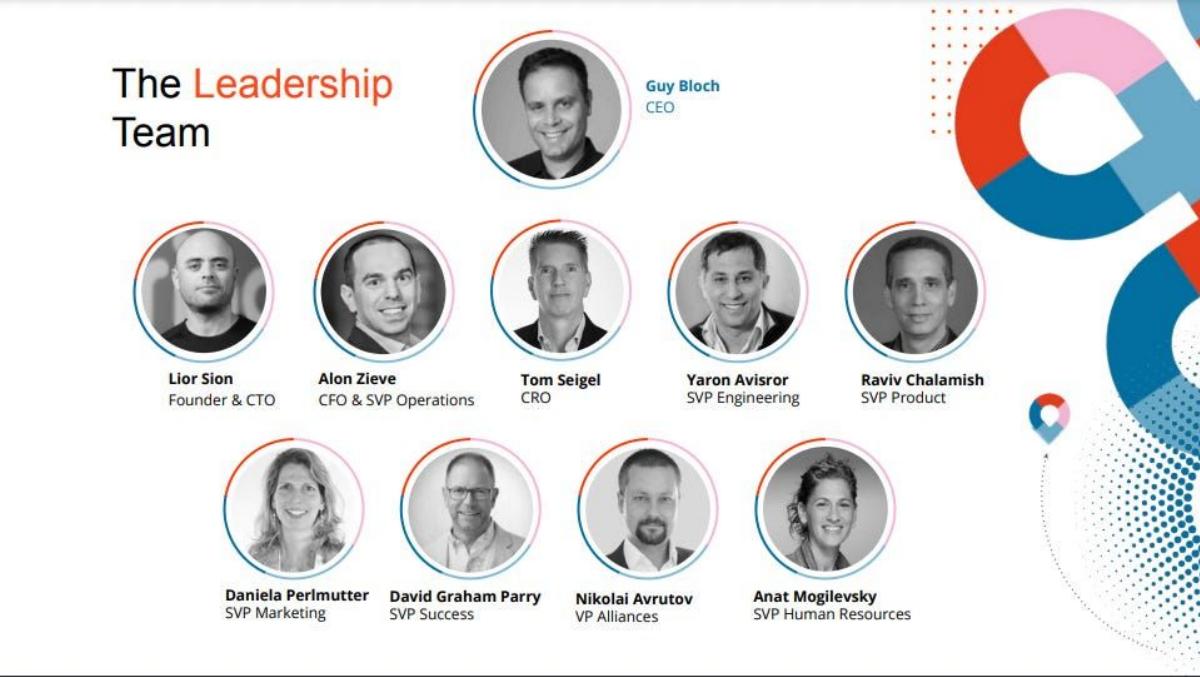
Software distribution for enterprise vendors, at Series C. Nine leaders, each with a result.
Replicated deck, slide 2. Exact stored slide matched to this analysis.
Our analysis: At this stage investors are backing a leadership bench, and each line shows a number at the scale the company is heading for.
Evidence and limitation: Revenue, contract value and team sizes as stated; not verified.
What a founder can adapt: For each executive, give the result that matches their job at your next stage: revenue for sales, team size for engineering.
Supporting analysis
What the deck claims: "Grant/Marc are second time founders, previously merging Look.io into LivePerson." Dustin Dean, Chief Revenue Officer: "Former LivePerson EVP WorldWide Sales & CS ($220m/year revenue)." Mark Pundsack, Chief Product Officer: "Head of Product at GitLab during massive growth. Previous customer while VP of Product at CircleCI." Scott Stockton, VP of Sales: "Delivered $48.7M TCV. Grew ARR by +400%." Dalia Havens, VP of Engineering: "scaled the team from 20 to 70."
Presentation choice: "Previous customer" is domain insight in two words: the product chief bought Replicated before joining.
When it does not fit: Nine people is right at Series C, not at seed; early decks should show the founders and name the gaps.
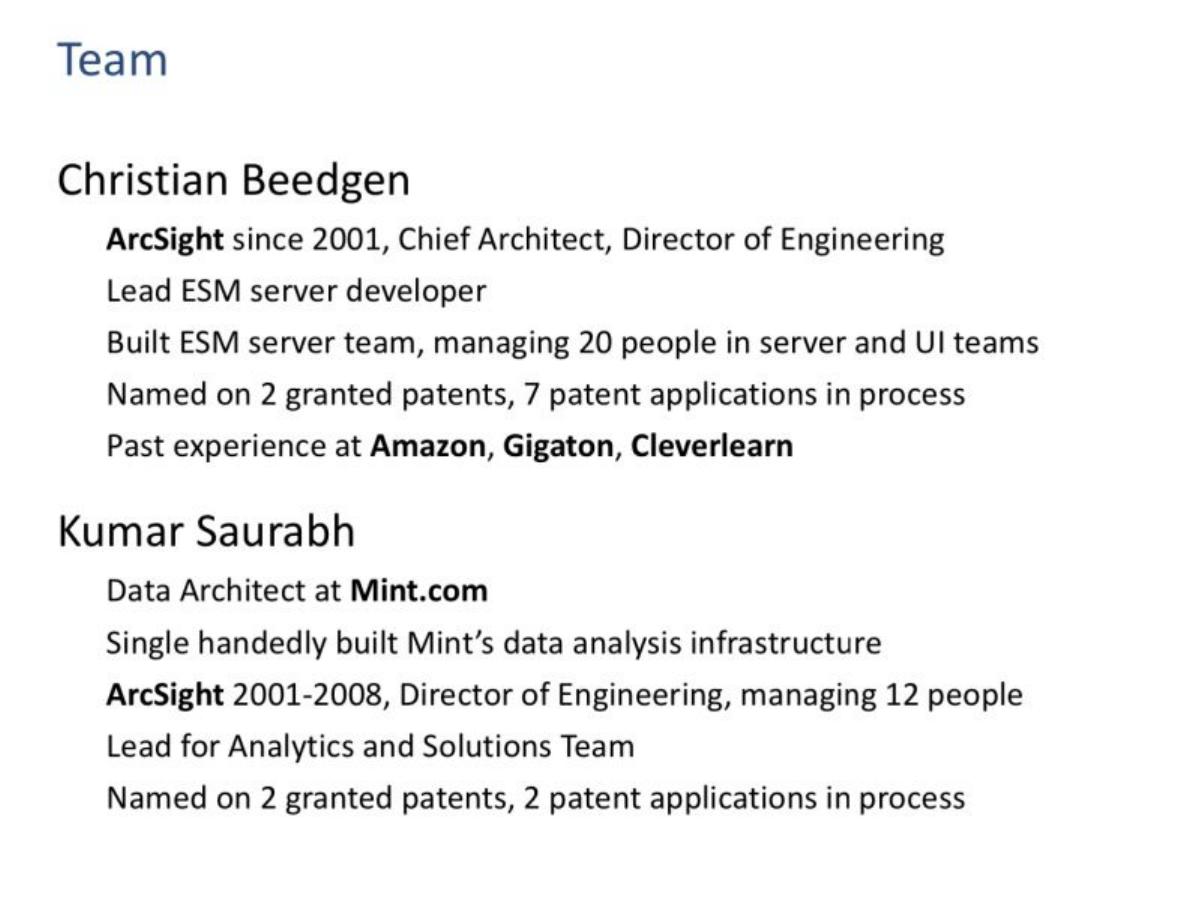
Cloud log analytics, an early deck. Two founders, text only, five lines each.
Sumo Logic deck, slide 4. Exact stored slide matched to this analysis.
Our analysis: Both founders built the category leader's core product (ArcSight, security event management) and one built data infrastructure at a consumer scale-up.
Evidence and limitation: Patents, team sizes and dates as stated; not verified.
What a founder can adapt: If your risk is technical, lead with what the founders built, its scale and any patents.
Supporting analysis
What the deck claims: Christian Beedgen: "ArcSight since 2001, Chief Architect, Director of Engineering. Lead ESM server developer. Built ESM server team, managing 20 people… Named on 2 granted patents, 7 patent applications in process." Kumar Saurabh: "Data Architect at Mint.com. Single handedly built Mint's data analysis infrastructure. ArcSight 2001-2008, Director of Engineering, managing 12 people."
Presentation choice: For infrastructure software, investors want proof the team can build what enterprises will trust with their data, and this slide gives it.
When it does not fit: Add photos and titles, and say who sells. Nothing here covers the buyer or the sale.
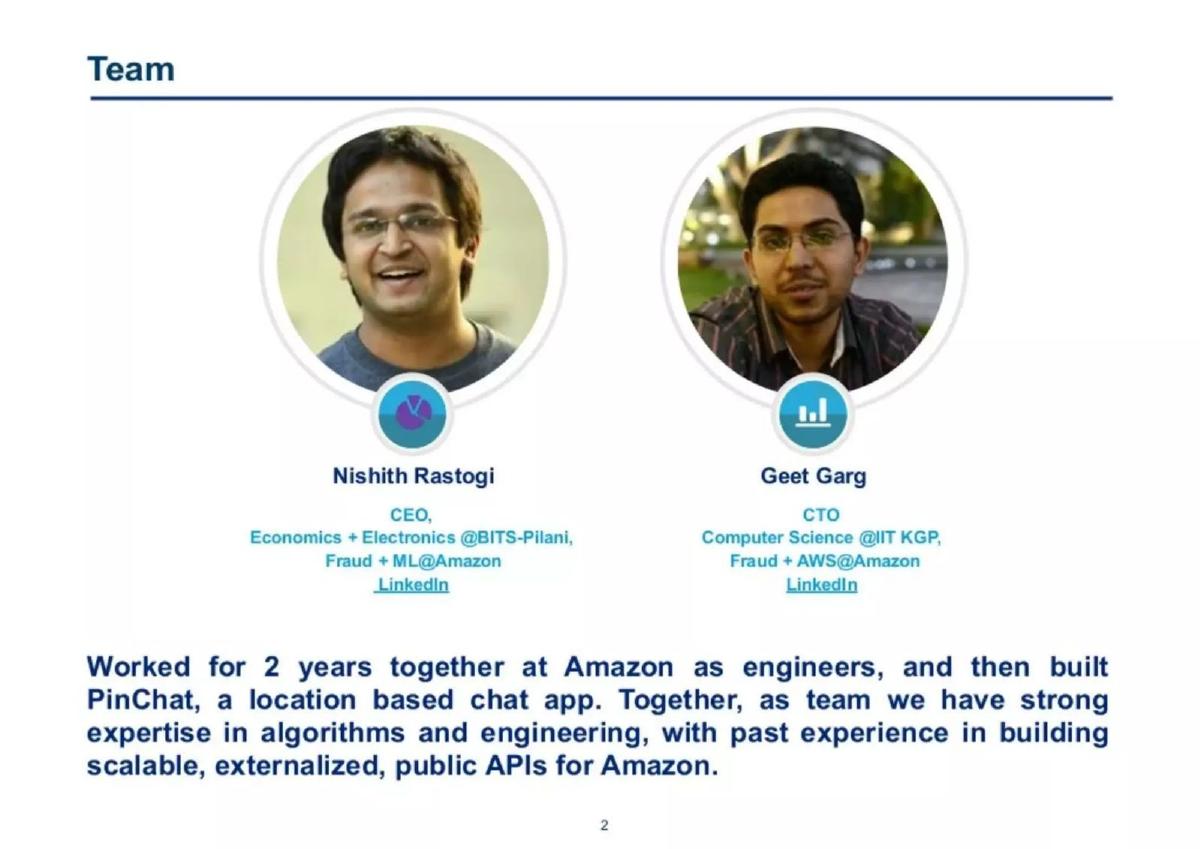
Location intelligence software sold to businesses. Two founders and one paragraph on their history.
Locus deck, slide 2. Exact stored slide matched to this analysis.
Our analysis: It answers a question investors ask about every pair of founders: have they worked together, and shipped something?
Evidence and limitation: Employers and schools as stated; no figures.
What a founder can adapt: If the founders worked together before, say for how long and what they shipped.
Supporting analysis
What the deck claims: Nishith Rastogi, CEO: "Economics + Electronics @BITS-Pilani, Fraud + ML@Amazon." Geet Garg, CTO: "Computer Science @IIT KGP, Fraud + AWS@Amazon." "Worked for 2 years together at Amazon as engineers, and then built PinChat, a location based chat app. Together, as team we have strong expertise in algorithms and engineering, with past experience in building scalable, externalized, public APIs for Amazon."
Presentation choice: "Public APIs for Amazon" is directly relevant for a product that businesses will call through an API.
When it does not fit: Add one result each (users, requests handled, systems launched) and say who sells to businesses.
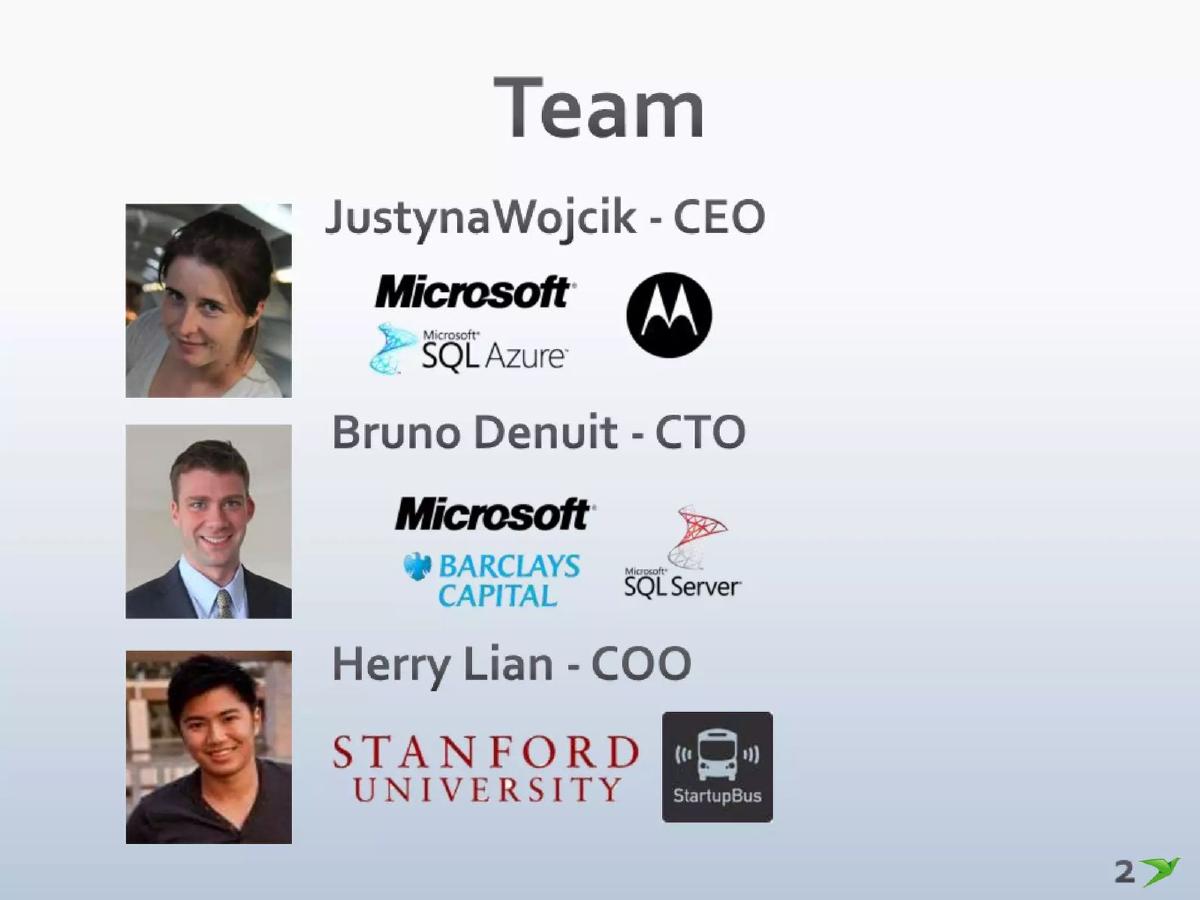
Task-based email software. A weaker example, included on purpose: names, titles and employer logos.
Contur deck, slide 2. Exact stored slide matched to this analysis.
Our analysis: The logos suggest big-company engineering, but not what anyone did there or why it matters for email.
Evidence and limitation: Logos only: no roles held, results or years.
What a founder can adapt: Turn each logo into a line: what you built or ran there, and at what scale.
Supporting analysis
What the deck claims: "Team." Justyna Wojcik, CEO, with Microsoft, SQL Azure and Motorola logos. Bruno Denuit, CTO, with Microsoft, Barclays Capital and SQL Server logos. Herry Lian, COO, with Stanford University and StartupBus logos.
Presentation choice: It shows the gap between a famous employer and proof: an investor learns where people worked, not what they can do.
When it does not fit: Say who knows the buyer and who will sell. Nothing on the slide covers either.
Whether each slide shows first-hand knowledge of the customer's work, the ability to sell to businesses, and the ability to build software at scale.
Example
Domain insight
Sells to businesses
Builds at scale
Flowhaven
Yes (ran Rovio licensing)
Yes (Fortune 500 deals)
Partly (10+ engineers)
Five Flute
Yes (ran engineering teams)
No
Yes (shipped products, patents)
Replicated
Yes ("previous customer")
Yes ($220m/year, $48.7M TCV)
Yes (team 20 to 70)
Sumo Logic
Yes (built ArcSight)
No
Yes (patents, Mint data)
Locus
Partly (Amazon fraud)
No
Yes (Amazon public APIs)
Topo
Partly (SaaS backers)
Partly (go-to-market role)
No proof given
Bringg
No proof given
Partly (CRO named)
No proof given
Contur
No
No
Partly (employer logos)
Key Takeaways
Lead with domain insight: a founder who did the customer's job, or ran the workflow you automate.
Name who sells to businesses, with one number: deals closed, revenue run or ARR grown.
Show who builds, with proof the software will hold up at scale.
Write one result per person. An employer logo is a clue, not proof.
Match the slide to your stage: two founders at seed, a full leadership bench only later.
Build your SaaS team slide
One line per person, each proving one part of the plan.
Domain insight. Who has done your customer's job or run the workflow you automate? Where, and for how long?
Selling. Who will close business customers? What deals, revenue or ARR proves it?
Building. Who has built software businesses relied on? At what scale?
Gaps. Which of the three is missing, and who (hire, advisor or board member) covers it?
Copyable framework: [Full name], [role]: [one result in domain, selling or building, with a number]. Repeat for each founder; advisors on a separate row.
Illustrative example 1 — written by us
Before: Anna Lee, CEO (logo: Deloitte). Mark Ortiz, CTO (logo: Google). Experienced, passionate team.
After: Anna Lee, CEO: ran accounts payable for a 2,000-person retailer for six years, the process we automate. Mark Ortiz, CTO: built Google Cloud billing services used by 40,000 businesses. Sales: advisor Priya Shah, former VP Sales at an accounting software company ($30M ARR).
What improved: Our illustrative rewrite; names and figures are invented for the example. Each line proves domain insight, selling or building.
What this guide adds
The general team slide guide covers founders in any business. Business buyers pay for software that fits a workflow they already run, and they buy through a sales process, so investors read a SaaS team slide for two things a consumer investor weighs less: first-hand knowledge of the buyer's job, and the ability to sell to companies. This guide compares how real SaaS decks show that.
It pairs with the B2B SaaS problem, solution and traction guides; together they cover the four slides investors read most closely in a software deck.
Three things a SaaS team slide proves
Domain insight: someone has done the customer's job or run the workflow (Flowhaven, Five Flute, Sumo Logic, Replicated).
Selling to businesses: someone has closed company deals or run revenue (Replicated, Flowhaven, Topo).
Building at scale: someone has built software that businesses relied on (Sumo Logic, Locus, Replicated).
Seed decks usually cover two of the three and say who fills the gap. Later decks show all three with numbers.
Common mistakes
Logos instead of results. A famous employer says where someone worked, not what they did there.
No one owns the sale. Business software is sold, not found. Name who closes customers.
Domain insight left implicit. If a founder did the customer's job, say so first.
Growth-stage bench at seed. Show founders and name the gaps; add executives when you have them.
Adjectives in place of numbers. "Sales wiz" and "world class" prove nothing; a deal size or team size does.
Diagnostic checklist
Every founder has a full name, photo and role.
One line shows a founder has lived the customer's problem.
Someone on the slide owns selling, with a number.
Someone has built software businesses relied on, with its scale.
Advisors and backers are labelled and kept separate from founders.
Frequently asked questions
How we chose these examples
Corpus: published pitch deck teardowns on StartupFundraising.com. Founder-uploaded private decks are excluded.
Selection (2026-09-25): we searched extracted text of slides 2–6 for team, founder and leadership slides in decks whose recorded sector is SaaS, software, B2B or enterprise, excluding fintech and marketplace decks. About forty candidates were read; slides already used in other team guides, investor-only slides and consumer products were set aside. Wasabi's leadership slide was set aside because it is marked confidential. Contur is kept as a weaker contrast.
Overlap check: none of these eight slides appears in another guide.
Review: all eight stored slide images were inspected on 2026-09-25 and matched to company, deck and slide number (editorial model review). No person has yet completed an editorial review of this page.
Claims are as shown on the slides; we have not verified them. We make no claim that any slide caused a fundraising outcome.