Replicated raised $50M in 2021 with a Series C deck that emphasizes a fundamental platform shift in enterprise software. The presentation moves away from traditional SaaS vs. On-Premise debates, instead introducing the 'Multi-prem' model powered by Kubernetes. The deck is heavy on social proof, showcasing a massive logo wall of high-growth software vendors and a staggering statistic: over 60 of the Fortune 100 companies run Replicated-powered applications. While it lacks a traditional team slide or detailed unit economics in this 13-slide subset, it excels at demonstrating product-market fit…
Key takeaways
- Replicated defines a new 'Multi-prem' hybrid model to address the gap between SaaS and private instances (Slide 4).
- The company positions its solution as a necessity for three distinct vendor types: Open Core, On-prem, and SaaS (Slide 5).
- Installation speed is a core value prop, with 65% of Replicated customers installing in under 7 days compared to 16% for the industry (Slide 6).
- The product is bifurcated into 'Vendor Tools' for operationalization and 'Admin Tools' for end-customer automation (Slide 7).
- Customer density is extremely high across Dev, Ops, Security, and Data sectors, including logos like HashiCorp and S&P Global (Slide 8).
- The Go-to-Market team saw massive 11x growth from 3 to 33 members in a single year (Slide 10).
- The Series C round targeted $50M to create the category of '3rd-party application management' (Slide 11).
- Enterprise penetration is the primary traction metric, with over 60 Fortune 100 companies running their applications (Slide 12).
The Narrative of Category Creation
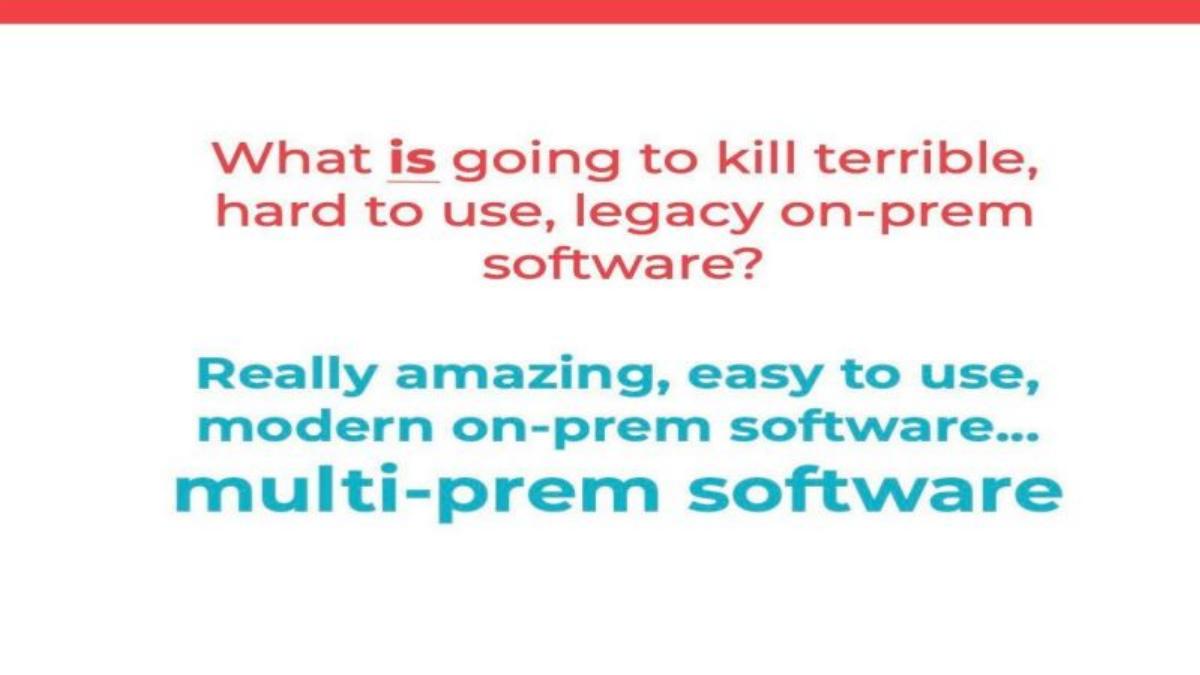
Replicated’s Series C deck is a masterclass in narrative-driven fundraising. By the time a company reaches Series C, the questions from investors shift from "Will this work?" to "How big can this actually get?" Replicated answers this by framing their technology not just as a tool, but as the foundation of a new era in enterprise software. They move the conversation away from the limitations of legacy on-premise software and the privacy concerns of pure SaaS, landing instead on a proprietary term: Multi-prem .
Slide 1: Title and Vision
The deck opens with a bold red brand identity and a clear subtitle: "Multi-prem software for the Kubernetes era." This immediately anchors the company in a specific technological movement (Kubernetes) while signaling that they are solving the deployment problem for modern, containerized applications. It is a high-level value proposition that speaks directly to the CTOs and VPs of Engineering who comprise their primary buyer persona.
Slide 2 & 3: Market Opportunity and the 'Benioff' Critique
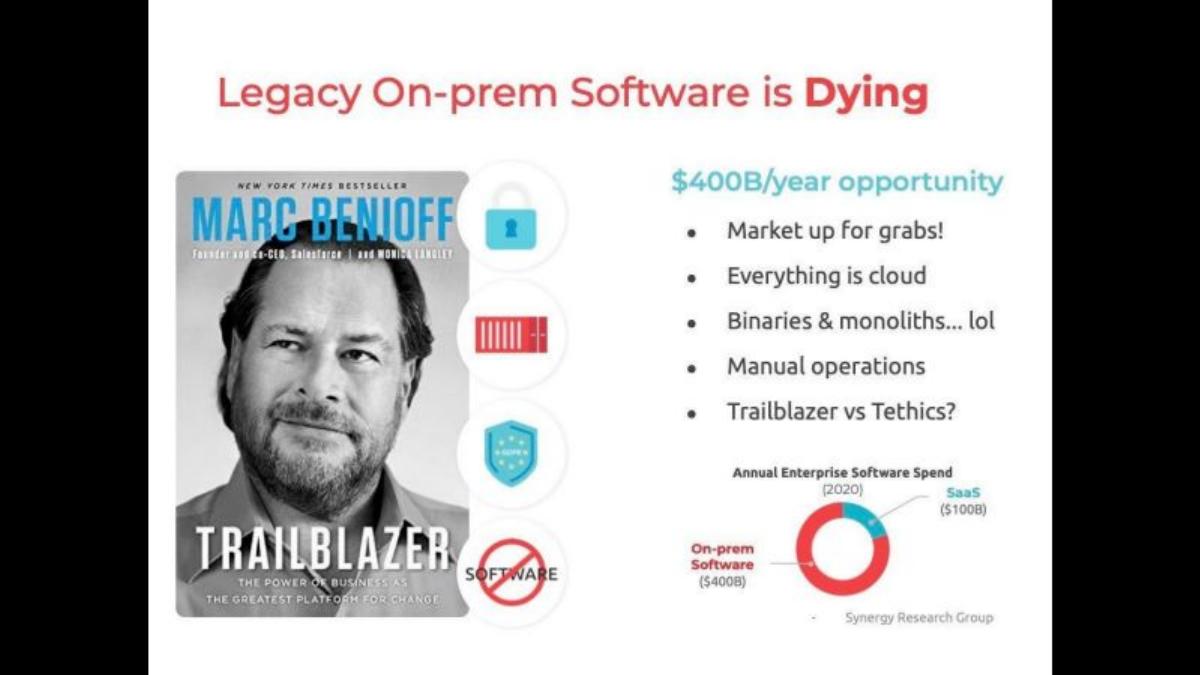
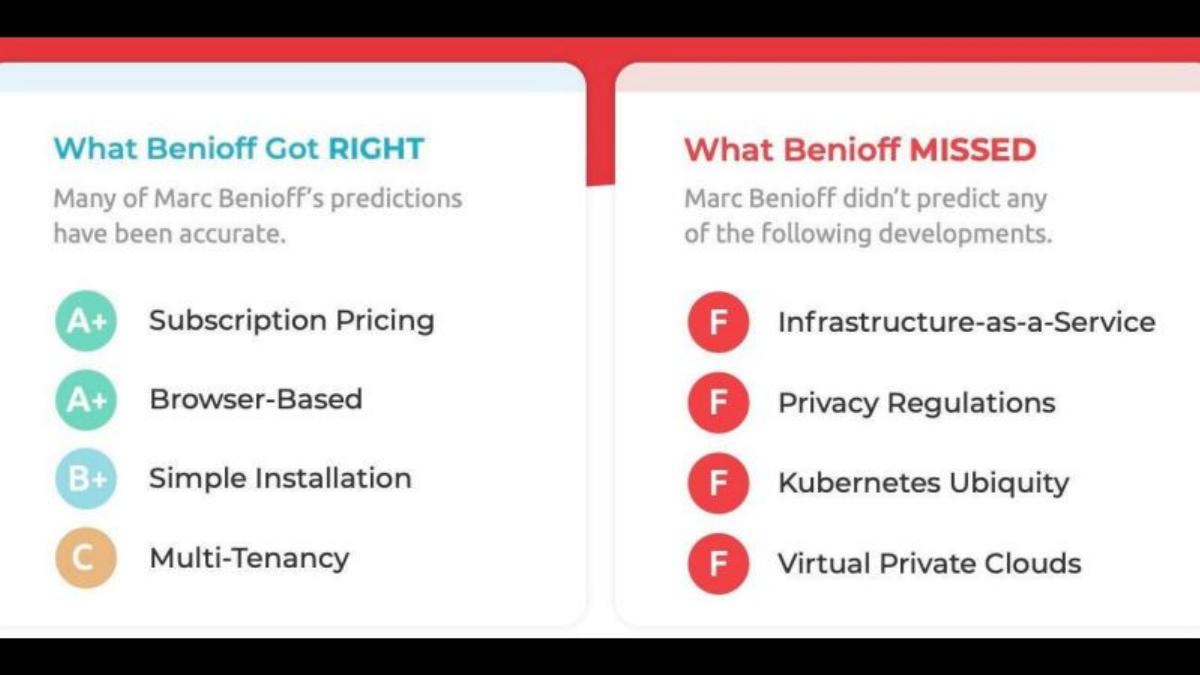
Slide 2 introduces the "Market Opportunity" as a "platform shift at the foundation of enterprise software." This is followed by a clever rhetorical device on Slide 3: "What Benioff Got RIGHT" vs. "What Benioff MISSED." By referencing Marc Benioff (Salesforce), Replicated acknowledges the success of the SaaS model (Subscription Pricing, Browser-Based) while highlighting its modern failures. According to the slide, Benioff missed the rise of Infrastructure-as-a-Service, Privacy Regulations, Kubernetes Ubiquity, and Virtual Private Clouds . This frames Replicated as the necessary evolution of the cloud revolution—the solution for the things the first wave of SaaS couldn't handle.
Slide 4: Defining the Multi-prem Model
Slide 4 is the conceptual heart of the deck. It visualizes the "New Hybrid 'Multi-prem' Model." It breaks the solution into three pillars: Automated Ops (using kots), Private Instances (bridging public internet and private networks), and Complex Environments (AWS, Azure, GCP, GovCloud). The punchline at the bottom of the slide is a powerful reversal of the SaaS status quo: "Enterprises can stop sending data to apps, & start bringing apps to the data." This addresses the massive enterprise shift toward data sovereignty and security.
Slide 5 & 6: The Vendor Need and Quantifiable Value
Slide 5 argues that "Every Software Vendor Needs Replicated," categorizing their market into Open Core (HashiCorp, dbt), On-prem (UiPath, Tripwire), and SaaS (CircleCI, Snyk). This demonstrates a massive Total Addressable Market (TAM) across all software delivery styles. Slide 6 then provides the "hard" evidence: Replicated Customers Install 4x Faster . Using a survey of 405 industry ISVs vs. 50 Replicated customers, they show that 65% of their users install in under 7 days, compared to just 16% of the broader industry. This is a critical metric for Series C—it proves the product delivers a massive, measurable efficiency gain.
Slide 7 & 8: Product Architecture and Social Proof
Slide 7 splits the product into Vendor Tools (for the software seller) and Admin Tools (for the end customer). This distinction is important because it shows Replicated manages the entire lifecycle of the software, from release channels and licensing to preflight checks and updates. Slide 8 is a "logo wall" of impressive proportions. It organizes dozens of high-growth tech companies into categories like Dev, Ops, Security, Data, Comms, and AI/ML. Seeing names like HashiCorp, S&P Global, and dbt on a single slide provides the ultimate validation of product-market fit.
Slide 9 & 10: The Go-to-Market Engine
Slide 9 serves as a transition to the "Go-to-Market" section, followed by Slide 10, which details a "Scalable Sales Model." This slide is dense with execution metrics. It shows the GTM team grew from 3 to 33 in a single year and that the first five Account Executive (AE) hires achieved 135% Net Quota Attainment over five quarters. This is exactly what Series C investors want to see: a proven sales "pod" that can be replicated (pun intended) globally. The slide also mentions an initial international presence in Israel and plans for EMEA.
Slide 11: Funding History and the $50M Ask
Slide 11 details the company's financial pedigree. It notes $31.7m raised to date , with leads from Two Sigma Ventures and Amplify Partners. Crucially, it mentions they still have $17m+ in the bank , suggesting they are raising from a position of strength rather than necessity. The "$50m Series C" section outlines the plan: hire talent from exits like CoreOS and Rancher, and create the category of "3rd-party application management."
Slide 12: Enterprise Penetration
The final content slide (Slide 12) focuses on the "Fortune 100." It claims that over 60 Fortune 100 companies are running Replicated-powered applications. This is a staggering statistic. It means that while Replicated sells to vendors (B2B), their footprint inside the world's largest enterprises is already massive. This "leveraged penetration" is a powerful moat; once an IT org is comfortable running Replicated-managed apps, the friction for the next vendor to use Replicated disappears.
What Replicated Does Well
Category Creation: They don't just say they are "better on-premise software." They invented the term "Multi-prem" and backed it up with a logical framework of why SaaS is no longer sufficient for the modern enterprise. This allows them to command a higher valuation as a category leader rather than a utility provider.
Efficiency Metrics: The 4x installation speed metric is the strongest slide in the deck. In enterprise software, "Time to Value" is a primary churn indicator. By proving they slash this time, they make themselves indispensable to the sales teams of their customers.
Sales Execution Proof: Many decks claim they will scale sales. Replicated proves they already have, citing 135% quota attainment. This de-risks the investment significantly, as the "money-in, revenue-out" machine is already calibrated.
What is Missing
Detailed Unit Economics: While we see quota attainment, we don't see the Customer Acquisition Cost (CAC), Lifetime Value (LTV), or Net Revenue Retention (NRR). For a Series C, these are usually expected in the full data room, even if omitted from the high-level pitch.
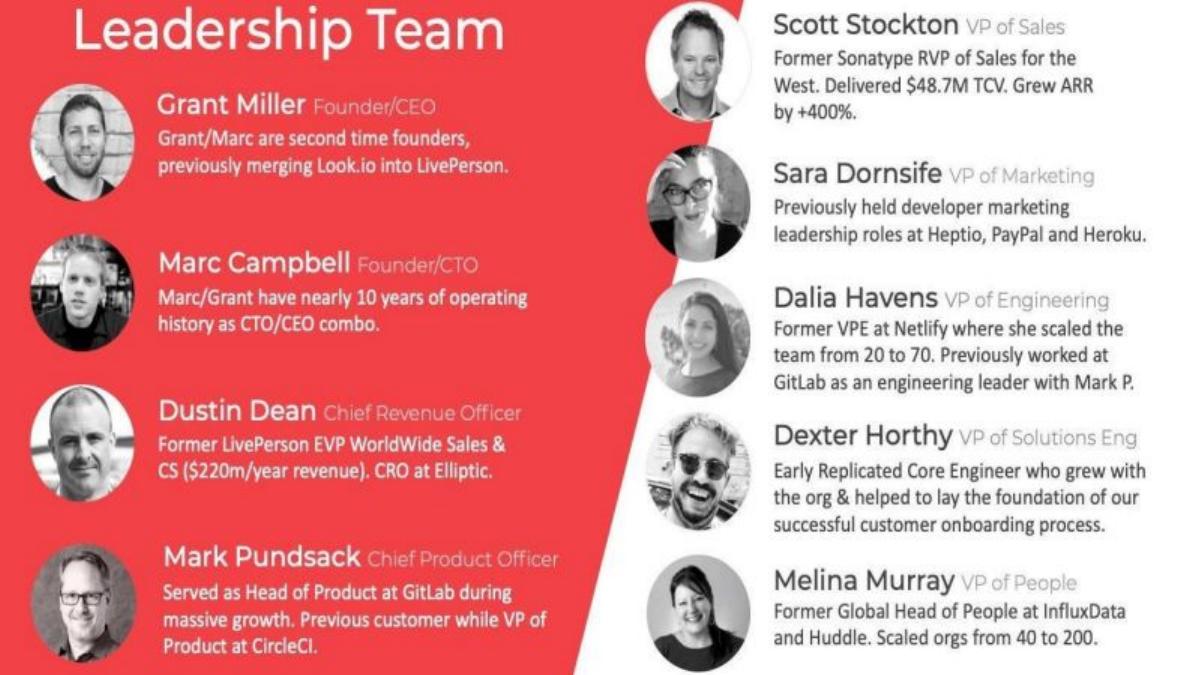
Team Slide: This specific 13-slide set does not include a team slide. While the GTM slide mentions a CEO, SE, and CRO, the backgrounds of the founders and the engineering leadership are absent. In a technical space like Kubernetes, the "pedigree" of the engineering team is usually a major selling point.
Competitive Landscape: The deck relies on the "Benioff missed this" narrative to explain their existence, but it doesn't address direct competitors or internal build-vs-buy arguments that large vendors often face.
What Other Founders Should Copy
The 'Leveraged Penetration' Argument: If you are a B2B2B company (selling to vendors who sell to enterprises), show the end-user reach. Replicated’s claim of 60/100 Fortune companies is more impressive than their own revenue numbers because it shows the scale of the ecosystem they influence.
Visualizing the Shift: Slide 4's diagram of "bringing apps to the data" is a perfect example of how to visualize a complex technical shift. It’s simple enough for a non-technical partner at a VC firm to understand, yet technical enough to remain credible.
The 'What the Giants Missed' Frame: Instead of a standard 2x2 competitive matrix, framing your company as the solution to the blind spots of an industry icon (like Benioff) creates a compelling "Why Now" story that feels inevitable rather than incremental.
Frequently asked questions
- What is the 'Multi-prem' model Replicated describes?
- On Slide 4, Replicated defines 'Multi-prem' as a hybrid model where enterprises stop sending data to apps and start bringing apps to the data. It utilizes machine-readable manifests to codify operational knowledge, allowing software to run in complex, private environments (like AWS GovCloud or VPCs) with the same ease as public SaaS, leveraging Kubernetes ubiquity.
- How does Replicated prove its value to software vendors?
- The deck uses a direct comparison of installation times on Slide 6. Using data from a Dimensional Research survey, they show that while only 16% of the industry can install and configure in under 7 days, 65% of Replicated customers achieve this. This 4x speed increase is a primary driver for vendor adoption.
- Who are Replicated's primary customers?
- Slide 8 categorizes their customers into functional buckets: Dev (CircleCI, Travis CI), Ops (HashiCorp, Puppet), Security (Snyk, Tripwire), and Data (DataStax, dbt). They also highlight AI/ML vendors like UiPath and Labelbox. The common thread is that these are software vendors who need to deploy their products into their own customers' secure environments.
- What was the specific 'Ask' in the Series C deck?
- According to Slide 11, Replicated was seeking $50M for their Series C. The stated goals for this capital were to bring in a strategic investor to add pipeline, hire talent from successful exits in the space (like CoreOS and Rancher), and establish the new category of 3rd-party application management.
- What is missing from this pitch deck?
- This 13-slide selection omits a dedicated team slide (though founders are mentioned in the GTM timeline), detailed financial projections, and specific unit economics like CAC or LTV. It also lacks a traditional competitor slide, choosing instead to focus on 'what Benioff missed' to frame the market gap.