Resgrid’s 11-slide deck from 2013 is a classic example of a founder-led seed pitch targeting a niche but vital market: emergency services. The company identifies a clear technical bottleneck—one-way radio communication—and proposes a cloud-based, bi-directional alternative. While the deck succeeds in demonstrating founder-market fit through Shawn Jackson’s background as a volunteer firefighter, it suffers from significant omissions common in early-stage decks. There is no financial ask, no clear pricing model (admitting it is 'not finalized'), and no detailed market sizing (TAM/SAM/SOM). Howe…
Key takeaways
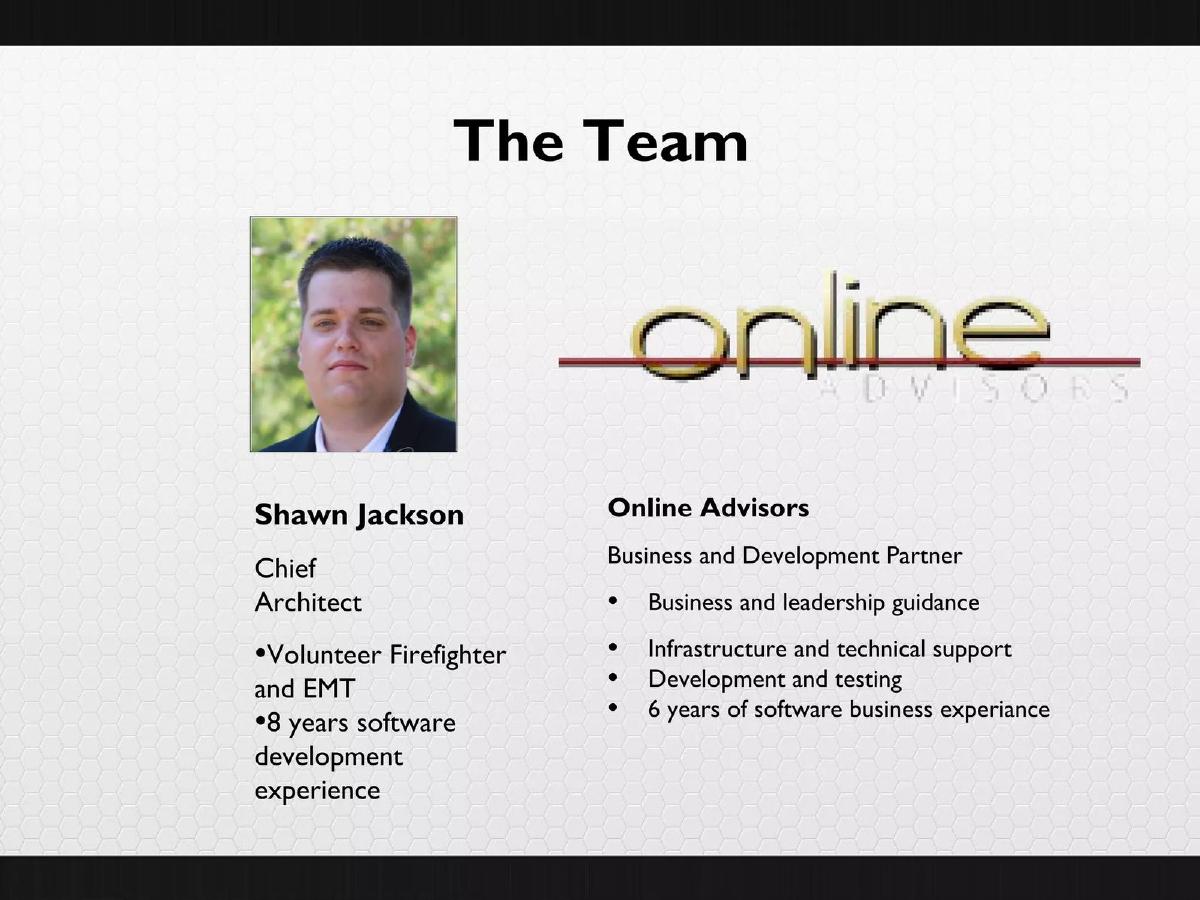
- The founder, Shawn Jackson, establishes immediate credibility on Slide 2 by highlighting his dual background as a volunteer firefighter/EMT and a software developer with 8 years of experience.
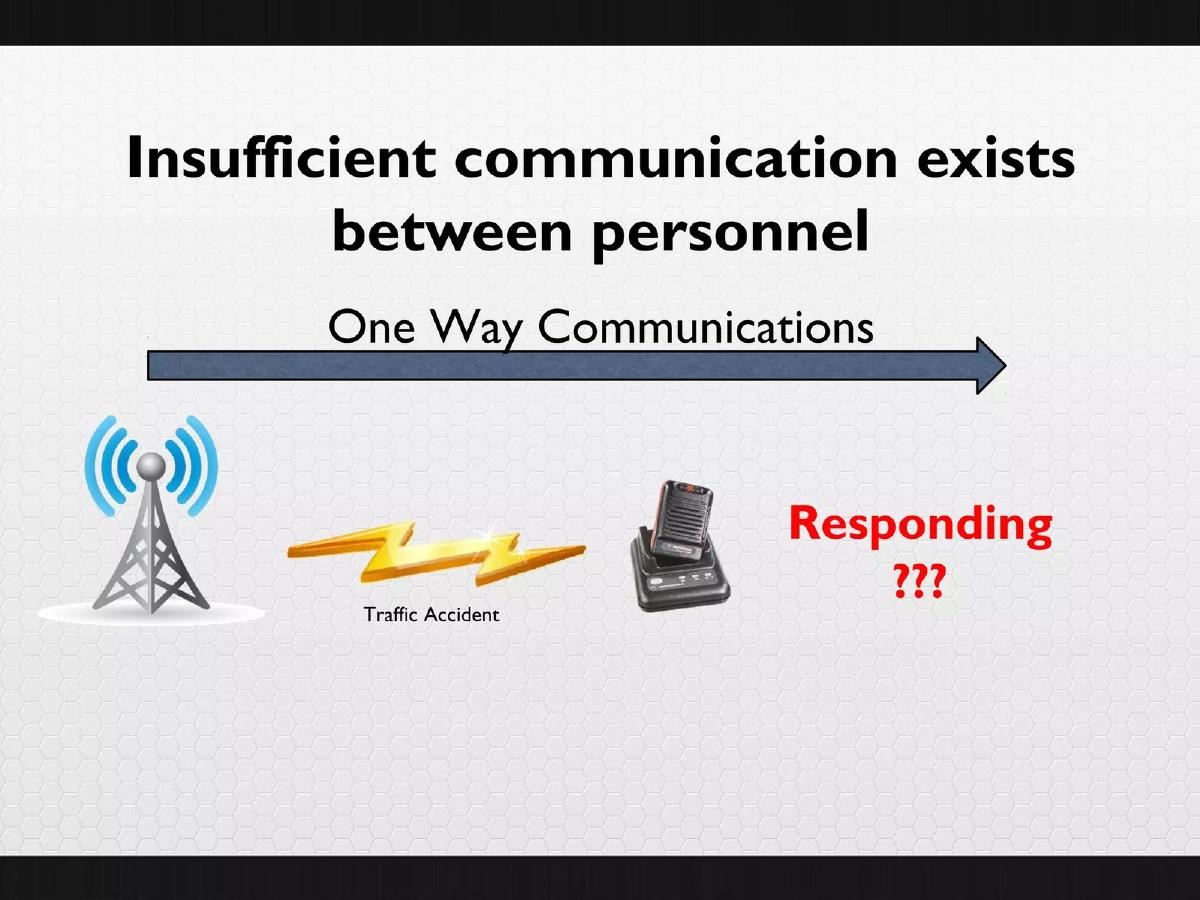
- The core problem is visualized on Slide 3 as 'Insufficient communication' caused by one-way radio systems that leave dispatchers wondering who is actually responding.
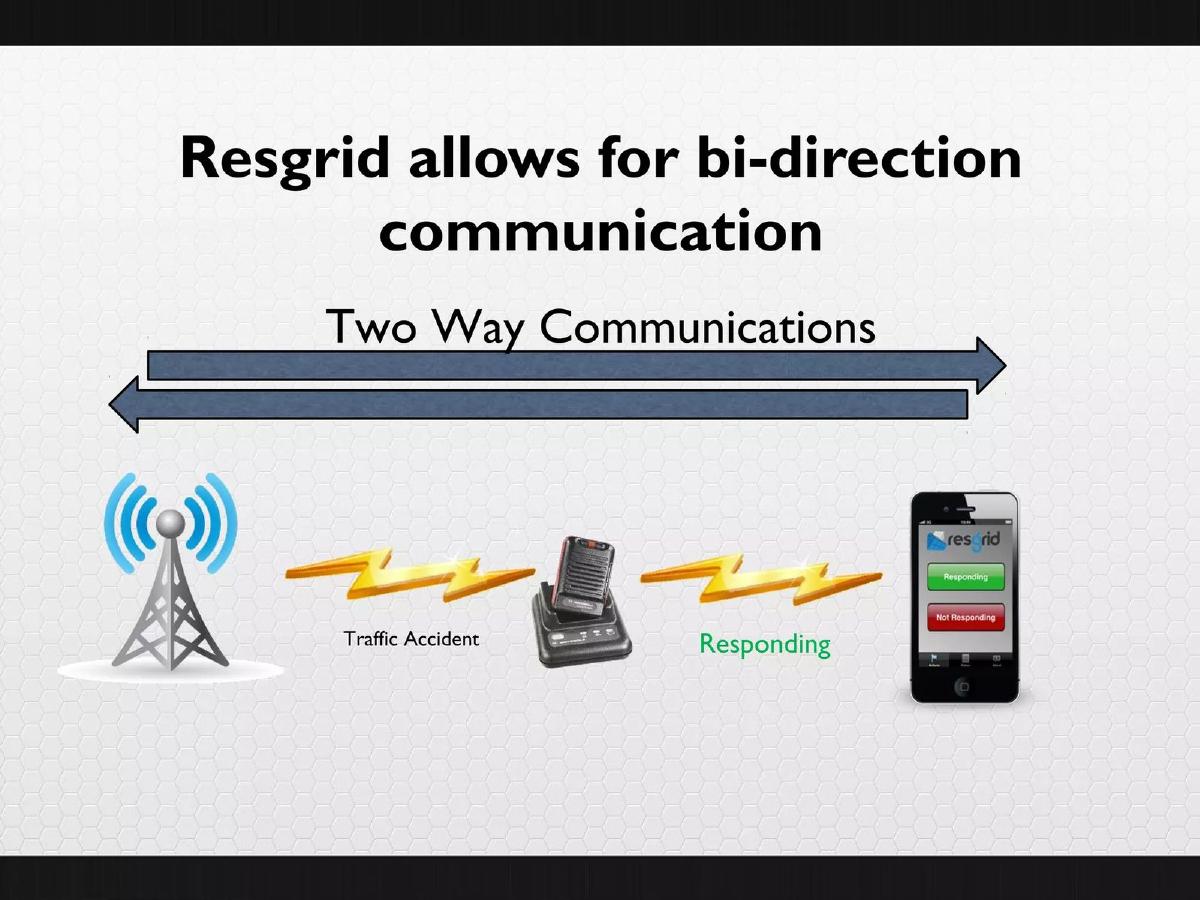
- The solution, shown on Slide 4, introduces bi-directional communication, allowing responders to confirm their status via a mobile app.
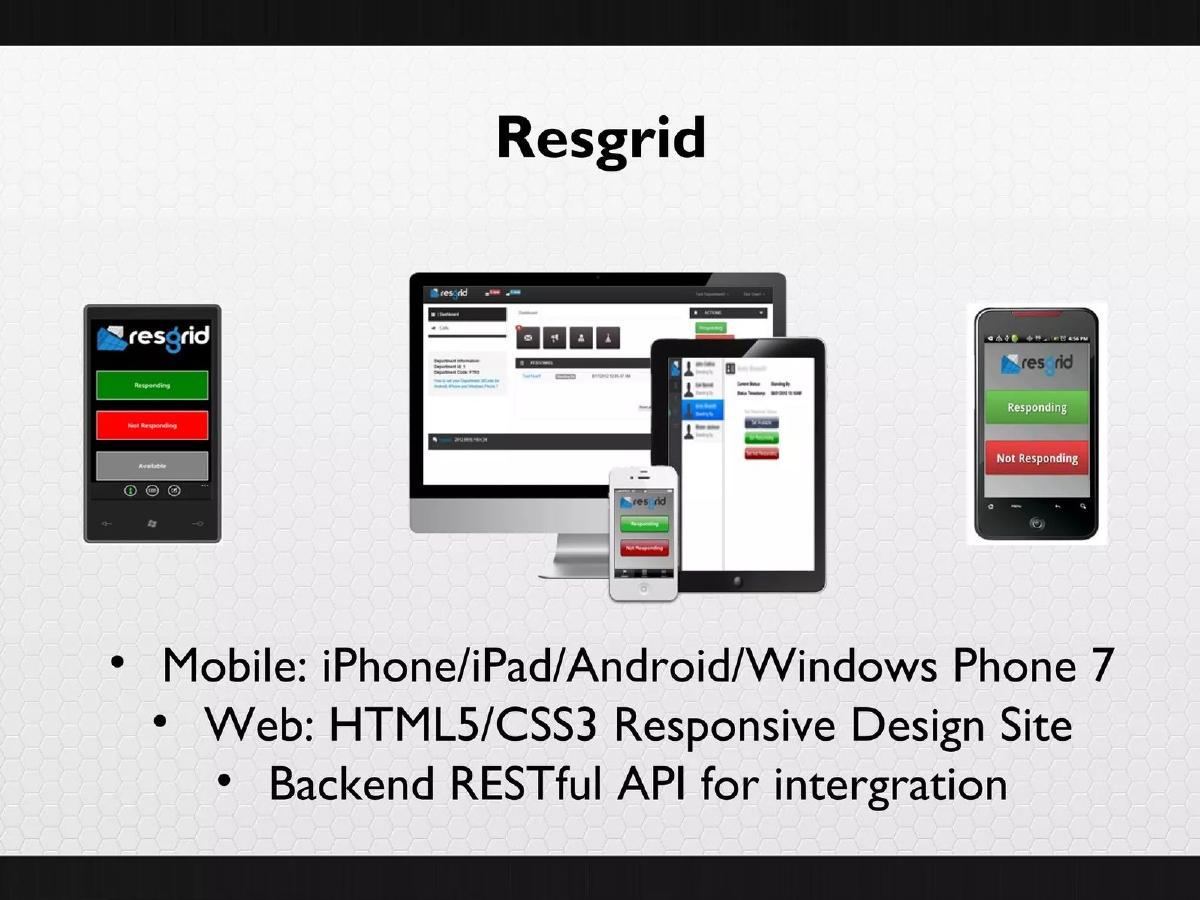
- Resgrid emphasizes a cross-platform approach on Slide 6, supporting iPhone, Android, and the now-defunct Windows Phone 7.
- The market focus on Slide 7 extends beyond Fire and EMS to include Search and Rescue, Hazmat, and any organization with dispersed personnel.
- The business model on Slide 8 is a five-tier subscription plan, though the slide explicitly states that 'Pricing has not been finalized at this point.'
- Competitive analysis on Slide 9 focuses on a single primary competitor, eDispatches, highlighting their lack of bi-directional support.
- Early traction is quantified on Slide 10, noting that as of October 20th, the platform had over 70 departments and 170 users in open beta.
The Resgrid Teardown: Pitching Public Safety SaaS
Resgrid’s 2013 seed deck is a utilitarian document. It doesn't rely on flashy design or complex metaphors; instead, it focuses on a very specific, high-stakes problem within the first responder community. At 11 slides, it is concise, but it leaves several vital investor questions unanswered. This teardown explores how a founder-market fit story can carry a deck, even when the financial specifics are thin.
The Introduction and Team (Slides 1-2)
Slide 1: Title The deck opens with the Resgrid logo and the name of the founder, Shawn Jackson. It is a standard, no-frills title slide that establishes the brand immediately.
Slide 2: The Team This is arguably the strongest slide in the deck. Shawn Jackson is listed as the Chief Architect. His credentials are perfectly tailored for this venture: he is a Volunteer Firefighter and EMT, and he has 8 years of software development experience. This combination of 'boots on the ground' experience and technical proficiency is what investors call founder-market fit. The slide also introduces 'Online Advisors' as a business and development partner, providing infrastructure and technical support. While it's unusual to see a partner firm taking up half the team slide, it likely served to mitigate concerns about a solo founder's ability to scale the technical infrastructure.
The Problem and Solution (Slides 3-4)
Slide 3: Insufficient Communication The problem is presented through a simple diagram. It shows a radio tower sending a one-way signal about a 'Traffic Accident' to a pager/radio. The text 'Responding ???' in red highlights the gap: the dispatcher has no idea if anyone is actually coming. In emergency services, this lack of data is a life-safety issue.
Slide 4: Bi-Directional Communication The solution slide mirrors the problem slide but adds a return arrow. It introduces the Resgrid mobile app, which features 'Responding' and 'Not Responding' buttons. This simple 'Two Way Communication' loop is the core of the Resgrid value proposition. It transforms a broadcast system into a data-driven coordination system.
Product and Market (Slides 5-7)
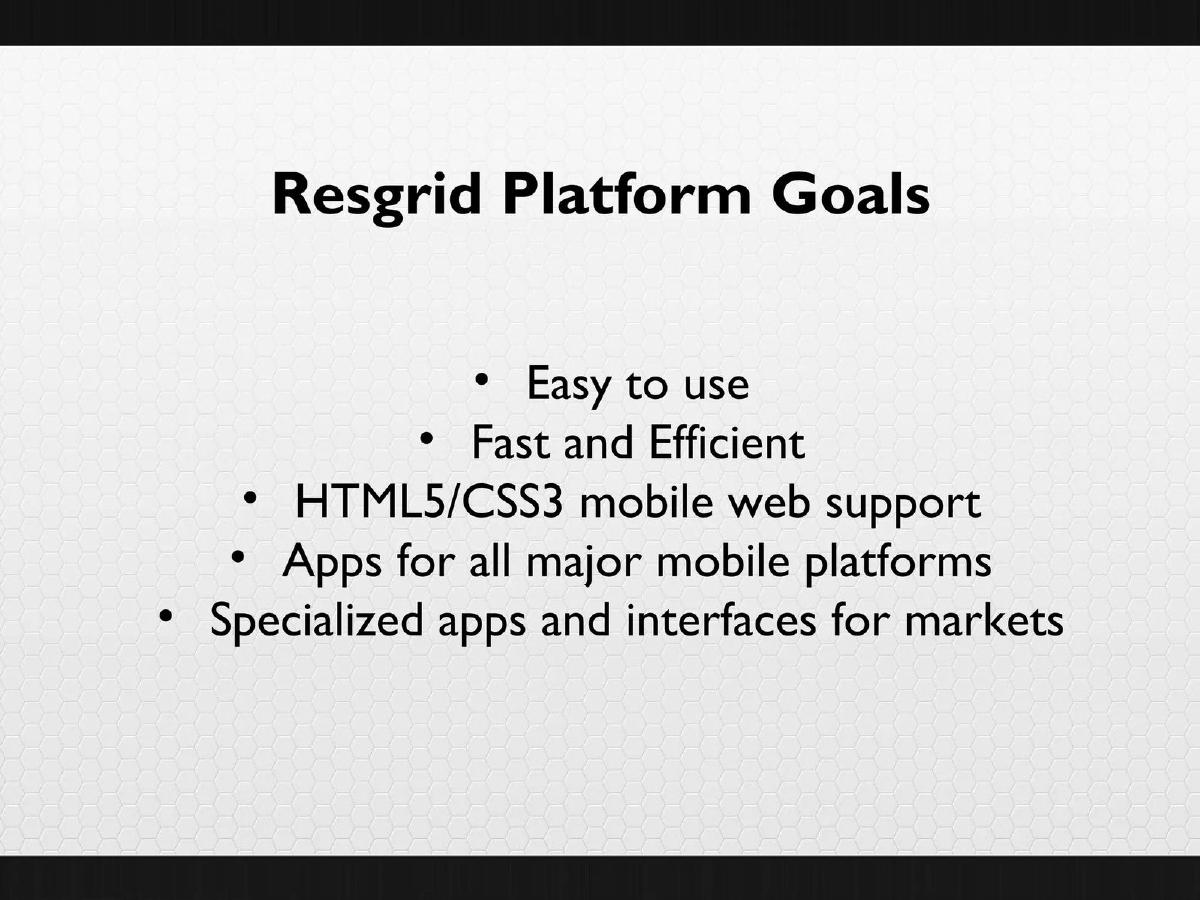
Slide 5: Resgrid Platform Goals This slide outlines the technical philosophy of the company. The goals are: Easy to use, Fast and Efficient, HTML5/CSS3 mobile web support, Apps for all major mobile platforms, and Specialized apps/interfaces for markets. It’s a high-level list that emphasizes accessibility and speed, which are critical in emergency environments.
Slide 6: Product Interface Here, the deck shows the product in action across multiple devices. It lists support for iPhone, iPad, Android, and Windows Phone 7. It also mentions a 'Backend RESTful API for integration,' which suggests the founders understood the importance of working within the existing ecosystem of dispatch software rather than trying to replace it entirely.
Slide 7: Target Markets Resgrid identifies its primary users as Volunteer/Career Fire and EMS departments and Wildland/Hand Crews. However, it also includes a '???' box for 'Any organization that has dispersed personnel and needs to coordinate responses.' This is a common tactic to show 'upside' beyond the initial niche, though it lacks the specificity of a true go-to-market strategy for those secondary segments.
Business Model and Competition (Slides 8-9)
Slide 8: Revenue Model The company proposes a tiered subscription model: Free, Standard, Premium, Professional, and Ultimate. The tiers are differentiated by the number of users (from 10 to 100) and features like 'Geolocation.' Crucially, the slide ends with a disclaimer: 'Pricing has not been finalized at this point.' For a seed round, this is honest but risky, as it shows the founders haven't yet validated what the market is willing to pay.
Slide 9: Primary Competition The deck identifies 'eDispatches' as the main competitor. Resgrid differentiates itself by noting that eDispatches is only one-way, has a limited online interface, and doesn't support geolocation. By focusing on a single competitor, Resgrid makes the choice seem binary for the customer: do you want the old one-way system or our new two-way system?
Traction and Conclusion (Slides 10-11)
Slide 10: Open Beta Traction This slide provides the 'proof.' Development started in June 2012. By October 20th (presumably 2013), they had over 70 departments and 170 users testing the platform. They also note they have already implemented user-requested features like 'Available status' and 'Call notes.' This demonstrates an active, iterative development cycle and genuine market pull.
Slide 11: Contact The deck closes with the website URL and the logo. There is no 'Ask' slide in this deck, which is a major omission for a fundraising teardown. We do not know how much they were looking for or what they planned to do with the capital.
What Works in the Resgrid Deck
Founder-Market Fit: Shawn Jackson’s background as both a firefighter and a developer is the deck's greatest asset. It eliminates the need to explain why he understands the problem. · Clear Problem/Solution: Slides 3 and 4 are a masterclass in simplicity. Anyone, even someone with no knowledge of emergency services, can understand the difference between one-way and two-way communication. · Quantifiable Traction: Having 70 departments in a beta is significant for a year-old startup. It shows that the 'Free' tier of the business model was successfully driving adoption.
What is Missing from the Resgrid Deck
The Ask: There is no slide detailing how much money is being raised, the terms of the round, or the milestones the company intends to hit with the funding. · Market Sizing: There is no mention of the Total Addressable Market (TAM). Investors need to know if this is a $10M business or a $1B business. · Financial Projections: Without finalized pricing or a sales forecast, the deck feels more like a product pitch than a business pitch. · Unit Economics: There is no mention of Customer Acquisition Cost (CAC) or Lifetime Value (LTV), though this is common for very early seed rounds.
What a Founder Should Copy
The Visual Problem Statement: Use simple diagrams to show the 'Before' and 'After' of your product. If you can't explain your value prop in two diagrams, it might be too complex. · Niche Focus: Resgrid didn't try to pitch to 'everyone' first. They started with a very specific user (volunteer firefighters) and built a product that solved their specific pain point. · Traction over Polish: The deck isn't beautiful, but it has real numbers. 70 departments using a beta product is more persuasive than 20 slides of beautiful icons and no users.
Frequently asked questions
- How much did Resgrid raise with this deck?
- According to the catalogue listing, Resgrid raised an unknown amount of funding in 2013 using this pitch deck. This was the only investment round the company conducted. The deck itself does not specify a target amount or valuation, which is a significant omission for a fundraising document.
- What is the primary value proposition of Resgrid?
- The primary value proposition is bi-directional communication for first responders. As shown on Slides 3 and 4, traditional radio systems are 'one-way,' meaning dispatchers don't know who is responding to a call. Resgrid provides a two-way system where personnel can signal their status (Responding vs. Not Responding) via a mobile app, improving coordination and safety.
- Who is the target audience for this software?
- While the primary focus is on Volunteer/Career Fire and EMS departments, Slide 7 broadens the scope. It targets Search and Rescue teams, Hazmat teams, Disaster Response teams, and any organization with dispersed personnel needing to coordinate responses. This suggests a pivot from a niche tool to a broader logistics and coordination platform.
- What was the state of the product at the time of the pitch?
- The product was in 'Open Beta' during the 2013 pitch. Slide 10 indicates that development started in June 2012. By October 2013, they had deployed free mobile apps and had over 70 departments and 170 users testing the platform, indicating significant early-stage interest from the target demographic.
- What are the biggest weaknesses in the Resgrid deck?
- The deck lacks three critical components: a clear financial ask, a market size analysis (TAM), and finalized pricing. Slide 8 admits pricing isn't set, which can be a red flag for investors looking for a validated business model. Additionally, the competitive slide only mentions one competitor, potentially overlooking larger legacy incumbents in the public safety software space.