Respira's 2020 pitch deck is a masterclass in positioning a hardware product through the lens of regulatory arbitrage. By identifying a specific FDA deadline—November 8th, 2019, for HPHC disclosures—the company frames its 'WAVE' device not just as a better vape, but as the only legally viable path forward for the industry. The deck effectively uses scientific citations and comparative analysis to discredit existing heat-based technologies. However, it suffers from a complete lack of team credentials, financial projections, or a specific funding ask. While the intellectual property and market…
Key takeaways
- The company positions its WAVE device as a 'substance agnostic' platform for nicotine, cannabis, and biopharma applications on slide 3.
- Respira identifies heat as the primary source of carcinogens in existing vapes, citing that vaping risk can be 5 to 15 times higher than long-term smoking on slide 7.
- The technology utilizes proprietary ultrasonic oscillation to create a heat-free respirable aerosol, as detailed on slide 8.
- A critical regulatory milestone is cited on slide 11: the FDA's Final Deeming Rule requiring HPHC disclosures by November 8th, 2019.
- The deck targets a massive market opportunity, projecting the US E-Vapor market to reach $27B by 2025 with a 22% CAGR on slide 12.
- Respira plans a multi-pronged monetization model including D2C brands, technology licensing, and biopharma joint ventures on slide 16.
- The deck completely omits a team slide, failing to list the founders' backgrounds or technical expertise.
- There is no financial ask, valuation, or use-of-funds slide included in this 17-slide presentation.
Introduction: The Regulatory Pivot
Respira Technologies, through its 2020 pitch deck, presents the 'WAVE' device as a disruptive force in the inhalation industry. Rather than competing on flavor or lifestyle branding, the deck focuses almost entirely on health safety and regulatory compliance. By framing heat as the fundamental flaw of the entire vaping industry, Respira attempts to invalidate its competitors' entire technological foundations.
Slides 1-4: Product Identity and Platform Vision
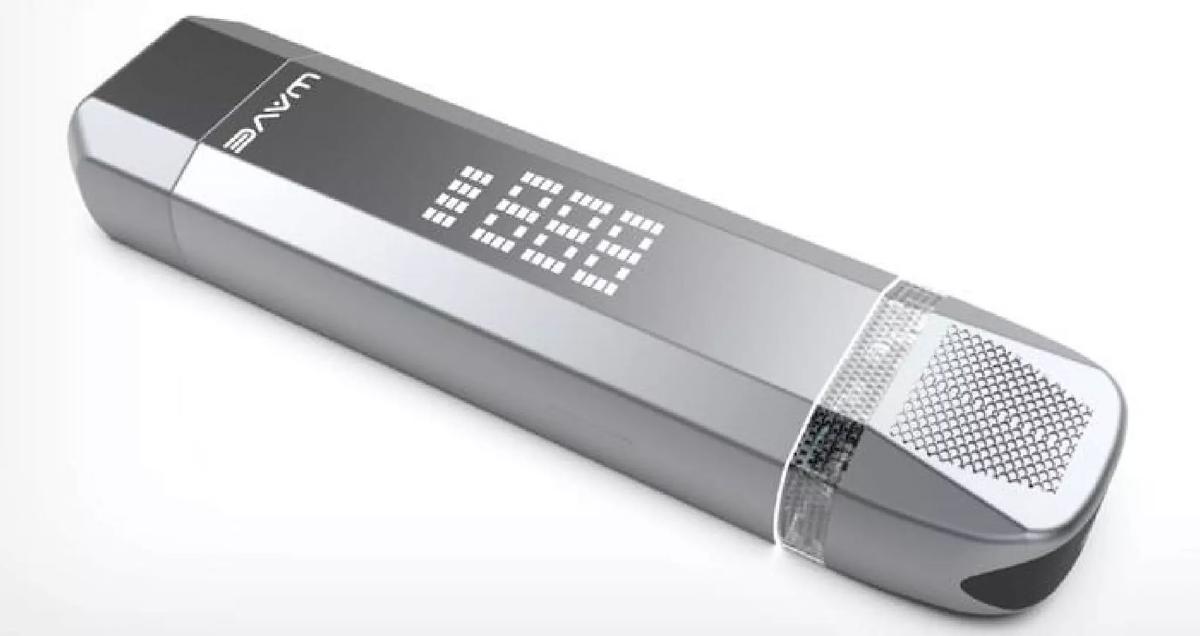
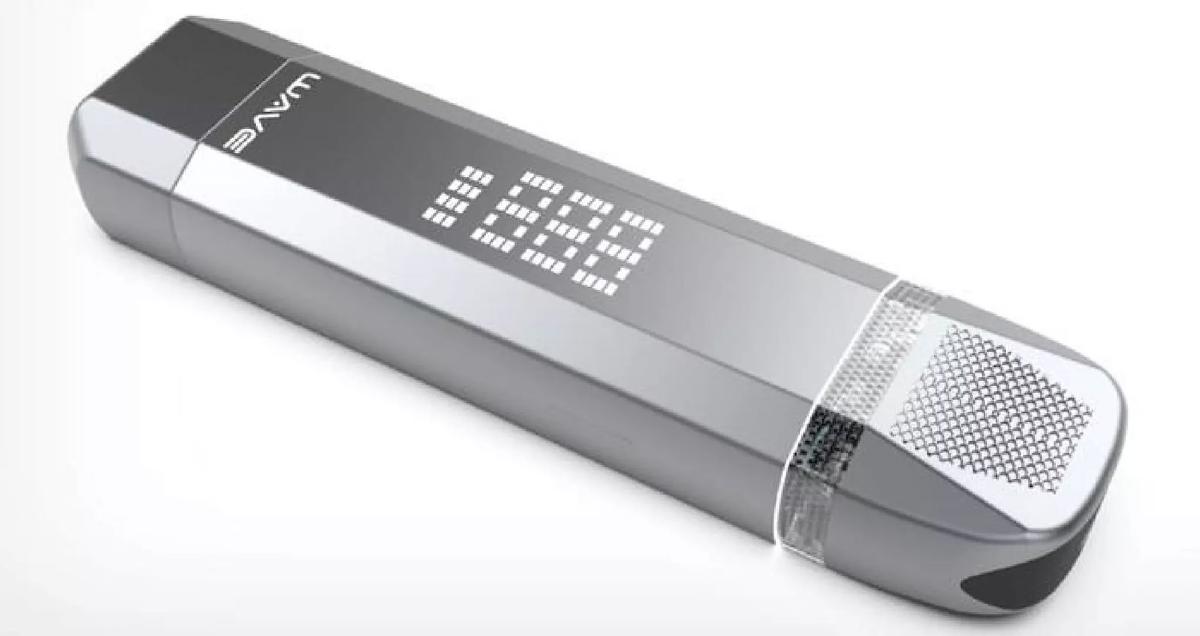
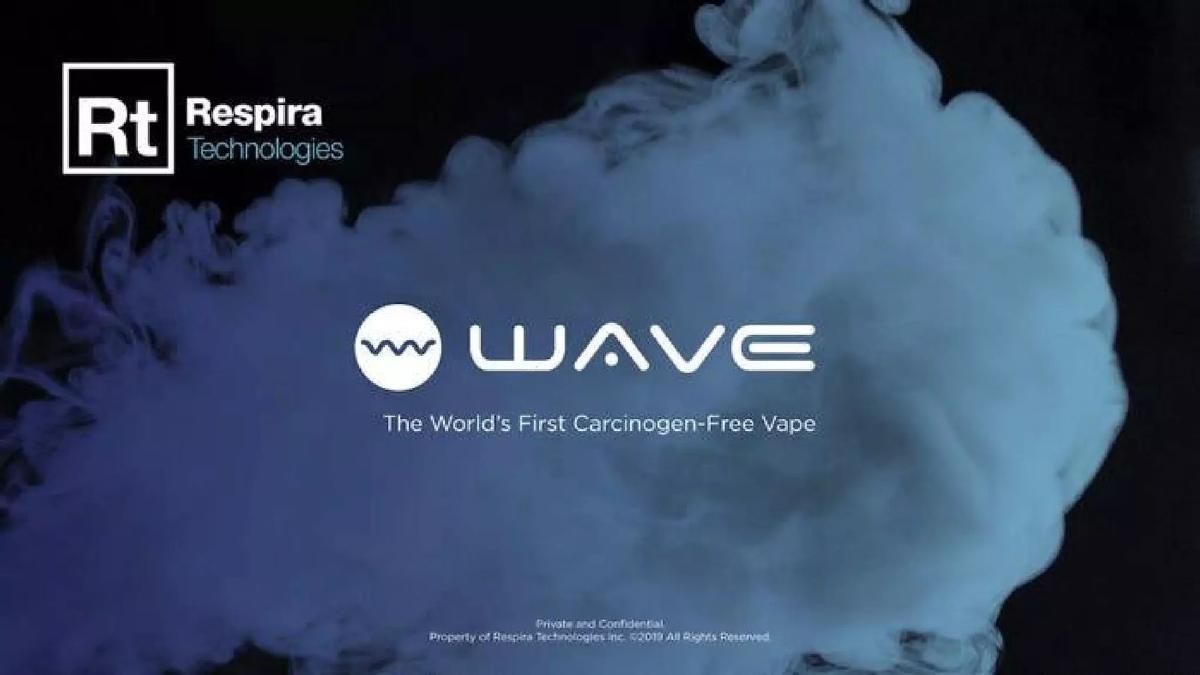
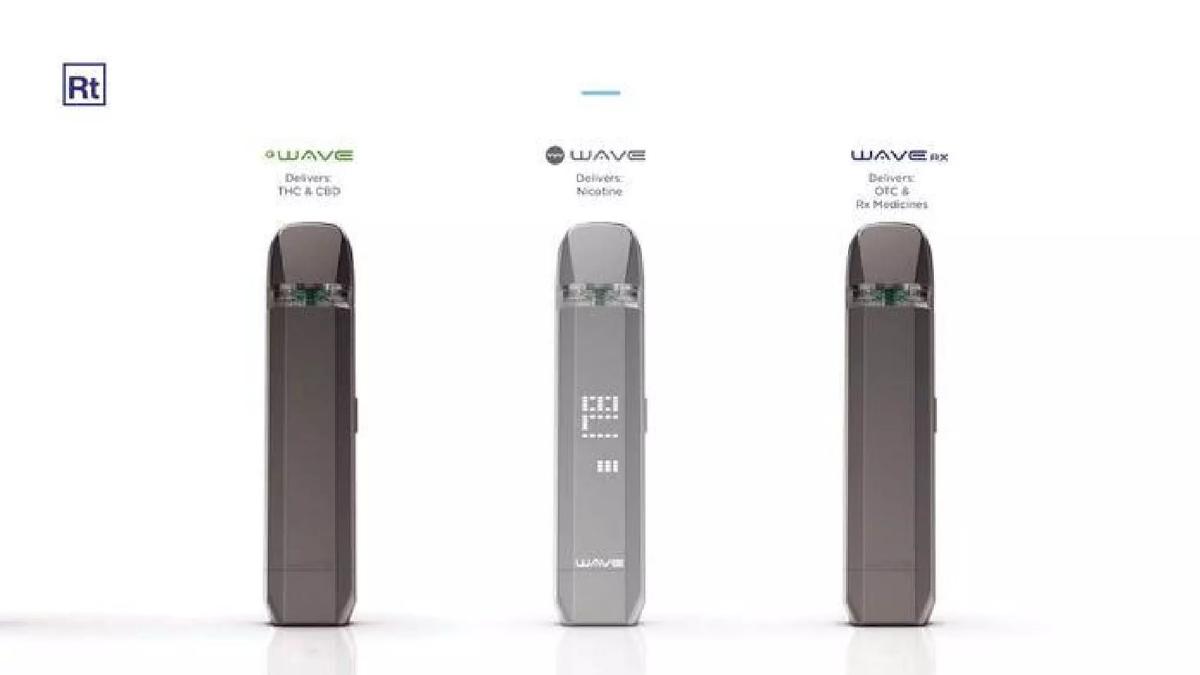
The deck opens with high-quality renders of the WAVE device. Slide 2 introduces the bold tagline: "The World's First Carcinogen-Free Vape." This sets a high bar for the technical evidence that follows. Slide 3 defines Respira as a "platform technology company," emphasizing that the device is "substance agnostic." This is a strategic move to avoid being pigeonholed as just a nicotine or just a cannabis company. It lists three distinct verticals: Cannabis (THC & CBD), Nicotine, and a future in OTC and Rx medicines. Slide 4 visualizes these three product lines—WAVE, WAVE nicotine, and WAVE rx—showing a unified design language across different market segments.
Slides 5-7: The Problem - Heat and Toxicity
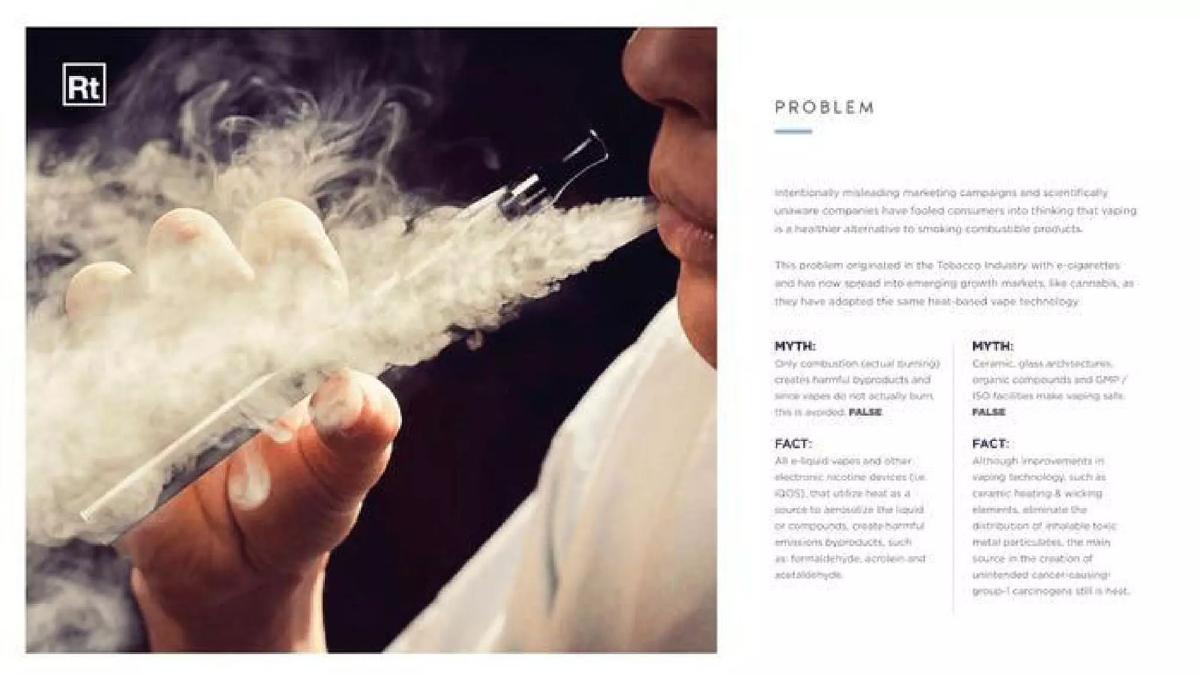
This section is the "fear" component of the pitch. Slide 5 uses a "Myth vs. Fact" format to attack the industry. It asserts that even if a vape doesn't "burn" (combust), the heat used to aerosolize liquids still creates harmful byproducts like formaldehyde. Slide 6 gets technical, showing thermographic images of heating coils and explaining that toxic carbonyl exposure occurs when heat is applied to propylene glycol and vegetable glycerin. Slide 7 hammers the point home with a quote from the New England Journal of Medicine, stating that vaping risk can be 5 to 15 times higher than long-term smoking. By citing the NIH, FDA, and OSHA, Respira builds a scientific case that the current industry standard is a public health liability.
Slides 8-9: The Solution and Intellectual Property
Slide 8 introduces the technical solution: proprietary ultrasonic oscillation. The slide features a transparent render of the device, showing a circuit board and an internal mechanism that replaces the traditional heating coil. It describes the process as "heat-free respirable aerosol." Slide 9 outlines the company's Intellectual Property (IP) focus. It uses a hierarchical chart to show that their patents cover not just the devices, but also the aerosolizing systems, compositions (nano-encapsulation), and production methods. This suggests a "moat" that is deeper than just a single hardware design.
Slides 10-11: The Regulatory Landscape
These are perhaps the most important slides for an investor. Slide 10 shows the FDA headquarters and quotes the agency's interest in "Modified Risk Tobacco Products" (MRTP). Slide 11 is a direct attack on competitors. It lists a table of 20+ harmful constituents (like Lead, Nickel, and Formaldehyde) and marks "YES" for all other vapes and "NO" for WAVE. Crucially, it cites the FDA's Final Deeming Rule deadline of November 8th, 2019, claiming that WAVE will be the only product exempt from mandatory cancer-causing byproduct disclosures. This positions the company as the only safe harbor for investors in a tightening regulatory environment.
Slides 12-14: Market Opportunity and Competitive Analysis
Slide 12 provides market data, projecting the US E-Vapor market to reach $27B by 2025 and the Cannabis market to reach $80B by 2030. Slide 13, "The Cannabis Conundrum," explains why current cannabis vapes are particularly dangerous due to the high heat required for decarboxylation. Slide 14 is a classic competitive matrix, comparing WAVE to traditional vapes, inhalers, and nebulizers. It uses green checkmarks to show that only WAVE combines a "Successful Consumer Form Factor" with "Zero Carcinogens Aligned with Public Health & FDA." It dismisses medical nebulizers and inhalers for having poor consumer adoption and limited pleasure in use.
Slides 15-17: Macro Trends, Monetization, and Contact
Slide 15 lists macro trends like the "Societal Rejection of Traditional Smoking" and "Gradual Acceptance of Cannabis." Slide 16 details the monetization model, which is surprisingly broad. For Cannabis, they suggest D2C brands and licensing. For Nicotine, they suggest an "Innovation Bonus" or "Exclusive License Agreement" with a Big Tobacco partner. For Biopharma, they propose joint ventures for medical devices. The deck concludes on Slide 17 with contact information for Mario Danek, Founder & CEO, based in Los Angeles, CA.
What Works in This Deck
Regulatory Urgency: The inclusion of specific FDA deadlines and rules (Slide 11) creates a sense of "why now." It moves the conversation from "we have a cool gadget" to "the industry is about to be legally disrupted, and we are the only solution."
Scientific Grounding: By citing the New England Journal of Medicine and the FDA (Slides 7 and 10), the company borrows authority from established institutions to validate its claims about toxicity.
Platform Positioning: Defining the technology as "substance agnostic" (Slide 3) significantly increases the Total Addressable Market (TAM). It allows the company to pivot between nicotine, cannabis, and pharma depending on which sector offers the fastest path to revenue.
What is Missing from This Deck
The Team: This is the most glaring omission. There is no team slide. Investors fund people, especially in highly regulated medical/hardware spaces. We don't know if the founders are engineers, doctors, or career marketers. Only the CEO is named on the final slide, with no bio.
Financials and Ask: There are no mentions of how much money the company is seeking, the valuation, or the burn rate. Furthermore, there are no revenue projections or unit economics. We don't know the Cost of Goods Sold (COGS) for an ultrasonic device versus a cheap heating coil device.
Traction: The deck doesn't mention if they have a working prototype, a clinical trial in progress, or any manufacturing partners. It feels like a conceptual pitch rather than a business ready to scale.
What a Founder Should Copy
The "Myth vs. Fact" Framework: Slide 5 is an excellent way to dismantle an incumbent industry's marketing. By labeling competitor claims as "Myths" and their own as "Facts," they control the narrative.
Visualizing the IP: Slide 9's hierarchy of IP is a great way to show that a company owns a whole system rather than just a single patent. It makes the company look like a platform rather than a product.
Direct Competitive Comparison: Slide 14's comparison table is effective because it doesn't just compare against direct competitors (vapes), but also against indirect competitors (nebulizers), showing why the product is superior in both health and lifestyle categories.
Final Analysis
Respira's deck is a highly effective product and regulatory pitch, but a weak investment pitch. It succeeds in convincing the reader that heat-based vaping is a dying, dangerous industry and that ultrasonic technology is the logical successor. However, by omitting the team's pedigree and the financial requirements of the business, it leaves the investor with too many unanswered questions to move toward a deal. It is a deck designed to start a conversation about technology, not to close a round of funding.
Company: Respira Technologies · Product: WAVE (heat-free aerosol device) · Target Markets: Nicotine, Cannabis, Biopharma · Technology: Ultrasonic oscillation · Key Regulatory Date: November 8th, 2019 (FDA HPHC disclosure deadline) · Projected Nicotine Market (2025): $27B · Projected Cannabis Market (2030): $80B · Founder/CEO: Mario Danek · Location: Los Angeles, CA
Frequently asked questions
- What is the core technology behind the WAVE device?
- According to slide 8, the WAVE device uses a proprietary ultrasonic oscillation and energy transfer system. Unlike traditional vapes that use heat to aerosolize liquids, this method is heat-free. The company claims this eliminates the creation of harmful byproducts like formaldehyde and acrolein, which are typically generated when propylene glycol and vegetable glycerin are heated.
- How does Respira address the cannabis market specifically?
- Slide 13, titled 'The Cannabis Conundrum,' explains that cannabis vapes often exceed 400 degrees Celsius to decarboxylate THC, exposing users to high levels of volatile constituents. Respira positions WAVE as a solution that provides the desired THC concentration without the toxic byproducts associated with high heat, aligning the product with the 'wellness' image of the cannabis industry.
- What regulatory advantage does the company claim?
- On slide 11, Respira points to the FDA's Final Deeming Rule. This rule mandates that e-vapor companies disclose cancer-causing group 1 byproducts. Respira claims its technology is 'unequivocally HPHC free,' meaning it would be the only product exempt from these public health disclosures and specific new labeling laws that affect competitors like JUUL and IQOS.
- What is missing from the Respira pitch deck?
- The deck is missing three critical components for a fundraising round: a team slide, a financial projections slide, and a clear 'ask.' While it lists Mario Danek as Founder & CEO on the final slide, there is no information about his or the team's professional history. Furthermore, there are no details on how much capital is being raised or how it will be spent.
- What are the projected market sizes for Respira's target verticals?
- Slide 12 outlines significant growth: the US Cannabis market is projected to reach $80B by 2030 (17.4% CAGR), and the US E-Vapor market is expected to hit $27B by 2025 (22% CAGR). The company also identifies 'Biopharma' as a third expansion market, though it does not provide specific dollar figures for that sector.