Renetec’s 9-slide deck is a highly visual, problem-oriented presentation that targets the clunky world of embedded user interfaces. By showcasing real-world examples of 'broken' interfaces—from ATMs to vending machines—the deck establishes an immediate emotional and logical need for their Pyxis smart display module. The company leverages the high-signal backgrounds of its founders (Tesla, WhatsApp, Google) to build credibility in a complex hardware-software play. However, the deck is remarkably thin on business fundamentals. There is no mention of a specific fundraising 'ask,' no revenue proj…
Key takeaways
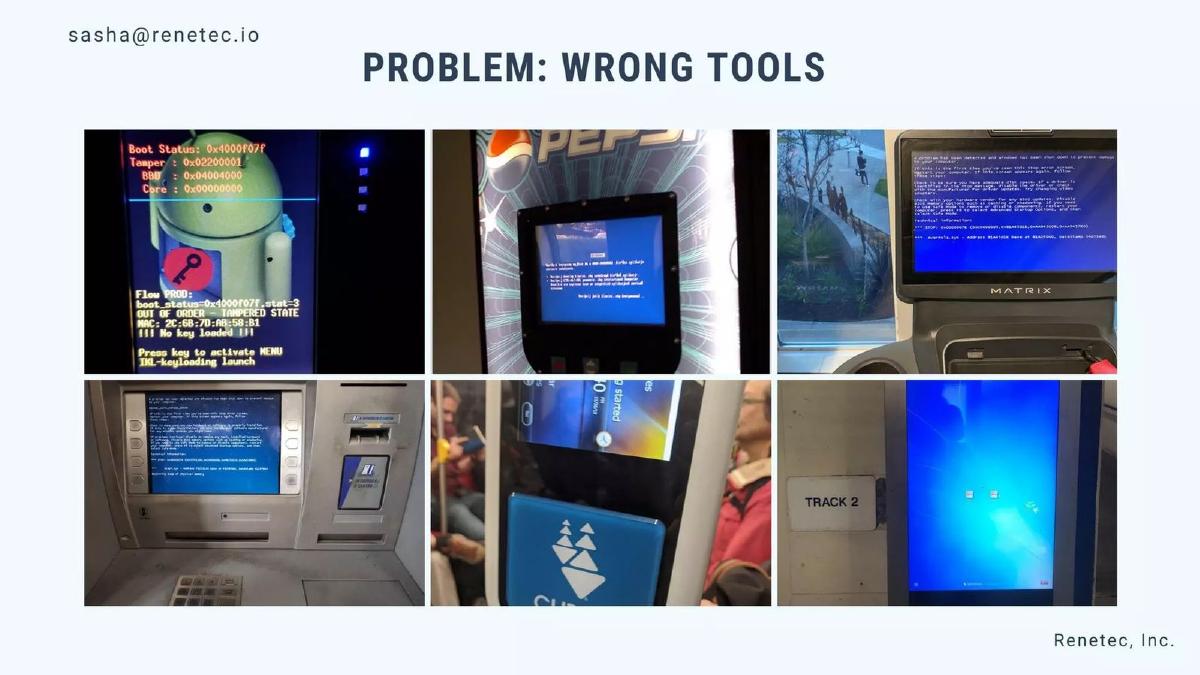
- The problem is defined visually through six images of failed legacy interfaces on slide 2, including blue screens of death on ATMs and vending machines.
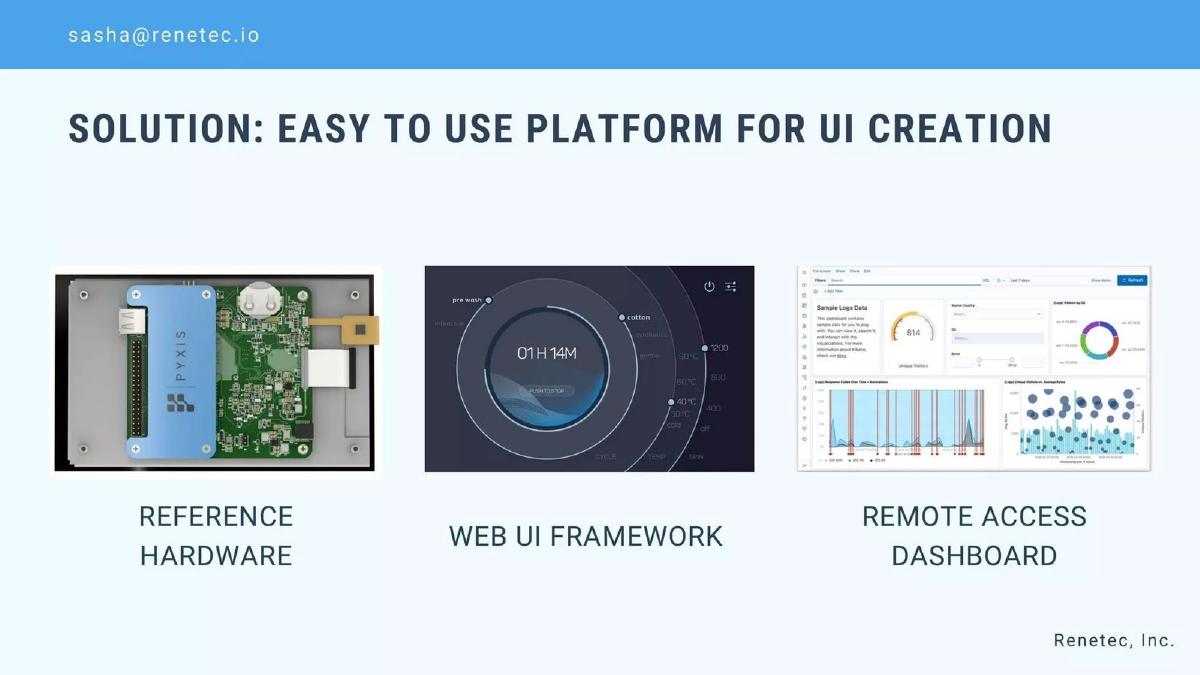
- The solution is a three-part ecosystem: Reference Hardware (Pyxis), a Web UI Framework, and a Remote Access Dashboard as shown on slide 4.
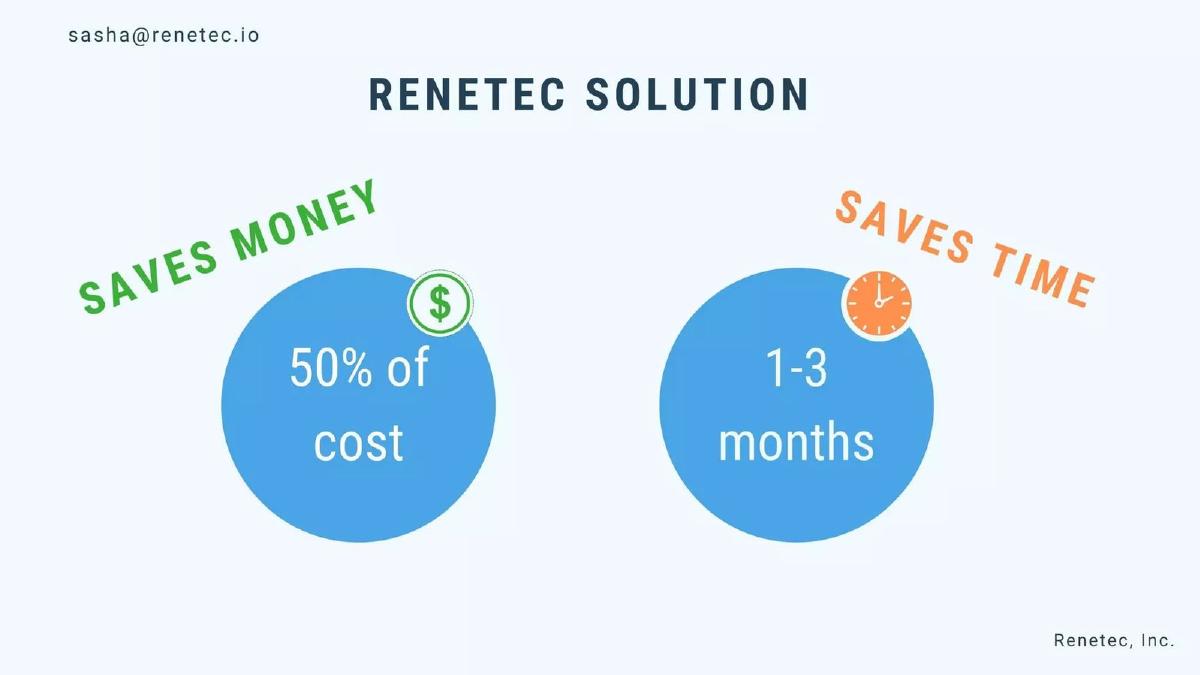
- Renetec claims a significant efficiency gain, stating their solution saves '50% of cost' and '1-3 months' of development time on slide 5.
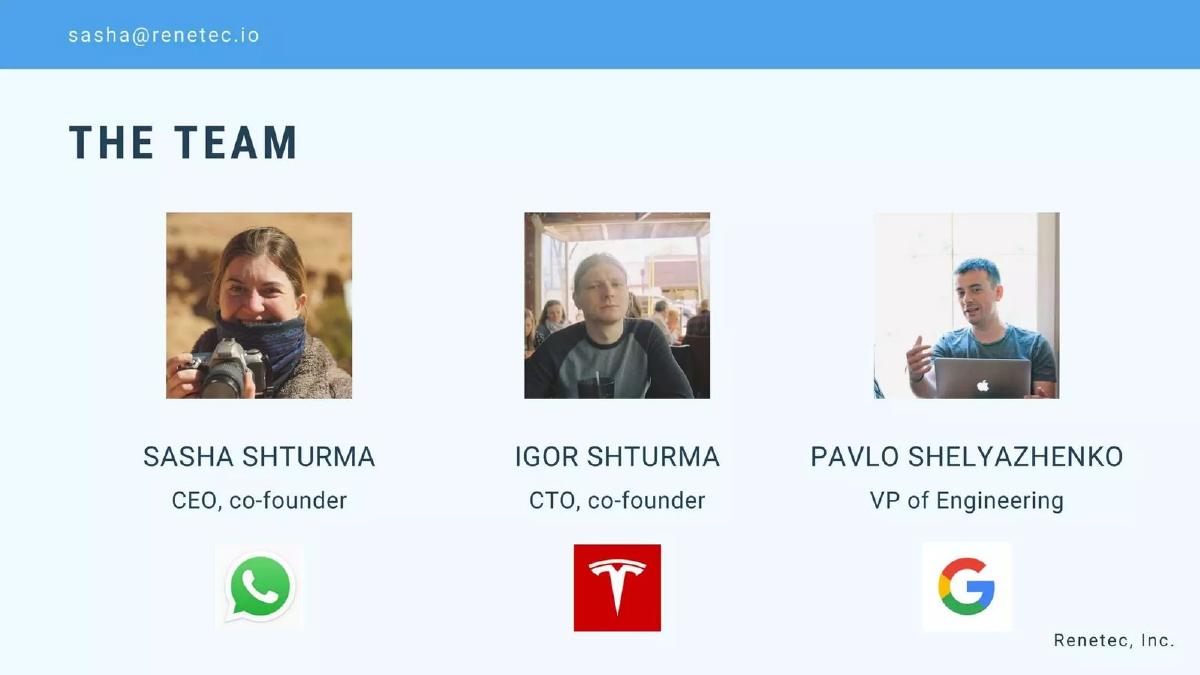
- The team slide (slide 6) relies on logo association, featuring the WhatsApp, Tesla, and Google logos to validate the founders' technical expertise.
- Market opportunity is segmented into six verticals on slide 7, including Automotive, Medical, and Industrial Automation.
- The deck narrows its focus to the vending machine market on slide 8, citing a growth from $30B to $50B at a 9% CAGR.
- There is a complete absence of a financial 'ask' or use of funds slide in the 9-slide deck.
- The deck provides no information regarding the current stage of the hardware—whether it is a prototype, in production, or currently shipping to customers.
The Renetec Teardown: Visualizing the Future of Embedded Screens
Renetec entered the market in 2019 with a clear mission: to fix the 'broken' user interfaces that plague everyday hardware. Their 9-slide deck is a lean, highly visual presentation that prioritizes the 'what' and the 'who' over the 'how much.' While the deck is effective at establishing a visceral need for better UI in the embedded space, it leaves many of the traditional venture capital boxes unchecked.
Slide 1: Title and Vision
The deck opens with a minimalist blue title slide. The company name, Renetec , is centered above the tagline "Revolution in Embedded Interfaces." The slide includes the company's URL (renetec.io) and a date of March 2020. This is a standard, clean entry point that immediately categorizes the company within the hardware/software interface sector.
Slide 2: The Problem - "Wrong Tools"
Slide 2 is perhaps the most effective in the deck. Titled "PROBLEM: WRONG TOOLS," it features six photographs of real-world interface failures. These include:
An Android boot error on a public kiosk. · A "Blue Screen of Death" on a Pepsi vending machine. · A Windows error on a Matrix-branded gym treadmill. · A system crash on an ATM. · A sideways, unformatted screen on a transit payment terminal. · A Windows desktop visible on a public digital sign.
By showing these images, Renetec bypasses a lengthy explanation of why current embedded UI development is difficult. It proves that even major brands (Pepsi, Matrix) struggle to maintain stable, professional interfaces using existing tools.
Slide 3: The Value Proposition
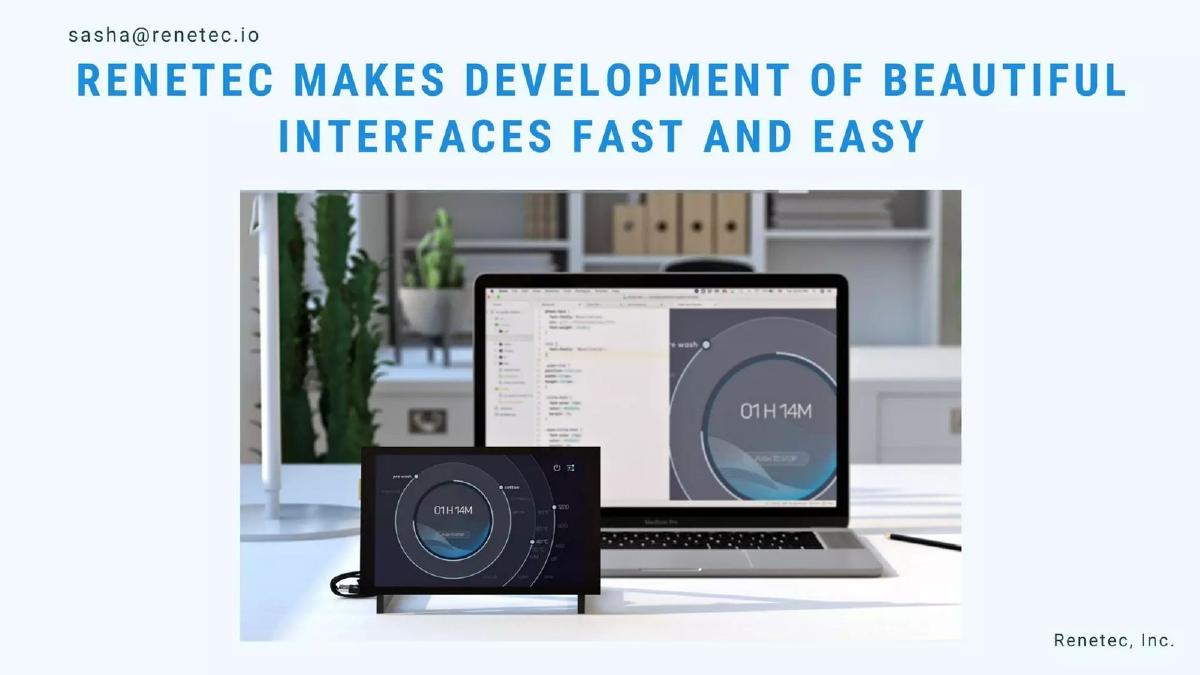
Slide 3 transitions from the problem to the promise: "RENETEC MAKES DEVELOPMENT OF BEAUTIFUL INTERFACES FAST AND EASY." The visual shows a laptop running a code editor side-by-side with a small physical display module. The display shows a high-end, circular UI that looks more like a modern smartwatch or a Tesla screen than a traditional vending machine. This slide establishes the core product benefit: bridging the gap between modern web design and physical hardware.
Slide 4: The Three-Pillar Solution
Slide 4, "SOLUTION: EASY TO USE PLATFORM FOR UI CREATION," breaks the product down into three distinct components:
REFERENCE HARDWARE: An image of a circuit board labeled "PYXIS." · WEB UI FRAMEWORK: A screenshot of the design interface, emphasizing that developers can use web-standard tools. · REMOTE ACCESS DASHBOARD: A data visualization screen showing that these devices can be managed and monitored remotely.
This is a critical slide because it clarifies that Renetec isn't just selling a screen; they are selling a full-stack ecosystem for deployment and management.
Slide 5: The Economic Impact
Titled "RENETEC SOLUTION," slide 5 attempts to quantify the benefit for a potential B2B customer. It uses two large blue circles to highlight two key claims:
While these are bold claims, the deck does not provide a footnote or data to explain how these numbers were calculated (e.g., compared to a specific legacy workflow). However, for a high-level pitch, these metrics provide a clear "why" for procurement departments.
Slide 6: The Team
The "THE TEAM" slide is a classic example of using "big tech" logos to build instant credibility. The three featured individuals are:
SASHA SHTURMA: CEO, co-founder (associated with the WhatsApp logo). · IGOR SHTURMA: CTO, co-founder (associated with the Tesla logo). · PAVLO SHELYAZHENKO: VP of Engineering (associated with the Google logo).
The catalogue listing notes that the company was established by Facebook and Tesla engineers, and this slide reinforces that pedigree. In hardware-heavy startups, investors look for teams that have shipped complex products at scale; these logos suggest the team has that experience.
Slides 7 & 8: Market Opportunity
Slide 7 identifies the broad "MARKET OPPORTUNITY" using icons for six sectors: Automotive, Vending Machines, Medical, Building & Security, Consumer Electronics, and Industrial Automation. This shows the versatility of the Pyxis module.
Slide 8 narrows the focus to the "GLOBAL MARKET OF VENDING MACHINES." It cites a "9% CAGR over 2019-2025" and uses a bubble chart to show the market growing from $30B to $50B . A source link to Grand View Research is provided at the bottom. This suggests that while the tech is horizontal, Renetec is eyeing the vending sector as a primary vertical.
Slide 9: Contact Information
The deck concludes with a "THANK YOU!" slide featuring Sasha Shturma's contact information, including a phone number and email address. Like the rest of the deck, it is clean and direct.
What Works in the Renetec Deck
Visceral Problem Identification: The use of real-world "fail" photos on slide 2 is brilliant. It makes the problem tangible and relatable, even for an investor who isn't an embedded systems engineer.
Clear Product Triad: By breaking the solution into hardware, framework, and dashboard (Slide 4), the company avoids being pigeonholed as just a "hardware company." They are positioning themselves as a platform, which typically commands higher valuation multiples.
High-Signal Team: The use of the Tesla, WhatsApp, and Google logos is a powerful shortcut for technical validation. It tells the investor that these founders have worked in environments with the highest engineering standards.
What is Missing from the Renetec Deck
The Ask: This is the most glaring omission. There is no mention of how much money is being raised, the terms of the round, or the milestones the company intends to hit with the capital. This makes the deck feel more like a product presentation than a fundraising tool.
Traction and Validation: There are no mentions of pilots, letters of intent (LOIs), or existing customers. For a hardware startup in 2020, investors would typically want to see that the Pyxis module has been tested in the field or that a manufacturer has committed to a trial.
Business Model: How does Renetec make money? Is it a one-time hardware sale? A per-device SaaS fee for the dashboard? A licensing fee for the framework? The deck is silent on the revenue model.
Competition: The embedded UI space is not empty. Companies like Qt, Crank Software, and even open-source alternatives exist. The deck fails to explain why a developer would choose Renetec over established industry standards.
What a Founder Should Copy
The "Show, Don't Tell" Problem Slide: If your startup fixes something that is visibly broken in the real world, use photos. Renetec’s slide 2 is far more effective than a bulleted list of "pain points."
Minimalist Design: The deck uses a consistent color palette and very little text. It forces the viewer to focus on the key message of each slide rather than getting lost in paragraphs of technical jargon.
Quantified Value Prop: Even if they are estimates, providing a "Time Saved" and "Cost Saved" metric (Slide 5) gives investors a hook to understand the economic incentive for the customer. It moves the conversation from "this looks cool" to "this makes business sense."
Frequently asked questions
- What is the primary product Renetec is pitching?
- Renetec is pitching a platform for creating modern user interfaces for embedded devices. According to slide 4, this consists of the 'Pyxis' reference hardware, a web-based UI framework that allows developers to use familiar web tools for hardware displays, and a remote dashboard for managing those devices. The goal is to replace clunky, error-prone legacy screens with high-fidelity, functional interfaces.
- How does Renetec justify its value proposition to manufacturers?
- The company focuses on two primary metrics: time and money. On slide 5, they explicitly claim that their platform saves manufacturers 50% of the cost associated with UI development and reduces the development timeline by 1 to 3 months. This suggests they are targeting the 'build vs. buy' friction in the embedded systems market.
- Who are the founders and what is their background?
- The leadership team includes Sasha Shturma (CEO), Igor Shturma (CTO), and Pavlo Shelyazhenko (VP of Engineering). Slide 6 highlights their previous experience at major tech firms, specifically using the logos of WhatsApp, Tesla, and Google to signal that they have the engineering pedigree required to handle complex hardware and software integration.
- What market segments is Renetec targeting?
- While slide 7 lists a broad range of industries—Automotive, Medical, Building & Security, Consumer Electronics, and Industrial Automation—the deck singles out the Vending Machine market on slide 8. They identify this as a $30B market growing to $50B, suggesting this may be their initial go-to-market focus or 'beachhead' segment.
- What critical information is missing from this pitch deck?
- The deck is missing several standard components of a seed-stage pitch. There is no 'Ask' slide detailing how much capital they are raising or how it will be spent. It also lacks a slide on traction (customers, LOIs, or units sold), unit economics (how much the hardware costs to make vs. sell), and a competitive analysis explaining how they differ from existing players like Qt or Crank Software.