Relevize’s 15-slide deck is a masterclass in using traction to validate a niche B2B problem. The company targets the $46BN market of B2B software companies with channel programs, identifying a specific friction point: only 20% of partners typically opt-in due to manual communication and lack of attribution. By showcasing a 350% ARR growth rate over 12 months and a detailed case study with WatchGuard that delivered $2.1M in registered pipeline, Relevize moves past theoretical value propositions into proven ROI. While the deck lacks a formal team slide or a specific breakdown of the $6M use of…
Key takeaways
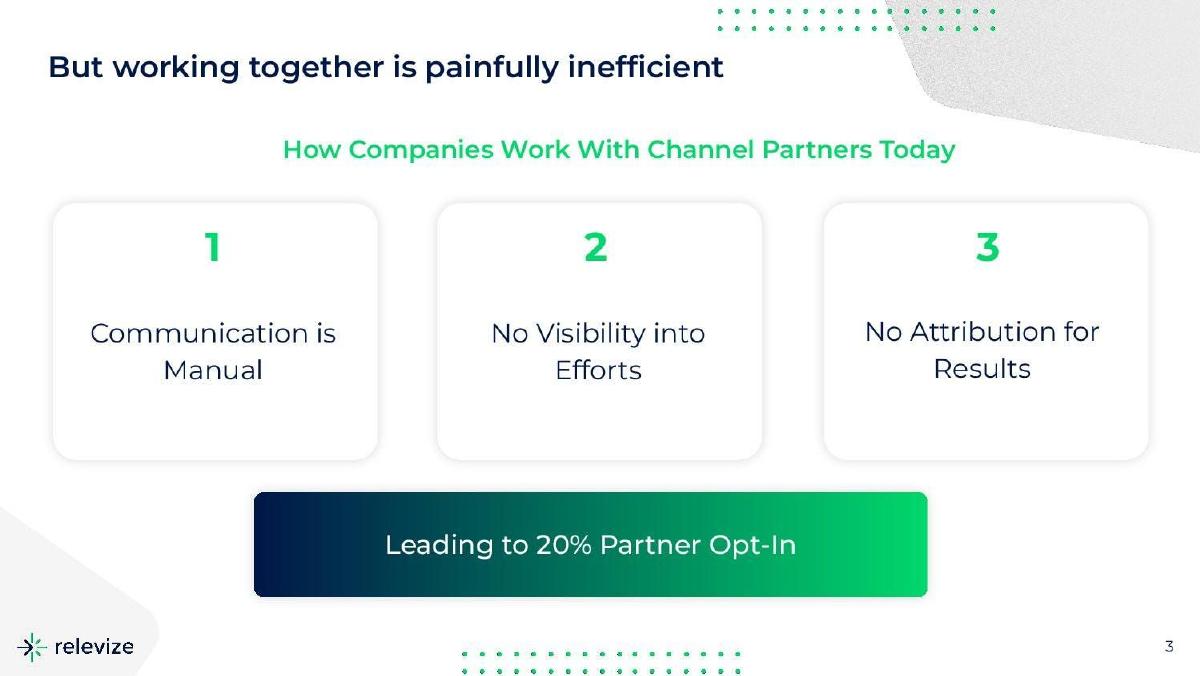
- The deck identifies a specific '20% Partner Opt-In' rate as the primary symptom of inefficient manual channel management (Slide 3).
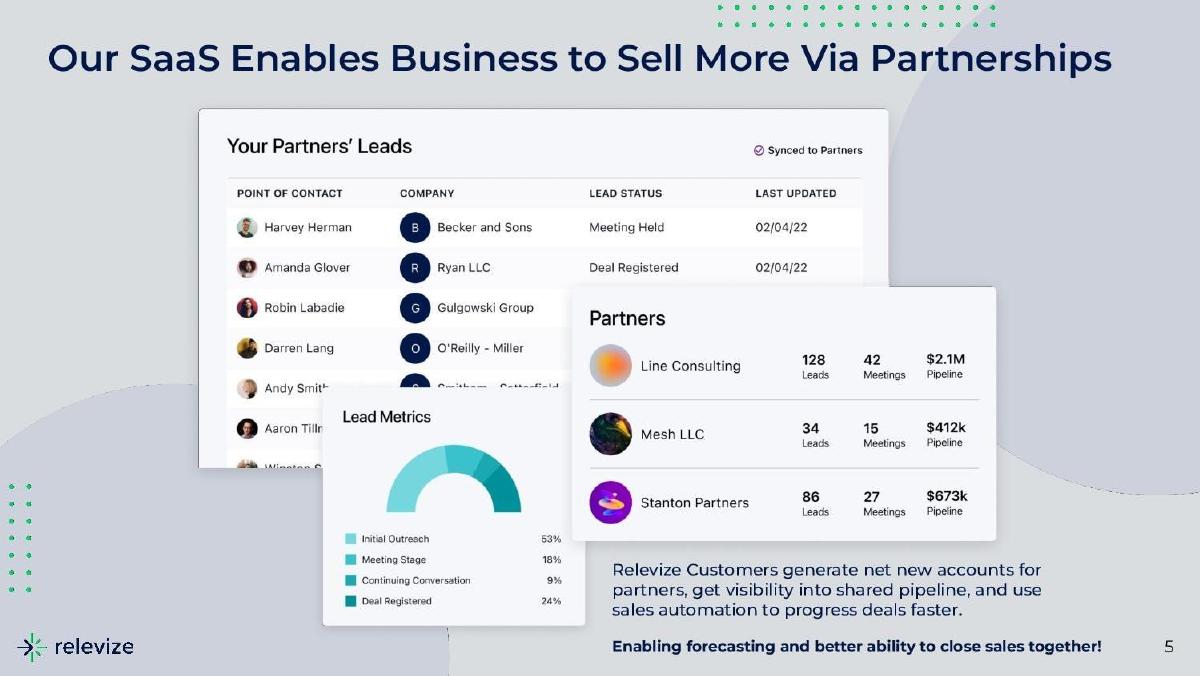
- Product functionality is demonstrated through a dashboard showing lead status, meeting counts, and pipeline value per partner (Slide 5).
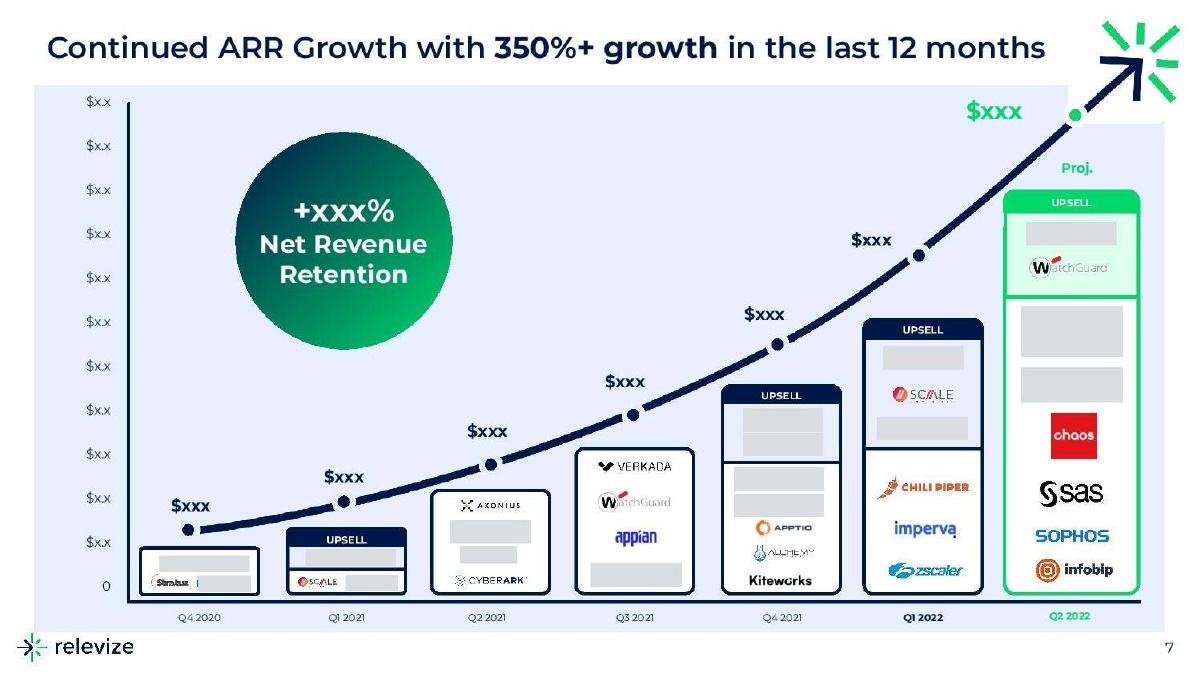
- Relevize reports 350%+ ARR growth over a 12-month period, though specific dollar amounts are redacted as $xxx (Slide 7).
- Net Revenue Retention is highlighted as a core strength, indicated by '+xxx%' and frequent 'UPSELL' events on the growth timeline (Slide 7).
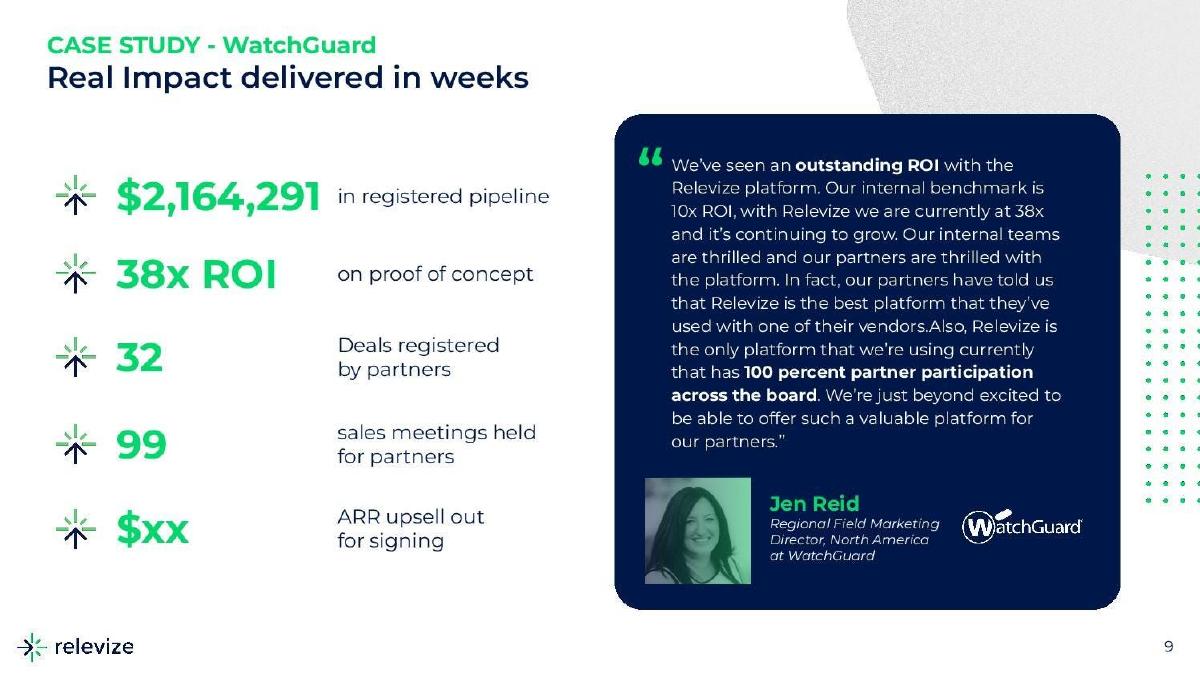
- A case study for WatchGuard claims a 38x ROI on a proof of concept and 99 sales meetings held for partners (Slide 9).
- The total addressable market is framed around 9,210 US B2B software companies with channel programs, totaling a $46BN opportunity (Slide 13).
- Software built for channel sales is reportedly growing at a 28% CAGR, which is 400% faster than general enterprise software (Slide 13).
- The deck omits a dedicated team slide, leaving the founders' backgrounds to be inferred or discussed in person.
Relevize Pitch Deck Analysis
Relevize provides a platform designed to optimize marketing and revenue streams through partner channels. In an era where B2B companies are increasingly reliant on indirect sales, Relevize positions itself as the connective tissue that provides visibility and automation. The following teardown examines the 15-slide deck used to secure their $6M Seed round in 2024.
Slide 1: Title Slide
The deck opens with a clean, minimalist title slide featuring the Relevize logo and the tagline: "Software to Maximize Your Channel Revenue." It is a functional start that immediately categorizes the company as a B2B revenue-tech solution. The branding uses a dark blue and green palette, signaling a professional, enterprise-focused aesthetic.
Slide 2: The Status Quo (Implicit)
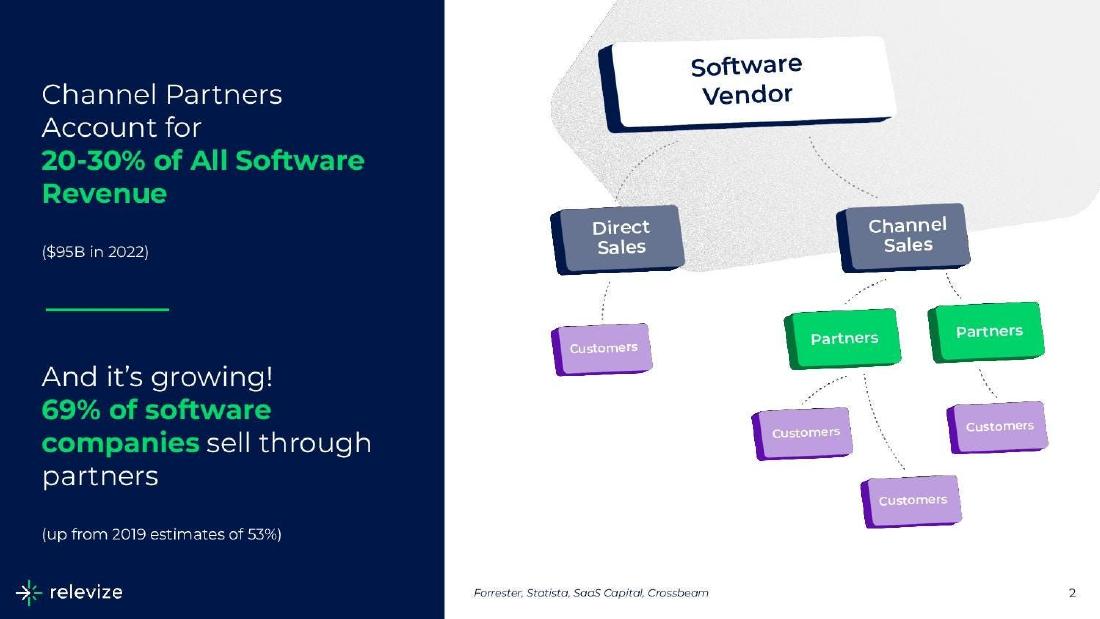
While the text for Slide 2 is not explicitly detailed in the provided notes, it serves as a transition into the problem space. In a standard 15-slide narrative, this typically establishes the importance of channel partners in the modern sales ecosystem before diving into the friction points.
Slide 3: The Problem - Inefficient Partnerships
Slide 3 identifies the core pain point: "But working together is painfully inefficient." The company breaks this down into three pillars: 1. Communication is Manual, 2. No Visibility into Efforts, and 3. No Attribution for Results. The most striking data point on this slide is the bottom banner: "Leading to 20% Partner Opt-In." This gives investors a concrete metric for failure—80% of a company's potential channel revenue is being left on the table due to poor tooling.
Slide 4: Transition to Solution
This slide acts as a bridge, likely setting up the requirement for a centralized platform to handle the complexities mentioned in the previous slide. It prepares the viewer for the product reveal by suggesting that a new category of software is needed to bridge the gap between brands and their partners.
Slide 5: The Solution - SaaS for Partnerships
Slide 5 introduces the product interface under the header "Our SaaS Enables Business to Sell More Via Partnerships." The slide displays a dashboard showing lead management features. Key data points visible in the UI include:
Lead Metrics: A breakdown showing 53% Initial Outreach, 18% Meeting Stage, 9% Continuing Conversation, and 24% Deal Registered. · Partner Performance: A list of partners (e.g., Line Consulting, Mesh LLC) with their respective lead counts, meeting counts, and pipeline value (e.g., $2.1M Pipeline for Line Consulting).
The slide concludes that Relevize helps customers generate net new accounts, gain visibility into shared pipelines, and use sales automation to close deals faster.
Slide 6: Product Deep Dive
This slide likely expands on the technical capabilities of the platform, such as how it integrates with existing CRM systems or social platforms like LinkedIn and Facebook (as noted in the publisher summary). It reinforces the idea that Relevize is not just a dashboard, but an active workflow tool.
Slide 7: Traction and ARR Growth
Slide 7 is the "money slide." It features a growth curve showing "Continued ARR Growth with 350%+ growth in the last 12 months." The chart tracks quarterly progress from Q4 2020 to Q2 2022. While the Y-axis values are redacted as "$x.x" and "$xxx," the visual representation of frequent "UPSELL" events is a strong indicator of high Net Revenue Retention (NRR). The slide also lists impressive customer logos at various stages of the growth curve, including Verkada, Appian, Zscaler, Sophos, and SAS.
Slide 8: Market Momentum
This slide likely contextualizes the growth shown in Slide 7, explaining why the company was able to scale so rapidly during the 2020-2022 period. It serves to prove that the traction is not a fluke but a result of a shifting market landscape.
Slide 9: Case Study - WatchGuard
To move from aggregate growth to specific customer success, Slide 9 presents a case study for WatchGuard. The results are quantified clearly:
$2,164,291 in registered pipeline. · 38x ROI on proof of concept. · 32 deals registered by partners. · 99 sales meetings held for partners.
The slide includes a quote from Jen Reid, Regional Field Marketing Director at WatchGuard, stating that Relevize is the "only platform that we're using currently that has 100 percent partner participation across the board." This directly addresses the "20% opt-in" problem mentioned on Slide 3.
Slide 10: Competitive Landscape
While the specific text is not provided, Slide 10 typically positions the company against legacy PRM (Partner Relationship Management) tools or manual spreadsheets. Relevize likely differentiates itself through its focus on marketing automation and real-time attribution rather than just being a static portal for partner documents.
Slide 11: Why Now?
Slide 11 outlines three market drivers: 1. Tech Adoption: Even unsophisticated partners are now seeking digital toolkits. 2. The In-Person Sale is Dying: The pandemic accelerated the shift to digital-first relationship selling. 3. Visibility into ROI is a must: Companies can no longer afford to "throw money at partners and hope for sales." This creates a sense of urgency for the Relevize solution.
Slide 12: Strategic Roadmap
This slide likely details the future product features or market segments Relevize intends to enter. For a Seed round, this usually involves moving from a single-product focus to a broader platform play that encompasses more of the revenue operations stack.
Slide 13: Market Size (TAM)
Slide 13 frames the opportunity: "Channel Will Drive One Third of All Tech Sales by 2030." It cites that software built for channel is growing at a 28% CAGR , which is 400% faster than the rest of enterprise software. The market is quantified as:
9,210 US B2B software companies with a channel. · $46 BN total market opportunity. · 1,560 "Partners that Matter" per Relevize customer (vs. a total partner average of 5,870).
A footnote mentions that Microsoft alone saw over $28BN in co-sale value driven by partners over the past 4 years, providing a massive anchor for the sector's potential.
Slide 14: The Vision
The penultimate slide likely summarizes the long-term goal of the company—to become the standard operating system for all B2B channel revenue. It ties the immediate traction back to the massive TAM described on Slide 13.
Slide 15: Contact / Thank You
The deck concludes with a contact slide for "mike@relevize.com." Notably, there is no explicit "Ask" slide detailing the $6M round or the specific use of funds, nor is there a dedicated team slide in the 15-slide sequence provided.
What Relevize Does Well
The Relevize deck excels at quantifying the pain point. By identifying that only 20% of partners typically participate in brand programs, they create a clear, measurable gap that their software is designed to fill. This makes the value proposition easy for an investor to grasp: if you can move that 20% to 100% (as they claim to have done for WatchGuard), the revenue impact is massive.
The use of logos is another major strength. For a Seed-stage company, having names like Zscaler, Sophos, and SAS on a traction slide (Slide 7) provides immense credibility. It suggests that the product is already robust enough to handle the needs of multi-billion dollar enterprise organizations.
Finally, the WatchGuard case study (Slide 9) is exceptionally well-executed. It doesn't just say the product works; it lists five distinct KPIs, including a 38x ROI. Providing a direct quote from a Field Marketing Director adds a layer of human validation to the cold metrics.
What is Missing from the Deck
The most glaring omission is the Team Slide. In a Seed round, the founders' backgrounds are often as important as the traction. Investors want to know if the team has deep domain expertise in channel marketing or enterprise sales. Without this, the deck feels slightly impersonal.
There is also no Ask Slide. While we know from external reporting that the round was $6M, a pitch deck should ideally state the amount being raised and how it will be spent (e.g., 50% Engineering, 30% Sales, 20% Ops). This helps investors understand the company's immediate priorities and how the capital will get them to their next milestone.
Lastly, the Financial Redactions (Slide 7) make it difficult to judge the absolute scale of the business. While 350% growth is impressive, the starting point matters. Growing from $10k to $45k is different from growing from $500k to $2.25M. While redaction is common for public versions of decks, the lack of even a range for the Y-axis leaves a significant question mark.
Founder Takeaways
Focus on the 'Opt-In' Metric: If you are building a platform that requires two-sided participation (like a brand and its partners), find the specific metric that shows where the current system is failing. Relevize’s use of the "20% Opt-In" figure is the hook that makes the rest of the deck relevant.
Show, Don't Just Tell, the Upsells: Slide 7 is effective because it marks exactly where existing customers spent more money. This is the strongest evidence of product-market fit. If your customers are expanding their contracts, make sure that is visible on your growth chart.
Leverage External Anchors for TAM: Relevize uses Microsoft's $28BN co-sale figure to validate the scale of the channel economy. If you are in a niche market, find a giant in a related space and use their public data to anchor the potential size of your opportunity.
Frequently asked questions
- What problem does Relevize solve for B2B companies?
- Relevize addresses the inefficiency of channel partnerships. According to Slide 3, current methods are manual, lack visibility into partner efforts, and offer no attribution for results. This leads to a low 20% partner opt-in rate. Relevize automates these workflows to increase participation and provide clear ROI data for both the brand and its partners.
- How does Relevize demonstrate its product value?
- The deck uses a combination of UI mockups and hard case study data. Slide 5 shows how the platform tracks 'Your Partners' Leads' with specific statuses like 'Meeting Held' or 'Deal Registered.' Slide 9 reinforces this with a case study showing $2,164,291 in registered pipeline for a single client, WatchGuard, within weeks of implementation.
- What is the scale of the market Relevize is targeting?
- Relevize targets the B2B software sector. Slide 13 notes there are 9,210 such companies in the US with channel programs. The slide values this market at $46BN and highlights that channel sales are expected to drive one-third of all tech sales by 2030, growing significantly faster than the broader enterprise software market.
- What are the key growth metrics mentioned in the deck?
- The primary growth metric is a 350%+ increase in ARR over the last 12 months (Slide 7). The deck also emphasizes high Net Revenue Retention and frequent upsells among its customer base, which includes notable names like Zscaler, Appian, and CyberArk. However, the specific dollar values for ARR are redacted.
- What information is missing from the Relevize pitch deck?
- The deck lacks two standard components: a Team slide and an Ask slide. There is no information regarding the founders' previous experience or the composition of the current team. Additionally, while we know from publisher reports that they raised $6M, the deck itself does not state the funding goal or the intended use of proceeds.