Contur presents a pitch for a productivity-focused email client designed to mitigate 'Email Overload.' The deck identifies a massive market of 90 million U.S. knowledge workers and a billion-dollar productivity loss. By shifting email from a communication-heavy medium to a task-oriented one, Contur aims to capture users through a freemium model, citing a 30% conversion rate from an unnamed competitor as a benchmark. However, the deck suffers from significant omissions: there is no team slide to establish credibility, no specific go-to-market strategy, and no financial projections or clear fun…
Key takeaways
- The deck identifies a target market of 90 million knowledge workers in the U.S. on slide 3.
- Contur quantifies the problem by stating that the average worker receives 50 emails per day and over $1 billion is wasted due to email inefficiency (slide 3).
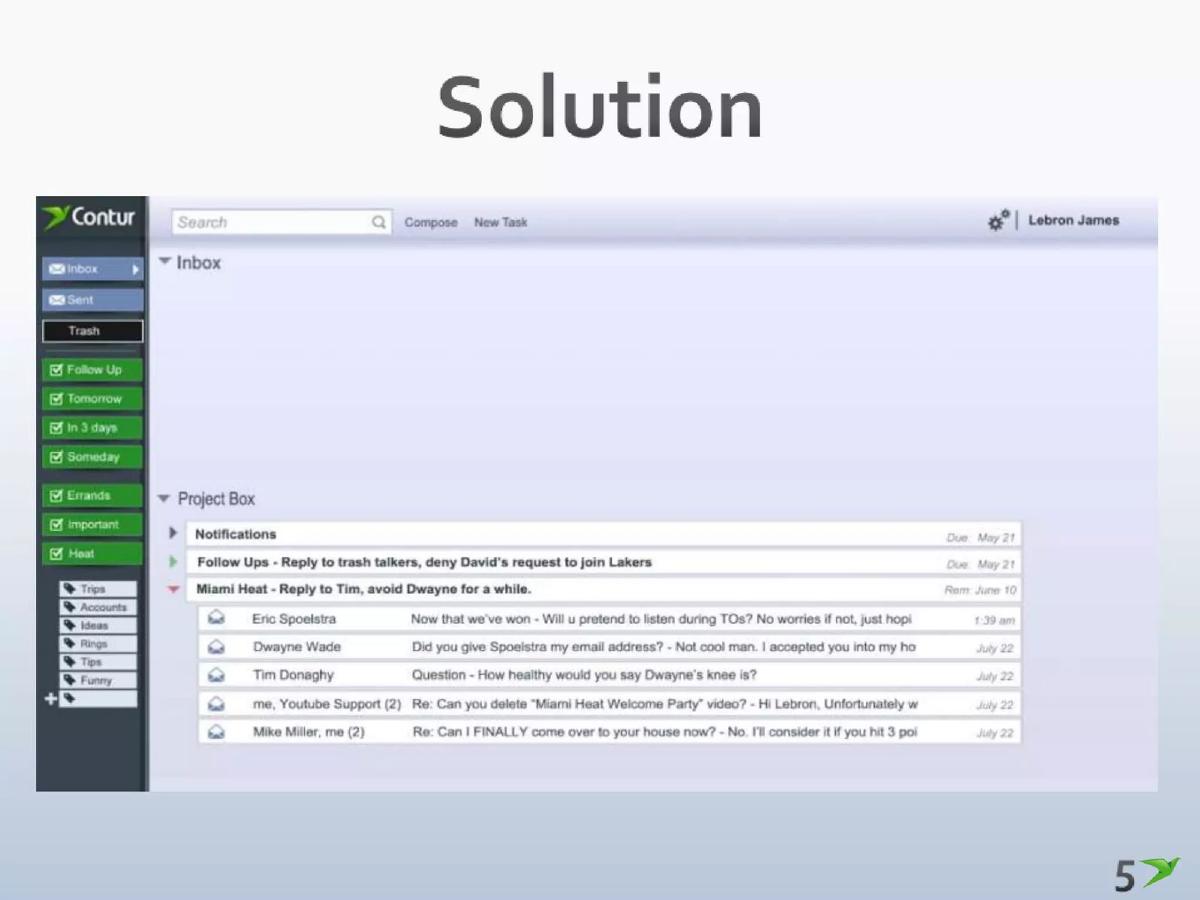
- The solution slide (slide 5) showcases a UI that organizes emails into a 'Project Box' with specific due dates and follow-up categories.
- The business model relies on a freemium structure, offering a free tier and a $5 paid tier (slide 7).
- Contur benchmarks its potential success against a competitor's 30% conversion rate, though the competitor is not named on slide 7.
- Competitive positioning (slide 9) places Contur in the top-right quadrant, defined by 'Automated Processes' and being 'Task Oriented.'
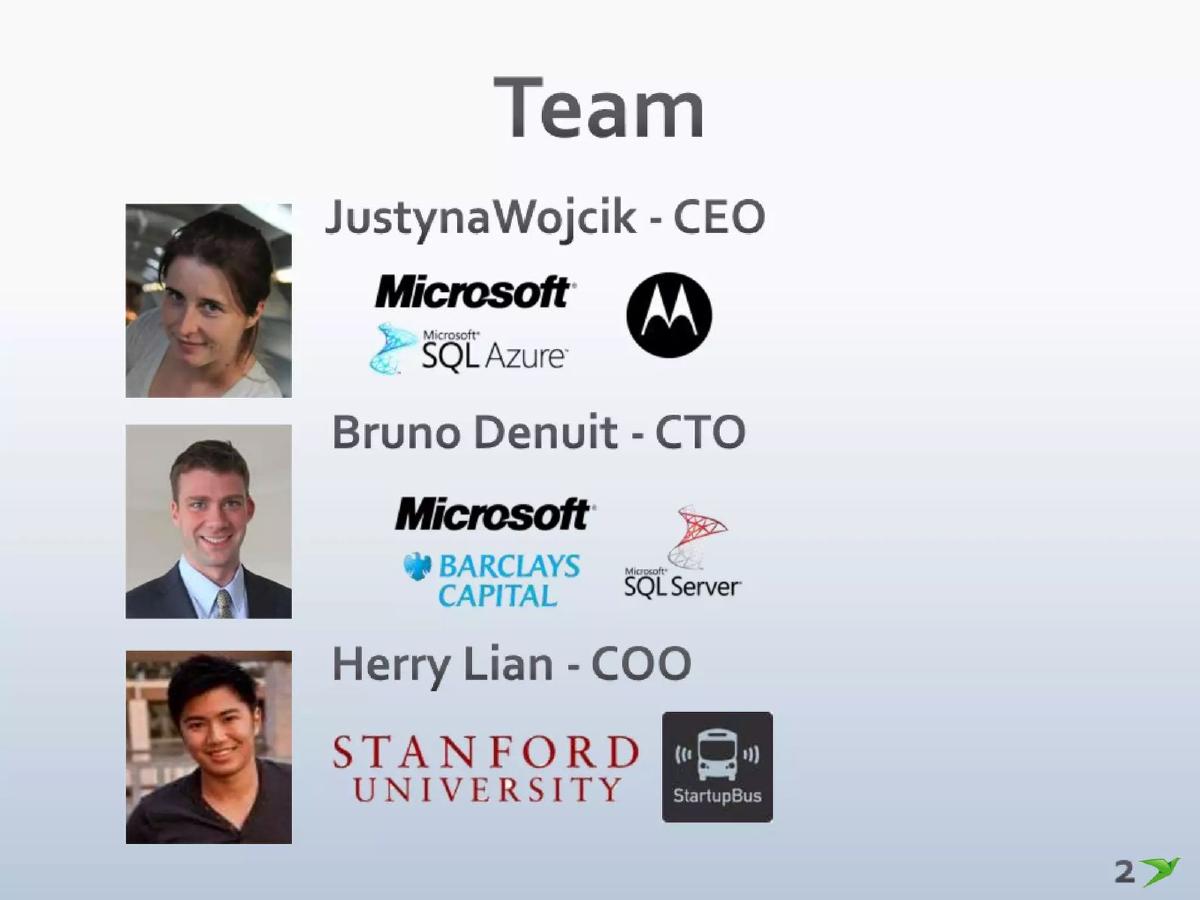
- The deck omits a team slide, failing to show who is building the technology or their relevant experience.
- There is no 'Ask' slide in the provided sequence, leaving investors unaware of the funding amount sought or the intended use of proceeds.
Contur Pitch Deck Analysis
The Contur pitch deck is a concise 11-slide presentation (of which 6 are analyzed here) that follows a traditional problem-solution narrative. It targets the productivity software market, specifically focusing on the evolution of the email inbox into a task management tool. While the deck identifies a clear pain point and offers a visual representation of the solution, it lacks the depth required for a late-stage seed or Series A round, functioning more as a high-level teaser for an early-stage angel investment.
Slide 1: Title Slide
The deck opens with a clean, minimalist title slide. It features the Contur logo—a green origami-style bird—and the company name in a bold, sans-serif grey font. Below the branding, the slide includes a hashtag (#conturmail) and a link to their AngelList profile (Angel.co/contur). This is a standard opening that establishes the brand identity immediately but provides no tagline or one-sentence value proposition, forcing the viewer to wait for the subsequent slides to understand the business category.
Slide 3: The Problem - Email Overload
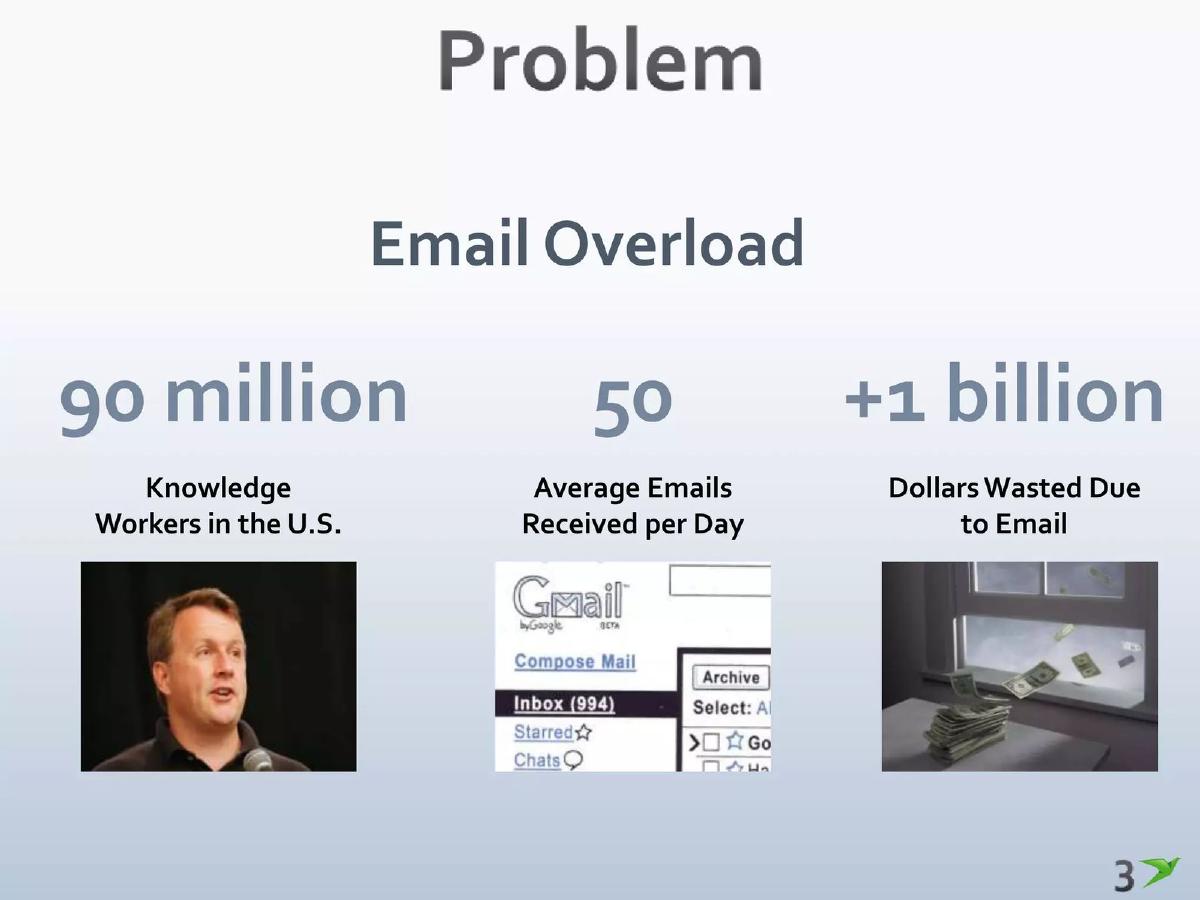
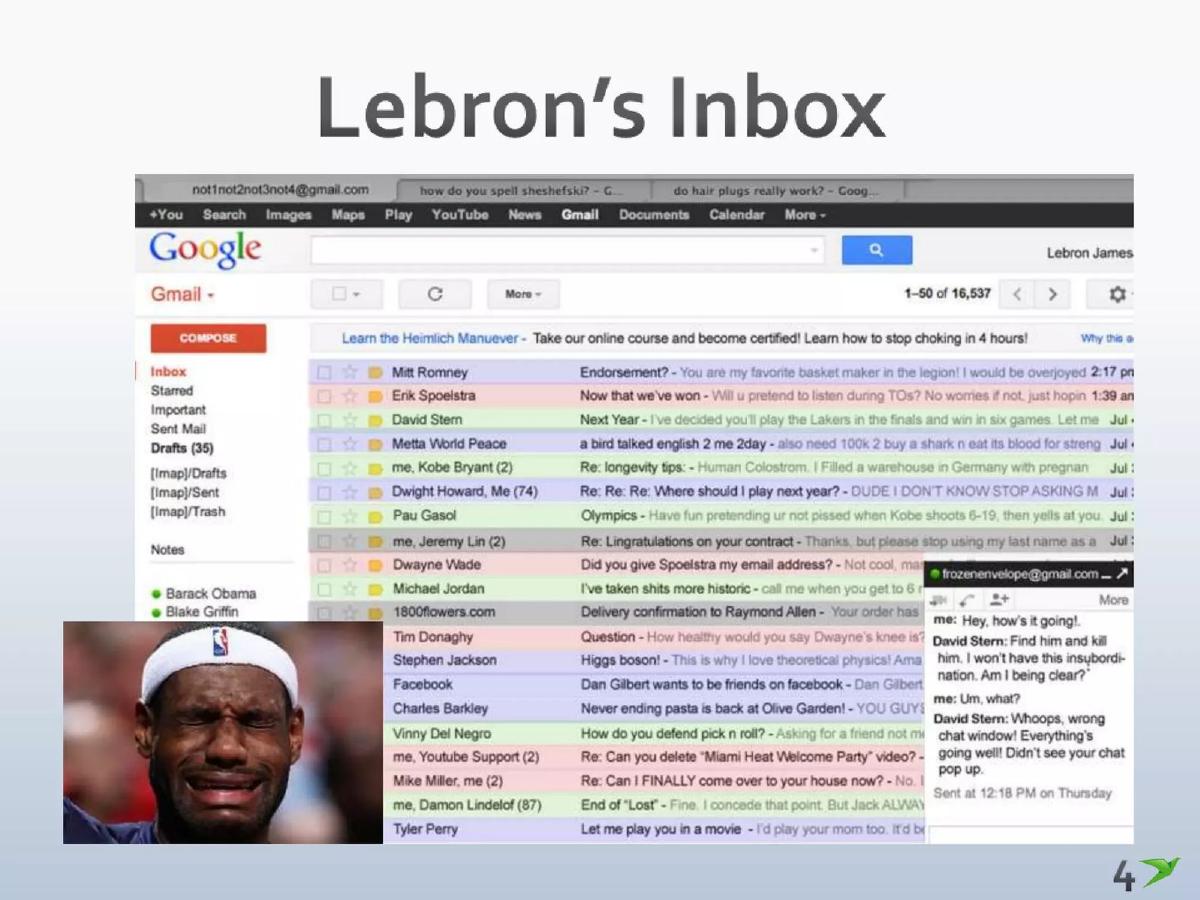
Slide 3 attempts to quantify the 'Email Overload' problem using three key metrics. First, it identifies the Total Addressable Market (TAM) as 90 million Knowledge Workers in the U.S. Second, it highlights the daily volume of the problem: 50 Average Emails Received per Day . Third, it attempts to show the economic impact, stating +1 billion Dollars Wasted Due to Email . The slide uses evocative imagery, including a screenshot of a Gmail inbox with 994 unread messages and a graphic of money flying out of a window. While the $1 billion figure is large, the slide does not cite the source for this data, which can undermine credibility with analytical investors.
Slide 5: The Solution - Task-Integrated Inbox
The solution slide is dominated by a high-fidelity mockup of the Contur interface. The UI suggests a departure from standard chronological inboxes. Key features visible in the 'Project Box' section include categorized threads such as 'Notifications,' 'Follow Ups,' and specific project folders like 'Miami Heat.' The mockup uses humorous placeholder text involving LeBron James and Dwyane Wade to demonstrate how the tool handles replies and due dates (e.g., 'Due: May 21' and 'Rem: June 10' ). This slide effectively communicates the 'Task Oriented' nature of the product, showing that email is treated as an actionable item rather than just a message.
Slide 7: Business Model - Freemium Strategy
Contur outlines a simple Freemium Model on slide 7. The slide shows two tiers: a Free tier and a $5 tier (presumably per month, though the time cadence is not specified). To validate this pricing strategy, the slide includes a graphic of a competitor (represented by a blue envelope character with glasses) and claims a 30% Conversion Rate for competitor . This is a bold claim, as a 30% free-to-paid conversion rate is exceptionally high for SaaS. Without naming the competitor or providing a source, this metric serves more as an aspirational benchmark than a proven financial driver for Contur itself.
Slide 9: Competition Matrix
The competition slide uses a standard 2x2 matrix to position Contur against existing players. The axes are defined as Communication Oriented vs. Task Oriented (X-axis) and Manual Processes vs. Automated Processes (Y-axis). Contur places itself in the top-right quadrant (Automated and Task Oriented). Other players mentioned or represented by logos include Gmail (Automated/Communication), Minbox (Manual/Communication), and an icon that appears to represent Microsoft Outlook (Manual/Task). By placing themselves alone in the top-right, the founders are claiming a unique 'blue ocean' space, though the deck does not explain the specific 'Automated Processes' that give them this advantage.
Slide 11: Contact and Call to Action
The final slide repeats the branding and provides a clear next step: 'Private Beta out in September.' It lists a contact email (info@contur.co) and a Twitter handle (twitter.com/conturmail). This slide serves as a placeholder for a closing conversation but lacks a summary of why an investor should act now. There is no mention of the current stage of the beta, the number of waitlisted users, or the specific milestones the team hopes to achieve next.
What Works in This Deck
Visual Clarity: The deck uses a consistent color palette and avoids cluttered text, making it easy to digest during a quick pitch. · Clear Positioning: The competition matrix on slide 9 clearly defines how the founders want the product to be perceived—as the automated, task-focused alternative to traditional email. · Relatable Problem: 'Email Overload' is a universal pain point for the target demographic (knowledge workers), making the value proposition immediately understandable.
What is Missing
The Team: This is the most glaring omission. Investors back people, especially at the early stage. There is no information on who is building Contur or why they are qualified to disrupt the email space. · The 'Ask': The deck does not state how much money the company is looking to raise or what that capital will be used for (e.g., hiring, marketing, infrastructure). · Technical Moat: While the deck claims 'Automated Processes,' it never explains the underlying technology. Is it AI? Is it a rules-based engine? Without this, the competitive advantage is just a claim. · Traction Metrics: Even for a pre-launch company, metrics like waitlist size, user interview insights, or early beta feedback are essential to prove demand. · Unit Economics: Beyond the $5 price point, there is no mention of Customer Acquisition Cost (CAC) or Lifetime Value (LTV) projections.
Founder Takeaways
Founders should look at the Contur deck as a lesson in visual storytelling but a warning in data transparency . The use of a high-fidelity mockup (slide 5) is a strong way to show, rather than tell, how a product works. However, referencing a '30% conversion rate' for an unnamed competitor (slide 7) is a risky move that often invites skepticism during due diligence. If you use a competitor's metrics to justify your business model, you must be prepared to name the competitor and cite the source of the data. Furthermore, never omit the team slide; even if the team is small, their background is the primary signal of execution capability for early-stage investors.
Frequently asked questions
- What is the primary problem Contur is trying to solve?
- Contur targets 'Email Overload.' According to slide 3, they focus on the inefficiency caused by the 50 emails the average knowledge worker receives daily. They frame this as a financial drain, citing over $1 billion in wasted dollars. The deck suggests that current email systems are too communication-oriented and lack the structure needed for modern task management.
- How does Contur plan to make money?
- The company proposes a freemium business model, as shown on slide 7. They offer a basic version for free and a premium version for $5. To justify the viability of this model, they point to a 30% conversion rate achieved by a competitor, suggesting that users are willing to pay for enhanced email productivity tools.
- What makes Contur different from Gmail or Outlook?
- According to the competition matrix on slide 9, Contur differentiates itself by being 'Task Oriented' and utilizing 'Automated Processes.' While Gmail is categorized as 'Communication Oriented' and 'Automated,' and other tools like Outlook (implied by the icon) are 'Task Oriented' but 'Manual,' Contur claims to sit in the unique intersection of automation and task management.
- What are the most significant missing elements in this pitch deck?
- The deck is missing three critical components: a Team slide, a Financials slide, and an Ask slide. Without a team slide, investors cannot evaluate the founders' ability to execute. The lack of financials means there is no insight into burn rate or revenue targets. Finally, the absence of an 'Ask' means the deck fails to communicate how much capital is needed.
- Is there evidence of product-market fit in the deck?
- There is very little evidence of product-market fit. The deck relies on macro statistics about the U.S. workforce and a competitor's conversion rate rather than Contur's own user data. Slide 11 mentions a 'Private Beta out in September,' which implies the product was still in the pre-launch or early-testing phase at the time of the pitch.