Biopane Energy presents a solution to the significant energy deficit in Africa, where 67.8% of houses lack electricity. Their core product, U-Pawa, is an automated blockchain and data portal designed to monitor, regulate, and facilitate peer-to-peer sharing of electricity tokens. The deck effectively identifies dual pain points for consumers (overcharging, shortages) and distributors (poor monitoring, unregulated service). While the solution leverages modern technology like blockchain to enable a trading platform for various energy sources (wind, solar, storage), the deck lacks critical finan…
Key takeaways
- The deck identifies a massive market opportunity in Africa, citing that 1.2 billion houses have no electricity on slide 2.
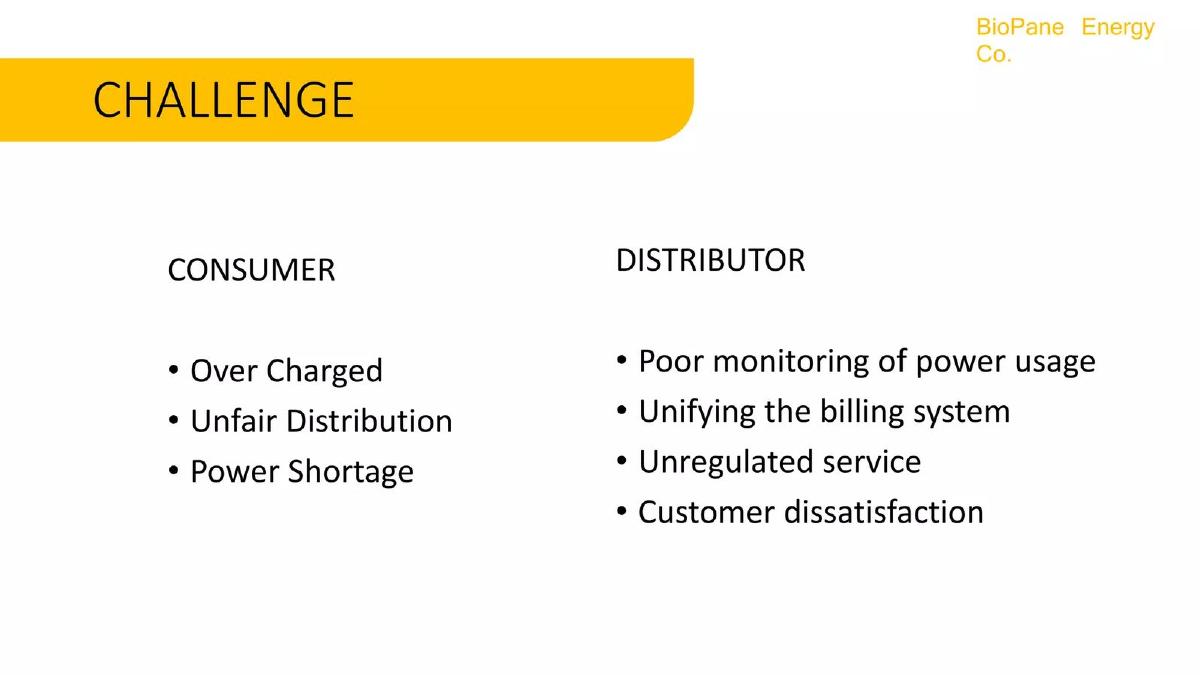
- Consumer pain points are defined as being overcharged, unfair distribution, and power shortages on slide 3.
- Distributor challenges include poor monitoring of power usage and customer dissatisfaction, also listed on slide 3.
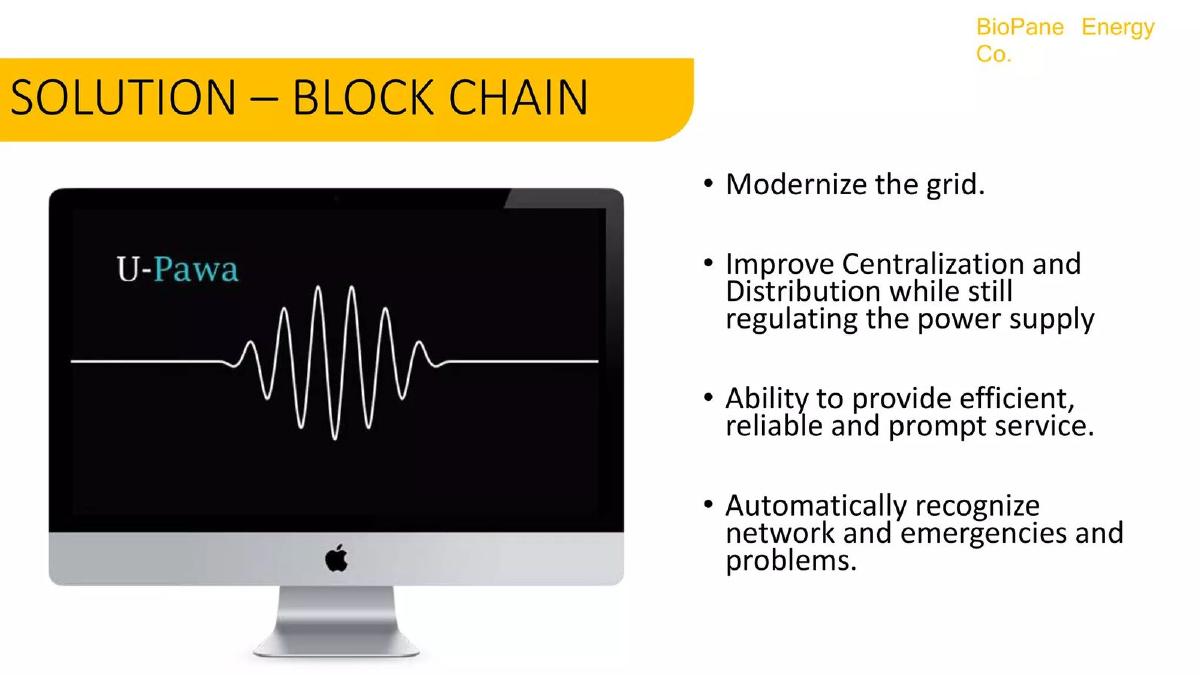
- The proposed solution is U-Pawa, described on slide 4 as an automated blockchain system for peer-to-peer electricity token sharing.
- Slide 5 illustrates a complex energy ecosystem involving wind, storage, and photovoltaics connected via a blockchain trading platform.
- Value propositions for consumers include earning income and reduced tariff rates, as stated on slide 6.
- Customer acquisition strategies on slide 7 include direct sales via WhatsApp and Facebook, as well as offline marketing with flyers.
- The deck concludes on slide 8 with contact information, including a Wix-hosted website and personal social media links.
Executive Summary: The African Energy Opportunity
Biopane Energy enters a high-stakes market with a clear mission: "Electricity for all!" (Slide 1). The deck focuses heavily on the infrastructure and distribution gaps within the African continent. By utilizing blockchain technology, the company seeks to decentralize energy distribution, allowing for a more transparent and efficient market. However, while the problem and the high-level solution are well-defined, the deck lacks the operational and financial depth usually required to secure venture capital funding.
Slide 1: Title and Vision
The cover slide introduces BIOPANE ENERGY Co. with the tagline "Electricity for all!" . The background imagery of a connected city grid suggests a focus on smart infrastructure and networked energy solutions. The branding is consistent, featuring a yellow and white color scheme that persists throughout the presentation.
Slide 2: The Macro Problem in Africa
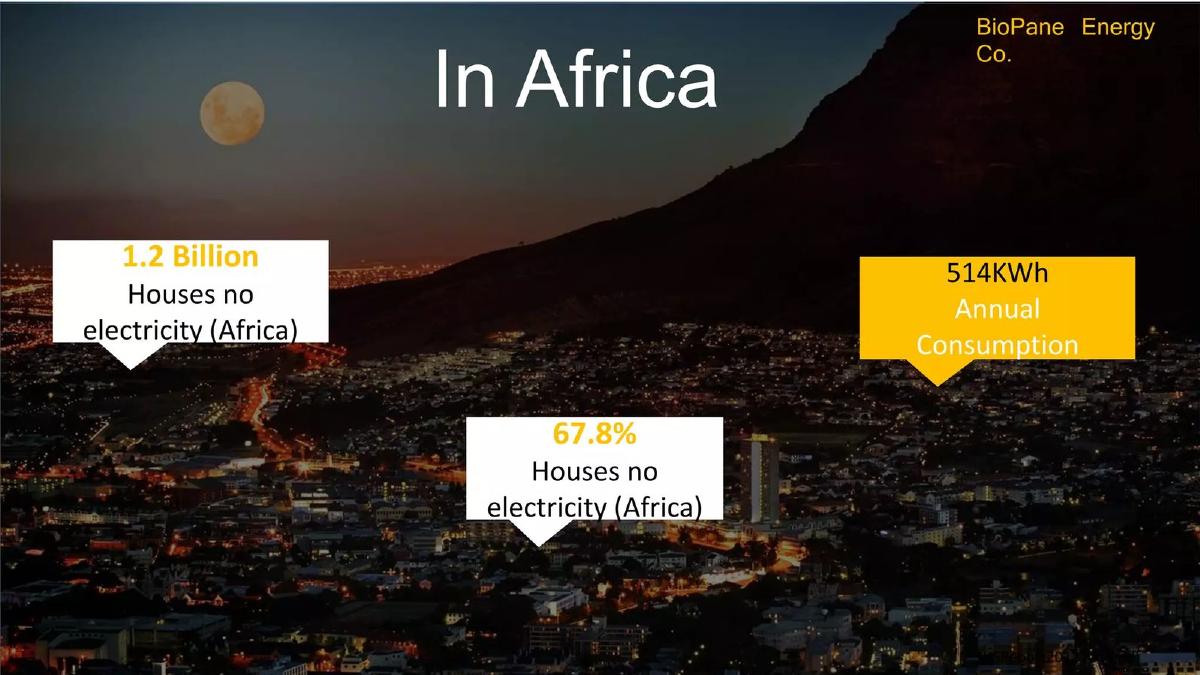
This slide establishes the scale of the opportunity. It provides three key metrics: "1.2 Billion Houses no electricity (Africa)" , "67.8% Houses no electricity (Africa)" , and "514KWh Annual Consumption" . While the 1.2 billion figure for "houses" seems statistically improbable given Africa's total population, the intent is to convey a massive underserved market. The slide uses a high-contrast background of a city at night to emphasize the lack of light/power.
Slide 3: Breaking Down the Challenge
The deck bifurcates the challenge into two categories: CONSUMER and DISTRIBUTOR . For consumers, the pain points are "Over Charged," "Unfair Distribution," and "Power Shortage." For distributors, the issues are "Poor monitoring of power usage," "Unifying the billing system," "Unregulated service," and "Customer dissatisfaction." This is a strong slide because it acknowledges that for a marketplace to work, the solution must provide value to both sides of the transaction.
Slide 4: The U-Pawa Solution
Slide 4 introduces the core product: U-Pawa . It is defined as "An automated blockchain and data portal system that monitors, regulates, and enables peer-to-peer sharing of electricity tokens." A mobile mockup shows a simple login screen, suggesting a user-friendly interface for consumers to manage their energy tokens. The use of "tokens" implies a fintech layer to the energy distribution model.
Slide 5: Technical Ecosystem Diagram
This slide provides a conceptual map of how the Trading platform sits at the center of an energy web. It connects Wind, Storage, Photovoltaics (RES in general), and Conventional energy sources to Industrial and Residential users. The Blockchain is depicted as the connective tissue between the network operator and the trading platform, illustrating how decentralized ledger technology facilitates the exchange.
Slide 6: Value Proposition
The value proposition slide reiterates the benefits for both parties. CONSUMERS are promised the ability to "Earn income," "Reduced tariffs rates," and a "Constant power supply." The mention of earning income suggests that consumers with excess generated power (perhaps from home solar) can sell it back to the grid. DISTRIBUTORS benefit from "Monitor electricity consumption rate" and a "Regulated billing system."
Slide 7: Customer Acquisition Strategies
Biopane outlines five pillars for growth: Direct Sales (WhatsApp, Facebook), Content Writing (Blogging), Partnerships (Networking with experts), Influencer Marketing (Training programs), and Offline Marketing (Flyers and posters). The inclusion of WhatsApp and offline flyers shows an understanding of the local African market context, where digital literacy and internet access may vary.
Slide 8: Contact Information
The final slide provides contact details. Notably, the website is a Wixsite URL, and the social media links lead to personal profiles (e.g., Cheptoo Sawe). This indicates a very early-stage startup, likely in the pre-seed or ideation phase, as they have not yet secured a custom domain or established corporate social media handles.
What Works in This Deck
Clear Problem/Solution Fit: The deck does an excellent job of identifying a specific, massive problem and proposing a modern technological solution. The distinction between consumer and distributor pain points shows a sophisticated understanding of the energy market's complexities.
Visual Simplicity: The slides are not cluttered. They use large text and clear icons, making the deck easy to digest in a quick flip-through. The ecosystem diagram on slide 5 is particularly helpful for visualizing a complex technical concept.
What Is Missing
The Team: Perhaps the most glaring omission is the lack of a team slide. Investors invest in people, especially at the early stage. Without knowing the technical or operational background of the founders, it is impossible to assess the execution risk.
Business Model and Unit Economics: The deck explains what they are doing but not how they make money. Is it a transaction fee on the blockchain? A SaaS fee for distributors? A hardware markup? This is a critical missing piece.
Market Validation and Traction: There is no mention of pilots, letters of intent (LOIs) from distributors, or user testing. For a project involving blockchain and physical energy infrastructure, proof of concept is vital.
The Ask: The deck ends without asking for anything. A pitch deck should clearly state how much capital is being raised, the valuation (optional), and exactly what milestones that capital will achieve.
Founder Takeaways
Validate your data: Ensure that macro statistics (like the number of houses) are accurate and cited from reputable sources to maintain credibility. · Professionalize your presence: Before pitching, secure a custom domain and professional email addresses. Using a Wix-branded URL can signal a lack of resources or commitment to some investors. · Address the 'How': In a complex industry like energy, you must explain the regulatory hurdles and the physical hardware requirements. A software-only solution (the app) cannot solve a hardware problem (lack of electricity) without a clear partnership or infrastructure strategy. · Include the Team: Always highlight why your team is uniquely qualified to solve this specific problem in this specific geography.
Frequently asked questions
- What is the primary problem Biopane Energy is trying to solve?
- Biopane Energy targets the energy crisis in Africa. According to slide 2, 67.8% of houses in Africa lack electricity, totaling 1.2 billion houses. They also address systemic issues like overcharging, power shortages, and poor usage monitoring by distributors, which leads to general customer dissatisfaction and unregulated service environments.
- How does the U-Pawa platform work technically?
- Based on slides 4 and 5, U-Pawa is an automated blockchain and data portal. It acts as a trading platform that connects various energy sources—including wind, solar (photovoltaics), and storage—to both industrial and residential users. The blockchain component is specifically used to enable and regulate the peer-to-peer sharing of electricity tokens.
- What are the benefits for energy distributors using this system?
- For distributors, the value proposition listed on slide 6 includes the ability to monitor electricity consumption rates more accurately and implement a regulated billing system. This is intended to solve the 'poor monitoring' and 'unifying the billing system' challenges identified earlier in the deck on slide 3.
- What is missing from the Biopane Energy pitch deck?
- The deck is missing several fundamental components required for a professional fundraise. There is no slide introducing the founding team or their expertise. Furthermore, there are no financial projections, no explanation of the business model (how the company makes money), no competitive analysis, and no specific 'ask' regarding how much capital they are seeking.
- How does the company plan to acquire customers?
- Slide 7 outlines a multi-channel acquisition strategy. This includes direct sales through social media platforms like WhatsApp and Facebook, content writing via blogging, partnerships with field experts, influencer marketing through training programs, and traditional offline marketing using flyers and posters to reach local communities.