Aeris raised $9.6 million in 2014 (per catalogue data) and utilized this deck to showcase a massive +800% growth rate in 2020. The company positioned itself as a high-tech alternative to 'under-engineered' market leaders like Dyson and Coway. By highlighting a diversified acquisition strategy—spanning direct web sales, major retailers like Best Buy and Target, and international dealers—Aeris demonstrated a mature go-to-market engine. The deck is particularly notable for its real-time response to the COVID-19 pandemic, introducing a medical infection control unit and citing ISO18184 testing fo…
Key takeaways
- The company reported +800% growth for 2020 and presence in 12 countries with over 50 retailers (Slide 2).
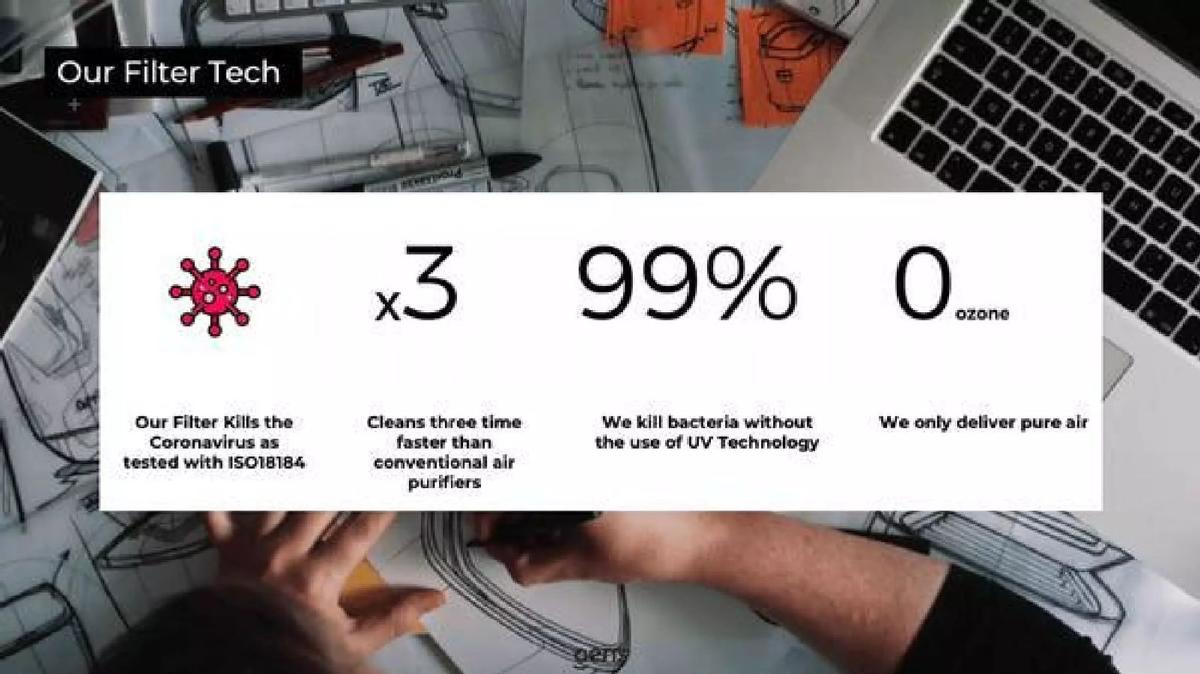
- Aeris claims its filter tech kills the Coronavirus as tested with ISO18184 and cleans three times faster than conventional purifiers (Slide 4).
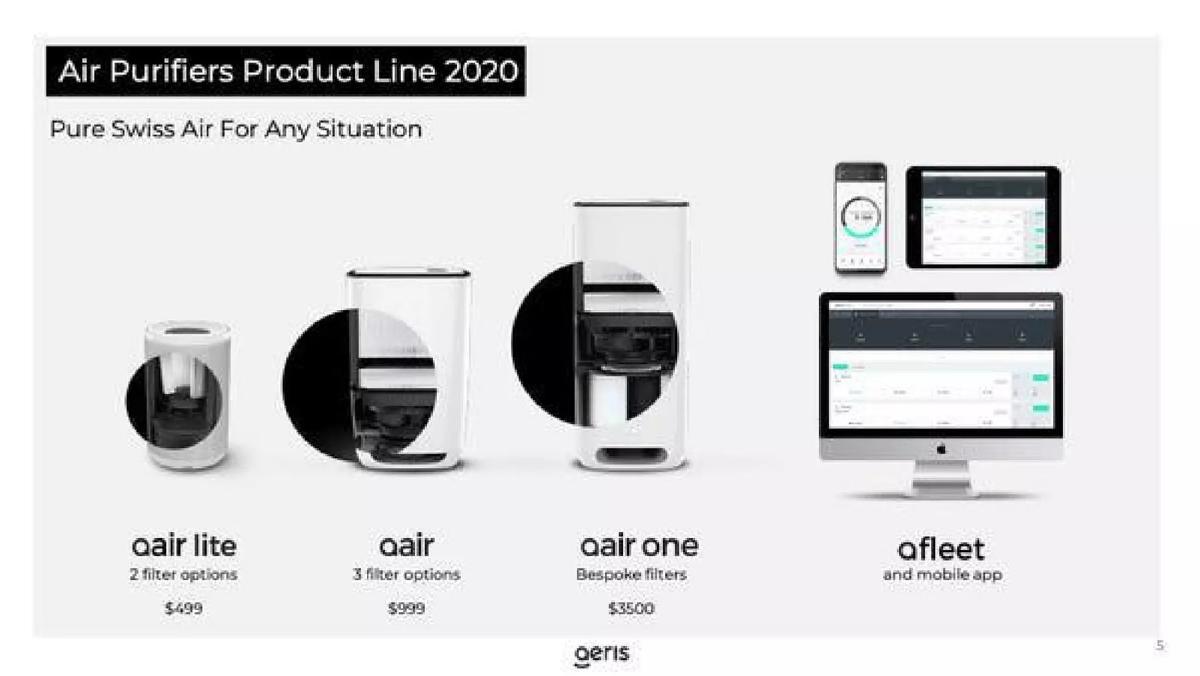
- The product lineup ranges from the $499 'aair lite' to the $3500 'aair one', supported by 'afleet' management software (Slide 5).
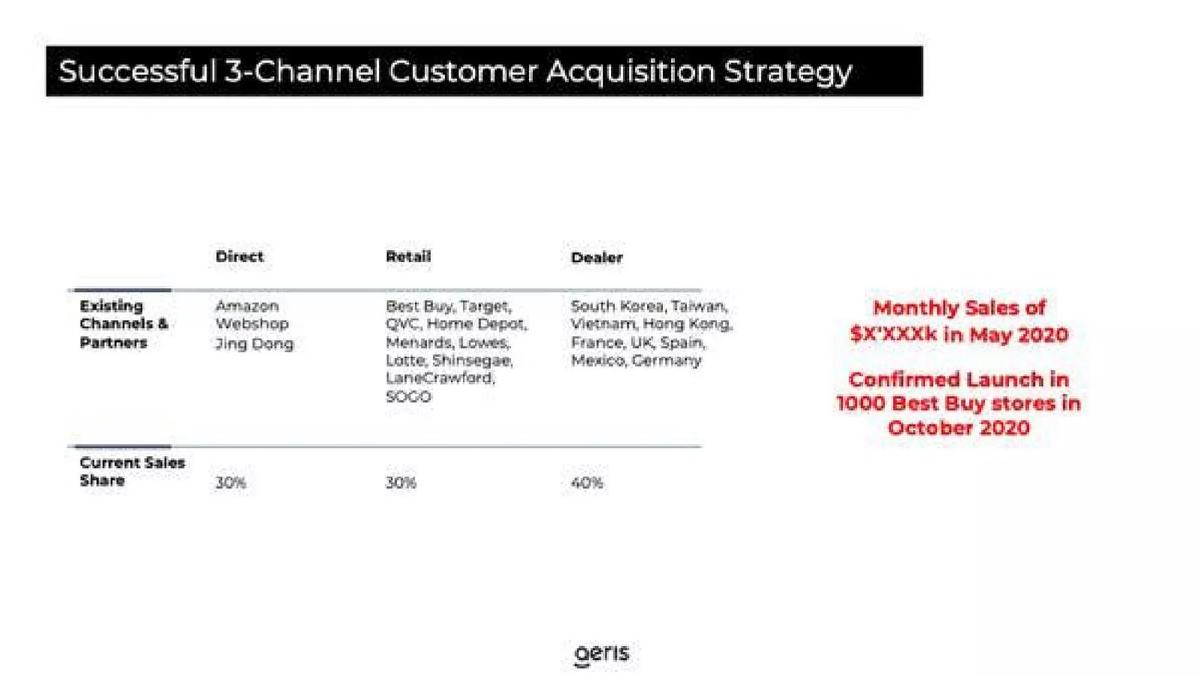
- Sales are distributed across three channels: 30% Direct, 30% Retail, and 40% Dealer (Slide 6).
- A high recurring revenue potential is highlighted, with 68% of filter sales being recurring, driven by app-based tracking (Slide 9).
- The company pivoted to medical sales during the pandemic, preselling to 300+ dental clinics in the US and Canada (Slide 11).
- Aeris positions itself in the high-tech, high-brand quadrant of the competitor landscape, claiming competitors like IQAir have 20-year innovation cycles (Slide 15, 16).
- The leadership team includes founders from MIT and ETH Zurich, plus a Head of Sales US with 30 years of retail experience (Slide 17).
Executive Summary: A High-Growth Hardware Play
Aeris presents a classic Series B narrative: a hardware company that has found product-market fit, established a global distribution network, and is now ready to scale. The deck, produced in mid-2020, leans heavily into the increased global awareness of air quality caused by both environmental disasters and the COVID-19 pandemic. With a reported 800% growth rate and a sophisticated multi-channel sales strategy, the company positions itself as the technologically superior successor to legacy air purification brands.
Slides 1-3: The Hook and Market Opportunity
Slide 1 is a minimalist title slide emphasizing the 'Swiss Made' branding. This is a strategic choice, as Swiss engineering carries a global reputation for precision and quality, which Aeris uses to contrast itself against 'under-engineered' competitors later in the deck.
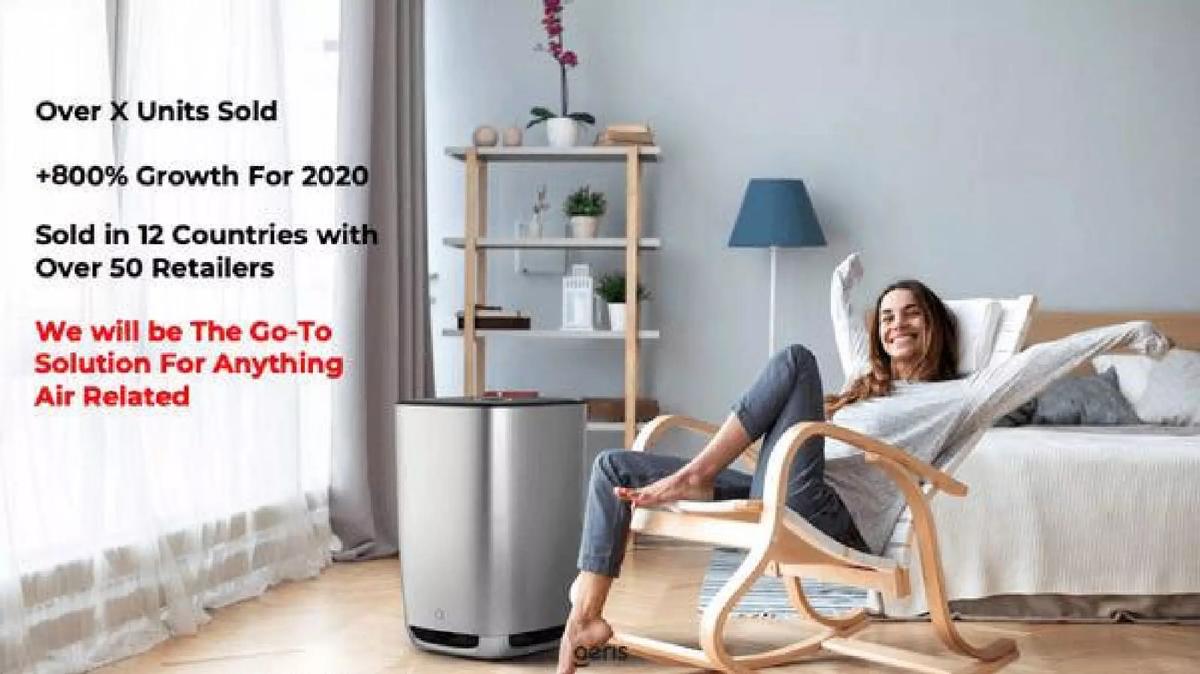
Slide 2 delivers the 'Traction' punch. It claims over 'X' units sold (the specific number is redacted in this version) but highlights +800% growth for 2020. The slide also notes presence in 12 countries and 50 retailers, establishing that this is no longer a localized startup but a global contender.
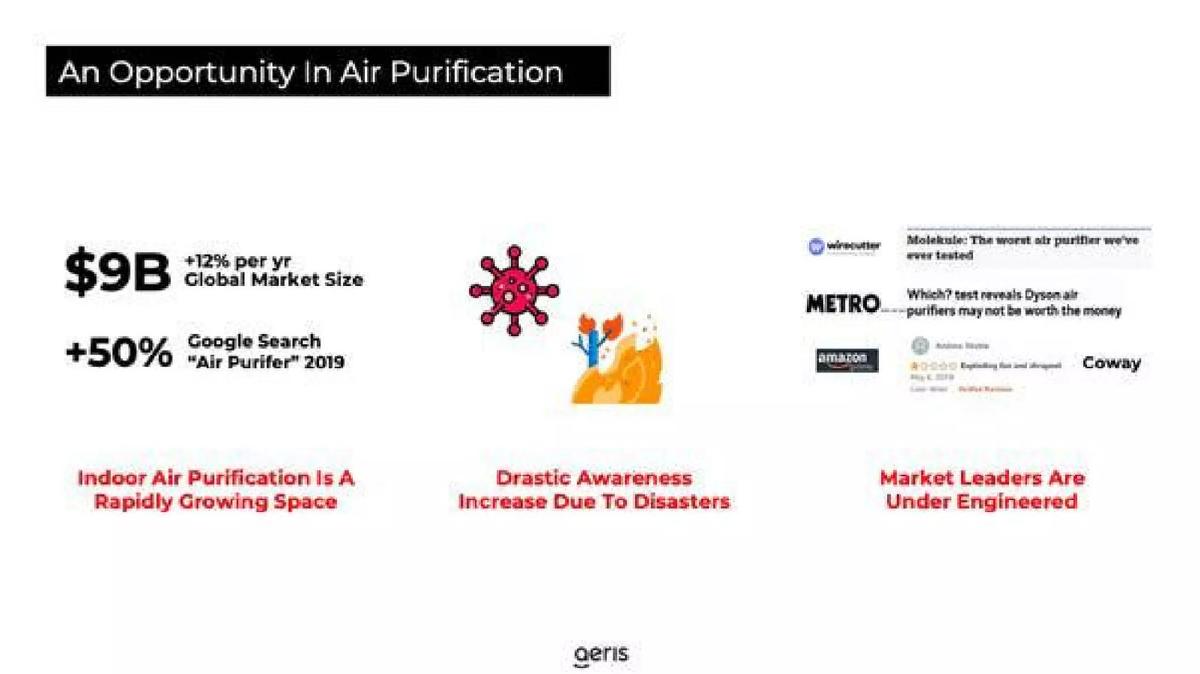
Slide 3 defines the opportunity. It cites a $9B global market size growing at 12% annually. More importantly, it highlights a +50% increase in Google searches for 'Air Purifier' in 2019 and notes that 'Market Leaders Are Under Engineered,' showing snippets of negative reviews for competitors like Molekule and Dyson to frame Aeris as the necessary solution.
Slides 4-5: Technical Superiority and Product Line
Slide 4 focuses on 'Filter Tech.' The company makes bold claims: killing the Coronavirus (tested with ISO18184), cleaning 3x faster than conventional purifiers, and delivering 0 ozone. By citing specific ISO standards, they aim to move past marketing hype into verifiable medical-grade performance.
Slide 5 showcases the 2020 product line. It demonstrates a clear 'Good-Better-Best' pricing strategy: the aair lite ($499), the aair ($999), and the aair one ($3500). Crucially, it introduces afleet , the software component that manages these devices, signaling that Aeris is an IoT/SaaS-enabled hardware company, not just a box-shifter.
Slides 6-9: Go-To-Market and Recurring Revenue
Slide 6 breaks down the '3-Channel Customer Acquisition Strategy.' The revenue split is healthy: 30% Direct (Amazon, Webshop), 30% Retail (Best Buy, Target), and 40% Dealer (International). The slide mentions a 'Confirmed Launch in 1000 Best Buy stores in October 2020,' which serves as a massive validation of their retail readiness.
Slide 7 reinforces this with a logo wall of 20+ retailers and 200+ premium locations, including high-end names like Lane Crawford and SOGO, alongside mass-market giants like Lowe's and Home Depot.
Slide 8 outlines the 'Consumer Marketing Strategy,' focusing on certifications (AHAM, Red Dot) and in-store experiences. Slide 9 addresses the 'holy grail' of hardware: recurring revenue. By claiming 68% recurring filter sales driven by app-based tracking, Aeris argues that their customer lifetime value (LTV) is significantly higher than a standard appliance manufacturer.
Slides 10-12: The COVID-19 Pivot
Slide 10 introduces the 'Medical Infection Control Unit.' Priced at $2499, this unit features a focused suction area for surgeries and a plasma unit that destroys 99% of H5N1 and H1N1. This was a timely response to the needs of dental and medical offices during the pandemic.
Slide 11 proves the efficacy of this pivot, noting they are 'Presold in Canada and the US to 300+ dental clinics' and are using 'Professors as Super Influencers' to close medical sales.
Slide 12 looks at 'Installed Solutions' for HVAC systems. It quotes Fast Company on the need for office buildings to retrofit HVAC systems, positioning Aeris's modular design as the solution for building-wide virus protection. This suggests an expansion from portable units to integrated infrastructure.
Slides 13-16: Commercial Strategy and Competition
Slide 13 highlights energy efficiency, claiming their system can reduce the need for traditional ventilation, which typically accounts for 80% of a building's energy consumption. This adds an ESG (Environmental, Social, and Governance) angle to their pitch.
Slide 14 displays a logo wall of commercial customers, including McDonald's, AIA, and the Beverly Hilton, proving their B2B viability.
Slide 15 is a standard 2x2 competitive matrix (Tech vs. Brand). Aeris places itself in the top-right quadrant, claiming higher tech than Dyson and stronger branding than industrial players like IQAir. Slide 16 backs this up with a bar chart comparing Clean Air Delivery Rates (CADR), showing Aeris outperforming all major rivals in both large and small room tests.
Slides 17-19: Team and Roadmap
Slide 17 introduces the team. The founders have pedigrees from MIT and ETH Zurich, but the 'Head of Sales' hires are the most important for a Series B deck. Scott Trowbridge, Head of Sales US, is noted for 30 years of retail experience and a background at IQAir and Duracell, providing the 'adult in the room' credibility needed for a $9.6M raise.
Slide 18 teases the 'Indoor Climate Platform' for 2021, showing a smart-home integration. Slide 19 provides the historical timeline from founding in 2015 to the projected 'Full Indoor Air Climate Solution' in 2021, showing a steady progression of product launches and dealer expansions.
What Works in This Deck
Timing and Relevance: The deck masterfully captures the urgency of the 2020 pandemic without appearing purely opportunistic. By citing ISO standards and medical presales, they prove the product's utility. · Multi-Channel Validation: Showing a balanced revenue split between direct, retail, and dealers suggests a de-risked business model that isn't overly dependent on a single platform like Amazon. · Technical Benchmarking: Using CADR metrics to directly compare against Dyson and Molekule provides a quantitative reason for their premium pricing. · Recurring Revenue: The 68% recurring filter sale metric is a powerful counter-argument to the 'one-and-done' hardware sales trap.
What is Missing
The Ask: There is no slide detailing the amount of capital sought or the specific use of funds. While we know from catalogue data they raised $9.6M, a pitch deck should ideally state the target. · Unit Economics: While they mention prices ($499-$3500), they do not disclose COGS (Cost of Goods Sold), margins, or Customer Acquisition Cost (CAC). For a Series B, investors would expect to see how profitable each unit is. · Financial Projections: The deck shows growth percentages but lacks a forward-looking P&L or revenue targets in absolute dollar amounts.
What a Founder Should Copy
The 'Anti-Competitor' Slide: Slide 16 is excellent. Instead of just saying 'we are better,' it uses an industry-standard metric (CADR) to show exactly how much better they are in different scenarios. · The Channel Breakdown: Slide 6 is a great template for showing a mature sales strategy. It lists specific partners and the percentage of sales coming from each, which builds immense trust. · The 'Super Influencer' Concept: Using respected professors and medical associations to validate a product (Slide 11) is a highly effective way to break into specialized B2B markets.
Frequently asked questions
- How did Aeris differentiate its technology from established competitors?
- Aeris focused on two main pillars: speed and efficacy. On Slide 4, they claim their technology cleans three times faster than conventional purifiers and kills bacteria without UV technology. Furthermore, Slide 16 uses Clean Air Delivery Rate (CADR) data to show their 'aair' and 'aair lite' models significantly outperform IQAir, Blueair, Dyson, and Molekule in both large and small room settings.
- What was the company's retail strategy at the time of the deck?
- Aeris employed a '3-Channel' strategy. According to Slide 6, they had a confirmed launch in 1,000 Best Buy stores for October 2020. Their retail footprint included major names like Target, Home Depot, and Lowe's, while their dealer network covered international markets like South Korea, Vietnam, and France. This diversification helped them achieve a balanced sales share (30% Direct, 30% Retail, 40% Dealer).
- How did Aeris address the COVID-19 pandemic in their fundraising?
- The pandemic was central to their 2020 narrative. Slide 10 introduces a 'Medical Infection Control Unit' developed specifically for the crisis, priced at $2499. They targeted the dental industry specifically, using webinars for the American Dental Association (ADA) mailing list to presell to over 300 clinics. They also cited ISO18184 testing to prove their filters killed the Coronavirus.
- What recurring revenue model does a hardware company like Aeris have?
- Aeris leverages its 'afleet' mobile app to drive filter replacements. Slide 9 claims a 68% recurring filter sales rate. The app tracks air quality and filter life remotely, creating a high-retention ecosystem where users are prompted to buy proprietary replacement filters, effectively turning a one-time hardware sale into a long-term service relationship.
- What are the notable omissions in this pitch deck?
- The deck is missing a clear 'Ask' slide detailing how much capital is being raised and how it will be allocated. It also lacks a detailed slide on unit economics (CAC/LTV) or a full P&L statement. While it mentions +800% growth, it does not provide the absolute revenue figures for 2019 or 2020, using 'X' placeholders in some versions of the deck (Slide 2, 6).