AEGIS is a personal safety startup developing a wearable device that allows users to send emergency alerts and location data to rescuers and family members. The 14-slide deck emphasizes the simplicity of its 'one-tap' interface compared to the multi-step process of unlocking a mobile phone during a crisis. Uniquely, the deck includes granular unit economics in Indian Rupees, citing a part cost of ₹1,800 and an assembly cost of ₹300 per unit. While the deck lacks a formal 'ask' or specific funding amount, it provides a clear break-even target of 2,643 watches at a selling price of ₹5,000. The…
Key takeaways
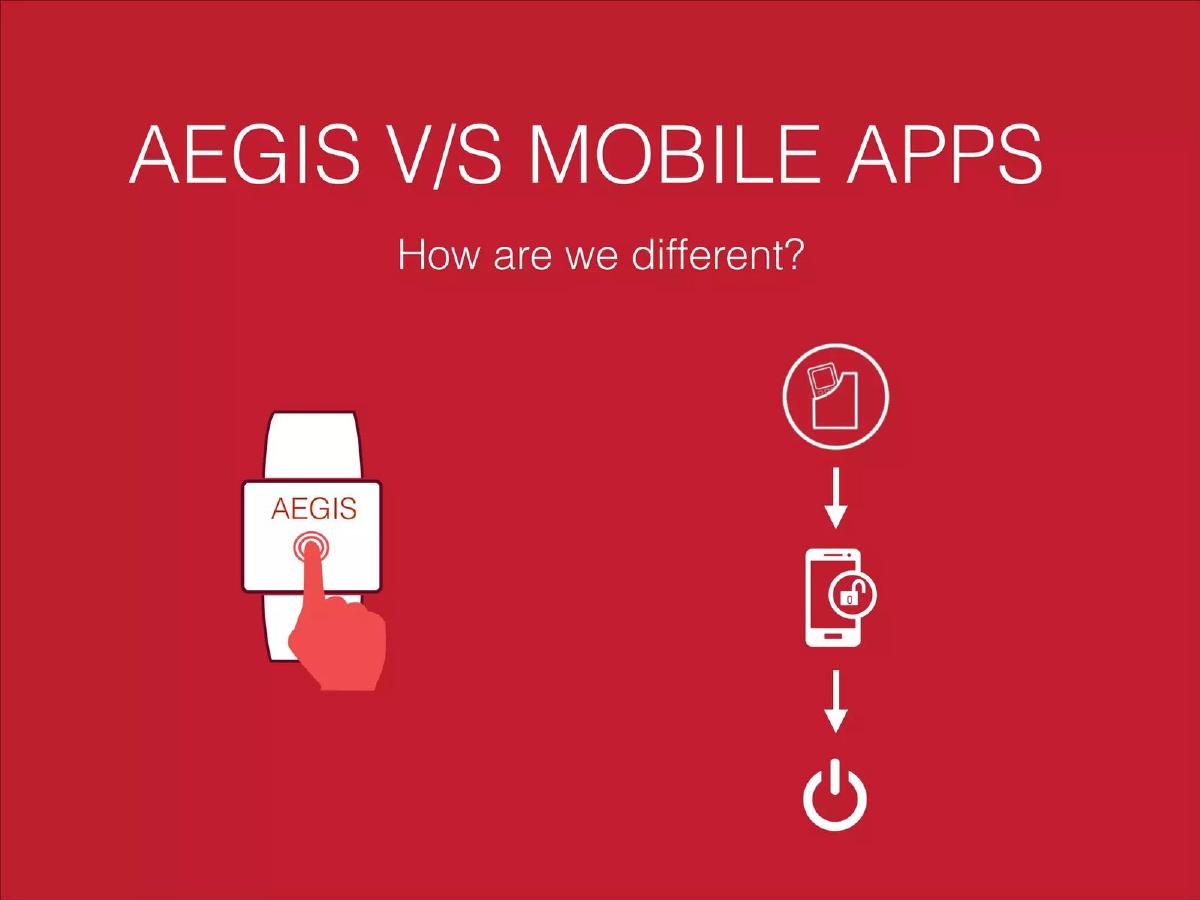
- The product aims to solve the difficulty of accessing safety apps on mobile phones during an assault, as shown on Slide 6.
- AEGIS claims a significant market interest, with 92% of survey respondents stating they are 'Ready to Buy' on Slide 8.
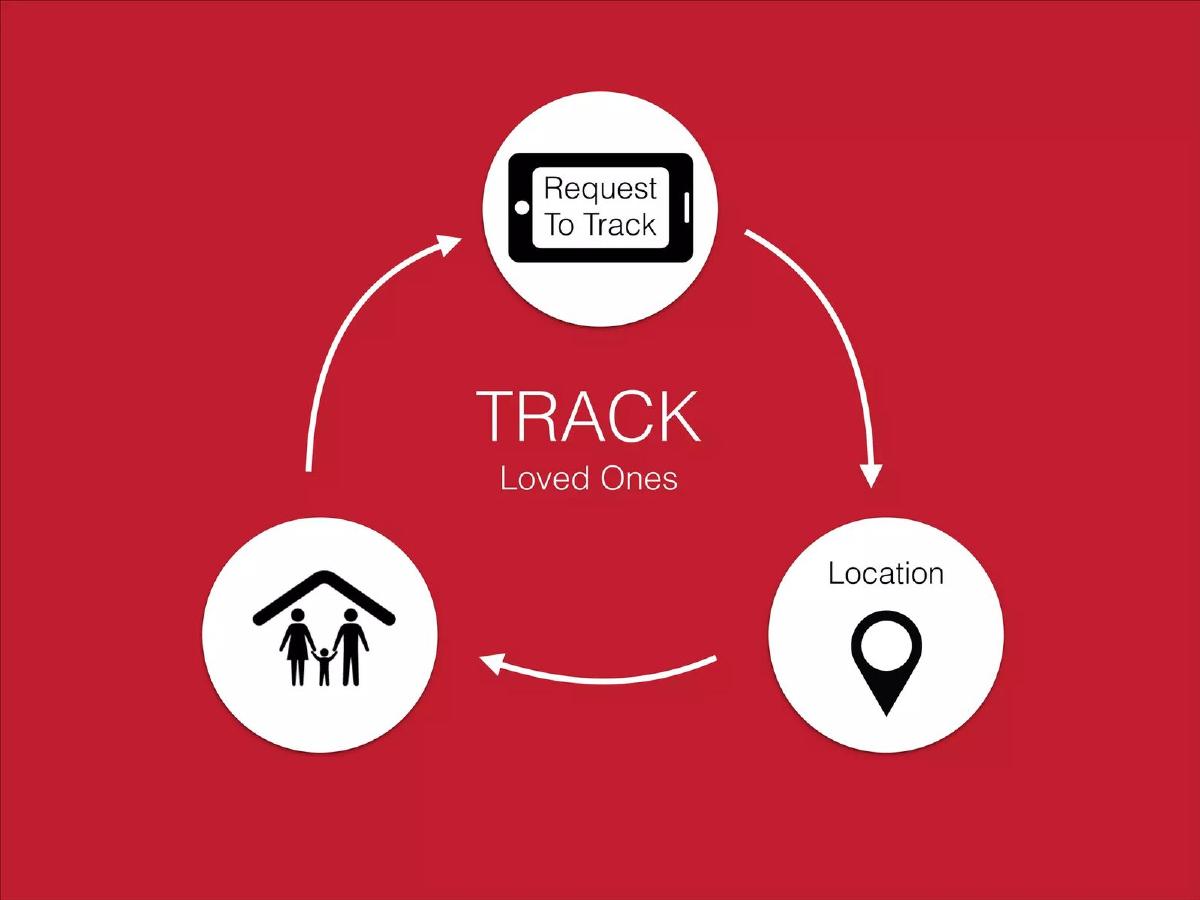
- The device features a dual-purpose functionality: emergency alerts and a 'Request to Track' feature for loved ones on Slide 5.
- Unit economics are clearly defined on Slide 10, with a total production cost (parts and assembly) of ₹2,100 per unit.
- The company targets a break-even point at 2,643 units sold, assuming a retail price of ₹5,000 as indicated on Slide 11.
- Monthly operational costs include ₹2,40,000 for design and ₹60,000 for customer service on Slide 10.
- The deck omits a specific investment ask, timeline for launch, or competitive landscape analysis beyond generic mobile apps.
- The team includes five named individuals and one corporate technology partner, Winatel Technologies, on Slide 12.
AEGIS Pitch Deck Analysis
The AEGIS pitch deck is a straightforward, hardware-centric presentation focused on a personal safety wearable. It utilizes a high-contrast red and white color scheme and relies heavily on iconography to explain its value proposition. The deck is notable for its specific focus on the Indian market, evidenced by the use of the Rupee (₹) symbol and local contact information.
Slide 1: Title Slide
The deck opens with the AEGIS logo—a shield containing a vertical white stripe—and the company name in a clean, sans-serif font. There is no tagline or mission statement on the cover, leaving the viewer to infer the company's purpose from the name and logo.
Slide 2: The Problem
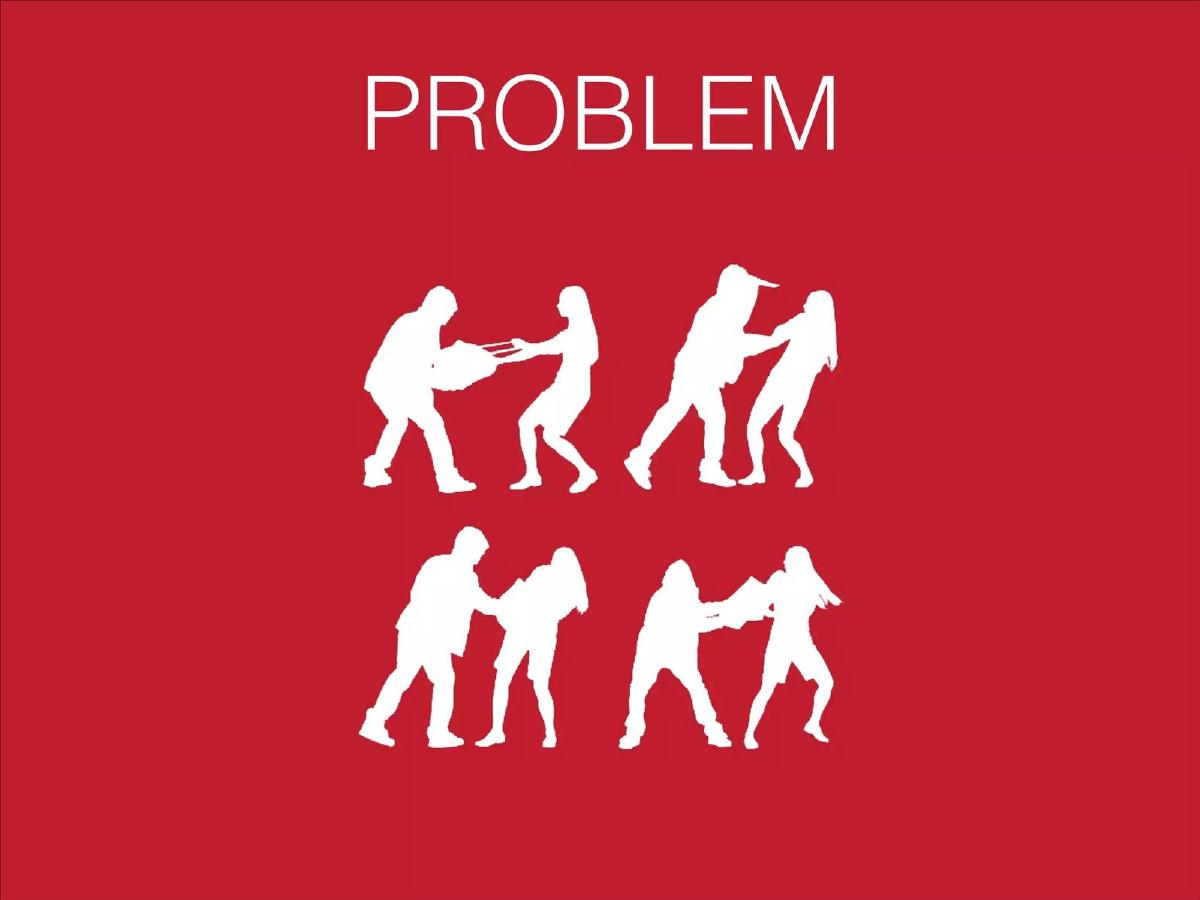
Slide 2 uses white silhouettes against a red background to depict four scenarios of physical assault and theft. The slide is titled 'PROBLEM' but contains no text descriptions. It relies entirely on visual storytelling to establish the need for a safety solution in high-risk physical environments.
Slide 3: The Solution - One Tap Alert
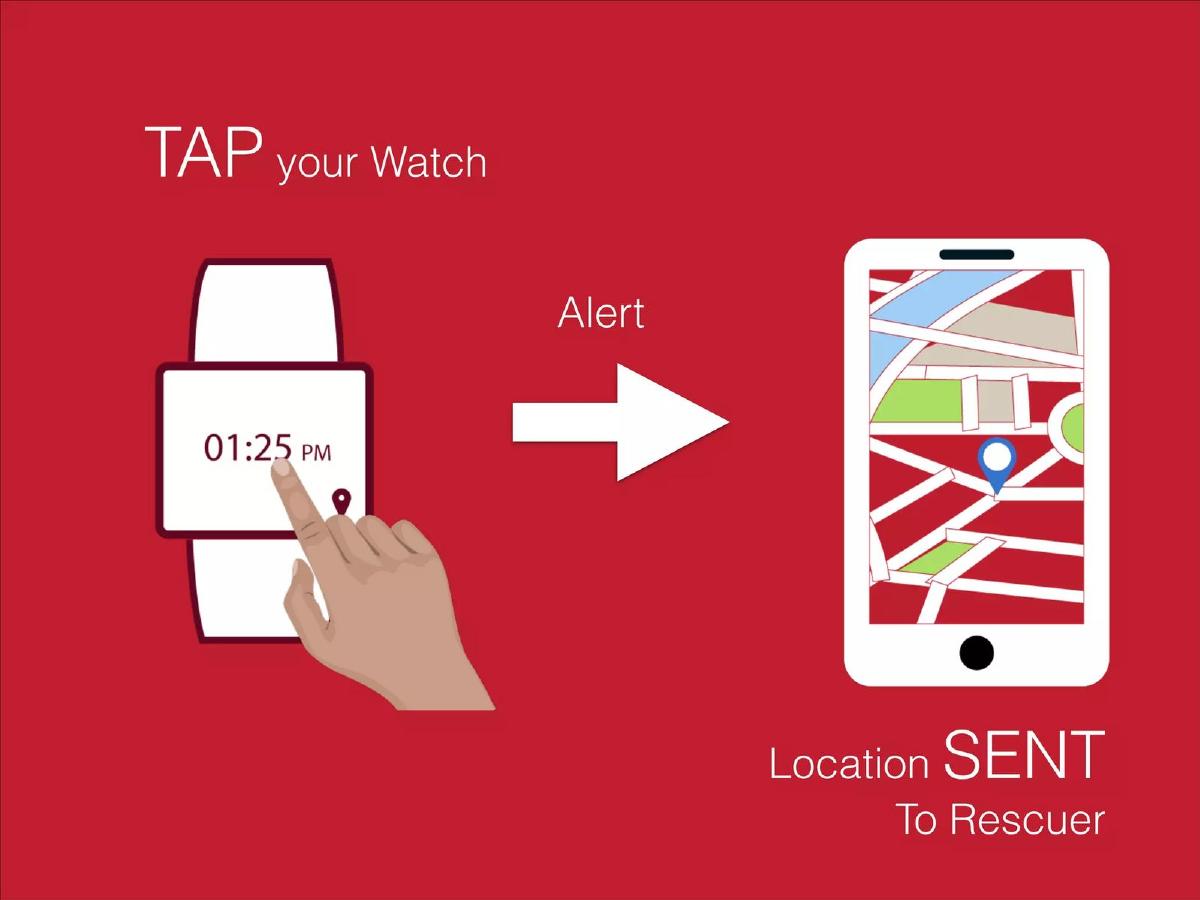
This slide introduces the core product functionality. It shows a hand tapping a wearable device, which then triggers an 'Alert' arrow pointing to a smartphone displaying a map. The text 'Location SENT To Rescuer' clarifies that the device is a location-based emergency transmitter.
Slide 4: How It Works
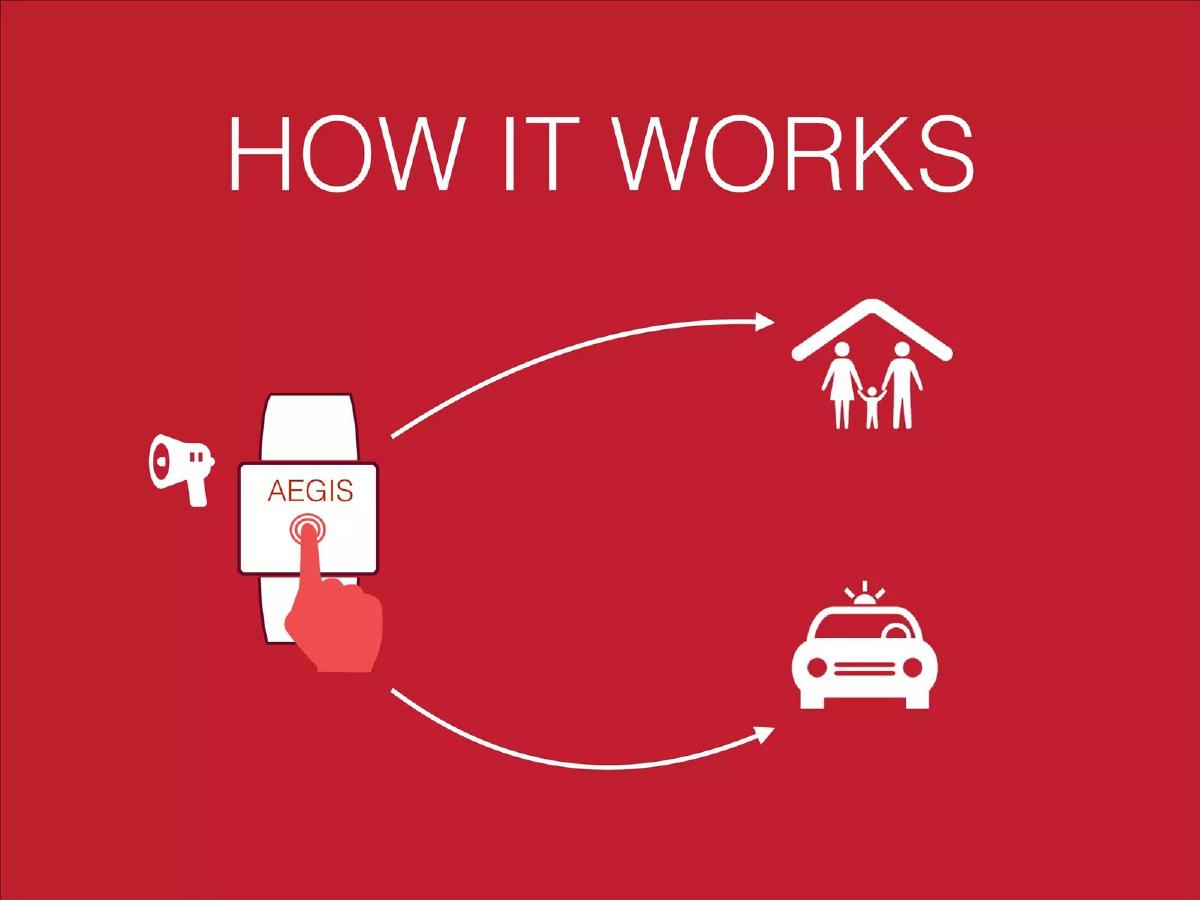
Slide 4 expands on the ecosystem. A tap on the AEGIS watch sends signals to two distinct groups: family members (represented by a house icon with a family) and emergency services (represented by a police car icon). A megaphone icon next to the watch suggests an audible alarm may also be part of the device's features.
Slide 5: Tracking Functionality
Beyond emergency alerts, Slide 5 introduces a 'Track Loved Ones' feature. It illustrates a circular flow: a 'Request To Track' is sent via a mobile device, the 'Location' is identified, and that information is shared with the family. This suggests the device has a passive tracking mode in addition to its active alert mode.
Slide 6: Competitive Advantage (AEGIS vs. Mobile Apps)
This is a critical slide for the company's positioning. It contrasts the 'one-tap' AEGIS interface with the multi-step process required for mobile apps: finding the phone, unlocking it, and then activating the app. The visual argument is that in a moment of crisis, the friction of a smartphone is a fatal flaw that a wearable overcomes.
Slide 7: Integration Ecosystem
Slide 7 shows the AEGIS shield connected to four icons: a government/bank building, a Facebook 'f', a megaphone, and a two-person chat bubble. This implies that the device integrates with social networks for alerts, official emergency channels, and perhaps a community-based safety network, though the slide does not explicitly name these integrations.
Slide 8: Market Research - Sentiment
The deck moves into validation with two pie charts. The first claims 87% of respondents 'Like' the idea. The second claims 92% are 'Ready to Buy'. There is no data provided regarding the sample size, demographic, or methodology of this research, which makes these high percentages difficult to verify.
Slide 9: Market Research - Pricing
This slide focuses on 'Preferred Pricing'. It shows that 46% of respondents would pay more than ₹5,000, 28% would pay between ₹2,500 and ₹5,000, and 26% would pay less than ₹2,500. This data is used to justify the company's eventual pricing strategy shown later in the deck.
Slide 10: Cost Structure
Slide 10 provides rare transparency into the company's expected expenses. It lists:
Sales and Marketing: ₹3,00,000 · Customer Service: ₹60,000 pm (per month) · Designing Cost: ₹2,40,000 pm (per month) · Part Cost: ₹1,800 pp (per piece) · Assembly Cost: ₹300 pp (per piece)
This breakdown allows a potential investor to calculate the burn rate and the gross margin per unit (₹2,900).
Slide 11: Break-Even Analysis
Using the costs from the previous slide, AEGIS calculates its break-even point. At a 'Selling Price' of ₹5,000 per piece, the company states it needs to sell 2,643 watches to break even. The slide includes a progress bar ranging from 0 to 20,000, suggesting an initial target or market capacity.
Slide 12: The Team
The team slide lists five members with their roles: Abhishek Upperwal (Hardware), Shubham Sharma (Software), Vijay Sirohi (Product), Ankita Mehta (Designer), and Neeraj Panwar (Sales). It also includes 'Winatel Technologies' as a Technology Partner. The presence of both hardware and software engineers is a positive sign for a wearable startup.
Slide 13: Contact Information
This slide provides an email address for Abhishek Upperwal at an 'innovatedelhi.com' domain, confirming the company's geographic base in India.
Slide 14: Product Summary
The final slide serves as a summary graphic, showing the watch with icons for GPS and a SIM card. It repeats the core value proposition: 'TAP To ALERT' and 'TRACK Loved Ones'.
What AEGIS Does Well
Clarity of Value Proposition: The deck is exceptionally clear about what the product does. By comparing the 'one-tap' wearable to the 'multi-step' smartphone process on Slide 6, the founders effectively highlight the specific pain point they are solving.
Granular Unit Economics: Most early-stage decks avoid specific cost numbers. AEGIS provides a clear breakdown of parts, assembly, and monthly overhead. This allows for a logical discussion about margins and the path to profitability.
Visual Consistency: The deck uses a consistent design language. The red, white, and green palette is maintained throughout, and the icons are professional and easy to interpret.
What is Missing from the AEGIS Deck
The Ask: The most significant omission is a funding request. The deck does not state how much money the company is looking to raise, what the valuation is, or how the funds will be allocated. Without an 'Ask' slide, the deck functions more as a product pitch than a fundraising tool.
Competitive Landscape: While the deck compares itself to mobile apps, it ignores other wearable safety devices (like smart jewelry or dedicated GPS trackers). Investors would want to know how AEGIS competes with existing hardware players.
Traction and Roadmap: There is no mention of current progress. Has a prototype been built? Are there pre-orders? What is the timeline for manufacturing and launch? The 'Market Research' slides provide sentiment, but not actual business traction.
Regulatory and Infrastructure Details: For a safety device that claims to alert the police, there is no explanation of how that integration works. Does the device call 100 (India's emergency number) automatically, or does it go through a private dispatch center? The technical and legal hurdles of emergency service integration are not addressed.
What a Founder Should Copy
The 'Friction' Comparison: Slide 6 is a masterclass in showing, not just telling, why a product is necessary. If your product replaces an existing behavior, visually mapping out the steps of the 'old way' versus your 'new way' is highly effective.
The Break-Even Bar: Providing a specific number of units required to reach break-even (2,643 in this case) gives investors a sense of the scale required for the business to become self-sustaining. It moves the conversation from 'if' the company can succeed to 'how' it will reach that specific sales milestone.
Role-Based Team Listing: The team slide clearly identifies who is responsible for hardware, software, and design. For a technical product, this distribution of labor is reassuring to investors who want to ensure the core competencies are covered in-house.
Final Thoughts
The AEGIS deck is a strong product-focused presentation that successfully argues for the utility of a dedicated safety wearable. Its financial transparency regarding unit costs is commendable. However, to be a successful fundraising deck, it requires a clear investment ask, a go-to-market strategy, and evidence of technical feasibility regarding its emergency service integrations.
Frequently asked questions
- What is the primary problem AEGIS is trying to solve?
- AEGIS addresses the physical difficulty of using a smartphone during an emergency. Slide 6 illustrates that using a mobile app requires multiple steps—finding the phone, unlocking it, and powering an app—which is nearly impossible during an active assault. AEGIS proposes a wearable device that triggers an alert with a single tap, sending location data immediately to rescuers.
- What are the specific unit economics for the AEGIS wearable?
- According to Slide 10, the hardware costs are broken down into ₹1,800 for parts and ₹300 for assembly per unit. With a target selling price of ₹5,000 (Slide 11), the company generates a gross margin of ₹2,900 per watch. This margin is used to cover fixed monthly costs like design (₹2,40,000) and customer service (₹60,000).
- How does the AEGIS device communicate with rescuers?
- Slide 4 and Slide 14 show that the device uses a combination of GPS (satellite icon) and a SIM card (SIM icon). When the user taps the watch, an alert and the user's precise location are sent to both family members and emergency services (police), as depicted in the 'How It Works' flow on Slide 4.
- What market validation does the company provide?
- The company presents internal market research on Slide 8 and Slide 9. They claim that 87% of people liked the idea and 92% were 'Ready to Buy.' Furthermore, their pricing research suggested that 46% of their target market is willing to pay more than ₹5,000, which aligns with their stated break-even selling price.
- Who is behind the AEGIS project?
- The team consists of Abhishek Upperwal (Hardware Engg.), Shubham Sharma (Software Engg.), Vijay Sirohi (Product Manager), Ankita Mehta (Designer), and Neeraj Panwar (Sales and Marketing). They also list Winatel Technologies as a 'Technology Partner' on Slide 12, suggesting an outsourced or collaborative manufacturing and R&D approach.