Demostack’s 2022 Series B deck is an anomaly in the world of growth-stage fundraising. While most Series B decks are heavy on spreadsheets, CAC/LTV ratios, and cohort analysis, Demostack leaned heavily into the 'Demo Experience Platform' category creation. The 11-slide presentation focuses almost exclusively on the friction of modern B2B sales—specifically the pain of using production environments for demos—and positions their cloning technology as the bridge between Product-Led Growth (PLG) and enterprise sales. By omitting a team slide, financial projections, and a specific 'ask' within the…
Key takeaways
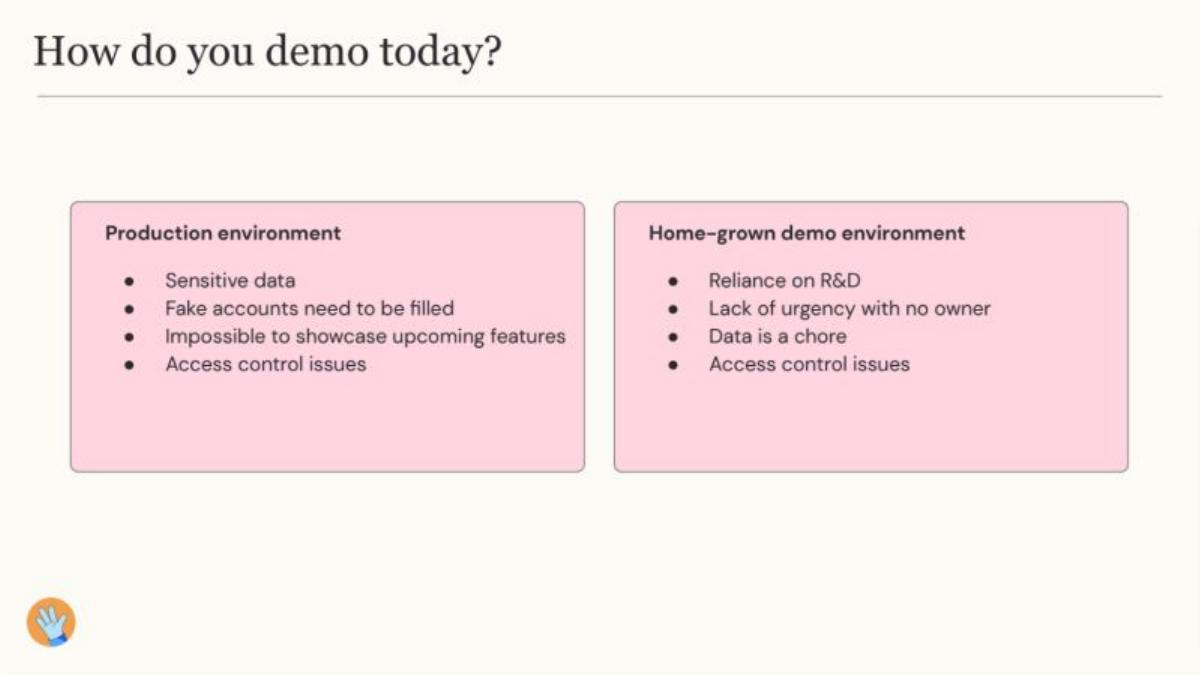
- The deck identifies two primary pain points for sales teams: using production environments with sensitive data and relying on slow R&D-owned 'home-grown' environments (Slide 2).
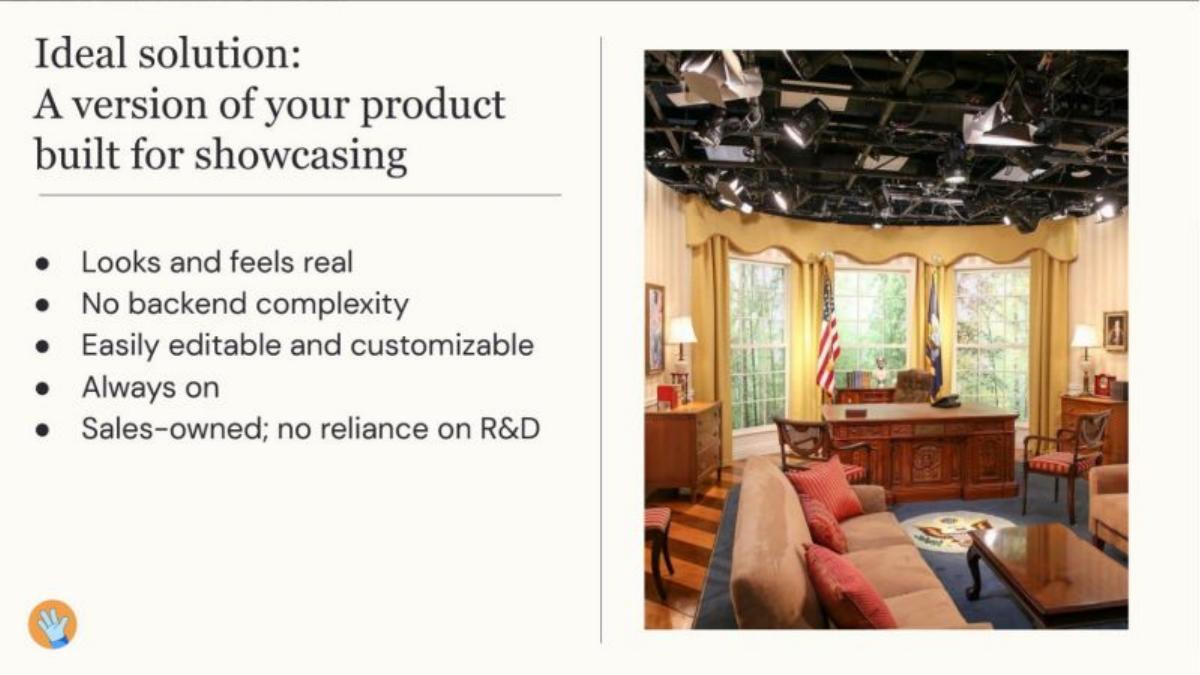
- Demostack positions its 'ideal solution' using a metaphor of a movie set—a version of the product that looks real but has no backend complexity (Slide 3).
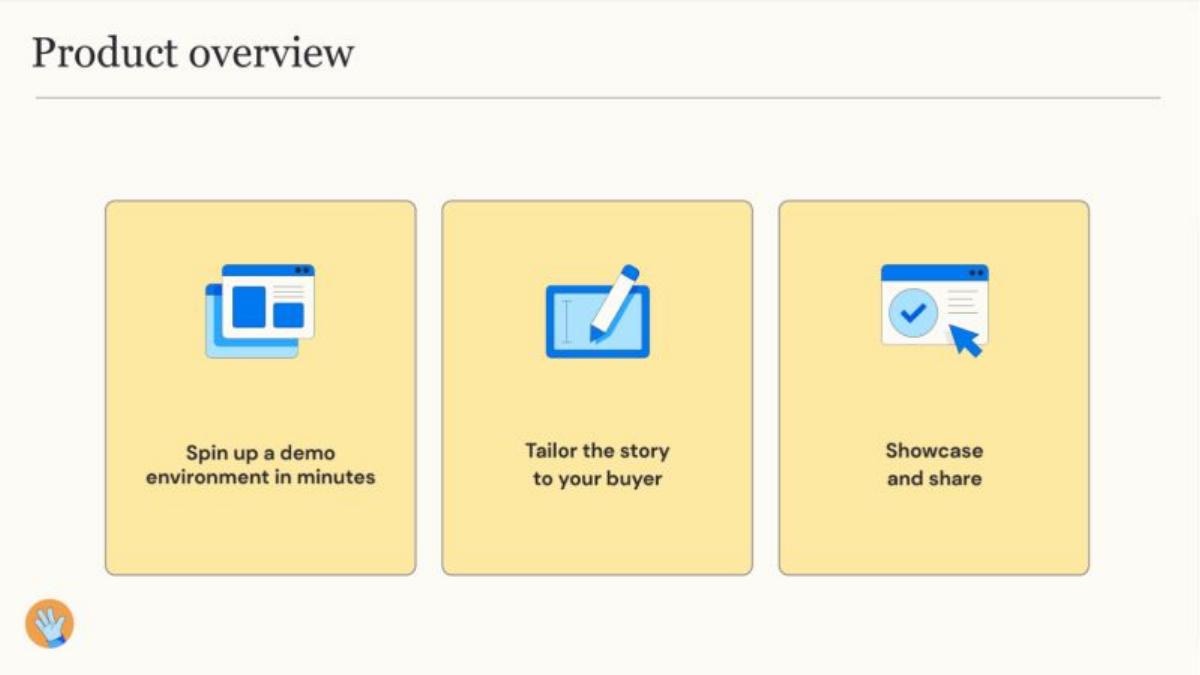
- The product workflow is simplified into three steps: spin up an environment in minutes, tailor the story, and showcase/share (Slide 5).
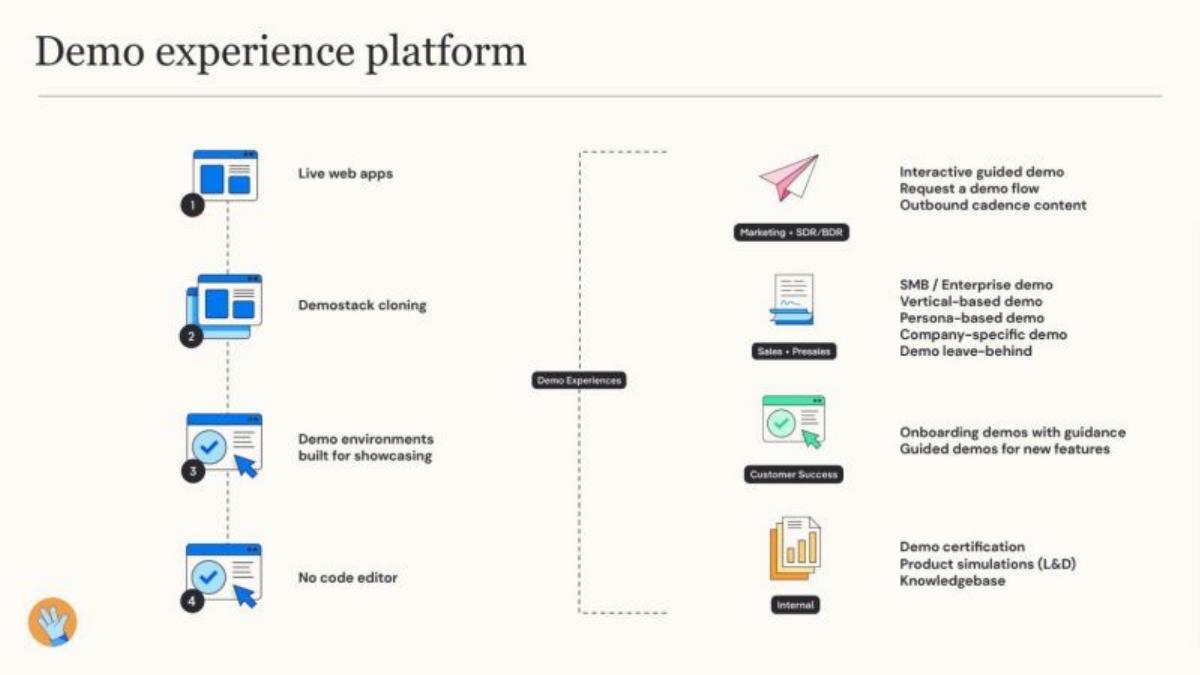
- The platform targets four distinct internal departments: Marketing/SDRs, Sales/Presales, Customer Success, and Internal L&D (Slide 6).
- A core value proposition is 'Bridging PLG with enterprise sales,' focusing on getting products into customer hands faster and enabling self-education (Slide 7).
- Competitive differentiation is claimed through 'Best in class technology' that clones full front-end experiences in seconds (Slide 8).
- The deck includes social proof from high-growth tech companies like WalkMe, PagerDuty, and Yotpo (Slide 9).
- Crucial Series B elements are missing from this specific deck version, including the founding team's pedigree, revenue growth charts, and the specific funding amount requested.
The Narrative-First Approach to Series B
Demostack’s Series B deck, used to raise $34M in April 2022, is a masterclass in minimalist storytelling. In an era where growth-stage decks are often bloated with data, Demostack chose to focus on the emotional and operational friction of the B2B sales process. The deck is less of a financial report and more of a manifesto for a new category: the Demo Experience Platform.
Slide 1: The Cover
The deck opens with a high-contrast orange cover featuring the Demostack logo and a simple "Overview" label. A stylized illustration of a hand reaching for a button sets a playful, user-centric tone. The date "April 2022" is clearly marked in the top right corner, providing immediate temporal context for the raise.
Slide 2: The Problem Statement
Slide 2, titled "How do you demo today?", splits the current market reality into two failing buckets. Production environment issues include sensitive data risks, the need to fill fake accounts, and the inability to show upcoming features. Home-grown demo environment issues focus on the "Reliance on R&D," "Lack of urgency," and the fact that "Data is a chore." This slide effectively identifies the 'enemy': the engineering bottleneck that prevents sales teams from being autonomous.
Slide 3: The Ideal Solution Metaphor
Instead of showing a screenshot, Slide 3 uses a powerful visual metaphor: a photo of a professional television set. The text defines the ideal solution as a version of the product built specifically for showcasing. Key attributes listed include "Looks and feels real," "No backend complexity," and most importantly, "Sales-owned; no reliance on R&D." This slide bridges the gap between the pain point and the product's value proposition without getting bogged down in technical specs.
Slide 4: The Value Proposition
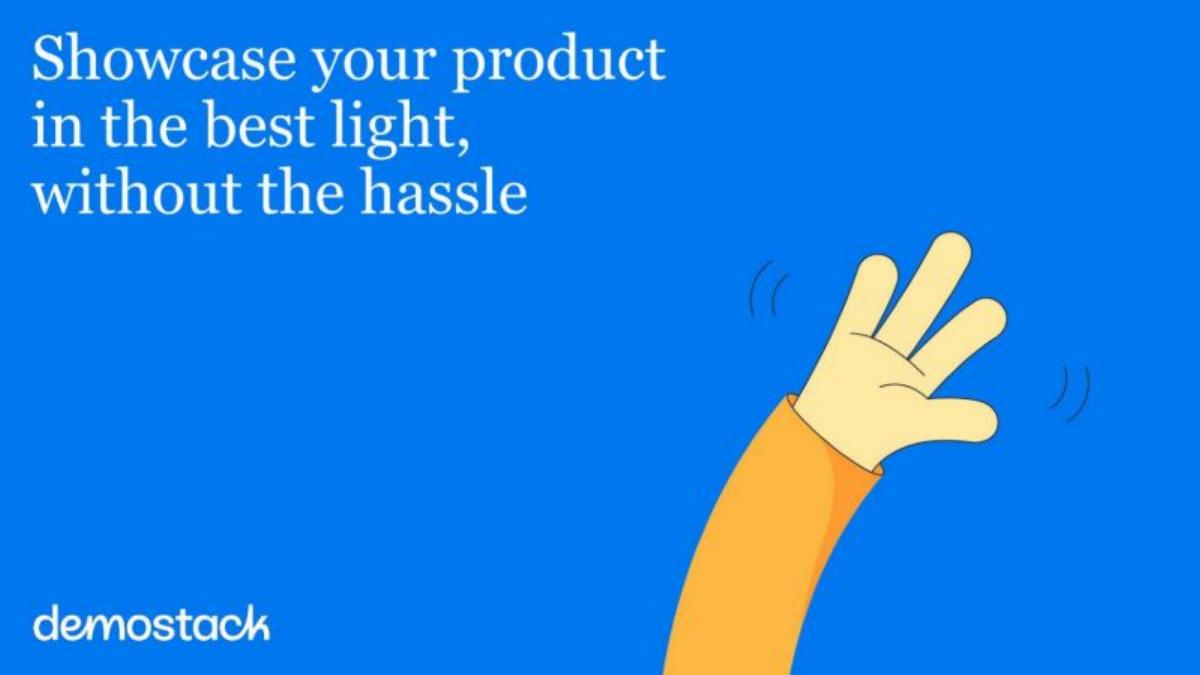
Slide 4 is a transition slide with a blue background. It features the core marketing hook: "Showcase your product in the best light, without the hassle." This reinforces the emotional benefit of the product—removing the "hassle" for the salesperson.
Slide 5: Product Overview
Slide 5 breaks the product down into a three-step workflow: 1. Spin up a demo environment in minutes. 2. Tailor the story to your buyer. 3. Showcase and share. This simplicity is intentional; it suggests that the complexity of cloning a software front-end has been abstracted away into a consumer-grade user experience.
Slide 6: The Demo Experience Platform
This is the most information-dense slide in the deck. It maps the technical process (Live web apps > Cloning > Environments > No code editor) to specific business outcomes across four departments. It lists use cases such as "Interactive guided demo" for Marketing, "Persona-based demo" for Sales, "Onboarding demos" for Customer Success, and "Demo certification" for Internal teams. This slide justifies the Series B scale by showing that the product isn't just a sales tool—it's an enterprise-wide platform.
Slide 7: Bridging PLG with Enterprise Sales
Slide 7 addresses a major trend in 2022: Product-Led Growth (PLG). It positions Demostack as the tool that allows enterprise sales teams to act like PLG companies by getting the "product into your customer's hands faster." The four pillars—Speed, Self-education, Storytelling, and Revenue Acceleration—align the tool with the C-suite’s primary goals.
Slide 8: Competitive Differentiation
Slide 8 focuses on four areas of 'moat' building: Best in class technology (cloning front-ends in seconds), Fidelity (supporting tooltips and animations), Breadth of offering (live demos + leave-behinds), and Architected for scale (one source of truth for assets). By emphasizing "fidelity," Demostack differentiates itself from lower-quality screen-capture competitors.
Slide 9: Social Proof
Slide 9 provides the necessary validation for a Series B round. It features two detailed quotes from leaders at BlueVoyant and WalkMe. The BlueVoyant quote specifically mentions a "multi-million dollar RFP," providing a direct link between Demostack and high-value revenue. The bottom of the slide features a logo wall including Yotpo, PagerDuty, and Betterworks, proving market fit across diverse SaaS verticals.
Slide 10 & 11: The Close
Slide 10 is a simple "Thank You!" with an illustration of clapping hands. Slide 11 is a standard promotional slide for the hosting platform, bestpitchdeck.com, and was not part of the original pitch. Notably, the deck ends without a team slide, a financial ask, or a roadmap.
What Demostack Omitted
The most striking aspect of this deck is what is not there. For a $34M Series B, one would typically expect to see:
A Team Slide: There is no mention of the founders' backgrounds or the size of the engineering team. · Financial Metrics: There are no charts showing ARR growth, churn rates, or expansion revenue. · Market Size: There is no TAM/SAM/SOM analysis. · The Ask: The deck does not state how much money is being raised or how it will be allocated (e.g., hiring 50 engineers, expanding to EMEA).
These omissions suggest that this deck was likely a "Story Deck" used to anchor the narrative during a meeting, while the hard data was handled in a separate document or a virtual data room.
What Founders Should Copy
Founders can learn several lessons from Demostack's approach:
Use Metaphors: The movie set photo on Slide 3 is more memorable than a list of features. It instantly communicates the concept of 'high fidelity, low infrastructure.' · Focus on Ownership: By repeatedly mentioning that the product is "Sales-owned" and removes "reliance on R&D," Demostack hits a major nerve for sales leaders who are tired of waiting on engineering tickets. · Map to Departments: Slide 6 is a great template for showing how a tool can expand within an organization. It moves the conversation from a single-user tool to an enterprise platform. · Quantify ROI through Quotes: Instead of just saying "we help you win deals," they included a quote about a "multi-million dollar RFP." Specificity in testimonials is worth more than generic praise.
Conclusion
Demostack’s Series B deck succeeds because it identifies a specific, painful friction point in the B2B sales cycle and proposes a clean, scalable solution. While it lacks the financial rigor usually seen in growth-stage decks, its focus on category creation ("Demo Experience Platform") and departmental expansion provided a compelling enough narrative to secure $34M in a competitive venture environment.
Frequently asked questions
- Why does a Series B deck have so few slides?
- At the Series B stage, investors often already have access to a comprehensive data room containing financials, cap tables, and legal documents. This 11-slide deck likely served as the 'narrative' or 'teaser' deck used to frame the conversation around category creation and the problem-solution fit, rather than being the sole source of due diligence information.
- How does Demostack define its market category?
- Demostack explicitly labels itself as a 'Demo experience platform' on Slide 6. This is a strategic move to move away from being viewed as a simple 'screen recording' tool and instead positioning itself as a critical infrastructure layer for revenue teams across Sales, Marketing, and Customer Success.
- What is the 'movie set' metaphor used in the deck?
- On Slide 3, Demostack uses a photo of a television set (the Oval Office) to illustrate their product. The point is that a demo should 'look and feel real' to the audience while having 'no backend complexity' and being 'Sales-owned.' Just as a movie set allows for filming without building a real building, Demostack allows for selling without a real production backend.
- What metrics are missing that you would usually see in a $34M round?
- Standard Series B metrics like Annual Recurring Revenue (ARR), Year-over-Year growth percentages, Net Revenue Retention (NRR), and Customer Acquisition Cost (CAC) are entirely absent. There is also no mention of the total addressable market (TAM) or a specific breakdown of how the $34M will be spent.
- Who are the target users according to the deck?
- Slide 6 identifies four key user groups: Marketing/SDRs (for outbound content), Sales/Presales (for company-specific demos), Customer Success (for onboarding and new feature guidance), and Internal teams (for demo certification and knowledge bases).