AutoLotto’s deck is a masterclass in Demo Day brevity, utilizing high-impact numbers to establish immediate market credibility. The presentation identifies a specific, multi-billion dollar friction point—$2 billion in unclaimed winnings annually—and proposes a mobile-first solution. By targeting a demographic where 70% of players earn over $75,000 per year, AutoLotto aligns itself with high-value smartphone users rather than the stereotypical low-income lottery participant. The deck concludes its narrative arc with significant traction, boasting a 100,000+ person waitlist growing by 10,000 ph…
Key takeaways
- The company identifies a $2,000,000,000 per year problem in unclaimed lottery winnings on Slide 2.
- AutoLotto targets a massive $485B annual global market, with $77B of that concentrated in the USA (Slide 4).
- The deck challenges lottery stereotypes by noting that 70% of tickets are bought by people earning over $75,000/year (Slide 5).
- Traction is demonstrated through a waitlist of over 100,000 users, adding 10,000+ new phone numbers daily (Slide 6).
- The startup had already raised over $2M USD by the time of this presentation (Slide 3).
- Strategic investor logos for DraftKings, the San Francisco 49ers, and Super Lucky Casino are used to build industry authority (Slide 3).
- The core value proposition is distilled into a simple five-word phrase: 'Play the lottery on your phone' (Slide 1).
- The USA lottery market is growing at a steady 10% year-over-year rate (Slide 4).
The Demo Day Format: Impact Over Information
The AutoLotto deck is a classic example of a Demo Day presentation. These decks are designed to be projected on a large screen while a founder speaks, meaning they prioritize large fonts, singular data points, and high visual impact over dense text. The goal is not to explain the entire business model in 12 slides, but to generate enough excitement for an investor to follow up for a meeting.
Slide 1: The Hook
The cover slide is remarkably clean. It features the AutoLotto logo and a clear, five-word mission statement: "PLAY THE LORTERY ON YOUR PHONE." Below the fold, it includes logos for DraftKings, the San Francisco 49ers, Super Lucky Casino, and Causecast. This is a strategic move to establish immediate social proof. By associating with a major sports franchise and a leader in daily fantasy sports (DraftKings), AutoLotto signals that it is a serious player in the regulated gaming and entertainment space.
Slide 2: The Problem as a Number
Slide 2 presents a single, jarring figure: "$2,000,000,000/YR IN UNCLAIMED WINNINGS." This is a brilliant way to frame the problem. Instead of talking about the inconvenience of going to a gas station to buy a ticket, they highlight the financial loss caused by the current physical system. It implies that the current process is so broken that billions of dollars are simply forgotten. This sets the stage for a digital solution that can track tickets and notify winners automatically.
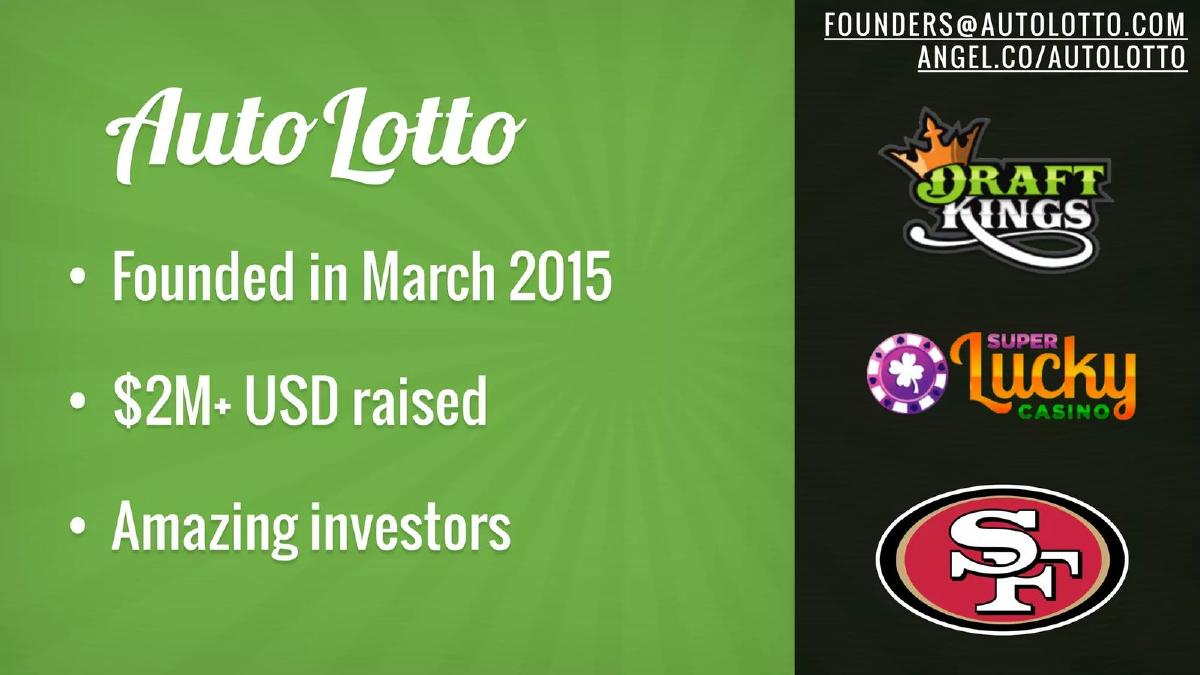
Slide 3: Company Status and Backing
This slide provides the 'hard facts' of the business. It notes the company was "Founded in March 2015" and has already "$2M+ USD raised." It reiterates the "Amazing investors" through the logos previously seen on the cover. This slide serves to tell investors that the train has already left the station; the company is funded, backed by industry giants, and moving fast.
Slide 4: The Trillion-Dollar Trajectory
Market size slides are often ignored if they feel inflated, but AutoLotto breaks it down effectively. They cite a "$485B ANNUAL GLOBAL MARKET." They segment this into a "$77B" US market and a "$408B" international market. Crucially, they include a "10%" year-over-year growth rate for the US. This shows that despite being an old industry, it is not a stagnant one. The scale here is large enough to support a venture-scale outcome even with a small percentage of market capture.
Slide 5: The Demographic Pivot
This is perhaps the most important slide for overcoming investor bias. Many investors view the lottery as a 'tax on the poor' and might be hesitant to invest in a product targeting low-income demographics. AutoLotto refutes this with a specific stat: "70% OF ALL LOTTERY TICKETS ARE BOUGHT BY PEOPLE WITH INCOMES OVER $75,000/YR." By labeling this as a "DEMOGRAPHIC HIGH IN SMARTPHONE USERS," they bridge the gap between a traditional paper-based industry and a modern mobile app audience.
Slide 6: Explosive Traction
The final slide in this set focuses on momentum. A "100K+ WAITLIST" is impressive, but the velocity is what matters: "ADDING 10K+ PHONE NUMBERS PER DAY." This indicates that their customer acquisition cost (CAC) is likely low or their viral mechanics are highly effective. For a Demo Day pitch, ending on a 'hockey stick' growth metric is the standard way to drive investor interest immediately following the presentation.
What Works in This Deck
Clarity of Purpose: Within three seconds of looking at the first slide, you know exactly what the product does. There is no jargon about 'leveraging blockchain for gaming ecosystems.' It is simply the lottery on a phone.
Data-Driven Problem Framing: Using the $2 billion unclaimed winnings figure is much more powerful than saying 'people lose their tickets.' It quantifies the inefficiency of the incumbent market in a way that demands a solution.
Counter-Intuitive Insights: The income demographic slide is a 'lightbulb moment' for investors. It changes the perception of the user base from 'desperate' to 'convenience-seeking high-earners,' which is a much more attractive segment for tech investors.
What is Missing
Regulatory and Legal Strategy: The lottery is one of the most heavily regulated industries in the world, varying state by state. The deck (at least in these six slides) does not address how they handle the legal complexities of selling tickets across state lines or the 'courier' model logistics.
Revenue Model: It is unclear how AutoLotto makes money. Do they take a service fee per ticket? Do they take a percentage of winnings? Do they sell advertising? In a high-volume, low-margin business like lottery tickets, unit economics are vital.
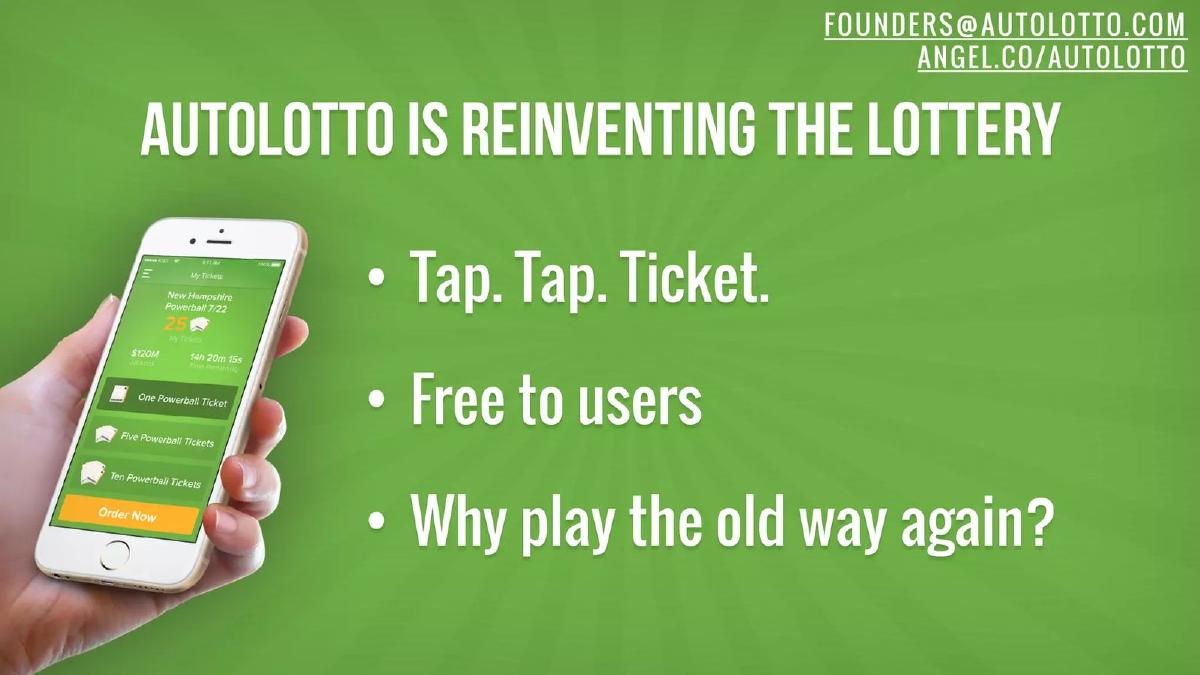
Product Interface: While the mission is clear, there are no screenshots of the app. Investors want to see if the user experience is actually better than the physical alternative.
Founder Takeaways
Lead with your biggest number. Whether it's the market size ($485B) or the problem size ($2B), AutoLotto puts the most impressive figures front and center in a large, bold font. · Address the 'Elephant in the Room' early. If your industry has a negative stigma (like gambling), use data to show why the reality is different and more lucrative than the perception. · Focus on Velocity. Total users are a vanity metric; daily growth rate (10k/day) is a momentum metric. Always prioritize the latter when showing traction. · Use Social Proof visually. If you have a big-name investor or partner, their logo is worth a thousand words. AutoLotto uses the 49ers and DraftKings logos on multiple slides to maintain a sense of legitimacy throughout the pitch.
Frequently asked questions
- What is AutoLotto's primary value proposition?
- AutoLotto's primary value proposition is digitizing the lottery experience. As stated on Slide 1, the goal is to allow users to 'Play the lottery on your phone.' By doing so, they address the $2 billion problem of unclaimed winnings (Slide 2), presumably by automating the checking and claiming process for digital tickets.
- Who is the target demographic for AutoLotto?
- Contrary to the common perception that the lottery is for low-income individuals, AutoLotto targets high-earners. Slide 5 states that 70% of all lottery tickets are purchased by people with incomes over $75,000 per year. This demographic is highly correlated with smartphone usage, making them ideal candidates for a mobile app.
- How large is the market AutoLotto is entering?
- The market is massive and global. Slide 4 cites an annual global market of $485 billion. The US market accounts for $77 billion of that total and is growing at 10% year-over-year, while the international market represents a staggering $408 billion opportunity.
- What kind of traction did AutoLotto have at the time of the deck?
- AutoLotto showed significant pre-launch or early-launch interest. Slide 6 reports a waitlist exceeding 100,000 people. More importantly, they were adding over 10,000 new phone numbers to that waitlist every day, indicating strong viral or marketing-driven growth.
- Who are AutoLotto's investors?
- While specific individual names aren't listed, Slide 3 highlights 'Amazing investors' and displays logos for DraftKings, the San Francisco 49ers, and Super Lucky Casino. The slide also mentions that the company had already raised over $2 million USD since its founding in March 2015.