Glystn’s 15-slide pitch deck is a masterclass in leveraging founder experience to offset early-stage risk. Raising a $4M Seed round in 2024, the company focuses on the 'fragmentation' of the creator economy, where audience interactions are scattered across dozens of platforms. The deck successfully highlights a team with 15 combined exits and 16 patents, providing immediate credibility. While the business model and competitive landscape slides are described in the text but less visually emphasized in the provided samples, the core value proposition—AI-driven community management—is clearly il…
Key takeaways
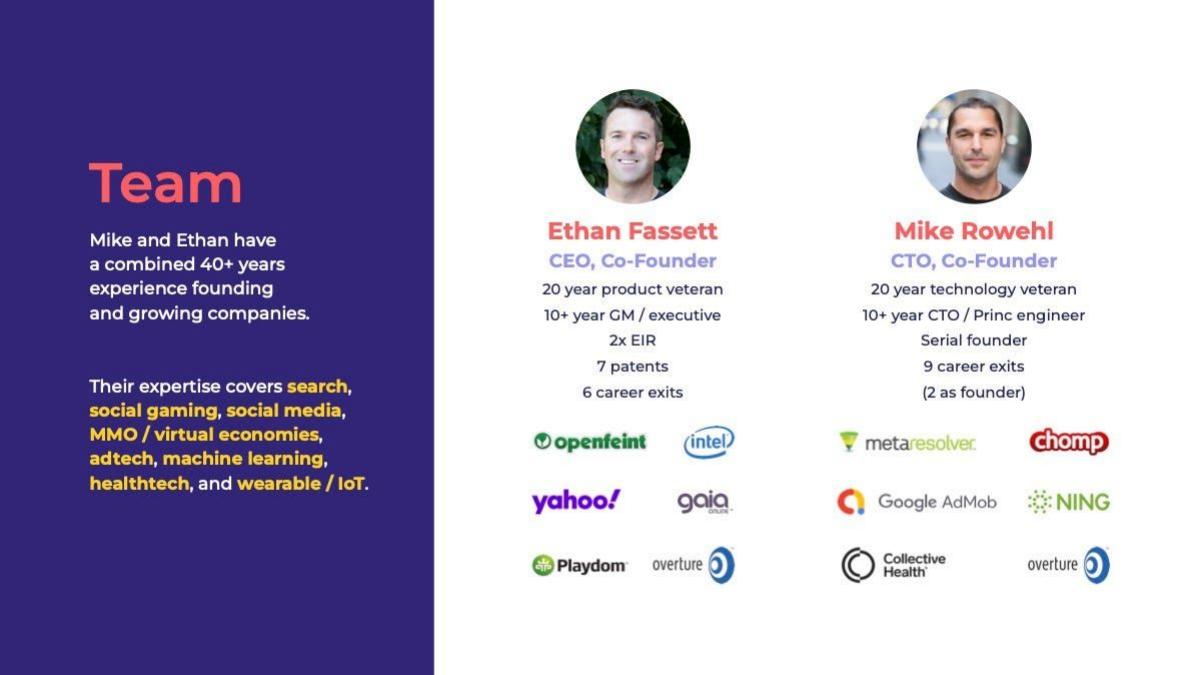
- The team slide (Slide 3) is the deck's strongest asset, showcasing 40+ years of experience and 15 combined exits between the two co-founders.
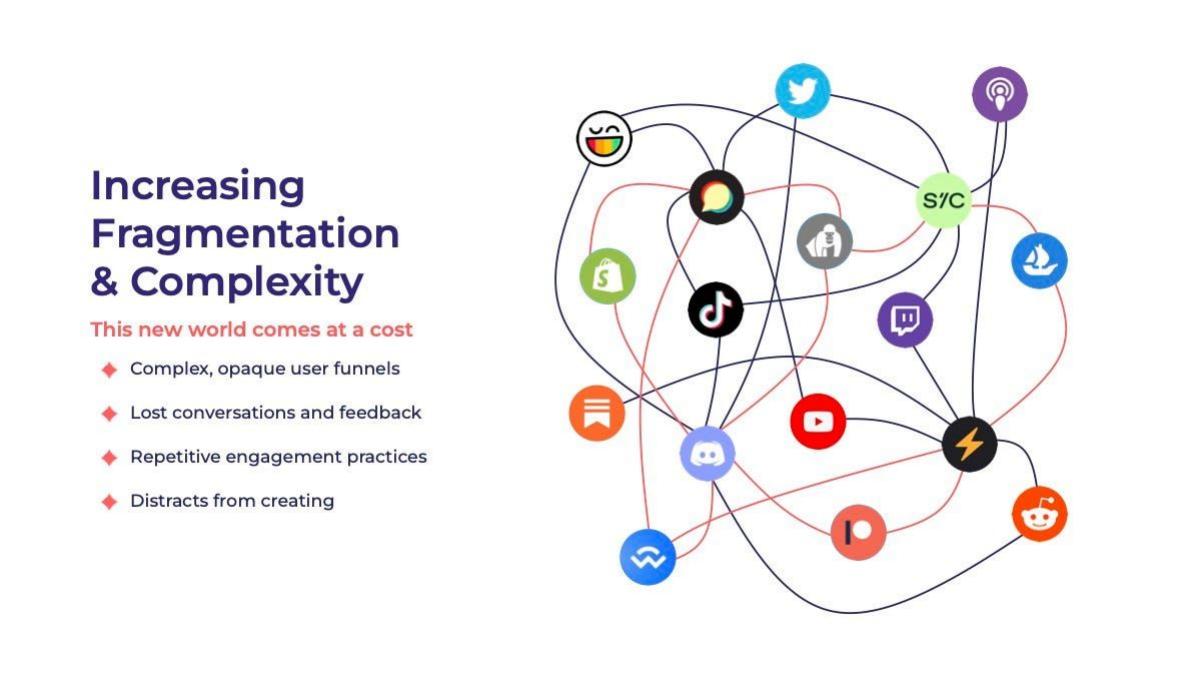
- Glystn identifies 'Increasing Fragmentation & Complexity' as the primary market pain point, visualizing 16 different platform logos connected by a chaotic web (Slide 5).
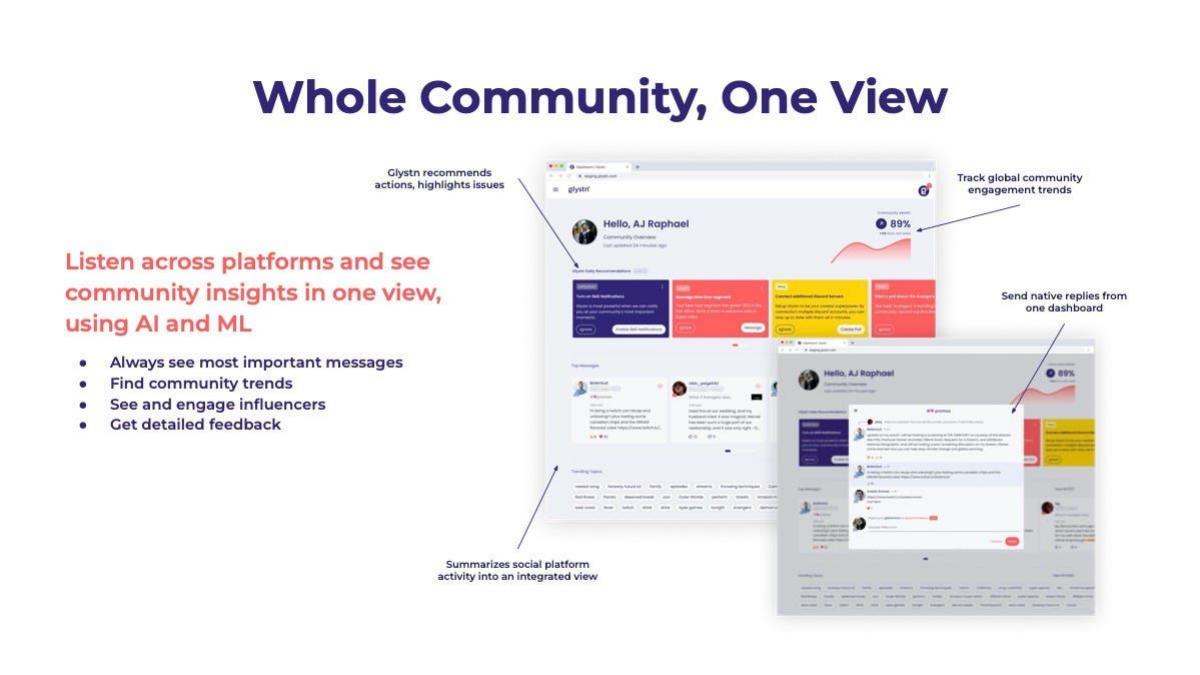
- The product is positioned as a 'Whole Community, One View' solution, using AI and ML to aggregate messages and sentiment (Slide 7).
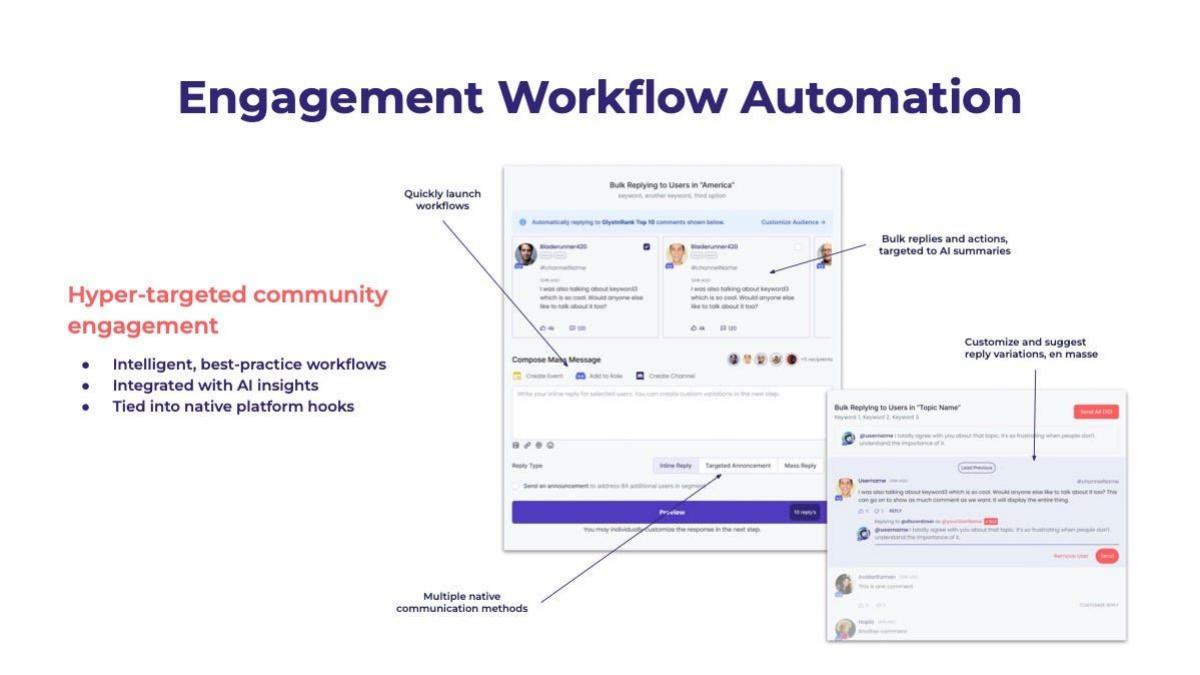
- Workflow automation is a key feature, allowing creators to send 'native replies from one dashboard' and perform bulk actions (Slide 8).
- The distribution strategy targets three specific segments: Influential Creator Projects, Aggregators (agencies), and Platform Ecosystems (Slide 11).
- Traction is demonstrated through a 'live closed-Beta' with high-profile pilot partners including Fox Sports and Nerd City (Slide 13).
- The deck omits a specific 'Ask' slide detailing the exact use of the $4M raised, at least in the provided visual sequence.
- Unit economics and specific revenue figures are missing, which is common for a Seed round focused on pilot traction (Slide 13).
Introduction and Vision
Slide 1: Title Slide
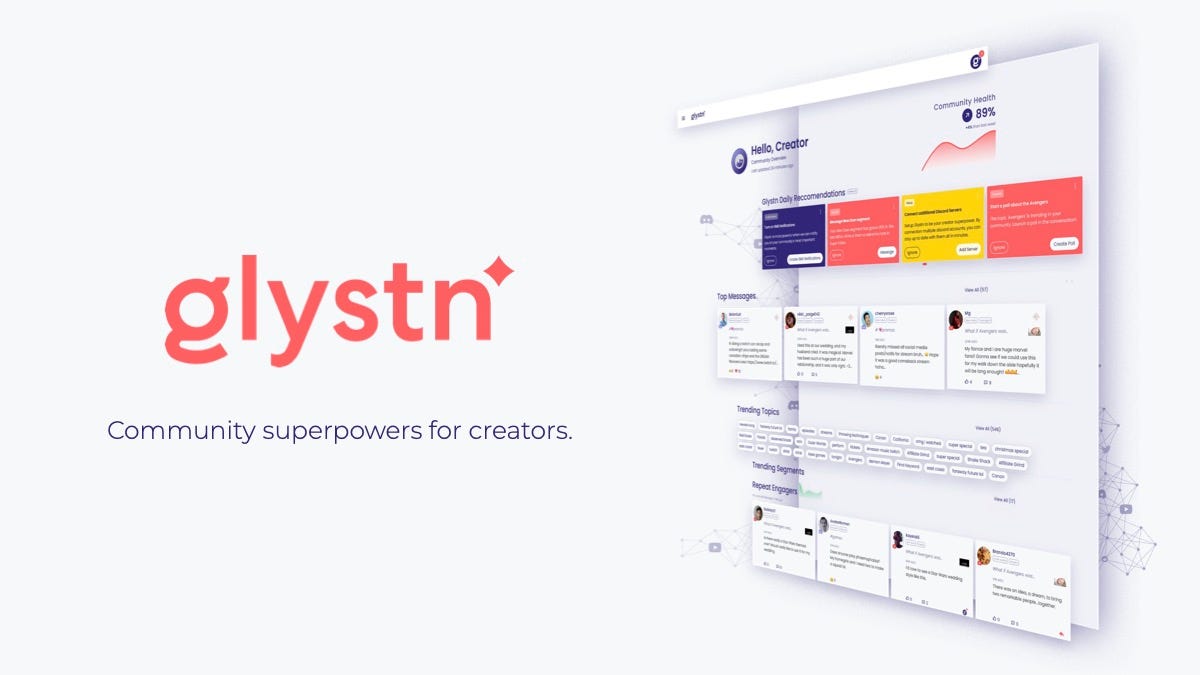
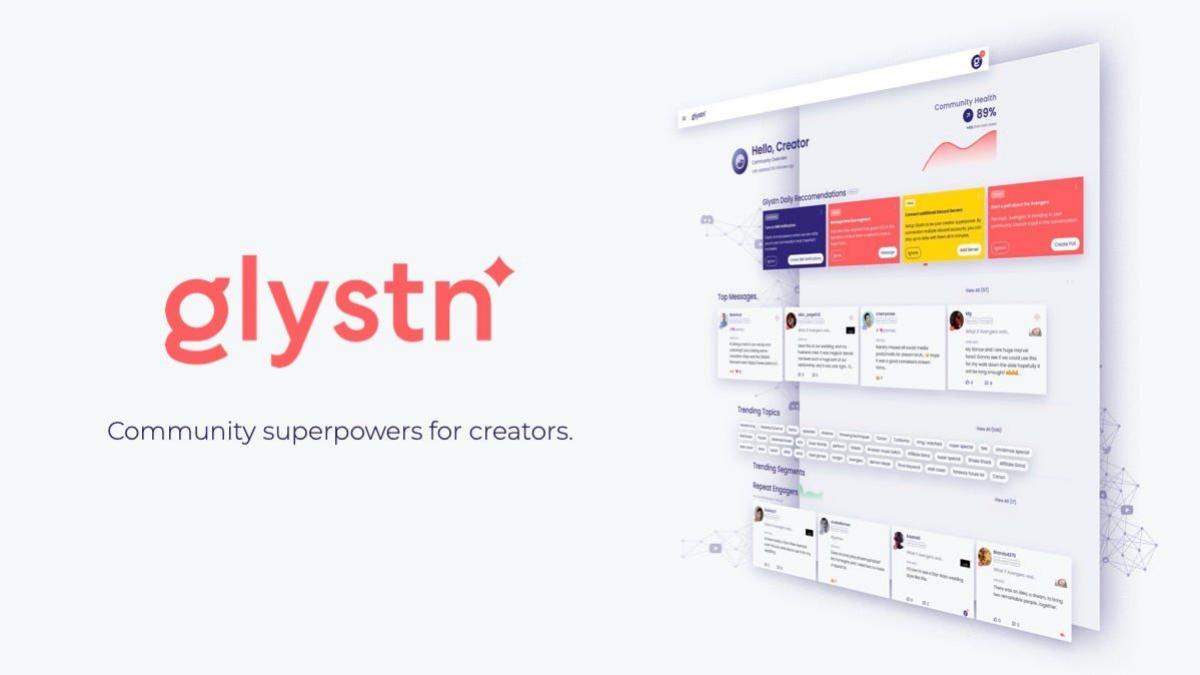
The deck opens with a minimalist title slide featuring the Glystn logo in a coral-red font. The tagline, "Community superpowers for creators," immediately establishes the target audience and the value proposition. A tilted 3D mockup of the product dashboard is visible on the right, providing a hint of the UI/UX before the formal product walkthrough begins.
Slide 2: The Hook
Slide 2 serves as a transition, utilizing a solid purple background with lighter text. While the specific text is not detailed in the summary, this slide typically functions as a 'mission statement' or a high-level summary of the market shift the founders have observed.
The Power of the Pedigree
Slide 3: The Team
This is arguably the most important slide in the deck for a $4M Seed round. It features co-founders Ethan Fassett (CEO) and Mike Rowehl (CTO) . The slide highlights a "combined 40+ years experience founding and growing companies." The metrics are impressive: Fassett claims 6 career exits and 7 patents, while Rowehl claims 9 career exits and 9 patents. The logos at the bottom—including Intel, Yahoo!, Google AdMob, and OpenFeint —provide massive social proof. For investors, this slide mitigates execution risk by showing the founders have successfully navigated the entire startup lifecycle multiple times.
Defining the Market Pain
Slide 4: Market Data
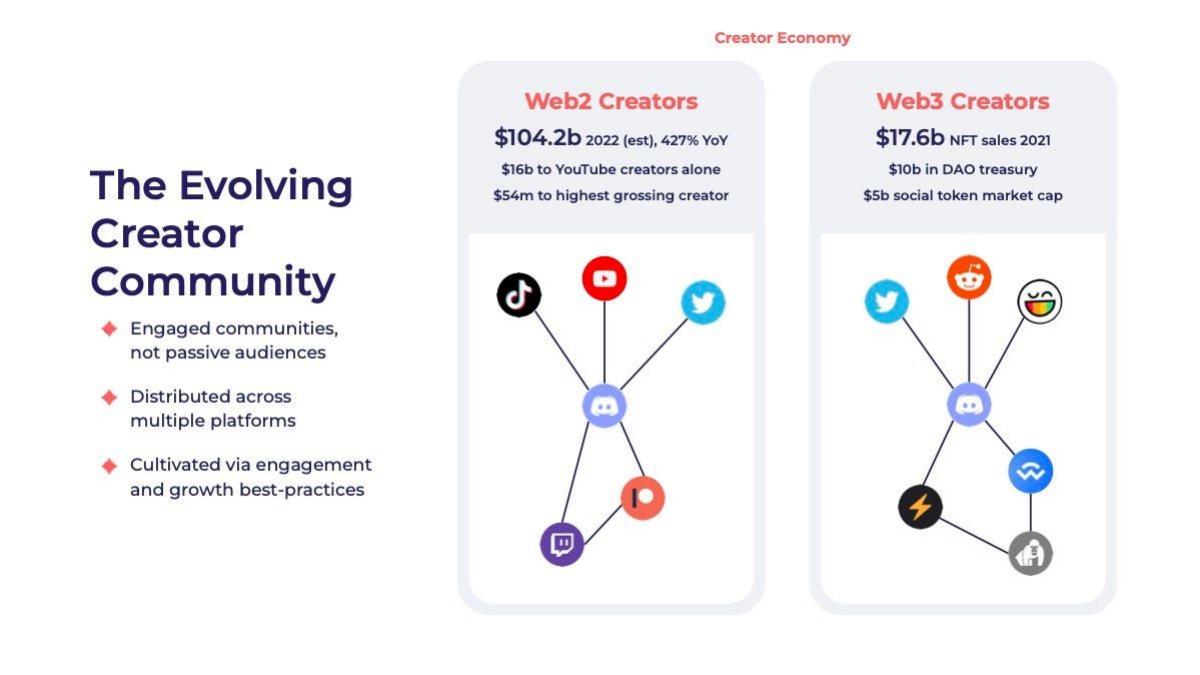
Slide 4 uses graphs with black and red text to quantify the problem. While the specific data points aren't listed in the prompt, the visual structure suggests a focus on the growth of the creator economy and the corresponding increase in management overhead.
Slide 5: Increasing Fragmentation & Complexity
This slide visualizes the 'Problem.' It features a chaotic web of lines connecting logos for TikTok, YouTube, Discord, Patreon, Reddit, Twitch, and Shopify , among others. The text notes that this "new world comes at a cost," specifically citing "complex, opaque user funnels," "lost conversations," and "repetitive engagement practices." It effectively argues that creators are spending too much time managing platforms and not enough time creating.
The AI-Driven Solution
Slide 6: The Pivot to Solution
Slide 6 uses a yellow graph and purple text to transition from the problem of fragmentation to the solution of aggregation. It sets the stage for how Glystn's technology addresses the chaos shown on the previous slide.
Slide 7: Whole Community, One View
This slide introduces the product's core functionality. It claims to "Listen across platforms and see community insights in one view, using AI and ML." The slide features a dashboard screenshot showing a "Community Health" metric at 89% . Key features listed include seeing the most important messages, finding community trends, and engaging influencers. The visual shows how Glystn "summarizes social platform activity into an integrated view."
Slide 8: Engagement Workflow Automation
Moving beyond simple listening, Slide 8 focuses on action. It highlights "Hyper-targeted community engagement" and "Intelligent, best-practice workflows." The screenshots show a "Bulk Replying" feature and the ability to "send native replies from one dashboard." This is a critical selling point: it promises to save creators hours of manual labor by centralizing the response process across disparate apps like Discord and Twitter.
Slide 9: Product Depth
Slide 9 continues the product walkthrough with additional screenshots. It emphasizes the "native platform hooks," suggesting that Glystn isn't just a wrapper but a deeply integrated tool that respects the unique features of each social network.
Business Model and Distribution
Slide 10: Business Model
Slide 10 outlines how the company intends to make money. While the specific pricing tiers aren't detailed in the text, the slide uses purple and red text to describe a scalable model, likely a SaaS subscription based on the number of followers or platforms integrated.
Slide 11: Distribution Strategy
Glystn plans to "Launch feature-rich, differentiated, and free." The distribution strategy targets three main pillars: Influential Creator Projects (large web-2 creators), Aggregators (agencies and community managers), and Platform Ecosystems (marketing and token platforms). This multi-pronged approach shows a sophisticated understanding of how tools spread within the creator economy—often through the agencies that manage the talent.
Competition and Traction
Slide 12: Competitive Landscape
Slide 12 addresses the competition. In the creator tool space, this usually involves mapping Glystn against legacy social listening tools (like Hootsuite) and niche platform-specific bots. The slide positions Glystn as the only comprehensive, AI-driven cross-platform solution.
Slide 13: Traction
The traction slide proves that the product works in the real world. It states the company is "In live closed-Beta with pilot creators." It features testimonials from Stronghold, Nerd City, and Louis Weisz . The list of "Creator Pilot Partners" is extensive, including Fox Sports, AJ Raphael, Eric Hunley, and Steve Mould . For a Seed round, this level of logo-dropping from recognizable creators is a strong indicator of product-market fit.
Slide 14: Milestones
Slide 14 outlines the roadmap. It likely details the transition from closed-Beta to public launch and the planned integration of additional AI features. This slide gives investors a clear picture of what the $4M will be used to achieve over the next 12-18 months.
Slide 15: Contact
The deck concludes with a simple contact slide featuring the company email: info@glystn.com . The use of yellow and purple text maintains the brand's vibrant, creator-focused aesthetic.
What Glystn Does Well
The deck excels at establishing founder authority . In a crowded AI market, investors bet on the team. By highlighting 15 exits and 16 patents on Slide 3, Glystn makes it difficult for an investor to say 'no' based on execution capability. The problem visualization on Slide 5 is also highly effective; every investor understands the 'messy web' of social media, and Glystn positions itself as the clean, organized alternative.
Furthermore, the specificity of the pilot partners on Slide 13 is excellent. Rather than just saying they have 'users,' they name-drop specific, high-reach creators and brands. This provides qualitative proof that the product solves a real problem for the people who matter most in this industry.
What is Missing from the Glystn Deck
The most notable omission in the provided slides is a clear 'Ask' slide . While we know from publisher reports that they raised $4M, a standard pitch deck should explicitly state the amount being raised and the specific allocation of those funds (e.g., 50% engineering, 30% marketing, 20% operations). Without this, the deck feels like a product presentation rather than a financial instrument.
Additionally, there is a lack of hard unit economics . While it is a Seed round and they are in Beta, providing even a projected Customer Acquisition Cost (CAC) or Lifetime Value (LTV) based on their pilot data would strengthen the business case. The deck relies heavily on the 'who' (the founders) and the 'what' (the product), but could do more to explain the 'how' of the long-term financial engine.
Lessons for Founders
Lead with your strengths: If you have a high-pedigree team, put the team slide early. Glystn put it on Slide 3, immediately building trust before they even showed the product. · Visualize the chaos: If your product is an aggregator or a productivity tool, create a slide that visualizes the 'mess' of the current status quo. Slide 5's web of logos is a perfect example of this. · Use 'Native' as a selling point: In the world of social media APIs, 'native' is a buzzword that implies stability and deep integration. Glystn uses this term repeatedly to differentiate itself from surface-level scrapers. · Leverage Pilot Testimonials: Don't just list logos; include short, punchy quotes that highlight specific benefits. The testimonials on Slide 13 mention "rewards automation" and "filling gaps in communication," which are much more descriptive than just saying the product is 'great.'
Frequently asked questions
- What is Glystn's primary value proposition?
- Glystn provides 'Community superpowers for creators' by using AI and machine learning to aggregate audience interactions from multiple social platforms into a single dashboard. This allows creators to see trending topics, engage with influencers, and send native replies without switching between apps, solving the problem of platform fragmentation.
- How much did Glystn raise with this deck?
- According to publisher-reported facts from Business Insider, Glystn raised $4M in a Seed round in 2024. The deck itself focuses on the milestones and traction achieved during their closed-Beta phase to justify this valuation.
- Who are the founders of Glystn?
- The company was co-founded by Ethan Fassett (CEO) and Mike Rowehl (CTO). Fassett is a 20-year product veteran with 6 career exits and 7 patents, while Rowehl is a 20-year technology veteran with 9 career exits and 9 patents. Their backgrounds include leadership roles at Intel, Yahoo!, and Google AdMob.
- Does the deck show actual revenue?
- No, the deck does not list specific revenue figures. Instead, it highlights 'Traction' (Slide 13) through a live closed-Beta with pilot partners. It lists several high-profile creators and brands, such as Nerd City, AJ Raphael, and Fox Sports, as early adopters.
- What is Glystn's go-to-market strategy?
- Glystn's distribution strategy (Slide 11) involves a 'free' entry tier to drive adoption across three targets: large web-2 creators and media publishers, creator management and brand agencies (aggregators), and influencer marketing or social token platforms (ecosystems).