GogoCoin’s 2013 seed deck is a time capsule of early crypto-accessibility hurdles. The company proposed a physical 'Bitcoin Card' to bypass the complex and expensive process of acquiring digital currency at the time. By framing bitcoin as 'digital cash' and aligning it with the massive growth in the prepaid card industry (which saw load volumes reach $353.8 billion by 2014), GogoCoin positioned itself as a necessary retail onramp. The deck relies heavily on macro trends and social proof, featuring appearances on 'This Week In Startups' and panels with industry figures like Jesse Powell and Ch…
Key takeaways
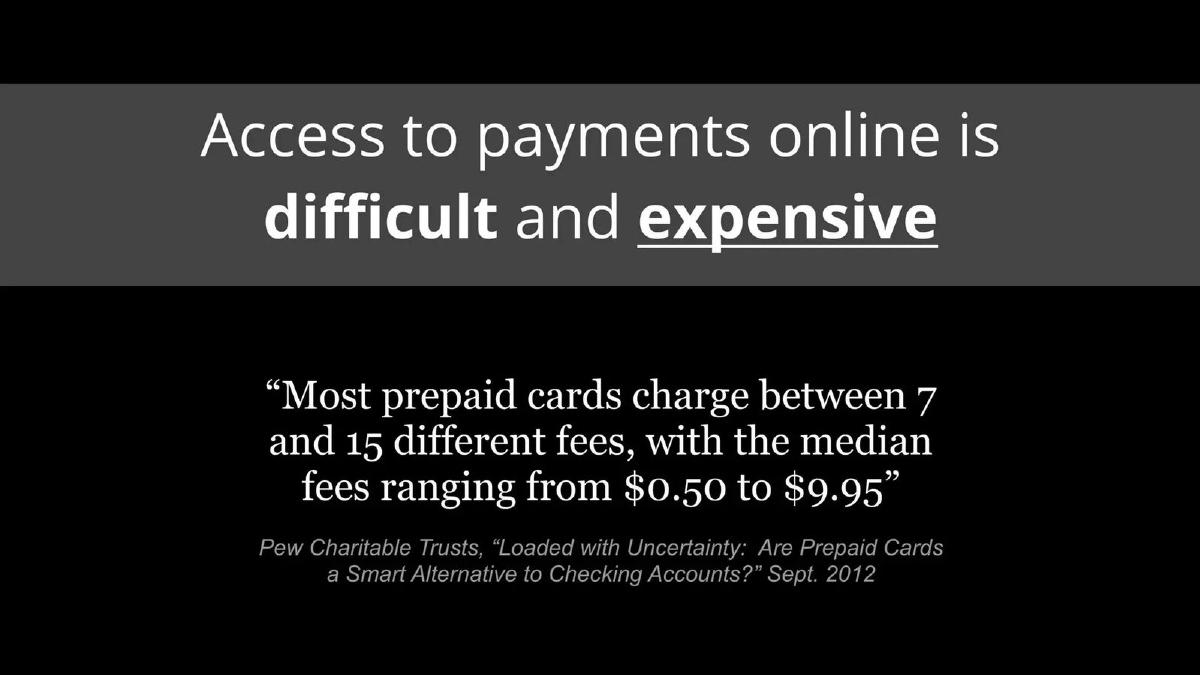
- The deck identifies a specific friction point: online payments are difficult and expensive, with prepaid cards charging between 7 and 15 different fees (Slide 3).
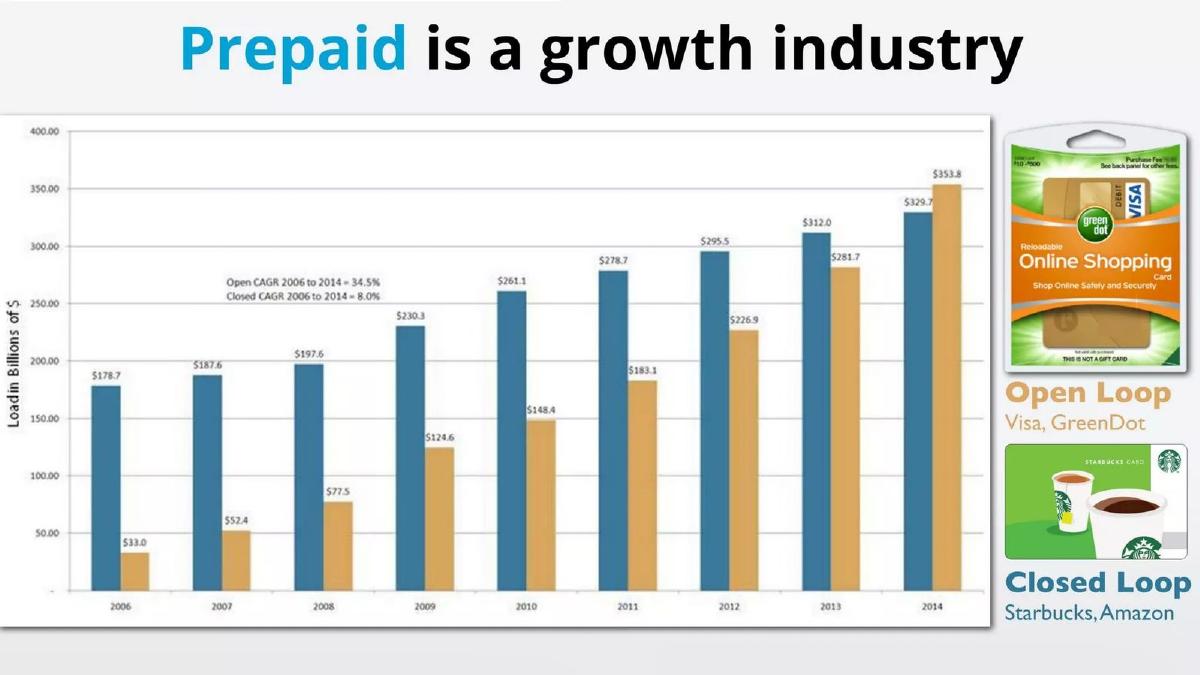
- GogoCoin leverages the growth of the prepaid industry, citing a 34.5% CAGR for open-loop cards between 2006 and 2014 (Slide 5).
- The product is positioned as a simple two-step process: buy a physical card at a retailer and redeem the code online (Slides 9-10).
- Revenue is generated through a 7% fee on redemption, as stated on the retail pilot slide (Slide 13).
- The company secured a whitelabel partnership with Blockchain.info to provide 'Wallet Invite' cards (Slide 14).
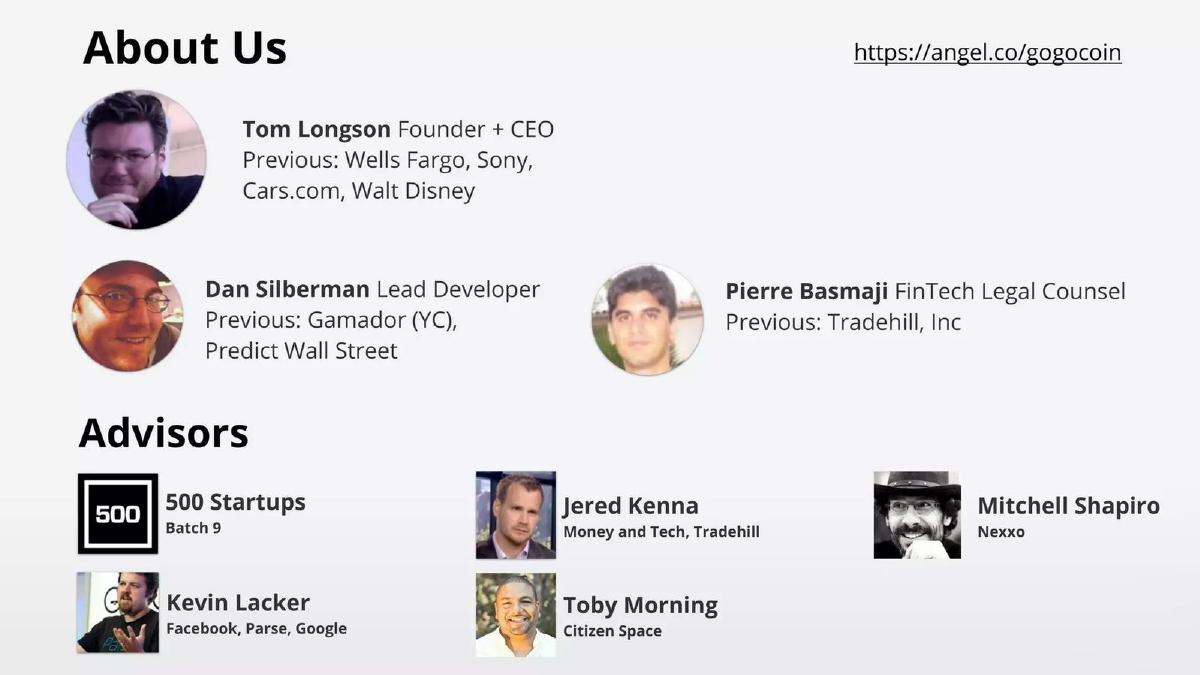
- The team slide highlights deep corporate experience at Wells Fargo, Sony, and Disney, alongside legal counsel from Tradehill (Slide 2).
- Social proof is a core pillar of the deck, showcasing the founder alongside Jason Calacanis, Tim Draper, and the CEOs of Kraken and Ripple (Slide 15).
- The deck completely omits a formal 'Ask' slide, leaving the specific funding requirements and valuation unstated within the presentation.
The 2013 Vision for Retail Bitcoin
GogoCoin’s pitch deck is a fascinating artifact from a time when 'buying bitcoin' was a technical hurdle that prevented mass adoption. In 2013, the infrastructure we take for granted today—instant bank transfers, mobile apps, and regulated exchanges—was in its infancy. GogoCoin’s solution was decidedly analog: physical cards sold in brick-and-mortar stores. This teardown examines how they pitched a physical solution to a digital problem.
The Team and the Problem (Slides 1-3)
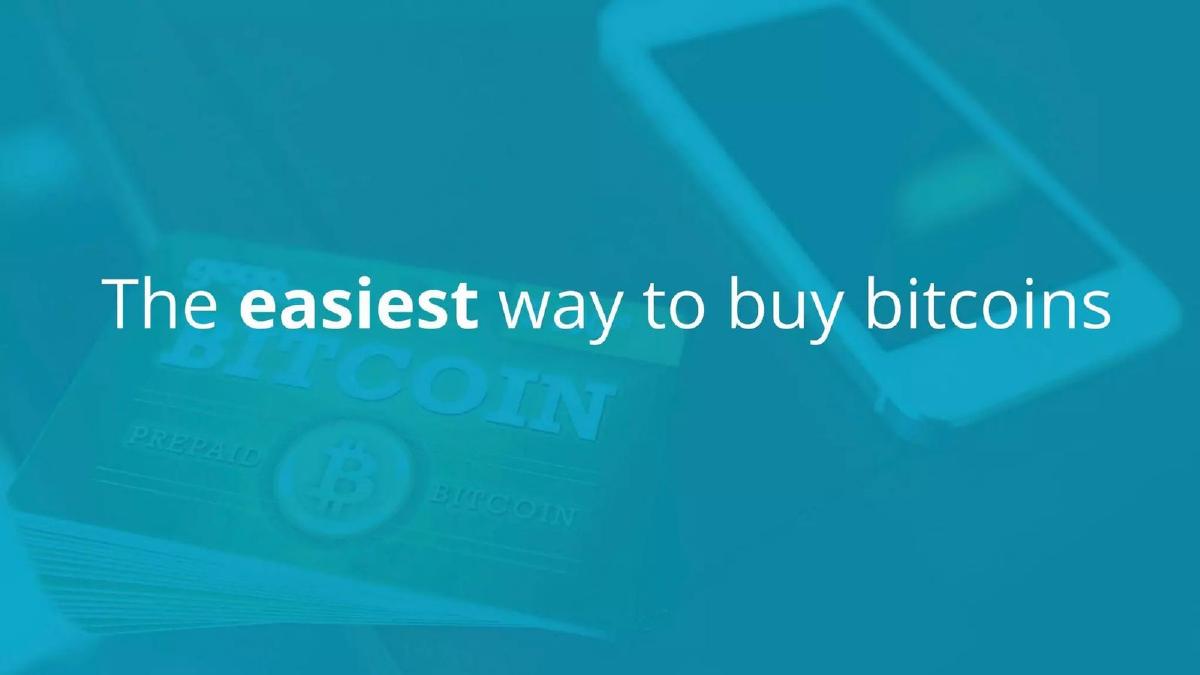
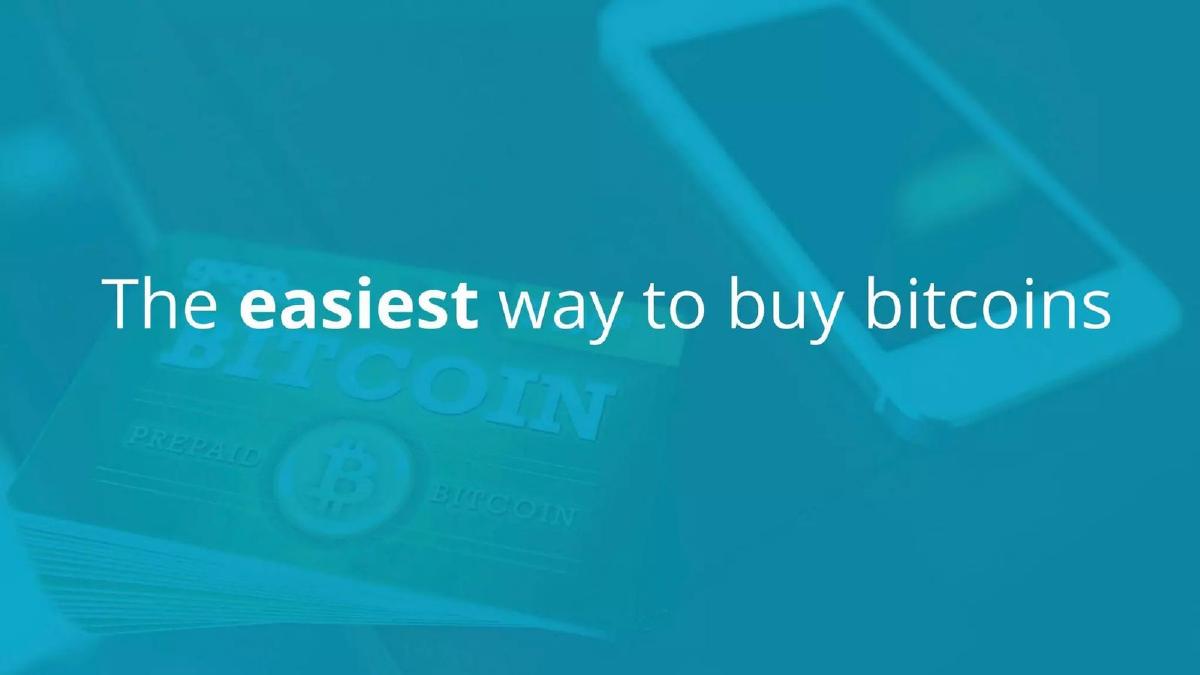
The deck opens with a simple value proposition: 'The easiest way to buy bitcoins.' Slide 2 introduces the team, which is a strong mix of corporate stability and early crypto expertise. CEO Tom Longson’s background at Wells Fargo and Disney provides a 'safe' face for a volatile industry, while the inclusion of legal counsel Pierre Basmaji (formerly of Tradehill) addresses the elephant in the room: regulatory compliance. The advisory board, featuring 500 Startups and Kevin Lacker, adds significant Silicon Valley credibility.
Slide 3 defines the problem not as 'Bitcoin is hard,' but as 'Access to payments online is difficult and expensive.' By quoting the Pew Charitable Trusts on the predatory nature of prepaid card fees (7 to 15 different fees), GogoCoin frames the existing financial system as the antagonist. This sets the stage for Bitcoin to be the hero, not just as a speculative asset, but as a cheaper payment rail.
Macro Trends and Market Validation (Slides 4-7)
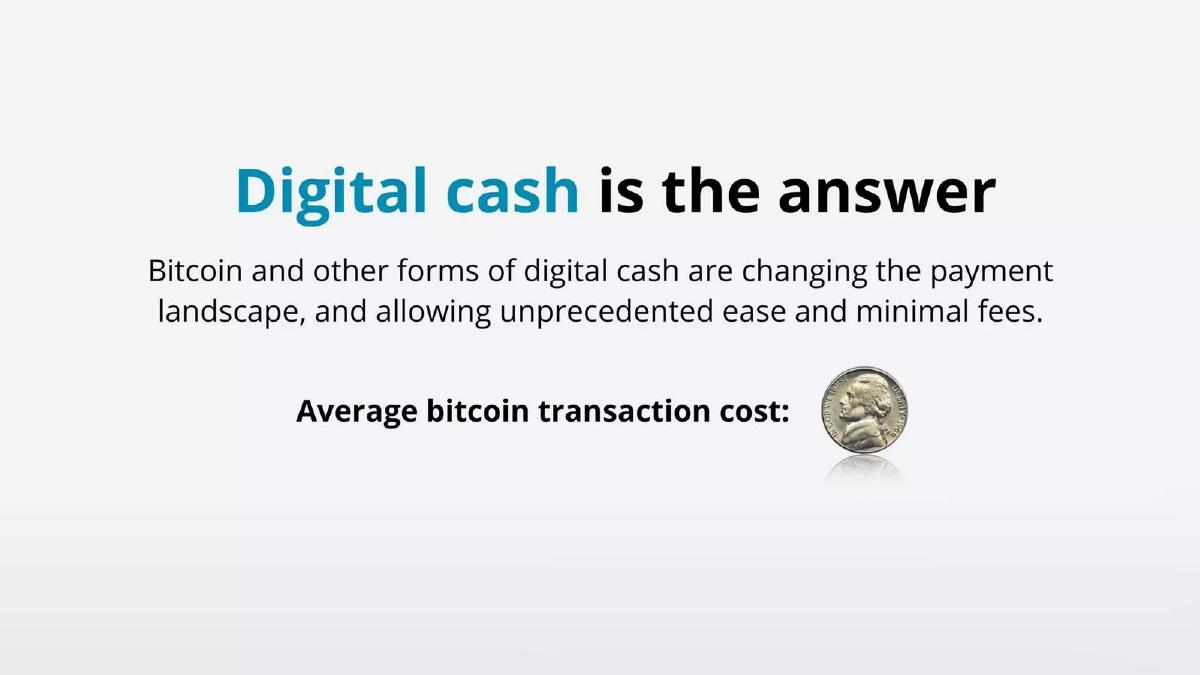
GogoCoin spends four slides establishing that they are riding a massive wave. Slide 4 introduces 'Digital cash' as the answer, highlighting minimal fees. Slide 5 is a heavy-hitter, showing the prepaid industry's growth. It notes that 'Open Loop' cards (like Visa/GreenDot) had a CAGR of 34.5% from 2006 to 2014, reaching a projected $353.8 billion. This is a classic 'big market' slide designed to show that the delivery mechanism (prepaid cards) is already a proven consumer habit.
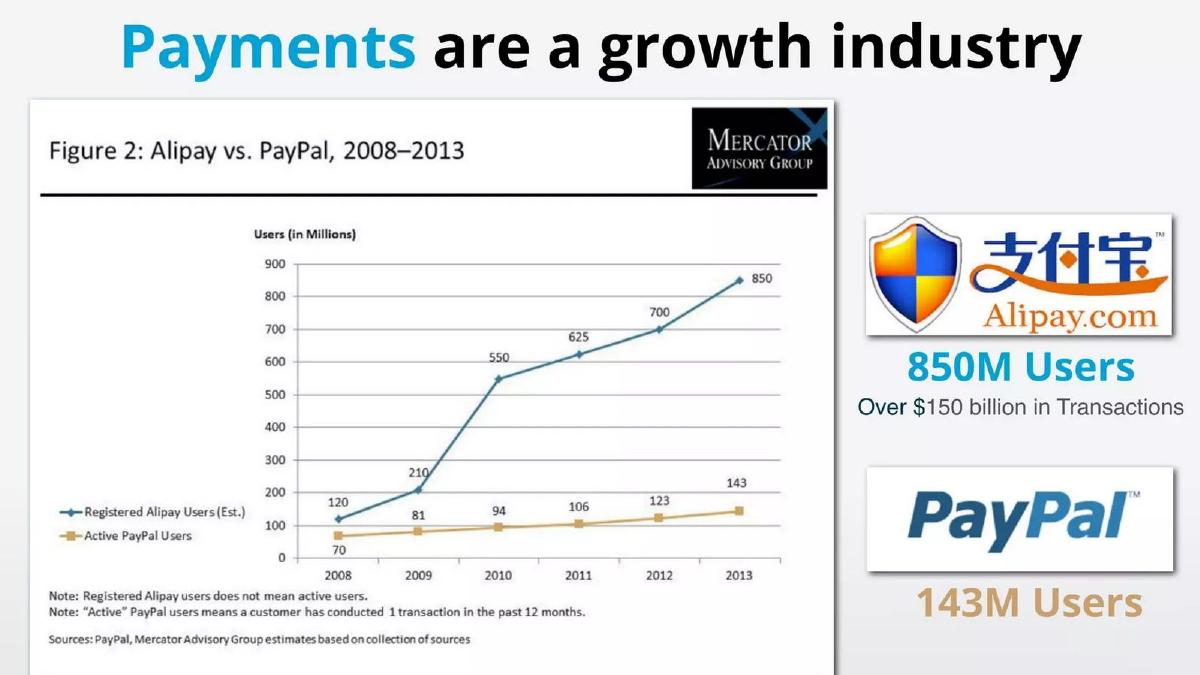
Slide 6 compares Alipay (850M users) to PayPal (143M users) to show the scale of digital payments globally. Finally, Slide 7 brings it back to crypto by showing Coinbase’s growth. By highlighting that Coinbase did ~$200M in sales in its first year and reached $40M in monthly volume by October 2013, GogoCoin proves that the appetite for the product is real and growing exponentially.
The Product and User Experience (Slides 8-12)
Slide 8 uses a visual metaphor of a road 'onramp' to describe GogoCoin’s role in the ecosystem. The next three slides (9, 10, and 11) walk through the user journey. It is a simple, two-step process: buy a card at a retail counter, then redeem the code on a mobile-responsive website. Slide 11 shows the 'Instant access' dashboard, which displays a balance in both USD and BTC ($27.43 USD / 0.046 BTC). This was crucial for 2013, as it demystified the fractional nature of bitcoin for new users.
Slide 12 is a 'Spend' slide, featuring logos like Overstock.com, TigerDirect, Reddit, and Dish Network. While these merchants accepted bitcoin, the slide is slightly ambiguous—it implies these are places you can use your GogoCoin, which is true only insofar as GogoCoin provides you with the bitcoin to spend elsewhere. It serves more as a validation of the Bitcoin ecosystem's maturity than GogoCoin's specific partnerships.
Traction and Partnerships (Slides 13-14)
Slide 13 details a pilot program: 'Four Retailers in San Francisco and Los Angeles this June.' This slide contains the only mention of the business model's unit economics: a '7% fee on redemption.' It also mentions the use of 'Smartphone / iPad POS' systems, indicating that GogoCoin was providing the hardware or software for retailers to sell these cards. A 7% fee is high by modern standards, but in 2013, compared to the '7 to 15 different fees' of traditional prepaid cards mentioned earlier, it was a competitive entry point for cash-to-crypto.
Slide 14 is perhaps the most important for an investor. It showcases a whitelabel partnership with Blockchain.info. Providing physical 'Wallet Invite' cards for the largest wallet provider at the time proved that GogoCoin’s infrastructure had utility beyond their own brand. This B2B2C angle significantly de-risks the investment by showing multiple paths to market.
Social Proof and Vision (Slides 15-16)
Slide 15 is a 'Social Proof' collage. It shows the founder on a panel with Jesse Powell (Kraken) and Chris Larsen (Ripple), being interviewed by Jason Calacanis, and presenting at Draper University. For a seed-stage startup, this level of industry integration is a powerful signal. It tells investors that the founder is already a recognized peer to the leaders of the space.
The deck concludes on Slide 16 with a vision statement: 'To put the power of digital cash into the hands of everyone, everywhere.' It’s a standard, aspirational ending that ties the physical product back to a global mission.
What Works in the GogoCoin Deck
1. Clear Problem/Solution Fit: The deck identifies a specific friction point (buying bitcoin with cash/retail) and offers a specific, tangible solution (prepaid cards). It doesn't get bogged down in the technical mechanics of the blockchain.
2. Leveraging Existing Habits: By focusing on the prepaid card industry, GogoCoin isn't asking consumers to learn a new behavior. They are simply changing what the card 'loads'—from USD to BTC.
3. Strong Social Proof: The inclusion of the Blockchain.info partnership and the photos of the founder with industry titans effectively 'borrows' credibility from established players.
What is Missing from the GogoCoin Deck
1. The Ask: There is no slide stating how much money the company is raising, the valuation, or what the milestones for the next 18 months are. This is a significant omission for a fundraising deck.
2. Regulatory Strategy: Selling prepaid 'digital cash' is a minefield of AML (Anti-Money Laundering) and KYC (Know Your Customer) requirements. While they have a legal counsel on the team slide, a slide dedicated to their compliance framework would have been necessary for serious institutional investors.
3. Detailed Financials: Beyond the 7% fee, there is no information on the cost of goods sold (printing cards), retail margins (what the store gets), or customer acquisition costs.
What a Founder Should Copy
1. The 'Growth Industry' Slide: Slide 5 is a masterclass in using third-party data to validate a market. If you are building in a new niche, show that the underlying delivery mechanism or consumer habit is already massive.
2. Simple Product Walkthrough: Slides 9 and 10 use high-quality photos and screenshots to explain the product in seconds. Founders often over-explain their tech; GogoCoin shows it.
3. The Proxy Growth Argument: Using Coinbase’s growth (Slide 7) to prove demand for their own product is a smart move. If a competitor is doing well, it’s not always a threat—it’s proof of a 'Growth Industry.'
Conclusion: GogoCoin’s deck succeeded because it took a complex, scary new technology and made it look like something you’d find next to the Snickers bars at a 7-Eleven. While it lacked the financial rigor of a later-stage deck, its focus on accessibility and market timing was perfectly tuned for the 2013 investment climate.
Frequently asked questions
- What was GogoCoin's primary business model?
- GogoCoin operated as a prepaid access provider for digital currency. They sold physical cards at retail locations that customers could purchase with cash or traditional payment methods. The company generated revenue by charging a 7% fee when the user redeemed the card for bitcoin on the GogoCoin website. This model aimed to capture the 'unbanked' or 'crypto-curious' retail market that found online exchanges too complex.
- How did the deck justify the market opportunity in 2013?
- The deck used a three-pronged growth argument: the rise of prepaid cards, the explosion of digital payments (citing Alipay's 850M users), and the rapid adoption of Bitcoin. By showing Coinbase’s $40M monthly sales volume in late 2013, they proved that demand for the asset existed, while their 'Problem' slide argued that the current methods of acquisition were too fee-heavy and difficult for the average consumer.
- Who were the key people involved in GogoCoin?
- The team was led by Founder and CEO Tom Longson, who brought experience from Wells Fargo and Disney. The technical lead, Dan Silberman, had a background with Y Combinator-backed Gamador. Crucially for a crypto firm in 2013, they included FinTech Legal Counsel Pierre Basmaji. Their advisory board was high-profile for the era, including 500 Startups and Kevin Lacker (Facebook/Google).
- What were the main weaknesses of this pitch deck?
- The deck is notably light on financial specifics. It lacks a slide detailing the use of funds (the 'Ask'), unit economics beyond the 7% fee, and a long-term roadmap. It also glosses over the significant regulatory hurdles of selling 'digital cash' at retail, though the presence of legal counsel on the team slide suggests they were aware of the issue. The 'Spend' slide also lists merchants who accept bitcoin, but not necessarily through GogoCoin directly.
- Did GogoCoin have any significant partnerships?
- Yes, the deck highlights a whitelabel partnership with Blockchain.info (now Blockchain.com). They produced 'Wallet Invite' cards that allowed Blockchain.info to onboard new users via physical retail distribution. This served as a major validation of their technology stack and distribution model, showing they weren't just a B2C play but could also function as a B2B infrastructure provider.