Esports Entertainment Group (GMBL) positions itself as a transparent, regulated alternative to the often-murky world of esports betting. By utilizing a Person-To-Person (P2P) wagering model where the company takes a 5-10% rake, they eliminate the house risk associated with traditional bookmaking. The deck leans heavily on massive market projections—such as a $23 billion betting market by 2020—and their status as a fully reporting SEC issuer. While the deck successfully highlights the scale of the opportunity and their regulatory compliance, it lacks granular data on user acquisition costs and…
Key takeaways
- The company operates a P2P wagering model, collecting a 5-10% rake while eliminating house betting risk (Slide 6).
- GMBL emphasizes its status as a fully reporting SEC issuer and a licensed wagering company to build investor trust (Slide 4).
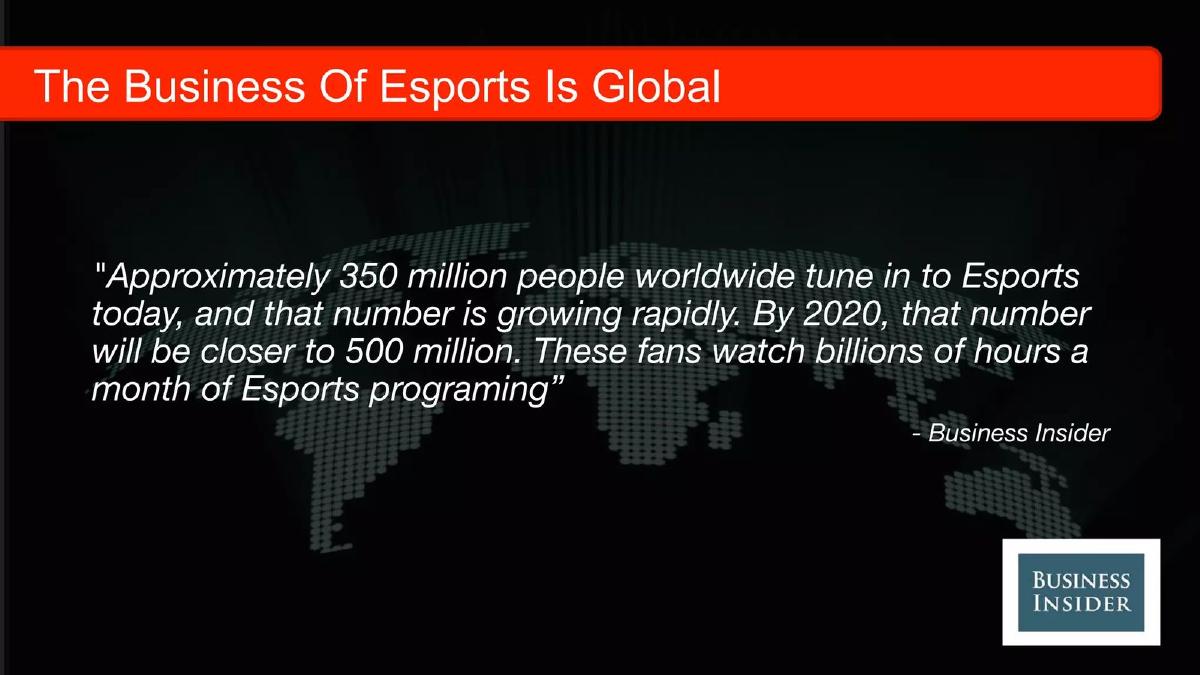
- The deck cites a Business Insider projection that esports viewership would reach 500 million people by 2020 (Slide 2).
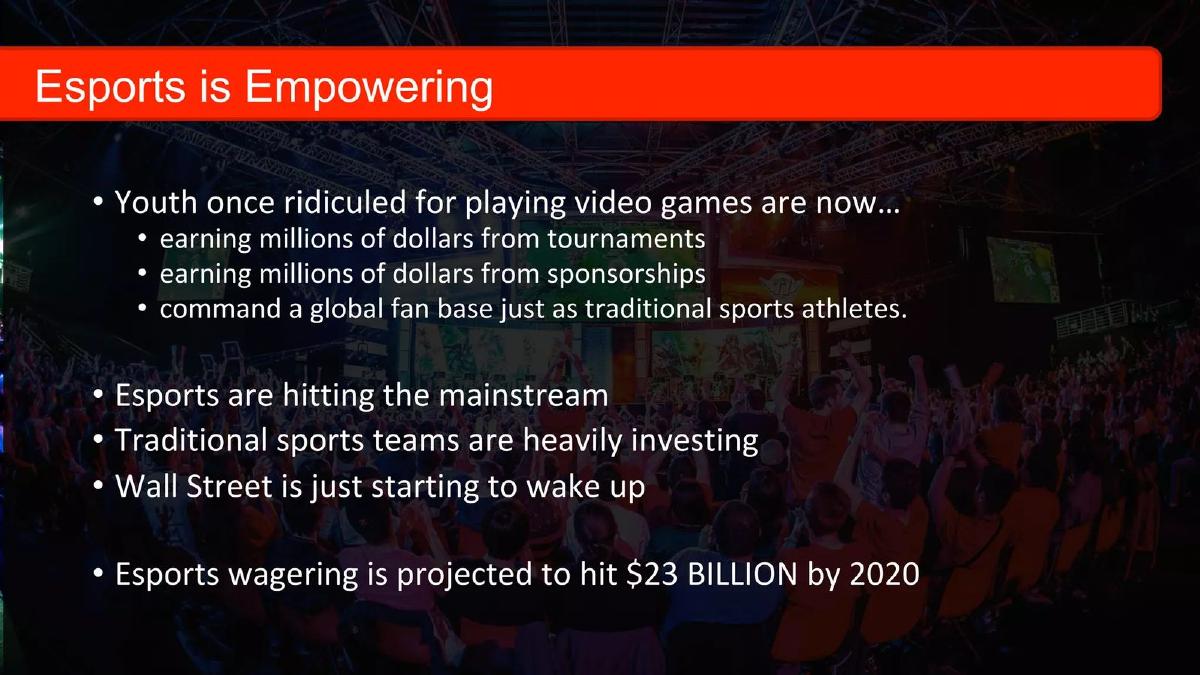
- Management claims the global esports betting market was projected to exceed $23 billion by 2020 (Slide 7).
- The platform launched in March 2018, positioning itself as the most transparent and regulated in the industry (Slide 4).
- Expansion plans include entering the tournament play market, citing Skillz.com's $58M fundraising as a benchmark (Slide 8).
- The company maintains operations in Antigua and Poland, focusing on anti-money laundering and IT development (Slide 4).
- A partnership with myRevenge e.V is used as a primary testimonial for the platform's fan-first philosophy (Slide 5).
Executive Summary: The Regulated Bet on Competitive Gaming
Esports Entertainment Group (GMBL) entered the market during a period of significant volatility and rapid growth in the esports sector. Their investor deck focuses on a singular value proposition: bringing transparency and regulation to a market often characterized by 'grey market' operators and betting scandals. By focusing on a P2P (Person-to-Person) model, they attempt to de-risk the investment by removing the volatility of house losses, turning the business into a high-margin facilitator of volume.
Slide 1: Title and Identity
The cover slide establishes the company's identity as Esports Entertainment Group, Inc., prominently featuring the 'VIE' brand logo. It identifies the company as an 'Esports Gaming and Wagering Company' and lists its ticker symbol, GMBL:OTCQB. The inclusion of the ticker immediately signals to investors that this is a public entity, which carries specific reporting and transparency requirements compared to private startups. The URL www.vie.gg is provided as the primary consumer touchpoint.
Slide 2: The Global Scale of Esports
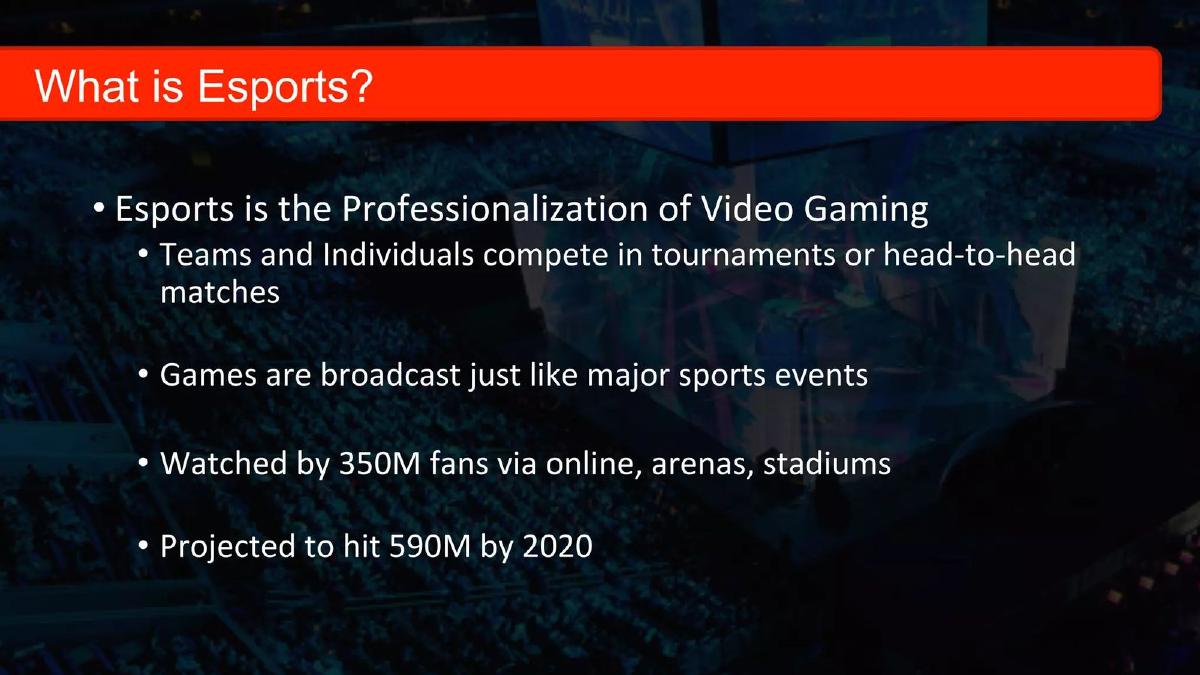
This is a standard market validation slide. It uses a quote from Business Insider to establish the sheer volume of the audience: 350 million people tuning in 'today,' with a projection of 500 million by 2020. The slide aims to prove that the underlying asset—the esports audience—is both massive and growing rapidly. By citing 'billions of hours a month' of programming, the deck establishes the high engagement levels of the target demographic.
Slide 3: Institutional Validation
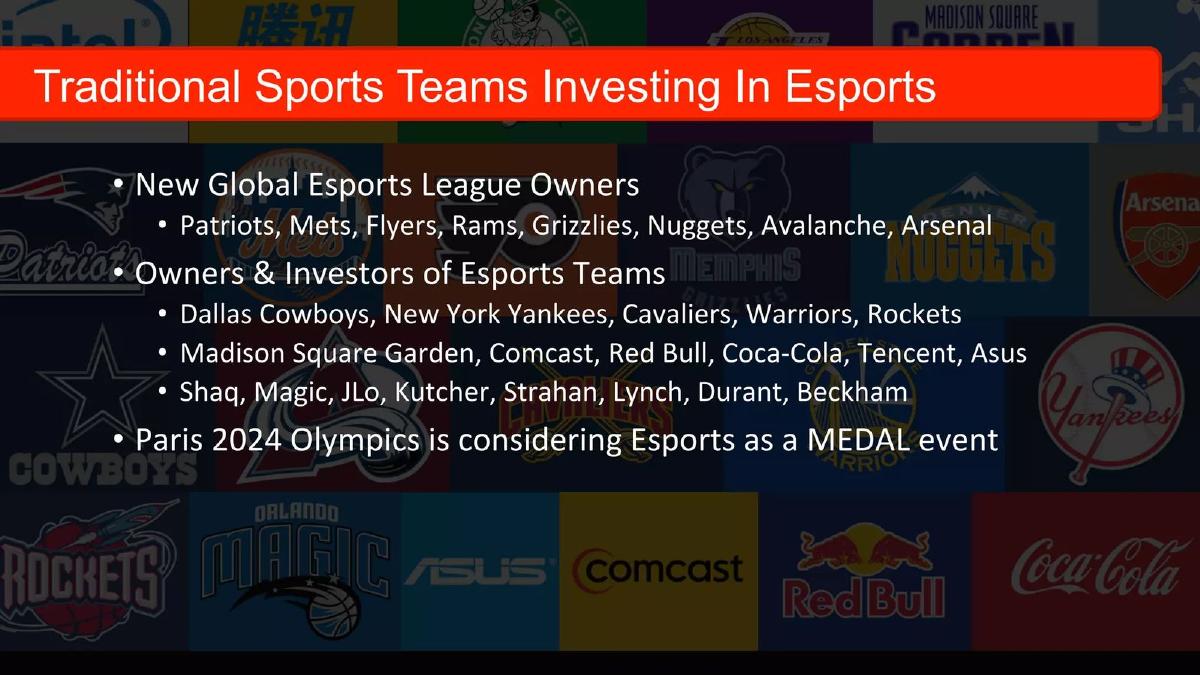
Titled 'Traditional Team Owners See Writing On The Wall,' this slide uses a quote from VentureBeat to show that 'smart money' is already in the building. It notes that owners of professional sports franchises are investing early to get in at a lower price point. This is a psychological play for the investor: it suggests that if the owners of the NFL or NBA teams are buying into esports, the sector has achieved a level of institutional legitimacy that justifies further investment in infrastructure like wagering platforms.
Slide 4: The Investment Thesis
Slide 4 is the 'Why Us' slide. It lists several key milestones and structural advantages:
Launched in March 2018 as a 'transparent & regulated' platform. · Operational presence in Antigua and Poland. · Staffing focused on Finance, IT, Development, and Anti-Money Laundering (AML). · The claim of being the 'ONLY' company offering small-cap esports growth as a fully reporting SEC issuer.
The comparison to 'Poker Stars of Esports' is a bold attempt to anchor the company's potential to one of the most successful brands in the history of online gambling.
Slide 5: Partner Testimonials
This slide features a quote from Christian Heinrichs of myRevenge e.V. The testimonial emphasizes 'full transparency' and a 'fans first' philosophy. In the gambling world, trust is the primary barrier to entry. By showing that team CEOs trust the platform to protect their fans, GMBL attempts to lower the perceived risk for both users and investors. The underlining of 'security, regulations and transparency' highlights the company's core marketing pillars.
Slide 6: The P2P Business Model
This is perhaps the most important slide for a financial analyst. It breaks down the mechanics of the revenue:
Model: Person To Person (P2P) wagering. · Revenue: A rake of 5-10% on every wager. · Risk Mitigation: P2P eliminates the risk of the house losing money on a 'bad' line or a massive underdog win. · Market Fit: Claims that 'House odds' and traditional casinos are disliked by the esports demographic.
This model suggests a scalable, software-like margin where the company wins regardless of who wins the game, provided there is sufficient betting volume.
Slide 7: Quantifying the Wagering Market
Slide 7 moves from audience size to dollar signs. It estimates the 2017 wagering market at over $5 billion, while noting that much of it is currently unregulated. It references the 'CSGO betting scandal' as a pain point that their regulated platform solves. The most aggressive figure is the projection that global esports betting would exceed $23 billion by 2020. The comparison to the NFL's $50 billion betting market serves to show the 'ceiling' of what a mature sports wagering market looks like.
Slide 8: Future Expansion into Tournaments
The deck looks forward by proposing an expansion into 'Tournament Play.' This is a move toward a more holistic gaming platform. They cite Skillz.com (which had raised $58M at the time) as a proof of concept for this model. The strategy involves letting developers upload games and share in the revenue, which GMBL claims will lead to 'little to no customer acquisition costs.' This is a significant claim that would usually require more data to support, as CAC in the gaming space is notoriously high.
Slide 9: Closing Call to Action
The final slide in this set is a brand-heavy closing with the tagline 'LET THE GAMES BEGIN' and the website URL. It reinforces the 'VIE' branding and the red/black color scheme, maintaining a consistent visual identity intended to appeal to the 'gamer' aesthetic while remaining professional enough for an investor presentation.
What Works in the GMBL Deck
The deck is highly effective at identifying a specific problem—the lack of regulation and transparency in esports betting—and positioning the company as the definitive solution. By emphasizing their SEC reporting status and AML (Anti-Money Laundering) focus, they appeal to the 'defensive' instincts of investors who might be wary of the gambling sector. The P2P business model is also a strong selling point, as it presents a much cleaner path to profitability than traditional bookmaking, which requires complex odds-making and significant capital reserves to cover potential losses.
What Is Missing from the Deck
While the deck is strong on market theory and regulatory positioning, it is light on operational reality. There is no slide in this selection detailing current user numbers, active monthly bettors, or actual revenue generated since the March 2018 launch. The claim of 'little to no customer acquisition costs' for the tournament expansion is highly optimistic and lacks a detailed marketing strategy to back it up. Furthermore, the competitive landscape is largely ignored; while they mention being the 'only' SEC issuer, they do not address how they will compete with massive, well-funded incumbents in the traditional sports betting world who are also moving into esports.
Founder's Playbook: What to Copy
Founders in 'vice' industries (gambling, cannabis, etc.) should copy GMBL's heavy emphasis on compliance and regulation. By leading with their licenses and SEC status, they preemptively answer the biggest question an investor will have: 'Is this legal, and will it get shut down?' Additionally, the use of a 'rake' model (P2P) is an excellent way to pitch a gambling business to investors who prefer the predictable margins of a platform over the high-risk volatility of a sportsbook. Finally, the use of industry-specific testimonials (like the team CEO) provides the necessary social proof to show that the product is accepted by the community it serves.
Frequently asked questions
- What is the core business model of Esports Entertainment Group?
- The company utilizes a Person-To-Person (P2P) wagering model. Unlike traditional sportsbooks that bet against the user, GMBL acts as a facilitator, allowing users to wager against each other. The company generates revenue by taking a 'rake' of 5% to 10% on these transactions. This model is designed to eliminate the risk of major betting losses for the company, as they do not hold the 'house' side of the bet.
- How does the company address the legal and regulatory risks of gambling?
- GMBL positions its regulatory status as a primary competitive advantage. The deck states they are a 'fully licensed online Esports wagering company' and a 'fully reporting SEC issuer.' By highlighting their offices in Antigua and Poland—staffed with experts in Anti-Money Laundering (AML) and finance—they aim to distance themselves from the 'unregulated betting sites' mentioned in the deck as sources of industry scandals.
- What market size figures does the deck use to justify the opportunity?
- The deck uses several large-scale projections: 350 million current viewers growing to 500 million by 2020, a $5 billion wagering market in 2017, and a projection that global esports betting would exceed $23 billion by 2020. They also compare the esports betting market to the NFL, noting that while the NFL generated $13 billion in revenue, NFL betting and fantasy leagues generated over $50 billion.
- What are the company's future growth plans beyond simple wagering?
- Slide 8 outlines an expansion into 'Tournament Play.' The company intends to offer mobile and PC video game tournaments globally. They plan to incentivize developers to drive audiences to the platform by sharing revenue, which they claim will result in 'little to no customer acquisition costs.' This move is intended to capture the US esports market and diversify revenue streams beyond pure P2P wagering.
- Who are the key partners mentioned in the deck?
- The deck features a significant testimonial from Christian Heinrichs, Founder and CEO of myRevenge e.V, an esports team. Heinrichs praises the platform for its transparency and security. The deck also references Skillz.com as a market comparable in the tournament space, though Skillz is not a partner. The team slide is notably absent from this 9-slide selection, though it mentions 'seasoned online gambling experts' generally.